
Lifestyle
Budapest: Where timeless legends come alive along magical Danube

The moment you set foot in Budapest, the gates to a 2,000-year-old legacy begin to open. It feels as if you’ve entered a land where time flows within a fairytale. This city, embracing both banks of the Danube, has been reborn from its humble Celtic and Roman roots. With its green hills, golden hues, and art that seeps into every corner, Budapest feels like a magical place pulled from the pages of a legend.
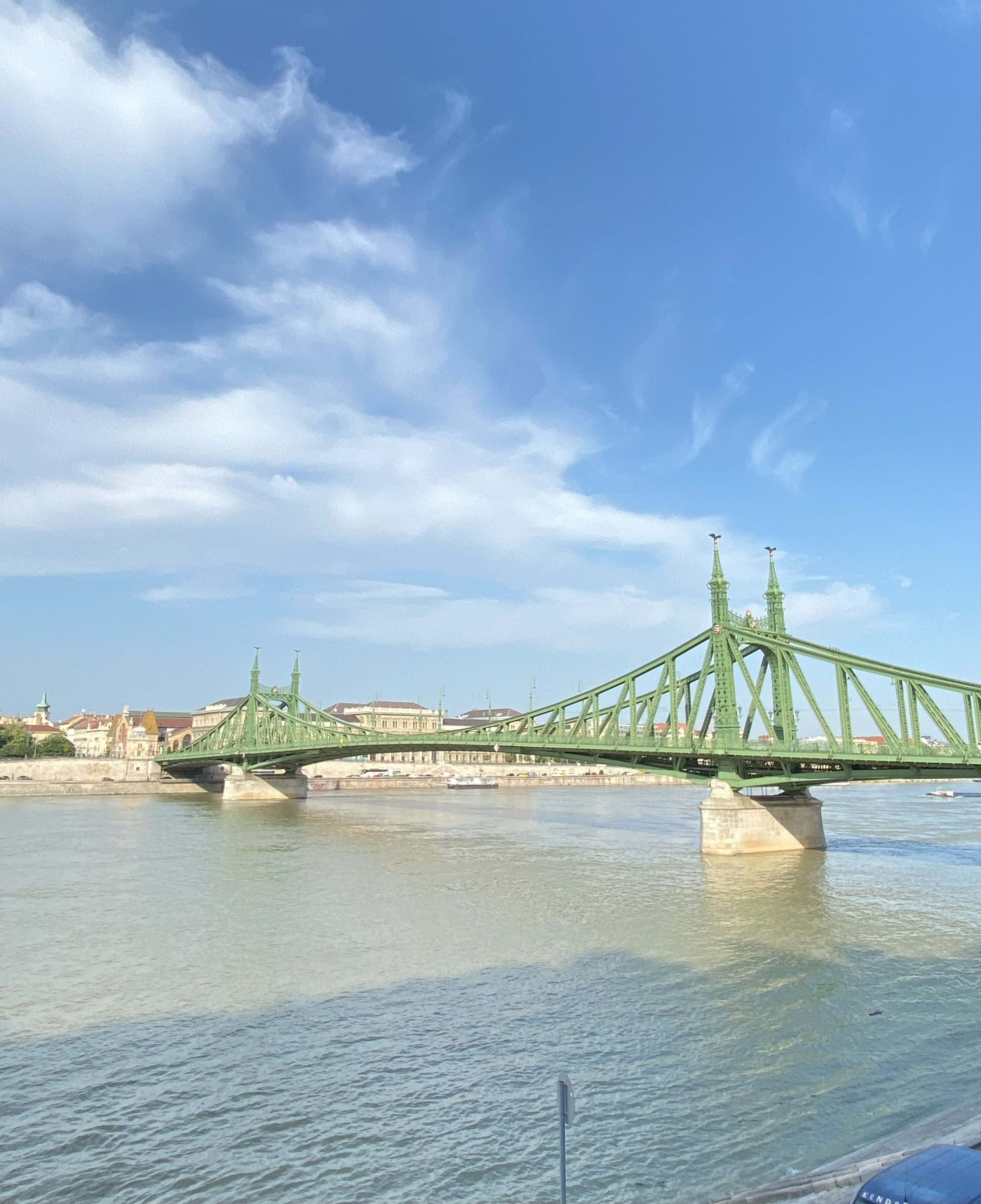
Enchanted dance of Buda, Pest
Set on opposite banks of the Danube, the city itself becomes a storybook stage: Buda, to the west, is peaceful with its gentle hills, cobbled streets and tranquil parks. Pest, on the eastern flatlands, pulses like a vibrant diary with wide boulevards reminiscent of Vienna, lively avenues and a beating modern heart. The bridges that connect the two aren’t merely pathways they feel like enchanted doors opening through time.
Buda’s silent whispers
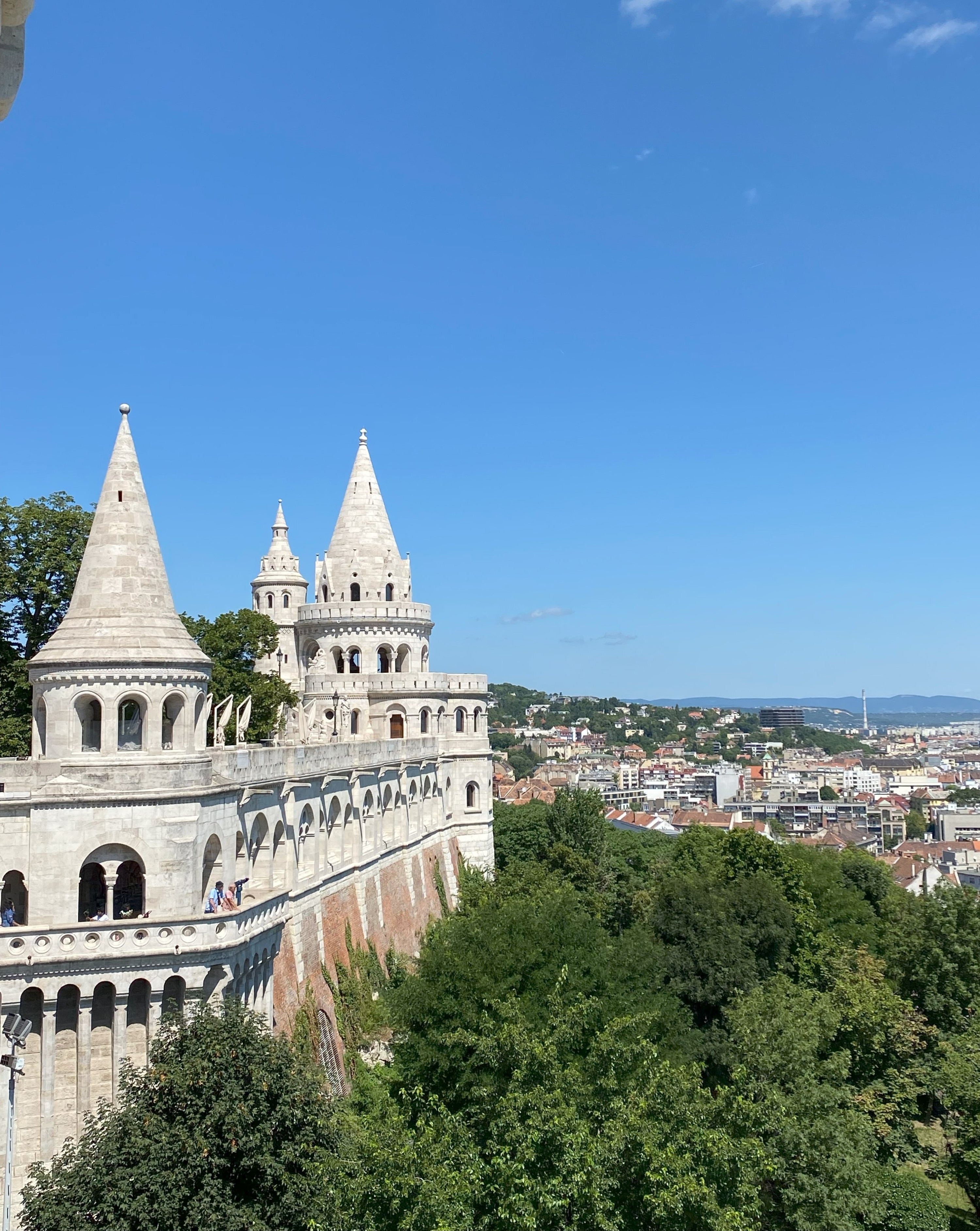
As you step into Buda, you’re drawn into layers of history. The Presidential Palace, standing in the shadow of Castle Hill, glimmers like a palace from a fairytale. Matthias Church, a witness to time since the 11th century, looms with elegance. Once converted into a mosque during the Ottoman period and later restored, the church enchants with its stone carvings, colorful tiled roofs and panoramic views from its dome. The Fisherman’s Bastion offers the most breathtaking lookout in the city its fairytale turrets and white pillars lay all of Budapest at your fingertips. At sunset, when the golden light paints the Danube, the scene becomes simply unforgettable.
Pest’s vibrant celebration
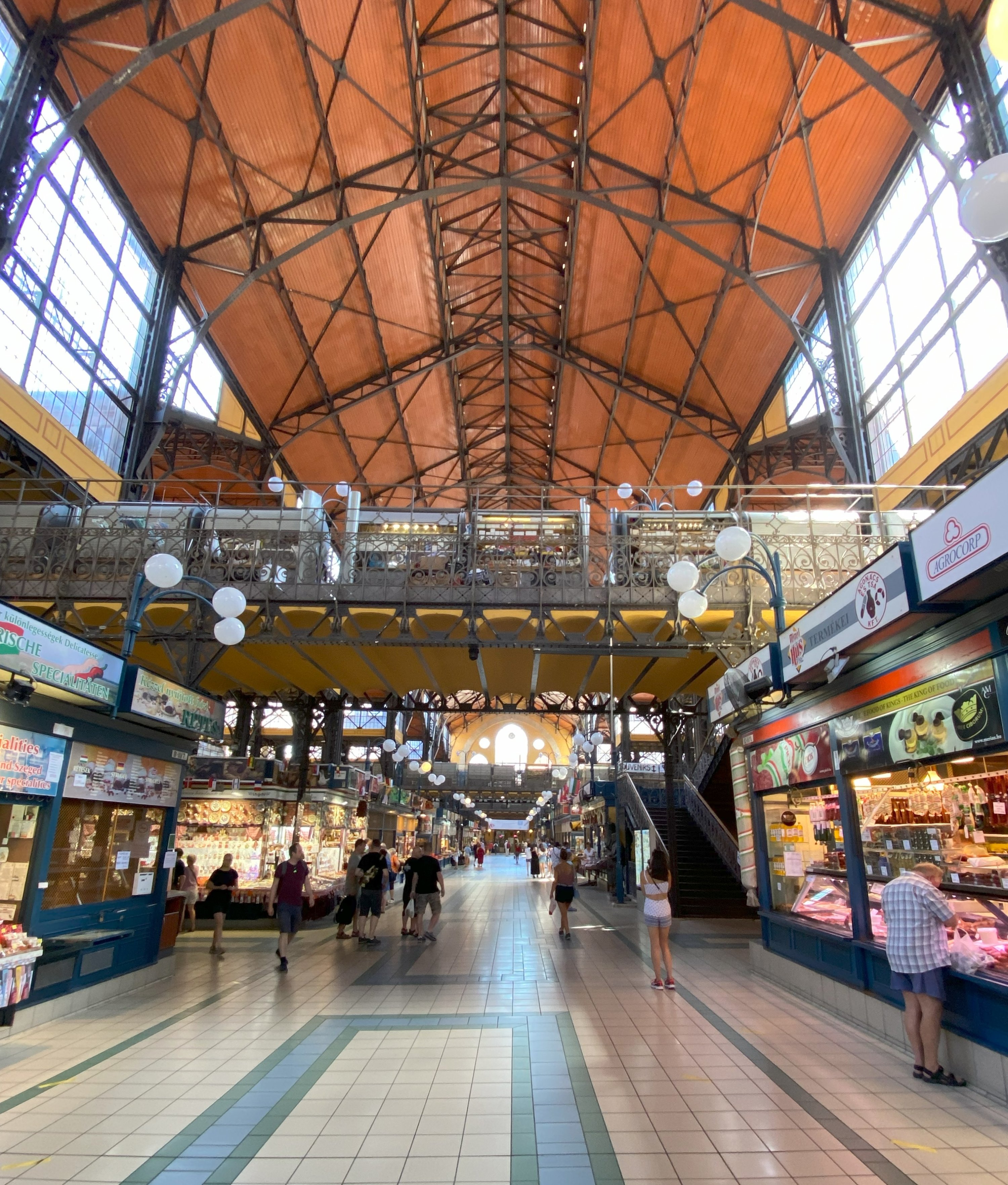
Crossing to Pest, you’re swept up in its rhythm. Your first stop: the Great Market Hall (Nagycsarnok), standing tall since 1897 with its vast vaulted ceiling that recalls a grand ship’s deck. The scent of fried dough from the upstairs langos stalls is as tempting as the sweet jam-filled bukta. Inside, colorful spices, handcrafted souvenirs, and fresh produce create a dazzling visual feast. Bite into a lángos on the street: crispy outside, soft inside; it’s pure culinary joy.
Another highlight along the Danube is the Gellert Thermal Bath. Open since 1918, it’s a masterpiece of Art Nouveau, with stained glass shutters and elegant mosaics. In its warm, mineral-rich waters, you can drift under the steam and waterfalls, rejuvenating both body and spirit. The steam rooms, saunas, and thermal pools offer a perfect escape from the city’s bustle.
Sacred, cultural riches
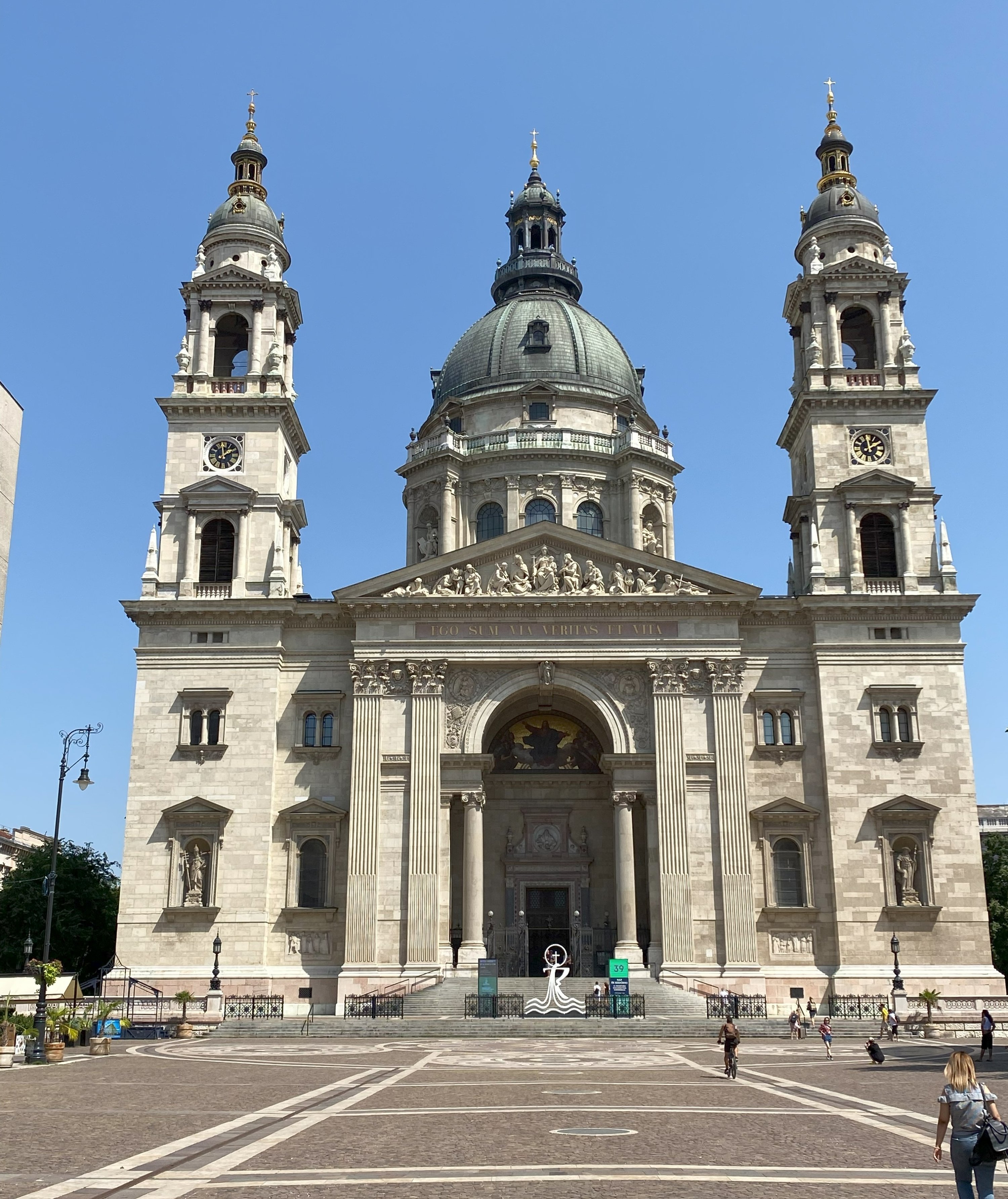
St. Stephen’s Basilica rises above the city like a resounding bell. Built in honor of Hungary’s first king, its graceful columns and intricate stonework captivate visitors. Climb the 364 steps (or take the elevator) to the dome for a sweeping 360-degree view like gazing upon a giant painting sprung to life. Beneath its heavenly domes, the hush within offers a serene glimpse into the past.
The Hungarian State Opera House is a jewel of Neo Renaissance architecture. Renovated in 2022, this grand building with its sweeping staircase and three-tiered auditorium resembles a royal palace. Ornate wall paintings and gilded ceilings invite you to revel in art, history, and splendor. If time allows, an afternoon guided tour offers a backstage pass into this cultural gem it’s like walking through a theater of secrets.
World of wisdom, wonder
Step into the Ervin Szabo Library and you’ll feel like a sorcerer flipping through timeworn tomes beneath golden chandeliers. Once the Wenck Heim Palace, the building has served as a library since the early 20th century. The high-ceilinged reading rooms, green-shaded lamps and faint scent of old books create an atmosphere of quiet reverence. For just about 1,900 HUF, this timeless sanctuary opens its doors to you.
Habsburg, Ottoman echoes
Budapest has borne witness to the power plays of empires the grandeur of Habsburg palaces and the elegance of Ottoman baths etched into its streets. Each of the city’s 23 districts tells a unique tale through its architecture, atmosphere and inhabitants. Walk down cobblestone alleys and you might feel like a traveler resting in the shadow of an Ottoman madrasa; turn a corner and you’re met with echoes of Habsburg nobility, playing flutes in baroque courtyards.
Practical tips for transportation
From Istanbul, it’s just a one hour and 50 minute flight to Budapest with Turkish Airlines, AJET and Pegasus Airlines. The trip from the airport to the city center takes 30–45 minutes depending on traffic. The 100E bus gets you downtown for about 5 euros ($5.77), while a taxi will cost around 35 euros. If you’re on a budget, take the bus; for a more comfortable ride, the taxi offers a direct route to your hotel’s doorstep.
Taste of Hungarian cuisine
Hungarian dishes are the characters in this travel tale. Start your morning with warm lekvaros bukta, a jam-filled bun that melts in your mouth like a sweet dream. At midday, try Paloc soup a refreshing mix of yogurt, potatoes, beans and herbs that tells a summery, colorful story. For dinner, no table is complete without goulash: tender beef stew simmered with paprika and root vegetables, representing the very soul of Hungarian cuisine. Each spoonful is a bite of history.

Madal Coffee & Co
With three locations across the city, Madal Coffee has been a local favorite since 2013. More than just a cafe, it stands out with its commitment to specialty coffee, a selection of vegan treats and a trendy vegan pasta menu. A perfect stop for those seeking both great flavor and mindful eating.
My Little Melbourne
Located in the buzzing Madách district, this cozy gem has been serving top-tier coffee since 2012. Though the space is small, it’s constantly full which testaments to its cult status among locals. Famous for its cappuccino, flat white, and tangy lemon cake, it’s a must-visit for true coffee lovers.
Espresso Embassy
Just steps away from St. Stephen’s Basilica, Espresso Embassy is a hub for the city’s coffee connoisseurs. Revered for its dedication to coffee craftsmanship, this spot is more than a cafe it’s a community gathering place. You can also purchase specialty beans to take the experience home with you.
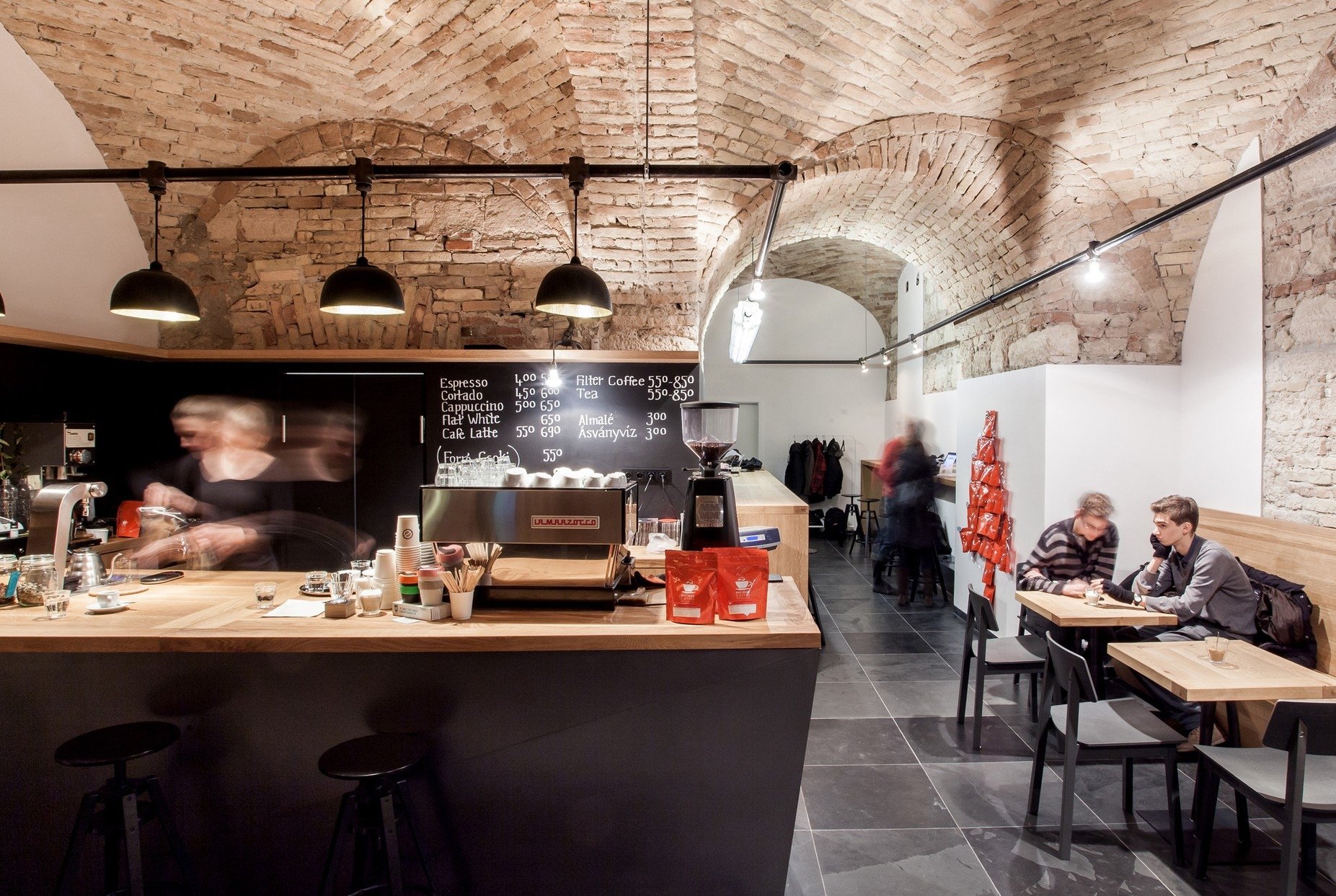
Kollazs Brasserie
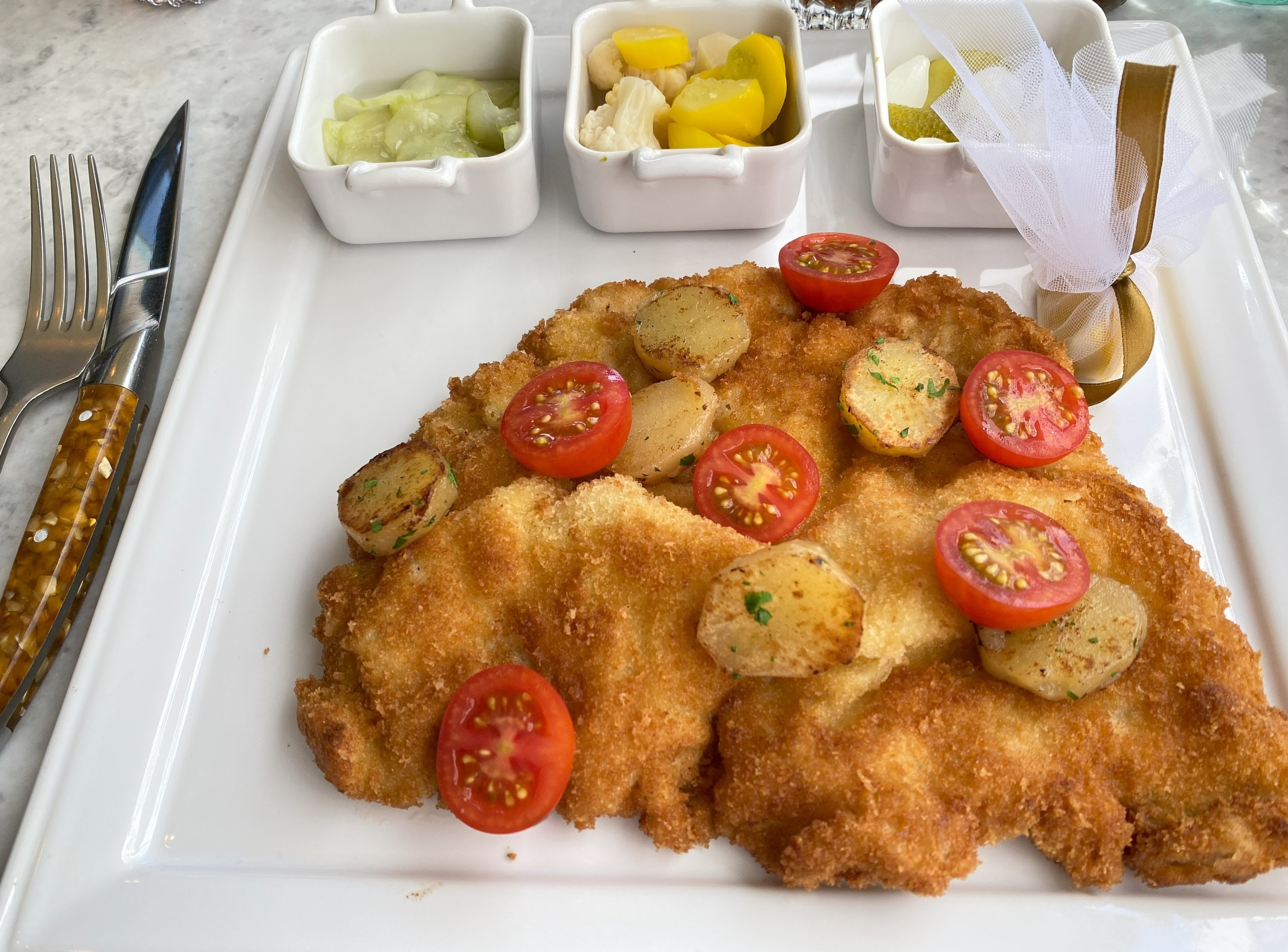
Set along the banks of the Danube, this stylish brasserie located in the Four Seasons Hotel is a favourite among both locals and visitors. Its menu highlights local ingredients and traditional dishes with a modern touch. Don’t leave without trying the schnitzel arguably one of the best in town.
Cafe Gerbeaud – Vörösmarty square
Dating back to the 1800s, Gerbeaud is a Budapest icon known for its decadent pastries and timeless charm. Situated in one of the city’s most beautiful squares, this historic café is often hailed as a must visit. Be sure to try traditional Hungarian cakes like Dobos, Esterházy, and Sacher tortes each a sweet slice of history.
Stand Restaurant
One of Budapest’s Michelin-starred gems, Stand is a serene haven of culinary sophistication nestled in a vibrant, youthful part of the city. Run by celebrated Hungarian chefs Szabina Szullo and Tamas Szell, the restaurant showcases Hungarian cuisine with a focus on seasonal, local ingredients.
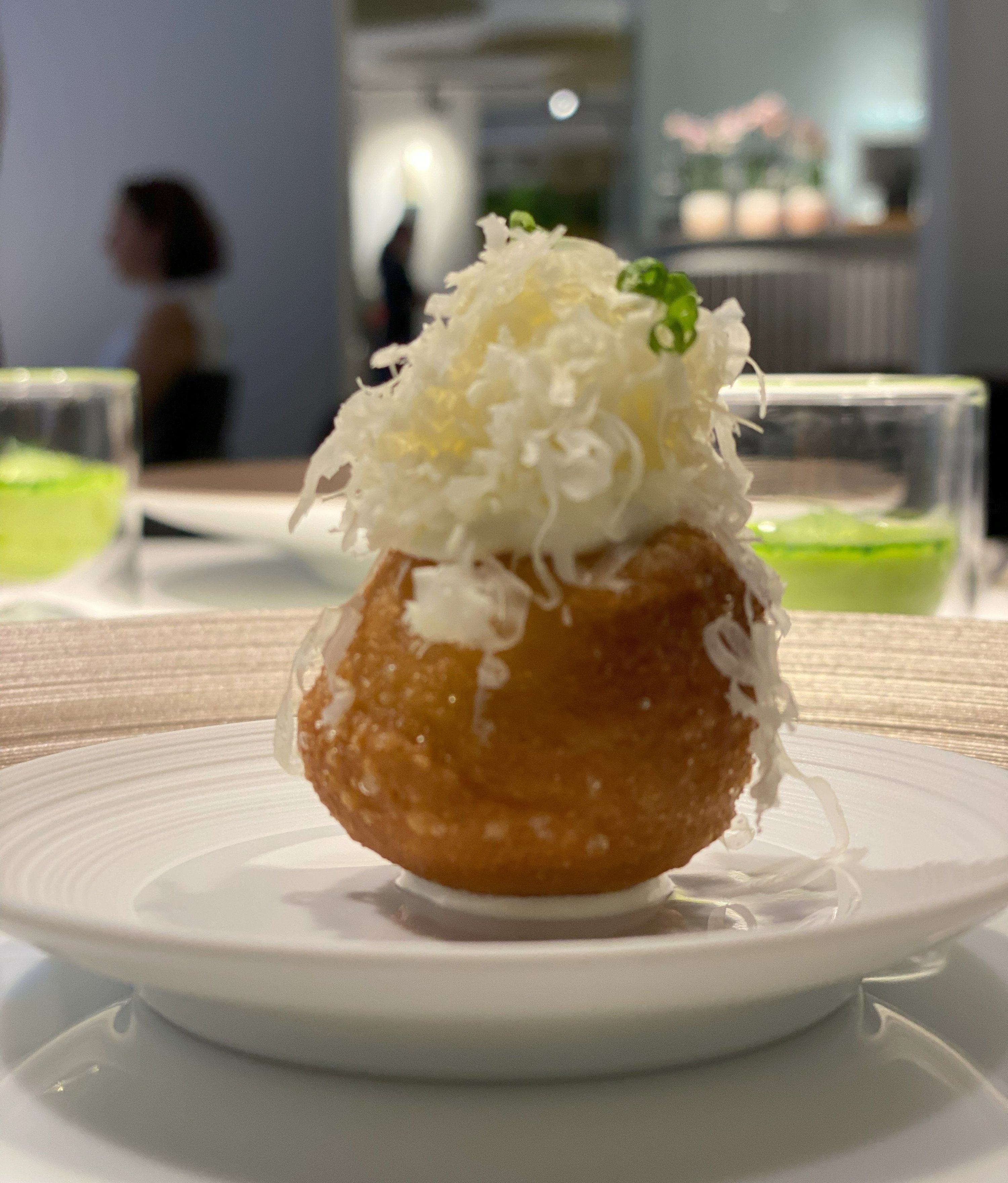
Choose between a six-course or eight-course tasting menu, with seatings typically at 6 p.m. or 7 p.m., as the full experience lasts around three to four hours and finishes close to 11 p.m. Every dish is a story served on elegant, traditional dishware with impeccable service.
Spago
Located within what’s arguably Budapest’s trendiest hotel, Spago by Wolfgang Puck is the city’s other Michelin-starred standout. Offering both lunch and dinner service, it’s a celebration of international and Hungarian flavors with signature dishes like the smoked salmon and caviar pizza, New York-style steak, lamb chops, cheese-filled ravioli and exquisite desserts. The ambiance enhances every bite, making it not just a meal but an event. Reservations are essential, especially for dinner, as this is where celebrities, politicians, and cultural figures queue up for a table.
Budapest is a city where every corner breathes with the spirit of a living fairytale. Whether you lose yourself in bustling streets or find serenity in Gellert’s steam, every moment is a magical encounter with history. As the sun dips behind the hills and lights flicker along the Danube, you hear a soft echo in your heart: “I, too, was here.” And know this each step you take in Budapest becomes another line in an unforgettable story.
A 190-year-old Greek Orthodox church in Kayseri, central Türkiye, whose restoration was completed last year, stands out for its striking wall paintings and is set to become part of the Cappadocia tourism circuit.
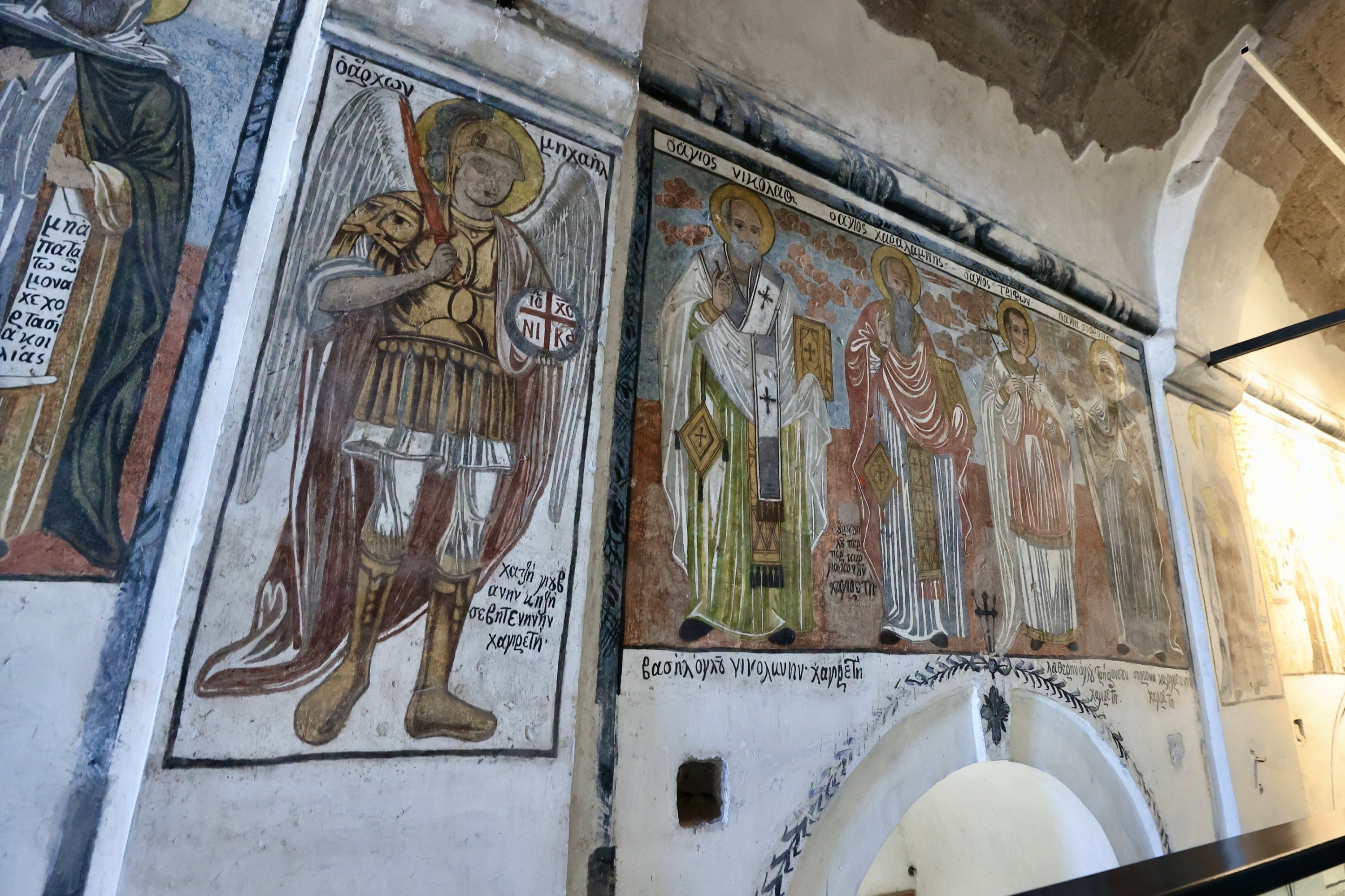
Built in 1836, the Church of St. Eustathios is an important historical and cultural landmark in Kayseri’s Incesu district and features numerous paintings and other remnants on its interior walls.
The three-aisled, vaulted church underwent restoration by the Kayseri Metropolitan Municipality in 2021. Its load-bearing walls and historic fabric were reinforced using materials and techniques compatible with the original structure.
The stonework and frescoes, or wall paintings, inside the church were preserved, while Karamanlı inscriptions – Turkish written in the Greek alphabet – depicting various scenes, as well as charitable endowment records, reliefs and carvings on the walls, were conserved and brought to light.
Restoration of the church was completed last year using archival photographs and documents as references to ensure the building remained faithful to its original appearance. The site, known for its distinctive wall paintings, will serve as the Incesu City Museum.
More than 80% of the exhibition and interior arrangement work has been completed. The church is also being prepared for inclusion in the Cappadocia tourism circuit, with nearby destinations such as Avanos, Ürgüp and Göreme located 45 to 50 kilometers (28 to 31 miles) from Incesu.
Tayfun Talaslı, head of the municipality’s Historical Buildings and Museums Branch Directorate, told Anadolu Agency (AA) that the three-aisled, vaulted church, built on a rectangular plan, is an example of classical Greek Orthodox architecture in Anatolia.
Talaslı said the building served as a place of worship until the 1923 population exchange between Greece and Türkiye, after which it was used for various purposes, including as a military warehouse, archive, theater and vocational school.
He said restoration work began toward the end of 2021 under a protocol signed between the Kayseri Metropolitan Municipality and Incesu Municipality and was completed last year.
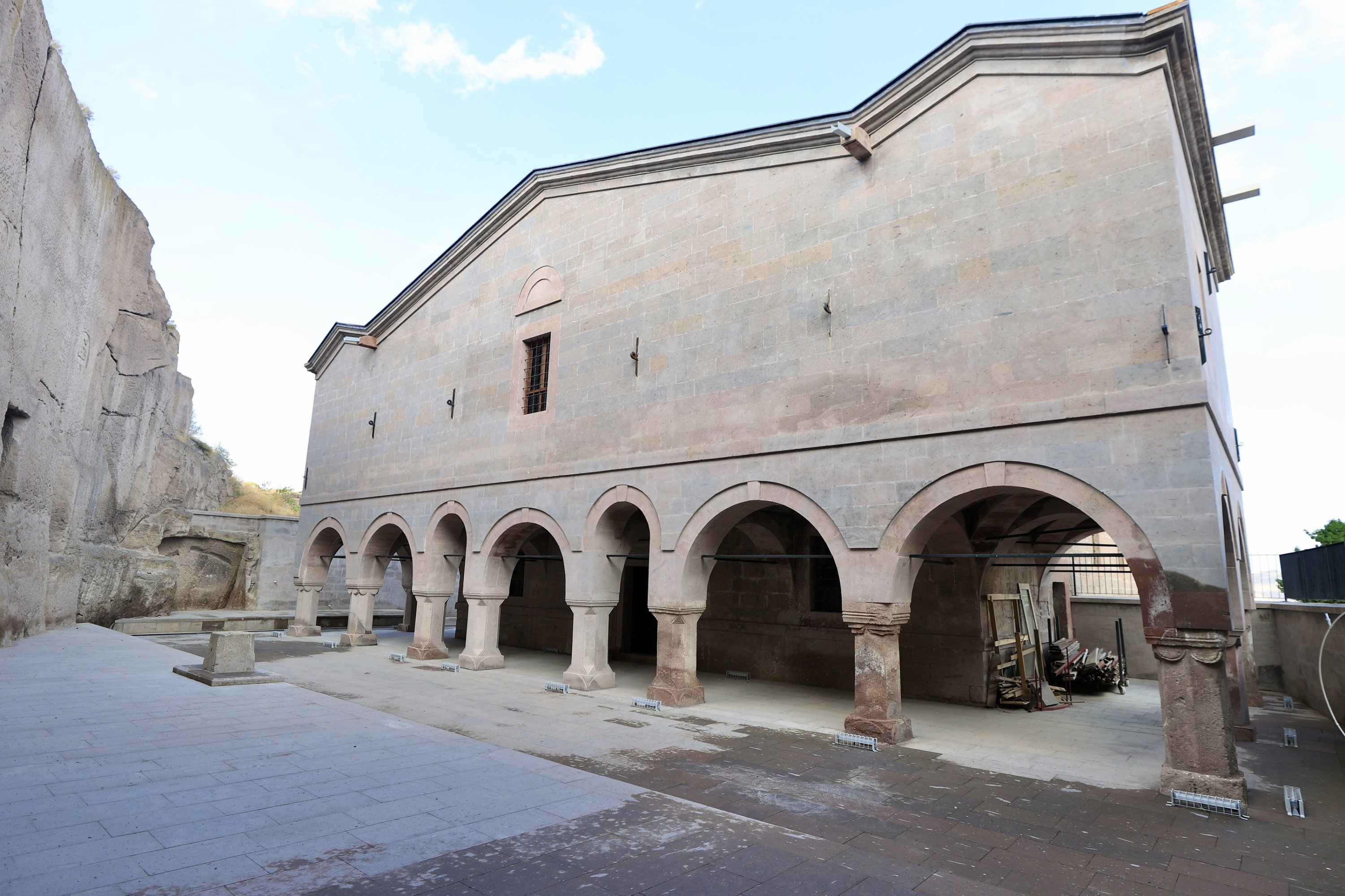
Talaslı emphasized that the main principle guiding the largely completed exhibition and interior arrangement work was to avoid causing any damage to the historic structure and said preserving the building’s original character was a top priority throughout the restoration.
“We used old photographs of the church as references during the restoration. We also based the project on art history reports that took into account the oral histories of people who once lived here,” he said.
He said the remaining work is expected to be completed soon, after which the museum will open to visitors.
“We are creating a museum on the ground floor of the building, which we have repurposed as the Incesu City Museum, focusing on the city’s tangible and intangible cultural heritage,” Talaslı said.
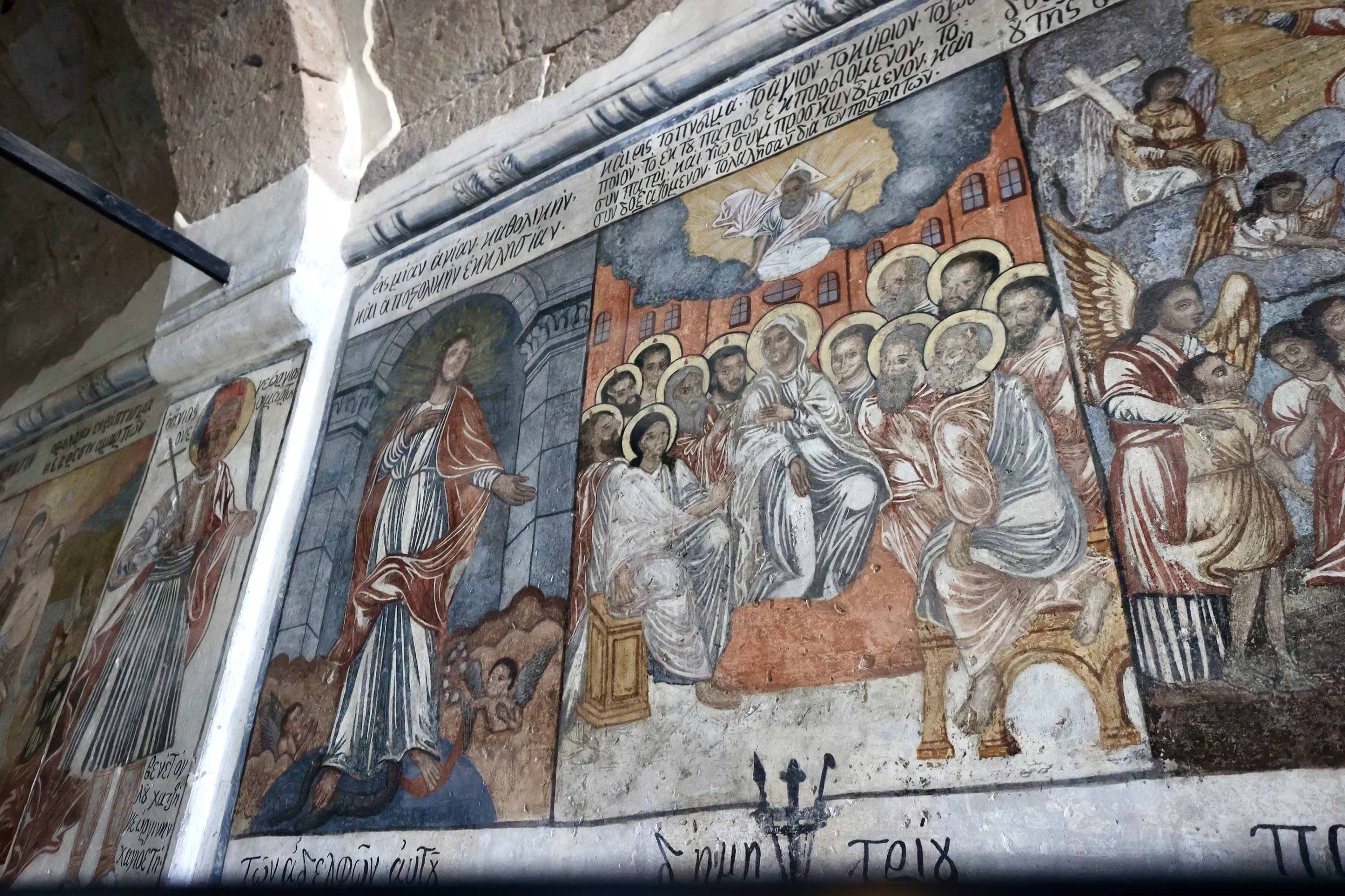
“Visitors will be able to trace Incesu’s history, learn about notable figures who were born here or left their mark on the city and explore its architectural heritage,” he said. “We will highlight a wide range of local treasures, from the Kara Mustafa Pasha Complex to the Roman-era milestone that has become one of the symbols of Incesu.”
Talaslı said visitors will also be able to see ceramics and other archaeological finds unearthed in Örenşehir, while the museum will offer a broader look at Incesu’s heritage, from its cuisine and population to the 1923 population exchange and the city’s historical development.
“We will cover everything from who the building was commissioned for to the area’s flora and fauna, geological structure, agriculture and grape production,” he said.

The Karaelmas Touristic Express, which operates between Ankara and Zonguldak, will return to the rails on Oct. 2, Transport and Infrastructure Minister Abdulkadir Uraloğlu announced, offering travelers a chance to explore the region’s natural, historical and cultural treasures by train.
In a written statement, Uraloğlu said the tourist train, launched by TCDD Transportation in cooperation with the Western Black Sea Development Agency (BAKKA) and the Zonguldak Provincial Special Administration, contributes to tourism-focused rail travel between Ankara and Zonguldak.
The train will begin this year’s service Oct. 2, Uraloğlu said.
The Ankara-Zonguldak service will depart on Oct. 2, 16 and 30 and Nov. 13, while trains traveling from Zonguldak to Ankara will depart on Oct. 3, 17 and 31 and Nov. 14.
Trains from Ankara to Zonguldak will leave at 11 p.m. on Fridays, while return services will depart Zonguldak at 11 p.m. on Saturdays. The train will have a total of seven carriages, including six sleeper cars and one dining car, with a capacity of 120 passengers.
The Karaelmas Express first operated as a tourist service in 2025, completing four outbound and four return journeys along the Ankara-Zonguldak-Ankara route, for a total of eight trips.
Since its inaugural journey, the train has offered passengers a different way to discover the Western Black Sea’s natural, cultural and industrial heritage, Uraloğlu said.
“For the 2026 schedule, passengers traveling from Ankara to Zonguldak will make sightseeing stops in Yenice, while those on the return journey will stop in Çankırı and Kalecik,” Uraloğlu said. “This journey, stretching from Yenice’s natural beauty and Zonguldak’s history to Çankırı’s cultural heritage and Kalecik’s local treasures, will bring rail travel and tourism together.”
Venice is looking at expanding its tourist entry fee, applying it for a longer period of the year and raising the daily charge to as much as €30 ($34), a senior official in the city government has said.
Budget and taxation councilor Michele Zuin said the current fee of €5 to €10 ($5.7 to $11.5 ) was too low to safeguard against overtourism, but said the new price for 2027 would have to be discussed and agreed with the government.
“The current €5-10 charge is affordable for virtually everyone; the risk is that it no longer has the deterrent effect that this measure is supposed to have,” Zuin told the Sunday edition of regional daily Il Gazzettino.
In remarks that were widely picked up by national media on Monday, the councillor said there was “even talk of (going up to) €50 ($57),” but added that authorities could settle for a maximum charge of €30.
The tourist fee, applicable only to day-trippers, was introduced in 2024, in a world first. Early bookers get to pay the lower rate and there are several exemptions, including for children under 14.
In 2026, it was operational on selected days from April 3 to July 26, from 8.30 a.m. to 4 p.m., and brought into city coffers more than €5.2 million ($5.9 million) from the sale of just under 680,000 entry tickets.
In a city that has long suffered from overtourism and depopulation, local officials say the scheme is meant to encourage visitors to avoid the most crowded periods of the year, such as the May Day public holiday.
Tokyo tourist hot spot Shinjuku will impose a ban on more than half of its holiday rentals, including homes on Airbnb, an official said Monday, after a surge in complaints about visitors.
Known for its buzzing commercial and entertainment district, the ward hosts nearly 10% of Japan’s 42,000 short-term rentals.
But it also has a large residential population, who have become increasingly exasperated with tourists who fail to properly dispose of rubbish, smoke where they’re not supposed to, and make too much noise.
A Shinjuku official supervising holiday rentals told Agence France-Presse (AFP) that the district was “planning to revise the current ordinance … to ban private lodging” in residential zones and areas near schools.
“As the number of private lodging businesses has risen, complaints and troubles around them have increased,” the official said on customary condition of anonymity.
More than 50% of short-term rentals in Shinjuku face a ban under the new rules, he said, adding that the plan would formally be announced by the Shinjuku mayor on Tuesday.
Shinjuku’s policy will apply to existing properties, he added.
The move comes as other cities around the world attempt to crack down on private lodgings available on Airbnb and other platforms, including New York City and Barcelona.
Like elsewhere, overtourism has emerged as a major issue in Japan.
Residents of Kyoto and other hot spots have expressed annoyance at selfie-taking crowds as well as traffic congestion and soaring land prices.
In Shinjuku, the number of complaints over vacation rentals increased by around 40% in the fiscal year to March, the official said.
“Many complaints are about the violation of trash disposal rules while others include smoking and trespassing,” he said.
Shinjuku’s ban comes after the Japan Tourism Agency in July gave municipalities the right to regulate short-term lodgings if “a tranquil living and educational environment” is under threat or if they “hinder the maintenance of a permanent population and local community.”
Japan’s ancient capital of Kyoto is also considering a ban on short-term lodging, but only for new rentals within residential and industrial areas.
Several Airbnb hosts contacted by AFP declined to comment.
Visitors to Hasankeyf, one of southeastern Türkiye’s major tourism destinations, are exploring the district’s historic and natural attractions through boat tours on the Ilısu Dam reservoir.
Located in Batman province, Hasankeyf is considered one of the world’s oldest settlements and continues to attract visitors with traces of civilizations that have shaped the region over centuries.
The district is known for historic landmarks including the Imam Abdullah Tomb, Zeynel Bey Tomb, Artuqid Bath, Hasankeyf Museum and Er-Rızk Mosque. The Ilısu Dam reservoir has also given the area a new character, offering visitors an opportunity to experience its landscape from the water.
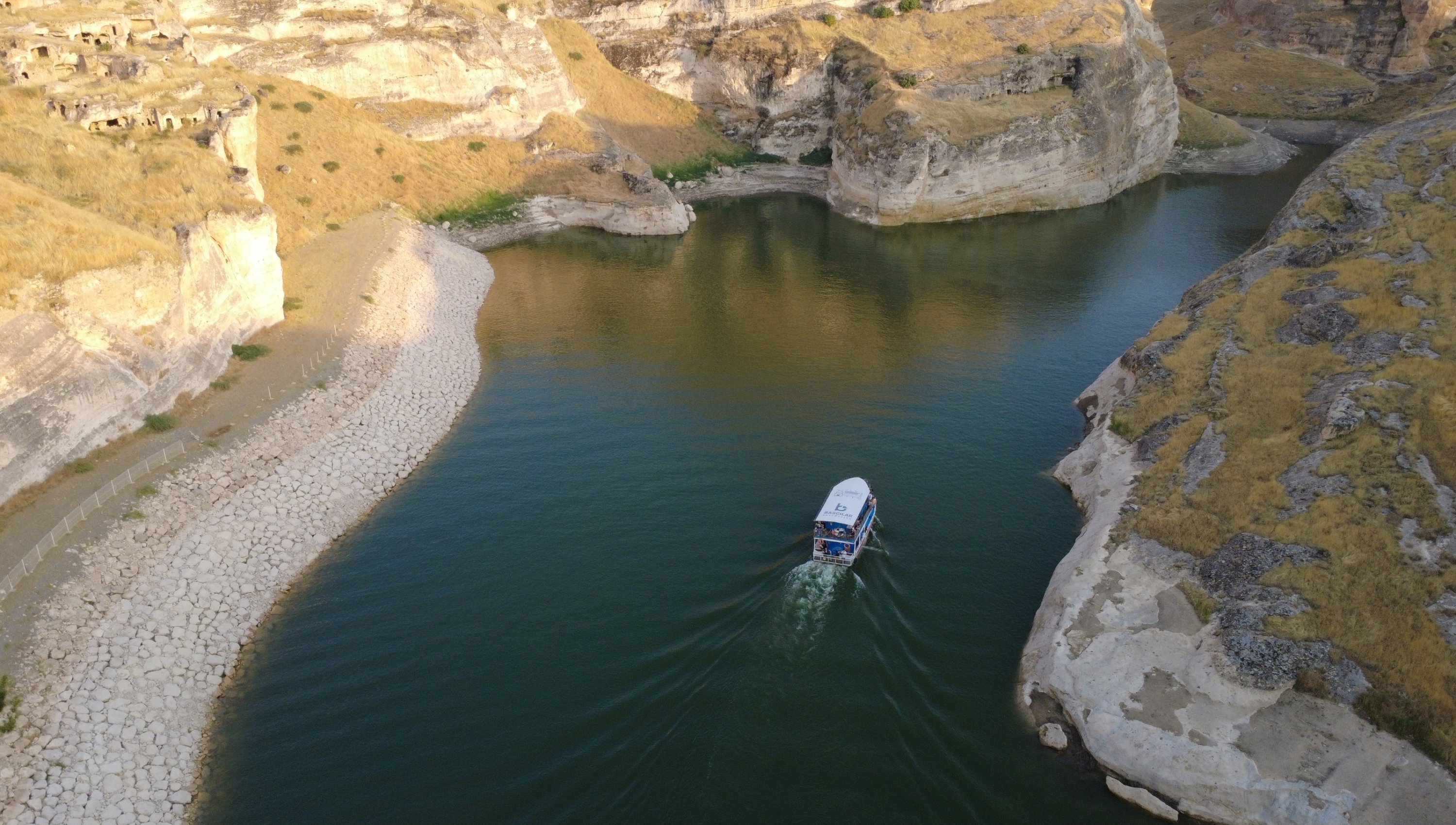
Domestic and international tourists visiting Hasankeyf can tour its historic sites before taking boat trips across the reservoir to see its canyons and Hasankeyf Castle.
Before setting off, guides brief passengers on safety rules and provide information about the historic castles, caves and canyons along the route. The boat tours last about an hour, allowing visitors to take in the area’s natural and historic scenery.
‘The boat tour was excellent’
Mustafa Yıldız, who traveled from Manisa as part of a tour of the southeastern Anatolia region, said his group visited Hasankeyf after stopping in Gaziantep, Şanlıurfa and Mardin.
“I really liked Hasankeyf. The boat tour was especially excellent. We really enjoyed seeing the canyons and caves,” Yıldız told Anadolu Agency.
Ramazan Kızar, who traveled from Batman to visit the district, said Hasankeyf was an important destination for cultural and historical tourism.
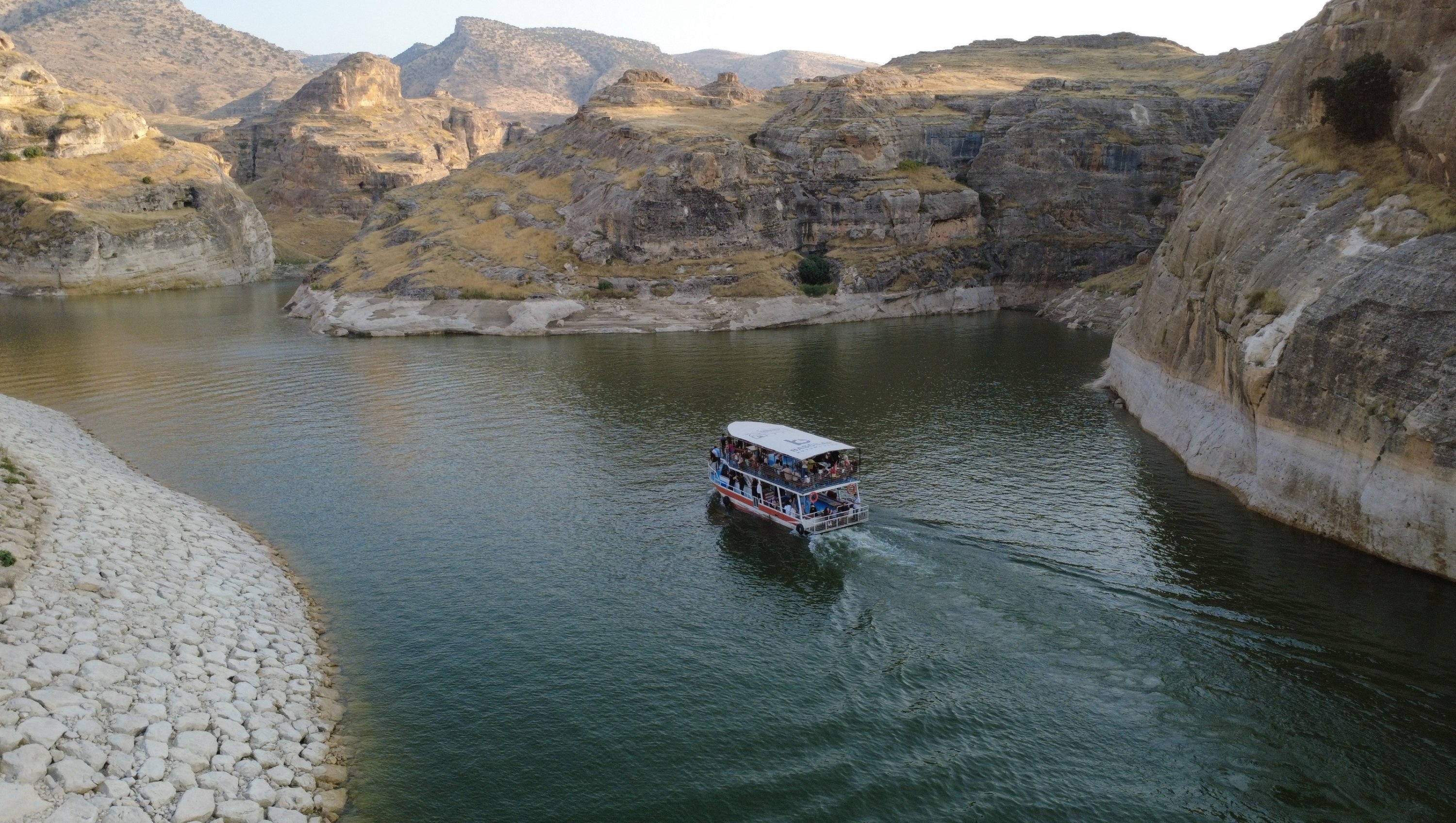
Kızar said the boat tour gave him the chance to see the historic castle and canyons.
“Thanks to the boat tour I took with my daughter and wife, we are exploring Hasankeyf’s unique beauty,” he said.
52,000 visitors take boat tours
Şehmus Batıhan, a captain and member of the Hasankeyf Kale Tourism Cooperative, said the cooperative operates eight boats offering tours of the reservoir.
Hasankeyf becomes particularly busy with domestic and international visitors during the summer months, Batıhan said, adding that the boat tours have brought additional activity to the district alongside its historic sites.
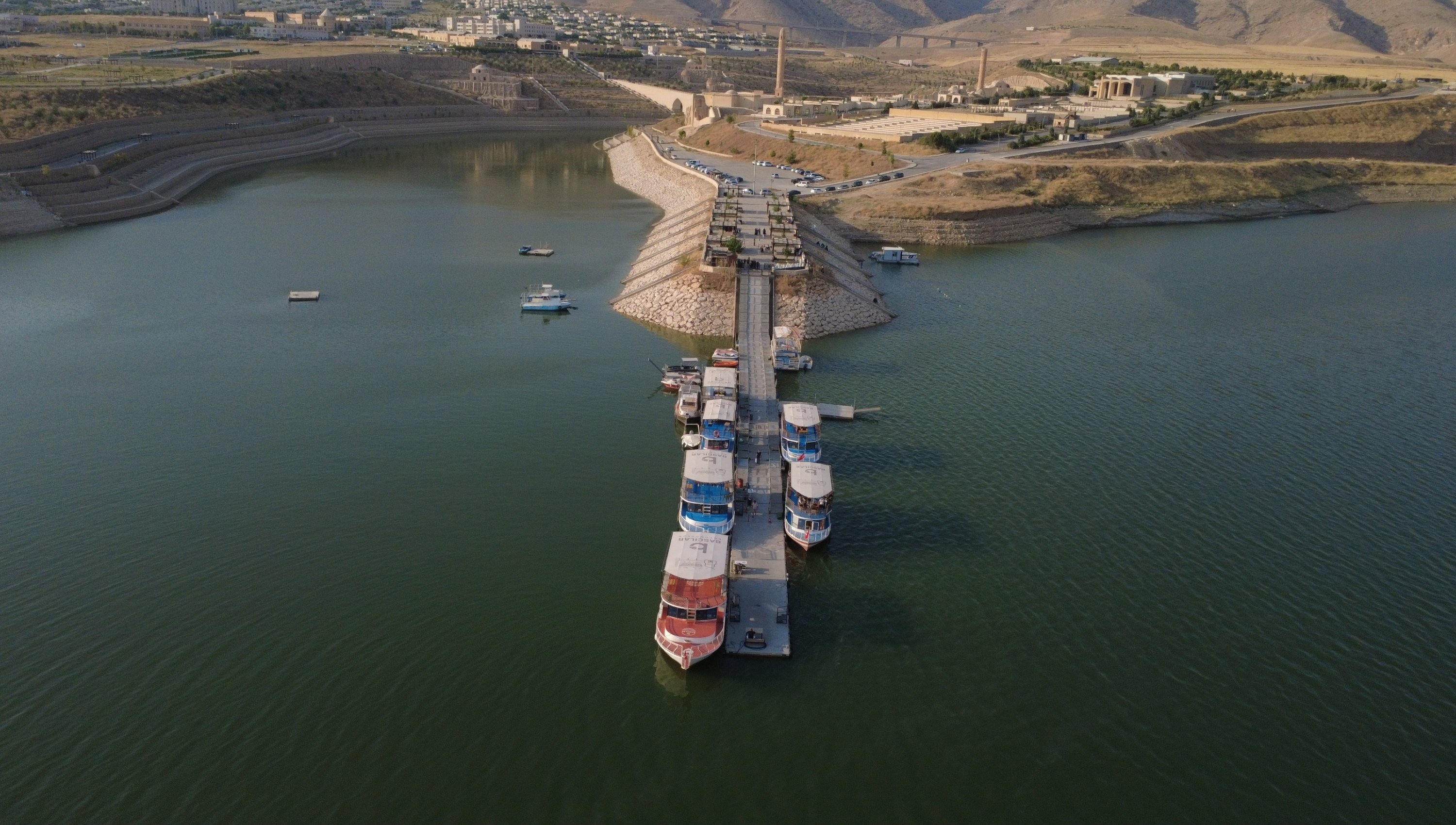
Visitors are picked up at the harbor and taken on a tour covering the area where the old settlement once stood. The tours last approximately one hour, he said.
“About 52,000 guests have taken advantage of the boat tours in the past eight months,” Batıhan said. “We also provide our guests with information about Hasankeyf’s history during the tours.”
He added that many visitors from European countries join the boat trips.
“Visitors can see many important historical works here and they really enjoy the boat tours,” Batıhan said.
Bosnia’s capital, Sarajevo, is enjoying a robust summer season, with concerts, cultural events and its internationally renowned film festival drawing visitors from across Europe and beyond.
More than 100,000 tourists visited the capital of Bosnia-Herzegovina in July, according to the Federal News Agency, as the city increasingly attracts travelers for its music, cinema, gastronomy and natural attractions alongside its historical heritage.
Three concerts by regional music star Dino Merlin at Kosevo Stadium in late July and early August attracted more than 200,000 people in total.
Visitors traveled from across the Balkans and other parts of Europe, putting hotels and private accommodation under significant pressure.
Sarajevo recorded nearly 78 million euros ($91 million) in fiscal turnover during the three concert days, with restaurants, cafes, shops and transportation companies benefiting from the influx.
The concerts were followed by a performance by British electronic music group The Prodigy on Aug. 13 and by the opening of the 32nd Sarajevo Film Festival (SFF) the following day.
Established in 1995 during the final year of the siege of Sarajevo, the festival has developed into one of southeastern Europe’s leading film events. This year’s guests included Woody Harrelson, Emily Watson, Pawel Pawlikowski, Diego Luna, Asghar Farhadi and Celine Sciamma.

In addition to these entertainment and cultural events, Sarajevo offers a blend of Ottoman and Austro-Hungarian architecture, along with landmarks linked to the assassination of Archduke Franz Ferdinand and sites preserving the memory of the 1992-1995 siege.
Its proximity to the Olympic mountains of Trebevic, Bjelasnica, Igman and Jahorina also allows travelers to combine a city break with hiking, cycling and winter sports.
Major events are becoming increasingly important for Sarajevo’s tourism economy by attracting new visitors, extending stays and boosting spending across the city.


-

 Sports3 days ago
Manchester City stare down barrel after reported guilty verdict
-

 Politics3 days ago
Turkish diplomat Güllüoğlu appointed to senior UN posts
-
 Economy2 days ago
Türkiye’s jobless rate falls to 7.8% in August
-

 Politics2 days ago
Türkiye’s CHP expels member caught with underage girl in China
-

 Economy3 days ago
China’s shift away from US puts pressure on Turkish exporters
-

 Economy3 days ago
Türkiye’s premier aviation, tech festival Teknofest kicks off
-

 Sports2 days ago
Manchester’s streets react with shock to City’s financial scandal
-

 Politics2 days ago
Former mayors among arrested in major ops against corruption in Türkiye