
Economy
Canada hits US goods with up to 50% tariffs as trade war deepens

Canada announced retaliatory tariffs of 15% to 50% on a range of U.S. goods Tuesday, escalating a trade dispute between the longtime North American allies.
Ottawa’s retaliation will take effect Sept. 8, a timeframe earlier outlined by Prime Minister Mark Carney after U.S. President Donald Trump’s 50% duties came into place Saturday.
Canadian officials said Tuesday that the retaliatory tariffs will match U.S. levels, with impacts on industries including steel, dairy and electronics.
Canada’s government also announced a $5.4 billion (CA$7.5 billion) aid package for impacted firms and workers.
“This is an unprecedented challenge imposed on Canada. But Canada will meet the moment,” Finance Minister Francois-Philippe Champagne said.
“I think what Canadians can see this morning is that we stand united,” he added. “Canada must respond and today we are, in a proportionate, targeted and strategic way.”
Industry Minister Melanie Joly echoed Champagne’s call for Canadians to support local businesses, while vowing to work with new allies and trading partners.
“We cannot wait for Washington to decide our future,” she said.
The steep U.S. tariffs hit about $20 billion in Canadian goods – about 5.5% of its exports to the United States – after trade negotiations collapsed at the eleventh hour.
Under Canada’s planned response, US steel and aluminum products previously subject to a 24% duty will soon face 50% tariffs.
Goods facing 25% tariffs will include appliances, dairy products like cheese, as well as certain steel and aluminum derivative products.
A small category will see a 15% duty, including electric equipment and tools.
Overall, these form about 7.3% of Canada’s imports from the United States.
But analysts warn of tit-for-tat escalation.
Already on Monday, Trump pledged to double tariffs on Canadian autos starting next year, up to 50% from the current 25% for non-U.S. content.
Ontario Premier Doug Ford criticized Trump’s threat on autos, saying he could “kiss my ass” and threatening an electricity export surcharge.
Trump lashed out at Ford, warning of “far worse” consequences. He also referred to Carney as a “governor,” re-upping his inflammatory push for Canada to become the 51st U.S. state.
Highlighting the animosity, Trump said Tuesday he was considering renaming Lake Ontario as “Lake America,” as he did last year with the Gulf of Mexico, which he ordered to be called the “Gulf of America.”
Trump’s latest tariffs do not exempt products covered by the U.S.-Mexico-Canada free trade agreement (USMCA). They raise the U.S. effective tariff rate on Canadian exports to 6.9% from 5.1%, Oxford Economics estimates.
Tariffs on plastics, electrical machinery, and wood and paper products contribute most to the increase.
“Manufacturers in Quebec, New Brunswick, and Ontario will be affected the most,” Oxford Economics said.
Over the weekend, Carney said U.S. negotiators sought restrictions on Canadian trade deals with other countries at the last minute.
U.S. officials made unacceptable “threats” to the French language and “Quebec culture” too, he added, referring to eastern Canada’s French-speaking province.
Trump pushed back Tuesday, saying on Truth Social that he would “never interfere with Canadians speaking French” and accusing Carney of lying to “gain political support.”
The United States is Canada’s biggest trading partner, with Canadian exports to its neighbor representing 70% of its overall total.
Canada is the second biggest U.S. trading partner in goods this year, behind Mexico.
Polling released Sunday by the Angus Reid Institute showed Canadians broadly support Carney’s move to walk away from talks, but some fear economic repercussions.
The White House had alleged “discriminatory treatment” by Canada against U.S. alcohol, automobile and dairy products in rolling out new tariffs.
Trump delayed their implementation, but both sides failed to reach an agreement after hours of talks.
Beyond tariffs, Washington and Ottawa also have to agree on revisions to the USMCA, which Trump declined to renew in its current form.

Fifty-four provinces in Türkiye recorded year-over-year increases in exports in the first seven months of the year, while 22 surpassed $1 billion (TL 48.10 billion) in shipments, the Trade Ministry said Tuesday.
Türkiye’s total exports rose 2.9% on an annual basis to $25.6 billion in what marked the highest-ever July shipments. In the January-July period, exports grew 3.4% to $161.6 billion.
Istanbul remained the country’s largest exporting province last month, with exports of about $5.9 billion, although its shipments fell 0.6% from a year earlier, the data showed.
The northwestern Kocaeli ranked second with almost $3.4 billion, down 1%, followed by the western Izmir with nearly $2.1 billion, up 6.9%.
Precious and semi-precious stones were Istanbul’s largest export category, generating $968.3 million. Knitted clothing and accessories followed with $517.2 million, while boilers and machinery accounted for $498 million.
Istanbul’s largest export market was the U.S., with shipments worth $406.7 million, followed by Germany at $352.6 million and the United Arab Emirates (UAE) at $344 million.
In Kocaeli, motor vehicles were the leading export category at $1.2 billion, followed by mineral fuels and oils at $335.9 million and electrical machinery and equipment at $334.8 million.
Germany was Kocaeli’s largest export market at $339.1 million, followed by the U.K. with $334.1 million and the U.S. with $169.6 million.
Mineral fuels and oils led Izmir’s exports at $351.3 million, followed by motor vehicles at $233.8 million and boilers and machinery at $212.5 million.
Germany was Izmir’s largest export destination at $191.9 million, followed by the U.S. at $128.5 million and Niger at $119.7 million.
Southern Mersin posted the largest increase in export value among provinces last month, with exports rising by $194 million from a year earlier.
Izmir ranked second with a $135 million increase, followed by southern Antalya with a $129 million rise.
Iran pledged Tuesday to retaliate against expanded U.S. sanctions intended to isolate its economy, expressing confidence that key trading partners would withstand pressure from Washington.
Almost six months into a conflict the U.S. has struggled to resolve, Treasury Secretary Scott Bessent unveiled the measures Monday but stopped short of the most punishing sanctions.
While he said countries that continued trading with Iran risked being forced out of the dollar-based financial system, he declined to give a timeline or identify which may be targeted, saying he would give them time to comply with the new directive.
“Why would I want to blow up the global financial system?” he said when asked why the measures had not gone further.
The Treasury Department did announce new sanctions on 60 individuals, entities and vessels, but the list did not feature any of the Chinese financial institutions suspected of facilitating Iran’s oil trade.
“We want to make clear here today that no one is above the reach of U.S. sanctions,” Bessent said in response to a question about Chinese banks.
China has been the biggest buyer of Iranian oil for several years, although the U.S. blockade of Iran’s ports has cut Iranian oil flows to China since Washington renewed it in mid-July.
Experts say Washington is wary of Chinese retaliation for any sanctions on its banks ahead of expected talks next month between President Donald Trump and Chinese President Xi Jinping, with any curbs on China’s exports of critical minerals especially sensitive.
China said Tuesday that its cooperation with Iran is conducted within the framework of international law and should not be interfered with or disrupted.
Oil prices fell for a second day as traders brushed off the impact of the sanctions, although market participants remained wary of Iran’s continued ability to disrupt shipping.
Oil tanker struck near Strait of Hormuz
An oil tanker was struck Tuesday by an unidentified projectile and disabled about 9 nautical miles (17 kilometers) northeast of Oman’s Ash Shishah, which lies at the entrance to the Strait of Hormuz, the United Kingdom Maritime Trade Operations said.
Before news of the latest sanctions, Iran threatened both a possible military response and further reduction in oil exports from the Gulf in retaliation for any U.S. economic measures.
After they were unveiled, Iranian Economy Minister Ali Madanizadeh said that Iran was prepared.
“Our defense is no longer so defensive; the enemies should wait for an attack,” he told state television. Neither China nor Russia had “accepted” the U.S. measures, he added, predicting that other countries would resist them.
Brig. Gen. Hossein Mohebbi, a spokesperson for Iran’s Islamic Revolutionary Guard Corps, vowed heavy blows to U.S. vital interests and energy chokepoints if Iran’s infrastructure is threatened, Press TV reported.
Iran and the United States signed an interim deal in June aimed at ending the war that began with U.S. and Israeli attacks on Iran in February, but it quickly faltered and Iran resumed attacks which have blocked most energy exports from the Gulf.
Mediator Pakistan made “significant progress” in the latest talks with Tehran that focused on preventing further escalation and the reopening of the Strait of Hormuz, the Pakistani military said Tuesday.
“We had a very constructive exchange,” Pakistani Interior Minister Mohsin Naqvi, who accompanied army chief Asim Munir to Tehran, said on the social media platform X.
An official at the Iranian president’s office, Mehdi Tabatabaei, said on X that Munir’s visit to Iran “yielded highly valuable diplomatic achievements, the results of which will soon be revealed.”
Little sign of diplomatic solution
Despite no major strikes by either side in weeks, there is little sign of a diplomatic solution.
Iran has spent decades under layers of U.S. and international sanctions that have battered its economy but have not deterred its leadership.
U.S. public approval of the war fell to its lowest level since the conflict’s early days, with Trump’s popularity at a record low ahead of congressional elections in November, a Reuters/Ipsos poll that closed Monday showed.
Oil transits through the Strait of Hormuz were at 5 million barrels per day Monday, provisional tracking from shiptracker Vortexa showed, down from more than 20 million per day before the war or about one of every five barrels consumed worldwide.
Thousands of people have died in the conflict, most of them in Iran and Lebanon, while much of Iran’s conventional military capacity has been degraded, its economy is struggling and then-Supreme Leader Ayatollah Ali Khamenei was killed.
But Iran is still able to attack Gulf neighbors and threaten oil tankers. The exact state of its nuclear program, which the U.S. and Israel aim to wipe out, remains unknown.
The price of corn surged to $5.2425 per bushel in global markets, hitting the highest level in about three years amid the El Nino weather phenomenon, dry conditions and rising geopolitical risks, including the Russia-Ukraine war.
Price movements in grains came to the fore due to El Nino, with sharp hikes in corn prices.
Corn previously reached $5.2450 on July 31, 2023.
Corn rose more than 11% compared with the end of July and increased more than 17% compared with the end of December 2025.
The bushel price of corn later stabilized at around $5.18.
Growing concerns over crop yields in the U.S. fuel expectations of tighter supplies and drive up corn prices, while rising U.S. corn exports contribute to the price increase.
Hot and dry weather in some corn-producing regions of the U.S., adverse weather in Europe and ongoing grain shipment disruptions in Ukraine fuel concerns over the global corn supply.
The corn harvest in the American Midwest came in lower than expected, while Russian and Ukrainian attacks on each other’s shipping routes halted grain exports.
While weather conditions threaten production, geopolitical disruptions pose risks to crop deliveries, and given the already high energy and fertilizer costs, the margin for offsetting additional supply shocks narrows.
Waning expectations of Federal Reserve (Fed) rate hikes and falling demand for the U.S. dollar also continue to drive up commodity prices.
Zafer Ergezen, a futures and commodities expert, told Anadolu Agency (AA) that El Nino’s effects began to be seen in June, especially in South America, Southeast Asia and Australia, and to a somewhat lesser extent in the U.S. and Europe.
“We’re seeing a serious impact of the weather phenomenon in West Africa,” he said. “There were concerns over a decline in corn yields, especially in Brazil, the U.S., and Southeast Asia.”
Ergezen stated that oil prices also contributed to the rise in corn prices as demand for corn used in biodiesel production climbs when oil prices rise, while around 60% of the corn produced across the globe is used for industrial purposes.
The combined effects of El Nino and high oil prices were instrumental in raising corn prices.
“El Nino will continue until the beginning of next year, and if oil remains at these levels, we may see even more upward movements in corn,” he said.
“As long as oil prices don’t decline and there isn’t a lasting peace deal between the U.S. and Iran, I don’t expect a deep pullback in corn prices,” he added.
Türkiye’s central bank reserves are projected to have increased last week to their highest level in five months, bringing the rebound since late June to nearly $40 billion, according to calculations.
The total reserves of the Central Bank of the Republic of Türkiye (CBRT) rose by an estimated $5.3 billion in the week ending Aug. 21, reaching $188.8 billion, calculations by Matriks Haber showed.
Total reserves stood at $183.5 billion in the previous week. The latest increase extends the recovery that began after reserves fell to a roughly six-month low in late June.
Reserves had dropped to $149.2 billion in the week ending June 26, before recovering to $164.4 billion by the end of July. The pace of the rebound accelerated in August, with reserves rising to $178.4 billion on Aug. 7 and $183.5 billion a week later.
The latest increase would bring total reserves to their highest level since the week ended March 13.
Rebound since June
The estimated figures show that reserves have increased by about $39.6 billion from their June 26 low.
The recovery has been particularly strong over the past four weeks, with reserves gaining about $10.4 billion between July 31 and Aug. 21.
CBRT total reserves had reached a record $218.2 billion in late January.
The figures for the last week are scheduled to be published Thursday.
Türkiye’s Treasury and Finance Ministry has completed its assessment and preliminary work on measures aimed at redirecting short-term capital flows concentrated in money market funds toward longer-term and productive investments, a report said Tuesday.
The ministry is reportedly preparing to impose a 10% withholding tax on gains earned by corporate investors from money market funds, the report by private broadcaster Bloomberg HT said, citing sources familiar with the matter.
The move would form part of the government’s efforts to limit the risks associated with short-term capital inflows and encourage capital to remain in Türkiye for longer periods and contribute more directly to investment and production.
According to the report, the proposed measure would apply to gains from money market funds earned by both resident Turkish corporate taxpayers and nonresident corporate taxpayers.
Turkish taxpayers would reportedly be able to offset the withholding tax against their provisional corporate tax liabilities. For foreign corporate investors, however, the withholding tax would serve as the final tax, the report said.
The withholding tax on gains earned by resident and nonresident individual investors from money market funds is not expected to change. Under the reported plan, the existing 17.5% withholding tax for individuals would remain in place.
That would leave the proposed new regime focused specifically on corporate investors, including foreign institutions using money market funds for short-term investments.
The proposed regulation is expected to apply only to gains accrued after the decision is published, rather than retroactively taxing earlier gains.
Under the example cited by Bloomberg HT, a corporate investor that purchased a money market fund one month before the decision was published and sold it two months afterward would only be subject to the 10% withholding tax on the gain attributable to the two-month period following publication.
The reported proposal comes after the Treasury and Finance Ministry began examining the growing concentration of short-term capital in money market funds and the role of institutional investors in those funds.
The broader objective is to make capital flows into Türkiye more permanent and channel a greater share toward long-term, productive investment.
Consumer goods giant Unilever is betting that cutting off food assets and focusing instead on beauty, personal care and home products would close a valuation gap with more focused rivals.
The challenge is convincing investors that a simpler company can deliver higher returns.
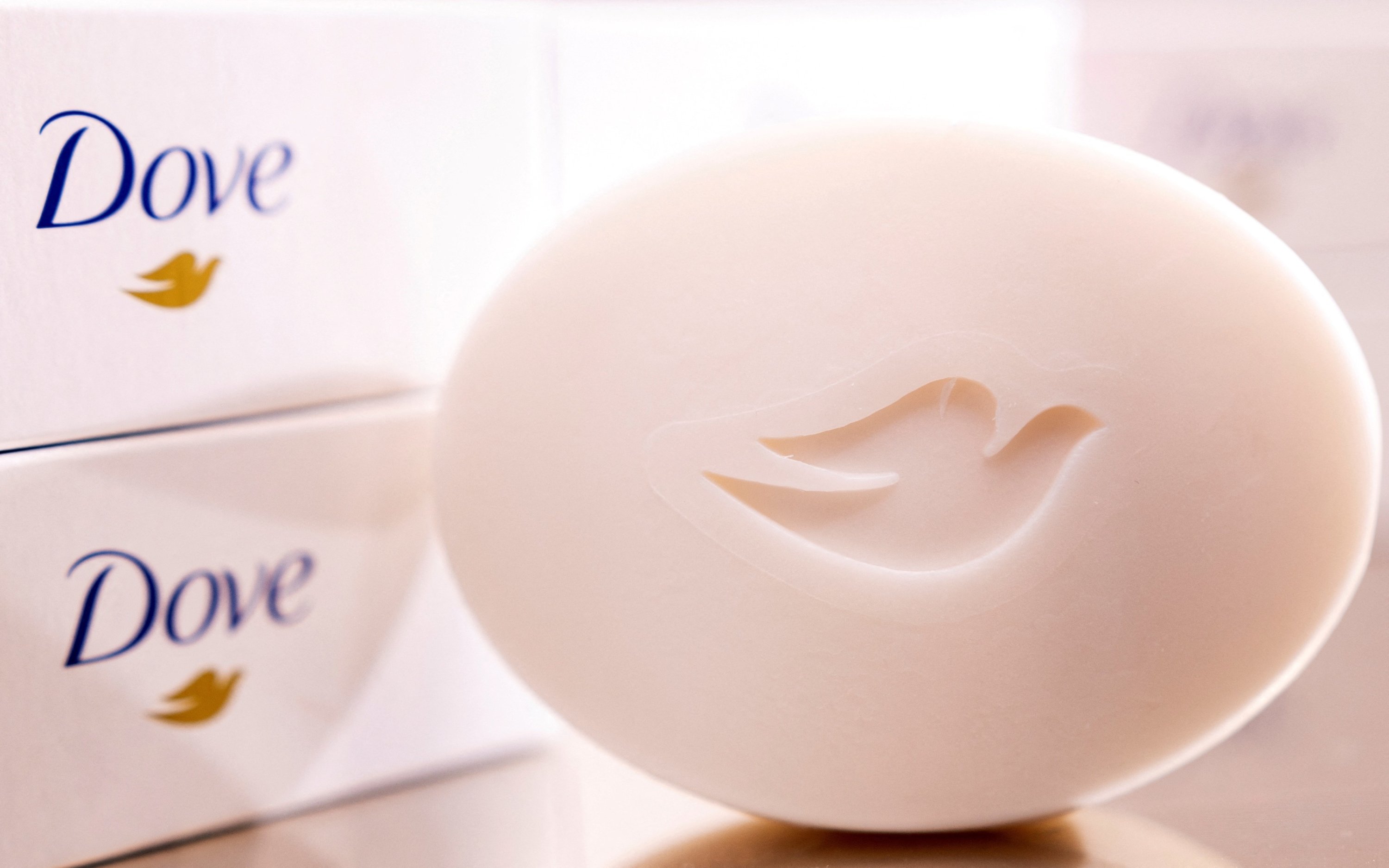
The maker of products such as Dove soap, Axe deodorant and Cif cleaning products trades at 11.5 times enterprise value to core earnings, according to LSEG data. That compares with 14.8 for Procter & Gamble (P&G), 17.5 for L’Oreal and 22.7 for Coca-Cola.
Those multiples suggest investors place a premium on more focused consumer goods companies.
But investors have two main concerns.
Unilever’s deal in March to merge its food business with U.S. spice maker McCormick will leave the British group with an almost 10% stake in the combined company, and its shareholders with a roughly 55% stake.
At the same time, the transaction reduces Unilever’s exposure to a relatively high-margin business, increasing pressure on management to show that faster-growing beauty, personal care and home products can make up the difference.
“Until you show me the evidence that you’re turning this around, you’re sitting on a very low multiple,” said Dan Hanbury, a portfolio manager at Ninety One, a major investor in Colgate-Palmolive, Unilever and L’Oreal.
The market is wary of “false dawns” from corporate turnarounds, he added, saying Unilever probably needed three or four quarters of strong volume growth to win over doubters.
The P&G example
Big industrial companies from General Electric to Siemens have spent years simplifying their structures in an effort to eliminate what investors call a conglomerate discount, a penalty applied to companies whose complexity is seen as weighing on efficiency and growth.
That thinking has increasingly spread to consumer goods companies. Where diversification was once seen as a strength that could cushion changes in consumer tastes, investors now increasingly favor category leaders that can focus investment, innovation and marketing on a narrower set of products.
Under CEO Fernando Fernandez, Unilever has accelerated its retreat from food. The company spun off its ice cream business, and in March struck a roughly $65 billion deal to combine its food division with McCormick.
The issue is not that food is unprofitable. The business has historically generated attractive margins, but growth has lagged Unilever’s beauty and personal care operations.
“Being focused on a single category allows you to be more cost-effective and more innovative,” said Akeel Sachak, global head of consumer at Rothschild & Co.
Investors often point to Procter & Gamble as a template. The Tide detergent maker exited food and streamlined its brand portfolio, subsequently delivering stronger growth and earning a valuation premium for much of the following decade.
“P&G pulled off the restructuring, drove higher growth and commanded a relatively higher premium for probably 10 years,” Hanbury said.
Improving results
Investors and analysts say the focus for Unilever has now switched from portfolio reshuffling to execution.
“If (Unilever) continues to execute, Unilever will continue to see a degree of re-rating … and then hopefully grow from there,” said Will James, portfolio manager at Guinness Global Investors, which holds shares in Unilever and L’Oreal.
Unilever has reported improving results in recent quarters, and in July said sales volumes had reached their highest level in more than a decade.
Yet despite the operational improvement, some Unilever investors are concerned about their continued exposure to the slow-growing food category via their stake in the company, resulting from the McCormick merger, Barclays analyst Warren Ackerman said.
Unilever declined to comment.
CEO Fernando Fernandez told an industry event in June: “I believe that every quarter that goes by, and we deliver the numbers that we have been delivering, and we get closer to the closing of a transaction of McCormick, the value of Unilever will be shown.”


-
 Economy2 days ago
At 55, China-Türkiye ties expand beyond trade into strategic co-op
-
 Economy1 day ago
Turkish central bank resumes repo auctions after nearly 6-month pause
-
 Politics2 days ago
Erdoğan targeted for standing up to Netanyahu’s genocide: AK Party spox
-

 Sports1 day ago
Ceferin dismisses FIFA bid as Infantino woos poorer associations
-

 Politics2 days ago
8 nations reject Israel’s E1 settlement plan, urge sanctions
-

 Politics24 hours ago
Netanyahu clings to anti-Türkiye campaign amid Likud’s decline
-

 Politics1 day ago
Verdict likely due in cases of corruption linked to CHP mayors of Türkiye
-

 Sports2 days ago
Goodbye Goldilocks: Man City’s Erling Haaland debuts new haircut