Cappadocia has long been one of Türkiye’s most captivating destinations, but what makes Cappadocia truly unforgettable goes far beyond its famous fairy chimneys. It is a place where nature, history, art and gastronomy merge effortlessly, creating an atmosphere that feels timeless.
Recognized as a UNESCO World Heritage Site since 1985, Cappadocia remains one of the rare destinations where nature, history and architecture coexist in extraordinary harmony. From its surreal volcanic landscapes and fairy chimneys to its rock-carved churches, underground cities and ancient cave dwellings, Cappadocia reflects centuries of cultural layering shaped directly by the geography itself. What makes the region truly unique is not only its visual beauty, but the way architecture appears to emerge naturally from the stone landscape, creating an atmosphere that feels both timeless and deeply connected to the earth.
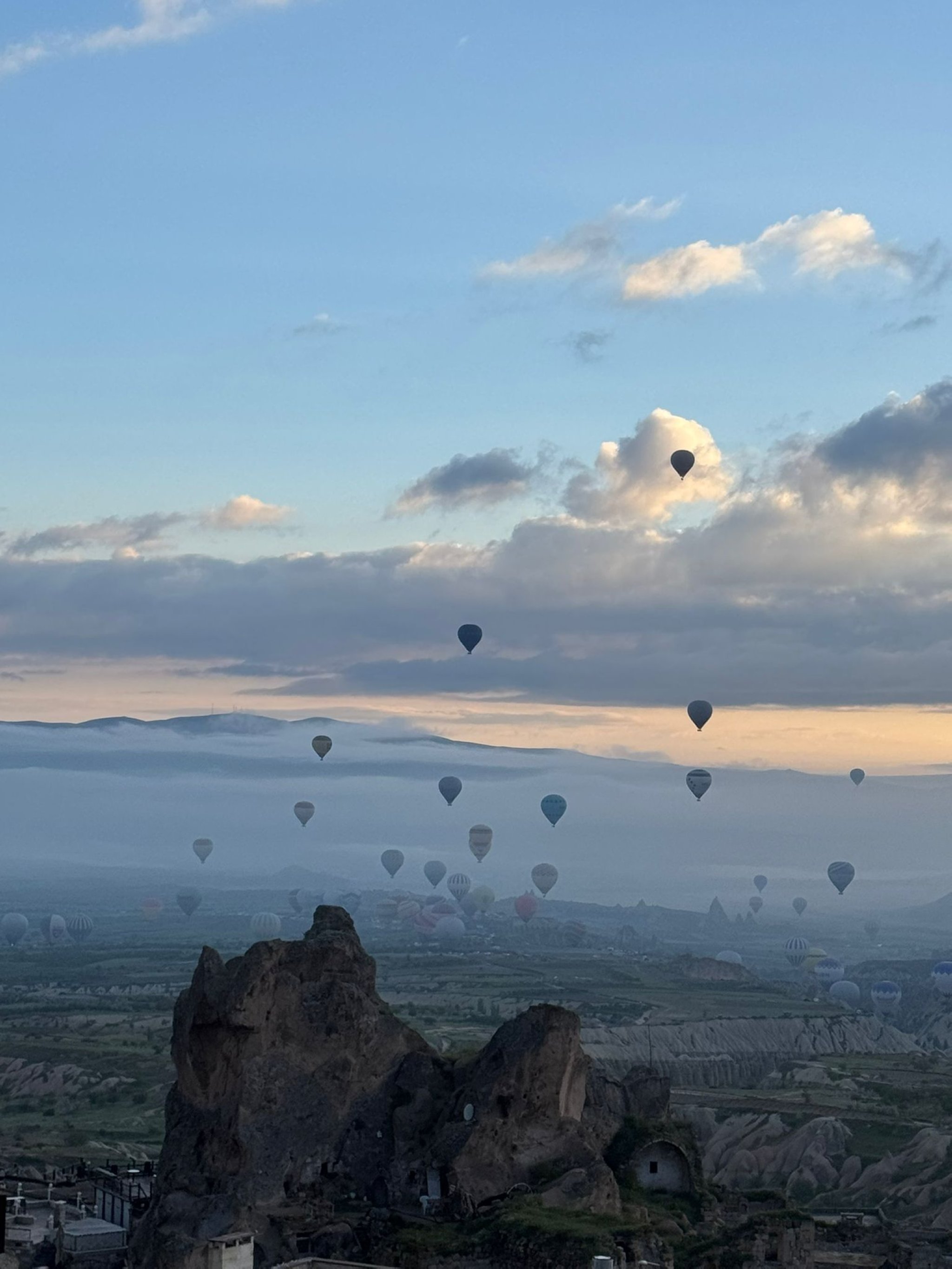
In Cappadocia, mornings begin unlike anywhere else in the world. Before sunrise, the valleys slowly awaken beneath a sky filled with hot air balloons rising one after another into the soft morning light. Especially around Uçhisar Castle, the view feels almost surreal – stone valleys painted in gold while colorful balloons float silently above them. Watching this scene unfold is not simply a tourist moment. It feels deeply emotional and cinematic, as though the landscape itself is breathing.
Hot-air balloons rise over a wide landscape in Cappadocia, Türkiye, May 18, 2026. (Photo by Neslişah Yılmaz Hidayetoğlu)
As the day progresses, Cappadocia reveals another side of its character through horseback rides across its valleys. Moving slowly between ancient rock formations at sunset allows visitors to experience the rhythm of the region in a far more intimate way. The silence of the valleys, interrupted only by the sound of horses and wind moving through the stone landscape, creates a rare sense of calm that modern life often makes us forget.
Cappadocia’s connection to art is equally fascinating. Australian artist Andrew Rogers brought a contemporary layer to the region through his monumental land art installations hidden among the valleys. His stone sculptures blend naturally into the geography, transforming Cappadocia into an open-air gallery where ancient history and modern artistic expression coexist seamlessly.
Yet one of the most exciting transformations taking place in Cappadocia today is in gastronomy. The region is increasingly becoming a destination not only for landscape lovers, but also for those searching for authentic culinary experiences rooted in local culture, local ingredients and atmosphere.
A new generation of tasting menus is redefining Anatolian cuisine through a refined contemporary perspective while remaining deeply connected to the region itself. What makes these dining experiences special is not simply presentation, but the storytelling behind every ingredient. Across Cappadocia, chefs are increasingly working with local producers, regional herbs and traditional slow-cooking techniques to create menus that feel sophisticated without losing their authenticity.
One evening overlooking Uçhisar, I experienced this new culinary identity firsthand at DAS 1350. The atmosphere felt intimate rather than formal. Long tables, soft music, warm stone textures and a view stretching across the valleys as the sun slowly disappeared behind the landscape. What stood out most was how even the smallest details carried the spirit of Cappadocia.
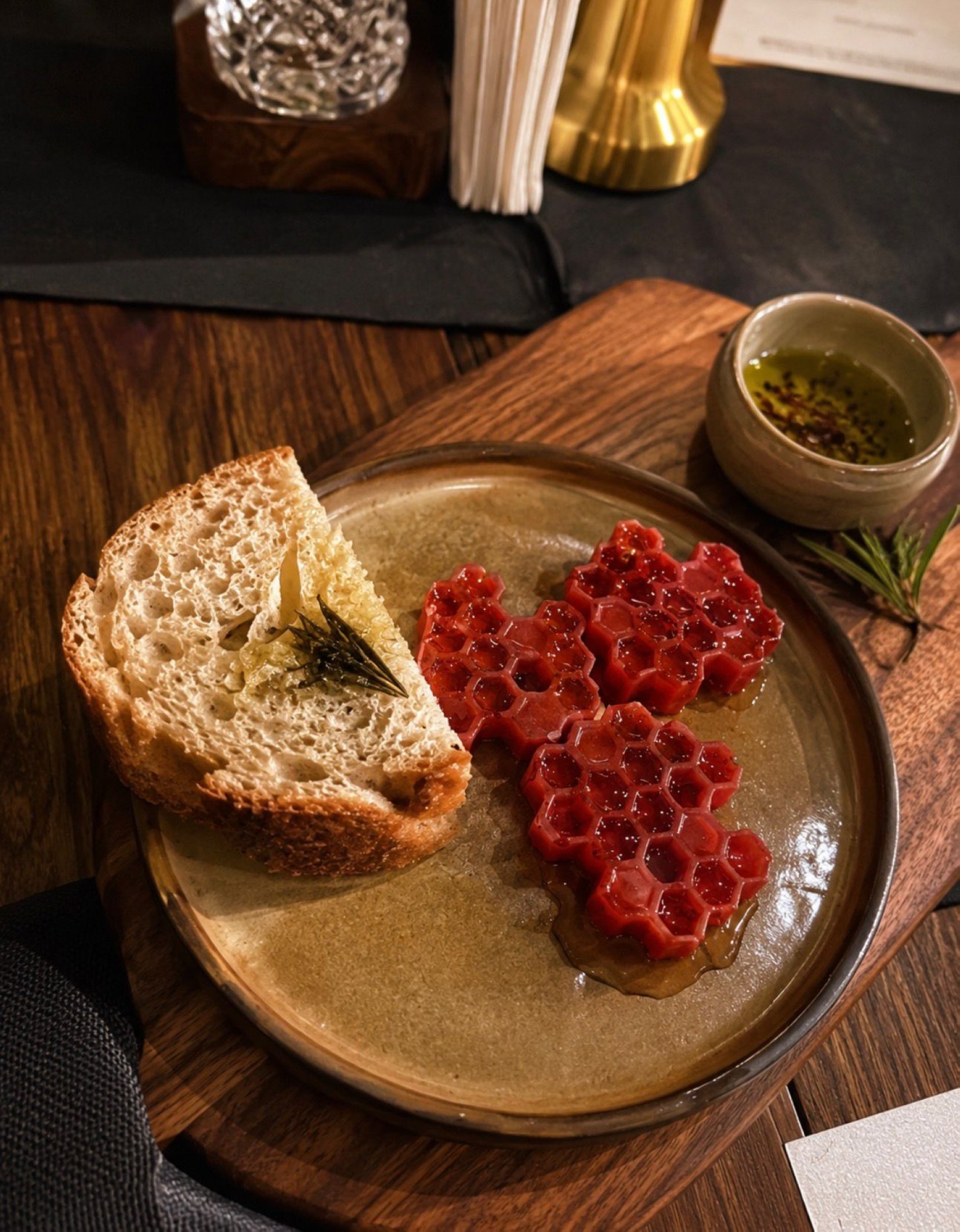
The butter itself became one of the most memorable parts of the evening. Served alongside warm sourdough bread, it carried delicate notes of pomegranate and honey, creating a flavor that felt rich, floral and unexpectedly elegant at the same time. Made from locally sourced dairy shaped by Cappadocia’s high-altitude landscape and natural herbs, it reflected the region’s ability to transform even the simplest ingredient into something deeply atmospheric and unforgettable.
Butter served with warm sourdough bread, noted for its subtle hints of pomegranate and honey, Cappadocia, Türkiye, May 19, 2026. (Photo by Neslişah Yılmaz Hidayetoğlu)
Throughout the tasting menu, local ingredients appeared in sophisticated yet grounded interpretations. Cave-aged cheeses, pumpkin flower fritters, regional herbs and slow-cooked lamb dishes reflected Cappadocia’s strong connection to Anatolian culinary traditions while embracing a more contemporary fine dining approach. Fire, stone and earth seemed present in every layer of the experience.
What makes Cappadocia’s gastronomy scene particularly exciting today is this balance between simplicity and depth. The food does not rely on excess or theatrical luxury. Instead, it tells the story of the region through texture, aroma and craftsmanship.
And perhaps that is why Cappadocia leaves such a lasting impression. Because here, everything feels connected: the balloons rising at sunrise, horses crossing the valleys at sunset, art emerging from the stones and long dinners shared beneath the Anatolian sky.
Cappadocia is no longer simply a destination to visit.
It is a place to experience with all the senses.
If you want to experience Cappadocia’s most iconic highlights in a single day without feeling rushed, it helps to follow a route that naturally flows from sunrise to sunset, blending history, landscape and atmosphere.
Sunrise
Begin before sunrise in Uçhisar Castle or nearby viewpoints, where hot-air balloons rise over the valleys. It’s one of the most unforgettable moments in Cappadocia, as the landscape slowly fills with color and movement at daybreak.
Morning
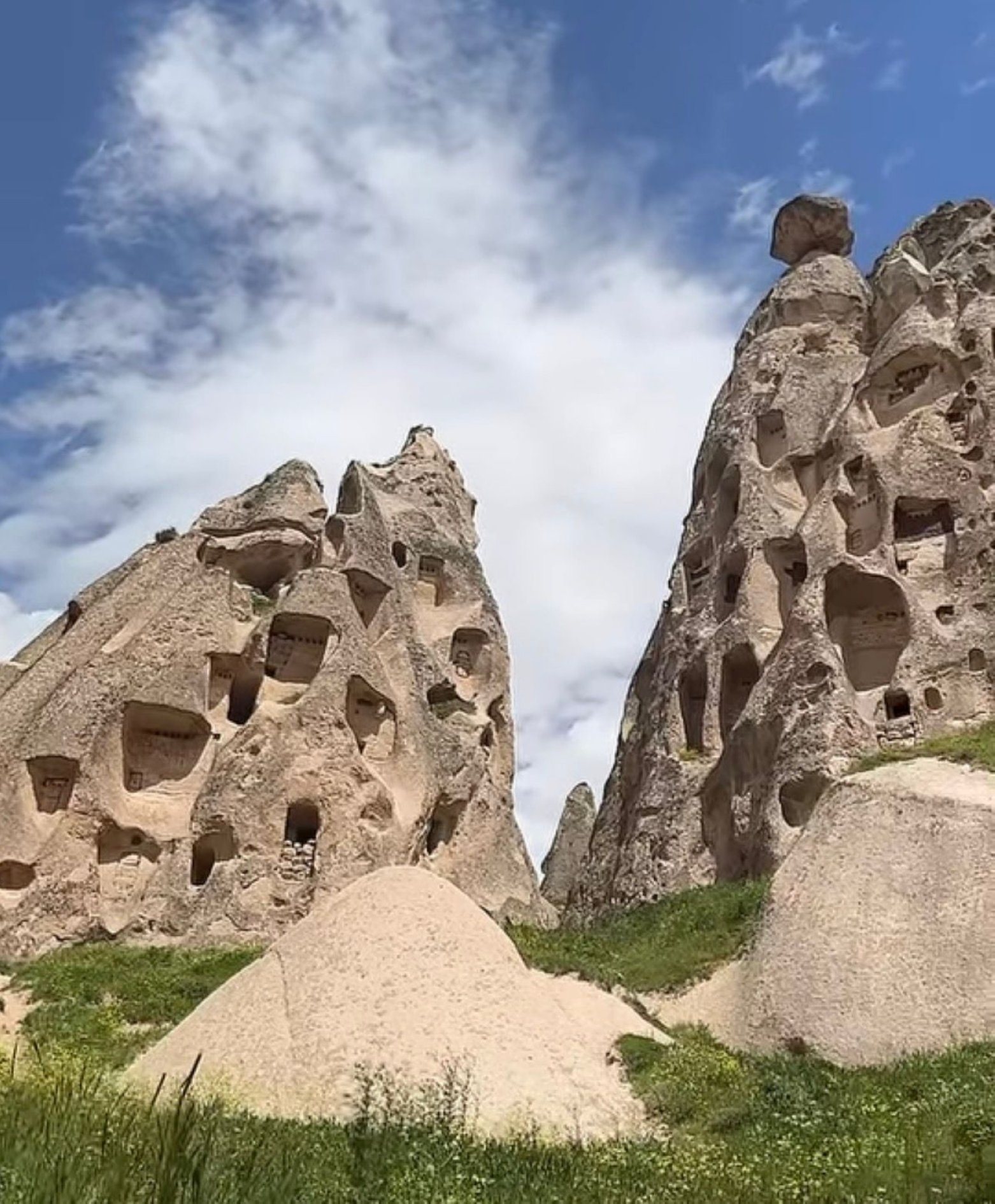
After breakfast, continue to the Göreme Open Air Museum. One of the region’s most significant historical sites, it features rock-cut churches, monasteries, and well-preserved frescoes that reflect Cappadocia’s deep spiritual and Byzantine heritage. Arriving early helps avoid both crowds and midday heat.
A view of the Göreme Open Air Museum, Cappadocia, Türkiye, May 18, 2026. (Photo by Neslişah Yılmaz Hidayetoğlu)
Late morning to midday
From there, head into the valleys to explore Cappadocia’s famous fairy chimneys.
In Paşabağ Valley, you’ll find some of the most iconic mushroom-shaped formations. Devrent Valley offers a more surreal landscape, where wind-carved rocks resemble animals and abstract figures. This is also one of the best times for photography, when the light sharpens the textures of the stone.
Lunch
For lunch, it’s worth slowing down. Cappadocia rewards a more relaxed rhythm, so take time to enjoy local dishes such as testi kebabı, pumpkin flower specialties, regional cheeses, and fresh village butter.
Afternoon
In the afternoon, consider a horseback ride through the valleys. Rose Valley, Red Valley and Love Valley are particularly striking as the light begins to soften. This is when Cappadocia’s nickname, the “Land of Beautiful Horses,” feels most fitting.
Sunset, evening
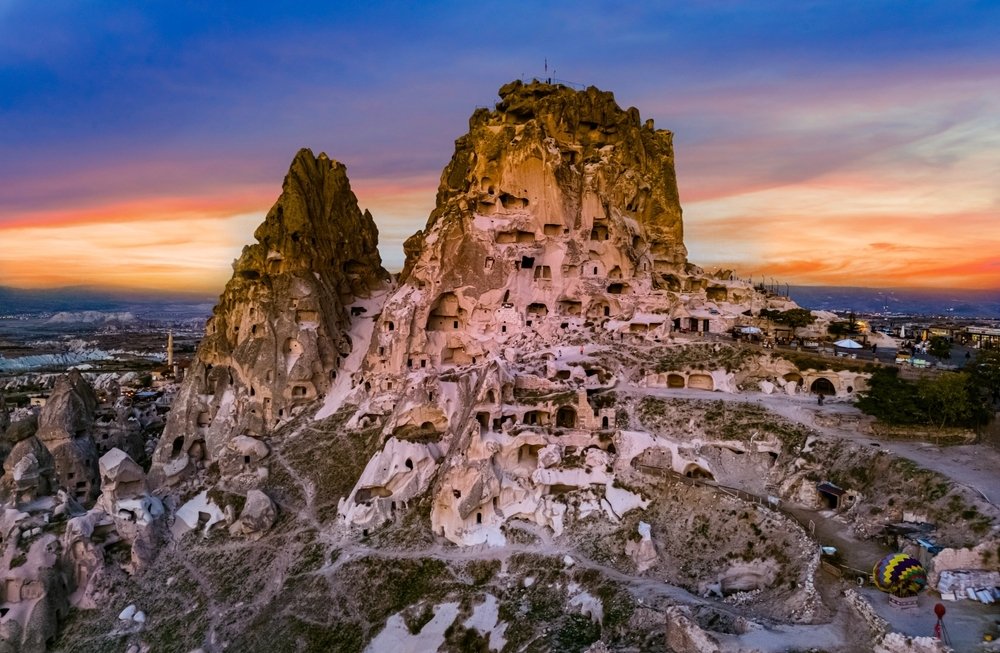
As the day winds down, return toward Uçhisar for sunset drinks and dinner overlooking the valleys. The landscape becomes quieter and more atmospheric, with warm light settling over the rock formations.
A view of Uçhisar Castle in Cappadocia, Türkiye. (Shutterstock Photo)
Suggested flow
The route moves from sunrise balloons in Uçhisar to Göreme Open Air Museum, then through Paşabağ and Devrent valleys, followed by a long lunch and ends with a sunset horseback ride and dinner in Uçhisar.
That route gives you history, nature, photography, gastronomy and the emotional atmosphere of Cappadocia all in one day.
Southern Türkiye’s Demre, home to renowned attractions including the St. Nicholas (Santa Claus) Church, the ancient cities of Myra and Andriake, Kekova, Üçağız and Kaleköy, aims to strengthen its tourism sector through year-round offerings, international events, new accommodation investments and sustainable tourism projects.
Local authorities are working to expand cultural, faith, nature and marine tourism beyond the traditional summer season. By combining its rich historical heritage with its well-preserved natural landscape, Antalya’s Demre hopes to establish itself as a four-season destination attracting visitors from around the world.
In an interview on Friday, Mayor Fahri Duran told Anadolu Agency (AA) that although Demre has long been known as an agricultural district, its tourism potential has become increasingly visible in recent years.
“Demre was known for many years as an agricultural district. However, we have always had exceptional assets, including cultural, faith, marine and nature tourism,” Duran said. “With its unspoiled natural environment, Demre is a destination where tourism can flourish throughout all 12 months of the year.”
Duran said faith tourism remains one of the district’s greatest strengths, noting that clergy from different countries gather every Dec. 6 at the St. Nicholas Church to hold religious services commemorating the fourth-century bishop widely associated with the modern-day figure of Santa Claus.
A view from a historical site in Demre, Antalya, southern Türkiye, July 17, 2026. (AA Photo)
He also highlighted the success of the inaugural Santa Claus Festival, held last year, saying the municipality plans to expand it into a larger international event.
“We organized the festival under the motto, ‘Christmas is celebrated in the city of Santa Claus,'” Duran said. “The response exceeded our expectations, and next year we plan to organize a much larger and more comprehensive international festival.”
Duran identified Üçağız and Kaleköy among Demre’s leading tourism destinations. He noted that Üçağız was named one of the “Best Tourism Villages” by the U.N. Tourism organization last year.
With a population of about 700, Üçağız draws thousands of visitors, particularly during the summer season.
“Kaleköy is one of the rare settlements in Türkiye with no road access,” Duran said. “Its distinctive houses, narrow streets and natural setting offer visitors a unique atmosphere. Although Üçağız has a population of around 700, we host between 3,000 and 4,000 visitors on weekends and around 2,000 on weekdays. While visitor numbers have declined in some tourism destinations, Demre was among the few places that welcomed more visitors than the previous year.”
A sailboat cruises along the coast of Demre in Antalya, southern Türkiye, July 17, 2026. (AA Photo)
Emphasizing the importance of sustainable tourism, Duran said the municipality plans to launch a recreational project covering approximately 50,000 to 60,000 square meters in the Çayağzı area in September. Infrastructure projects aimed at protecting the marine environment are also continuing with support from the Antalya Governor’s Office.
He added that accommodation investments have accelerated in recent years, increasing the district’s capacity to approximately 4,000 to 5,000 beds through villas, bungalows, apartment-style accommodations and hotels.
As Demre gains greater international recognition each year, Duran invited both domestic and international visitors to explore the district’s historical, natural and cultural treasures.
The Daily Sabah Newsletter
Keep up to date with what’s happening in Turkey,
it’s region and the world.
SIGN ME UP
You can unsubscribe at any time. By signing up you are agreeing to our Terms of Use and Privacy Policy.
This site is protected by reCAPTCHA and the Google Privacy Policy and Terms of Service apply.
Cappadocia, the UNESCO World Heritage Site renowned for its dramatic landscapes and ancient rock formations, has been named the world’s best sunset destination in an international tourism study conducted by AllClear Travel Insurance.
The central Turkish region earned a score of 86.1 out of 100, topping the global ranking after being evaluated on weather conditions, scenic quality, visitor experiences and social media engagement. Cappadocia finished ahead of internationally recognized destinations including Waikiki Beach in Hawaii, the Grand Canyon in the United States and the Taj Mahal in India.
Known for its distinctive fairy chimneys, deep valleys and centuries-old rock-carved dwellings formed by volcanic activity millions of years ago, Cappadocia offers visitors panoramic sunset views illuminated by vibrant shades of red, orange and gold.
Popular sunset viewing locations include Red Valley (Kızılçukur), Göreme, Uçhisar and Ortahisar, where thousands of domestic and international visitors gather each evening to experience the region’s changing colors.
In addition to its scenic viewpoints, Cappadocia offers a variety of outdoor activities that enhance the sunset experience, including ATV safaris, horseback riding tours and panoramic observation terraces. While the region is globally recognized for its sunrise hot air balloon flights, its sunset landscapes have increasingly become one of its defining tourism attractions.
Beyond its natural beauty, Cappadocia is internationally recognized for its rock-hewn churches, underground cities, historic stone houses and thousands of years of cultural heritage, making it one of Türkiye’s most significant tourism destinations.
Visitors welcomed the announcement, describing the region’s sunsets as unforgettable.
Yasemin Ilgın, a tourist from Germany visiting Cappadocia for the first time, said she thoroughly enjoyed the scenery and believed the region deserved the top ranking.
“I am visiting Cappadocia for the first time. I really enjoyed this view. I think it truly deserves to be ranked first in the world,” Ilgın said.
Visitor Abdulkadir Önügören said everyone should experience Cappadocia at least once.
“Everyone should come and see Cappadocia. Being able to experience the sunset here is very special. I had seen Cappadocia on social media before, which made me want to come and experience this atmosphere myself,” he said.
Berfin Çavdar, who traveled from another province in Türkiye, said the region’s atmosphere gave visitors a sense of peace.
“You feel as though you are in a completely different world here. Watching the sunset against this landscape is truly an unforgettable experience,” she said.
Berke Eren, a Dutch-Turkish visitor from the Netherlands, said he came to Cappadocia to witness what he described as the world’s most beautiful sunset.
“We came to Cappadocia to watch the world’s most beautiful sunset. The atmosphere here is every bit as incredible as people say,” he said.
A Russian tourist visiting Cappadocia for the first time described the experience as deeply emotional.
“This is my first time here. It is incredibly beautiful, with a breathtaking landscape. When I first saw it, I cried. Cappadocia is a very romantic place that embodies love,” the visitor said.
The Daily Sabah Newsletter
Keep up to date with what’s happening in Turkey,
it’s region and the world.
SIGN ME UP
You can unsubscribe at any time. By signing up you are agreeing to our Terms of Use and Privacy Policy.
This site is protected by reCAPTCHA and the Google Privacy Policy and Terms of Service apply.
Perched on steep hillsides where lush forests meet the Black Sea, the northern Turkish city of Giresun is emerging as a destination for travelers seeking nature, outdoor experiences and cultural heritage.
Home to numerous civilizations since antiquity, Giresun takes its name from the cherry cultivation that flourished in the region during ancient times. Today, the city offers visitors a different atmosphere in every season, combining scenic landscapes, historical landmarks and regional cuisine.
Located within easy reach of both Trabzon Airport and Ordu-Giresun Airport, Giresun is about a 45-minute drive from Ordu and roughly 90 minutes from Trabzon.
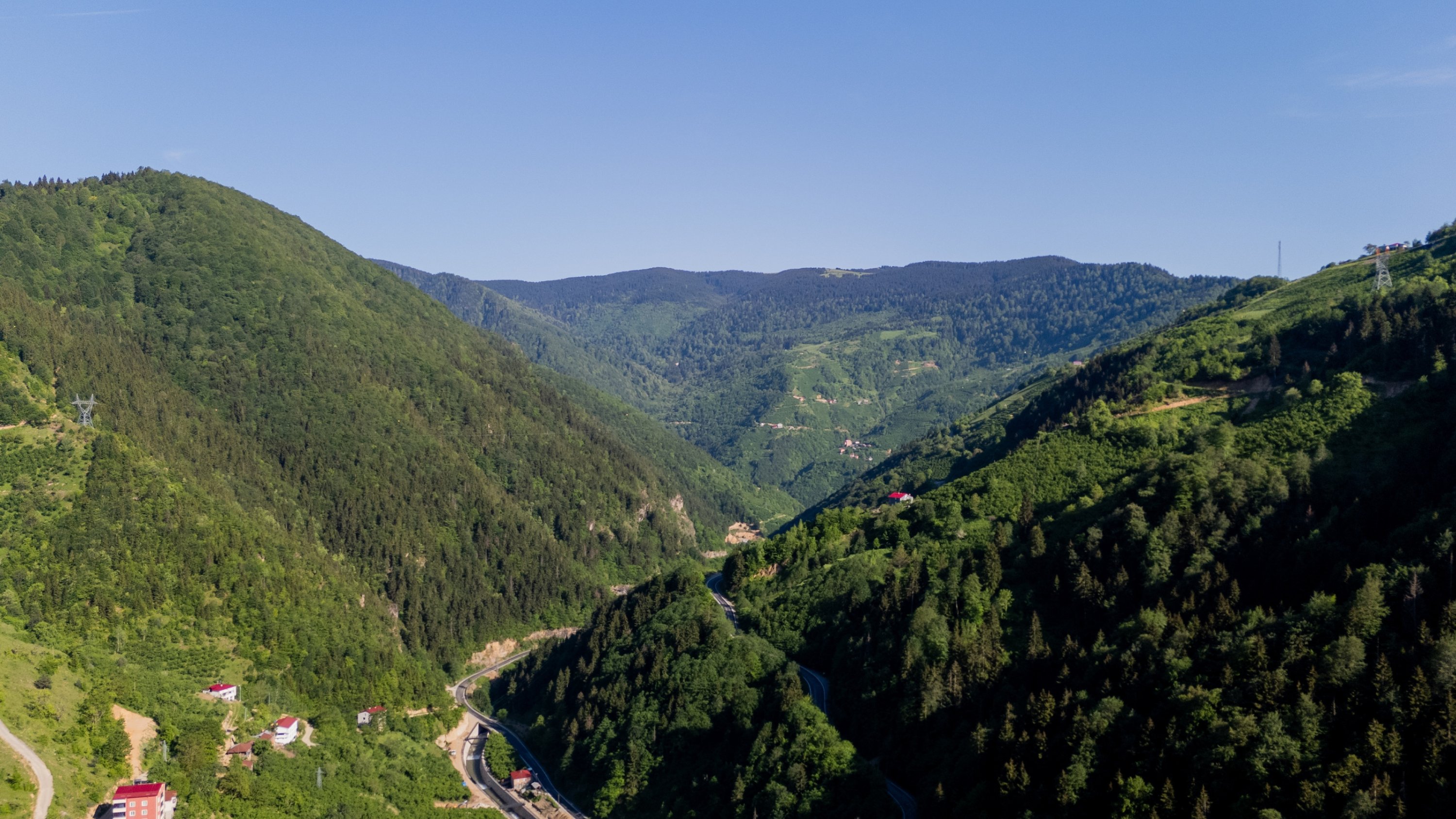
Among the city’s most popular attractions are Giresun Castle, Giresun Island – the only inhabited island in the eastern Black Sea, the Zeytinlik historic district, the highland plateaus of Kulakkaya, Kümbet and Bektaş, Kuzalan Falls, Mavigöl (Blue Lake) and the Göksu Travertines.
A general view of Giresun Castle, Giresun, northern Türkiye, June 27, 2026. (AA Photo)
Overlooking Giresun
Rising about 100 meters (330 feet) above sea level, Giresun Castle is one of the city’s best-known landmarks, offering sweeping views of the Black Sea and the surrounding urban landscape.
Known in ancient sources as “Kerasus,” the fortress is believed to have been built by King Pharnaces I of Pontus during the second century B.C. Today, the remains of its walls resemble an open-air museum.
The castle preserves traces of the Hellenistic and Roman periods, while shaded walking paths beneath centuries-old plane trees and tea gardens overlooking the Black Sea make it a popular destination for both history enthusiasts and visitors seeking scenic views. Recent improvements have also transformed the site into a recreational park.
Myth, archaeology
Located about 2.5 kilometers (1.6 miles) offshore, Giresun Island is the only island in the eastern Black Sea suitable for human habitation.
Known as “Aretias” in antiquity, the island is associated with Greek mythology. Legends say it was visited by the Amazons and that Hercules and the Argonauts stopped there during their quest for the Golden Fleece.
During the summer, visitors can reach the island by boat tour to explore Byzantine-era fortifications and church ruins. The island also serves as an important habitat for seabirds, including gulls and cormorants, allowing visitors to observe nesting and breeding colonies.
Kulakkaya Plateau
For travelers seeking the region’s mountain landscapes, the highland plateaus surrounding Giresun provide a striking contrast to the coastline.
An aerial view of Kulakkaya Plateau, Giresun, northern Türkiye, June 27, 2026. (AA Photo)
Kulakkaya Plateau, about 45 kilometers (28 miles) from the city center, is among the area’s most popular destinations. The plateau reflects the traditional lifestyle of the Black Sea highlands while offering accommodation options and visitor facilities.
Known for its cool mountain air, peaceful atmosphere and regional cuisine, Kulakkaya has become a favored retreat for visitors looking to escape urban life.
An aerial view of Kulakkaya Plateau, Giresun, northern Türkiye, June 27, 2026. (AA Photo)
Waterfalls, travertines
In recent years, Kuzalan Nature Park in Giresun’s Dereli district has become one of the province’s leading ecotourism destinations.
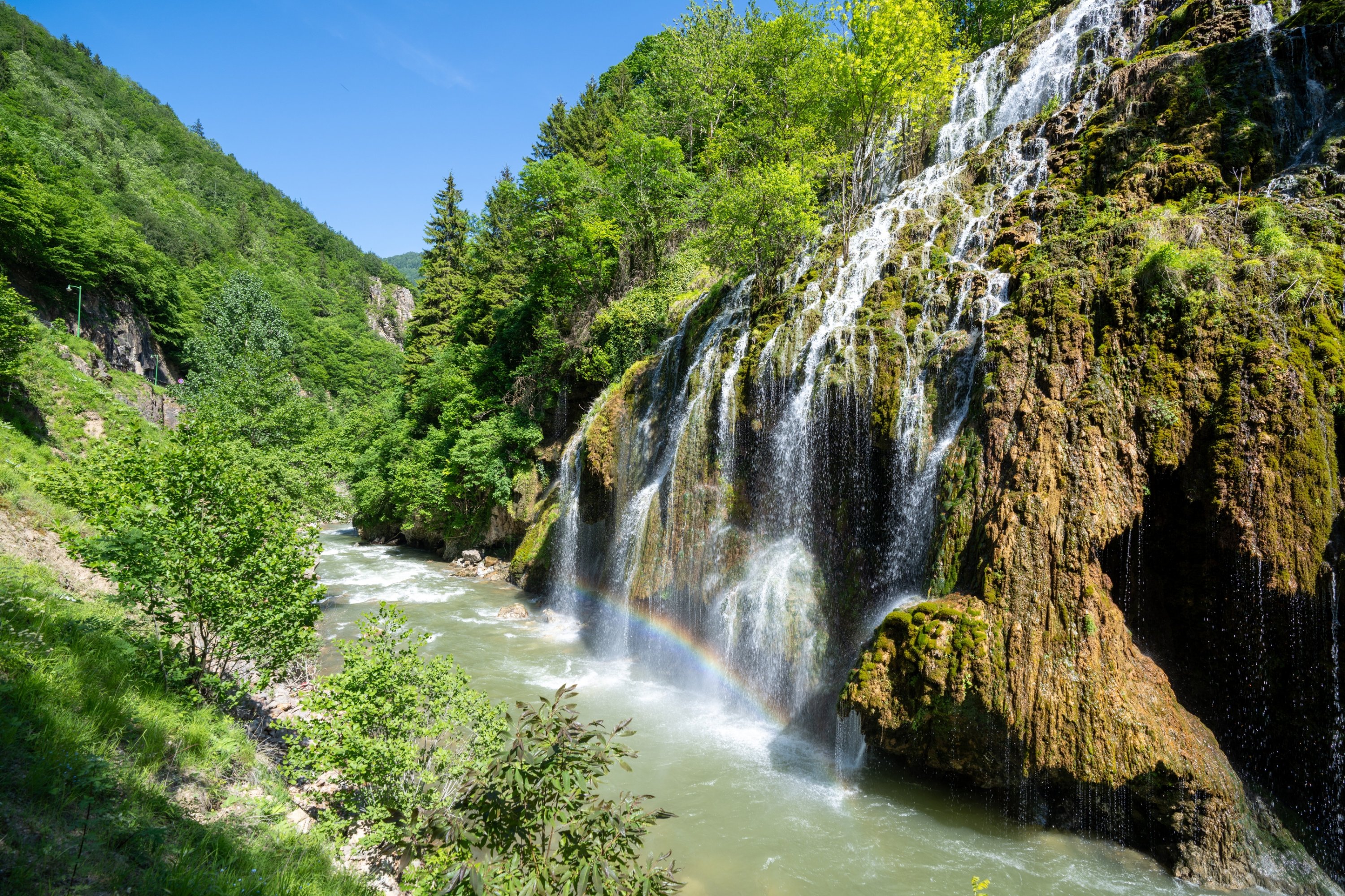
The park is home to Kuzalan Falls, where water cascades about 20 meters (66 feet) into a forested valley. Observation terraces and hiking trails make the site especially popular among photographers and nature lovers.
A view of Kuzalan Falls, Giresun, northern Türkiye, June 27, 2026. (AA Photo)
Nearby, Blue Lake draws visitors with its vivid turquoise waters, a seasonal phenomenon created by the area’s limestone-rich geology and mineral content. The lake’s striking colors, particularly during summer and autumn, have made it a favorite destination for photographers and social media users.
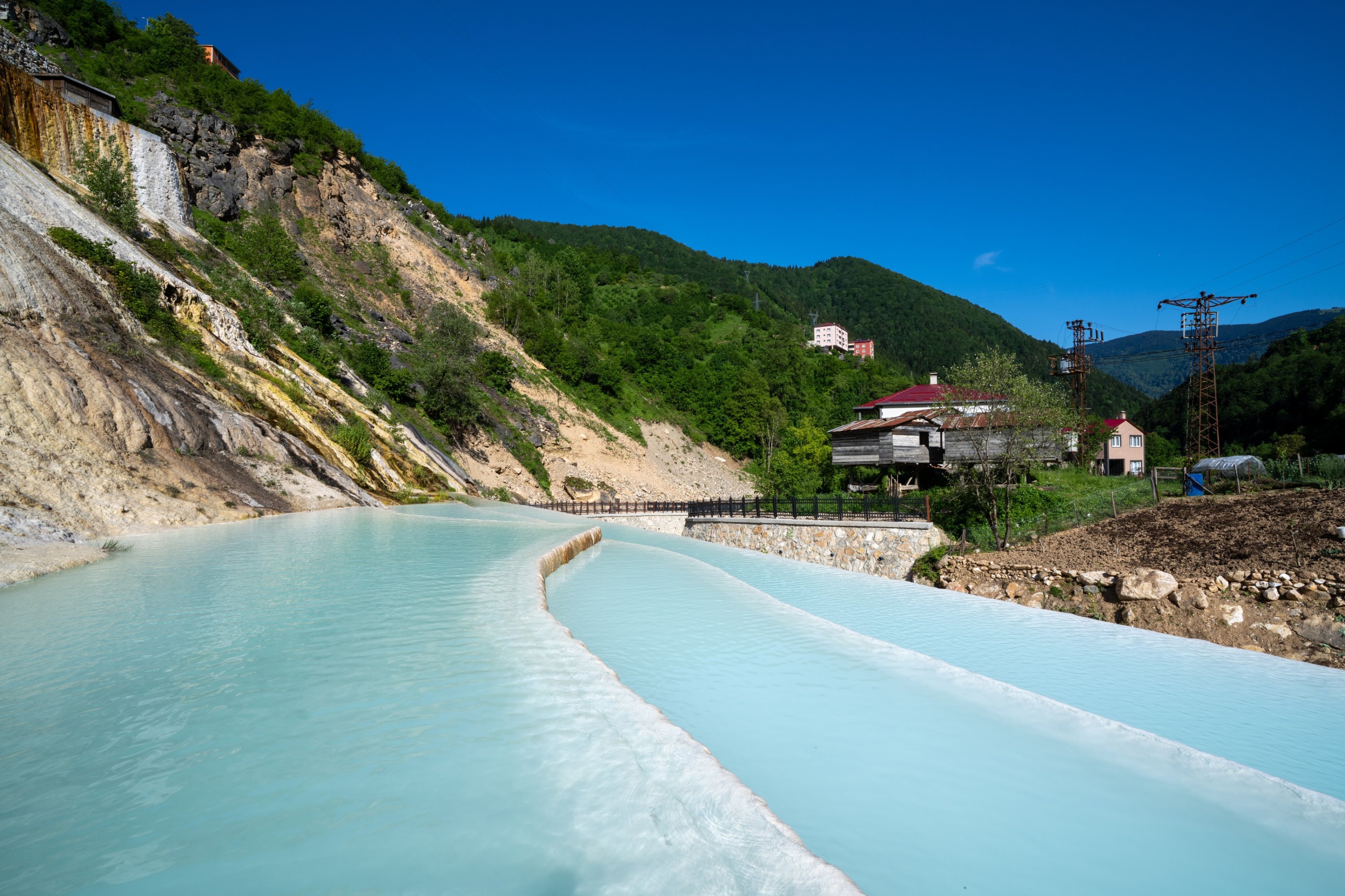
A general view of Göksu Travertines, Giresun, northern Türkiye, June 27, 2026. (AA Photo)
Adjacent to the lake, the Göksu Travertines feature white mineral terraces and shallow pools formed by calcium-rich waters. Often referred to as the “Pamukkale of the Black Sea,” the site has been developed with walking paths and rest areas, adding another attraction to the region’s growing ecotourism offerings.
Local cuisine
Often referred to as Türkiye’s “hazelnut capital,” Giresun is also gaining recognition as a culinary destination.
The province is renowned for its registered Giresun Tombul hazelnuts, widely regarded among the world’s highest-quality hazelnut varieties.
The local cuisine ranges from seafood to wild edible plants and includes several geographically registered specialties, such as Çamoluk sugar beans, Görele ice cream, Alucra kid kebab, Giresun nettles and the kadayıf dessert made with hazelnut paste.
Giresun also stands out for its plant-based dishes, reflecting the region’s rich biodiversity. Traditional recipes such as karalahana diblesi (rice with black cabbage), taflan kavurması (sauteed cherry laurel), melocan kavurması (sauteed wild shoots) and sakarca dishes offer vegetarian options that appeal to travelers interested in local and healthy cuisine.
The Daily Sabah Newsletter
Keep up to date with what’s happening in Turkey,
it’s region and the world.
SIGN ME UP
You can unsubscribe at any time. By signing up you are agreeing to our Terms of Use and Privacy Policy.
This site is protected by reCAPTCHA and the Google Privacy Policy and Terms of Service apply.
One of Chamonix’s most iconic experiences begins with a little red train winding its way through the heart of the Alps. The historic Train du Montenvers takes travelers on a breathtaking journey toward the slopes of Mont Blanc, through a landscape that feels almost too beautiful to be real.
The final stop is Montenvers, a mountain station surrounded by dramatic peaks and unforgettable views. And waiting there is one of the Alps’ most extraordinary natural wonders: the legendary Mer de Glace, or “Sea of Ice.” The mysterious ice cave hidden within the glacier is the perfect final surprise at the end of this magical journey.
When I was preparing my first Chamonix travel guide, I quickly realized there were far too many memories and experiences to fit into a single article. This destination deserved more than one story.
As I mentioned in my previous guide, Chamonix is not just a place to visit during ski season. To me, it is a destination for every season. Some places have a way of staying with you so deeply that, after leaving, you find yourself imagining what they must look like in spring, summer, autumn and winter.
Chamonix became one of those places for me. Almost a month has passed since I returned, yet my mind still wanders back to those mountains and I still find myself looking at flight options to return.
Before our trip, my list of things to do in Chamonix was already quite long. One experience that stood out the most was finding a way to get closer to Mont Blanc with our 4-year-old son.
Of course, one of the most famous experiences in Chamonix is reaching the summit of Mont Blanc, the highest mountain in Western Europe. However, due to the high altitude, climbing to the summit is not recommended for young children. Since we were traveling with our son, we decided not to take that risk.
But after coming all this way, I still wanted us to experience the magic of the mountains at a higher altitude. While researching alternatives, I discovered something that turned out to be perfect for families: a journey aboard the historic red Montenvers train.
The idea of traveling through the Alps on a century-old railway and arriving at a glacier sounded incredible. But what made this journey even more special was what awaited us at the top: a frozen landscape shaped by thousands of years of nature, along with the famous ice cave carved into the glacier.
Before sharing our experience, let me introduce you to this beautiful train journey.
Historic red train
The Train du Montenvers immediately reminded me of those famous red mountain trains often seen in Switzerland travel videos – the ones that slowly climb through the Alps, surrounded by endless peaks and postcard-worthy scenery.
The journey itself feels like stepping into a storybook. The train follows a spectacular route through the mountains, offering panoramic views of the Chamonix Valley from different angles.
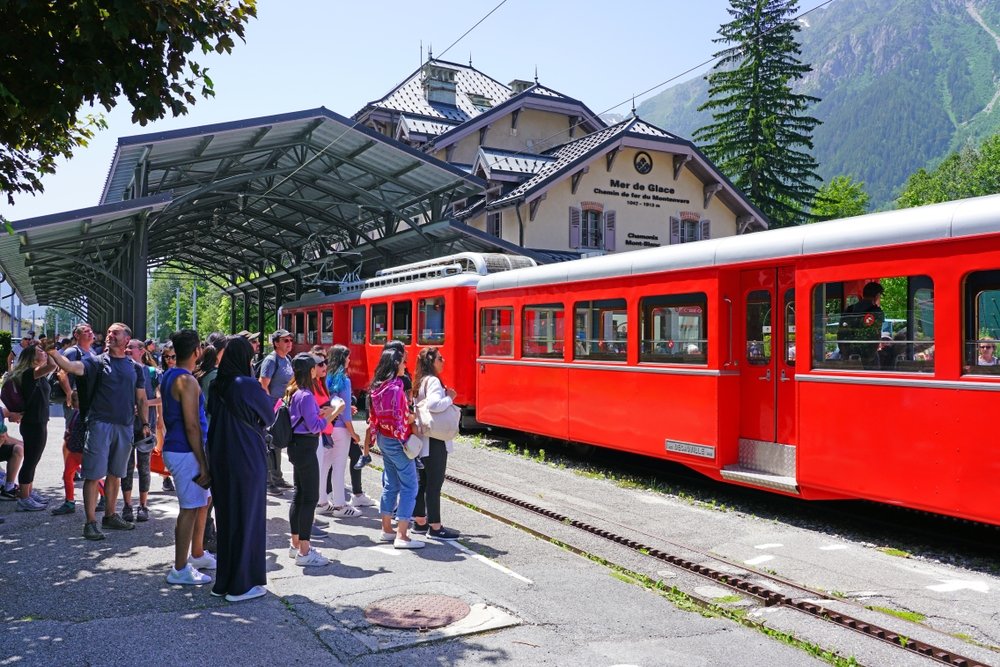
To begin the journey, you need to cross the bridge on the left side of Chamonix-Mont-Blanc station and reach the Montenvers Mer de Glace station. Once you see the charming red train waiting there, you know you have arrived at the right place.
Built in 1909, the Chamonix-Montenvers railway is a historic mountain railway that has been carrying visitors toward the glacier for more than a century. The route offers incredible views throughout the entire ride, making the journey itself just as memorable as the destination.
The Chemin de Fer du Montenvers, a little red tourist railway going from Chamonix to Montenvers, France near Switzerland and Italy, Chamonix, France, June 26, 2019. (Shutterstock Photo)
Montenvers Mer de Glace Station
Before boarding the train, you can see the original locomotive from the early days of the railway at the station.
The train departs every 30 minutes, and while waiting, the surrounding area offers plenty of opportunities for beautiful photographs. If you want the best views during the ride, I recommend choosing a seat on the left side of the train.
Children under 5 years old can travel for free and children under 14 are eligible for child tickets.
The station is generally open between 10 a.m. and 4:30 p.m., although opening hours can vary depending on the season and weather conditions.
After approximately 25 minutes of climbing through the mountains, you arrive at Gare du Montenvers, located at an altitude of 1,913 meters (6,276 feet).
As the train approaches the station, the first views of the glacier begin to appear. If you are sitting on the left side, you will also be rewarded with beautiful views of waterfalls cascading down the mountain slopes. We visited in spring, which may have been the reason the waterfalls were especially impressive. I can only imagine how magical the snowy landscapes must be during winter.
At the top, there are two cafés. One sits slightly below the station with beautiful glacier views, while the other welcomes you right as you step off the train. It is the perfect place to enjoy a coffee break with delicious desserts, mountain-fruit macarons and small treats.
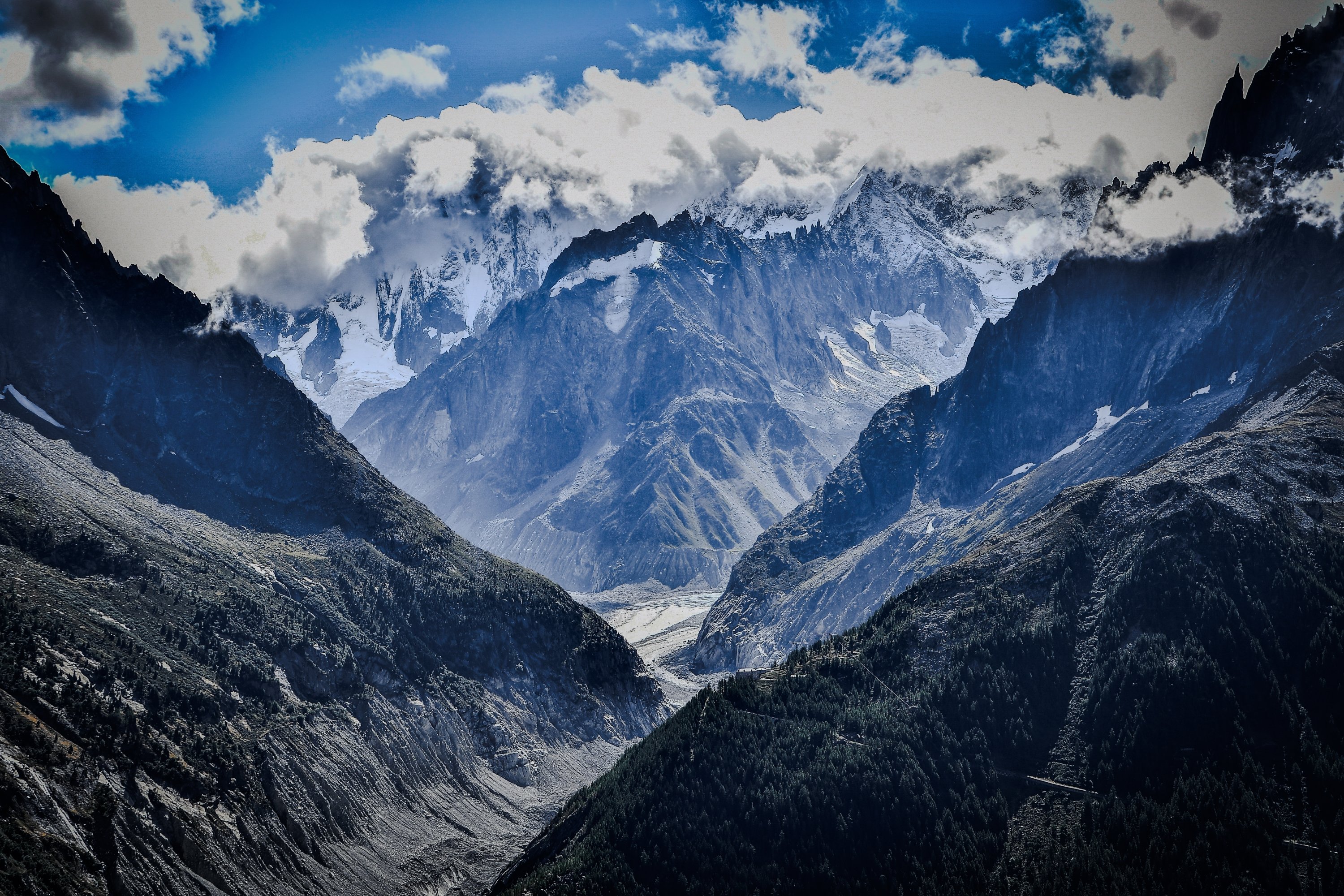
An aerial view of Mer de Glace glacier, Chamonix, France. (Shutterstock Photo)
River frozen in time
The name “Sea of Ice” might make you imagine an endless blue ocean, but this place is unlike any sea you have ever seen.
The Mer de Glace is France’s largest glacier – a vast river of ice created by centuries of accumulated snow slowly compressing and flowing through the valley.
Located about 7 kilometers (4.35 miles) north of Mont Blanc, this incredible glacier stretches approximately 7.5 kilometers (4.66 miles) and reaches depths of around 200 meters (656 feet).
The story behind its name makes the experience even more fascinating.
In 1741, two English explorers arrived here for the first time and looked down from the mountainside. What they saw reminded them of a stormy sea that had suddenly frozen in place: a massive, uneven landscape of waves and textures carved entirely from ice.
They named it Mer de Glace, meaning “Sea of Ice” in French.
Of course, this is not a sea where you can sail. Instead, it is a frozen river where time appears to have stopped – a place where the powerful and delicate sides of nature exist together in shades of white and blue.
Unfortunately, the glacier has dramatically changed over the years. Once, enormous walls of ice reached much higher toward the panoramic viewpoints, but climate change has caused the glacier to retreat significantly. Some impressive sections of ice can still be seen today, offering a powerful reminder of how fragile these natural wonders are.
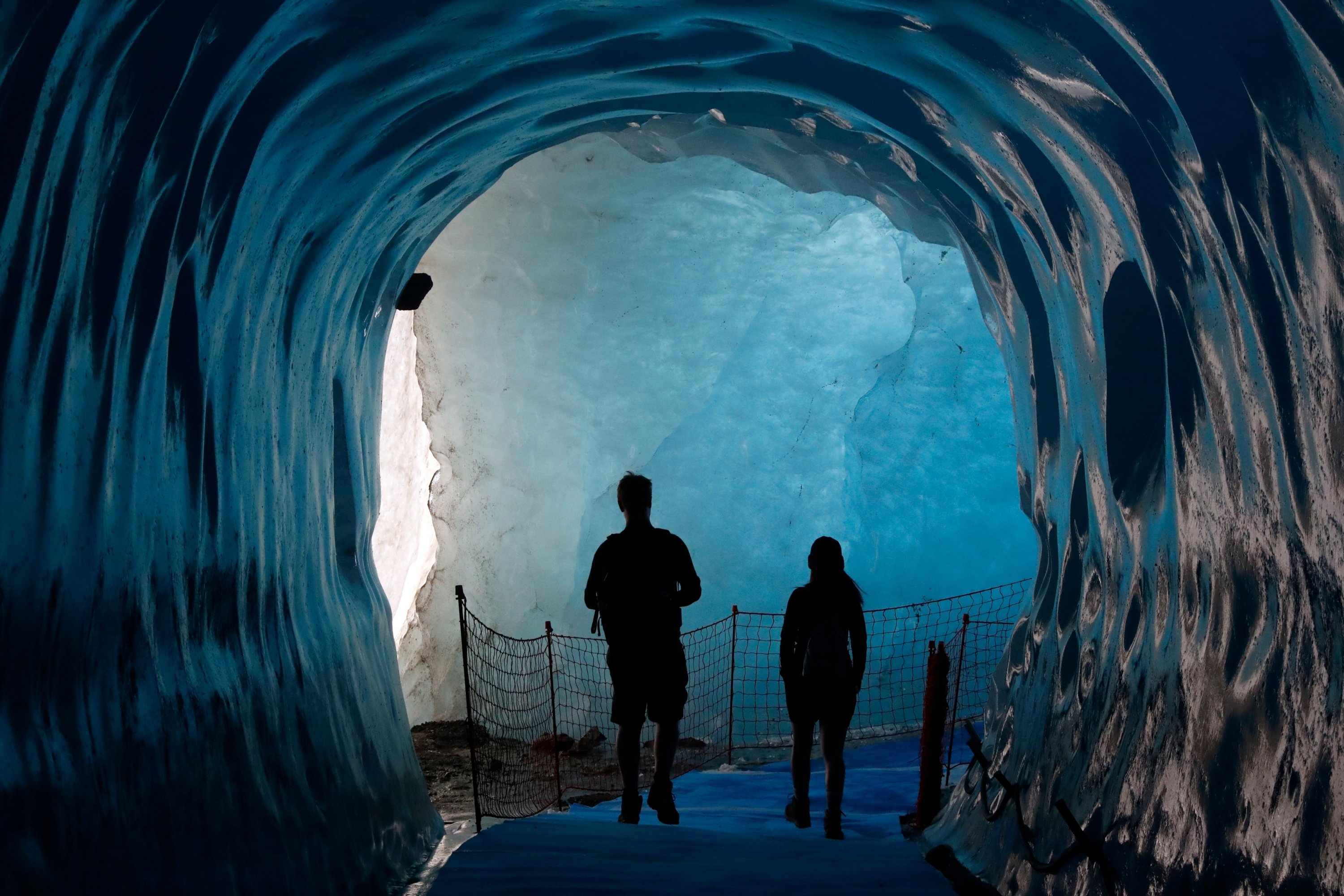
People exploring the ice cave inside the glacier of Mer de Glace, Chamonix, France, May 30, 2018. (Shutterstock Photo)
Ice cave
At the lower section of the glacier, visitors can explore the famous Grotte de Glace, a real ice cave carved directly into the glacier.
To reach the cave, you first take a cable car down from the station. The ride takes only about two minutes and brings you to the beginning of the staircase leading toward the entrance.
From there, you need to walk down approximately 480 steps before reaching the cave.
Inside, you are welcomed by incredible ice formations and a completely different world hidden beneath the glacier. Visitors can also discover interesting information about glaciers and their formation along the way.
Unfortunately, during our visit, the cable car and ice cave were closed, so we could not experience this part of the journey ourselves. However, I wanted to share the details I had researched beforehand, as it is definitely something worth adding to your itinerary.
In Chamonix and throughout the Alps, May is considered an in-between season. The ski season has ended, but the summer season has not fully begun yet. This period is called Intersaison and many cable cars undergo annual maintenance during this time.
The same situation can occur in November. Before planning your visit, it is always a good idea to check the official opening dates of the train and cable cars.
Also, keep in mind that temperatures at Montenvers can be much cooler than in Chamonix town center, depending on the season.
Memories to treasure
Chamonix became much more than a winter destination for me. It transformed into a place that captured my heart in every season – a destination I continue to dream about returning to.
Among all the experiences on our pre-trip list, the historic red train was one of the most exciting. Although we could not reach the summit of Mont Blanc with our 4-year-old son due to the altitude, this alternative opened the door to an equally unforgettable adventure.
The Train du Montenvers carried us through breathtaking Alpine scenery, winding between mountains like a scene from a movie. And at the end of this beautiful journey, the 1,740-year-old Sea of Ice and the mysterious glacier cave revealed themselves as the greatest surprise waiting for us.
Celebrating our son’s fourth birthday in such a magical place gave us memories that we will treasure for a lifetime.
Whether you are an adventurous traveler or simply looking for a relaxing holiday, if you have not yet visited Türkiye’s “food capital,” a UNESCO Creative City of Gastronomy, and the jewel of southeastern Anatolia, it is time to pack your bags.
I experienced Turkish hospitality the moment I arrived at the airport. Ali Küncülü, a Gaziantep-born Swedish resident, kindly offered me a comfortable ride to the hotel in the city center.
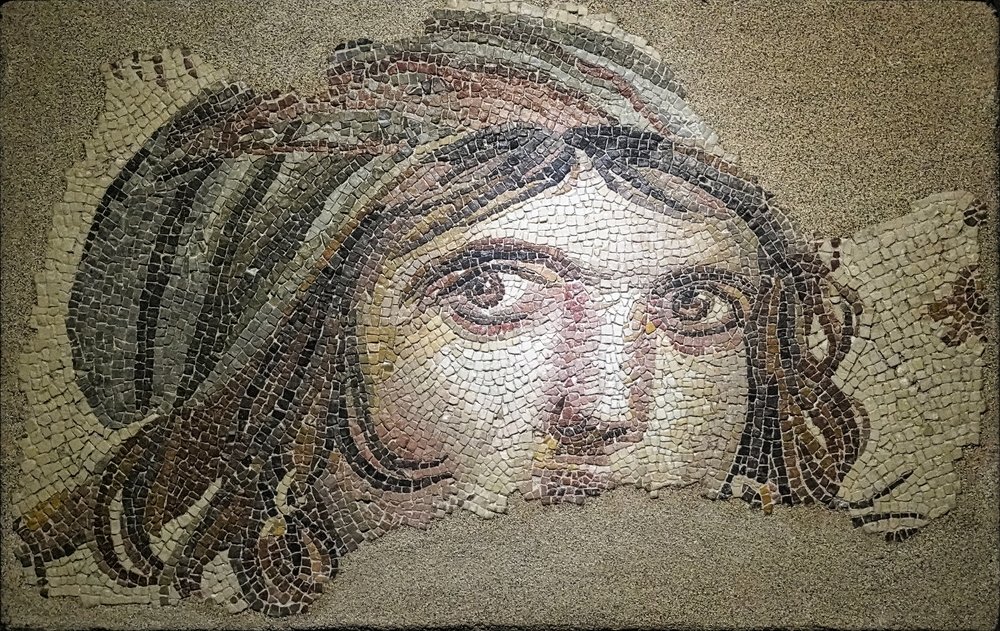
Gaziantep is a fascinating blend of ancient history, world-renowned gastronomy, Roman mosaics, centuries-old stone bazaars, legendary pistachio desserts, traditional Turkish baths and countless remarkable attractions.
The Gipsy Girl mosaic at the Zeugma Mosaic Museum, Gaziantep, southeastern Türkiye. (Shutterstock Photo)
In 2023, I explored Gaziantep’s historic treasures, including its majestic mosques, fortress, centuries-old bazaars and museums. This time, however, I wanted to experience the city’s community spirit. What followed became an unforgettable travel memory.
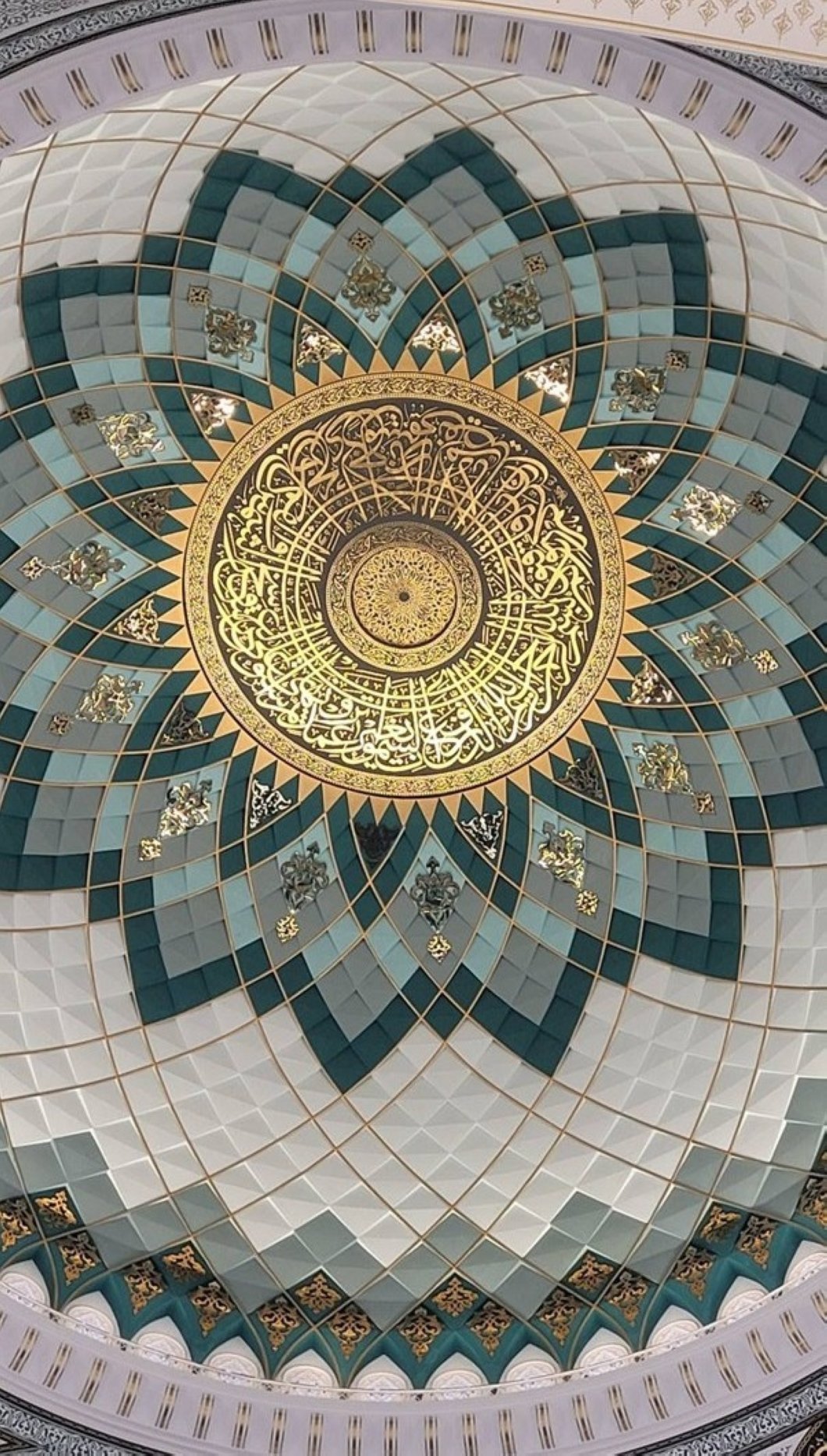
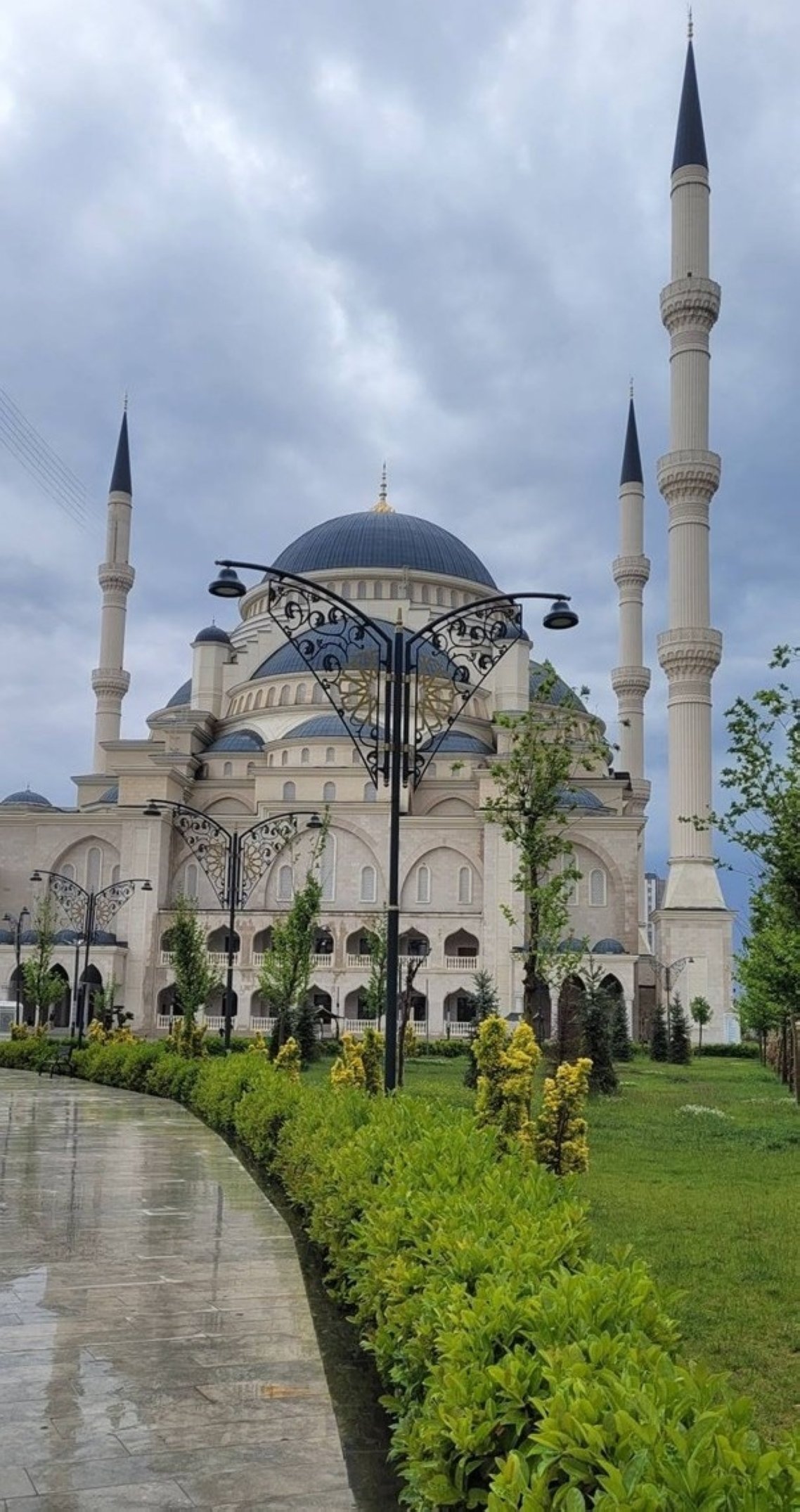
Şahinbey Millet Camii (Millet Mosque) beautifully reflects Islamic architectural traditions while incorporating modern facilities designed to serve the entire community. The city’s electric tram provides convenient access, with a stop located directly beside the mosque. As I stepped off the tram, I noticed a young female driver confidently operating the vehicle – a reflection of modern Türkiye.
The ornate ceiling of Şahinbey Millet Mosque, Gaziantep, southeastern Türkiye, May 10, 2026. (Photo by Irfan Raja)
The mosque offers a wide range of community facilities, including spaces for marriage ceremonies (nikah), condolence gatherings, children’s play areas, cafes, souvenir shops and vendors dressed in traditional Ottoman-style attire. These tea sellers, known as çaycı, are a familiar sight around tourist attractions, serving freshly brewed Turkish black tea while proudly preserving Ottoman traditions.
Later, around Gaziantep University, I noticed that many neighbourhood mosques follow a similar community-centered design. They provide separate seating areas for women and children, outdoor exercise equipment, playgrounds, green spaces, ablution and restroom facilities, cat shelters and social gathering areas.
Among the many features that make Gaziantep such a vibrant and modern city to visit, study or retire in are its people-friendly municipal services. I personally witnessed free tram and public transport during Eid celebrations, comfortable public spaces around parks, hospitals and city centers for people observing Ramadan, discounted municipal markets held every Saturday across the city’s districts, and Diyanet centres equipped with study-friendly facilities.
While exploring the city, I learned that Şahinbey Municipality provided food assistance to more than 28,000 low-income families during Ramadan.
Gaziantep continues to develop rapidly. The upscale district of Gazi Osman Paşa features Prime Mall, modern high streets, international brands, thriving businesses and impressive new developments, including the luxurious Iconova residential skyscraper complex.
Its seven iconic towers feature distinctive geometric rooftops that, from above, are said to resemble the Arabic calligraphy of the name Allah. Gaziantep native Husameddin Musab Destan explained the city’s growing investment potential, highlighting its strategic location at the crossroads of regional trade.
Destan showed me several newly developed residential districts, including Ibrahimli, whose modern skyline resembles parts of Dubai and Abu Dhabi. During our journey, we also discussed the remarkable history of Turkic peoples, whose influence stretches from Bosnia-Herzegovina, Serbia and Hungary to China, Pakistan and India, where Turkic dynasties once established powerful kingdoms.
Recent geopolitical developments, including conflict involving Iran and the voluntary return of many Syrians to help rebuild their country, have created new opportunities for businesses operating between Syria and Türkiye. Gaziantep, located near the border, is well positioned to benefit from these changing economic dynamics.
President Recep Tayyip Erdoğan’s recent investment incentives and tax benefits for foreign investors further signal Türkiye’s commitment to attracting international business. Combined with Mayor Fatma Şahin’s long-term vision of transforming Gaziantep into a regional economic hub, these policies continue to stimulate growth in the city’s property and construction sectors.
A view of the Şahinbey Millet Mosque, Gaziantep, southeastern Türkiye, May 10, 2026. (Photo by Irfan Raja)
Gaziantep street life
A stroll through Gaziantep reveals cafes and restaurants named after famous European cities, reflecting the city’s cosmopolitan character. The city is highly tourist-friendly; visitors can simply press the yellow buttons installed on roadside poles to summon a taxi.
Tourists should note that taxis charge a minimum fare of approximately TL 200 ($4) regardless of distance, with fares displayed on the meter. Using Google Maps to plan journeys is therefore highly recommended.
Stray cats are an integral part of life in Gaziantep. Friendly and well cared for, they often wait outside supermarkets and restaurants, where regular customers feed them. It is common to see residents leaving bags of bread beside rubbish bins for animals, reflecting the city’s strong culture of sustainability and compassion.
Despite the warm atmosphere, visitors should remember that smiling at strangers is less common than in places such as Yorkshire. It is not considered rude. Rather, it reflects local customs and social traditions.
Turks enjoy gathering over coffee or tea, particularly in the evenings. Nearly every cafe, restaurant and tea house is filled with people, especially around weekends and near the university district.
Many establishments are decorated with themes inspired by Turkish history and culture. Bread is rarely baked at home. Instead, each neighborhood typically has traditional clay ovens producing a wide variety of breads, including lavaş, simit, katmer, full-grain breads and wheat bread. I also visited popular student restaurants, including Gözde Kebap.
The Turkish Ministry of Agriculture has recently promoted its Whole Wheat Bread Campaign to encourage healthier eating habits. Baking traditions remain deeply rooted in Turkish society. Families often prepare large pots filled with meat and vegetables before taking them to neighborhood ovens, where they are professionally baked for a modest fee.
Like many European countries, Türkiye has a deep passion for football. During April and May 2026, I witnessed Gaziantep FK supporters celebrating their club’s victories by waving flags and chanting enthusiastically throughout the city.
While walking through Gaziantep’s neighbourhoods, my host, Syrian English teacher Fatema Zahra Salem, shared fascinating stories about mixed marriages and the emergence of a unique Syrian-Turkish cultural identity. Through her, I met several Turkish entrepreneurs working in partnership with Syrian businesspeople.
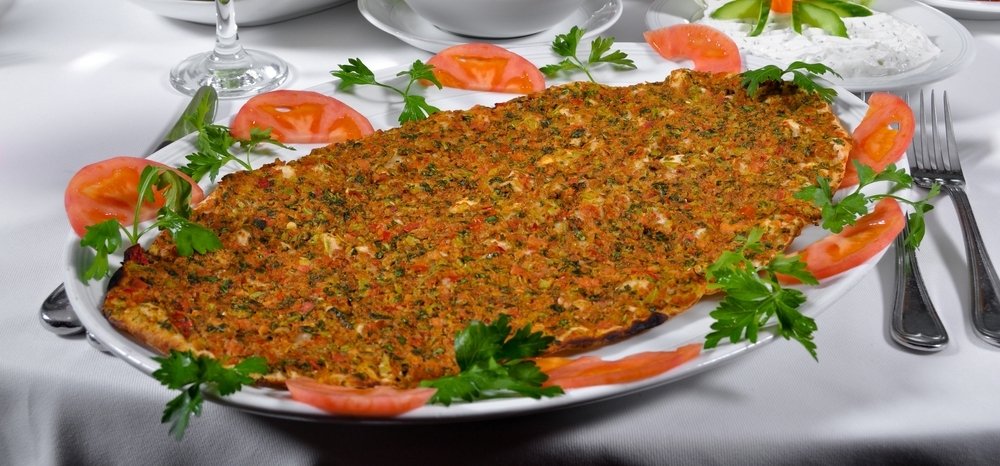
Together, we enjoyed lahmacun, yalanji (stuffed vine leaves), stuffed grape leaves and many other dishes that beautifully combine Syrian and Turkish culinary traditions.
Turkish lahmacun, one of the most important dishes of Turkish cuisine. (Shutterstock Photo)
Today, dishes such as kebab, şiş köfte and halwa remain living reminders of the cultural exchanges that flourished under Turkic dynasties across South Asia, Central Asia, the Middle East, Eastern Europe and the Balkans. Their influence continues to shape food, language, clothing and customs across these regions.
I also met Gaziantep’s respected scholars and welcoming hosts, Hanifi Çanakcı and Hasan Aksut. The city proudly honors its historical figures, whose statues can be found throughout its streets and public spaces.
Gaziantep remains a second home to thousands of Syrians, many of whom will one day serve as informal ambassadors for Türkiye abroad. Although the return of many Syrian refugees has affected parts of the local economy, it has also created new opportunities in construction, trade, and services. As Türkiye’s gateway to Syria, Gaziantep continues to offer significant investment potential.
Fatma Şahin’s vision for Gaziantep
Gaziantep’s growing reputation as one of the world’s leading tourist destinations reflects the vision and leadership of its first female reelected mayor, Fatma Şahin, who previously served as a Cabinet minister and now chairs several national platforms.
During my visit, I admired the city’s libraries, universities, modern shopping centers, beautifully designed parks, colorful amusement facilities and elegant mosques. Above all, Şahinbey MilletMosque stands as a magnificent reminder of the grandeur of the Ottoman Empire, symbolizing its architectural excellence, nation-building tradition (millet) and enduring cultural legacy.
Located in the heart of the Balkans, Bosnia-Herzegovina is a country where history, spirituality, culture and nature come together in remarkable harmony. As one of the most significant heirs to the Ottoman legacy in Southeastern Europe, the country offers visitors a unique opportunity to explore centuries-old monuments, sacred sites and breathtaking landscapes while experiencing the coexistence of different religions and cultures. From the bustling streets of Sarajevo to the peaceful rivers of Herzegovina, Bosnia-Herzegovina remains one of the region’s most rewarding travel destinations.
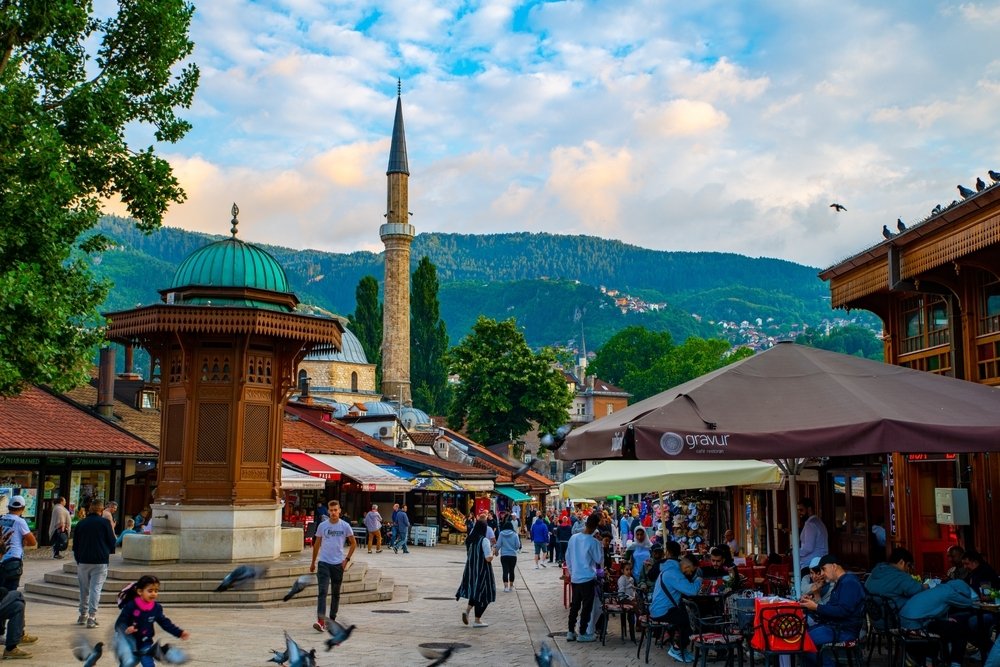
The journey often begins in Sarajevo, the country’s capital, where Baščaršija serves as the historical and cultural center of the city. Established during the Ottoman period, this lively bazaar continues to preserve its authentic atmosphere with traditional copper workshops, artisan shops, cafés and local restaurants. Walking through its narrow stone streets allows visitors to experience the architectural and cultural legacy of the Ottoman Empire that still shapes Sarajevo’s identity today.
Vibrant Baščaršija district in Sarajevo, with its historic fountain and minaret against a mountainous horizon, Sarajevo, Bosnia-Herzegovina, July 8, 2022. (Shutterstock Photo)
Only a few steps away stands the magnificent Gazi Husrev Bey Mosque, one of the finest examples of Ottoman architecture in the Balkans. Built in the 16th century, the mosque remains an active place of worship and an enduring symbol of Bosnia’s Islamic heritage. Adjacent to it is the Gazi Husrev Bey Madrasa, one of the oldest educational institutions in the region, which has trained generations of scholars and continues to represent the Ottoman tradition of learning and public service.
Sarajevo is also celebrated as one of Europe’s most diverse cities. Historic mosques stand alongside Catholic cathedrals, Orthodox churches and synagogues, reflecting centuries of peaceful coexistence among different faiths. This unique cultural landscape has made Sarajevo an important symbol of religious tolerance and mutual respect, where visitors can witness how diverse communities have shared the same urban space throughout history.
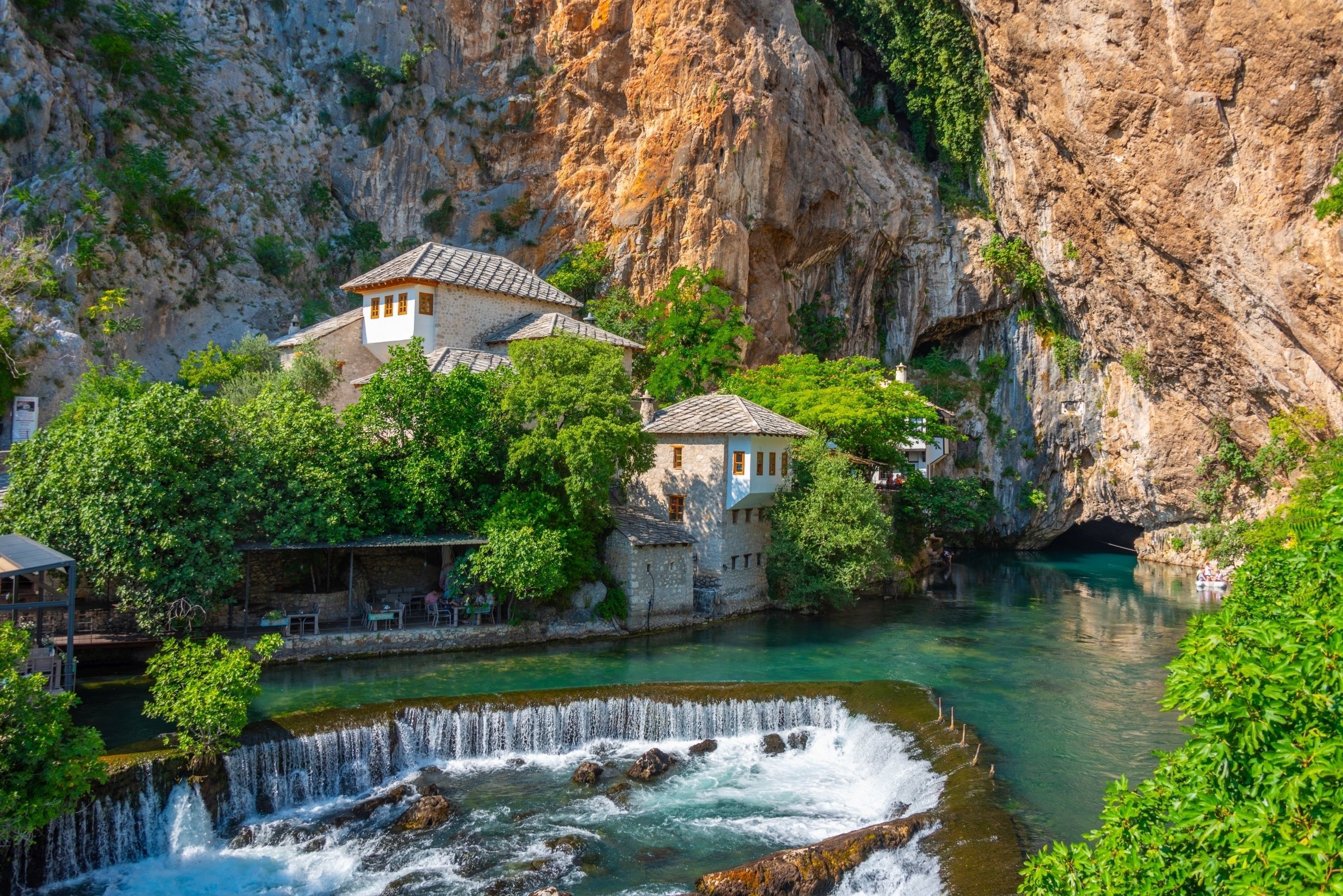
Blagaj Tekke, an historic Sufi monastery built on the cliffs by the water, Bosnia-Herzegovina. (Shutterstock Photo)
Among Bosnia-Herzegovina’s most important spiritual destinations is the Blagaj Tekke, located beside the spectacular spring of the Buna River beneath towering limestone cliffs. Founded by Anatolian dervishes known as the Alperens, the tekke combines remarkable Ottoman architecture with one of the country’s most beautiful natural settings. Its peaceful atmosphere and historical significance attract visitors from around the world, making it a place that few travelers leave Bosnia without experiencing.
Near Mostar, visitors can also discover the Hacı Aliya Mosque, an elegant example of classical Ottoman architecture designed by Mimar Hayreddin, one of the most distinguished students of the legendary architect Mimar Sinan. The mosque reflects the refined craftsmanship and aesthetic principles that made Ottoman architecture renowned throughout the empire.
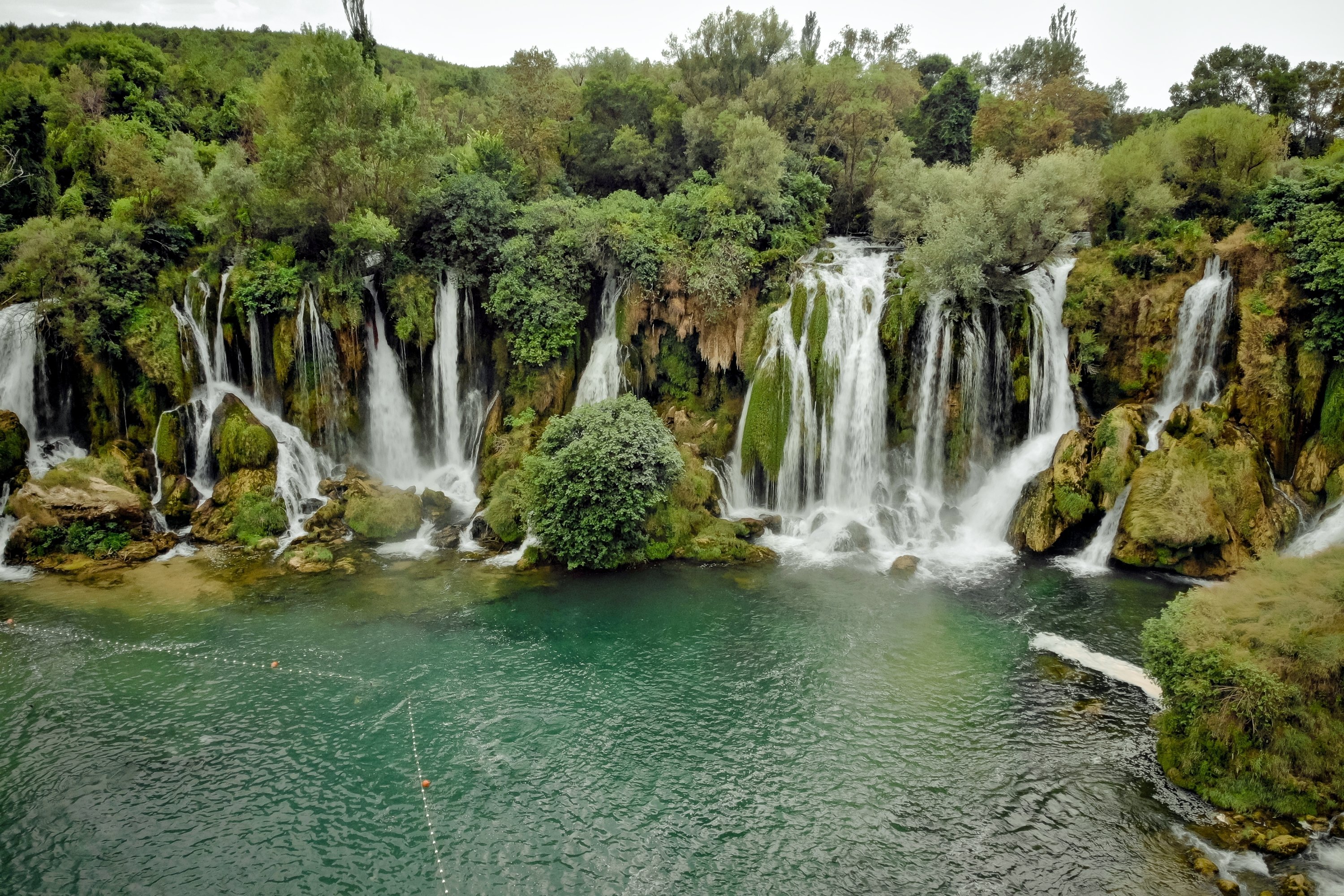
Bosnia-Herzegovina’s natural beauty is equally impressive. The Kravica Waterfalls, surrounded by lush forests and crystal-clear waters, provide one of the country’s most spectacular landscapes. During the summer months, the waterfalls offer visitors a refreshing escape while showcasing the harmony between Bosnia’s rich natural environment and its historical heritage.
An aerial view of Kravica Waterfalls in Bosnia-Herzegovina. (Shutterstock Photo)
No visit would be complete without seeing the iconic Old Bridge of Mostar. Constructed during the Ottoman era by Mimar Hayreddin, the bridge became a masterpiece of engineering and a symbol of connection between cultures. Although destroyed during the Bosnian War, it has been faithfully reconstructed and today stands as a powerful symbol of reconciliation, resilience and the preservation of cultural heritage. It remains one of the Balkans’ most recognizable landmarks and an essential stop for every traveler.
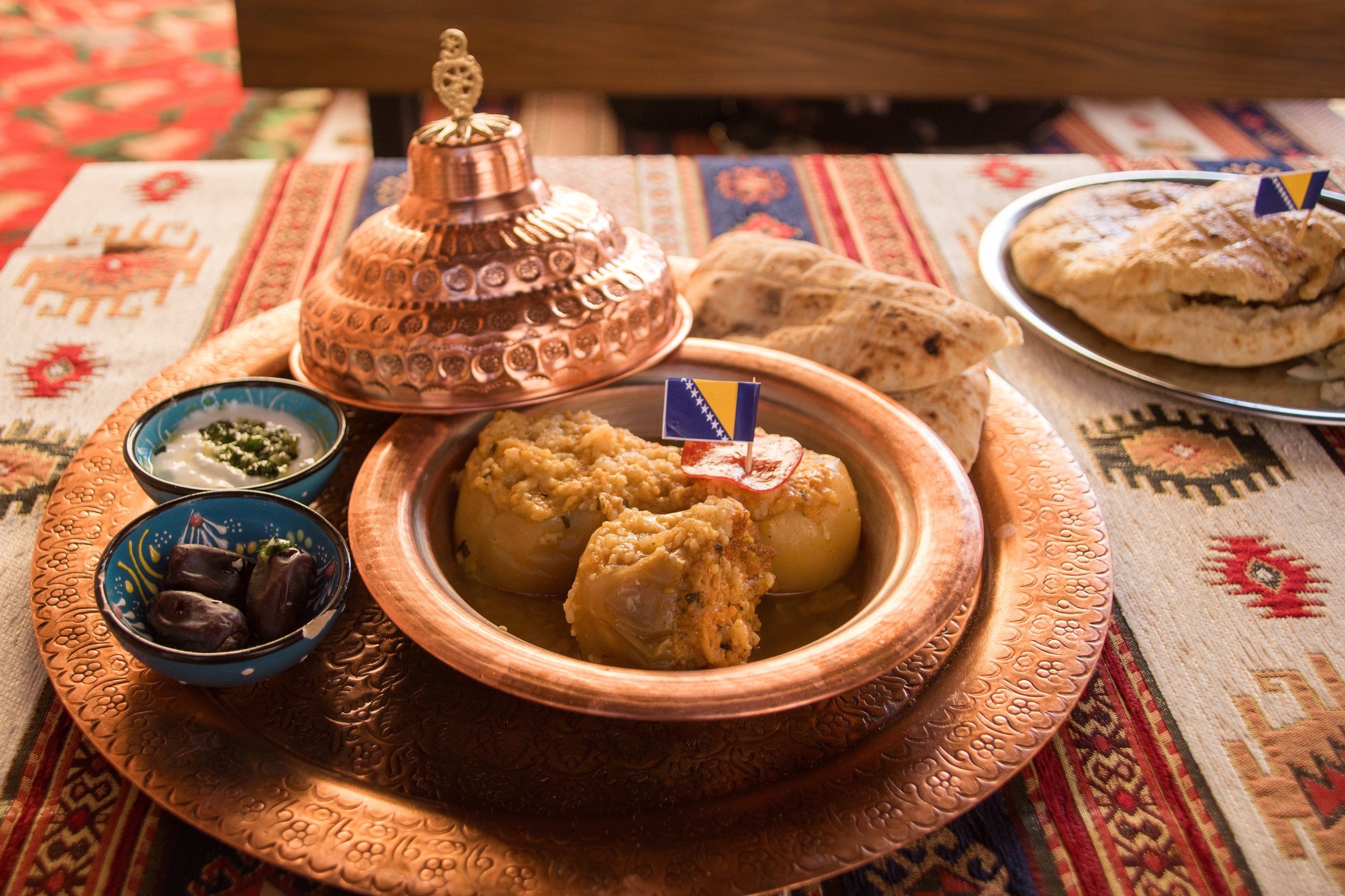
Bosnia-Herzegovina is also a paradise for food lovers. Traditional dishes such as ćevapi, pljeskavica, Bosnian börek and Begova soup reflect centuries of Ottoman culinary influence while showcasing the country’s warm hospitality. Sampling these local specialties is an essential part of understanding Bosnian culture.
A traditional Bosnia-Herzegovina dish called Jelan Dolma. (Shutterstock Photo)
For those interested in history, museums dedicated to the Bosnian War and the Srebrenica genocide offer meaningful insights into the country’s recent past. The Kovači Martyrs’ Cemetery, where the first President of independent Bosnia-Herzegovina, Alija Izetbegović, is buried, is another place of deep historical and spiritual significance, attracting visitors wishing to pay their respects.
Beyond its monuments and landscapes, Bosnia-Herzegovina offers an experience that deeply touches its visitors. Walking through cities that still bear the scars of war while witnessing a society rebuilt through resilience and hope creates a profound psychological impact. At the same time, the call to prayer from centuries-old mosques, the peaceful atmosphere of historic tekkes and the country’s many sacred sites remind visitors of the enduring values of faith, patience and solidarity. These places encourage reflection, inner peace and a deeper appreciation of Bosnia-Herzegovina’s rich cultural identity.
With its Ottoman heritage, multicultural character, remarkable architecture, magnificent natural scenery and welcoming people, Bosnia-Herzegovina is far more than a tourist destination. It is a living testament to the enduring legacy of history, faith and cultural coexistence. For travelers seeking both historical discovery and spiritual enrichment, this remarkable Balkan nation deserves a place at the top of every travel itinerary.
The Daily Sabah Newsletter
Keep up to date with what’s happening in Turkey,
it’s region and the world.
SIGN ME UP
You can unsubscribe at any time. By signing up you are agreeing to our Terms of Use and Privacy Policy.
This site is protected by reCAPTCHA and the Google Privacy Policy and Terms of Service apply.






 Daily Agenda1 day ago
 Daily Agenda2 days ago
 Daily Agenda2 days ago
 Daily Agenda2 days ago
 Politics3 days ago
 Daily Agenda3 days ago
 Economy3 days ago
 Daily Agenda3 days ago