
Sports
Flamengo edge rivals Palmeiras to win 4th Copa Libertadores title

Flamengo won their fourth Copa Libertadores title Saturday with a 1-0 victory over Palmeiras at the Estadio Monumental, extending Brazilian dominance as the trophy went to a club from Brazil for the seventh straight year.
Flamengo had the better chances, with efforts from Samuel Lino and Bruno Henrique, while Palmeiras came closest when Khellven sent in a fine cross to Vitor Roque. However, neither side managed to create many opportunities in the first half.
After the break, Palmeiras built pressure as Joaquin Piquerez’s long-range attempt was blocked. However, Flamengo responded with Giorgian de Arrascaeta and Leo Pereira both seeing close-range efforts denied.
The breakthrough came in the 67th minute with Danilo rising to meet a corner and guiding his header into the net.
“All finals are difficult, and this one was very tough. Scoring the goal with the team I love, I have no words,” the Brazilian defender said.
“We put a lot of work into set pieces, I knew we would have a chance, I took advantage of it, and now it’s time to celebrate.”
Palmeiras pushed for an equalizer, with Roque’s close-range attempt blocked in the dying minutes, yet Flamengo defended resolutely and nearly doubled their lead with Jorge Carrascal and Everton’s efforts in the added time.
“It was a tough match. It’s a sad day, but champions are made of this, we’ll get our revenge,” Palmeiras forward Jose “El Flaco” Lopez said, highlighting the team’s determination to bounce back in the domestic league.
Palmeiras currently trail league leaders Flamengo by five points in the Brasileirao, with two rounds remaining.
For Flamengo, the win gave them a sense of redemption as Palmeiras had defeated them in the 2021 final.

Manchester City face a potentially hostile reception at Liverpool on Sunday in their first match since being found guilty of more than 100 breaches of the Premier League’s financial rules.
City have appealed the findings and maintain their innocence, but their future in the English top flight is under scrutiny after the club was found to have used “sham” sponsorship deals to inflate revenues and reduce costs by more than 900 million pounds ($1.2 billion).
Manchester United and Tottenham are both desperate for a victory when they clash at Old Trafford, while Arsenal will look to bounce back from a rare defeat when they host Leeds.
Agence France-Presse (AFP) Sports previews the standout fixtures as the Premier League returns to action following a three-week international break.
City face the music
City’s transformation into the dominant force in English football since an Abu Dhabi-backed takeover 18 years ago has cost Liverpool more than most.
The charges against City cover the period from 2009 to 2018, but the foundations they built during that time helped ensure they remained the Premier League’s top dogs for much of Pep Guardiola’s subsequent tenure.
Jurgen Klopp’s Liverpool twice missed out on the title to Guardiola’s side despite amassing more than 90 points.
Those battles to be crowned champions of England over the past decade have turned this fixture into the Premier League’s marquee matchup, and the eyes of the football world will be on Anfield again Sunday.
City have won every game since Enzo Maresca replaced Guardiola, but their title challenge could be derailed by a sanction unless they can overturn the verdict of an independent commission.
Liverpool will seek to capitalize on City’s uncertainty and kick-start their own campaign.
Andoni Iraola remains unbeaten as Liverpool manager, but draws against Newcastle, Nottingham Forest and Fulham have left the Reds six points off the top spot.
“I think it’s a big game, and I think everyone is expecting to play, to watch, to be part of that game,” Iraola said.
“We know we will have to be at our best, and I also know that the people will be looking to help the team.”
Pressure on Carrick
City’s scandal has diverted attention from a difficult start to the season on the other side of Manchester.
United have taken just five points from what appeared to be an inviting opening five fixtures and now face a difficult run of games.
Just months after being handed the job on a permanent basis, Michael Carrick is the latest United manager facing scrutiny over his ability to turn around the fortunes of the struggling English giants.
After Saturday’s visit from Tottenham, the Red Devils travel to Atletico Madrid, Leeds and Como over a nine-day period. They also face Chelsea, Roma and Aston Villa before next month’s international break.
Tottenham spent more than 300 million pounds on new players during the transfer window but have nevertheless spent the past three weeks rooted to the foot of the table after taking just two points from their opening five games.
Arsenal just getting started
Defending champions Arsenal will look to bounce back when Leeds visit the Emirates Stadium in Saturday’s early kickoff.
A perfect start to the campaign for the Gunners ended dramatically with a 3-0 defeat at Brighton in their last outing.
But developments in the City case have reinforced Arsenal’s position as bookmakers’ favorites to retain the title.
Arsenal manager Mikel Arteta extended his contract through 2030 this week and is determined that a first league title in 22 years will mark only the beginning of a golden age for the north London club.
“This is only the beginning of what we can achieve together,” the Spaniard said.
UEFA is seeking a challenger to FIFA President Gianni Infantino ahead of next year’s election, calling for a respected and unifying leader with deep roots in football as Africa’s 54 member associations pledged their unconditional support for the incumbent.
European football’s governing body outlined its strategy Thursday after a meeting of its 55 member federations in Berlin, signaling a growing divide over FIFA’s leadership, governance and financial priorities ahead of the March 18 election in Rabat, Morocco.
UEFA said FIFA needed a president who could unite the global game, command confidence across regions and prioritize development, reform, integrity and independence.
The candidate should represent FIFA worldwide and provide leadership without becoming involved in the organization’s day-to-day management, UEFA said, without identifying a potential challenger.
The search could extend beyond Europe as Infantino seeks to retain the backing of FIFA’s 211 member federations. UEFA President Aleksander Ceferin has led efforts to challenge Infantino’s increasingly executive-style leadership but ruled himself out of the FIFA race.
Instead, Ceferin confirmed Thursday that he would seek a fourth and final term as UEFA president at an election scheduled for April 22 in Astana, Kazakhstan. The announcement came despite his 2024 pledge not to seek another term, removing one of the most prominent potential challengers to Infantino from consideration.
The growing opposition to Infantino follows a controversial proposal to sell private investors stakes in the World Cup and other FIFA tournaments. The plan, which was quickly abandoned after a backlash, intensified long-standing European concerns about FIFA’s governance and decision-making.
UEFA used its Berlin meeting to set out a series of reforms it wants FIFA to adopt, including stronger protections for oversight bodies against interference from the president or senior executives.
“No FIFA resources may be used for personal or electoral interests,” the proposed reforms stated.
The measures were backed by all UEFA members except Azerbaijan, which has pledged its support to Infantino. One of the FIFA president’s key campaign aides is Azerbaijani.
German football federation president Bernd Neuendorf, a member of the FIFA Council, expressed doubts that meaningful changes could be achieved under the current leadership.
“I’m not convinced personally that a credible reform process can be achieved under the current FIFA leadership,” Neuendorf told reporters.
UEFA also renewed its call for FIFA to distribute a one-off $10 million payment to each of its 211 member associations from its reserves. FIFA’s cash reserves stand at nearly $6 billion following the lucrative 2026 World Cup, which is being hosted by the United States, Canada and Mexico.
Ceferin and other global football officials are due to meet Infantino in Zurich next week for the first meeting of the 37-member FIFA Council since the private investment proposal became public.
The meeting is expected to provide an opportunity for officials to address their differences over FIFA’s direction and the independence of its decision-making bodies.
UEFA’s concerns extend beyond financial matters to decisions involving players and competitions.
FIFA’s handling of disciplinary and eligibility cases involving Portugal captain Cristiano Ronaldo, United States forward Folarin Balogun and Congo goalkeeper Lionel Mpasi has raised questions among football officials.
Infantino’s influence over sporting decisions has also come under scrutiny following Inter Miami’s inclusion in the 2025 Club World Cup despite the Major League football team not being the league’s champion. The decision was made without a clearly established consultation process, prompting further questions about FIFA’s governance.
While UEFA considers its options, Infantino has been strengthening his support elsewhere, particularly in Africa, where the continent’s 54 national federations have pledged to back his reelection.
At a conference in Cape Verde on Thursday, Confederation of African Football President Patrice Motsepe announced the continent’s unanimous support for Infantino, giving the FIFA president a significant boost as he seeks another term.
“There is a unanimous decision by the 54 CAF member associations to unconditionally support Gianni as president of FIFA,” Motsepe told delegates.
He attributed the backing to Infantino’s support for African football since taking office in February 2016.
Infantino, who received a standing ovation at the gathering, reminded African officials of FIFA’s investment in the continent through its development programs.
“With the FIFA Forward program we have invested, in 10 years, $1 billion in Africa, $500 million in the last four years,” Infantino said. “One hundred and 24 different projects and many other actions.”
He described the investment as part of a broader effort to strengthen African football and said FIFA would continue seeking additional resources to help the continent compete at the highest level.
Infantino also acknowledged that disagreements could arise within the global game, urging officials to address concerns through dialogue without directly referring to the abandoned private investment proposal.
“When you go through a journey, sometimes concerns are raised,” he said. “When they are raised, we have to address them.”
He added that FIFA remained committed to expanding opportunities for African teams, pointing to the continent’s representation at the 2026 World Cup.
“Ten countries at the World Cup has been a success for the entire continent,” Infantino said.
“We will continue to look for the resources and the increases in funding that are necessary to boost the African game to the top of world football.”
Africa’s backing contrasts with the opposition emerging in Europe, highlighting the challenge facing any candidate seeking to unseat Infantino. The continent represents more than a quarter of FIFA’s voting membership, making its support a valuable asset in a contest decided by national federations.
Former Switzerland and Tottenham defender Ramon Vega has already said he intends to challenge Infantino, marking a second attempt to run against the FIFA president after failing to secure the required support from five federations in 2019.
It remains unclear whether Vega meets FIFA’s eligibility requirement that candidates must have held a recognized role in football for at least two of the previous five years.
Lionel Messi and Cristiano Ronaldo have defined football for nearly two decades, but their international careers reveal a striking difference.
Argentina built a team around Messi that thrives on collective sacrifice, while Portugal have repeatedly struggled to balance Ronaldo’s influence with the needs of the squad.
Both countries boast generations of exceptional players, yet Argentina’s unity has delivered major international trophies, while Portugal have faced persistent questions about accommodating their greatest star.
Boy from Rosario
For years, Messi struggled under comparisons with Diego Maradona. After leaving Rosario for Barcelona at 13, he faced relentless pressure to reproduce his club success with Argentina.
Consecutive Copa America final defeats in 2015 and 2016 intensified criticism. Messi briefly retired from international football after the latter loss, prompting doubts about his connection with the national team.
Unlike Maradona, Messi was quiet and reserved, leading critics to question his leadership qualities.
That perception changed when Argentina won the 2021 Copa America, defeating Brazil 1-0 at the Maracana to end a 28-year wait for a major senior men’s international trophy.
Under coach Lionel Scaloni, Argentina had developed a team that no longer depended entirely on Messi to produce every decisive moment.
The transformation became clearer at the 2022 World Cup. During the quarterfinal against the Netherlands, Messi celebrated his penalty by cupping his ears toward the Dutch bench, responding to comments from coach Louis van Gaal.
After Argentina advanced on penalties following a 2-2 draw, Messi interrupted a television interview to confront Dutch striker Wout Weghorst, delivering the now-famous line, “¿Qué mirás, bobo?”
The moment revealed Messi’s willingness to defend his teammates. His leadership was not about being the loudest voice in the dressing room, but earning trust and showing his teammates he would stand up for them.
Argentina eventually defeated France in a dramatic final, allowing Messi to lift the World Cup.
Team around trust
Argentina’s success was no accident. Since taking charge in 2018, Scaloni has built a team based on collective responsibility, introducing younger players who grew up idolizing Messi.
Rather than assembling admirers around their captain, he gave them defined roles that allowed the team to function cohesively.
Rodrigo De Paul became one of Messi’s closest allies. Frequently described as his bodyguard, the midfielder combines relentless running with a willingness to confront opponents who target his captain.
Emiliano Martinez provides confidence and competitive intensity, while Enzo Fernandez, Alexis Mac Allister and Julian Alvarez have helped establish a generation willing to work for Messi.
Their contributions go beyond admiration. De Paul’s defensive work allows Messi to conserve energy, Mac Allister helps maintain balance, and Alvarez’s movement creates space for his captain.
Argentina’s unity reflects a simple principle: Messi does not have to carry the team alone because everyone understands their responsibilities.
Ronaldo’s leadership presents a different challenge
Ronaldo’s career has been built on ambition, discipline and extraordinary self-belief. Those qualities made him one of football’s greatest players, but his later international years have raised questions about how Portugal should accommodate him.
For years, Ronaldo was portrayed as the outspoken leader, while Messi was considered too quiet to inspire his country.
Portugal’s Euro 2016 triumph appeared to support that argument. Ronaldo helped lead his country to its first major international title, encouraging teammates from the sidelines after injury forced him off during the final against France.
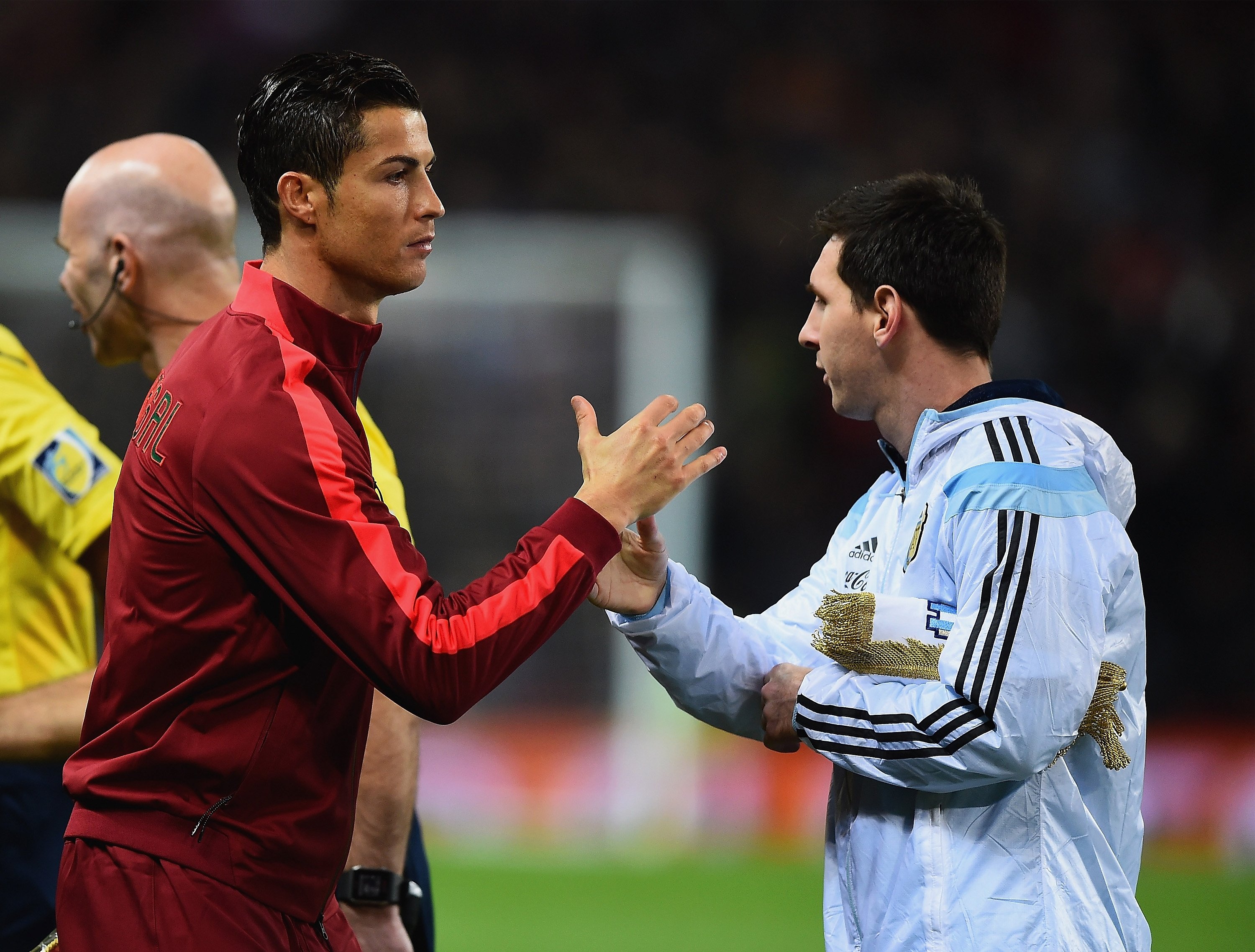
Argentina, meanwhile, were still struggling to win a major trophy with Messi.
Over time, however, the narrative changed. Argentina developed a successful system around Messi, while Portugal struggled to establish an attacking structure that maximized Ronaldo’s strengths without limiting the team’s collective play.
The challenge became particularly visible at the 2022 World Cup. Before the tournament, Ronaldo gave an explosive interview with Piers Morgan, criticizing Manchester United and manager Erik ten Hag. The interview led to the termination of his contract and ensured controversy followed him into Portugal’s preparations.
Portugal’s performances intensified the debate. Coach Fernando Santos dropped Ronaldo for the round-of-16 match against Switzerland, and Portugal responded with a commanding 6-1 victory. Goncalo Ramos scored a hat trick, demonstrating the team’s attacking potential without Ronaldo starting.
The result did not prove Ronaldo was responsible for Portugal’s difficulties, but it raised legitimate questions about tactical flexibility.
Even when Portugal succeeded, discussion frequently returned to Ronaldo’s role rather than the collective performance.
Euro 2024’s emotional pressure
The debate continued at Euro 2024, when Ronaldo missed a penalty against Slovenia in extra time during Portugal’s round-of-16 match. He broke down in tears, and his teammates gathered around him.
Portugal eventually advanced after winning the shootout, with goalkeeper Diogo Costa saving all three Slovenian attempts.
There was nothing wrong with Ronaldo’s emotional reaction. Missing a decisive penalty can be devastating, especially for a player accustomed to extraordinary standards.
Yet the episode illustrated how Ronaldo’s individual struggles could dominate Portugal’s narrative, even when other players delivered decisive contributions.
The issue is not that Portugal’s players lack affection for their captain. Their response demonstrated genuine solidarity. The question is whether that relationship can coexist with the freedom to build a team around several leaders rather than one dominant figure.
Bigger than the system
Ronaldo’s club career has also featured public conflicts over his role.
After Real Madrid won the Champions League in 2018, he cast uncertainty over his future during the celebrations before eventually joining Juventus. His time in Italy ended with another high-profile departure, while his second Manchester United spell collapsed after he refused to enter as a substitute against Tottenham in 2022.
His subsequent interview with Morgan intensified the dispute with Ten Hag, leading to his departure from Old Trafford.
These episodes illustrate the difficulty of balancing a superstar’s ambitions with a team’s tactical requirements. Coaches must consider pressing, movement, defensive responsibilities and opportunities for younger players.
As a player ages, a team cannot build its future entirely around what he once offered.
Argentina have managed a similar challenge by allowing Messi to concentrate on his greatest strengths while teammates handle much of the defensive work. Portugal have faced greater scrutiny over whether their decisions prioritize collective performance or preserve Ronaldo’s central role.
Neither player’s legacy can be reduced to a simplistic comparison between a team player and a selfish superstar. Ronaldo helped Portugal win Euro 2016 and the 2019 Nations League, while Messi’s success reflects Scaloni’s tactical organization and his teammates’ quality.
Ultimately, Argentina made their superstar part of a collective mission. Portugal’s challenge has been ensuring Ronaldo’s extraordinary legacy does not overshadow the needs of the team around him.
Rıza Kayaalp is preparing for another world championship with a bigger prize still in sight.
The 36-year-old Turkish Greco-Roman wrestler is targeting a sixth world title at the 2026 World Wrestling Championships in Astana, Kazakhstan, while keeping his ultimate goal firmly fixed on the Los Angeles 2028 Olympics.
Kayaalp, a five-time world and 13-time European champion, is currently training with Türkiye’s Greco-Roman national team at a high-altitude camp in Erzurum ahead of the Oct. 24-Nov. 1 world championships.
The team has been combining indoor sessions at its hotel with walks on Mount Palandöken as it looks to sharpen its conditioning before heading to Astana.
For Kayaalp, the Erzurum camp is also part of a carefully measured plan to extend his career to Los Angeles.
“This is the first time we are holding our final camp at such a high altitude,” Kayaalp said. “We think it will be good for us. I am sure I will get the benefit of the high altitude. If it works well, perhaps we will come here for the championships leading up to 2028 and maybe even the 2028 Olympics.”
Kayaalp has already built one of the most decorated careers in European wrestling. His 13 European titles moved him past Russian great Aleksandr Karelin’s record, while his five world championships have established him among the sport’s elite.
Yet one major prize remains missing from his collection: an Olympic gold medal.
Kayaalp has won three Olympic medals during his career, but he has never stood on the top step of the podium. He hopes to change that in Los Angeles.
Before then, he plans to compete at two more world championships and two European championships, using those tournaments to maintain his competitive sharpness and stay in peak condition for his final Olympic campaign.
“The Olympics are my most important goal,” Kayaalp said. “There are two years until the Olympics, and before then there are two world championships and two European championships. Of course, the goal is to win those championships as well, but my biggest goal is the Olympics.”
Kayaalp also dismissed the idea that financial rewards have been the driving force behind his lengthy career.
“If we were doing this for money, we would do something else and try to invest what we earned,” he said. “Our goal was to win medals and break records in Europe and the world. The only medal I have not won is the Olympic gold. That is my goal.”
The veteran wrestler acknowledged the demands of continuing at the highest level at his age, particularly after already achieving so much.
“It is not easy to endure all these difficulties at this age when you have already achieved so many things,” he said. “We have a debt of loyalty to our country. It is our duty to repay it.”
Kayaalp said Türkiye supported him from his early days in wrestling and helped develop him into an international champion, giving him another reason to continue competing despite the physical demands of the sport.
“We have a state that took us from the village and raised us,” he said. “That is why our goal is always to give back for as long as we are physically able. We are continuing to achieve that.”
His immediate focus, however, is Astana.
Kayaalp wants to remain competitive through the championships leading up to Los Angeles, with every tournament serving a broader purpose as he attempts to preserve his strength, fitness and experience for one final Olympic push.
“I need to stay fit and strong until I get there,” he said. “Whatever needs to be done in terms of training, I will do it. God willing, perhaps it will happen later, but maybe that is a lesson to be grateful. We should ask, work and believe. With God’s help, why can’t it happen?”
The Australian Open will bring back its wildly unpredictable 1 Point Slam in 2027, with Carlos Alcaraz, Coco Gauff, Naomi Osaka and Jannik Sinner among the stars confirmed to compete in the one-point, sudden-death tournament.
The event will return to Melbourne Park on Jan. 13, ahead of the Australian Open, after its headline-making debut in 2026 gave amateur players a rare chance to share the court with some of the biggest names in tennis.
The format is deliberately simple. Every match consists of a single point, with the winner advancing and the loser immediately eliminated. Professionals, amateurs and celebrity wildcards compete in the same knockout field, meaning one serve, return or mistake can decide a player’s entire tournament.
The concept produced one of the biggest surprises of the 2026 Australian tennis season when Sydney amateur Jordan Smith won the inaugural edition in front of a packed Rod Laver Arena.
Smith, who qualified through the grassroots pathway as New South Wales state champion, defeated several established professionals on his way to the title, including Sinner and Amanda Anisimova, before beating Taiwan’s Joanna Garland in the final to claim the A$1 million prize.
His unexpected run illustrated the appeal of the format, giving club-level players the opportunity to face elite professionals while putting a significant prize and the spotlight of a Grand Slam crowd on the line.
Tennis Australia Chief Tennis Officer Tom Larner said the event was designed to bring elite and grassroots tennis together.
“It creates an opportunity for grassroots tennis players to share the spotlight with some of the biggest names in the game,” Larner said.
“Having stars like Carlos Alcaraz, Coco Gauff, Naomi Osaka and Jannik Sinner locked in to play, alongside everyday Australians … captures exactly what this event is about, bringing people together through tennis.”
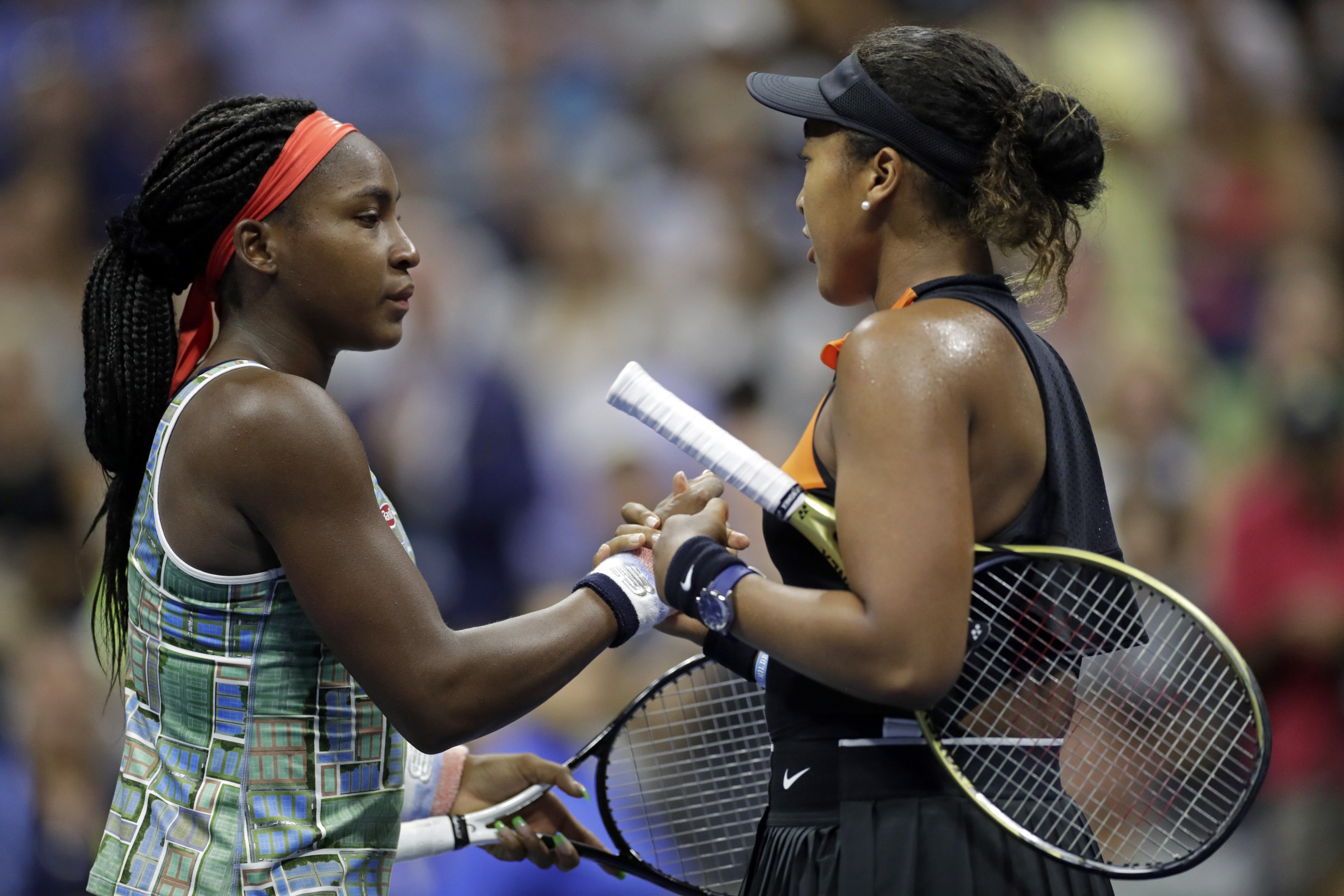
The amateur field for 2027 will again feature eight state and territory championship winners, with eight additional players earning places through qualifying events held across Australia. Community competitions and club events will provide pathways into the tournament, with more qualifying opportunities scheduled during Australian Open Opening Week.
The format will again put men and women in the same draw, adding another layer of unpredictability to a competition where traditional rankings and experience can quickly become irrelevant.
A game of rock-paper-scissors typically determines who serves and who receives, before the players have just one point to settle the contest.
That simplicity is central to the event’s appeal. A world-class player can be eliminated by a perfectly timed return, while an amateur can seize a once-in-a-lifetime opportunity with a single winning point.
The 2027 final will be played at Rod Laver Arena, with the winner again taking home the A$1 million prize and the tournament’s distinctive trophy made from Australian silver.
The 1 Point Slam will form part of an expanded Australian Open festival that begins Jan. 11, with the main draw getting underway Jan. 17 and the tournament running through Jan. 31.
More than 1.3 million fans attended the 2026 Australian Open, setting a record for the tournament, and organizers are planning further upgrades for 2027. Those changes include increased viewing capacity, additional seating, expanded shaded areas and a larger Grand Slam Oval designed to accommodate more fans across the Melbourne Park precinct.
The International Olympic Committee has set a timetable for selecting the host of the 2036 Olympic and Paralympic Games, with seven national Olympic committees currently engaged in the process.
Türkiye, Germany, Hungary, India, Qatar, South Korea and South Africa are in the IOC’s Continuous Dialogue phase, the first stage of a revamped selection process designed to provide greater technical scrutiny, financial oversight and support before a host is chosen.
The IOC said Oct. 31 will be the deadline for any additional interested parties to enter the race. The seven current candidates will then present their projects virtually to the IOC’s Future Host Commission in November.
The process is part of reforms approved by the IOC Executive Board and endorsed by the 146th IOC Session in Lausanne in June.
The changes, introduced under the IOC’s “Fit for the Future” reforms, add a Strategic Dialogue stage between the existing Continuous Dialogue and Targeted Dialogue phases.
The IOC said the revised approach is intended to improve transparency, control costs, assess the feasibility of projects at an earlier stage and ensure that proposed Games fit into the long-term development plans of host regions.
The IOC Executive Board is expected to announce the shortlist in March 2027, when the successful candidates will advance into the Strategic Dialogue phase.
Candidates reaching that stage will have to provide initial legal and financial guarantees and respond to the IOC’s Future Host Questionnaire. The Future Host Commission will also conduct site visits to the proposed host regions before preparing its assessment for the Executive Board.
Projects will be judged on several technical criteria, including venue plans, athlete experience, financing, political and public support, organizational capacity and the long-term legacy for host communities.
The IOC will also consider the overall feasibility of each proposal, including cost control and how closely the Games align with broader regional development plans.
The Strategic Dialogue is expected to continue through much of 2028. By the end of that year, the Executive Board will invite a smaller number of candidates to enter the Targeted Dialogue phase.
Those candidates will be required to submit final responses to the IOC questionnaire and provide comprehensive legal, financial and other guarantees covering areas such as venue use and Games delivery.
The Future Host Commission will then submit a final report, allowing the Executive Board to determine which preferred host or hosts should be presented to IOC members for a vote.
The 2036 host is expected to be elected at an IOC Session in the middle of 2029, roughly seven years before the Games.
The seven candidates represent a diverse field, with several bringing previous experience of hosting major international sporting events.
Türkiye’s bid is closely associated with Istanbul, which has made several unsuccessful attempts to host the Olympics. Germany is expected to focus on Munich, which hosted the 1972 Summer Games, while Hungary’s proposal is centered on Budapest.
India’s interest is led by Ahmedabad, which is scheduled to host the 2030 Commonwealth Games. India has never hosted an Olympic Games.
Qatar’s proposal is centered on Doha, which hosted the 2022 FIFA World Cup and is scheduled to host the Asian Games in 2030. A successful bid would make Qatar the first Muslim-majority country to host the Summer Olympics.
South Korea is considering a proposal involving Seoul, host of the 1988 Olympics, potentially alongside other regions. The country also hosted the 2018 Winter Olympics in PyeongChang.
South Africa is seeking to bring the Summer Olympics to Africa for the first time in the modern era. Cities including Cape Town, Durban and Johannesburg have previously been discussed as possible hosts. South Africa hosted the 2010 FIFA World Cup.
The IOC’s new system is designed to gradually narrow the field, moving candidates from exploratory discussions to increasingly detailed assessments before the final vote.
The next Summer Olympics will be held in Los Angeles in 2028 and Brisbane in 2032. The 2036 Games will therefore be the next edition whose host remains undecided.


-

 Politics3 days ago
Turkish police detain 14 suspects linked to Daesh, al-Qaida
-
 Economy3 days ago
Over $16B shifted into deposits amid fund exits: Turkish central bank
-
 Politics3 days ago
Mecca Alliance activates collective deterrence over Saudi attacks
-
 Economy1 day ago
Trump says anyone who doesn’t call AI ‘super intelligence’ is ‘enemy’
-
 Economy2 days ago
Inside Türkiye’s plan to repay investors caught up in fund turmoil
-
 Economy2 days ago
CBRT chief vows cautious stance to preserve disinflation gains
-
 Politics1 day ago
AK Party scores win as Turkish opposition stronghold’s mayor joins
-
 Politics2 days ago
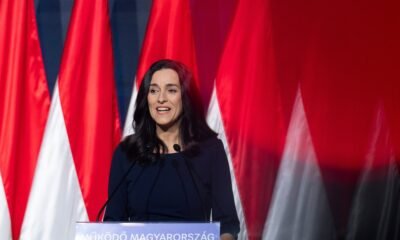
Türkiye, Hungary launch new mechanism to deepen strategic ties