
Economy
German Q2 GDP growth revised slightly upward despite Iran war

The German economy expanded slightly more than previously estimated in the second quarter of the year, owing to strong exports, official data showed Tuesday, thus weathering the turmoil unleashed by the U.S.-Iran war better than feared.
Gross domestic product (GDP) grew 0.3% from April to June compared with the first three months of the year, according to revised data from the statistics office, Destatis.
A first estimate in July had put growth at 0.2%, after expansion of 0.4% in the first quarter.
“The German economy is maintaining the growth momentum seen at the start of the year,” said Destatis’s chief, Ruth Brand, adding that “growth was primarily driven by the positive development of exports.”
The revision to second-quarter growth is another sign that the eurozone’s manufacturing powerhouse could be weathering the energy shock unleashed by the U.S. and Israel’s war against Iran better than feared.
Factory output and exports have also been up in recent months despite the fallout from the conflict.
The closely watched ifo business confidence survey released Tuesday rose for the fourth time in a row in August, to 88.8 points, its highest level in over a year.
The increase beat analyst expectations and was a “huge surprise,” said Frank Brandmaier, an analyst at the bank KfW, adding that it was the latest piece of data to “suggest that the overall positive trend is continuing.”
‘More resilient than feared’
The revised GDP data showed that exports rose 2% in the second quarter from the first, while imports were also up substantially.
Investment fell slightly, dragged down by a hefty fall in the machinery and equipment sectors. Spending by both households and governments registered a small increase.
The German economy has stagnated for several years due to high energy costs, growing competition from China and U.S. President Donald Trump’s tariffs.
Hopes had been high at the start of the year that it would stage a strong rebound thanks to Chancellor Friedrich Merz’s spending blitz on defense and infrastructure.
The outbreak of the Middle East war has dimmed those expectations after the hit to energy-intensive manufacturers, with the government now expecting growth of just 0.5% for 2026 as a whole.
The revision of GDP data “is clearly good news,” ING bank analyst Carsten Brzeski told Agence France-Presse (AFP), adding that “it shows that the economy has been more resilient than feared.”
“It also shows that German industry benefited from the fact that Asian competitors suffered more from the war in the Middle East than they themselves. Some industrial orders were actually reverted from Asia to Germany,” he said.
Brzeski warned, however, that Germany faced other problems, from high global energy prices to low water levels on major rivers after months of drought that have hampered cargo transport.
He also warned that Merz’s government must push through a raft of reforms it has promised, from social welfare overhauls to efforts to ease bureaucratic hurdles and other burdens on business.
“Looking ahead, the low water levels, the continued high oil prices and the political struggle to really implement the announced reforms are clear headwinds for German growth,” Brzeski said.

Consumer goods giant Unilever is betting that cutting off food assets and focusing instead on beauty, personal care and home products would close a valuation gap with more focused rivals.
The challenge is convincing investors that a simpler company can deliver higher returns.
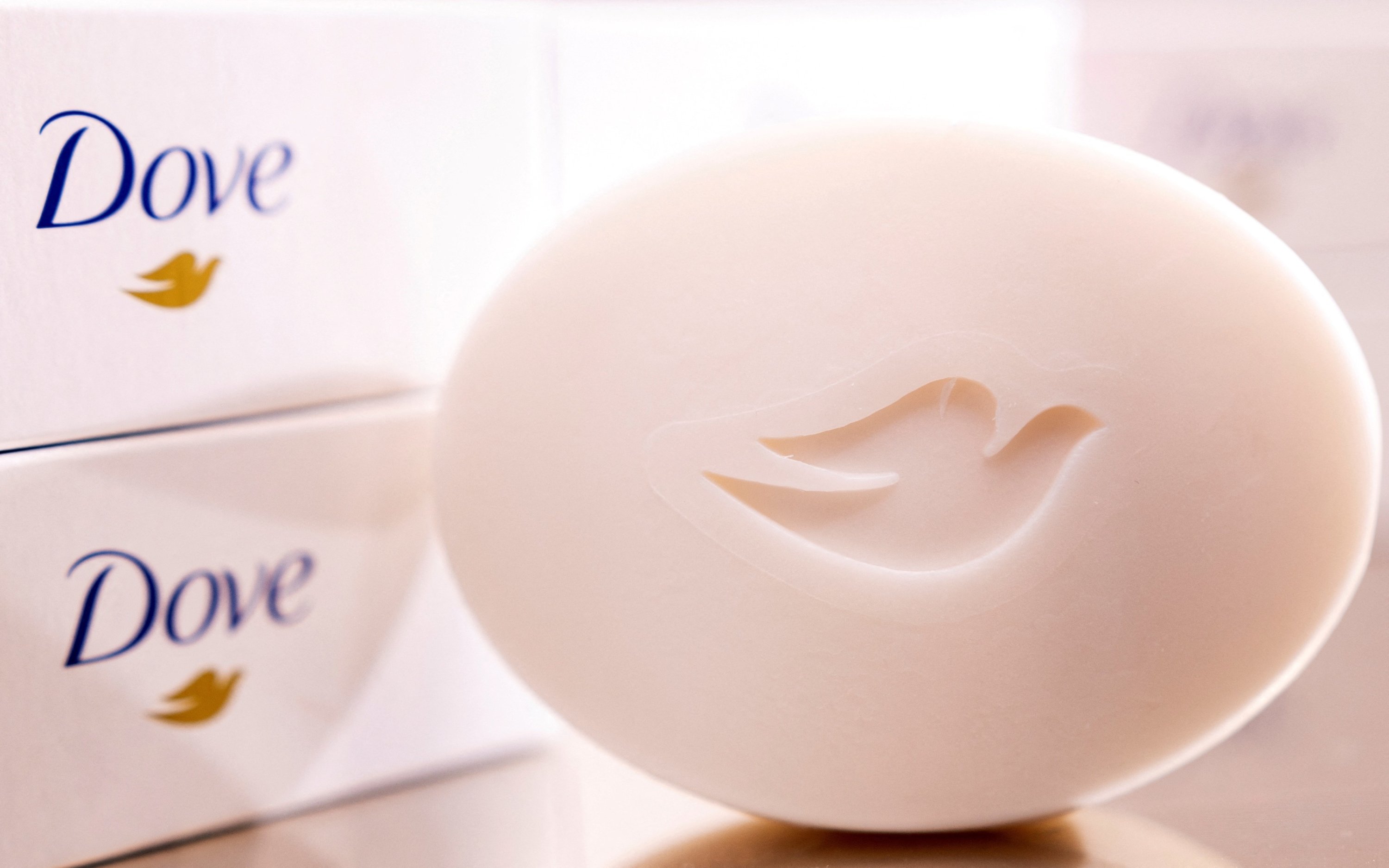
The maker of products such as Dove soap, Axe deodorant and Cif cleaning products trades at 11.5 times enterprise value to core earnings, according to LSEG data. That compares with 14.8 for Procter & Gamble (P&G), 17.5 for L’Oreal and 22.7 for Coca-Cola.
Those multiples suggest investors place a premium on more focused consumer goods companies.
But investors have two main concerns.
Unilever’s deal in March to merge its food business with U.S. spice maker McCormick will leave the British group with an almost 10% stake in the combined company, and its shareholders with a roughly 55% stake.
At the same time, the transaction reduces Unilever’s exposure to a relatively high-margin business, increasing pressure on management to show that faster-growing beauty, personal care and home products can make up the difference.
“Until you show me the evidence that you’re turning this around, you’re sitting on a very low multiple,” said Dan Hanbury, a portfolio manager at Ninety One, a major investor in Colgate-Palmolive, Unilever and L’Oreal.
The market is wary of “false dawns” from corporate turnarounds, he added, saying Unilever probably needed three or four quarters of strong volume growth to win over doubters.
The P&G example
Big industrial companies from General Electric to Siemens have spent years simplifying their structures in an effort to eliminate what investors call a conglomerate discount, a penalty applied to companies whose complexity is seen as weighing on efficiency and growth.
That thinking has increasingly spread to consumer goods companies. Where diversification was once seen as a strength that could cushion changes in consumer tastes, investors now increasingly favor category leaders that can focus investment, innovation and marketing on a narrower set of products.
Under CEO Fernando Fernandez, Unilever has accelerated its retreat from food. The company spun off its ice cream business, and in March struck a roughly $65 billion deal to combine its food division with McCormick.
The issue is not that food is unprofitable. The business has historically generated attractive margins, but growth has lagged Unilever’s beauty and personal care operations.
“Being focused on a single category allows you to be more cost-effective and more innovative,” said Akeel Sachak, global head of consumer at Rothschild & Co.
Investors often point to Procter & Gamble as a template. The Tide detergent maker exited food and streamlined its brand portfolio, subsequently delivering stronger growth and earning a valuation premium for much of the following decade.
“P&G pulled off the restructuring, drove higher growth and commanded a relatively higher premium for probably 10 years,” Hanbury said.
Improving results
Investors and analysts say the focus for Unilever has now switched from portfolio reshuffling to execution.
“If (Unilever) continues to execute, Unilever will continue to see a degree of re-rating … and then hopefully grow from there,” said Will James, portfolio manager at Guinness Global Investors, which holds shares in Unilever and L’Oreal.
Unilever has reported improving results in recent quarters, and in July said sales volumes had reached their highest level in more than a decade.
Yet despite the operational improvement, some Unilever investors are concerned about their continued exposure to the slow-growing food category via their stake in the company, resulting from the McCormick merger, Barclays analyst Warren Ackerman said.
Unilever declined to comment.
CEO Fernando Fernandez told an industry event in June: “I believe that every quarter that goes by, and we deliver the numbers that we have been delivering, and we get closer to the closing of a transaction of McCormick, the value of Unilever will be shown.”
Iranian rial plunged to a record low on Monday as Washington prepared to announce new sanctions that it said would put more pressure on a fragile economy already battered by previous sanctions and a U.S. naval blockade.
The rial dropped to 2.02 million to the U.S. dollar as trading opened on currency markets. Iran’s official central bank rate stood at around 1.5 million rial to the dollar, but the market rate is what most Iranians pay.
The currency had already been under pressure before the U.S. and Israel attacked Iran on Feb. 28, as Iran faced double-digit inflation and negative growth.
The rial has repeatedly hit new lows as nearly six months of war have taken an even greater toll.
Iranians find daily staples increasingly unaffordable. Since the war began, rice is up some 60% and beef prices are more than 150% higher.
The International Monetary Fund (IMF) forecasts that gross domestic product (GDP) will contract more than 5%.
Still, economic pressure has not yet translated into political pressure.
Iran retains a key strategic advantage: Its attacks and threats on ships in the Strait of Hormuz have brought traffic in the vital waterway to a near halt, damaging the world economy and heaping pressure on U.S. President Donald Trump ahead of congressional elections.
The war, as a result, has devolved into a fight over who controls the strait, through which a fifth of the world’s traded oil transited before the conflict. Iran is now refusing to fully reopen it unless it can charge ships.
Iran and Oman, which is located on the opposite side of the strait, are reportedly in the final stages of agreeing on a plan for joint management of the waterway. Oman’s foreign minister is set to visit Iran on Tuesday.
In an attempt to break the impasse, Trump’s administration promised that even stronger sanctions would be announced on Monday, including secondary sanctions on countries that continue to do business with Iran.
Ahead of the announcement, Trump posted on social media that “IRAN IS COMPLETELY COLLAPSING!!!”
“President Trump decimated Iran’s economy to a point where the rial has never been weaker and inflation has rarely been higher,” U.S. Treasury Secretary Scott Bessent wrote Sunday in an opinion piece in the Financial Times (FT).
“The regime’s final refuge now lies in the self-deception of fearful nations that still believe accommodating aggression can secure a durable peace.”
Already last week, the United Arab Emirates (UAE) announced that it was suspending all trade with Iran. The UAE has long been one of Iran’s largest trading partners and its biggest source of imports.
Iranian Foreign Ministry spokesperson Esmail Baghaei told reporters in Tehran on Monday that “any escalation of this situation will undoubtedly bring about consequences.”
“Our hands are not tied,” he added.
Pakistan, which played a key role in brokering a 60-day cease-fire in June, sent a high-level delegation to Iran on Monday to discuss ending the war, the military said.
Trump recently spoke with Pakistani Field Marshal Asim Munir ahead of the army chief’s visit to Iran, according to a person familiar with the discussion.
The person spoke on condition of anonymity to confirm a private conversation. Reuters, citing Pakistani sources, first reported the call.
In downtown Tehran, 73-year-old Sadegh Mahmoudi did not hold out hope for a resolution.
He joined a line of about a dozen people to purchase U.S. dollars, with his remaining savings to hedge against further declines.
“There is no hope for a deal and peace,” he said.
U.S. Treasury Secretary Scott Bessent pledged on Monday to crush Iran’s economy as he gave a live address on a new pressure campaign against Tehran nearly six months into the war, suggesting “no one” should test Washington’s resolve.
Bessent said that new U.S. sanctions aim to “block every potential source of revenue” for Iran and told nations to cut economic ties to Tehran or face retaliation. He termed the operation as the “Operation Economic Outcast.”
“Around the globe, our objective is to sever every economic lifeline that sustains this tyrannical regime until Tehran stands alone,” Bessent told a press conference, announcing secondary sanctions measures.
He said Tehran had two choices before them, either “complete global isolation” or the “path to normalcy.”
Bessent made the announcement as Iran’s currency hit a record low.
“We are going to hold everyone accountable, and this is economic asphyxiation of this regime.”
He added that countries not joining U.S. sanctions would “share in the isolation” of Iran, and noted that President Donald Trump is making phone calls to world leaders with requests to stop their interactions with Tehran.
The Treasury Department said Monday that it has “issued determinations against five critical sectors – digital assets, technology, gold, aviation, and shipping – that the Iranian regime uses to try to prop up its failing economy.”
Bessent, meanwhile, vowed that any entity “that facilitates money laundering on behalf of Iran will be removed from the U.S. dollar system.”
Asked if Chinese banks dealing with Iran could be targeted, Bessent said that: “No one is above the reach of U.S. sanctions.”
“Those who stand with the United States will reap the rewards of our partnership. Those who tether themselves to the Iranian regime should expect to share in the isolation,” he also said.
The Treasury chief earlier declared that an “economic D-Day” had begun against Tehran, in a column for the Financial Times.
The U.S. and Israel triggered the Middle East war with a massive wave of bombing against Iran on Feb. 28, sparking Iranian retaliation across the region.
Saudi Arabia and France inked on Monday a memorandum of understanding (MoU) for a 6-billion-euro ($7-billion) Saudi investment to construct three theme parks near Paris, including one likely to be manga-themed, the French president’s office said.
The French presidency’s Elysee Palace said the agreement for the “colossal” project was signed during a two-day visit to France by Saudi Arabia’s de facto ruler, Crown Prince Mohammed bin Salman (MBS).
The investment will see the construction of three theme parks near Cergy-Pontoise, some 30 kilometers (19 miles) northwest of Paris, it said.
French President Emmanuel Macron on X hailed the “unprecedented announcement,” saying the attractions would be a “new global destination.”
The project will be led by an investment firm Qiddiya, a subsidiary of Saudi Arabia’s sovereign wealth fund.
The parks are expected to create some 22,000 direct jobs, compared with around 20,000 generated by Disneyland Paris, according to the presidency.
The project “stemmed from a discussion between the president of the republic and the crown prince in December 2024” in Riyadh, where they discovered their “shared passion” for manga, “and in particular Dragon Ball Z,” an adviser to Macron told reporters.
Reports had emerged over the summer of plans for a park dedicated to the iconic Japanese franchise in the Val-d’Oise region, though no official confirmation was given.
Macron’s office confirmed that one park is expected to be manga-themed.
The themes of the other two have yet to be disclosed.
The parks will be built and opened in stages, with construction expected to take several years, the Elysee said, without giving an opening date.
The trip marks a rare foreign visit for the crown prince, with Paris emphasizing that he seldom leaves his home country other than for international summits.
It was his first such trip in almost a year.
On Sunday, Macron hosted the Saudi crown prince at the Esports World Cup, while Monday’s talks were also expected to focus on strategic issues, including events in the Middle East.
The Trump administration on Monday moved to introduce a new, over $100,000 fee on employers hiring foreign workers through a high-skilled visa program, after facing a legal setback in an earlier effort.
Curbing immigration, both undocumented and lawful, has been a key goal of President Donald Trump and a persistent demand of his Make America Great Again (MAGA) base.
The $103,265 fee for H-1B visas would serve as a “revenue mechanism” to recoup the costs of administering the lawful immigration system, the Department of Homeland Security said of its newly proposed rule.
The administration has argued the visa program has been exploited to replace, rather than supplement, American workers, and in September 2025, it issued a presidential proclamation imposing a $100,000 fee to combat what it called “systemic abuse.”
But a federal judge in June blocked that order, siding with 20 Democratic-led states in a lawsuit that contended the fee constituted an unlawful tax that bypassed Congressional authority.
Another federal judge in December 2025 upheld the same action, finding the president had “broad statutory authority” to address “a problem he perceives to be a matter of economic and national security.” That ruling is being appealed.
In the new proposal, the administration leans more heavily on cost-based arguments, saying it needs to make up the costs of its agencies, including the U.S. Citizenship and Immigration Services (USCIS), Customs and Border Protection (CBP) and Immigration and Customs Enforcement (ICE).
However, it also acknowledges it would have what it calls an “indirect” benefit: “U.S. employers, if required to pay an additional $103,265 fee when filing an H-1B cap-subject petition, would be less likely to hire an H-1B worker over a qualified and highly-skilled American.”
And it says the new proposed fee “would be in addition to any other applicable fees or payments,” including the fee from the presidential proclamation under legal review. However, this is set to expire this September, unless it is extended.
There will be a 30-day public comments window before any rule can take effect.
There are likely to be legal challenges based on a number of arguments, including the previously advanced theory that the new proposal is a de facto tax, and that it exceeds statutory authority.
Congress created the H-1B program in 1990, and the U.S. currently awards 85,000 H-1B visas per year.
In fiscal year 2025, 70% of H-1B workers came from India, followed by China with 12%, then the Philippines, Canada and South Korea, according to official data.
Amazon is the biggest employer, accounting for more than 9,000 approved H-1B visas in fiscal year 2026.
Past holders of H-1B visas include several prominent tech executives, including SpaceX’s Elon Musk and Google CEO Sundar Pichai.
Critics say the new rules will leave critical shortages in different fields, including IT, engineering, education and medicine.
Türkiye and Qatar aim to lift their bilateral trade volume to $5 billion, Trade Minister Ömer Bolat said on Monday as he hosted Qatar’s Minister of State for Foreign Trade, Ahmed bin Mohammed Al-Sayed, in Ankara.
“Türkiye-Qatar relations have truly made tremendous progress. Our total annual foreign trade increased 53-fold over the past 21 years, reaching $1.3 billion last year,” Bolat told reporters after the meeting.
Trade between the two countries climbed as high as $2.5 billion during preparations for the 2022 FIFA World Cup in Qatar, largely due to construction projects, he added.
Bolat said the Trade and Economic Partnership Agreement (TEPA) between Türkiye and Qatar, which entered into force last year, would make a significant contribution to achieving the $5 billion trade target.
Turkish contractors have undertaken 206 projects worth a combined $21 billion in Qatar, he also said.
Around 250 Qatari companies have investments totaling $7.8 billion in Türkiye, spanning sectors including finance, banking, energy, logistics, media and agriculture.
Meanwhile, approximately 1,116 Turkish companies of various sizes operate in Qatar’s construction, services and manufacturing sectors.
Alternative trade routes amid Hormuz disruption
Moreover, Bolat said that the closure of the Strait of Hormuz due to the war in the region had created logistics and supply bottlenecks, highlighting the need for alternative routes.
“The current circumstances have shown that alternative routes are greatly needed to avoid dependence solely on maritime transport and the Strait of Hormuz,” he said.
Türkiye is working to meet Qatar and other Gulf countries’ demand for consumer goods, Bolat noted.
Under a transit transportation agreement with Saudi Arabia that took effect on April 15, Turkish carriers have been conducting intensive shipments to Gulf countries through Syria, Jordan and Saudi Arabia, as well as via Iraq and Saudi Arabia.
“We will work together to establish these transit and trade corridors on a stronger and more stable basis,” he said.
Bolat added that Al-Sayed conveyed the Qatar Investment Authority’s desire to expand its investments in Türkiye and said initiatives were underway in this regard.


-

 Sports3 days ago
Top 10 greatest sports rivalries in world, ranked
-

 Sports3 days ago
Hull roar back into Premier League with 2-0 rout of Man Utd
-
 Economy3 days ago
US imposes 50% tariffs on Canadian goods as trade talks collapse
-

 Politics16 hours ago
Netanyahu clings to anti-Türkiye campaign amid Likud’s decline
-
 Economy2 days ago
At 55, China-Türkiye ties expand beyond trade into strategic co-op
-

 Sports2 days ago
Real’s 2nd Mourinho era starts with last-gasp win at Espanyol
-

 Politics19 hours ago
Verdict likely due in cases of corruption linked to CHP mayors of Türkiye
-
 Economy1 day ago
Turkish central bank resumes repo auctions after nearly 6-month pause