
Economy
MBS, Trump tout trillion-dollar ambitions in key US-Saudi talks

Saudi and U.S. officials touted billions of dollars in new investments and growing financial ties between the two countries on Wednesday, coinciding with Saudi Arabian Crown Prince Mohammed bin Salman’s (MBS) first visit to Washington since 2018.
Sitting next to Trump in the White House, MBS on Tuesday had promised to increase his country’s U.S. investment to $1 trillion from a $600 billion pledge he made when Trump visited Saudi Arabia in May. But he offered no details or timetable.
On Wednesday, U.S. President Donald Trump, who spoke at a U.S.-Saudi business forum, pushed MBS to go higher. “Could you make it $1.5 trillion?” he asked.
Trump and MBS applauded $270 billion in agreements and sales signed between dozens of companies at the Kennedy Center conference, including planned purchases of 600,000 Nvidia AI chips by HUMAIN, a government-backed Saudi AI firm.
HUMAIN and Elon Musk’s xAI will also jointly develop data centers in Saudi Arabia, including a 500-megawatt facility.
Separately, MP Materials said it would build a rare earths refinery in Saudi Arabia with the U.S. Department of Defense and Saudi Arabian state-owned mining company Maaden to expand Middle Eastern processing of the critical minerals.
Oil giant Saudi Aramco also said it has signed 17 memoranda of understanding and agreements with major U.S. companies, carrying a potential value of more than $30 billion.
MBS rubbed shoulders with many of Corporate America’s most powerful executives at the event, a day after Trump reintroduced him to official Washington with a glowing endorsement.
It is the first trip by MBS to the U.S. since the 2018 killing of Saudi critic Jamal Khashoggi by Saudi agents in Istanbul, which caused a global uproar.
The CEOs from Chevron, Qualcomm, Cisco, General Dynamics and Pfizer attended the U.S.-Saudi Investment Forum, as well as senior executives from IBM, Alphabet’s Google, Salesforce, Andreessen Horowitz, Boeing, Halliburton, Adobe, Aramco, State Street and Parsons Corp.
Tesla CEO Elon Musk and Nvidia CEO Jensen Huang talked about the future of AI. Musk predicted work will be optional in 10 or 20 years, while Huang said he thought AI would change the future of employment.
A $1 trillion investment in the U.S. would be difficult for Saudi Arabia to pull together given its heavy spending on an already-ambitious series of massive projects at home, including futuristic megacities that have gone over budget and faced delays, and stadiums for the 2034 World Cup.
Still, its ample land and energy resources are key ingredients to building AI infrastructure.
Trump himself could benefit from closer business ties with Saudi Arabia. He and several of his confidants have forged business deals with Saudi partners in real estate and other investments.
But on Tuesday, the president sought to distance himself from any suggestion of a conflict of interest. “I have nothing to do with the family business,” he told reporters, adding “they’ve done very little with Saudi Arabia actually.”
In May, during Trump’s four-day Middle East trip, the U.S. and Saudi Arabia announced billions of dollars in investments in both countries that included defense and AI deals. Several of those deals were finalized this week.

Andy Burnham has been warned by several Labour MPs of a potential trade war with U.S. President Donald Trump over the British premier’s plans to impose tougher sanctions on illegal Israeli settlements in the occupied West Bank, a report said Wednesday.
The MPs cautioned Burnham that the move could trigger retaliatory measures from the White House and risk a trade dispute with Washington, The Times said.
One Labour MP told the newspapers that the U.K.’s trade and diplomatic relationship with the U.S. is already “fragile enough” in its current state.
“We shouldn’t be naive enough to believe we could sanction Israel and not face any economic and political consequences,” the MP said.
Another MP pointed to the significant risk of U.S. tariffs being imposed on countries that ban goods from Israeli settlements.
“There is a very big risk of Trump and the Israelis taking retaliatory measures,” another official warned.
The official also called on the government to consider such risks carefully “before going ahead with gestures that might make their backbenchers and some voters feel better, but would not improve the plight of the Palestinians anyway.
Burnham’s plans to impose tougher sanctions on illegal Israeli settlements in the occupied West Bank have deepened divisions within the governing Labour Party.
More than 140 Labour lawmakers, roughly a third of the parliamentary party, have signed a letter calling on the government to ban trade with Israeli settlements, according to The Times.
Labour Friends of Israel, however, warned that distinguishing settlement products from other Israeli goods would be “practically impossible” and that the measure could become a de facto boycott of Israel.
Burnham wants Britain to adopt a “far more robust” stance than his predecessor, Keir Starmer, in response to Israel’s plans to construct around 1,200 additional settler homes, the newspaper reported, citing a senior government source.
Measures under consideration reportedly include a ban on trade with Israeli settlements and sanctions against individuals involved in settlement activity.
U.S. President Donald Trump hinted Thursday that his administration may be preparing sanctions targeting Chinese banks over their links to Iran, in what would be a major escalation of Washington’s attempts to isolate Tehran.
Treasury Secretary Scott Bessent this week announced that the United States was stepping up its campaign to “collapse” the Iranian government through economic sanctions and other measures.
This includes a vastly expanded threat of secondary sanctions on countries that continue to do business with Iran.
China is Tehran’s biggest trading partner, particularly when it comes to oil. Chinese banks continue to handle payments related to those and other forms of trade between the countries.
Asked by reporters at an event in the Oval Office whether he would sanction Chinese banks over such transactions, Trump responded with his own question.
“Who said I’m not?” he said, cryptically. “I mean, who said I’m not? You don’t know if I’m doing it. Well, I don’t have to announce everything, do I?”
The U.S. Treasury has not so far issued any sanctions against major Chinese banks, although it has sanctioned several companies in mainland China and Hong Kong it accuses of aiding the Iranian government and armed forces.
Beijing said its cooperation with Iran has always been “within the framework of international law” and said it would do what is necessary to protect its rights.
The new measures come just weeks before Trump is scheduled to host Chinese leader Xi Jinping to maintain a fragile trade truce.
British Prime Minister Andy Burnham heads into the fall season with a busy agenda and a key question of how to fund some of his ambitious policies after enjoying a couple of well-received weeks and promising to give “people some breathing space now.”
Burnham, who entered Number 10 Downing Street in July, two months earlier than he might have liked, has focused almost exclusively on domestic issues, tweaking a system he wants his premiership to deliver a “circuit breaker” to.
Now, he must go some way to honoring the bigger commitments he made on the steps of Number 10, and set out a 10-year program, expected to offer more detail to his promise to reform social care and end rough sleeping in Britain, while sticking to fiscal rules that limit his room for maneuver.
He enters September from a position of power – he is enjoying higher popularity ratings than his two closest rivals, populist Reform U.K. leader Nigel Farage and head of the opposition Conservative Party, Kemi Badenoch.
But as Britain’s seventh prime minister in a decade, he will be acutely aware that those ratings could slide quickly if his approach alienates voters.
Burnham, the 56-year-old former mayor of Greater Manchester, says he will not pull his punches with his 10-year plan.
First problem: How to fund policies?
“I will give this my all, and I ask you all to pull with me,” he said on July 20 as he took power. “Let us make this the moment when Britain starts to believe again. The moment we bring back hope.”
But he faces a similar problem to his predecessor, Keir Starmer – his Labour government has few levers to raise funds for a policy agenda, which hopes to tackle some expensive areas, such as the provision of social care to the elderly.
With a budget set for Oct. 28, Treasury chief John Healey has said he will honor the fiscal rules, which include a pledge to balance day-to-day spending with tax revenues by the end of the decade. But both have hinted at using the “flexibility” within them.
That could mean more borrowing for investment, and possible tax rises, despite the Labour manifesto promising not to increase the burden on “working people.”
Two reviews on welfare, one looking at youth unemployment and the other on disability benefits, will most probably come after the budget. Burnham has said he is against any sort of “crude cuts.”
Yet, something will have to give to fund changes to social care, which economists say could cost the government billions of pounds a year.
And while that might take some time, there are more immediate problems on the horizon.
Immediate problems
Burnham and Healey need to fill a 4.7 billion pound ($6.4 billion) gap in the Defence Investment Plan, a blueprint that several defense experts say does not go far enough in meeting Britain’s promise to bolster both NATO and Ukraine as support from the U.S. is waning.
Richard Dannatt, a parliamentary peer who was head of the British Army between 2006 and 2009, said he believed that Healey, having served as defence minister under Starmer, would find a way to raise the money he had previously resigned over.
“John Healey … having had many years immersed in defence, actually knows the detail, knows the issues, and officials can’t bamboozle him,” Dannatt told Reuters.
Burnham’s government must also decide whether to approve oil and gas drilling projects that have the backing of U.S. President Donald Trump but risk alienating some voters.
And he has to implement the politically difficult decision of allowing some serious offenders to leave jail early to reduce prison overcrowding.
He has twice changed position on who will be released, charging Justice Minister Alex Norris to find a way of blocking the release of those convicted in 2020 of killing a police officer after a public outcry.
Housing illegal immigrants
Then there’s the arrival of illegal immigrants over the summer – the numbers are down on last year, but they are still high – and where they live poses a threat to Burnham’s popularity.
He has said their accommodation should be spread more evenly across Britain and more in wealthier areas, a message that did little to stem protests outside possible new sites.
Burnham will hope he can take the public with him as he enters the more precarious part of his premiership.
“Once he’s done the big picture stuff … he will absolutely delegate to operational teams and trust that they’re able to deliver,” said Rose Marley, a mayoral adviser in Manchester and the head of Co-operatives U.K., a not-for-profit body.
“He’ll make sure that they’re facing the right direction.”
Favorable weather conditions and rainfall have boosted the yield of many fresh fruits in Türkiye, with exports from the sector topping $1 billion (TL 48.14 billion) for the first time in the January-July period, according to a report on Wednesday.
Higher yields have enabled exporters to meet foreign demand with regular and high-quality products.
The increase in production was also supported by Türkiye’s logistical advantage of being close to European markets.
Accordingly, Türkiye’s fresh fruit exports in the January-July period rose by 59% compared to the same period last year, increasing from $631.66 million to $1.005 billion, according to data compiled by Anadolu Agency (AA) from the Aegean Exporters’ Association.
Thus, for the first time, the sector surpassed the $1 billion export mark in the January-July period.
During this period, Türkiye exported 512,011 tons of fresh fruit to foreign markets, with significant increases particularly in important European markets.
Rise in exports to Spain, Poland
Among European countries, Germany was the largest importer of Turkish fresh fruit. Exports to this country increased by 80%, rising from $63.41 million to $113.92 million.
One of the strongest proportional increases in European markets was observed in Spain. Fresh fruit exports to Spain rose by a staggering 318%, from $1.73 million to $7.21 million.
Poland also became one of the fastest-growing markets. Exports to Poland increased by 295%, rising from $9.39 million to $37.06 million.
Fresh fruit exports to Italy increased by 203%, from $2.02 million to $6.13 million.
The increase continued in other European markets as well. Exports to the Netherlands increased by 53% to $12.58 million, to Latvia by 44% to $4.34 million, and to the U.K. by 19% to $20.59 million.
Cherries, peaches, nectarines stand out
Hayrettin Uçak, the chairperson of the Turkish Fruit and Vegetable Products Exporters’ Sector Board, noted that a productive season has pleased both producers and exporters.
Uçak noted significant increases in revenues from products such as cherries, nectarines, peaches, and apricots, and said that the increase in exports has brought more foreign revenues.
Emphasizing that exports are an indispensable element for the Turkish economy, Uçak suggested that agricultural products were in “truly high demand.”
“The continuous demand for our products due to their quality, flavor, and aroma drives up our exports. In the first seven months, our exports rose from $631 million to $1 billion,” he said.
“This situation pleases both our exporters and producers. This figure is the highest ever reached in the first seven-month period,” he added.
Turkish authorities have, under a new regulation, eased conditions for tradespeople and artisans to access financing, a directive published in the country’s Official Gazette showed on Thursday.
Commenting on the regulation, Treasury and Finance Mehmet Şimşek announced that under it, the government has made it easier for tradespeople who do not fully meet the loan criteria to access financing.
He noted that they continue to strengthen tradespeople’s access to financing under Treasury-backed plans.
“We cover a significant portion of the interest burden in Treasury-backed investment and operating loans,” he said.
“With the new regulation we have enacted, we are making it easier for our tradespeople who do not fully meet the loan conditions to access financing. We will always continue to stand by our tradespeople who produce, invest, and provide employment,” he added.
Accordingly, the regulation indicates that the interest rate reduction ratios applied to Treasury-backed investment and operating loans provided under certain conditions to tradespeople and artisans by state-run Halkbank have been redefined.
The relevant Presidential Decree was published in the Official Gazette and has thus entered into force.
Within the scope of the relevant law, tradespeople and artisans must, with a document obtained no more than 15 days before, have no overdue public receivables or social security premium debts to the tax offices, or, if such debts exist, they must be restructured and the restructuring should not be disrupted.
With the new decree, if this condition cannot be met, two alternatives have been offered for tradespeople and artisans to benefit from loans provided by Halkbank.
First, an amount corresponding to up to 25% of the Treasury-subsidized loan must be paid to the relevant authorities on behalf of the person. The annual amount collected in this scope cannot exceed TL 300,000.
The interest reduction provided by the Treasury on the interest portion of the debt is also set at 25%. After the debt payment is made, the loan is granted to the tradesperson or artisan. The amounts related to disbursement and the Treasury interest subsidy are recorded and monitored separately from the loan itself.
Second, for the relevant tradespeople and artisans who cannot fully meet the specified criteria, the Treasury interest reduction ratio for investment and operating loans will be applied as 40% instead of 50% for some groups, 80% instead of 100%, and 48% instead of 60% for other groups.
Additionally, under this decree, it was also decided that for certain traditional, cultural, and artistic professions that are at risk of disappearing – such as hand weaving, copper processing, tile and pottery making, mother-of-pearl inlay, wood carving, spoon-making, and quilt-making– the aforementioned conditions will not be required for loans to be extended until Dec. 31, 2027.
Previously, the deadline was set to end on Dec. 31, 2026.
Friday marks half a year since the U.S. and Israeli bombing of Iran triggered a conflict that upended the entire region, disrupted global energy supplies and sent shock waves through global financial markets.
The conflict has affected everything, from oil production and prices to equities, safe-haven assets and food prices.
Costly energy
Oil prices soared as Gulf production was disrupted and shipments through the Strait of Hormuz curtailed. Brent crude briefly topped $120 in April and still averages about $90 in 2026, up from roughly $70 last year.
The biggest impact has been on refined fuels. Diesel prices have risen more sharply amid shortages of middle distillates, Russian refinery outages caused by Ukrainian attacks and lost Gulf export flows.
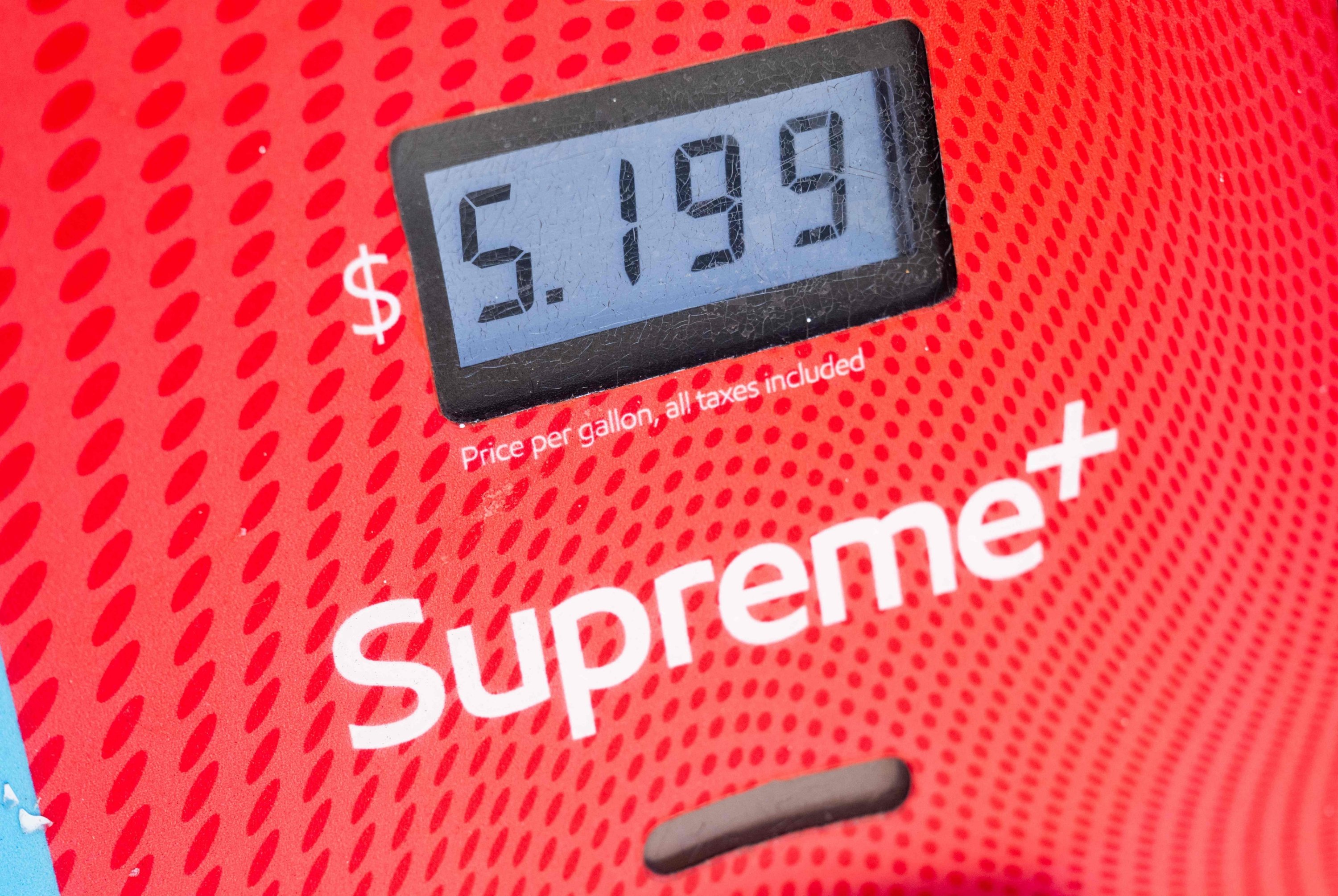
Jet fuel was initially hit hard given the Gulf’s importance, though a surge in U.S. refinery output and exports helped ease supply fears.
With the Northern Hemisphere winter approaching, further disruption to Hormuz shipments coupled with risks to Russia’s energy infrastructure could push up heating-oil and inflationary pressures.
AI boom cushions stocks
Global stocks have largely shrugged off the war, buoyed by the trillions of dollars pouring into the AI sector.
MSCI’s 47-country world stocks index hit a $105 trillion record high this month, gaining almost $7 trillion, or 9%, since the war erupted – though stocks in the Gulf region have underperformed.
Fidelity analyst Pranav Aggarwal said the broader rally suggested investors were taking a “relaxed view” and still expected the war to end this year.
“Equities are actually having a pretty good year,” he said. “They’re up 14% or so (for the year). If we are expecting 8% to 9% in a standard year, 14% up till August is pretty good.”
Searching for safety
None of the assets investors usually pick in times of trouble, such as highly rated government bonds, gold and the dollar, have played the traditional safe-haven role consistently.
The dollar has risen 1.4% against a basket of major currencies since the war began, though much of that reflects the Japanese yen’s weakness, analysts said.
U.S. Treasuries – a traditional mainstay in portfolios – have lost 3.5% on a total return basis as higher inflation has dashed U.S. rate cut bets, while more recent concerns about new Federal Reserve (Fed) chief Kevin Warsh and Washington’s surprise debt buyback plans have also weighed.
Gold fell nearly 25% between the start of the war and July – though it had more than trebled in price since 2022 when Western powers froze Russia’s central bank reserves over the invasion of Ukraine.
Gold has rebounded more than 15% this month, however, amid renewed concerns about dollar debasement.
Food and fertilizers
The closure of the Strait of Hormuz has also disrupted fertilizer shipments, a key input for global food production.
Combined with a strong El Nino and fresh disruptions to grain shipments linked to the war in Ukraine, analysts say the shock increasingly threatens agricultural output.
Food prices rose in July to a more than three-year high, according to the U.N. Food and Agriculture Organization (FAO). However, experts warn that much of the impact is yet to be felt.
The FAO has warned the world could be heading towards another bout of food inflation. JPMorgan estimates that a strong El Niño alone could, at its peak, lift global food inflation by around 0.7%.
The impact is likely to be felt most acutely in Asia, Latin America and Africa, where households spend a larger share of income on food and policymakers remain wary of renewed price pressures.
Gulf region impacted
The direct hit to the Gulf has been stark. Saudi Arabia’s exports shrank by 10% between the first and second quarters.
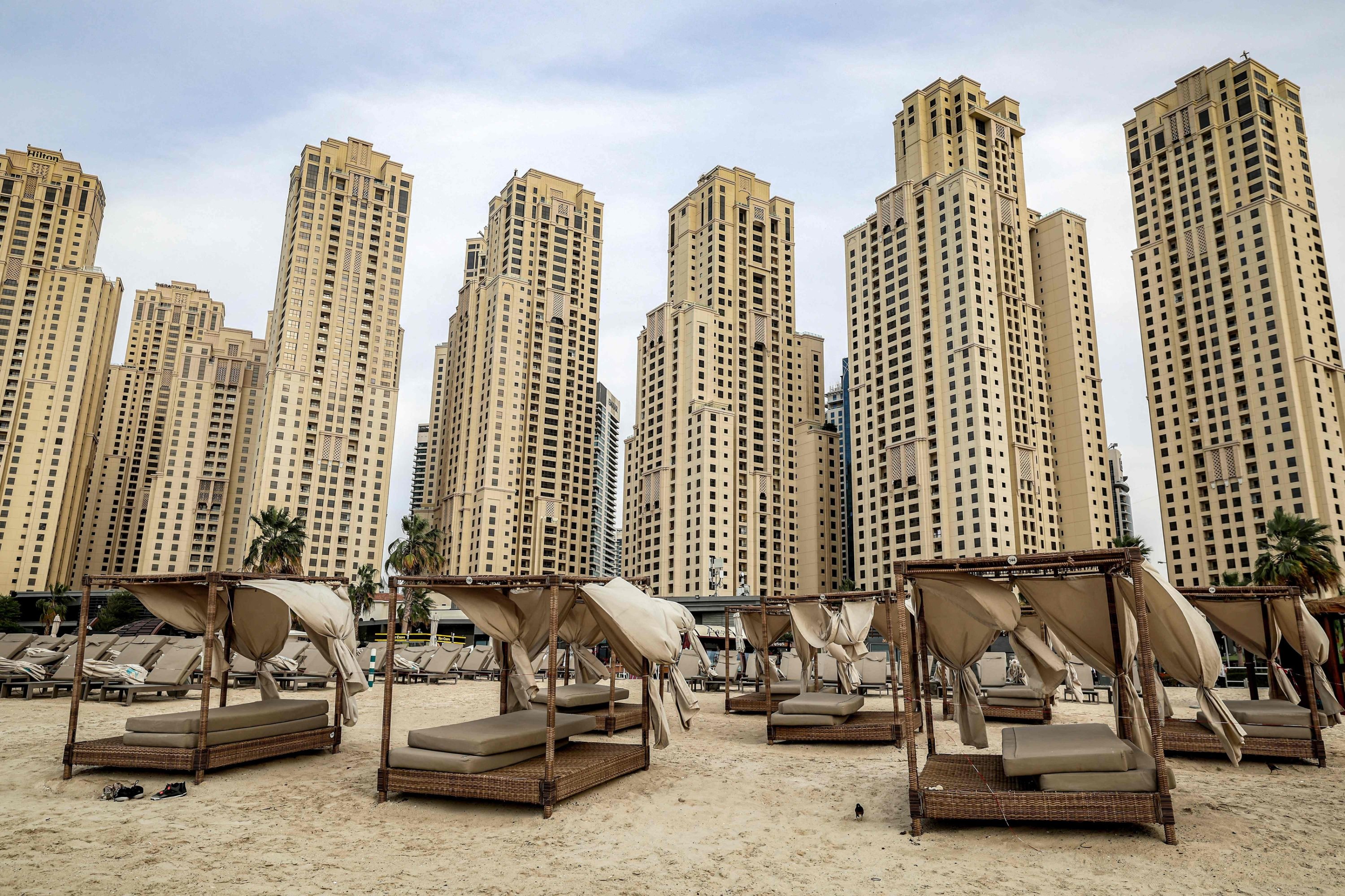
JPMorgan estimates Dubai’s property sales have plummeted 70%-80%, and Oxford Economics warns Qatar’s economy will shrink almost 30% this year, given the damage to its Ras Laffan gas facility.
Qatar and UAE stocks have both dropped around 14% – a more than 20 percentage point underperformance versus world stocks. The cost of insuring both countries’ debt against a default has also risen, although more heavily indebted Bahrain has been hardest hit, with its credit default swap (CDS) prices up almost 40%.


-

 Sports1 day ago
Beşiktaş poised to seal Europa League passage against Kauno Zalgiris
-
 Politics3 days ago
Erdoğan, Lula discuss Türkiye-Brazil ties, global developments
-
 Politics3 days ago
Netanyahu clings to anti-Türkiye campaign amid Likud’s decline
-
 Economy2 days ago
Canada hits US goods with up to 50% tariffs as trade war deepens
-
 Economy2 days ago
Death of consumer giant?: Unilever bets shedding assets may help
-
 Economy3 days ago
Saudi Arabia to invest $7B to construct 3 theme parks near Paris
-

 Sports2 days ago
‘Blinded by power’: Legends turn up heat on FIFA boss Infantino
-
 Economy3 days ago
Türkiye, Qatar aim to lift their trade volume to $5 billion