
Politics
NATO parliamentary leaders call for stronger alliance, defense coop

Parliamentary leaders from NATO member states called for stronger defense capabilities, greater allied unity and closer cooperation at the NATO Parliamentary Summit in Istanbul on Monday, underscoring the need for collective security, continued support for Ukraine and adherence to international law.
Speaking at the summit hosted by Türkiye, Bulgarian National Assembly Speaker Mihaela Dotsova said the NATO Summit to be held in Ankara presents “an opportunity to reaffirm our strong commitment to the alliance’s values, collective security and strengthening stability in the Euro-Atlantic region.”
She stressed that Bulgaria sees NATO as a cornerstone of security and pointed to growing instability and multiple conflicts in the current global environment.
Dotsova said Bulgaria continues to fulfill its commitments to collective defense and modernize its armed forces.
“Investing in defense means investing in security, resilience and the state’s ability to protect its citizens and national sovereignty,” she added.
Croatian Parliament Speaker Gordan Jandrokovic said Russia’s attacks on Ukraine, along with hybrid threats, disruptive technologies and intensifying strategic competition, are reshaping Europe’s security landscape and the functioning of societies.
“In this context, military power, of course, remains indispensable, but it is no longer sufficient on its own,” he said.
“Critical infrastructure, economic and technological progress, and political cohesion are equally important parts of the equation,” he added.
Jandrokovic stressed the need for stronger European defense capabilities in solidarity with a credible transatlantic bond.
He said Croatia is on track to allocate 3% of its gross domestic product (GDP) to defense spending by 2030 and is determined to raise that figure to 5% by 2035.
Emphasizing that NATO allies form a shared security space, Jandrokovic said any weakness within that space affects the security of all allies and underlined that the alliance must be prepared for future threats.
Dutch House of Representatives Speaker Thom van Campen said parliamentary diplomacy plays a “vital role” in building trust between countries, fostering mutual understanding and strengthening transatlantic solidarity.
“We are meeting in Türkiye, which serves as a bridge between continents and cultures, and this is no coincidence,” he said, calling on allies to continue supporting one another and demonstrate that NATO is “united, determined and ready to act.”
North Macedonian Parliament Speaker Afrim Gashi said “NATO 3.0” should be viewed from the perspective of a strategic restart of the alliance and stressed the need for balanced burden-sharing and increased national investments in defense capabilities.
He also said developments in the Middle East have serious implications for peace, energy markets and humanitarian conditions and called for continued diplomatic efforts to reduce tensions.
Norwegian Parliament Speaker Masud Gharahkhani said his country is increasing defense production and investing in new systems, including unmanned aerial vehicles and digital solutions.
“We need more coordination. We need to accelerate our industrial capacities and production to strengthen our collective security,” he said, adding that Norway’s long-term defense plan reflects a more serious security environment and lessons learned from the war in Ukraine.
Estonian Parliament Speaker Lauri Hussar said NATO members’ decision to allocate 5% of GDP to defense by 2035 was historic and stressed the need to deepen cooperation in regional defense planning and air defense.
“Peace is never free and weakness always comes at a cost. Unity is NATO’s center of gravity,” he said, while calling for increased pressure on Russia and continued support for Ukraine.
Finnish Parliament Speaker Jussi Halla-Aho said Finland wants to actively contribute to collective deterrence, emphasizing that NATO’s strength stems from the strength of its members and that Russia can only be persuaded to end its aggression if the economic and political costs become unsustainable.
Italian Chamber of Deputies (lower house) Speaker Lorenzo Fontana said security in the Euro-Atlantic region is shaped by interconnected crises stretching from the Mediterranean and the Middle East to the Red Sea and the Gulf.
“NATO is strong when it is united. It is credible not only when it reacts to crises but also when it can prevent them,” he said.
Polish Senate Speaker Malgorzata Kidawa-Blonska called for increasing resilience against Russia and said NATO’s defense preparedness and new formats of cooperation should be strengthened.
“We must support Ukraine with all our strength,” she said, adding that Poland and Türkiye play key roles as allies on NATO’s eastern flank.
Portuguese Parliament Speaker Jose Pedro Aguiar Branco said maintaining the alliance’s internal cohesion remains essential and stressed that support for Ukraine should continue to be a priority within the Euro-Atlantic security framework.
Slovak National Council Speaker Richard Rasi said Slovakia’s foreign and security policy is based on its European Union and NATO memberships and noted that the country plans to gradually increase defense spending to 5% of GDP while seeking conditions for a just and lasting peace in Ukraine.
British House of Lords Speaker Michael Forsyth described Türkiye as “a valuable partner in many fields at the intersection of Europe, the Middle East, Africa and Asia,” saying Ankara plays “a vital diplomatic role in connecting regions and mediating conflicts.”
Forsyth said deterrence is less costly than conflict and collective defense is more effective than acting alone, adding that NATO allies must adapt to changes brought by artificial intelligence and cyber technologies.
He also said Ukraine is bearing the burden of resisting Russian aggression on behalf of the broader alliance and said NATO members owe Ukrainians “a great debt of gratitude.”
U.K. House of Commons Deputy Speaker Judith Cummins also stressed the need for closer cooperation among allies, saying: “At this most dangerous point in our history, we NATO members need each other.”
She warned that current challenges are becoming increasingly unpredictable and pointed to growing competition and emerging technological threats.
French NATO Parliamentary Assembly delegation head Natalia Pouzyreff recalled that the situation in the Middle East and navigation through the Strait of Hormuz had been discussed at the recent G7 Leaders’ Summit in France, which also issued a joint statement recognizing Ukraine’s territorial integrity and calling for strengthened military assistance to Kyiv.
Pouzyreff said Ukraine’s future lies in NATO and stressed that the country’s Euro-Atlantic integration would directly contribute to regional security and stability.
Czech Senate Speaker Milos Vystrcil said every NATO member has a responsibility to allocate at least 2% of its GDP to defense spending.
“Europe should assume greater responsibility for NATO’s defense because a stronger Europe means a stronger NATO,” he said.
Vystrcil said NATO’s future rests on unity among allies, fulfilling commitments, and greater European support for collective defense.
“If we are to send one message from Istanbul, it is this: When it comes to defending our freedom and democracy, we all stand shoulder to shoulder,” he added.
Czech Chamber of Deputies Speaker Tomio Okamura said countries need to strengthen their defenses before crises emerge, stressing that every nation has both the right and the duty to defend its territory, citizens, borders, and way of life.
He also called for the war in Ukraine to end as soon as possible.
Danish Parliament Speaker Soren Gade said Euro-Atlantic security has become increasingly complex and underlined the importance of maintaining NATO’s strength and intervention capability.
“As a former defense minister, I have seen firsthand the immense pressure NATO is under, but NATO remains the strongest and most successful alliance in history,” he said.
“Although the international security situation is under great pressure, I believe NATO has the necessary tools to address the challenges ahead,” Gade added.
Spanish Senate First Deputy Speaker Javier Maroto said all NATO countries should defend respect for international law in every conflict, “whether in Ukraine or the Middle East.”
He also argued that NATO reform should not mean “less U.S.” but rather greater European responsibility, regional leadership, and a larger share of the traditional defense burden.
Swedish Parliament Third Deputy Speaker Kerstin Lundgren said the agenda of the upcoming NATO Leaders Summit in Ankara would include alliance capabilities, sustainable support for Ukraine, and increasing industrial production in the defense sector.
“NATO is an alliance founded on the view that democracy, human rights, the rules-based world order, and free trade are not only great ideals but also principles that make us strong today,” she said.
Albanian Parliament Foreign Affairs and European Affairs Committee Chairman Igli Hasani said security depends on the ability to act together and reiterated Albania’s support for Ukraine.
“Security is defended not only on the battlefield but also through sustained solidarity and determination,” he said, adding that investments in defense are a strategic step toward preparedness, resilience and deterrence.
NATO Parliamentary Assembly Greek delegation Deputy Head Dimitris Keridis described Istanbul as “magnificent” and said more than 2 million Turkish citizens are expected to visit Greece this year.
Keridis believes that Türkiye should be included in the Schengen Area, adding that Greece is sincere in extending a hand of friendship.
Dagur Eggertsson, member of parliament from the Social Democratic Alliance and the chair of Iceland’s NATO parliamentary delegation, said being in Istanbul, which has connected cultures, continents, and civilizations for centuries, is a privilege.
“This city reminds us that security is never built in isolation but through dialogue, cooperation, and shared responsibility,” he said.
Eggertsson said NATO exists not only to defend territories but also to protect the principles that make peace possible, stressing that trust in democratic institutions and shared values is the real foundation of the alliance.
NATO PA Montenegro delegation head Dusko Stjepovic said wars in Europe and the Middle East, cyberattacks, disinformation campaigns and attempts to weaken democratic institutions show that security can no longer be viewed only from a state-centered perspective.
He said NATO is more important than ever and voiced support for strengthening the alliance’s defense capacity and increasing defense investments.
The NATO Parliamentary Assembly Ukraine delegation head, Yehor Cherniev, thanked Türkiye for organizing the 2022 negotiations in Istanbul, while saying the talks did not succeed because the conditions were not fair or acceptable for Ukraine.
Cherniev said Ukraine is beginning to regain the initiative in the war and argued that Russia should not be given an opportunity to recover and rebuild its forces.
He also said Europe’s security would remain incomplete without Ukraine’s full NATO membership.
Justice Minister Akın Gürlek said Tuesday that investigators have obtained evidence indicating that the Gülenist Terror Group (FETÖ) was involved in the 2009 death of prominent politician Muhsin Yazıcıoğlu, as prosecutors continue an investigation into the helicopter crash that killed him.
Asked whether concrete evidence linking the crash to an operation by FETÖ had entered the case file, Gürlek said: “Of course it has.”
Speaking at Anadolu Agency’s (AA) Editors’ Desk in Ankara, Gürlek said prosecutors believe the incident was carried out under organizational instructions from the group, which Ankara says infiltrated key state institutions before the failed July 15, 2016 coup attempt.
Yazıcıoğlu, founder and former chair of the Great Unity Party (BBP), died along with five others when their helicopter crashed in the southern province of Kahramanmaraş in March 2009.
Gürlek cited several pieces of evidence investigators are examining, including alleged contacts involving a military pilot and Adil Öksüz, a key suspect accused of helping organize the 2016 coup attempt.
He also cited phone records, meetings allegedly held with the group’s covert operatives and messages on ByLock, an encrypted messaging application widely used by FETÖ members.
According to Gürlek, one ByLock exchange referring to the incident said it had been carried out “as easily as pulling a hair from butter” and that the group’s leader was “very pleased.”
Gürlek said arrests were made during an initial operation and that Ankara prosecutors have since carried out a second operation. The investigation remains underway.
The minister also addressed a reopened investigation into the 2011 death of former National Intelligence Organization (MİT) officer Kaşif Kozinoğlu in Silivri prison.
Kozinoğlu’s death was initially recorded as a heart attack, but Gürlek said investigators now have findings suggesting he may have died following an intervention rather than from natural causes.
His remains have been exhumed as part of the investigation, while the Forensic Medicine Institute has yet to issue its final report. Nine suspects are currently jailed pending trial in the case, according to the minister.
The minister further said the Justice Ministry’s department investigating unresolved crimes has reviewed around 640 cases and that 56 previously unresolved cases have so far been solved.

President Recep Tayyip Erdoğan on Tuesday received the family of Hind Rajab, the 6-year-old Palestinian girl ruthlessly killed in an Israeli attack in Gaza, at the Presidential Complex in Ankara.
Culture and Tourism Minister Mehmet Nuri Ersoy was also present during the closed-door meeting, Anadolu Agency (AA) reported.
The president hosted the family in December 2025, when they came to Türkiye to attend the screening of the Voice of Hind Rajab movie.
Hind’s tragic death has drawn international attention amid Israel’s genocidal attacks in Gaza, which have resulted in widespread civilian casualties.
The Israeli military admitted to firing at the family car carrying Rajab, four of her cousins and her aunt and uncle as they fled an Israeli invasion of Gaza City.
As gunfire sprayed around them, Rajab’s cousin, 15-year-old Layan Hamada, called the Palestinian Red Crescent paramedic center, telling them that a tank was approaching and her family had been killed. Seconds later, more gunshots were heard, and Layan’s screaming stopped, according to the Red Crescent recording of the call.
Palestinian paramedics dispatched an ambulance to rescue Rajab, the sole survivor, and stayed on the line until contact was lost. Rajab, her five relatives and two medics from the ambulance were found dead 12 days later.
The military admitted that troops had fired toward that ambulance, killing the two medics.
A curt statement followed an Oct. 5 meeting of ministers and army chiefs in Riyadh on the Mecca Joint Defense Alliance. The Strategic Political and Defense Committee of the alliance, in its second meeting after an Istanbul gathering, decided to deploy military forces and capabilities to Saudi Arabia. The move is the most concrete step since the agreement was signed in August by top officials of Türkiye, Pakistan and Saudi Arabia, to showcase the impact of the alliance in the broader region. Experts say the alliance remains focused on defense amid tensions between Saudi Arabia and the Houthis in Yemen, which stepped up attacks on the kingdom.
The Sabah newspaper reported on Wednesday that Türkiye would provide low- and medium-altitude aerial defense systems to Saudi Arabia along with assistance in drone technologies and electronic warfare. The newspaper also reported that Saudi Arabia was working on setting up a base for Türkiye. A Foreign Ministry official told Daily Sabah that the Saudi side conveyed “some expectations” to Türkiye and they would examine those.
Gökhan Ereli, assistant professor in the Political Science and International Relations Department at Ibn Haldun University in Istanbul, told Daily Sabah that the multilateral defense mechanism represents “a strictly territorial security framework.”
“It is fundamentally defensive. Under no circumstances will allied military assets deployed through this agreement be drawn into the internal combat operations of the Yemeni theater. Their mandate remains exclusively confined to fortifying Saudi Arabia’s capacity to intercept cross-border hostilities. This ensures the kingdom can effectively shield its sovereign territory from external strikes. Ultimately, by consolidating these defensive lines, the pact establishes a robust deterrent that substantially bolsters the broader security architecture of the region,” Ereli stated.
As civil war in Yemen flared up this summer, Houthis spread it to Saudi Arabia, prompting the central government in Yemen to launch an all-out operation against the group this week. Saudi Arabia’s oil and military installations are among the main targets of the Houthis.
Ereli says the unified posture of Saudi Arabia, Türkiye and Pakistan was a result of current geopolitical realities.
“The Houthi movement continues to operate as a profound destabilizing force. They project a sustained, asymmetric threat both within Yemen’s borders and across the wider regional landscape. Countering this hazard is paramount. Furthermore, the structural stability of the entire region remains deeply intertwined with the political trajectory of Sanaa. Protecting the fundamental welfare of the Yemeni people and ensuring the survival of their legitimate political authority are not merely localized objectives. They serve as indispensable prerequisites for achieving durable regional peace and preventing further systemic fragmentation,” he said.
Critical threshold
Yusuf Bahadır Keskin, assistant professor at Amasya University Social and Strategic Research Center (AÜSSAM), says the alliance was at a “critical threshold,” citing the clause of the Mecca Joint Defense Agreement, which says an attack on one party would be viewed as an attack on all sides of the agreement.
“Nowadays, we witness that this won’t remain on paper. Houthis crossed a boundary here. Though they deny it, we saw attacks targeting the infrastructure of sacred sites. We see attacks on oil facilities and military bases in Saudi Arabia. This is beyond a mere border issue. It is an overall threat to the security of the kingdom and the region,” Keskin said.
He stated that Houthis’ aggression toward the legitimate government in Yemen was also unacceptable for the wider region. “Even though attacks on Saudi Arabia may cease at one point, it is not realistic to expect the situation to calm down in the short run,” he stressed.
Keskin highlighted that the Mecca alliance openly demonstrated that it would take “active responsibility in defense of Saudi Arabia” through the message given in Riyadh during the meeting of foreign and defense ministers and military officials on Monday.
“At this stage, the alliance’s strategy toward the Houthis should be understood primarily in terms of deterrence and defense support. Looking at the statements, there is no promise or plan for a ground operation inside Yemen or a joint offensive. The focus is clear: defending the kingdom’s territory. But there is another side to this. If the deterrence messages are ignored, the Houthis will have to face a much tougher intervention. In other words, the door is not closed, but the sequence is clear,” he underlined.
“Ankara and Islamabad could concretely contribute in areas such as air defense systems, intelligence sharing, advisory support or limited air assets. Each of these would significantly raise the cost of Houthi attacks targeting Saudi cities, energy infrastructure and holy sites. It would also make any potential retaliation much more effective and destructive,” Keskin added.
“Pakistan already has a longstanding military presence in Saudi Arabia, and expanding that presence could be on the agenda. Perhaps even the establishment of a Turkish military base in the kingdom could come up in the months ahead. For now, on the Turkish side, the focus appears to be more on training and the integration of defense industry products,” he also said.
President Recep Tayyip Erdoğan said last month that the defense alliance was “part of a shared effort to promote regional security and stability.”
In an interview with U.S. magazine Newsweek, Erdoğan has stressed that Türkiye’s broader diplomatic priority was to prevent existing conflicts from spreading and to keep channels for negotiations open.
“Conflicts directly affect the security, economy and stability of our region. At times like these, it is the shared responsibility of the international community to expand the space for diplomacy rather than narrow it,” said Erdoğan.
Keskin says that Foreign Minister Hakan Fidan’s emphasis on a measured stance after the meeting in Riyadh shows that deterrence and a diplomatic solution are “still being given a chance.”
In his first statement after the meeting, Fidan underlined that they discussed in detail “what could be done to resolve the issue (of the Yemen conflict) peacefully and through dialogue.” Fidan said the talks focused both on strengthening the institutional structure of the alliance and on possible steps that could be taken in response to the current situation involving Saudi Arabia and Yemen.
“Diplomacy remains on the table, but there is also very serious preparation on the ground,” Keskin pointed out.
He added that the positions of Türkiye and Pakistan could have a profound impact on the regional balance, both in terms of deterrence and operational capacity.
“For Türkiye, the issue has both symbolic and strategic significance: the security of an ally, the protection of Islam’s holy sites, and the security of the Turkish Ministry of National Education-affiliated school in Abha, its staff and Turkish citizens, with the city located approximately 100 kilometers from the Yemeni border. When these three factors come together, the possibility of Türkiye becoming directly involved in the process, if necessary, will also increase,” he said.
“The latest developments represent the alliance’s first serious test. Since the alliance was announced, the Houthis have effectively been testing it, and that test has now crossed the red line. Everyone is now watching how the alliance will respond to this challenge. If the necessary steps are not taken at this stage, it could undermine the alliance’s credibility in the years ahead. But if it demonstrates the right and resolute stance, the Mecca alliance will have taken a very important step toward becoming a genuine security architecture in the region,” Keskin concluded.
Türkiye and Hungary will hold the first meeting of their Joint Planning Group on Thursday as the two NATO allies seek to deepen cooperation in trade, defense, energy and regional security, according to Turkish diplomatic sources.
Hungarian Deputy Prime Minister and Foreign Minister Anita Orban will visit Türkiye on Oct. 8 for talks with Foreign Minister Hakan Fidan, with the newly established mechanism expected to provide a framework for coordinating the two countries’ expanding strategic partnership.
During the talks, Fidan is expected to underline the importance of a $10 billion (TL 491.95 billion) bilateral trade target as a key milestone for expanding economic ties and boosting mutual investment, according to the sources.
Bilateral trade reached approximately $5.1 billion in 2025. Turkish investments in Hungary currently total about $231 million, while Hungarian investments in Türkiye stand at about $35 million. Around 300 Turkish companies operate in Hungary, while nearly 100 Hungarian-capital companies are active in Türkiye.
Fidan is also expected to highlight cooperation in energy, transportation and connectivity and express Ankara’s interest in developing new joint projects.
Defense cooperation will feature prominently in the discussions, with Fidan expected to stress the importance of further developing military and defense industry ties between the two NATO allies based on shared interests and objectives.
The ministers are also expected to discuss Türkiye-European Union relations, including Ankara’s calls for the modernization of the customs union, progress in the visa liberalization dialogue and its long-running EU membership process.
The Turkish minister is expected to argue that Europe’s security cannot be considered separately from Türkiye’s capabilities and emphasize Ankara’s expectation of being effectively included in EU security and defense initiatives.
The talks are also expected to cover Hungary’s support for Türkiye’s EU accession process and Budapest’s engagement with the Organization of Turkic States, where Ankara views Hungary as playing an important role in strengthening interaction between Europe and the Turkic world.
Orban and Fidan are expected to exchange views on major regional and international developments, including the Russia-Ukraine war, Gaza and Palestine, the Balkans, Iran and developments surrounding the Strait of Hormuz.
Türkiye and Hungary established their High-Level Strategic Cooperation Council in 2013, elevating bilateral ties to a strategic partnership. Relations were upgraded to an “enhanced strategic partnership” during the council’s sixth meeting in Budapest in 2023.
The Joint Planning Group was established at the council’s seventh meeting in Istanbul on Dec. 8, 2025. Co-chaired by the two countries’ foreign ministers, the group is tasked with coordinating the implementation of decisions taken by the council and preparing future high-level meetings.
Nationalist Movement Party (MHP) leader Devlet Bahçeli addressed his supporters at a parliamentary group meeting on Tuesday. Among other things, Bahçeli’s speech focused on the political future of President Recep Tayyip Erdoğan. Erdoğan will be eligible to run for the presidency in the 2028 election, but this will require Parliament to approve the renewal of the election. Bahçeli pointed to this fact and threw his full support behind another term for Erdoğan.
“If our president finds it suitable and Parliament demonstrates its constitutional will, the People’s Alliance (of the MHP and Erdoğan’s Justice and Development Party (AK Party)) wants to have him as its candidate,” he said.
“Maintaining the momentum Türkiye has achieved will be possible if President Recep Tayyip Erdoğan runs for office once again and is elected president for a third term. The third term will coincide with many significant developments in Türkiye, the region and the world, and, above all, it will require the resolve and experience to navigate this challenging period. That experience lies with Erdoğan through the executive presidential system and the institutional structure of the People’s Alliance,” Bahçeli said.
It has been 12 years since Erdoğan became Türkiye’s first president elected directly by popular vote, a period that has seen the country overhaul its system of government and expand its diplomatic and defense footprint.
“At a time when the world is going through a chaotic period, amid an environment of uncertainty in our region and as historic steps are being taken toward a ‘terror-free Türkiye’ and a terror-free region, Türkiye needs to not change course or abandon its goals, but to fully maintain its existing capabilities and resources both systemically and institutionally,” Bahçeli said, referring to the process for the dissolution of the PKK terrorist group that the MHP leader spearheaded.
“Considering the responsibility our president has assumed to date, the leadership he has demonstrated and the strategic capacity he has brought to Türkiye, it would be in the interests of Türkiye and our region for him to serve another term as president. There is more than sufficient legal, political and social ground to make this possible,” Bahçeli stated.
Erdoğan’s chief adviser Mehmet Uçum, who also serves as deputy chair of the Presidency’s Legal Policies Board, clarified a debate over the date of the next elections last month. Uçum told journalists that the elections will most likely be held on April 16, 2028, the same date as a referendum held in 2017 on the switch to an executive presidential system. He also underlined that this would be the last election Erdoğan would be eligible to run in.
Uçum said the elections may be held on that date if Parliament approves the renewal of the elections, something that would require the support of 360 lawmakers. He said the possibility of an election in the last quarter of 2027 was “low” amid calls from the opposition for an early election.
Under Turkish law, an election would normally be held in May 2028. However, the Constitution allows Parliament to trigger an early election if such a move has the support of 360 of the Turkish Parliament’s 600 lawmakers, which would open the way for Erdoğan to seek another term. The People’s Alliance has 326 seats in total.
The government has repeatedly insisted that elections will be held on schedule. Erdoğan, who was elected prime minister in 2003, was elected president in 2014 after serving three terms as premier.
Bahçeli recalled Article 116 of the Constitution, which stipulates that, “If the Grand National Assembly of Türkiye decides to renew elections during the president’s second term, the president may run for office once more,” saying the provision allows for a third presidential candidacy if Parliament decides, by a qualified majority, to renew the elections.
“For President Recep Tayyip Erdoğan to be able to run for office again, the Grand National Assembly of Türkiye should, at an appropriate time and with the broadest possible consensus, decide to renew the elections. If the renewed elections are held in 2028 within the framework of Parliament’s decision, this will not undermine stability or predictability, and the system will have been operated in accordance with its spirit. With the emergence of such a political will, unnecessary debates will come to an end, uncertainties will disappear, economic confidence will increase, and our country will be able to continue full steam ahead on its path as it takes historic steps. The instability that Türkiye’s adversaries expect and hope for will not materialize, and the calculations of those who invest in uncertainty, chaos and turmoil will be thwarted.
“It should also be underlined here that our issue is not the political careers of individuals, but the continuity of the state, political stability and, ultimately, the construction and revitalization of a leading Türkiye,” Bahçeli said.
Emphasizing that the MHP views 2028 not merely as an election year but as the beginning of a period in which major reforms will be implemented in Türkiye, Bahçeli said efforts aimed at diverting attention from these goals should come to an end.
“Candidacy must be clarified, and the realities of the world must be confronted under conditions of ruthless competition. Alongside the president, the parliamentary majority must undoubtedly also belong to the People’s Alliance, while the Nationalist Movement Party must definitely increase its strength of representation in the legislature to ensure that the checks and balances mechanism functions more effectively. Because if the MHP is strong, Türkiye will be secure. If the MHP is strong, our national unity and fraternity will be strengthened, and our people will find peace,” he said.
Bahçeli said his party’s legislative objectives were clear.
“First is representational strength. Within this framework, our goal is to increase our vote share, raise the number of our lawmakers and become Türkiye’s leading party. Second is institutional strength. Within the institutional structure of the legislature, our goal is to assume more positions in its governing bodies and become more effective. Third is political strength. In this way, we aim to become more effective and decisive in legislative activities and policymaking, and to implement our party’s strategic objectives and economic and social policy priorities,” he said.
“Within this framework, I express the political formula for the next five-year period, which will witness Türkiye’s rise, as follows: Erdoğan in the executive, MHP in the legislature, the People’s Alliance in Türkiye, and the ‘Century of Türkiye’ in the world. This formula expresses our strategy that the legislature, like the executive, must be strong, while also being able to exercise oversight, produce policies and play a decisive role, as well as our determination to become a global power.”
Bahçeli, who traditionally wears a different ring at every parliamentary group speech, was seen wearing one featuring the crescent and star symbols of the Turkish flag and the immortal verses of Turkish folk singer Neşet Ertaş: “You have been my hidden, you are my outward, you have been my first, you are my last,” words derived from esoteric expressions linked to Islam.
Security forces on Wednesday launched two new operations in Istanbul and Izmir targeting municipal officials accused of corruption. They are the latest in a string of raids targeting municipalities across the country over the past two years.
In Istanbul’s Esenyurt district, one of the city’s most populated districts, police detained 17 suspects, including a deputy mayor. The suspects are accused of corruption in certain public tenders held by the municipality and taking bribes from contractors. Two other suspects in the case remain at large.
Along with Deputy Mayor Yusuf Ulutaş, former Deputy Mayor Ümit Ünal and the head of a municipal department were detained in the operation. Esenyurt municipality was run by the opposition Republican People’s Party (CHP), but Mayor Ahmet Özer was removed from office in 2024 after his arrest in an investigation into his alleged links to a terrorist group. Since then, the municipality has been run by a district governor appointed as a trustee.
In Çeşme, a popular tourism destination in the western province of Izmir, security forces detained 11 suspects in an operation targeting the local municipality. The suspects are accused of running a criminal ring and committing bribery and forgery of official documents. Among those detained was the acting head of the municipality’s construction and urban planning department.
Authorities said the operation was launched following a tip that a municipal employee was trying to destroy documents at the construction and urban planning department, apparently to cover up irregularities. Çeşme’s former Deputy Mayor O.G., a suspect in the case, was already jailed as part of another investigation.
Earlier investigations in other municipalities showed that construction and urban planning departments were heavily involved in corruption scandals, allegedly issuing construction and zoning permits in exchange for lavish gifts and cash from contractors and other businesspeople.
On Tuesday, the Interior Ministry announced that four mayors and an acting mayor had been suspended from office after being detained in corruption investigations.
Among them were Mithat Bülent Özmen, mayor of Istanbul’s Eyüpsultan district; Murat Güneş, acting mayor of Istanbul’s Ataşehir district; Abdullah Özyiğit, mayor of the Yenişehir district of the southern province of Mersin; and Ahmet Serkan Tuncer, mayor of Mersin’s Mezitli district.
Mersin Mayor Vahap Seçer, who was detained along with Tuncer and Özyiğit in a recent anti-corruption operation, was suspended both from his mayoral post and as chair of the Union of Municipalities of Türkiye.


-

 Economy2 days ago
Brazilian assets rally as Flavio Bolsonaro tops first-round vote
-
 Economy2 days ago
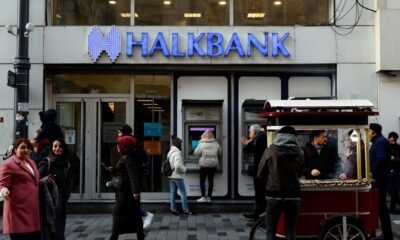
Türkiye’s Halkbank after secondary offering amid strong interest: CEO
-
 Politics2 days ago
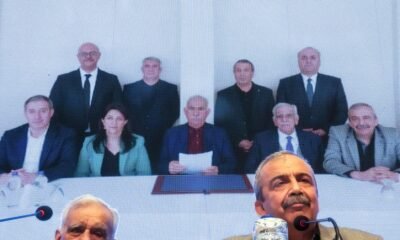
MP hints at more access for Öcalan amid terror-free Türkiye bid
-
 Economy2 days ago
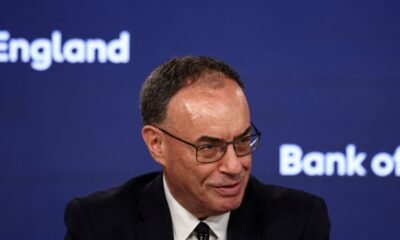
Top central bankers due in Istanbul to discuss policy challenges
-
 Politics2 days ago
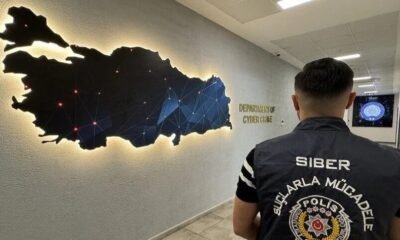
3 jailed in Türkiye over FETÖ-linked infiltration of MASAK data systems
-
 Politics2 days ago
Türkiye’s CHP seeks removal of mayor with divided loyalty
-
 Economy2 days ago
Türkiye says Development Road could become $80B ‘energy corridor’
-
 Politics2 days ago
Türkiye-led Nusret-2026 drills bring together multinational naval forces