
Sports
New-look Beşiktaş face Midtjylland in key Europa League qualifier

A new season brings renewed hope for Beşiktaş, who launch their 2026-27 campaign Thursday with a high-stakes UEFA Europa League second qualifying round clash against Denmark’s FC Midtjylland, as Vincenzo Italiano takes charge of his first competitive match while the club continues pursuing a blockbuster move for Mohamed Salah.
The first leg at Tüpraş Stadium marks the beginning of Beşiktaş’s bid to return to the European stage after several disappointing seasons.
The winner of the two-legged tie will move one step closer to the Europa League league phase, with three qualifying rounds separating both clubs from the main competition.
The match also represents a fresh start for a Beşiktaş side desperate to restore its status after finishing a distant fourth in the Turkish Süper Lig last season.
Once again overshadowed by fierce rivals Galatasaray and Fenerbahçe in the domestic title race, the Black Eagles also endured another disappointing European campaign.
Those struggles prompted a managerial change, with Sergen Yalçın making way for Italiano, whose reputation was built through successful spells with Bologna and Fiorentina, guiding both clubs deep into European competitions.
Beşiktaş have not lifted the Turkish league title since 2021 and have failed to reach the group or league phase of a UEFA competition since 2023, placing immediate pressure on Italiano to revive one of Türkiye’s biggest clubs.
The Italian coach has already overseen an active summer rebuild. German goalkeeper Alexander Nübel, midfielder Salih Özcan, defender Kassoum Ouattara and youngster İlhan Fakili have all joined the squad and are available for Thursday’s match.
Belgian international Leandro Trossard, one of the club’s marquee signings this summer, will miss the opener after being granted additional leave following Belgium’s participation at the 2026 FIFA World Cup.
Beşiktaş’s preseason offered mixed encouragement. The Istanbul club won only two of five friendlies, beating Gyirmót and Mattersburg but suffering defeats to Spartak Trnava and Widzew Lodz before settling for a 1-1 draw against Dynamo Malzenice.
Italiano will also be without suspended defender Felix Uduokhai, while captain Orkun Kökçü is expected to anchor midfield alongside Wilfred Ndidi.
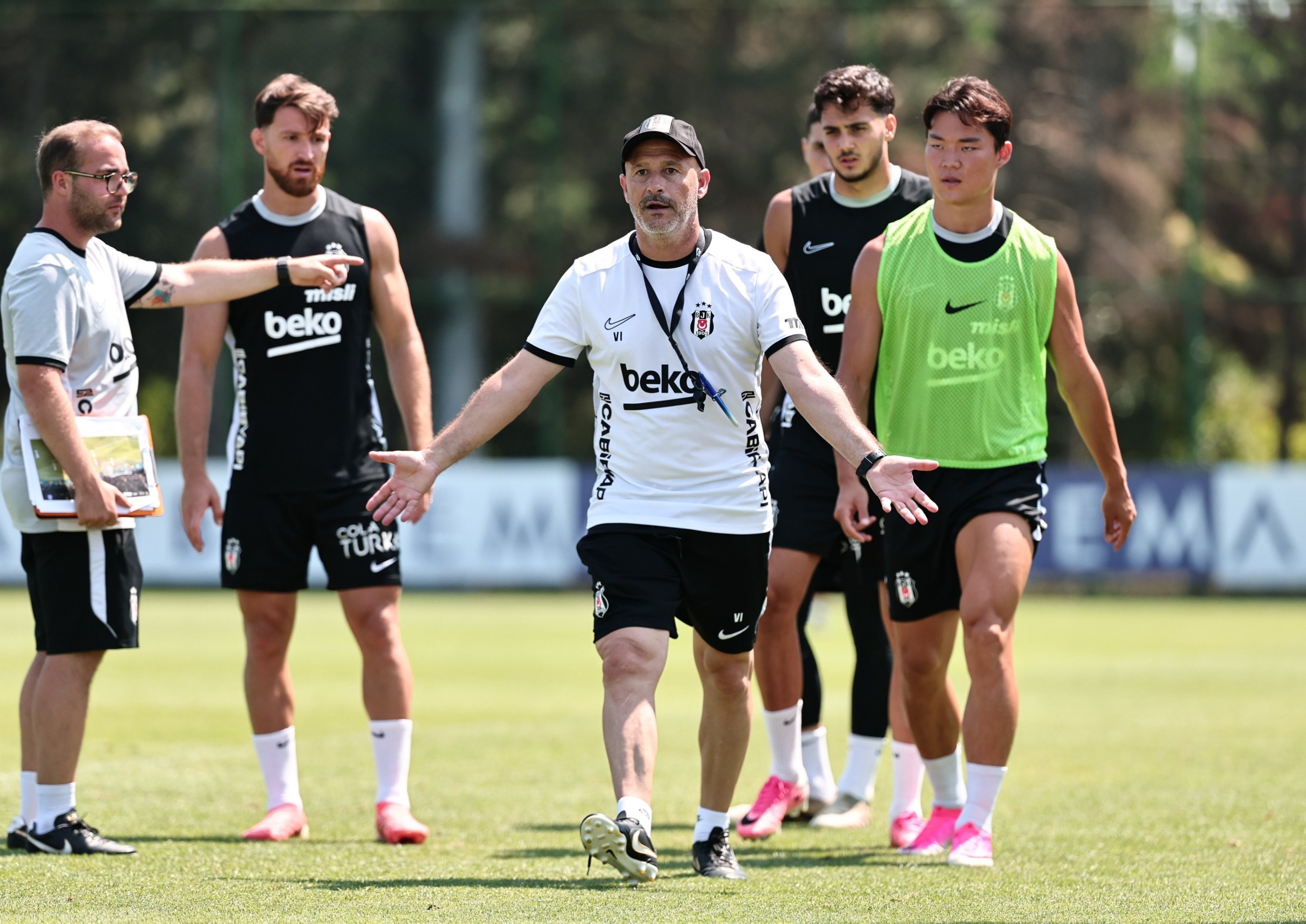
The biggest selection question remains in attack, where South Korean striker Oh Hyeon-gyu is competing with academy product Semih Kılıçsoy, who returned after a mixed loan spell at Serie A side Cagliari.
Midtjylland arrive in Istanbul carrying considerably stronger momentum.
The Danish club has won four of its last five preseason matches, including emphatic victories over Cardiff City and Odense by a combined score of 10-1.
Despite being founded only in 1999, Midtjylland have established themselves as one of Denmark’s leading clubs, winning four league titles while building a growing reputation in Europe.
Their Europa League campaign last season was among the club’s finest. Victories over Celtic, Nottingham Forest and Dinamo Zagreb helped Mike Tullberg’s side finish third in the league phase before suffering a heartbreaking penalty shootout defeat to Forest in the round of 16.
Rather than allowing that disappointment to derail their campaign, Midtjylland finished runners-up in the Danish Superliga and defeated Copenhagen to lift the Danish Cup.
Advancing past Beşiktaş would set up a third qualifying round meeting with either Norway’s Tromsø or Czech side Hradec Králové.
Tullberg’s attack remains dangerous despite growing transfer interest in several of his stars.
Guinea-Bissau international Franculino Dju, who has scored 55 goals in 107 appearances for the club, has returned from a knee injury and found the net in each of Midtjylland’s last two friendlies. Chilean winger Dario Osorio, who has attracted reported interest from Arsenal, is also expected to start.
Summer arrivals Rasmus Kristensen and Friday Etim could make their competitive debuts, although captain Mads Bech Sørensen faces a late fitness test and Brazilian wing-back Paulinho has departed for Botafogo.
Salah pursuit dominates headlines
Away from the pitch, Beşiktaş continue pursuing one of the most ambitious transfers in Turkish football history.
The club remains in negotiations with Mohamed Salah and is reportedly developing a sponsor-backed financial package modeled after the structure Juventus used to sign Cristiano Ronaldo from Real Madrid in 2018.
Rather than financing the move entirely through club resources, Beşiktaş hope to secure a major commercial sponsor willing to cover a significant portion of Salah’s salary and related costs, making the deal financially sustainable.
Reports indicate Salah has reduced his initial salary expectations from approximately €15 million ($17.1 million) per year to around €10 million plus performance bonuses, with discussions focusing on a one-year contract that includes an option for a second season.
Club executives believe the Egyptian superstar’s arrival would transform Beşiktaş both competitively and commercially.
Beyond adding one of football’s most prolific forwards, Salah would boost shirt sales, increase ticket demand and strengthen the club’s commercial reach across Europe, the Middle East and Africa.
Negotiations remain active despite disagreements over agent commission fees, reportedly as high as 35%, which Beşiktaş consider excessive.
Club officials have dismissed speculation that an agreement has already been reached, emphasizing that talks are continuing and no deal will be finalized until every financial detail has been resolved.
Salah is expected to visit Istanbul with his family on Aug. 2 to attend Egyptian music legend Amr Diab’s concert at Ataköy Marina Open-Air Stage, a trip that has intensified speculation Beşiktaş officials could hold further face-to-face discussions during his stay.

Trabzonspor and Galatasaray meet Saturday in a high-profile Süper Lig clash with both teams carrying different ambitions into the sixth round. Trabzonspor are looking to make a winning start under new coach Thomas Reis, while Galatasaray will try to extend their perfect run over the past four league matches and remain atop the standings.
The match at Papara Park kicks off at 8 p.m. local time.
Trabzonspor have collected seven points from their opening five matches, recording two wins, one draw and two defeats. Reis will take charge of his first game since replacing Fatih Tekke, with the home side hoping a change in the dugout can spark a turnaround.
Trabzonspor will be without injured midfielders Okay Yokuşlu and Ruslan Malinovskyi. Folcarelli and Batagov have completed their treatments but are not expected to be ready to play.
Galatasaray arrive in considerably stronger league form. The defending champions have 13 points from five games and have won their last four after opening the season with a draw. They will be seeking a fifth consecutive league victory in Trabzon.
The fixture is also the 144th meeting between the clubs in all competitions since their rivalry began during the 1974-75 season, when Trabzonspor first reached the top flight.
Galatasaray have won 66 of the previous 143 encounters, while Trabzonspor have 45 victories. The teams have drawn 32 times. Galatasaray have scored 197 goals in those matches, compared with 159 for Trabzonspor.
Galatasaray hold recent advantage
The Istanbul club have lost only once in their last 10 official meetings with Trabzonspor. Galatasaray have won seven and drawn two of those matches, scoring 23 goals and conceding eight.
Their only defeat during that stretch came in a 2-1 Süper Lig loss to Trabzonspor on Jan. 23, 2022.
Galatasaray have also dominated the rivalry under coach Okan Buruk in league play. Since the start of the 2022-23 season, Buruk’s side have faced Trabzonspor eight times in the Süper Lig, winning five, drawing two and losing once.
Saturday’s match will be Buruk’s 23rd as a coach against Trabzonspor. His teams have recorded 10 wins, six draws and six defeats against the Black Sea club across his managerial career.
Trabzonspor have the home edge
Despite Galatasaray’s recent dominance, Trabzonspor have historically held the advantage in home league meetings.
The teams have played 53 Süper Lig matches in Trabzon, with the hosts winning 21, Galatasaray winning 19 and 13 ending in draws. Trabzonspor have scored 64 goals in those matches, while Galatasaray have scored 69.
Forty-three of those games were played at the former Hüseyin Avni Aker Stadium, while 10 have been held at the current Papara Park.
Galatasaray’s biggest league wins over Trabzonspor came in a 5-1 victory in Trabzon on Jan. 21, 2024, and a 4-0 home win on May 26, 2001.
Trabzonspor’s biggest victory in the rivalry came on Sept. 1, 2018, when they defeated Galatasaray 4-0 at home.
The highest-scoring meeting between the sides came on Nov. 15, 1998, when Trabzonspor won 5-3 in Istanbul.
107th Süper Lig meeting
Saturday’s encounter will be the 107th between the clubs in the Süper Lig. Galatasaray have won 47 of the previous 106 league meetings, compared with 33 victories for Trabzonspor, while 26 matches have ended in draws.
Galatasaray have scored 143 league goals against Trabzonspor, while the Black Sea side have found the net 121 times.
For Galatasaray, the match also represents another opportunity to build on their strong start under Buruk. However, their away record in 2026 has included four league defeats, the most they have suffered away from home in a calendar year during his tenure.
Galatasaray’s four away league defeats this year have come against Beşiktaş, Konyaspor, Trabzonspor and Kasımpaşa.
Harry Kane says the 2025-26 season was the best of his career, but the Bayern Munich striker is leaving the Ballon d’Or decision to the voters.
Kane scored 73 goals for Bayern and England last season, the second-highest single-season total in football history behind Lionel Messi’s 82 in 2011-12. He also won the European Golden Shoe after finishing as the leading scorer across Europe’s major domestic leagues.
Those numbers have put Kane among the leading contenders for the Ballon d’Or, alongside Spain and Barcelona star Lamine Yamal and France and Real Madrid forward Kylian Mbappé.
Yet Kane, who has never won the award, remains reluctant to campaign for himself.
“I’ve never liked talking too much about myself,” Kane told Spanish newspaper Marca in an interview published Friday. “The only thing I’d say is that last season was incredible, both personally and for the team. It was, by far, the best season of my life.”
The 73-goal haul was a source of particular pride for Kane, although he acknowledged that individual statistics alone will not decide the award.
“I’m extremely proud of that, but the Ballon d’Or isn’t in my hands. It depends on the people who vote,” he said.
Kane also played a key role for England, helping the team reach the World Cup semifinals, while Bayern enjoyed a strong campaign domestically and in Europe.
No English player has won the men’s Ballon d’Or since Michael Owen in 2001, adding another layer of significance to Kane’s candidacy.
But rather than dwell on the award, Kane said he has already moved on from last season and is focused on what comes next.
“As far as I’m concerned, last season is in the past,” he said. “Now I’m focused on this one and I’m looking forward to seeing what else I can achieve.”
The Ballon d’Or ceremony is scheduled for Oct. 26 in London, Kane’s hometown. That has added an intriguing twist for the Bayern striker, who spent much of his career at Tottenham Hotspur before moving to Germany.
Kane stopped short of saying the London setting was a sign he would win, but admitted the location could make the occasion especially meaningful.
“Perhaps it is a good omen,” Kane said. “Of course, having it take place in my hometown would make it even more special. So yes, it feels strange that the ceremony is being held there this year.”
The 2026 Ballon d’Or race is shaping up as one of the most difficult to call in years, with no single candidate clearly separating himself from the field.
Kylian Mbappe has the scoring numbers and individual accolades. Harry Kane has combined elite production with domestic and European success.
Lamine Yamal has been central to Barcelona and Spain’s biggest achievements. Khvicha Kvaratskhelia produced a standout Champions League campaign, while Michael Olise quietly assembled one of the most complete seasons of the group.
The debate has become even more complicated because this is a World Cup year, giving international performances an added weight in the discussion.
Mbappe’s scoring case
Mbappe’s argument is built largely around individual production.
The Real Madrid forward finished as the Champions League’s top scorer, won the La Liga Pichichi and claimed the World Cup Golden Boot. Those achievements give him a compelling statistical case, and former France striker Thierry Henry has also backed him for the award.
Mbappe himself has made no secret of his belief that he has done enough to win the Ballon d’Or.
The counterargument is that leading the scoring charts is not necessarily the same as being the best player. The Ballon d’Or recognizes individual excellence, but goals are already recognized through separate Golden Boot awards.
Mbappe also finished the season without a major team trophy, a significant weakness in his candidacy. Critics have questioned his defensive contribution and overall influence on Real Madrid, arguing that his impressive statistics did not consistently translate into team success.
That distinction will be central to the debate. If scoring numbers are the primary criterion, Mbappe has a formidable case. If overall influence and winning achievements carry greater weight, his argument becomes more complicated.
Kane’s all-around case
Harry Kane offers perhaps the clearest alternative to the Mbappe argument.
The Bayern Munich striker scored more than 70 goals across competitions while also contributing heavily as a creator. He was a regular throughout the season and played a major role in Bayern’s domestic success.
Kane also produced in important Champions League matches, scoring against Real Madrid and contributing a goal and an assist in the return leg. He then scored and assisted against Paris Saint-Germain in the semifinals.
His international campaign further strengthens his case. Kane played an important role for England at the World Cup, including a two-goal performance against the Democratic Republic of Congo, and he continued to provide goals and leadership throughout the tournament.
The main argument against Kane is that he was not universally regarded as the best player in either of his major environments. Michael Olise was named Bundesliga Player of the Season, while Jude Bellingham had a particularly strong tournament for England.
Still, Kane’s supporters can point to the combination of production, creativity, consistency, big-game performances and team success.
Yamal’s influence beyond the numbers
Lamine Yamal presents a different type of Ballon d’Or case.
The Barcelona winger was named La Liga Player of the Season and played a central role in Spain’s World Cup triumph. Yet his international campaign did not produce the kind of defining moments that have become synonymous with his performances.
That has weakened his case in the eyes of some voters.
Yamal did not dominate the World Cup statistically, but his influence extended beyond goals and assists. His dribbling, creativity and ability to attract defenders made him an important part of Spain’s attacking structure.
He was among the tournament’s leading dribblers and remained influential even when he was not producing directly on the scoresheet.
The problem is that Ballon d’Or debates are often shaped by memorable moments. Yamal had produced those moments previously, including during Spain’s European Championship run, but his World Cup lacked a comparable signature performance.
That does not erase his contribution to Spain’s title, but it explains why his candidacy remains contested despite an exceptional club season and a World Cup triumph.
Kvaratskhelia’s UCL argument
Kvaratskhelia’s case is heavily tied to his Champions League performance.
The Paris Saint-Germain winger was named Champions League Player of the Season after playing a major role in the competition, particularly during the knockout stages.
His overall numbers were also impressive, with 19 goals and 11 assists across all competitions.
But his domestic campaign presents a significant weakness. He scored only eight goals in Ligue 1 and was not as influential domestically as the leading candidates competing for the Ballon d’Or.
His situation is further complicated by Georgia’s absence from the World Cup. That is not something Kvaratskhelia could control, but the lack of an international tournament campaign removes an important opportunity to strengthen his case in a World Cup year.
His Champions League campaign was outstanding, but whether that is enough to outweigh his relatively modest domestic contribution and absence from the World Cup is central to his candidacy.
Olise’s overlooked campaign
Michael Olise may have received less attention than the other leading candidates despite putting together an exceptional season.
The Bayern Munich winger recorded 22 goals and 28 assists across all competitions and was named Bundesliga Player of the Season.
He was also influential in the Champions League and produced important performances against elite opposition. His creativity and ability to create opportunities made him one of Bayern’s most important attacking players.
Olise’s World Cup campaign was less consistent, but he still made a significant contribution for France and set a record for the most assists in a single World Cup campaign.
His case is therefore built around balance. He combined goals, assists, chance creation, off-ball work and team success rather than relying primarily on one statistical category.
That makes the gap between Olise and the more heavily discussed candidates particularly interesting. His numbers compare favorably with Mbappe’s in several areas, while his influence at Bayern came within a team that achieved major domestic success.
An unusually open race
The defining feature of the 2026 Ballon d’Or debate is the absence of a universally dominant candidate.
Mbappe has the goals and individual scoring awards. Kane has extraordinary production alongside team success. Yamal has been influential for both Barcelona and Spain. Kvaratskhelia has a compelling Champions League resume, while Olise has combined elite creativity with domestic dominance.
Each candidate also has an obvious weakness.
That is what makes this race different from the years dominated by Lionel Messi and Cristiano Ronaldo. There is no straightforward statistical argument that settles the discussion, and there is no player whose season was flawless across every competition.
The Ballon d’Or will ultimately require voters to weigh individual production, team success, performances in major competitions and overall influence differently.
The debate is unlikely to end before the votes are counted, because each of the leading candidates has a legitimate body of work to put forward.
And that may be exactly what makes this year’s Ballon d’Or race so compelling.
Mohamed Salah has a new coach at Trabzonspor after the Turkish Süper Lig club on Thursday hired Thomas Reis, who cited the lure of working with the former Liverpool star.
Trabzonspor said the German coach signed a two-year contract to leave Bulgarian club Ludogorets. He replaces Fatih Tekke, who resigned early this month after the team suffered two losses and were eliminated from the Europa League.
Salah is the marquee signing at Trabzonspor this season following a stellar nine-year spell at Liverpool, working mostly with German coach Jurgen Klopp. The Egyptian star has scored four goals in five league games so far.
“Working with a player of his caliber is perhaps one of the best things that can happen to a coach,” Reis said in a club statement, adding he would give Salah “freedom in attack.”
Reis previously coached in the Turkish league, taking unheralded Samsunspor to a third-place finish two seasons ago behind Istanbul powerhouses Galatasaray and Fenerbahçe.
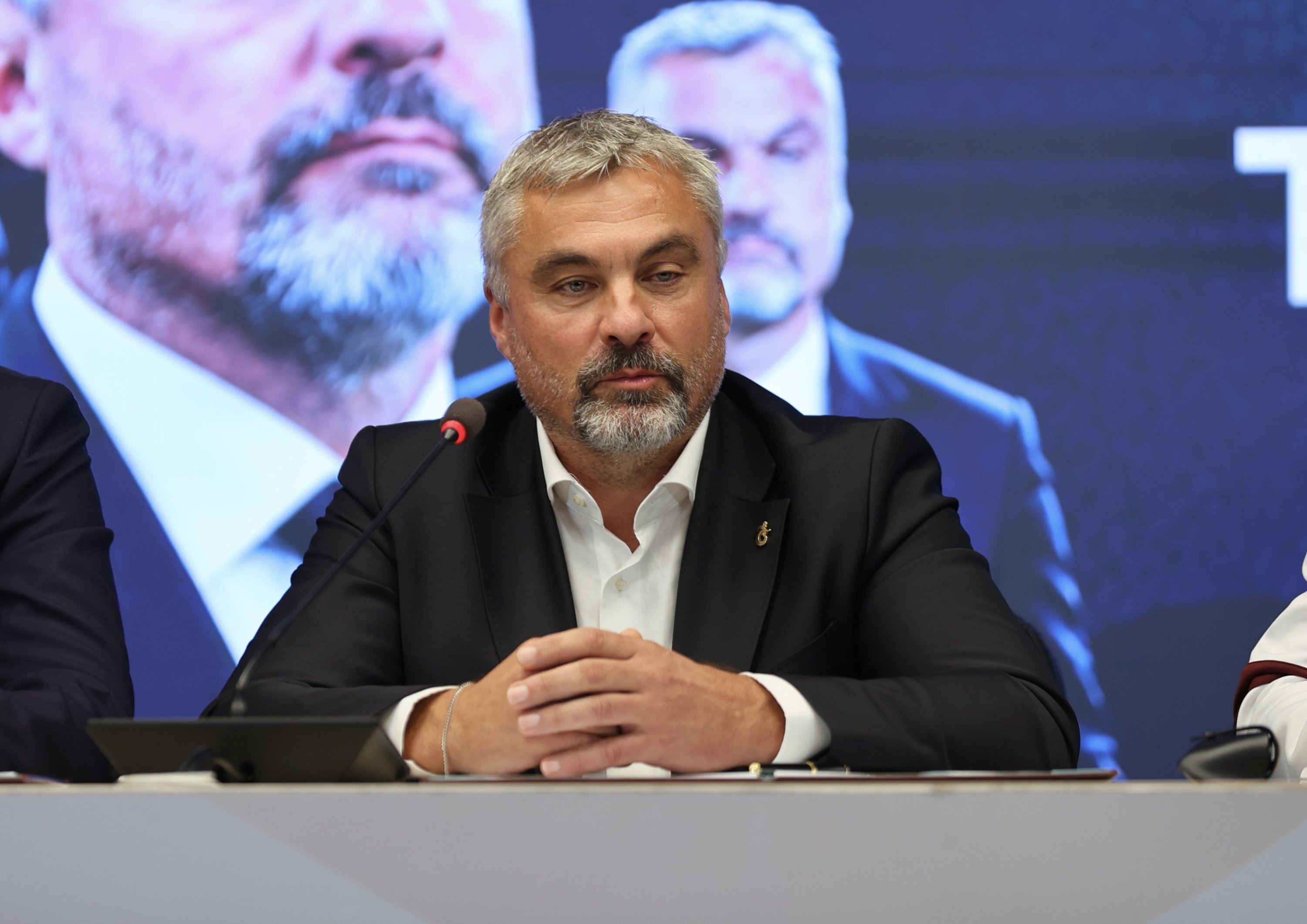
“I know this place and I know how intense the games are here,” the coach said.
Ludogorets said in a statement that they were surprised by the offer to take Reis, who expressed a wish to work at Trabzonspor with talents like Salah, Fabinho and goalkeeper Andre Onana.
The Black Sea club will pay Ludogorets 900,000 euros ($1.06 million) in compensation for terminating the 52-year-old coach’s contract.
Reis will receive a guaranteed salary of 1 million euros for the 2026-27 season and 1.2 million euros for the 2027-28 campaign, the club said.
Trabzonspor, which won the last of their seven Turkish league titles in 2022, are ninth in the standings after five rounds.
Trabzonspor lost 1-0 to Konyaspor last week and will face Galatasaray this Saturday.
The team start a six-game program in the Conference League in Finland at KuPS Kuopio on Oct. 15.
Beşiktaş turned a tense opening half into a commanding European night Thursday, scoring three times after the break to dismantle French side Olympique Marseille 4-1 at Tüpraş Stadium and open their UEFA Europa League campaign with three points.
Ilhan Fakılı fired the Black Eagles ahead in the 15th minute after Junior Olaitan sent him through on goal, but Keyliane Abdallah struck back for Marseille on the half-hour mark to send the teams into the break level at 1-1.
Backed by a vocal home crowd, Beşiktaş seized control after the restart.
Vaclav Cerny restored the lead with a stylish finish in the 56th minute before Amir Murillo struck just three minutes later, heading home from a corner against his former club to make it 3-1.
Ernest Poku completed the rout in the 81st minute, scoring his first goal for Beşiktaş after coming off the bench 10 minutes earlier.
Fakılı nearly added another when his 68th-minute effort struck the post. The young winger, filling in for the absent Leandro Trossard, has now scored three times this season and registered his first goal in European competition.
Cerny’s goal was his fourth of the campaign as the Czech international continued his strong start under coach Vincenzo Italiano.
Italiano also made a precautionary change at halftime, replacing Emmanuel Agbadou with Tiago Djalo after the defender had been booked in the 10th minute.
The victory extended Beşiktaş’s perfect home record this season to seven matches across the Süper Lig and Europa League. The Black Eagles have scored 19 goals and conceded just three at Dolmabahçe during that run.
Beşiktaş have also won four consecutive matches across all competitions, beating Çorum FK, Fenerbahçe and Erzurumspor FK before Thursday’s European victory.
The result marked Beşiktaş’s second win over Marseille in three meetings. Their previous encounters came in the 2007-08 Champions League group stage, when Marseille won 2-0 in France before Beşiktaş responded with a 2-1 victory in Istanbul.
The Black Eagles also improved their overall record against French opposition to six wins, two draws and four defeats in 12 European matches.
For Marseille coach Bruno Genesio, it was another difficult trip to Istanbul against Beşiktaş. He previously lost 2-1 at Dolmabahçe while coaching Olympique Lyon in the 2016-17 Europa League.
Marseille’s defeat extended their losing streak to four matches across all competitions after setbacks against Monaco, Paris FC and Rennes.
Beşiktaş will next travel to Germany to face Hoffenheim on Oct. 15 in their second Europa League match.
AC Milan suffered their first defeat under Ruben Amorim, losing 2-0 at home to Benfica as the Europa League began Wednesday, while Sunderland won on their return to European competition after a 53-year absence.
Seven-time European champions Milan had won two and drawn two of their opening four Serie A games, but were given a reality check by Benfica on the opening day of the Europa League league phase.
Milan were profligate in front of goal and were made to pay by the visitors, who maintained their unbeaten start to the season.
“I change all the time, we need to start with a base, we have two months of work,” Amorim, who said before the game that he does not “know if I’ll have the time needed,” told Sky Sport Italia when asked if he would change tactics.
“We lost tonight, but we will find the solutions to adapt to these games, because we need to create an idea, but we also need to win, so of course we can adapt,” he added.
Benfica, who lost to Milan in the 1963 and 1990 European Cup finals, were able to enjoy their first-ever win over the Italian giants.
Marco Silva’s side grabbed a 16th-minute lead through a superb individual goal from Dodi Lukebakio, as the Belgian cut inside from the right and unleashed a left-footed drive into the far bottom corner.
The Portuguese powerhouse extended their advantage eight minutes after the interval when Jakub Kaminski slammed in Souffian el Karouani’s left-wing cross.
Sunderland back with bang
Regis Le Bris’s Sunderland clinched a 1-0 victory over AZ Alkmaar at a raucous Stadium of Light in their first European match since the Cup Winners’ Cup second round in 1973.
Sunderland were the stronger team in the first half but failed to take their chances, with Enzo Le Fee going closest when he struck the post.
The Black Cats were awarded a penalty 20 minutes after the restart for Weslley Patati’s foul on Le Fee.
The Frenchman, who had a penalty saved by David Raya in Saturday’s Premier League loss to Arsenal, stepped up to slot the spot-kick into the corner.
Sunderland were indebted to goalkeeper Robin Roefs when he made an excellent save to deny AZ attacker Valdemar Byskov an equalizer in the 81st minute.
“Now that we are here I’m just trying to enjoy every moment,” said Sunderland defender Trai Hume.
“We have a great team, great staff and unbelievable fans. We fully deserve this moment and we are going to keep pushing this season.”
Lyon put some of the disappointment of their dramatic Champions League play-off loss to Fenerbahçe behind them with a 2-1 victory at Anderlecht.
The visitors quickly took control in Brussels as Noah Nartey put them in front after less than eight minutes.
Keito Nakamura’s deflected strike doubled the lead midway through the first half and gave the Japan winger his first Lyon goal since signing from Reims.
Anderlecht pulled one back through teenage striker Mihajlo Cvetkovic’s header after halftime, but Lyon held on under severe pressure.
Bayer Leverkusen saw off spirited Slovenian champions Celje 2-0 in Germany.
Leverkusen forged ahead when Celje midfielder Svit Seslar put through his own net in the 15th minute and Argentina international Facundo Medina made the points safe with 16 minutes remaining.
Elsewhere, Olympiacos came from behind to beat Poland’s Jagiellonia 2-1, while Sparta Prague brushed aside Ararat 4-1 in Armenia and Cypriots Omonia edged out Celta Vigo.


-
 Economy3 days ago
UniCredit reportedly wants Commerzbank CEO, chair to leave
-

 Economy3 days ago
Diesel prices in Türkiye near $2 per liter as fuel costs hit record high
-

 Politics2 days ago
39 suspects captured in Istanbul-based anti-terror ops
-
 Politics2 days ago
Businesspeople reveal bribery scheme at Istanbul municipality
-
 Politics2 days ago
Türkiye concerned over Russia-Ukraine war spillover, vows work for peace
-

 Economy2 days ago
UK inflation picks up to 3.1% in August on rising fuel prices
-

 Economy2 days ago
‘Tipping point’: EU to use ‘all tools’ to rebalance China trade
-

 Politics2 days ago
Türkiye warns Greece against alliance with ‘destabilizer’ Israel