
Politics
Nigerien president meets Erdoğan as ties set to grow

Niger’s President Abdourahamane Tchiani met President Recep Tayyip Erdoğan on Thursday in Ankara in his inaugural visit to Türkiye. The two-day visit is an opportunity for the leader of the West African country to deepen blossoming ties with Türkiye and vice versa.
Tchiani, invited by Erdoğan, arrived with a busy agenda on bilateral relations, including talks on regional security, counterterrorism and economic ties.
Two countries escalated the level of relations after Tchiani came to power in 2023. Since 2023, the West African country also downgraded ties with the United States and France. Niger, in the meantime, seeks to reach out to new partners elsewhere.
Türkiye’s diplomatic relations with Niger date back to 1967, but Ankara opened its first embassy in Niamey in 2012, months before Niger set up its own embassy in the Turkish capital. Since 2012, two countries signed 29 agreements. Erdoğan, then prime minister, visited Niger in 2013, one year before the Nigerien president visited Türkiye. In 2012, the two countries signed the “Agreement of Trade, Economic and Technical Cooperation,” laying the groundwork for future economic relations.
Although diplomatic ties remained stable, Türkiye sought to expand cooperation further with the implementation of the Africa Action Plan. This evolved into the Africa Partnership Policy starting in 2013. In the past two decades under Erdoğan’s Justice and Development Party (AK Party) governments, Türkiye’s relations with the African countries flourished in every field, from trade to security, culture and development. The country signed trade and economic cooperation agreements with 50 African countries in recent years. It signed agreements of incentives for mutual investments with 32 countries, agreements to prevent double taxation with 17 countries, military framework agreements with 35 countries, military training cooperation deals with 21 countries and defense industry cooperation agreements with 29 countries. It set up joint business councils with 49 African countries. In other venues, Türkiye’s Eximbank became the first non-African shareholder of Africa Finance Corporation (AFC) in 2023. Türkiye is also hosting some 65,000 international students from African countries. In terms of development aid, Türkiye contributed to the construction of hospitals in Niger, Sudan and Somalia.
Türkiye increased the number of its diplomatic missions to 44 in 2024, from 12 in 2002, across the continent. Similarly, the number of embassies of the African countries in Türkiye rose to 38 in 2024, from only 10 in 2008.
Türkiye’s trade volume with the African countries rose to about $40 billion by the end of 2025, from around $4.3 billion in 2002. Turkish investments in Africa rose to $10 billion in 2024, from $67 million in 2003. Turkish contractors are behind more than 2,000 projects across the continent.
Elsewhere, Türkiye boosted ties with the African Union (AU), with its status in the body elevated from observer to strategic partner in 2008. In the same year, Istanbul hosted the first edition of the Türkiye-Africa Partnership Summit. The summit’s next edition is expected to be held later this year after a five-year hiatus.

Syrian President Ahmad al-Sharaa on Sunday praised Turkish President Recep Tayyip Erdoğan and Saudi Arabia for their role in securing the lifting of U.S. sanctions on Syria, highlighting their support for Damascus’ reintegration into the international community.
“His Excellency President Erdogan and Saudi Arabia mediated last year with U.S. President Donald Trump to lift the sanctions on Syria,” al-Sharaa said in an interview with Al Jazeera television.
Last year, Washington issued Syria General License 25 and granted exemptions under the Caesar Act to facilitate investment supporting Syria’s recovery. Trump later signed an executive order lifting U.S. sanctions on Syria.
Ankara continued diplomatic efforts to lift international sanctions on Syria.
Erdoğan has long stressed Türkiye’s commitment to a political solution in Syria that safeguards the country’s territorial integrity and ensures the return of millions of displaced Syrians.
Türkiye’s ruling Justice and Development Party (AK Party) plans to mark the 25th anniversary of its founding by launching a nationwide campaign to plant 25 million trees over the next year, party officials said.
The party, founded on Aug. 14, 2001, will officially begin anniversary celebrations on Aug. 14 with a main event at the Capital Nation’s Garden in Ankara, where President Recep Tayyip Erdoğan is expected to attend.
Officials said the celebrations will emphasize themes including “Safe Haven Türkiye,” “Quarter Century,” “Peace” and “Stability.”
The tree-planting campaign will be coordinated by the party’s Environment and Urban Planning Policies Directorate.
The anniversary program will conclude with a drone show, while guests will receive a commemorative publication featuring poems previously recited by Erdoğan.
History of AK Party
The AK Party, born from the “Movement of the Virtuous” led by then-Istanbul Mayor Erdoğan, entered politics as Türkiye’s 39th party with his pledge that “from today onwards, nothing will be the same in Türkiye.”
Following its establishment, Erdoğan was unanimously elected party chair at the Aug. 16 Founders’ Council meeting, launching a political journey that would produce four prime ministers, two presidents and a series of election victories.
Just 15 months after its founding, the AK Party contested its first general election on Nov. 3, 2002, without Erdoğan, who was barred from political office. Campaigning under the slogan “On our own, into power” (“Tek başına, iş başına”), the party won 34.28% of the vote, becoming the leading party and forming the 58th government under Abdullah Gül.
A turning point came when amendments to Article 312 of the Turkish Penal Code lifted Erdoğan’s political ban. He entered Parliament on March 8, 2003, through the Siirt by-election. Shortly after, Gül resigned as prime minister, and on March 15, 2003, Erdoğan was tasked by then-President Ahmet Necdet Sezer to form the 59th government, officially taking over as prime minister.
In the 2004 local elections – its first municipal contest – the AK Party secured 41.7% of the vote, winning 1,950 municipalities, including 11 metropolitan cities. The 2007 general election further strengthened its position, with the party receiving 46.58% of the vote. In the 2009 local polls, it once again came out ahead of all competitors.
The party faced one of its most serious challenges in 2008, when the chief prosecutor filed a closure case on March 14, seeking to ban 71 party members, including President Abdullah Gül and Prime Minister Erdoğan, and dissolve the party. The Constitutional Court accepted the indictment on March 31, but on July 30, it voted against closure, as the required qualified majority was not achieved.
The 2010 constitutional referendum, held on the 30th anniversary of the 1980 coup, brought a “yes” vote of 57.88% to amend the 1982 Constitution. This reform period preceded the 2011 general elections, during which the AK Party achieved a record 49.53% of the vote. In the 2014 local elections, the party maintained its lead with 45.60%, winning 818 municipalities, including 18 metropolitan cities.
On Aug. 10, 2014, Erdoğan was elected Türkiye’s 12th president with 52% of the vote, becoming the first president to be chosen directly by the people. Konya Deputy Ahmet Davutoğlu succeeded him as chair, leading the party through the June 7, 2015, general elections and the Nov. 1 snap elections, in which the AK Party regained its parliamentary majority.
Leadership changed again on May 22, 2016, when Binali Yıldırım was elected chair at the 2nd Extraordinary Congress and formed the 65th government. That year, on July 15, Türkiye faced the deadliest coup attempt in its history, staged by the Gülenist Terror Group (FETÖ). President Erdoğan’s call for citizens to take to the streets and airports was decisive in stopping the attempt. The solidarity displayed between the AK Party and the Nationalist Movement Party (MHP) in its aftermath laid the groundwork for the formation of the People’s Alliance.
On April 16, 2017, Türkiye held a constitutional referendum, initiated by an AK Party proposal signed by 316 deputies and submitted to Parliament on Dec. 10, 2016. Following parliamentary approval, President Erdoğan signed the law on Feb. 10, 2017, and voters went to the polls, approving the changes with 51.41% “yes.” The reform removed the rule that presidents must sever ties with their party, opening the way for Erdoğan’s return. On May 2, 2017, after a 979-day absence, Erdoğan rejoined the AK Party and was reelected chair on May 21 with all valid votes.
The first elections under the new presidential system were held on June 24, 2018, following a call for early elections from MHP leader Devlet Bahçeli. On the same day, voters cast ballots for both the presidency and Parliament. Erdoğan was reelected with 52.38% of the vote, and the AK Party secured 42.28% of the vote in parliamentary elections, marking its 13th consecutive national victory.
At the Aug. 18, 2018, 6th Ordinary Congress, Erdoğan was reelected chairperson with all valid votes. The party amended its bylaws to include electoral alliances and to prevent members from simultaneously holding positions on the Central Executive Board (MYK) and in the Cabinet. Continuing its alliance with the MHP in the subsequent local elections, the AK Party won 44.33% of the vote, remaining the leading party.
The 7th Ordinary Congress process, launched with the theme “Walk the road you believe in,” began in the autumn but was paused due to the COVID-19 pandemic. Once restrictions eased, the process resumed, and on March 24, 2021, Erdoğan was reelected chair with all 1,428 valid votes.
For the 2023 elections, Erdoğan announced on March 10 that the vote would be moved from June 18 to May 14. In the first round of the presidential election, he received 49.52% of the vote, leading to a May 28 runoff, in which he prevailed with 52.18% of the vote. The AK Party won 35.62% of the parliamentary vote, taking 268 seats and retaining its status as Türkiye’s longest-serving ruling party since 1946.
On Oct. 7, 2023, at the 4th Extraordinary Congress, Erdoğan was reelected chair with all 1,399 valid votes. The Central Decision and Executive Board welcomed 49 new members, while 14 of the 18 Central Executive Board members retained their seats.
In the March 31, 2024, local elections, the AK Party won 35.49% of the vote, gaining 24 provincial and 357 district municipalities. After the results, Erdoğan stated that the party would “carefully weigh the messages from the ballot box with reason and conscience” and initiated a process of cadre renewal, replacing several provincial and district heads.
At the 8th Ordinary Congress on Feb. 23, 2025, 39 new members joined the 75-seat Central Decision and Executive Board (MKYK), renewing more than half of the party’s top body. The congress also established three new presidencies for relations with Turkic states, health policies and culture and arts.
From its foundation to its 24th anniversary, the AK Party’s history has been marked by consecutive election victories, constitutional changes, resilience in the face of challenges and the enduring leadership of Erdoğan.
One day after Özgür Özel announced his New Party (YP), his predecessor and successor, Kemal Kılıçdaroğlu, declared that his cleansing operation of Türkiye’s main opposition Republican People’s Party (CHP) had been “largely achieved.”
Kılıçdaroğlu was reinstated as chairman of Türkiye’s oldest party last May after a court ruled that Özel had been dubiously elected as party chair in a November 2023 election amid allegations of vote-buying. Although Özel’s supporters branded him a “traitor” for accepting the reinstatement, Kılıçdaroğlu has stressed that he returned to the top post to “purify” the CHP of the corruption with which it had long been associated. The alleged corruption refers both to vote-buying allegations and to the arrests and detentions of a large number of CHP mayors on charges of corruption, money laundering and widespread bribery.
Kılıçdaroğlu spoke in Istanbul on Saturday at an event where the CHP welcomed new members and people who had been expelled from the party under the Özel administration. “We have a party that needed to clean itself, and thankfully, that has largely been achieved,” he said.
Since taking office, Kılıçdaroğlu has replaced most of the top cadres loyal to Özel and sacked the heads of the party’s provincial branches amid confrontations between pro-Özel and pro-Kılıçdaroğlu groups.
“We don’t want politicians who steal here. No genuine member of the CHP can side with corrupt people,” he stressed, noting that his mission has always been to fight corruption since he first took office at the party in 2010.
Meanwhile, the CHP faced accusations from pro-Özel media outlets of hiring extras for Saturday’s event. The Birgün newspaper claimed that the party paid TL 950 ($20) a day to hundreds of people to fill the event and chant slogans in support of Kılıçdaroğlu. The CHP denied the accusations, while party spokesperson Müslim Sarı branded them “immoral accusations” and pledged that the party would take legal action against those responsible.
At a time when the United Nations has refocused on resolving the Cyprus question, amid U.N. Secretary-General Antonio Guterres’ anticipated visit to the island this week, the European Union is seeking a role in the process. Nevertheless, the bloc, which counts the so-called Republic of Cyprus as a member, fails to fulfill the criteria required for such a role, including objectivity, the consent and confidence of one side, and the absence of a conflict of interest, let alone having the necessary jurisdiction.
Guterres will likely make his final visit to the island before his term officially ends in January. During his two-day visit, he is expected to hold talks with representatives of the Greek Cypriot and Turkish Cypriot communities. The EU, meanwhile, has increased its activities regarding Cyprus despite having no official role in the resolution process. The EU took its first step in that direction in 2025 by appointing Johannes Hahn as its special envoy for Cyprus, describing the move as a contribution to a solution on the divided island. On July 13, European Commission President Ursula von der Leyen held a phone call with Guterres and underscored the “momentum” in efforts to resolve the Cyprus question. The same day, the EU announced Raffaele Fitto as its new special envoy for Cyprus.
The island has been mired in a decadeslong dispute between Greek and Turkish Cypriots, despite a series of diplomatic efforts by the U.N. to achieve a comprehensive settlement.
Ethnic attacks that began in the early 1960s forced Turkish Cypriots to withdraw into enclaves for their safety. In 1974, a Greek Cypriot coup aimed at the annexation of Cyprus by Greece led to Türkiye’s military intervention as a guarantor power to protect Turkish Cypriots from persecution and violence.
As a result, the Turkish Republic of Northern Cyprus (TRNC) was founded in 1983. The country is recognized only by Türkiye, which does not recognize the Greek Cypriot administration in the south.
The island has seen an on-and-off peace process, but negotiations have been stalled since 2017.
In response to a question from Anadolu Agency (AA) about how Turkish Cypriots could trust the EU as a neutral facilitator in the process, particularly after the EU failed to fulfill its pledge to integrate Turkish Cypriots more closely into the bloc and end their isolation following a 2004 referendum on a U.N. plan to reunify Cyprus as a federal state, and after failing to seek the views of the Turkish Cypriot side on the appointment of Fitto, the European Commission said Fitto would be tasked with preparing the ground for the resumption of negotiations between Greek and Turkish Cypriots. The commission said both communities in Cyprus would be included in Fitto’s mission to build trust between the two sides.
Kaja Kallas, the EU’s High Representative for Foreign Affairs and Security Policy, also announced that she had spoken by phone with Maria Angela Holguin Cuellar, the U.N. secretary-general’s personal envoy for Cyprus, on July 21, adding that “the EU’s determined support for U.N. efforts will continue.” Cuellar, who visited Brussels, also held face-to-face meetings with European Commission President Ursula von der Leyen and the EU’s new special representative for Cyprus, Raffaele Fitto, on July 22.
In a statement following the meeting, von der Leyen said she welcomed Cuellar’s efforts to find a solution within the U.N. framework and “in line with the EU’s principles, values and legislation,” adding that the EU would continue contributing to the process.
In international disputes, key criteria generally considered when a party seeks to assume the role of mediator, facilitator or official actor include impartiality, the consent and trust of the parties, the absence of a conflict of interest, and the necessary authority and capacity. One of the most significant factors preventing the EU from assuming a role in the Cyprus issue is its lack of impartiality. The Greek Cypriot administration in the south, which is a party to the dispute, is a member of the EU.
The “Republic of Cyprus” applied for full membership in the European Community on behalf of the entire island on July 4, 1990. Despite strong objections and criticism from the Turkish Cypriot side, which argued that the application was unlawful, the European Commission issued an opinion to the EU Council in 1993 that the application was eligible for consideration. Despite provisions in the 1960 Treaties stipulating that Cyprus could not join any economic or political union of which Türkiye and Greece were not both members, and that the Greek Cypriot administration did not have the authority to represent Turkish Cypriots, the EU began processing the Greek Cypriot administration’s membership application in 1993.
Full membership negotiations between the EU and Cyprus began on March 30, 1998.
Following the negotiations, the Greek Cypriot administration, which did not meet the Copenhagen criteria for EU membership, became a full member of the EU on May 1, 2004.
By admitting the Greek Cypriot administration into the bloc before a solution to the Cyprus issue had been reached, the EU itself became a party to the dispute.
With its veto power within the EU, the Greek Cypriot administration gained the ability to shape the bloc’s policies regarding Cyprus. While it began to continuously influence developments related to the process across the bloc, the EU also adopted a stance that favored and protected the Greek Cypriot administration.
Matter of impartiality
For the EU to assume a role in the Cyprus issue, it must have not only impartiality but also a relationship of trust with the parties.
However, the EU has frequently taken steps that have undermined trust among Turkish Cypriots, failed to fulfill its promises and even ignored the Turkish Republic of Northern Cyprus (TRNC).
Indeed, when the Annan Plan was put before the two communities on the island in 2004, the EU and the U.S. had sent the message before the negotiations that the side voting in favor of the peace plan would be rewarded, while the side blocking it would bear the costs.
The Annan Plan could not enter into force because it was rejected by Greek Cypriots. Nevertheless, the doors to EU membership were opened to the Greek Cypriot administration.
Turkish Cypriots had been promised that their isolation would be lifted after they voted “yes” to the Annan Plan.
Following the constructive stance of Turkish Cypriots, the EU prepared the Green Line Regulation, the Financial Aid Regulation and the Direct Trade Regulation with Turkish Cypriots.
Only the Green Line Regulation and the Financial Aid Regulation could enter into force, while the Direct Trade Regulation with Turkish Cypriots could not be implemented because of a veto by Greek Cypriots.
Throughout this process, EU institutions and leaders continued to act as spokespeople for the Greek Cypriot side, while the European Parliament continued to adopt provocative resolutions on Cyprus.
The European Commission also recently ignored the TRNC and the will of Turkish Cypriots by failing to seek their views or consent even when appointing a special representative.
In response, the Turkish Cypriot Foreign Ministry said the EU’s new representative had no official status and stated: “It is absurd for a representative of an institution that disregards the inherent rights and sovereign will of the Turkish Cypriot people to claim that they can conduct equal dialogue with both sides on the island. On this occasion, we reiterate our call on the European Commission to recognize the realities on the island and once again remind it that we will not take part in any negotiation process unless our sovereign equality and equal international status are recognized.”
Foreign Minister Hakan Fidan’s remarks welcoming Türkiye’s admission as an Association of Southeast Asian Nations (ASEAN) Dialogue Partner have brought renewed focus to Ankara’s growing engagement with Southeast Asia, with experts arguing that the region has become a key pillar of the country’s long-term foreign policy vision based on strategic autonomy and diversified partnerships.
“Türkiye’s 2019 “Asia Anew” initiative has gained increasing traction within ASEAN,” Mustafa Cem Koyuncu, an Asia-Pacific specialist and co-founder of Bridge Turkey, told Daily Sabah arguing that Ankara’s economic outreach, expanding diplomatic presence and historical and cultural links with the region have strengthened its standing both within the bloc and among its member states.
Türkiye has been admitted as an ASEAN Dialogue Partner, Foreign Minister Hakan Fidan announced Tuesday, calling the decision a major milestone in Ankara’s efforts to expand its diplomatic footprint in the Asia-Pacific and deepen long-term engagement with Southeast Asia.
Fidan said the decision was adopted by ASEAN foreign ministers during their meeting in Manila, elevating Türkiye to a status previously granted to only 11 countries and ranking just below full membership within the bloc’s partnership framework.
Arguing that the Indo-Pacific has become one of the principal arenas of the global power competition between the United States and China, while also serving as the heart of increasingly critical supply chains and trade corridors, Koyuncu stated that at the center of this strategic geography, the ASEAN has emerged as a key mechanism in shaping the regional architecture since the end of the Cold War.
“Its strategic weight, however, is not based on geography alone but also on its institutional cohesion. Individually, none of ASEAN’s 10 member states possesses the capacity to balance major powers or shape global decision-making on its own, he said, “Collectively, however, ASEAN enables its members to overcome those individual limitations and project a level of strategic influence that major powers cannot afford to ignore,” he emphasized.
Minister Fidan noted in a post on his social media account that the development was crucial to expanding Türkiye’s presence in the Asia-Pacific, which he described as the eastern pillar of the country’s global diplomacy, advancing Ankara’s long-term strategy toward ASEAN and bringing ongoing projects to completion.
Balancing superpowers
Founded in 1967, the Association of Southeast Asian Nations was established to promote regional peace and stability while fostering economic, social and cultural cooperation among Southeast Asian countries.
Moreover, Koyuncu also argued that the deepening an increasingly rivalry between the U.S. and China presents ASEAN with both opportunities and risks.
“The bloc is seeking to maximize the economic benefits of Chinese and U.S. investment projects and bilateral trade while avoiding the growing securitization and militarization of the region.”
The bloc’s five founding members were Indonesia, Malaysia, the Philippines, Singapore and Thailand. It later expanded to include Brunei in 1984, Vietnam in 1995, Laos and Myanmar in 1997, Cambodia in 1999 and Timor-Leste in 2025, bringing its membership to 11 countries.
“ASEAN is therefore walking a fine line, attempting to preserve its neutrality while protecting its interests, he said, “In this context, the doctrine of ‘ASEAN centrality,’ championed particularly by Indonesia and other regional states, serves as a shield against the risk of wider geopolitical confrontation.”
ASEAN’s highest-level decisions are taken at leaders’ summits held twice annually. Under its 2019 “Asia Anew” initiative, Türkiye has identified ASEAN as a key strategic partner, pursuing a long-term policy aimed at expanding political, economic and institutional cooperation with the Southeast Asian bloc.
“From this perspective, ASEAN offers a third path not only to its own members but also to other regional and external powers. This alternative can be described as a strategic orientation centered on constructive, win-win cooperation and regional stability, rather than alignment with either Chinese or U.S. interests.”
On the other hand, according to Ahmet Faruk Işık, an expert on Chinese Foreign Policy and researcher fellow at the ChinaMed Project, Torino World Affairs Institute (TWAI), ASEAN is assuming greater strategic importance as U.S.-China rivalry deepens, while also facing mounting geopolitical pressures.
He said the bloc, with 11 member states, a population of more than 680 million and a combined economy worth over $3.9 trillion, occupies a pivotal position in global shipping routes, manufacturing networks and regional integration.
“Its political significance stems from its ability to bring major powers, including China and the United States, to the same table through inclusive, ASEAN-led mechanisms,” Işık remarked.
Washington on Thursday announced tariffs on imports from 60 trading partners, which took effect Friday, over their alleged failure to prevent goods produced with forced labor from entering international trade.
The duties, ranging from 10% to 12.5%, entered into force and replaced President Donald Trump’s temporary 10% global tariff, which expired at the same time.
China on Friday rejected unilateral fresh tariffs by the U.S., stressing trade wars do not serve the world’s top two economies.
“We oppose all forms of unilateral tariffs,” China’s Foreign Ministry spokesperson Lin Jian told reporters in Beijing.
ASEAN brings together 11 Southeast Asian countries: Indonesia, Malaysia, Thailand, the Philippines, Singapore, Brunei, Vietnam, Laos, Myanmar, Cambodia and Timor-Leste. Its dialogue partners include the United States, Canada, Russia, China, Japan, South Korea, India, Australia, New Zealand and the United Kingdom, along with the European Union and now Türkiye.
“ASEAN’s core function is not to mediate between the two powers in the traditional sense, but to provide regional countries with the strategic space to preserve their autonomy without being forced to choose sides,” Işık noted.
Türkiye – ASEAN ties
Türkiye laid the groundwork for institutional ties with ASEAN by acceding to the Treaty of Amity and Cooperation in Southeast Asia in 2010. It was granted Sectoral Dialogue Partner status in 2017.
While trade and investment remain central to Türkiye’s engagement with Southeast Asia, Ankara also aims to deepen its ties with ASEAN and its member states across a broader range of areas, including structured political dialogue, development cooperation and academic and cultural exchanges.
“The upgrade of Türkiye’s status from a Sectoral Dialogue Partner, which it had held since 2017, to a full Dialogue Partner on July 21, 2026, represents a significant institutional leap,” Işık stressed.
Reiterating that the status does not amount to ASEAN membership or grant Türkiye voting rights in the bloc’s decision-making mechanisms, Işık argued that “It does, however, expand cooperation beyond a limited number of sectors to a broader agenda covering political and security issues, economic ties and sociocultural cooperation.”
ASEAN holds significant strategic importance in the global economy. Trade between Türkiye and the bloc rose from $6.5 billion in 2010 to $16.12 billion in 2025, with Malaysia, Vietnam, Indonesia, Thailand and Singapore emerging as Ankara’s leading trade partners in the region.
“The success of the relationship will ultimately be determined not by the status itself, but by joint projects backed by clear timelines, adequate funding and measurable outcomes,” Işık noted.
He added that Ankara should avoid viewing ASEAN as a single, uniform market and instead pursue country-specific bilateral strategies tailored to each of its 11 member states while simultaneously advancing ASEAN-wide initiatives.
Türkiye-ASEAN cooperation has also continued to expand through concrete projects in areas including agriculture, women’s economic empowerment, disaster management, humanitarian mine action, maritime affairs, sustainable development, newborn health, science and technology.
Türkiye’s exports to ASEAN member states increased 17.1% from $2.4 billion in 2021 to $2.8 billion in 2025. Exports to the bloc totaled $1.2 billion in the first five months of this year.
Koyuncu further underlined that the recent momentum in diplomatic and economic ties was likely to accelerate following Türkiye’s elevation to Dialogue Partner status.
He said defense industry cooperation between Türkiye and ASEAN countries was expected to expand further as several Southeast Asian states sought to diversify their military procurement away from an overreliance on Chinese and U.S. suppliers.
Imports from ASEAN countries rose 50.7% during the same period, increasing from $8.8 billion to $13.3 billion. Imports reached approximately $6 billion in the January-May period of this year.
As a result, Türkiye’s total trade volume with the region reached $16.1 billion in 2025.
Koyuncu also offered that Türkiye’s active and balanced foreign policy, which has largely shielded it from the wave of international economic sanctions in recent years, could further enhance the appeal of Turkish-made products across Southeast Asia.
Türkiye is expected to bring a long-awaited framework bill to Parliament next week as part of its “terror-free Türkiye” initiative, establishing the legal basis for the disarmament of the PKK terrorist group and the return of its members from their camps in the region, while creating a parliamentary oversight mechanism to monitor the process.
Behind-the-scenes negotiations have intensified following consultations by Parliament Speaker Numan Kurtulmuş with political party leaders to finalize the scope of the legislation and secure its swift passage through the Parliament. Kurtulmuş is expected to hold another round of meetings with party representatives in the coming days.
The proposed legislation is expected to establish a Monitoring and Coordination Board, which will oversee the PKK’s disarmament and the evacuation of its camps and caves.
Chaired by the vice president, the board will include officials from relevant ministries and technical experts. It will prepare verification reports addressing key questions, including how many weapons have been surrendered, how many PKK members have returned to Türkiye, and the overall situation on the ground. The reports will be submitted to Parliament every six months.
Subcommittees operating under the board will also be established to monitor former PKK members who return to Türkiye after laying down their arms, with the aim of preventing any renewed involvement in terrorist activities.
The draft legislation does not include any legal provisions or amnesty for the PKK’s senior leadership.
Instead, discussions have focused on relocating senior PKK figures leaving the group’s headquarters in Iraq’s Qandil Mountains to Sulaymaniyah, a city administered by the Patriotic Union of Kurdistan (PUK), rather than allowing them to move to a third country. Turkish authorities are expected to coordinate with Iraq’s Kurdistan Regional Government (KRG) to closely monitor those individuals.
The arrangement is intended to clarify the legal and practical status of senior PKK leaders who are not eligible to return to Türkiye.
Last week, Kurtulmuş launched consultations with political parties involved in the process, beginning with Nationalist Movement Party (MHP) leader Devlet Bahçeli, who is widely regarded as the architect of the initiative.
In 2024, Bahçeli publicly called on imprisoned PKK leader Abdullah Öcalan to urge the group to lay down its arms. Öcalan issued such a call in February 2025, after which the PKK announced its decision to dissolve. Turkish security authorities, however, have not yet officially confirmed the group’s complete disarmament, a key condition of the initiative.
Later the same day, Kurtulmuş met with representatives of the PKK-linked Peoples’ Equality and Democracy (DEM) Party, whose members have acted as intermediaries between Öcalan and Turkish authorities during the process. Before the meeting, a DEM Party delegation had visited Öcalan at his prison on Imralı Island near Istanbul, where they conveyed his latest message to the public.
Kurtulmuş concluded Tuesday’s consultations with a meeting with Republican People’s Party (CHP) leader Kemal Kılıçdaroğlu. The closed-door meeting at Parliament lasted about one hour.
On Wednesday, Kurtulmuş continued his consultations with Good Party (IP) leader Müsavat Dervişoğlu. The meeting, held behind closed doors at Dervişoğlu’s parliamentary office, lasted about 50 minutes and was also attended by IP deputy parliamentary group chairs Uğur Poyraz and Turhan Çömez.
Speaking afterward, Dervişoğlu criticized what he described as major decisions being made “under inappropriate circumstances” and behind closed doors.
Kurtulmuş later met with senior officials from the ruling Justice and Development (AK Party) in a closed-door meeting that lasted about one hour.
Following the meeting, AK Party Deputy Chairman Efkan Ala, who has played a key role in the consultations, declined to specify when the legislation would be introduced.
“We are holding discussions, and those discussions are continuing. Everyone is working on it,” Ala told reporters.


-
 Daily Agenda2 days ago
Fatih Altaylı confessed at the prosecutor’s office: He accepted broadcasts in support of AHBAP! “We knew he was addicted to gambling”
-
 Daily Agenda3 days ago
Brawl between Özgür Özel and Kemal Kılıçdaroğlu supporters! Mustafa Sarıgül kicked the citizen who reacted
-
 Daily Agenda3 days ago
Message from Minister of Justice Gürlek about the February 6 earthquake: They tried to overshadow the power of our state
-
 Daily Agenda2 days ago
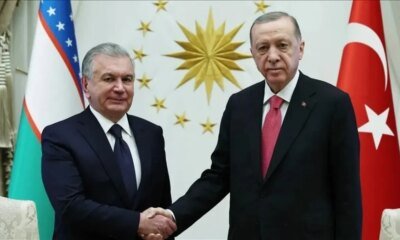
Directorate of Communications shared: President Erdoğan met with the President of Uzbekistan!
-
 Daily Agenda2 days ago
May the resurrection of Hagia Sophia be blessed – Breaking News
-
 Daily Agenda2 days ago
BREAKING NEWS… Shocking statement from the secret witness in the Izmit Municipality investigation! The tender worth 1.6 million was shown as 84 million TL: Veli Ağbaba’s lover…
-
 Daily Agenda3 days ago
‘Sign, dear, no dishes left, the president’s order’
-
 Daily Agenda2 days ago
BREAKING NEWS… Separation debate in CHP! Voters evaluated the seat fight to AHaber: They do not represent the will of the nation!