
Sports
Real climb to La Liga summit, Inter go 8 clear in Serie A

Real Madrid moved atop LaLiga with a commanding 4-1 win over Real Sociedad, while in Italy, Piotr Zielinski struck late to lift Inter Milan eight points clear at the summit of Serie A with a victory over Juventus.
Vinicius Junior scored two penalties while Gonzalo Garcia and Federico Valverde were also on target, with Mikel Oyarzabal replying with a spot-kick to send Madrid two points clear of Barcelona, who play at Girona Monday night.
Mauro Arambarri’s penalty and Martin Satriano’s header, either side of halftime, saw Getafe dent Villarreal’s top-four hopes as the visitors went down 2-1 at the Estadio Coliseum despite substitute Georges Mikautadze’s late strike.
Borja Iglesias stoppage-time equalizer secured a 2-2 draw for Celta Vigo at Espanyol.
The visitors led at the break through Ferran Jutgla’s opener, but goals from substitutes Kike Garcia and Tyrhys Dolan looked to have won it for the hosts until Iglesias’ last-gasp intervention.
Toni Martinez spared Alaves blushes as they came from behind to draw 1-1 at nine-man Sevilla.
The hosts, who had midfielder Juanlu Sanchez sent off for two bookable offences inside the opening 16 minutes, went ahead through Djibril Sow as the first half drew to a close, but Martinez leveled on the hour before substitute Joan Jordan was dismissed in stoppage time.
Inter soar in Derby d’Italia
In Italy, Piotr Zielinski’s sent Inter Milan eight points clear at the top of Serie A as his last-minute goal clinched a 3-2 Derby d’Italia victory over 10-man Juventus.
Juve’s Andrea Cambiaso had earlier scored for both sides before fellow defender Pierre Kalulu was sent off in an eventful first half, but Manuel Locatelli looked to have claimed a point for the visitors when he canceled out Francesco Pio Esposito’s header, only for Zielinski to win it at the death.
Moise Kean’s penalty proved the difference as Fiorentina boosted their survival hopes with a 2-1 victory at Como.
Nicolo Fagioli and Kean struck either side of halftime to give the visitors a 2-0 lead, and although Fabiano Parisi’s own goal gave the Cesc Fabregas’ men hope, it died with substitute Alvaro Morata’s 89th-minute dismissal for a second bookable offence.
Ederson’s first-half penalty and a second goal from Nicola Zalewski edged Atalanta to a 2-0 win at Lazio.
In Ligue 1, Wesley Said and substitute Rayan Fofana both scored twice, either side of Florian Thauvin’s penalty, as Lens routed Paris FC 5-0 at the Stade Jean Bouin to climb to the top of the table.
Joaquin Panichelli’s penalty in the seventh minute of stoppage time denied Marseille victory as Strasbourg fought back from 2-0 down to snatch a point at the Velodrome.
Mason Greenwood and Amine Gouiri had put the hosts into a strong position, but substitute Sebastian Nanasi reduced the deficit with 17 minutes remaining before Panichelli secured a 2-2 draw from the spot.
Lille needed a late equalizer from substitute Gaetan Perrin to claim a 1-1 home draw with Brest, who had gone ahead through Remy Labeau Lascary.

The West Indies stormed into the Super Eight stage of the Twenty20 World Cup with a nine-wicket victory over Nepal in Mumbai on Sunday, powered by a four-wicket spell from Jason Holder and a half-century from Shai Hope.
Chasing a modest 134 for their third straight victory after battling knocks by Nepal’s Dipendra Singh Airee (58) and Sompal Kami (26 not out), West Indies eased to victory at Wankhede Stadium with 28 balls to spare.
After paceman Holder’s wickets laid the platform, captain Hope (61 not out) and Shimron Hetmyer (46 not out) guided their team home to rule Nepal out of the reckoning for the next stage of the tournament.
“I’m very pleased. This is what we set out to do and we got here. That’s one step and one hurdle that we’ve crossed and now on to the next stage,” Hope said.
“I’m glad I actually got the opportunity to decide what I wanted to do first. The guys put the ball in the right areas … It was difficult work for Nepal in the powerplay. Then it was about trying to limit the flow of runs and picking up wickets.
“It’s crunch time now, back into the Super Eights.”
A little over four months since their confidence-boosting 2-1 T20 series win over a weakened West Indies in Sharjah, Nepal arrived for the clash seeking their first victory in Group C of the World Cup after defeats by England and Italy.
Poor start for Nepal
They made a poor start after being asked to bat by table-toppers West Indies with Kushal Bhurtel bowled by Akeal Hosein on the fifth delivery of the innings and skipper Rohit Paudel trapped lbw by Matthew Forde shortly afterward.
Holder (4-27) ramped up the pressure by having Aasif Sheikh caught in the deep off a loose ball before Nepal limped to 22-3 in six overs, the lowest powerplay score in this edition of the event, silencing a large group of their fans.
Several soft dismissals meant Nepal struggled to recover before Airee cut loose and reached his half-century with a big six and Kami marked his recall to the side with late fireworks to take them to 133-8 in 20 overs.
“It was a challenge in the powerplay, their bowlers were using the conditions well,” Paudel said. “As a batting unit, we failed again. We need to step up.”
Norway’s Johannes Hoesflot Klaebo won a record ninth gold medal at the Winter Olympics Sunday by leading his country to victory in the cross-country relay, while Canada’s Mikael Kingsbury capped his Olympic career with gold in the men’s dual moguls for his fifth career medal.
Klaebo anchored the favoured Norwegian quartet, which also included Emil Iverson, Martin Lowstrom Nyenget and Einar Hedegart to gold in the 4×7.5-kilometer race ahead of France and hosts Italy.
The ninth gold moved Klaebo ahead of three compatriots who won eight gold medals in their career: Marit Bjorgen, Bjorn Daehlie (both cross country) and Ole Einar Bjorndalen (biathlon).
The 29-year-old won five golds in 2018 and 2022 and now has four more from four starts at the Milan/Cortina Games.
Klaebo has two more starts in the team sprint and 50-kilometer and if he wins those as well – like in his six-gold sweep at last year’s world championships – he will be the first Winter Olympian to get six golds at one Games.
That record currently stands at five golds, from American Eric Heiden’s speed skating sweep in 1980.
Klaebo was handed a 12-second lead by 10-kilometer bronze medallist, Hedegart, after Nyenget had put them ahead on the second leg.
Klaebo took no major risks and celebrated on the home straight to the finish line, where his teammates were waiting.
The world champions returned to the top of the podium, after being beaten by a quartet of Russian athletes in 2022, with a comfortable margin of 22.2 seconds over France.
The French got silver after three straight bronze medals in the event and their Mathis Desloges won a third Milan/Cortina silver.
Veteran Federico Pellegrino anchored Italy to bronze, their first relay medal since gold at the Turin Games 20 years ago.
Sweden, meanwhile, were never in contention, falling behind in the first leg and finishing almost three-and-a-half minutes back in 10th place.
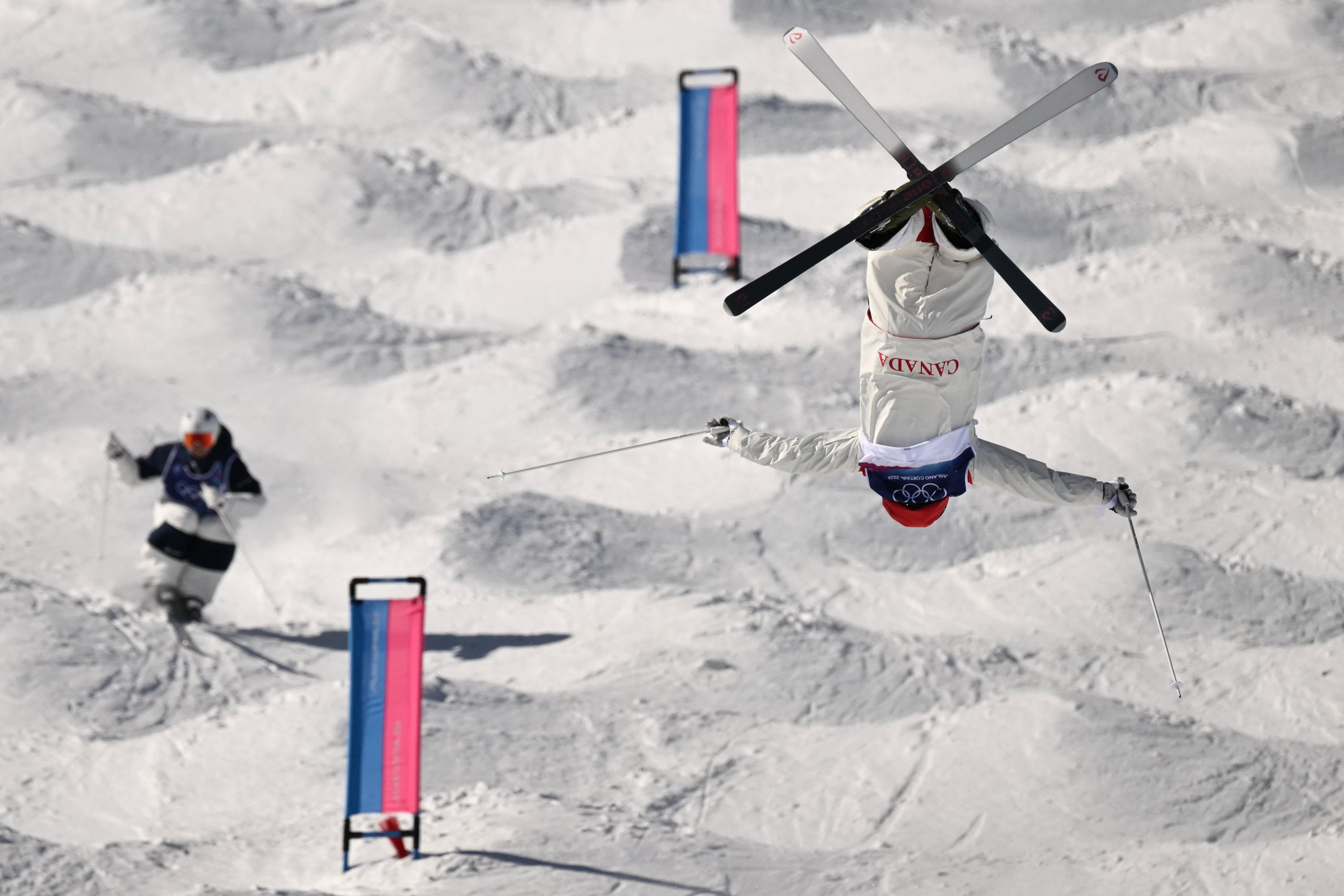
Kingsbury bows out on top
Also Sunday, Canada’s “king of the moguls,” Kingsbury, signed off his Olympic career in style, winning the men’s dual moguls to collect his fifth overall Winter Games medal.
The 33-year-old fell marginally behind Ikuma Horishima early in the super final in Livigno, but his Japanese opponent lost control, flying over the second jump with no tricks to cross the line first.
Kingsbury, who took silver in the individual event earlier in the Milan-Cortina Games, kept his cool to become the first-ever winner of the men’s dual moguls – the discipline is making its Olympic debut in Italy.
He knew he had won as he crossed the line to win Canada’s first gold of the 2026 Winter Olympics, spreading out his arms in triumph.
The judges gave Kingsbury a decisive 30-5 victory, with Australia’s Matt Graham taking bronze.
“It’s the cherry on top of five Olympic starts and five medals,” said the Canadian. “I got to win it in 2018 (in Pyeongchang) in singles and I got to win it (today) in duals. It’s tough to find the words.
“I gave everything, this is extra special. I’m the oldest guy in the field. They keep me young in what I do, I love skiing. I’m very proud of myself.”
He added: “I knew it was my last Olympic performance … I had no regrets. I didn’t feel too nervous. I trusted my plan, I trusted the work that I put in with my team and just went for it. I’m really happy with the outcome.
“It wasn’t easy today. We had good conditions but the piste was not easy. But I just trusted my years of experience and the work of my team. I gave it my all, everything I had in my body, to go for this medal.”
Dual moguls is a freestyle skiing event in which two athletes compete side by side on a bumpy course, featuring two jumps, where they perform aerial tricks.
Judges choose the winner of each contest based on speed and style.
Kingsbury won moguls gold at the 2018 Games and has taken three silvers in the event – in 2014, 2022 and earlier in these Games.
In all his Olympic and world championship appearances, he has been absent from only one podium – dual moguls at the 2017 world championships.
He is also the only moguls skier in history to claim a century of World Cup victories.
In his 23rd NBA season, the longest career in league history, LeBron James is still rewriting the record book and defying time.
At 41 years and 44 days old, James became the oldest player in NBA history to post a triple-double, doing so in the Los Angeles Lakers’ 124-104 victory over the Dallas Mavericks on Thursday night.
He sealed it with 2:06 remaining, grabbing his 10th rebound to go with 28 points and 12 assists. Moments later, he checked out to a standing ovation, recording the 123rd triple-double of his career, the fifth-most in NBA history.
In the process, James surpassed Karl Malone, who had held the record for 22 years after recording his final triple-double with the Lakers at 40 years, 127 days old.
Two decades on, Father Time is still chasing. James is still leading.
“I guess I’m more appreciative of moments like this in my career, understanding where I’m at at the later stage of my journey,” James said. “You definitely take it in a little bit more.”
While statistics and longevity records do not carry the same weight for James at this stage of his career, he said he values triple-doubles as a measure of his overall impact.
Although he has missed 18 games this season because of injury, James was no ceremonial selection to his 22nd All-Star Game this weekend. He showed why by dominating the Mavericks while Luka Doncic was out with a hamstring strain.
“I think what it represents is pretty cool, the fact that you can go out and have an impact in three facets of the game,” James said. “Rebounding. The assists, obviously, are what I love the most. Being able to get my guys involved, throughout my career I’ve always loved that more than anything. And being able to put the ball in the basket, that’s part of this game as well. So I think what it means, to be able to have your hand in three facets of the game, making an impact in those three, that’s pretty cool.”
James has remained highly productive when healthy. He reiterated his belief that he can continue playing at this level for years to come. He entered the game averaging 21.8 points, 6.9 assists and 5.7 rebounds. The Lakers are in the thick of the Western Conference playoff race despite playing only 10 games with James, Doncic and Austin Reaves all healthy.
The NBA’s all-time leading scorer had not recorded a triple-double since Feb. 1, 2025, at New York. That day is remembered more for the late-night news of the trade that brought Doncic to the Lakers.
Malone had been the oldest player to post a triple-double since recording 10 points, 11 rebounds and 10 assists on Nov. 28, 2003, in his final NBA season. James now owns the next 15 spots on that list. He had come close several times over the past year before finally breaking the record in the Lakers’ final game before the All-Star break.
With Doncic sidelined as his former team visited, James was aggressive from the opening tip, returning from his own injury absence in Tuesday’s loss to San Antonio.
After an animated pregame warmup, James scored 14 points and had six assists in the first quarter. He was involved in the Lakers’ first 23 points. By halftime, he had 18 points, eight assists and four rebounds. He reached double figures in assists during the third quarter and stayed in the game long enough in the fourth to secure the three rebounds he needed.
He nearly secured the milestone earlier, but Reaves grabbed a rebound in front of him.
“Everybody on the team yelled at me,” Reaves said. “I don’t catch myself looking at the stats during the game, so we went to the bench and everybody let me know about it. He didn’t, but everybody else. I looked at him and said, ‘Shoot, my fault.’”
After his streak of 20 consecutive All-Star Game appearances ended last year because of injury, James will return to the midseason showcase Sunday at Intuit Dome. He is ineligible for All-NBA consideration this season because of missed games, including the first 14 while dealing with sciatica.
Including the playoffs, James has 152 career triple-doubles.
Four-time world champion Max Verstappen criticized Formula One’s new-era machinery after the second day of preseason testing in Bahrain, branding the redesigned cars “anti-racing.”
The Dutch driver logged 136 laps for Red Bull on Wednesday and posted the second-fastest time of the day before handing over duties to new teammate Isack Hadjar on Thursday. Despite the mileage and early pace, Verstappen made clear he is far from impressed.
Speaking at his first news conference of the season, he questioned the direction of this year’s sweeping regulation changes, which have forced every team into a full rethink of chassis and power units with a stronger emphasis on energy management. For Verstappen, the shift risks dulling the wheel-to-wheel edge that defines Formula One.
“To drive, they are not a lot of fun, to be honest,” he said.
“I would say the right word is management. It’s not very Formula One-like. It feels a bit more like Formula E on steroids.
“But the rules are the same for everyone, so you have to deal with that.
“As a pure driver, I enjoy driving flat out and at the moment you cannot drive like that. There’s a lot going on.
“A lot of what you do as a driver, in terms of inputs, has a massive effect on the energy side of things. For me, that’s just not Formula One.
“Maybe it’s then better to drive Formula E, right? Because that’s all about energy, efficiency and management.”
Verstappen said he does like the look of the new cars.
“Honestly, the proportion of the car looks good, I think,” he said. “That’s not the problem. It’s just everything else that is a bit, for me, anti-racing.”
He tempered his criticism when it came to the engineers and designers working under the new regulations.
Red Bull have dispensed with the Honda engines of previous years and are competing this season for the first time with their own factory-built power units.
“On the other hand, I also know how much work has been going on in the background, also from the engine side, for the guys,” he said. “So it’s not always the nicest thing to say, but I also want to be realistic as a driver.”
On Wednesday, seven-time champion Lewis Hamilton also weighed in, calling on the FIA, the sport’s governing body, to resolve differing interpretations of the new regulations to ensure all teams start “on an equal playing field.”
On track Thursday, Charles Leclerc topped the timesheets for Ferrari with 128 laps.
World champion Lando Norris, who was quickest on Wednesday, was just behind after putting his McLaren through 139 laps, while George Russell was third-fastest for Mercedes.
Sports and politics have never really been separate. Sport markets itself as fair play and unity, but politics is driven by power and interest.
When they face off, the results shape national identity, fuel protest, and sometimes steal the spotlight from competition itself.
From Cold War boycotts to Russia’s war in Ukraine and the Gaza conflict, the past decade has shown that this partnership can be as divisive as it is inevitable.
Sport vs. statecraft
The belief that sport should be apolitical has always been more ideal than reality.
FIFA President Gianni Infantino has forged an unlikely bromance with U.S. President Donald Trump. With the 2026 FIFA World Cup on the horizon, Infantino has become a frequent visitor to the Oval Office, a visible sign of the governing body’s close ties to the White House.
That relationship was on full display at the World Cup draw in Washington in December, when Trump was presented with FIFA’s inaugural Peace Prize. Standing beside him, Infantino praised the president’s leadership, saying the world wanted “hope” and “unity” and that Trump deserved the honor.
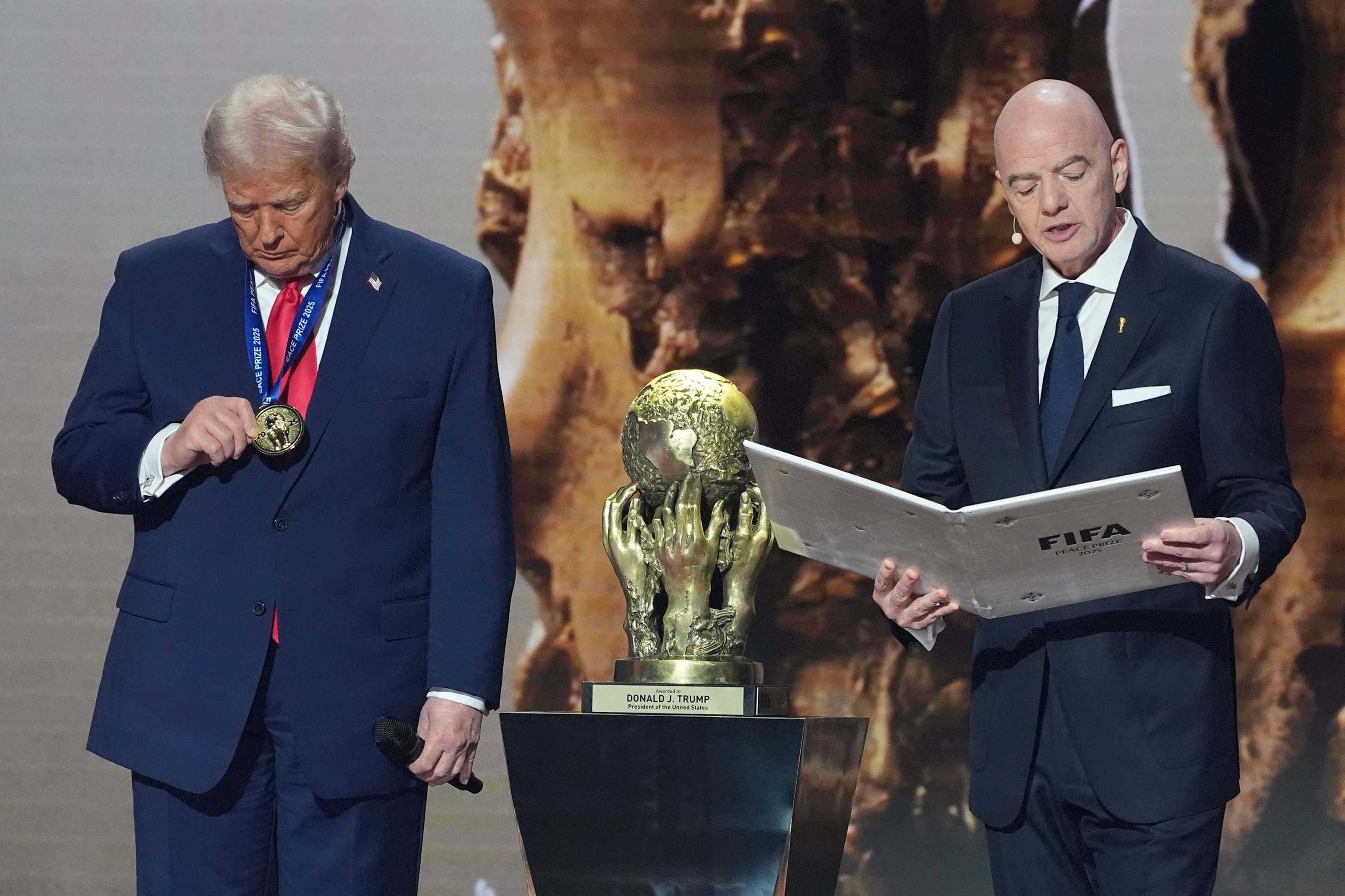
The decision sparked immediate controversy. Critics questioned the optics of awarding such a prize to a sitting political figure, especially in a deeply polarized climate. Despite the backlash, the award stands.
Behind the scenes, there is said to be growing unease within FIFA itself. Mid-level and senior officials have privately expressed embarrassment over the move, concerned that the gesture blurred the line between global sport and partisan politics at a moment when the organization is already under scrutiny.
Even the ancient Olympics reflected city-state rivalry and alliances. In 1936, Nazi Germany tried to turn the Berlin Games into a propaganda victory, only to be undermined by Jesse Owens’ performance on the track.
The Cold War turned Olympic arenas into ideological battlefields. The 1972 Munich Games were scarred by terror. The U.S. boycotted the 1980 Moscow Olympics over the Soviet invasion of Afghanistan, and the Soviets returned the gesture in 1984. Athletes lost career-defining moments because of state decisions.
Athlete protest has a long tradition. Tommie Smith and John Carlos were expelled in 1968 after raising black-gloved fists at the Mexico City Games. Muhammad Ali was stripped of his heavyweight title for refusing the Vietnam draft. These moments, once controversial, are now part of sporting lore.
Even club football has reflected political fault lines. Football Against the Enemy explored how football often mirrors wider political currents, revealing that when the sport matters to billions, it becomes inseparable from national narratives and conflict. Kuper travelled to 22 countries to show how football both reflects and shapes cultural identity and political tensions.
Protest, war and global pressure
The 2020 murder of George Floyd sparked a wave of athlete activism.
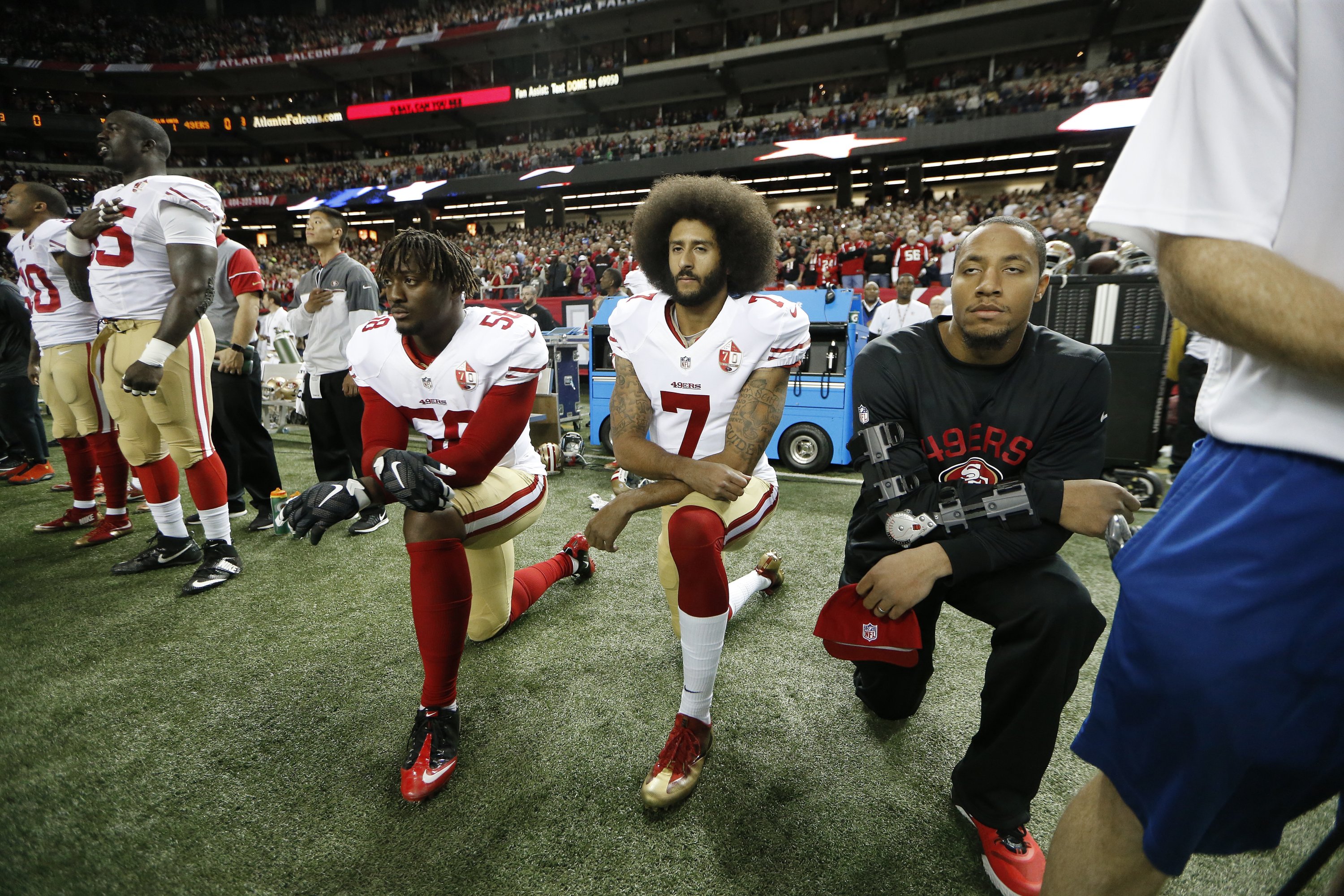
NBA players wore social justice messages. Premier League teams knelt before matches. The WNBA campaigned against a sitting U.S. senator who was a team owner. The NFL, after sidelining Colin Kaepernick for kneeling in 2016, later embraced anti-racism messaging in stadiums, a shift some saw as genuine and others as commercially driven.
International football brought its own controversies. The 2022 FIFA World Cup in Qatar drew intense scrutiny over workers’ rights, human rights concerns and allegations tied to the bidding process, with some players staging symbolic protests and FIFA trying to enforce a facade of neutrality.
Russia’s 2022 invasion of Ukraine forced global sport into political action. FIFA, UEFA and the International Olympic Committee (IOC) imposed bans or neutral status on Russian teams and athletes in many competitions, decisions that brought praise and criticism for inconsistency.
At the same time, the Gaza conflict sparked calls from some federations and public figures to exclude Israel from international competitions, highlighting how geopolitical disputes spill into sport and expose questions about fairness and sanctioning.
It’s deeper
Government interference has also blurred boundaries. FIFA suspended Zimbabwe in 2022 after state authorities dissolved its football association, a ban that sidelined national teams before being lifted in 2023. Early in 2026, Gabon briefly suspended its national team after humiliation at the Africa Cup of Nations, risking FIFA penalties before reversing course. In both cases, political decisions threatened athletes’ opportunities in global sport.
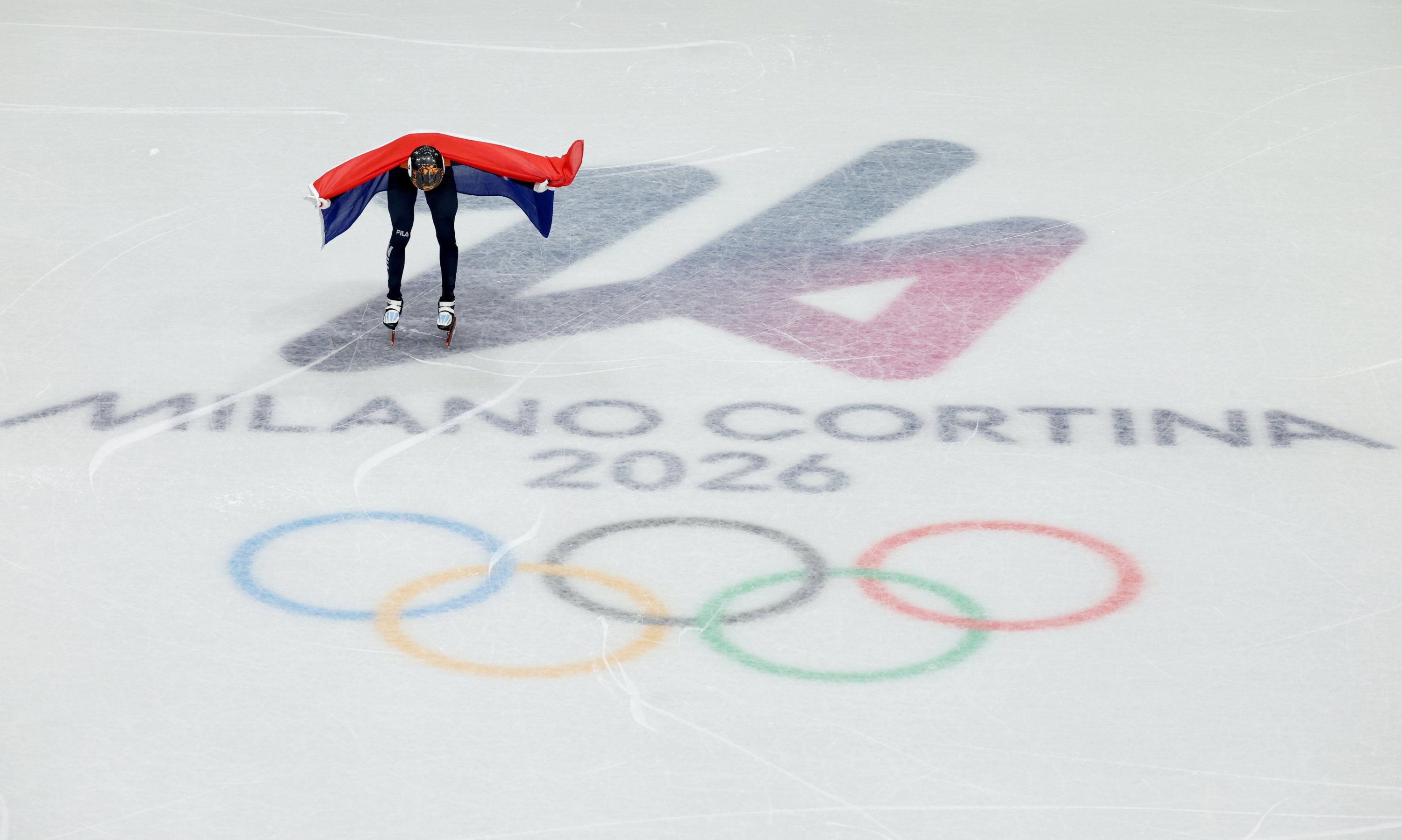
In the United States, the 2024 presidential cycle played out on sporting stages as well. High-profile athletes endorsed candidates. Political leaders appeared at games. By the run-up to the 2026 FIFA World Cup, diplomatic tensions around visas and policy disputes were influencing media narratives around teams and fans just as much as match preparation. Even the ongoing Milan-Cortina Winter Olympics are shadowed by broader social debates, from athlete eligibility to national policy clashes reverberating beyond the slopes.
Influence that changes society
Despite the tension, political engagement in sport can drive meaningful change.
Maya Moore retired from basketball to fight for criminal justice reform, helping secure a wrongful conviction reversal. Brittney Griner’s release from detention in Russia was supported by sustained advocacy from teammates, the WNBA and public pressure. Didier Drogba’s televised plea after Ivory Coast qualified for the 2006 World Cup helped encourage a cease-fire during civil war and later became a symbol of unity when the national team played in a former rebel-held city.
Sport has also brought athletes into governance. George Weah became president of Liberia after a celebrated football career. Imran Khan transitioned from cricket legend to prime minister of Pakistan. In these cases, sporting influence became political capital.
The costs of entanglement
Yet the dangers are clear. Mega events can be used to soften international criticism of host nations. Boycotts often punish athletes rather than policymakers. Governing bodies face accusations of selective enforcement. Fans who turn to sport for escape increasingly find themselves entangled in the world’s sharpest debates.
The war in Ukraine and the Gaza genocide have demonstrated how quickly global tournaments can become extensions of wider conflict, turning venues into stages where power, protest and politics play out against the backdrop of competition.
A reality to be managed
Sport cannot be divorced from society. Its global reach ensures politics will always follow. The challenge for organisations such as FIFA and the IOC is to act consistently, protect athletes’ rights and resist becoming instruments of political theatre.
The relationship between sport and politics may be uneasy, but it is not new and is unlikely to disappear. The test ahead is whether global sport can preserve its integrity while standing at the centre of the world’s most heated disputes.
After all, it is a toxic relationship built to endure. A stormy marriage that survives every crisis, bound together for better or worse, with no real prospect of separation.
U.S. Immigration and Customs Enforcement will serve as a key pillar of security for the 2026 FIFA World Cup, a role that places the agency at the heart of the largest tournament in the sport’s history and at the center of an ongoing political storm.
Acting ICE Director Todd Lyons told the House Committee on Homeland Security that Homeland Security Investigations, the agency’s investigative arm, will be fully integrated into World Cup operations.
“HSI is a key part of the overall security apparatus for the World Cup,” Lyons said, responding to Rep. Nellie Pou of New Jersey, whose district includes MetLife Stadium, the scheduled site of the final. He made clear the agency does not plan to pause enforcement actions around matches or FIFA events, adding that ICE is “dedicated to securing that operation” and to protecting “participants as well as visitors.”
The expanded 48 team tournament begins June 11 and runs through July 19 across 16 cities in the United States, Mexico and Canada. With 104 matches and millions of expected visitors, it will be the largest World Cup ever staged, requiring coordination across federal, state and international agencies under the Department of Homeland Security.
HSI typically handles counterterrorism intelligence, visa security, human trafficking investigations, financial crimes and cross border threats. At global sporting events, its focus includes intelligence sharing, fraud investigations, smuggling networks and potential risks to venues and teams. Deportations and detention operations fall under a separate ICE division.
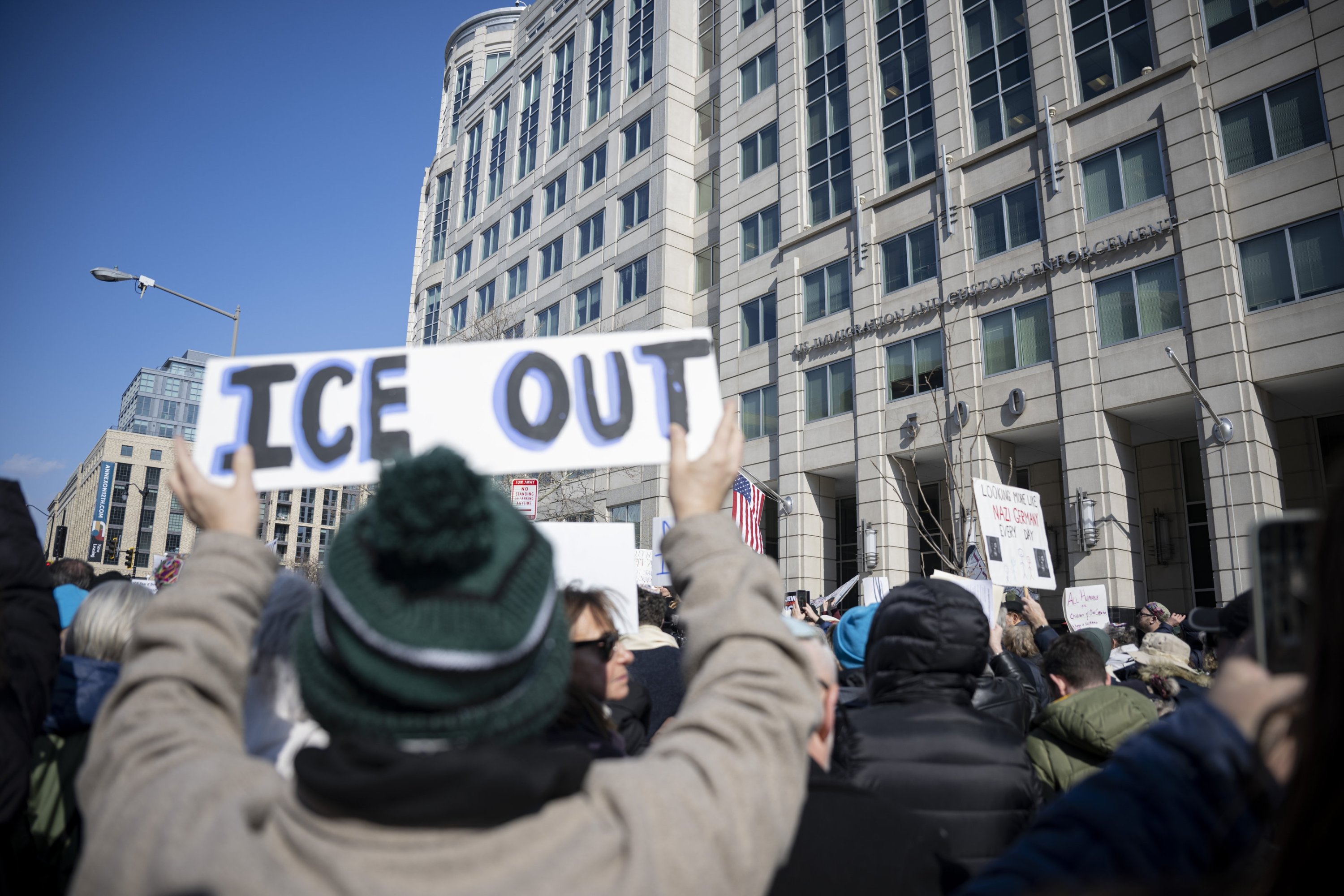
( Celal Güneş – Anadolu Ajansı )
Still, the agency’s expanded visibility comes during a period of heightened criticism. ICE has drawn backlash over aggressive street level arrests and allegations of wrongful detentions. Recent incidents, including a fatal encounter involving federal agents in Minnesota, have intensified scrutiny, though administration officials have rejected claims of misconduct tied to broader policy.
Abroad, ICE’s presence at the Winter Olympics in Milan and Cortina d’Ampezzo has sparked protests. Demonstrations in Milan turned violent, leading to arrests, as activists objected to the deployment of ICE officers assigned to protect senior U.S. officials including Vice President JD Vance and Secretary of State Marco Rubio.
For the World Cup, federal officials frame ICE’s involvement as standard protocol for a major global event. Critics argue the agency’s reputation could shape how international fans view the United States as a host.

President Erdoğan met with the ship’s personnel: We are waiting for good news from Çağrı Bey.

Türkiye’s expanding military reach boosts diplomatic clout, analysts say

Reaction from Minister Yumaklı to CHP’s olive tree massacre! Profit games in the background of so-called environmental sensitivity
President Erdoğan met with the ship’s personnel: We are waiting for good news from Çağrı Bey.
Türkiye’s expanding military reach boosts diplomatic clout, analysts say
Reaction from Minister Yumaklı to CHP’s olive tree massacre! Profit games in the background of so-called environmental sensitivity
-
 Politics3 days ago
Mitsotakis gets warm welcome as Ankara sees brighter side in ties
-

 Politics3 days ago
3 migrants killed after boat sinks off western Türkiye
-
 Politics3 days ago
Report on terror-free Türkiye focuses on laws to promote disarmament
-
 Daily Agenda3 days ago
Palestine message from Minister Gürlek: “We continue to defend peace and justice”
-

 Politics3 days ago
Türkiye condemns Israel’s attempt to annex West Bank
-
 Economy3 days ago
Trump takes most aggressive move to roll back US climate regulations
-

 Daily Agenda2 days ago
Record fine period for traffic violations
-
 Daily Agenda2 days ago
Minister Göktaş: We have brought our social media editing work to the final stage.