
Sports
Turkish football rocked as TFF sends 10 Süper Lig clubs to PFDK

The Turkish Football Federation’s (TFF) legal board has referred 10 Süper Lig clubs and several club officials to the Professional Football Disciplinary Board (PFDK) following a fiery weekend of league action marked by crowd trouble, offensive chants and a string of disciplinary flashpoints across Türkiye’s top flight.
The most serious cases emerged from Gençlerbirliği’s heated clash against Kasımpaşa S.K., where both clubs and multiple officials were swept into disciplinary proceedings after a stormy encounter in Ankara.
Gençlerbirliği S.K. were referred over allegations of irregular spectator entry under Article 49 of the Football Disciplinary Regulations, while several club officials also landed in trouble for breaching accreditation and competition directives.
Club executive Ali Ekber Düzgün was sent to the PFDK with a provisional suspension for alleged unsporting conduct, while officials Ümit Utaş, Hüseyin Şen, Hakan Acar and Mehmet Doğru were all cited for actions deemed contrary to federation regulations.
Recep Baylan was also referred with precautionary measures attached over violations linked to Süper Lig competition statutes.
Kasımpaşa’s disciplinary file proved equally extensive. The Istanbul side were charged with collective unsporting conduct after 10 of their players received yellow cards during the match, an incident that underlined the tense atmosphere surrounding the contest.
Kasımpaşa executive Ceyhun Kazancı faces multiple allegations, including breaching directives, unsporting behavior, insults and threats, with the federation imposing a provisional suspension pending the disciplinary process.
Head coach Emre Belözoğlu was also referred for alleged unsporting conduct, alongside team masseur Rahman Karaağaç.
League leaders Galatasaray S.K. were referred after their match against Antalyaspor over offensive chanting, crowd disturbances and an alleged breach of sporting equipment regulations.
Rivals Beşiktaş J.K. were cited for offensive chants following their high-profile showdown with Trabzonspor, while Fenerbahçe S.K. were referred over both crowd misconduct and offensive supporter behavior during their trip to Konyaspor.
Elsewhere, Samsunspor, Kocaelispor, Göztepe S.K., Eyüpspor, Çaykur Rizespor and Kayserispor were all referred to the PFDK over offensive and abusive chanting by supporters during weekend fixtures.

Panathinaikos Basketball Club owner Dimitrios Giannakopoulos wants to bring three-time NBA Most Valuable Player Nikola Jokic to Athens, with the Denver Nuggets superstar potentially joining the Greek club for the 2027-28 season.
Giannakopoulos, whose net worth has been estimated at between $500 million and $1.9 billion, said on the “Euro Insiders” podcast, published Tuesday, that he approached the Nuggets about buying out Jokic’s contract and bringing the Serbian star to Greece.
“People are going to say, ‘OK, now he’s joking,’” Giannakopoulos said. “I did make a very serious proposal this year, both to his team and to him. I got a rejection. I know that he has one more year (on his) contract.”
Technically, Jokic has two years remaining on his contract. According to Spotrac, he is due to be paid $59,033,114 this season and $62,841,702 next season, while the 2027-28 season is a player option.
“When I asked, he had a certain contract running,” Giannakopoulos said. “This was his last year. I tried to buy out his last year. They didn’t even, I mean, it took a few seconds to say, ‘Who? Greece? Where? What? Bye,’ from his team. But … let’s wait until next year.”
Jokic, 31, has spent all 11 of his NBA seasons with the Nuggets and has averaged 22.2 points, 11.1 rebounds and 7.5 assists while leading the franchise to its only NBA championship in 2022-23.
Jokic has averaged a triple-double in each of the past two seasons. Oscar Robertson, who did so in 1961-62, and Russell Westbrook, who accomplished the feat four times, are the only other players to average a triple-double for a full season.
Last season in the EuroLeague, Panathinaikos went 22-16 to finish seventh among 20 teams before losing to Valencia Basket in the first round of the playoffs.
Former NBA players including Jerian Grant, Juancho Hernangomez, Kendrick Nunn and Guerschon Yabusele are listed on Panathinaikos’ preseason roster.
South American football’s governing body CONMEBOL has postponed two continental club matches in Colombia following a powerful 7.4-magnitude earthquake that killed at least 164 people and caused widespread destruction across the country.
Deportes Tolima’s Copa Libertadores round of 16 first-leg match against Ecuador’s Independiente del Valle, scheduled for Tuesday in Ibague, and Wednesday’s Copa Sudamericana clash between Independiente Santa Fe and Argentina’s River Plate in Bogota have both been suspended.
CONMEBOL said new dates and venues for the matches would be announced later.
The decision came as Colombia continued to deal with the aftermath of Monday’s earthquake, which struck western Colombia and caused severe damage in several parts of the country.
The disaster prompted a major rescue and relief operation as authorities assessed collapsed buildings and other damaged infrastructure.
“In these difficult times, CONMEBOL extends its affection and support to all of Colombia and, especially, to the great Colombian football family,” the governing body said in a statement.
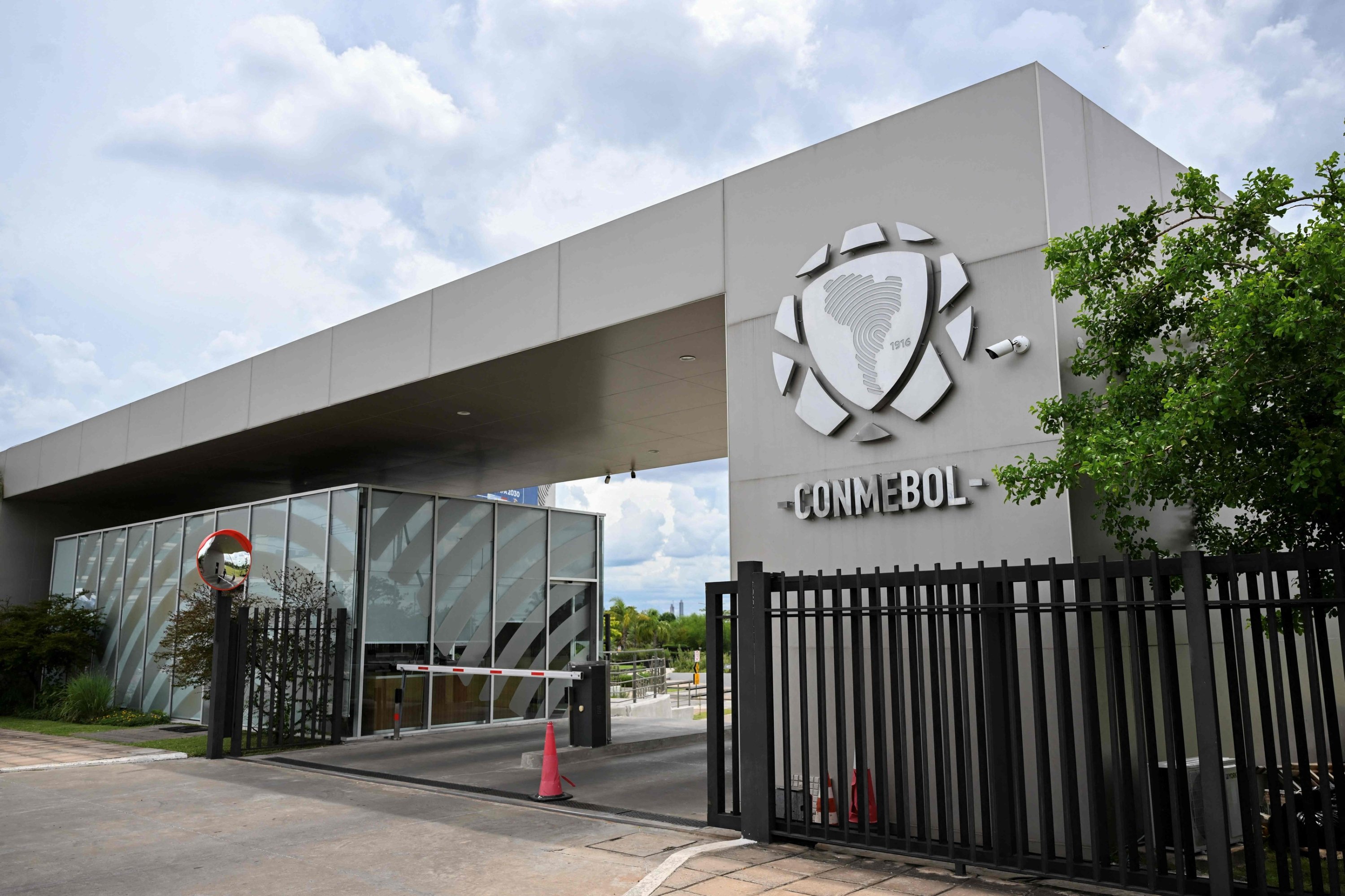
“In light of this exceptional situation, and to ensure everyone’s safety and respect for the victims, the matches are temporarily suspended.”
The postponements affect two of Colombia’s biggest clubs on the South American stage.
Tolima were due to host Independiente del Valle at the Estadio Manuel Murillo Toro in Ibague in the first leg of their Libertadores knockout tie. Santa Fe were scheduled to welcome River Plate to Bogotá’s Estadio Nemesio Camacho, commonly known as El Campin, for the opening leg of their Sudamericana round of 16 series.
With the earthquake disrupting normal activity across western and central Colombia, CONMEBOL opted against proceeding with the fixtures while rescue and recovery efforts remained underway.
The Colombian Football Major Division, known as DIMAYOR, also suspended all domestic matches scheduled for the week.
The move brought Colombia’s professional football calendar to a standstill as authorities and communities focused on the emergency. DIMAYOR expressed its solidarity with those affected and said the decision was taken in response to the exceptional circumstances facing the country.
The earthquake struck Monday morning in the Choco region of western Colombia. Its effects were felt across a wide area, including major cities such as Cali, Pereira and Bogotá.
The quake caused extensive structural damage, with buildings collapsing in some areas and emergency services working to reach people trapped under rubble. Airports and other infrastructure were also affected, complicating efforts to assess the full scale of the disaster.
The death toll rose throughout the day as rescuers reached areas that had initially been difficult to access.
The earthquake was among the strongest to strike Colombia in recent history and triggered a national emergency response. Authorities warned of further seismic activity as rescue crews continued searching damaged areas.
For Colombian football, the immediate priority shifted away from competition and toward safety and solidarity.
The postponements mean Tolima, Santa Fe and their opponents will have to wait for confirmation of when and where their continental fixtures will be played. CONMEBOL said those details would be announced in due course.
U.S. President Donald Trump said Monday that replacing embattled FIFA President Gianni Infantino would be “a terrible mistake,” throwing his support behind the football chief as he faces mounting criticism from several of the sport’s leading confederations.
Infantino came under renewed pressure after UEFA, CONCACAF and the AFC signed an open letter accusing the FIFA president of breaking trust “through deception.” The three confederations represent football in Europe, North and Central America, and Asia, respectively.
Despite the backlash, Trump defended Infantino, who presented the U.S. president with a “FIFA Peace Prize” during last year’s World Cup draw ceremony.
Infantino has also faced scrutiny over his unsuccessful efforts to sell a stake in the World Cup to private investors, adding to the growing controversy surrounding his leadership of world football.
“FIFA would be making a terrible mistake if, for any reason, they even considered replacing President Gianni Infantino,” Trump posted on Truth Social.
Trump called Infantino “fantastic” and said he “presided over the most successful World Cup, by four times, ever presented.”
“If he is gone, it will never be as successful or profitable again!” added Trump, who attended the World Cup final with Infantino last month.
Trump’s backing of Infantino is at odds with U.S. football, which joined the voices lining up against the FIFA president.
Infantino launched, then withdrew in the face of scathing criticism, a plan to bring private investment into FIFA competitions, including the World Cup.
FIFA hit back Saturday at efforts “to undermine” football’s governing body and Infantino.
However, Monday’s joint letter from UEFA, CONCACAF and the AFC retorted: “Leadership in football is not a possession. It is not about holding — or demanding — power to be held.
“When trust is broken through deception, when an individual places himself above the collective that entrusted him with authority, that duty has been abandoned.”
UEFA boycott threat
CONCACAF President Victor Montagliani is viewed as a potential challenger to Infantino, who will be up for reelection to a fourth and final term at the FIFA Congress in March 2027. Candidates have to be declared by Nov. 18.
Infantino had looked certain to be unopposed for a fourth term after overseeing a successful World Cup in the United States, Mexico and Canada until his plans were revealed.
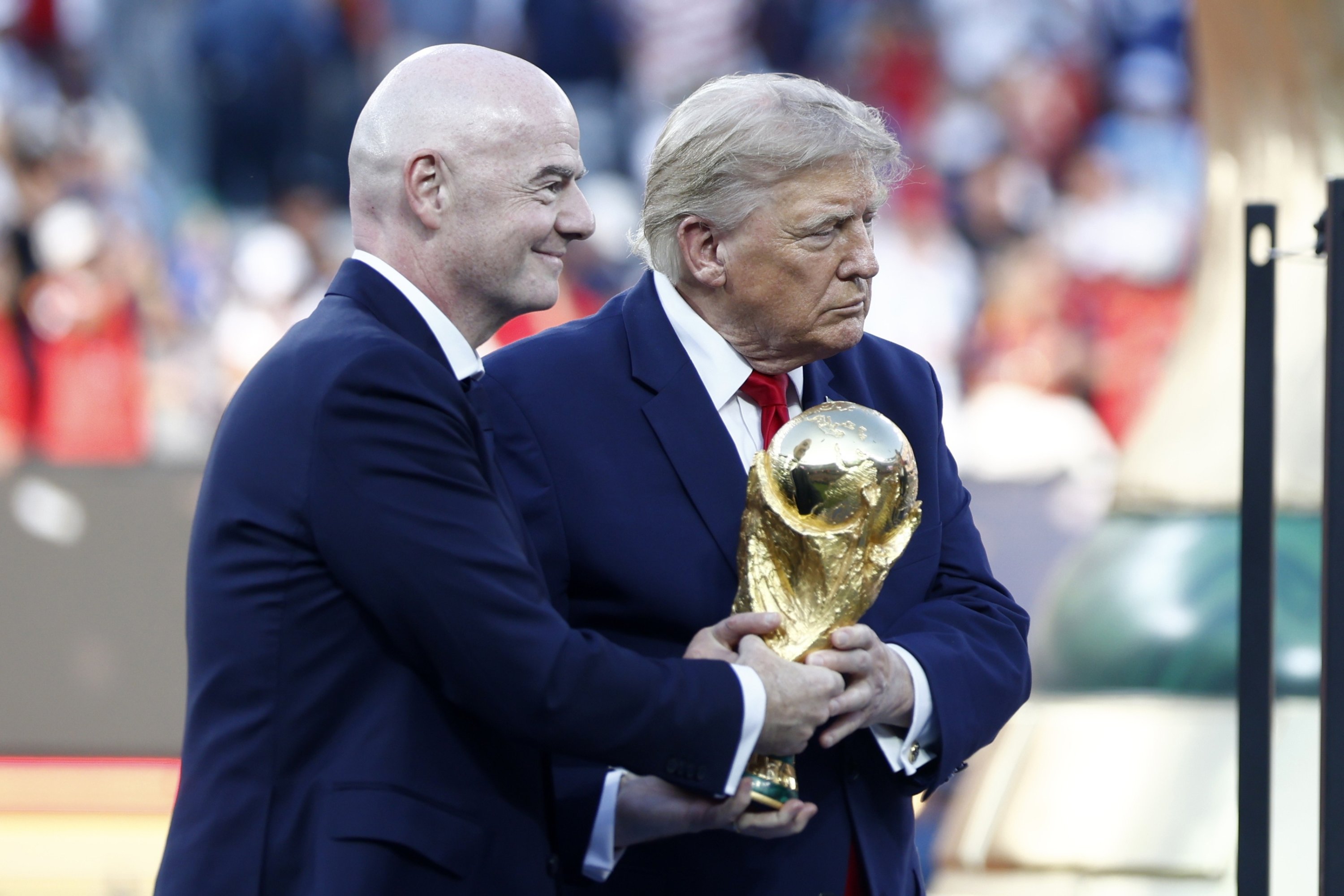
The 56-year-old Swiss, who has been in office for 10 years, has received the backing of the Confederation of African Football, or CAF, while South American governing body CONMEBOL is largely supportive.
Individual member associations, not confederations, vote in the FIFA election.
Infantino has received support from CONCACAF’s Mexico and two AFC members, Kuwait and 2022 World Cup host Qatar, where he has a house.
‘Shabby, backroom deal’
UEFA’s threat to boycott World Cups if the private investment plan went ahead proved pivotal in Infantino withdrawing his sell-off plan.
UEFA had called it “a shabby, opaque, backroom deal” and lashed out at Infantino again Monday over a “failure of judgment.”
After the furor, Infantino received the “full support” of senior FIFA directors at an emergency meeting in Morocco last week, but the three confederations said that was meaningless.
The recent meeting, at which “a select number of members of the FIFA Management Committee” were present, they said, “represents a continuation of the very pattern of conduct that brought us to this moment.”
“It is not the conduct of a custodian of the game, but of one who believes the game is answerable to him.”
Infantino had been basking in the afterglow of the largest-ever World Cup involving 48 teams until his plans divided the sport.
“The growth over the past decade has been real. But that progress was never the work of one individual,” the letter declared.
“It was the product of FIFA, the Confederations, the Member Associations, and the thousands of people who dedicate their lives to the game.
“The expanded tournaments … were shared achievements, agreed together, delivered together.”
Under Infantino’s leadership, “there is silence where there should be accountability, distance where there should be openness,” they said.
“That is why we have taken this stance: not lightly and not alone, but together, and out of duty to the game we serve.
“Football’s strength has always been its unity.”
Palestinian football is set to resume in September after nearly three years of suspended activity amid Israel’s war on Gaza, the Palestinian Football Association announced Monday.
“We announce the resumption of sports activities and the football association’s league beginning September 4,” association president Jibril Rajoub said at a Ramallah press conference on Monday.
Palestinian sports leagues, including professional football, came to a halt with Israel’s genocidal war.
The association has named the first tournament back the “Thousand Martyrs’ Cup”, to honour the 1,014 Palestinian athletes killed by Israel during the war, according to the association’s data.
More than 200 clubs will compete in the tournament, including 146 from the Israeli-occupied West Bank, 44 from Gaza, and 36 from Palestinian refugee camps in Lebanon.
The tournament will kick off simultaneously in the three locations.
Rajoub said the war “created difficult conditions for all Palestinians that led to the suspension of our competitions and activities.”
“But we have not lost our Palestinian national will, nor have we lost our belief that sport will remain a symbol of hope and life.”
Rajoub said the association and Palestinian clubs faced tough financial circumstances.
During the press conference, he called on FIFA and other federations to stand by Palestinian sports and to protect the rights of players, clubs and children to enjoy sports in “freedom and dignity.”
The association previously issued a statement regarding FIFA president Gianni Infantino’s now-withdrawn plan to open tournaments to private investors, saying “many today are questioning FIFA’s commercial direction”.
“But for Palestine, the issue is more fundamental… Our question is whether FIFA still has the courage to apply its regulations to everyone equally… without succumbing to political pressures.”
The association has called on FIFA to impose sanctions on Israeli clubs that operate in West Bank settlements and to suspend Israel’s FIFA membership over the country’s conduct in Gaza.
Israeli settlements in the West Bank are illegal under international law.
“We are not asking for privileges; we are demanding legitimate rights guaranteed by international sporting laws and charters,” Rajoub said.
World No. 1 Aryna Sabalenka and No. 3 Jessica Pegula suffered surprise fourth-round defeats Saturday at the Toronto Masters, sending two of the tournament’s top seeds out in the same round.
Four-time Grand Slam winner Sabalenka suffered a blow to her preparations for a tilt at a third consecutive US Open title, beaten 7-6 (7/3), 4-6, 6-4 by Russian 16th seed Ekaterina Alexandrova.
“I wasn’t trying to think about the score or anything like beating number one,” said Alexandrova after ousting the Belarusian in 2 hours 29 minutes.
“I was just trying to do my best. I just tried to play every single point as if it was the last one because with her, you don’t get a lot of chances during the match,” Alexandrova said.
“I had a lot today, but I couldn’t realize some of them. I’m super happy that I could win because after the second set, I thought (winning) was already past me,” she added.
Alexandrova moves on to a quarterfinal against Ukraine’s Elina Svitolina, who dispatched American Amanda Anisimova 6-2, 6-4 in 78 minutes.
Russian 15th seed Shnaider upset another top seed, Pegula, 6-3, 6-3 to book a last-eight date with Poland’s Iga Swiatek.
The 22-year-old left-hander took only 73 minutes to defeat Pegula.
“This week I’ve been very comfortable on both defending and just firing some winners,” Shnaider said.
“It was working well. I was choosing a bigger target today but sometimes ripping the ball,” she added.
Sabalenka dropped the first set on a tiebreak as her Russian opponent won five of the last six points.
“I was trying to play super aggressive, the way I didn’t play for a long time. It worked,” said Alexandrova.
“I had the feeling I have some kind of power and I can create something and it helped me mentally.”
Sabalenka leveled the match but in the decider faced match points on her serve in the 10th game.
She saved the first on a service winner and the second with an ace.
But, after sending a backhand beyond the baseline, the Belarusian made her sixth and final double fault to lose the match.
“I didn’t have any expectations before the match,” Alexandrova said. “I knew it was going to be super difficult when I walked on the court.”
“I was trying to risk as much as possible because it felt like it was the only way to create some chances. It caused many more mistakes, but at the same time I created many more opportunities,” she said.
Former world No. 1 Swiatek, the seventh seed, rallied to defeat Ukraine’s 10th-seeded Marta Kostyuk 3-6, 6-1, 6-2.
Swiatek, a four-time French Open champion, saved nine break points in the last two sets without dropping serve.
“In the second I came out… playing a bit faster and more heavy and pushing Marta a little bit more,” Swiatek said.
“Game by game I felt like it was a good plan and a good choice and I went for it.”
FIFA has pushed back against what it called a “concerted and ongoing effort” to undermine the governing body and President Gianni Infantino over allegations concerning his conduct while at UEFA.
UEFA confirmed Saturday a “departure payment” was made to a female employee alleged to have been in a relationship with Infantino when he was the European organization’s general secretary.
The Daily Telegraph reported the woman received a six-figure sum and UEFA confirmed a payment was made along with covering the fees for an MBA course, adding it was “in line” with regulations at the time.
The allegations intensify the position of Infantino, who worked at UEFA for 16 years and was its general secretary between 2009 and 2016 before being elected FIFA president, following his aborted plan to sell off stakes in the World Cup to private investors.
While not directly referencing UEFA’s statement, FIFA accused Infantino’s critics of trying to weaken his authority and have him removed from his role without a due re-election process.
A lengthy statement said: “It is increasingly evident that there is a concerted and ongoing effort by some to undermine FIFA and its president.”
“Those who do not have the support of FIFA’s member associations should not seek to achieve through allegation, insinuation or misinformation what they cannot achieve through FIFA’s established democratic processes.”
“Recent reporting has included unsubstantiated assertions and demonstrably false claims concerning FIFA and its president. Speculation and insinuation should not be presented as fact, and repetition does not make an allegation true,” it added.
“The FIFA president has dedicated more than 30 years of his professional life to European and world football, contributing to significant change in the game and, in particular, to broadening access, resources and opportunity across world football.”
“Change inevitably challenges established interests, but disagreement with that change cannot justify efforts to undermine the democratic mandate of FIFA’s president or the institution he was elected to lead,” the statement said.
“FIFA welcomes legitimate scrutiny. But scrutiny is not a licence to distort facts, amplify unsubstantiated allegations or manufacture distractions designed to undermine progress. Where reporting is inaccurate or misleading, FIFA will challenge it directly and vigorously.”
“FIFA’s responsibility is to its 211 member associations and to football around the world. We will not be distracted or diverted from strengthening the organisation, delivering for our member associations and continuing the work of making football truly global,” it said.
“Through the FIFA president and the FIFA administration, our focus remains firmly on that mission, and we are more determined than ever to fulfil it.”
Infantino’s controversial proposal was rejected by UEFA and two other continental confederations. On Wednesday, Infantino was backed by FIFA’s management board following a meeting in Morocco and issued an apology over the process.
UEFA’s threat for its 55 member countries to boycott FIFA competitions until the plan was scrapped remains, with the European confederation saying Thursday that Wednesday’s announcement “changes nothing.”
Following the Daily Telegraph claims Friday, a FIFA spokesperson was reported to have told the newspaper Infantino “strongly denies these categorically untrue allegations.”
A UEFA spokesperson said: “We are aware of the allegations and can confirm a departure payment was made to the individual in question, coupled with the payment of fees for an MBA course at a local business school.”
“The payment was in line with the regulations that existed for departing staff at the time.”
“Such regulations have been tightened since 2016 and the current staff regulations, which apply to all UEFA employees at whatever level, reflect those found in a modern, high-profile organization.”


-
 Economy2 days ago
Türkiye sets 2026 daily truck departures record at gate with Iraq
-
 Politics2 days ago
Somalia welcomes Saudi-Türkiye-Pakistan defense pact
-

 Economy2 days ago
China inflation eases in July, producer prices at 3-month low
-
 Economy1 day ago
Turkish export outlook improves at fastest pace in 8 months
-
 Economy2 days ago
German trade gap with China widens as Beijing relies less on Europe
-

 Economy1 day ago
Turkish industrial output grows in Q2 despite headwinds
-

 Lifestyle2 days ago
Traveling with young children? Tips for safer, smoother trip
-
 Politics2 days ago
Türkiye signs defense pact with Saudi Arabia, Pakistan