
Economy
Turkish fourth quarter growth fastest among G20 countries

ISTANBUL
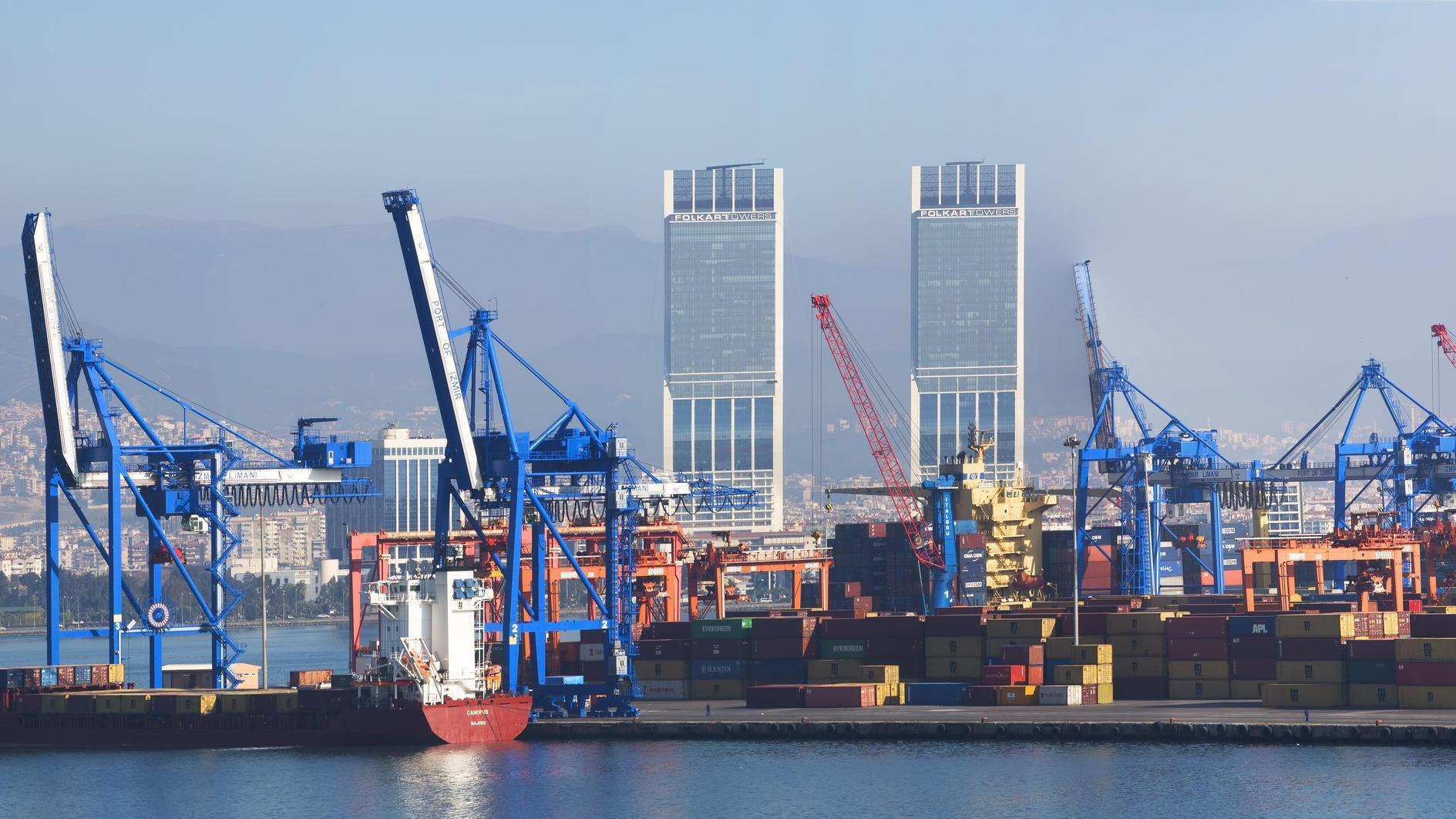
Türkiye was the fastest-growing G20 country in the last quarter of 2024, according to data from the Organization for Economic Cooperation and Development (OECD).
class=”cf”>
The Turkish economy expanded by 1.7 percent in the fourth quarter of last year compared to the third quarter.
G20 economies grew by 0.9 percent quarter-on-quarter in the last quarter of 2024, showed OECD data.
China and India followed Türkiye with a 1.6 percent growth rate in the same period, while Indonesia achieved 1.2 percent growth.
The U.S. economy grew by 0.6 percent in the last quarter of 2024, whereas the European Union countries recorded 0.4 percent growth and the U.K. economy expanded by 0.1 percent.
During this period, Germany’s economy contracted by 0.2 percent, and France saw a 0.1 percent decline.
Mexico’s economy shrank by 0.6 percent in the final quarter of the year.
According to preliminary annual growth figures calculated by the OECD based on quarterly data, G20 countries grew by 3.2 percent annually in 2024.
class=”cf”>
This figure shows a slowdown compared to the 3.4 percent growth in 2023.
India recorded the highest economic growth in 2024, with a rate of 6.7 percent.
It was followed by China and Indonesia with 5 percent growth each, and Türkiye with 3.2 percent growth.
Among OECD nations, Türkiye shared the top spot with Spain in the fastest-growing economies last year.
Türkiye and Spain’s growth rate reached 3.2 percent in 2024, followed by the U.S. with 2.8 percent, Lithuania with 2.7 percent and Norway with 2.1 percent.
Austria’s economy shrank 1 percent and Germany’s contracted 0.2 percent.
The size of the Turkish economy reached $1.32 trillion in 2024, with per capita income at $15,463.
The Turkish economy expanded by 5.1 percent in 2023, when its size was $1.13 trillion.
The Turkish government expects the GDP growth to accelerate to 4 percent in 2025. If this expectation materializes, the size of the economy will increase to $1.47 trillion with per capita income reaching $17,028.
According to the government forecasts in the medium-term program, the GDP growth rates will quicken to 4.5 percent in 2026 and further up to $5 percent in the following year, with the size of the economy hitting $1.64 trillion and $1.77 trillion, respectively.
The government projects that per capita income will increase to $18,990 next year and to $20,420 in 2027.
Home sales in Türkiye decreased 23.3% on a yearly basis in October to some 131,072 units, official data shared by the Turkish Statistical Institute (TurkStat) revealed Tuesday.
New home sales totaled 50,105, falling 13.1% year-over-year, while existing home sales declined 28.5% to 80,967.
New properties accounted for 38.2% of total transactions, with existing homes making up the remaining 61.8%.
Mortgaged home sales dropped 5.7% to 23,286, representing 17.8% of total sales. Other home sales decreased 26.3% to 107,786.
On a seasonally and calendar-adjusted basis, new home sales fell 4.8% from the previous month, while existing home sales declined 1.4%.
Foreign buyers purchased 2,259 homes in October, up 0.9% from a year earlier and accounting for 1.7% of total sales.
Russian citizens topped the list of foreign buyers with 477 purchases, followed by Iranians with 193 and Iraqis with 159.
In the January-October period, home sales totaled around 1.22 million, down 9.2% compared with the same period last year.
New home sales decreased 2.4% to 410,018 during the period, while existing home sales fell 12.3% to 813,973.
Mortgaged home sales rose 20.8% to 235,496 in the first 10 months, while sales to foreigners declined 3.6% to 17,567.
Looking at the commercial property sales, new sales increased by 4.5% in October compared to the same month of the previous year to 5,519 units. Existing commercial property sales, however, dropped by 19.2% over the same period to 10,970 units.
JPMorgan upgraded the MSCI UAE equity index to “Overweight” from “Neutral” on Tuesday, citing the country’s economic resilience amid the months-long Middle East conflict.
“We are impressed by its economic resilience. Earnings revisions have swung positive; valuations have upside; and foreign inflows have returned,” the Wall Street brokerage said.
The United Arab Emirates, a major oil producer, has been hit by the U.S.-Iran war that began in late February. The Strait of Hormuz, a strategic waterway that carried nearly one-fifth of the world’s crude oil before the war, was blocked, which pushed oil prices higher.
However, crude prices hit two-month lows earlier this month, after US officials downplayed the need for additional military action against Iran, easing fears of additional Middle East supply disruptions.
“We think the current state of no war / no peace in the Gulf is good enough for the UAE economy to keep growing and for the stock market to outperform CEEMEA (Central and Eastern Europe, the Middle East and Africa),” the brokerage added.
JP Morgan upgraded the MSCI Türkiye equity index to “Overweight” from “Neutral,” as it views the investment fund crisis that has rattled the region’s financial markets as over and expects stock markets to rebound.
Türkiye’s investment fund sector was hit by a scandal after regulators in September ordered the liquidation of 131 funds managed by seven asset managers, following warnings that some could not meet redemption payments.
“We think the fund crisis is over and the stock market should bounce back,” the brokerage said.
“Investors are too worried about the threat of MSCI demotion in our view; we think the chances are 10% or lower.”
Treasury and Finance Minister Mehmet Şimşek said on Sunday he would meet MSCI’s senior management and global investors next month to discuss reforms and address concerns about Türkiye’s capital markets and investment environment.
Şimşek said he expected concrete reforms and the government’s structural policy efforts on the financial markets to have taken shape by then.
Separately, JPMorgan cut the MSCI Greece equity index to “Neutral” from “Overweight” on valuation concerns, following the country’s strong equity outperformance.
In local terms, the index has risen about 27% so far this year.
Türkiye’s automotive production fell 6% in the first 10 months, led by a drop in passenger car manufacturing, the industry’s trade body said Monday.
Exports fell in unit terms but rose 3% in value to $35.2 billion, and the sector remained the country’s top exporter, the Automotive Manufacturers’ Association (OSD) said.
Total vehicle production fell to nearly 1.09 million units from January through October. Passenger car output dropped 17% to 592,163. Including tractors, total production was about 1.1 million.
Commercial vehicles bucked the trend. Their production rose 12%, with light commercial vehicles up 13% and heavy commercial vehicles up 5%.
Capacity utilization across the industry was 61%, the OSD said. It was 63% for light vehicles, 60% for trucks, 67% for buses and midibuses and 28% for tractors.
Exports fell 9% in units to 779,557 vehicles. Passenger car exports dropped 25% to 364,639, while commercial vehicle exports rose 11%.
Despite the drop in volume, export revenue rose. Data from the Türkiye Exporters Assembly (TIM) showed automotive exports up 3% to $35.2 billion. The sector accounts for 17% of the country’s total exports.
Passenger car exports fell 6% in value to $8.9 billion. Exports by vehicle makers rose 3.1% and exports by suppliers rose 2.8%.
The market shrank 15% from a year earlier to 916,149 units, the data showed. The passenger car market contracted 17% to 692,916.
The overall commercial vehicle market fell 9%. Sales of light commercial vehicles dropped 9% and heavy commercial vehicles 7%.
Domestically produced vehicles accounted for 35% of passenger car sales and 24% of the light commercial vehicle market.
Italian lender UniCredit has won European Union and U.S. Federal Reserve (Fed) approval for its acquisition of Germany’s Commerzbank, as Europe seeks to reinforce the bloc’s banking sector.
With the acquisition of Commerzbank, UniCredit plans to cement its status as a European heavyweight, a goal shared by the European Union.
The EU believes better integration of the bloc’s banking sector will help it keep up with U.S. lenders and boost its competitiveness.
The approvals follow the European Central Bank’s (ECB) green light for the deal last month.
UniCredit’s hostile 45 billion euros ($49.57 billion) approach for Germany’s No. 2 bank began two years ago and, if successful, will mark a significant step in European cross-border banking consolidation.
The unconditional European Commission’s approval underscores the regulatory push for cross-border financial mergers to create what it calls “European champions.”
The approval “is a good example of the kind of cross-border merger that can deliver positive scaling up of EU banks, improve their efficiency, and help them better compete internationally,” EU competition chief Teresa Ribera said.
The European Commission, the EU’s powerful competition regulator, approved the acquisition after determining the deal would not raise competition concerns.
“We want stronger European banks, and we want to achieve this while safeguarding competition and protecting consumers,” Ribera said.
But Monday’s decision “is not a green light for every single merger in the banking sector,” she told reporters in Brussels.
“We will always look at every operation case by case, but it shows we support companies increasing scale when this does not create competition concerns,” she said.
UniCredit said that it welcomed the Fed’s move.
“This represents another important milestone in the process and reflects the regulator’s positive assessment of the transaction,” the Italian bank said.
‘Good news’
The German government declined to comment on the EU’s approval of the deal.
The potential takeover had raised alarm in Germany, where Commerzbank is a key financing source for small and midsize industrial companies.
Ribera said the Commission carefully assessed whether “this consolidation may introduce limits to the small and medium-sized companies in Germany, and that is not the case.”
Despite initial fierce resistance from Berlin and the German lender, UniCredit had built up a stake of nearly 50% in Commerzbank.
Berlin earlier this year significantly shifted its stance, with Chancellor Friedrich Merz saying his government did not want to prevent the merger.
The EU examined how the takeover would affect banking services in Germany since UniCredit already has a German subsidiary, HypoVereinsbank, whose activities overlap with those of Commerzbank.
But the Commission concluded that the two banks together would still hold “moderate” market share for banking services in Germany.
Italian Foreign Minister Antonio Tajani welcomed the decision as “good news.”
“Developing the single market is a step in the right direction. It is a Europe that must also look to the future – toward a banking union. It is a Europe that fosters the growth of its own economy,” Tajani said, quoted in Italian media.
Commerzbank CEO Bettina Orlopp said the decision came as “no surprise” during an event in Frankfurt.
“What does this mean for us? For the time being, nothing. We are here for our clients, and that won’t change in the future,” Orlopp said.
The European Union on Monday imposed sanctions on Russia’s richest woman, Tatiana Kim, CEO of the country’s largest online retailer, Wildberries, in a fresh slew of punishments over the Ukraine war.
Kim will now face a freeze on any assets held in the EU, along with EU travel and transaction bans.
Brussels also imposed sanctions on 50 Russian banks and “enablers” of Russia’s so-called shadow fleet.
It said it had targeted Kim because Wildberries, sometimes referred to as “Russia’s Amazon,” is “one of the largest taxpayers” in Russia and “operates as a supply network for the Russian military by facilitating the sale of military and dual-use goods.”
Ukraine has been attacking Wildberries facilities since mid-July. Kyiv says the company, whose vast product range includes items such as night-vision goggles, ammunition pouches and helmets alongside regular clothing, cosmetics and electronics, is supporting Russia’s war effort.
Responding to accusations that Wildberries sells dual-use goods, which can have both civilian and military applications, Kim said in July that it did not offer anything that was not also available on major global e-commerce platforms such as Amazon or Alibaba. The Kremlin denied that Wildberries’ warehouses were used for military purposes.
Wildberries said the EU sanctions on Kim would not affect its operations, as it had no assets in the EU and did not conduct business there. It said Wildberries and other group companies would continue to operate as usual.
Kim is currently ranked by Forbes magazine as Russia’s richest woman, with $5 billion in assets. She was born in the Chechen capital, Grozny, in 1975 to a family of ethnic Koreans. She worked as an English teacher before founding the company with her then-husband Vladislav Bakalchuk in 2004.
The couple initially worked out of their apartment in the Moscow region but later rode the e-commerce boom of the 2010s to build Russia’s largest online retailer.
Among other entities hit by sanctions was a key oil terminal in Russia’s second city of Saint Petersburg.
The EU also blacklisted firms in the United Arab Emirates (UAE), China, Seychelles and Oman linked to the purchase of oil from Russia’s so-called “shadow fleet” of aging tankers.
The 27-nation bloc is seeking to keep the pressure on Moscow despite a renewed push for negotiations to halt the fighting. Brussels is currently working on a broader package of sanctions that it hopes to impose by the end of the year.
The European Commission announced on Monday that it was imposing anti-dumping duties on certain cold-rolled flat steel products imported from Türkiye, India, Japan, Taiwan and Vietnam.
The duties were set at 9.5% for India, 27.9% for Japan, 20.7%-27% for Taiwan, 3%-7.8% for Türkiye and 16% for Vietnam, the Commission said in a statement.
It added that an investigation found that certain cold-rolled flat steel products from these countries were entering the European Union at “dumped prices.”
The total value of imports of cold-rolled flat steel products into the EU amounts to about 1.77 billion euros ($1.95 billion), according to the Commission.
Of that, 282 million euros come from India, 240 million euros from Türkiye, 180 million euros from Japan, 345 million euros from Taiwan and 125 million euros from Vietnam.


-

 Politics2 days ago
Türkiye, Greece, others join forces for major East Med drill
-

 Sports3 days ago
Hacıosmanoğlu strolls through Bordeaux ahead of Türkiye-France tie
-

 Politics3 days ago
Erdoğan, Bolivia’s Paz seek to boost trade, investment beyond $1B
-
 Politics2 days ago
Former Istanbul mayor’s trial adjourned amid 8 releases
-
 Politics2 days ago
Erdoğan keeps up with diplomatic pace at busy COP31
-

 Sports2 days ago
Türkiye see off Israel in Women’s EuroBasket 2027 qualifiers
-

 Sports2 days ago
Portugal wake up to post-Ronaldo era with Denmark drubbing
-
 Economy2 days ago
Close to 445,000 investors payed in Turkish fund case: VP Yılmaz