
Economy
Turkish prosecutor seeks probe of ex-banking watchdog head

A Turkish prosecutor has requested authorization to launch an investigation into a former banking watchdog head and central bank governor over suspected links to Türkiye’s investment fund crisis, the prosecutor’s office said Wednesday.
Şahap Kavcıoğlu submitted his resignation last week as head of the Banking Regulation and Supervision Agency (BDDK) following allegations in Turkish media relating to the fund scandal that erupted in September and has led to a series of detentions, dismissals and resignations.
Kavcıoğlu denied the reports, including an allegation that he had links to a detained former fund executive at the center of the crisis.
The Istanbul prosecutor has asked the Treasury and Finance Ministry for authorization to investigate Kavcıoğlu as part of a probe into the funds, the prosecutor’s office said in a statement. Authorization is a legal requirement, under Turkish law.
Kavcıoğlu, who was the governor of the Central Bank of the Republic of Türkiye (CBRT) between 2021 and 2023, said last week that he had asked President Recep Tayyip Erdoğan for permission to step down so that “our Agency would not suffer any further damage.”
Senior BDDK officials have been detained and subsequently jailed pending trial as part of the investigation.
In September, regulators ordered the liquidation of 131 funds after some of the funds warned that they could not meet redemption payments.
Assets in the funds had swollen to more than $20 billion in just three. The funds had nearly half a million investors.
Justice Minister Akın Gürlek on Tuesday said 129 people have been arrested so far as part of the investigation.
President Recep Tayyip Erdoğan on Wednesday reiterated that the government was determined to resolve the issue as soon as possible and ensure similar cases are prevented.
“Those responsible for this organized malfeasance in our capital markets are being held accountable, one by one, for the crimes they have committed,” Erdoğan said.

The worst energy shock in history, paired with growing urgency around climate change, is permanently changing how the world will power homes, drive cars and fuel industries. That’s the main takeaway from a new International Energy Agency (IEA) report out Thursday.
The crisis, triggered by the Iran war, will “leave lasting marks” on the world’s energy sector, according to the Paris-based organization, founded after the 1973-74 energy crisis.
Energy-hungry nations will prioritize the security and affordability of their electricity, the report said. This is a boon for renewable technologies, like solar, and alternative technologies, like nuclear. But it is also reinforcing the case to keep coal as a backup in times of crisis.
This is especially true in coal-rich Asia, which went into energy triage when the Iran war cut off the Strait of Hormuz, a narrow passageway where around a fifth of the world’s traded oil typically flows.
The report looks “past the current turmoil to explore the range of energy futures that could emerge from today’s upheaval,” said IEA Executive Director Fatih Birol. He said the Iran war “delivered a huge shock to the system” and warned, “the longer the crisis lasts, the deeper the effects will be.”
“I don’t see any credible pathway for the energy world to return to the way it was before,” he said.
Annual United Nations climate talks, known as COP31 and hosted in Türkiye this year, are in their second and final week. Before these negotiations, the U.N. announced the world is dangerously close to missing its goal of limiting global warming to 1.5 degrees Celsius (2.7 degrees Fahrenheit) above pre-industrial temperatures.
Electrification – the process of powering homes, cars and industries with electricity – and moving away from planet-warming fossil fuels are the two big-ticket issues at this year’s climate talks.
“The future of the energy system and our climate are inextricably intertwined,” said Rachel Cleetus, climate program director at the Union of Concerned Scientists, who is at COP31.
The IEA, the world’s leading intergovernmental energy organization with more than 30 member countries, publishes World Energy Outlooks annually.
This year’s 560-page-plus report analyzes government and private data to project various future scenarios based on whether countries will continue with current policies or drastically change policies in the face of ongoing crises.
The world’s energy sector will clearly have a before and after the Iran war, experts said. In March, the IEA coordinated the emergency release of 400 million barrels of crude oil stocks to stabilize global markets.
“This crisis has exposed the price of fossil fuel dependence,” said Mohamed Adow, director of Power Shift Africa. “It’s crazy that a conflict thousands of miles away can send energy bills soaring at home.”
Conflicts, trade tensions, climate risks and cyberattacks are increasing the number of possible energy futures. The IEA said the “drive to diversify” fuel supplies will reshape the energy trade.
The Middle East will still be the world’s largest oil exporter, but nations will likely reduce dependence on the Strait of Hormuz. The IEA forecasts the amount of oil transiting the strait could go from 20 million barrels per day before the Iran war, to 8.5 million barrels in 2030, and even under 2 million barrels by 2035.
While fossil fuels still dominate national energy mixes, the IEA said renewables – led by solar – and nuclear power are the “biggest beneficiaries” of governments trying to grow domestic energy sources. But energy security concerns may lead coal-rich nations to rely on fossil fuels as a fallback option during times of crisis.
“When we look at how energy crises change the world over the long term, governments are only just beginning to get their head around just how much things will change,” said Dave Jones, co-founder of the think tank Ember.
The ongoing talks in Türkiye follow a year rattled by the Iran war’s energy shock, as well as several climate-induced disasters.
Global warming adds pressure to rising electricity demand. In what the IEA called a “striking milestone,” energy demand for cooling is overtaking energy demand for heating for the first time.
India, the world’s most populous nation, will account for more energy demand growth over the next decade than any other country or region. China, already one of the world’s most electrified economies, may see its electrification grow from 32% last year to 43% by 2035 – the highest among any major economy.
At COP31, Türkiye is pushing for the world to increase the share of electricity in total global energy consumption from roughly 21% today to 35% by 2035.
While the preference would be for this to come from renewable energy, U.N. documents on the negotiating table don’t spell this out. That means coal and other fossil fuels could be used, at least initially.
“The IEA’s latest report makes clear that the fossil energy crisis unleashed by the U.S.-Israel war on Iran has irrevocably changed the global energy system, adding to the many reasons why countries would benefit from a rapid transition to clean energy and electrification,” said Cleetus, with the Union of Concerned Scientists.
The German group Bertelsmann said Thursday it agreed to acquire Ekol Lojistik (Ekol Logistics), one of the leading logistics companies in Türkiye, via its Arvato subsidiary, thus further strengthening its position in one of the most dynamic logistics markets in the EMEA region.
“The agreed purchase price is in the mid-nine-figure range. The transaction is subject to regulatory approval,” the company said in a statement.
The acquisition would make Arvato one of the leading contract logistics providers in Türkiye.
Ekol employs roughly 4,500 people and focuses and operates primarily in the fashion, consumer electronics, and fast-moving consumer goods (FMCG).
Combined with Ekol, Arvato is expected to generate annual revenues of 460 million euros ($506 million) in the country, making Türkiye one of its five largest markets.
Arvato has operated in Türkiye since 2005 and has significantly expanded its business there in recent years.
Bertelsmann CEO Thomas Rabe called it “the largest investment in Arvato’s history.”
“The acquisition of Ekol Logistics will further accelerate our growth and strengthen our position in an attractive market,” he said.
Ekol Logistics was founded by Ahmet Musul in 1990 and has become a major logistics provider in Türkiye.
“Ekol Logistics has built a strong contract logistics business in Türkiye with deep sector expertise, an extensive operational network and a clear focus on technology and automation. Arvato brings an international platform and the ambition to further grow the business,” Musul said.
“Together, these strengths create a strong foundation to offer clients broader capabilities, greater scale, and new opportunities for growth. I am confident that once completed, the transaction is expected to create long-term value for our clients and employees alike,” he added.
When two powerful earthquakes struck Türkiye on Feb. 6, 2023, they left behind a scale of destruction that would reshape the future of urban development across the country. More than 53,000 people lost their lives, leaving entire communities across 11 provinces in ruins.
In the aftermath, Türkiye launched a major reconstruction effort, rebuilding 455,000 homes, village houses and workplaces within two years, along with public infrastructure, squares and marketplaces, with greater emphasis on disaster preparedness.
“A city’s strength lies in how safe its people feel,” said Murat Kurum, COP31 president and Türkiye’s minister of environment, urbanization and climate change, at the COP31 climate summit in Antalya last week.
Kurum said Türkiye’s reconstruction efforts integrated urban resilience, energy efficiency, infrastructure, transportation and public services with environmental and social considerations. “With this approach, we have set an example for the world,” he added.
As Türkiye looks beyond reconstruction, experts told Daily Sabah what needs to be done to build safer, greener and more resilient cities.
Resilient cities, better incentives
“From Türkiye’s perspective, a robust institutional framework is already in place,” said professor Cenay Babaoğlu, whose work focuses on public policy, local governments and disaster management in urban planning.
Babaoğlu said Türkiye’s existing disaster and climate plans should be complemented by greater use of nature-based solutions in urban planning. Approaches such as the “sponge city” concept, which uses green spaces and natural systems to absorb and manage rainwater, reducing flood risks, should be expanded, he noted. He also pointed to green-blue infrastructure networks, which connect natural areas, waterways and green spaces to improve urban resilience.
Türkiye has already taken steps to improve water management. According to municipal reports, Izmir, Ankara and Bursa have explored the “sponge city” concept, although their levels of implementation differ. Moreover, the European Commission’s 2026 Türkiye Report shows that 12 of the country’s 25 river basin management plans are being implemented, covering areas such as flood risk, drought and groundwater management.
Babaoğlu also stressed the importance of circular economy practices.
“The Zero Waste Movement is also highly valuable in this regard. Similarly, the transition to an energy-efficient, renewable and holistic building stock can be included in this scope,” he said.
By promoting waste reduction, recycling and more efficient resource use, the Zero Waste Initiative aims to ease pressure on natural resources and support more sustainable reconstruction. Since the launch of the initiative, Türkiye’s municipal waste recycling rate has risen from 13% to 36.08% in 2024. The government aims to increase this figure to 60% by 2035.
Meanwhile, energy efficiency is expected to help urban areas better withstand disasters and recover more effectively.
Türkiye took steps in this direction in 2022 by introducing the Nearly Zero Energy Building (NZEB) concept. Under the requirements, buildings of 2,000 square meters (21,500 square feet) or larger must meet at least B-class energy performance standards and source at least 10% of their primary energy from renewable sources. These measures push developers to adopt better insulation and high-efficiency systems.
Achieving these goals requires substantial financial resources. The World Bank estimated in its 2022 Türkiye report that the country would need an additional $68 billion in investments between 2022 and 2030 to meet its broader climate and development goals. Separately, a 2023 official estimate put the cost of rebuilding 6.7 million earthquake-vulnerable homes at $465 billion over 20 years, out of an estimated 14 million vulnerable residential units.
“It is highly unlikely that we can sustain this effort with national resources alone,” Babaoğlu said. He said that tangible results would require the combined efforts and resources of government institutions at both national and local levels, international funding bodies, the private sector and civil society. Even then, the results might fall short of expectations, he added.
“In theory, these actors offer a wide range of resources, but in practice, the desired outcomes are not always achievable,” he said.
On the role of the private sector, Babaoğlu highlighted businesses’ reluctance to use available incentives, noting that some prefer paying penalties rather than meeting the relevant requirements. “Stricter policies in this area could prove more effective,” he said.
International coordination, workforce
Experts argue that developing and implementing disaster-resilient urban models also requires stronger international cooperation.
Highlighting Türkiye’s partnership with the European Union on sustainable urban development, Babaoğlu pointed to existing Instrument for Pre-accession Assistance (IPA) grants and sustainability-focused projects as a foundation for further collaboration. However, he said there was considerable room to deepen the partnership.
“In particular, closer collaboration in sharing technical expertise and developing joint pilot projects could be beneficial for both sides,” he said.
“Leveraging Türkiye’s experience in disaster management and reconstruction to contribute to the EU’s climate adaptation efforts could shift cooperation onto a more balanced and mutually beneficial footing,” he added.
Existing cooperation demonstrates the partnership’s potential.
An EU-funded climate adaptation program has been implemented in Türkiye. The United Nations Development Programme (UNDP) and Türkiye’s Environment Ministry worked together between 2019 and 2025 to implement climate adaptation initiatives in four pilot provinces: Samsun, Sakarya, Muğla and Konya. The program supported 29 projects and reached more than 11,000 people through awareness campaigns and conferences.
Susanne M. Nielsen, a human capital development and green skills expert at the European Training Foundation (ETF), also highlighted EU agencies’ ongoing cooperation with Türkiye.
“We work with Türkiye at both the national and regional levels,” she said, adding that the ETF brings together local representatives to embed skills development into urban planning.
According to Nielsen, skilled-worker shortages are often overlooked in urban development, despite posing a major obstacle to projects’ implementation.
“The skills needed really have to be considered upfront by cities, particularly when future investments are being planned, because this is a key barrier to moving forward quickly,” she said.
Noting that many construction companies struggle to find qualified personnel, she said, “Four out of five construction companies would say, ‘We lack skills. So that’s a key problem.’”
Efforts are underway to address this gap through what the agency calls “skills ecosystems,” which bring together stakeholders to integrate workforce needs into employment, she added.
According to the ETF’s 2023 report, 57 vocational and higher education centers in Türkiye were participating in the network. However, the agency’s 2025 Türkiye assessment shows that employers continue to report gaps between workers’ qualifications and job requirements, particularly in occupation-specific knowledge and experience.
Türkiye’s construction sector employed 2.22 million people in 2025, with the workforce growing by 62,000 from the previous year, according to TurkStat figures.
A Turkish prosecutor on Wednesday requested authorization to launch an investigation into a former banking watchdog head and central bank governor over suspected links to Türkiye’s investment fund crisis.
Şahap Kavcıoğlu submitted his resignation last week as head of the Banking Regulation and Supervision Agency (BDDK) following allegations in Turkish media relating to the fund scandal that erupted in September and has led to a series of detentions, dismissals and resignations.
Kavcıoğlu denied the reports, including an allegation that he had links to a detained former fund executive at the center of the crisis.
The Istanbul prosecutor has asked the Treasury and Finance Ministry for authorization to investigate Kavcıoğlu, the prosecutor’s office said in a statement. Authorization is a legal requirement under Turkish law.
Kavcıoğlu, who was the governor of the Central Bank of the Republic of Türkiye (CBRT) between 2021 and 2023, said last week that he had asked President Recep Tayyip Erdoğan for permission to step down so that “our Agency would not suffer any further damage.”
Senior BDDK officials have been detained and subsequently jailed pending trial as part of the investigation.
In September, regulators ordered the liquidation of 131 funds after some of them warned that they could not meet redemption payments. Assets in the funds had swollen to more than $20 billion in just three days. The funds had nearly half a million investors.
Türkiye announced on Wednesday that it would offer residence permits of three to five years to foreigners who invest at least $150,000 or $200,000 in the country.
That’s according to a presidential decree published in the Official Gazette that covers foreigners who invest in Türkiye but do not work there.
Foreigners who invest at least $150,000, or the equivalent in foreign currency, may be granted a three-year residence permit, the decree said. If the investment reaches at least $200,000 or the equivalent, the permit will last five years.
The investment must be kept in the relevant account, fund or system for at least half the length of the permit.
Foreign investors can meet the threshold in several ways. These include depositing the amount in banks operating in Türkiye, buying government debt securities, buying units in real estate investment funds or venture capital investment funds, or making contributions to the private pension system under designated pension plans.
The investor’s spouse can also receive a permit, as can the children of the investor or spouse who are minors or dependents. The Interior Ministry will set the procedures for applying.
The decree includes a provision on citizenship. Residence permits issued under it fall outside Article 12 of Türkiye’s Citizenship Law (No. 5901), which governs citizenship by exception. Citizenship applications continue to be judged on their own investment amounts and other conditions.
For citizenship through investment, the existing requirements include at least $400,000 in real estate, or at least $500,000 in deposits, government debt securities, designated investment funds, or private pension investments.
Real estate must be held for three years, and the financial investments must be kept for at least three years. Other routes include at least $500,000 in fixed capital investment or creating 50 jobs.
President Recep Tayyip Erdoğan said Wednesday that interim repayments to most investors who held stakes in the funds caught up in the September scandal have been completed.
Erdoğan said the process is being managed with a “high degree of transparency,” reiterating that the government was determined to resolve the issue as soon as possible and ensure similar cases are prevented.
“Those responsible for this organized malfeasance in our capital markets are being held accountable, one by one, for the crimes they have committed,” he told the parliamentary group meeting of his ruling Justice and Development Party (AK Party).
In September, regulators ordered the liquidation of 131 funds after some of the funds warned that they could not meet redemption payments. Assets in the funds had swollen to more than $20 billion in just three years. The funds had nearly half a million investors.
Erdoğan said at least one payment has reached 444,987 of the 455,758 investors in the liquidated funds. He said the interim payment of up to TL 1 million ($20,000) has been completed in 110 of the funds, including those under extraordinary liquidation.
He said 371,021 investors, or 81.4% of the total, have received their net investment amount or principal. Total payments have reached TL 161 billion, none of it from the Treasury or other public funds, Erdoağn said.
About TL 41 billion in unjust gains has been returned, and the money has been transferred to banks for use in interim payments, according to the president.
As part of the investigation into the funds, authorities have identified about 500 suspects. Of them, 136 have been arrested and 285 placed under judicial control, Erdoğan said, adding that fugitives are being closely pursued.
He said the party’s leadership has brought new legislation to a certain stage. The law is meant to increase transparency in capital markets, strengthen oversight and make penalties more of a deterrent. Erdoğan said the government intends to seek the opposition’s input.
Erdoğan said the State Supervisory Council completed its first review at the start of the week, and that those who committed what he called “organized evil” against the markets will be held to account one by one.
Prosecutor seeks probe of ex-banking watchdog head
Separately, a prosecutor on Wednesday requested authorization to launch an investigation into a former banking watchdog head and central bank governor over suspected links to the scandal.
Şahap Kavcıoğlu submitted his resignation last week as head of the Banking Regulation and Supervision Agency (BDDK) following allegations in Turkish media relating to the crisis.
Kavcıoğlu denied the reports, including an allegation that he had links to a detained former fund executive at the center of the crisis.
The Istanbul prosecutor has asked the Treasury and Finance Ministry for authorization to investigate Kavcıoğlu, the prosecutor’s office said in a statement. Authorization is a legal requirement under Turkish law.
Kavcıoğlu, who was the governor of the Central Bank of the Republic of Türkiye (CBRT) between 2021 and 2023, said last week that he had asked Erdoğan for permission to step down so that “our Agency would not suffer any further damage.”
Senior BDDK officials have been detained and subsequently jailed pending trial as part of the investigation.
Justice Minister Akın Gürlek said on Tuesday that investigations have been deepened in light of new evidence.
Authorities have, meanwhile, also seized or frozen the assets of 417 individuals and 149 companies to prevent the proceeds of crime from being moved, Gürlek wrote on the social media platform X.
“What matters to us is not people’s office, title or connections, but concrete evidence and legal responsibility,” he said.
All matters that could give rise to legal liability, including those involving public officials, are being assessed by the authorities, Gürlek said. “No claim will be accepted as true in advance, and no concrete evidence will be ignored,” he said.


-
 Economy2 days ago
JPMorgan sees upside in Türkiye, UAE stocks, turns cautious on Greece
-
 Politics2 days ago
Türkiye urges nations to honor climate commitments at COP31
-
 Politics1 day ago
Turkish VP to meet Uzbek leaders during 2-day visit to Tashkent
-

 Politics2 days ago
Türkiye’s New Party tones down newness in first convention
-

 Sports2 days ago
Türkiye relegated to Nations League B after Greece defeat Serbia
-
 Economy3 days ago
Russia’s richest woman, Wildberries’ CEO added to EU’s sanctions list
-
 Economy3 days ago
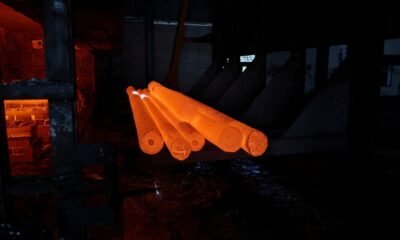
EU imposes anti-dumping duties on steel from Türkiye, 4 other countries
-

 Sports2 days ago
Ercümen holds her breath as she gives oceans voice at COP31