
Politics
Türkiye key to Middle Corridor, connectivity agenda: EU commissioner

European Union Enlargement Commissioner Marta Kos said on Tuesday that Türkiye plays a pivotal role in the bloc’s Connectivity Agenda, stressing that a strong Middle Corridor and deeper digital, energy and trade links would be difficult to imagine without Ankara’s active participation.
Speaking ahead of the high-level opening event of the Connectivity Agenda Platform in Brussels, Kos welcomed the participation of Turkish Transport and Infrastructure Minister Abdulkadir Uraloğlu and said the EU would continue its engagement with Türkiye.
Kos said she would meet Turkish officials later in the day and announced plans to visit Ankara at the end of the month alongside EU foreign policy chief Kaja Kallas and EU Commissioner for Internal Affairs and Migration Magnus Brunner.
She noted that EU-Türkiye relations are currently progressing on two separate tracks, saying there has been no movement in Türkiye’s accession process at this stage but significant opportunities remain under the connectivity agenda.
“I cannot imagine having a strong Middle Corridor and all these digital, energy and trade connections without Türkiye’s strong participation,” Kos said.
The commissioner added that the European Commission had received a list of potential connectivity projects from Türkiye’s Foreign Ministry and was assessing them alongside proposals submitted by other countries, with work on the initiatives continuing.
Türkiye urges faster visas, simpler customs procedures
Transport and Infrastructure Minister Uraloğlu called for faster visa issuance for transport workers and simpler customs procedures to prevent delays in global supply chains, warning that administrative bottlenecks can undermine even completed commercial deals.
Speaking to reporters following the high-level launch of the Connectivity Agenda Platform in Brussels, Uraloğlu said international trade cannot function efficiently if goods are delayed at borders despite being already produced, sold, and paid for.
“If road and rail transport visas are not issued on time, if customs crossings are not facilitated, and if digital infrastructure is not established, then in fact the work you have completed is wasted at customs gates or visa procedures,” he said.
“We really need to make this easier. If we’re not going to make it easier, then why are we doing trade at all?” Uraloğlu added.
The minister stressed that all countries are now deeply interdependent and no longer self-sufficient in production and trade, making efficient cross-border logistics more critical than ever.
“None of the countries, including the most developed ones, can be self-sufficient anymore,” he said, adding that international trade must therefore be supported by faster administrative systems.
Uraloğlu said Türkiye is actively engaging with the EU to strengthen transport connectivity, particularly along the Middle Corridor linking Asia and Europe through Türkiye.
He said that there is growing recognition in Brussels that transport routes must be diversified and not dependent on a single mode or corridor, especially in light of recent global disruptions.
“Therefore, at this point, we see a determination and will to cooperate more strongly with Türkiye,” the minister said.
Uraloğlu recalled that Ankara has long advocated major connectivity investments, including the planned Northern Rail Crossing over the Yavuz Sultan Selim Bridge in Istanbul.
He said the project has already received support from European funding mechanisms under World Bank leadership, and that additional EU credit instruments could be mobilized for future connectivity investments along the corridor.
On the sidelines of the event, Uraloğlu said he held talks with European Commissioner for Enlargement Marta Kos, adding that she is expected to visit Istanbul next week, with further bilateral discussions planned thereafter.
He also highlighted ongoing regional engagement with Armenia, saying he had a bilateral meeting with Armenian Territorial Administration and Infrastructure Minister Davit Khudatyan.
According to Uraloğlu, both sides are working toward reactivating previously operational road and rail crossings.
He said maintenance and preparatory works are progressing on both sides, with Türkiye having begun its own preparations while the Armenian side has also indicated readiness to proceed.
Uraloğlu added that improving regional connectivity could also help restore historical transport links along the Silk Road corridor, referencing ongoing efforts tied to the restoration of a historic bridge in the Kars Ani region.

Cemil Tugay, mayor of Türkiye’s third-largest city, Izmir, joined the ruling Justice and Development Party (AK Party) on Wednesday in a landmark move for the party, which has failed to win the city for years.
The AK Party portrayed the move as ushering in a new era for the Aegean city, which has been beset by chronic problems for years, with a video showing flowers blossoming over mountains of garbage as it announced Tugay’s switch.
Expectations are high following the switch, given the successful track record of AK Party-run municipalities in public services. Locals hope the new era will turn around the fortunes of a city grappling with pollution in the Gulf of Izmir, uncollected garbage, infrastructure shortcomings and transportation problems.
Tugay pledged that “good things are in store” for Izmir after joining the party. The mayor had been serving as an independent after resigning from the opposition Republican People’s Party (CHP), which has dominated municipal elections in Izmir for the past two decades.
Izmir has been under the spotlight since the 2024 local elections, particularly over strikes by workers and civil servants at district municipalities, from Karabağlar, Konak and Karşıyaka to Buca and Bayraklı. Delays in salary payments since the 2024 vote led to strikes whose impact was most visible in uncollected garbage piling up on the streets and threatening public health.
The garbage problem is the first emergency, and the municipality is expected to shut down a landfill in the Çiğli district and build new solid waste disposal facilities.
Second, severe sanctions are expected against businesses and individuals polluting the Gulf of Izmir, which has suffered mass fish deaths. A wastewater treatment plant that has been left to deteriorate will undergo a major renovation. This is expected to help the city tackle the nightmarish stench that engulfs Izmir, particularly in the summer.
Another issue requiring attention is urban transformation, including the demolition and renewal of decaying housing projects. Amid a corruption scandal involving the construction of new housing projects, Tugay’s predecessor, Tunç Soyer, was arrested last year, while some housing projects have remained incomplete for the past five years. Under the new administration, urban transformation projects are expected to be accelerated, particularly for low-income families.
The municipality is also expected to launch a drive to renew roads across Izmir, many of which have become riddled with potholes due to inadequate maintenance.
In terms of transportation, new projects are underway, including the construction of a new bypass and increased investment in railway systems.
Bilal Saygılı, chairperson of the AK Party’s Izmir branch, said they would work in coordination with Tugay to resolve the city’s problems. Yaşar Kırkpınar, an AK Party lawmaker from Izmir, described Tugay’s switch as a turning point for Izmir’s future and public services.
Ceyda Bölünmez Çankırı, another AK Party lawmaker from Izmir, said the city had longed for “real municipal services for years” and that they would work hard to deliver them to residents under Tugay’s leadership.
Turkish Cypriot President Tufan Erhürman and Greek Cypriot leader Nikos Christodoulides are set to meet on Oct. 13 in the United Nations-controlled buffer zone on the divided island of Cyprus, according to reports Wednesday.
The meeting between the leaders of the Turkish Republic of Northern Cyprus (TRNC) and the Greek Cypriot administration is scheduled for 3:30 p.m. local time and is expected to focus on efforts surrounding the Cyprus issue and confidence-building measures.
The two leaders last met on Sept. 17 at the office of the U.N. Good Offices Mission in the buffer zone. Their closed-door talks, which began at 11 a.m., lasted approximately two hours.
Following the meeting, the U.N. said Erhürman and Christodoulides had exchanged views on confidence-building measures, methodology and substantive aspects of the Cyprus issue.
Erhürman said after the talks that the two sides had yet to reach an agreement on confidence-building measures.
“On the remaining substantive issues, the two sides are only at the stage of listening to each other’s thoughts and views. That is the clear picture,” he said, noting that the meeting was “better” than their previous talks but that the sides remained at the stage of listening to each other’s positions on substantive issues.
He also stressed that concrete progress on the island would be necessary before another meeting could be held in an expanded format.
Erhürman and Christodoulides later traveled to New York for the U.N. General Assembly following their Sept. 17 meeting. The two leaders did not hold a bilateral meeting during their time in New York, although talks were held between their respective delegations.
Cyprus has remained divided for more than five decades between the Turkish Cypriot north and the Greek Cypriot south despite a series of diplomatic efforts by the U.N. to achieve a comprehensive settlement. The TRNC was established in 1983 and is recognized only by Türkiye, while the Greek Cypriot administration represents the island internationally and joined the European Union in 2004.
Turkish officials and leaders in Turkish Cyprus have increasingly advocated a two-state solution to the dispute, arguing that decades of United Nations-led negotiations for a federal settlement have failed to produce results.
The upcoming Oct. 13 meeting comes as efforts continue to find common ground between the two sides and determine the next steps in the long-running Cyprus issue.
President Recep Tayyip Erdoğan told Russian President Vladimir Putin on Wednesday that Türkiye remains ready to support efforts to establish direct contacts between Russia and Ukraine, stressing the importance of diplomacy aimed at finding a solution to the war.
Erdoğan and Putin discussed bilateral ties as well as regional and global issues during a phone call, Türkiye’s Directorate of Communications said in a statement.
During the call, Erdoğan emphasized the importance of ongoing efforts to ensure the safety of navigation in the Black Sea.
He said Türkiye was always ready to contribute to initiatives aimed at establishing direct contacts between Moscow and Kyiv and underlined the importance of solution-oriented diplomatic efforts, according to the statement.
The two leaders also discussed Türkiye-Russia relations and other regional and international developments, the directorate said, without providing further details.
Erdoğan also congratulated Putin on his birthday and on his party’s performance in Russia’s Duma elections.
The opposition Republican People’s Party (CHP) has alleged that vehicles, equipment and other assets worth more than TL 250 million (approximately $5.1 million) were reported to have been removed or gone missing from its provincial and district offices during the formation of the New Party (YP).
The alleged losses followed a court ruling declaring the CHP’s leadership election legally invalid, triggering a period of internal turmoil and disputes over party property.
According to findings cited by CHP officials, the vehicles and equipment were allegedly taken from party offices across Türkiye’s 81 provinces, Sabah newspaper reported.
Individual criminal complaints have been filed with prosecutors under the coordination of CHP Deputy Chair Tahsin Tarhan, seeking investigations into the missing assets.
The allegations also involve seven district headquarters previously rented by the CHP. Rental agreements were reportedly changed following arrangements with property owners, allowing the buildings to be transferred to the New Party without the CHP leadership’s knowledge.
The affected districts reportedly include Akyurt and Altındağ in Ankara.
A court ruling in a case concerning alleged irregularities at the CHP’s November 2023 convention declared the congress null and void and reinstated Kemal Kılıçdaroğlu and the previous party administration.
In late July, following escalating tensions within the party, Özel and 90 lawmakers resigned from the CHP and established the New Party.
Meanwhile, several missing CHP vehicles were reportedly located in industrial repair facilities and scrapyards. Party officials alleged that many returned vehicles had been deliberately damaged, potentially requiring millions of liras in repairs.
The whereabouts of office furniture, computers, sound systems and air conditioning units remain unknown.
CHP officials further alleged that equipment belonging to the party had been transferred to newly established New Party offices.
Turkish defense companies showcased advanced underwater systems, sonar technologies and unmanned maritime platforms in the western province of Izmir as part of the Türkiye-hosted Nusret-2026 Invitation Exercise.
The exhibition at the Port of Alsancak brought together 16 defense companies presenting technologies for underwater operations and mine countermeasures to Turkish and foreign military representatives participating in the exercise.
The Nusret-2026 Invitation Exercise is being held from Oct. 6-16 in the Gulf of Izmir and off the coast of Karadeniz Ereğli. Alongside Turkish forces, the exercise includes units from NATO’s Standing Mine Countermeasures Group 2 (SNMCMG2) and the Black Sea Mine Countermeasures Task Group (MCM Black Sea).
Havelsan presented a remotely operated underwater vehicle developed with the company’s own resources that can operate at depths of up to 300 meters (985 feet).
Zekiye Bilinç Serintuna, Havelsan’s underwater systems group leader, said the platform is equipped with sensors and systems enabling navigation and precise positioning. It can be used for military and civilian missions, including search and rescue, mine countermeasures, pipeline monitoring and ship hull inspections.
Meteksan Defense also showcased underwater acoustic technologies, including sonar systems developed for ships and submarines.
The company introduced two new products at Nusret-2026: the Submarine and Underwater Vehicle Detection System (SUVDES) and the National Synthetic Aperture Sonar System (MİLSAS).
SUVDES is designed for tasks including harbor security, protection of critical facilities and the detection of unmanned maritime vehicles.
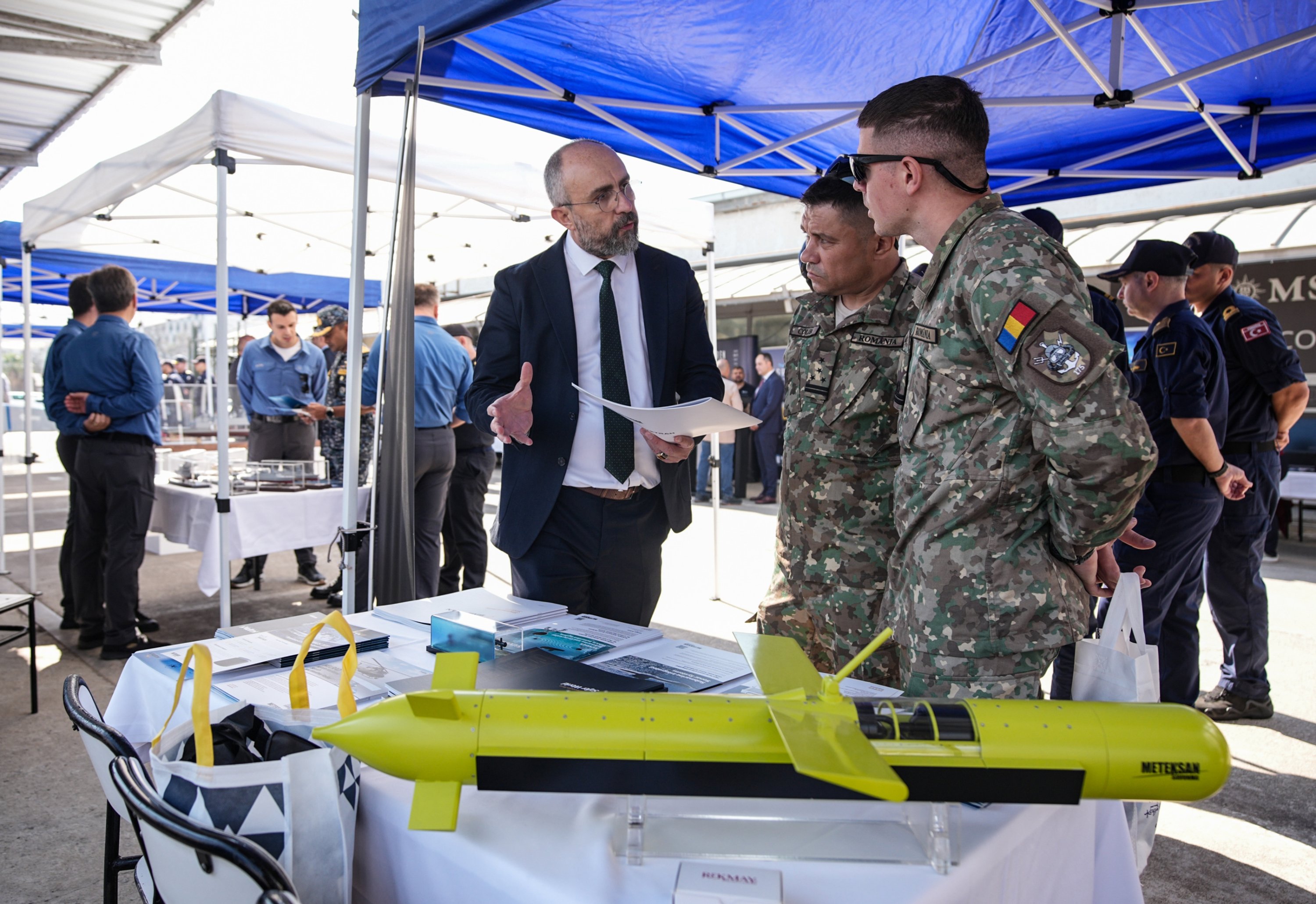
State-owned defense manufacturer MKE, meanwhile, displayed several systems developed for naval warfare.
They included the Denizhan national naval gun, the Pirana kamikaze unmanned surface vehicle and the Malaman smart bottom mine, alongside infantry rifles used by naval forces.
A total of 20 ships, five aircraft and various unmanned systems are taking part in the exercise, which focuses on mine countermeasures and maritime operations.
Interior Minister Mustafa Çiftçi will be in Athens on Thursday. Ministry sources said Wednesday that the purpose of the visit was “cooperation in fighting against transboundary crime, terrorist groups and next-generation criminal gangs.”
He is scheduled to meet Greek Minister for Migration and Asylum Thanos Plevris and Minister for Citizen Protection Michalis Chrisochoidis. Çiftçi’s talks will focus on joint steps in the above-mentioned areas.
The Turkish and Greek officials will discuss extradition of members of criminal gangs and how to enhance cooperation in this area, ministry sources also said.
Çiftçi stepped up Türkiye’s contacts with neighboring countries in the joint fight against transboundary crimes and recently paid visits to Bulgaria and Georgia to this end.
The minister last visited Athens in April for a trilateral meeting with Plevris and Bulgarian Interior Minister Emil Dechev on security-related issues affecting the three neighboring countries.


-
 Politics3 days ago
3 jailed in Türkiye over FETÖ-linked infiltration of MASAK data systems
-
 Politics2 days ago
Türkiye condemns Israel’s deepening incursion into Syria
-
 Economy2 days ago
Over $16B shifted into deposits amid fund exits: Turkish central bank
-
 Economy1 day ago
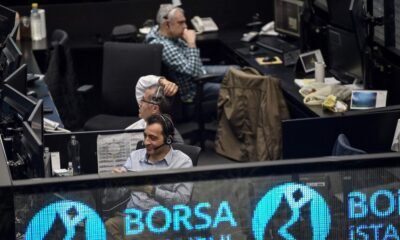
Inside Türkiye’s plan to repay investors caught up in fund turmoil
-
 Politics2 days ago
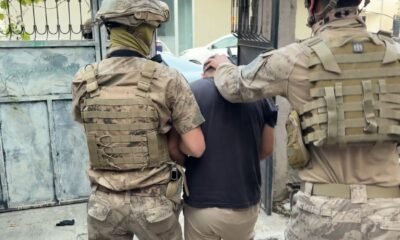
Turkish police detain 14 suspects linked to Daesh, al-Qaida
-
 Economy2 days ago
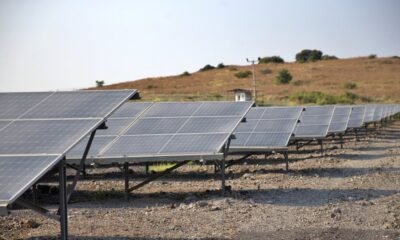
Türkiye sets new record for solar, wind power generation
-
 Economy1 day ago
CBRT chief vows cautious stance to preserve disinflation gains
-
 Politics2 days ago
Mecca Alliance activates collective deterrence over Saudi attacks