
Politics
Uzbek president’s Ankara visit puts Türkiye-Uzbekistan ties in focus

Türkiye and Uzbekistan are seeking to expand economic cooperation across trade, investment, transportation and digital technologies as Uzbek President Shavkat Mirziyoyev prepares to attend the 13th Organization of Turkic States (OTS) summit in Ankara on Oct. 29-30.
The summit, hosted by Türkiye, comes as the organization prepares its 2027-2031 strategy, aimed at setting priorities for regional cooperation and strengthening economic ties among member states.
Economic cooperation within the OTS has increasingly expanded beyond traditional trade and investment to include industrial partnerships, transportation corridors, digital infrastructure, artificial intelligence and joint financing mechanisms.
OTS Secretary-General Kubanychbek Omuraliev and Foreign Minister Hakan Fidan met on Sept. 8 to discuss the summit’s organization, agenda and expected outcomes.
According to Uzbek diplomatic assessments, the combined nominal gross domestic product (GDP) of OTS countries reached approximately $2.3 trillion by the end of 2025, while their combined GDP based on purchasing power parity exceeded $6.2 trillion.
Their total foreign trade surpassed $1.2 trillion, underscoring the economic potential of a region connecting Central Asia, the South Caucasus and European markets through Türkiye.
Despite these figures, trade among OTS members remains relatively limited compared with their combined economic capacity, highlighting opportunities for stronger regional integration.
Expanding industrial cooperation
Member countries are increasingly focusing on developing joint production chains, reducing transportation costs and financing cross-border investment projects. Their complementary economic structures provide opportunities for cooperation across multiple sectors.
Türkiye has an established manufacturing base in machinery, automotive production, electronics, textiles and chemicals, while Kazakhstan and Azerbaijan hold significant positions in energy, metallurgy and petrochemicals.
Uzbekistan’s expanding textile, automotive, chemical and food industries, alongside Kyrgyzstan’s agricultural and light manufacturing sectors, offer additional opportunities for integrated regional supply chains.
The planned 2027-2031 strategy is expected to provide a framework for translating these opportunities into concrete economic initiatives.
The Ankara summit will also offer member states an opportunity to review progress on connectivity, investment and digital transformation while identifying priorities for future cooperation.
For OTS countries, deeper economic integration will increasingly depend not only on expanding trade volumes but also on connecting businesses, strengthening industrial partnerships and improving regional supply chains.
Uzbekistan-OTS ties
Uzbekistan’s total foreign trade reached $81.2 billion in 2025, comprising $33.8 billion in exports and $47.4 billion in imports.
Kazakhstan and Türkiye remained among Uzbekistan’s major trading partners, with bilateral trade reaching $5 billion and $3 billion, respectively. Together, the two countries accounted for nearly 10% of Uzbekistan’s total foreign trade.
Economic ties with Kyrgyzstan, Turkmenistan, Azerbaijan and Hungary have also strengthened the importance of the broader Turkic region as a market for Uzbek goods and services.
Uzbekistan exported $1.5 billion worth of goods and services to Kazakhstan in 2025, followed by $1.1 billion to Türkiye and $771.1 million to Kyrgyzstan.
Industrial goods accounted for 28.2% of Uzbekistan’s exports to OTS countries, while machinery and transportation equipment represented 19%. Services made up 12.7%, food products 11.1% and chemicals 10%.
Imports from OTS countries were dominated by food products at 22.8%, mineral fuels at 20.3%, industrial goods at 18.1%, and machinery and transportation equipment at 12.9%.
The figures suggest that Uzbekistan’s trade with Turkic countries extends beyond raw materials and is increasingly linked to manufacturing, industrial supply chains and domestic production.
Despite growing trade volumes, Uzbekistan has yet to fully capitalize on opportunities in OTS markets, according to estimates by the Center for Economic Research and Reforms.
The center estimates that Uzbekistan could increase exports to OTS countries by an additional $2.7 billion, with Türkiye accounting for the largest share at $1.8 billion.
Kazakhstan offers an estimated $500 million in additional export potential, followed by Hungary at $200 million and Kyrgyzstan at $100 million.
Agriculture and food products are among the sectors offering significant opportunities, with the combined agricultural market of OTS countries estimated at approximately $72 billion.
Uzbekistan could expand exports of fresh fruits and vegetables, processed foods, textiles, electronics, construction materials, mineral fertilizers, copper products and polymers.
Türkiye’s large consumer market and access to European and Mediterranean markets make it a key destination for potential export growth.
Kazakhstan also offers opportunities for industrial cooperation because of its geographic proximity, established transportation networks and links to Central Asian production chains.
Closer coordination of industrial production, logistics and trade policies could help Uzbekistan realize its untapped export potential while strengthening economic integration among Turkic states.
Investment cooperation
Investment cooperation among OTS members has expanded alongside growing trade ties, with investment flows into Uzbekistan recording significant growth in recent years.
Between 2017 and 2025, investments from OTS member states into Uzbekistan exceeded $11.5 billion, including $3.8 billion in 2025 alone.
Türkiye emerged as Uzbekistan’s largest investor among OTS countries, with investments totaling $2.4 billion. The funds were primarily directed toward manufacturing, energy, agriculture, construction and logistics.
As of April 2026, more than 4,500 enterprises with capital participation from OTS countries were operating in Uzbekistan.
The growing number of businesses reflects a broader structural shift in economic relations among Turkic states.
While trade typically involves the cross-border exchange of goods, foreign direct investment establishes longer-term economic ties through capital, technology transfers, employment, local supply chains and export networks.
Against this backdrop, expanding joint industrial projects within the OTS could provide a stronger foundation for further growth in trade among member states.
Differences in the economic specializations of Turkic states could offer significant opportunities to develop such cross-border production networks, strengthening regional economic integration and long-term investment cooperation.
Turkic Investment Fund
One of the most significant institutional developments in the economic integration of the Organization of Turkic States (OTS) has been the launch of operations by the Turkic Investment Fund (TIF).
In 2025, the fund’s capital was increased from $500 million to $600 million, with Uzbekistan holding a $100 million share.
However, the fund’s economic significance extends beyond its capital base, as it also has the potential to mobilize additional resources from international financial institutions to support investment projects across member states.
On June 17, 2026, the TIF signed an agreement with the Islamic Corporation for the Development of the Private Sector (ICD), a member of the Islamic Development Bank Group, to establish an Islamic co-financing program worth up to $50 million.
The initiative aims to support small and medium-sized enterprises (SMEs) through local financial institutions in Azerbaijan, Kazakhstan, Kyrgyzstan, Türkiye and Uzbekistan.
A second financing initiative followed on July 1, when the TIF signed an agreement to provide up to $10 million in financing to Kazakhstan’s KMF Bank, while the European Bank for Reconstruction and Development (EBRD) agreed to provide up to $50 million.
The financing is intended to expand access to credit for micro, small and medium-sized enterprises, supporting private-sector development and economic activity in Kazakhstan.
The two agreements highlight an emerging trend in regional financial cooperation, suggesting that the TIF could evolve beyond a traditional investment institution that relies solely on its own resources.
Instead, the fund could serve as a platform for channeling international financing into projects across OTS member states, helping attract investment from major development banks and other financial institutions.
Such an approach could mobilize investment resources far exceeding the fund’s $600 million capital base.
The mechanism could play a particularly important role in financing joint industrial projects, transportation networks, energy infrastructure, digital connectivity and small businesses, further strengthening economic integration among Turkic states.
Integrated logistics network
Transportation costs and delivery times remain key factors shaping trade growth among member states of the OTS.
Limited direct access to seaports in Central Asian countries has made logistics costs a major factor affecting export competitiveness.
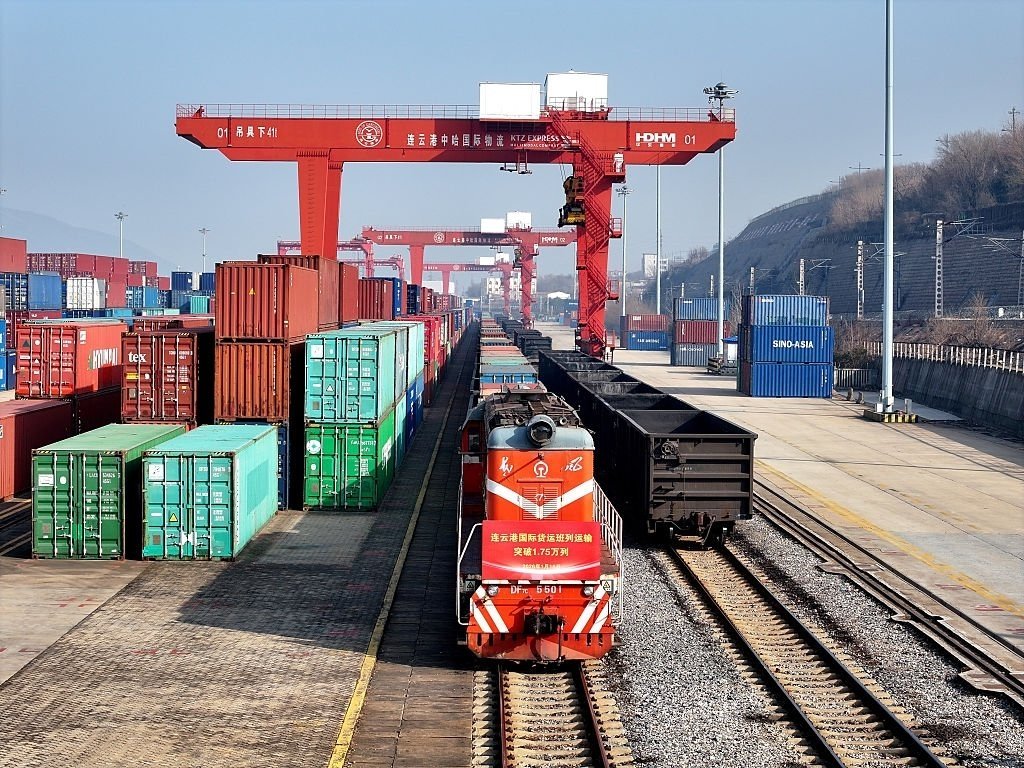
Against this backdrop, the Trans-Caspian International Transport Route, also known as the Middle Corridor, has emerged as a key component of economic cooperation within the OTS.
The route connects Central Asia to Azerbaijan, Georgia and Türkiye via the Caspian Sea, providing access to European markets.
For Uzbekistan, the corridor’s strategic importance is expected to increase further with the construction of the China-Kyrgyzstan-Uzbekistan railway.
Connecting the new railway to the Trans-Caspian route could strengthen Uzbekistan’s position in an east-west logistics network linking China to the Caucasus and Europe through Central Asia.
However, developing a modern transport corridor requires more than expanding railway and road infrastructure.
Border crossing procedures, transport permits, customs declarations, shipping documents and cargo tracking systems also directly affect transportation costs and delivery times.
Digitalization has therefore become an increasingly important priority in the OTS’ transportation agenda.
The e-Permit electronic transport permit system has been introduced among OTS member states to facilitate cross-border transportation.
At the ninth meeting of OTS transport ministers, held in Bishkek on April 23, 2026, officials welcomed the implementation of the system and signed a memorandum of understanding on introducing the electronic consignment note for international road transport, known as e-CMR.
At a summit held in Turkistan in May, the Uzbek president highlighted the full implementation of the e-Permit system among OTS member states.
He also proposed linking the Middle Corridor with the China-Kyrgyzstan-Uzbekistan railway, developing a simplified customs corridor and expanding digital data exchange and cargo tracking systems.
Integrating these initiatives into a single framework could help establish a comprehensive logistics network across the OTS region, enabling not only the movement of goods but also the digital exchange of transport documents and data.
Such integration could reduce border delays, lower administrative costs and make delivery schedules more predictable for exporters, ultimately improving trade efficiency and regional connectivity.
Technological integration
Economic cooperation within the OTS gained a new dimension in 2026, with digital infrastructure, emerging technologies and artificial intelligence becoming increasingly prominent areas of collaboration.
At an informal summit held in Turkistan on May 15 under the theme “Artificial Intelligence and Digital Development,” leaders discussed expanding digital infrastructure, promoting innovative technologies and exploring practical applications of artificial intelligence.
During the summit, Uzbekistan proposed developing a “Digital Turkic Corridor” aimed at connecting data centers across member states through high-speed communication networks.
The country also called for establishing a strategic cooperation network on artificial intelligence, organizing a technology forum in Tashkent and strengthening technological collaboration among Turkic states.
The proposals highlight growing parallels between transportation connectivity and digital integration across the region.
While the Middle Corridor facilitates the movement of goods between Central Asia, the Caucasus and Europe, the proposed Digital Turkic Corridor could accelerate cross-border data flows and strengthen digital connectivity.
Together, the initiatives could establish two complementary pillars of regional integration: physical and digital infrastructure.
The physical network would encompass roads, railways, ports, logistics hubs and customs facilities, while the digital network would include data centers, telecommunications systems, cloud computing, artificial intelligence infrastructure and digital services.
Integrating these networks could create new opportunities for economic cooperation in areas such as e-commerce, digital logistics, financial technology (fintech), cross-border services and the digital management of manufacturing processes.
Economic cooperation within the Organization of Turkic States presents several opportunities for Uzbekistan, ranging from expanding export markets and industrial partnerships to improving transportation links, financing access and digital integration.
One of the most significant opportunities lies in expanding export markets. Uzbekistan’s estimated additional export potential of $2.7 billion represents considerable room for growth compared with its current trade volume.
Another key area is industrial cooperation. Türkiye’s industrial and technological capabilities, Kazakhstan’s and Azerbaijan’s natural resources, and Uzbekistan’s labor force and developing manufacturing sector could complement one another, creating opportunities for joint production and integrated supply chains.
Transportation connectivity also offers significant economic potential.
Linking the China-Kyrgyzstan-Uzbekistan railway to the Middle Corridor could strengthen Uzbekistan’s role in East-West transit trade, expanding its logistics capacity and improving access to international markets.
Access to financing represents another opportunity. The Turkic Investment Fund and co-financing mechanisms developed with international financial institutions could provide additional resources for private-sector projects and regional investment initiatives.
The digital economy is also emerging as a potential driver of growth.
Integrating data centers, artificial intelligence technologies, e-commerce platforms and electronic transport documentation could create conditions for trade in services to expand faster than trade in goods.
Realizing Uzbekistan’s estimated $2.7 billion in additional export potential will require addressing barriers related to product standards, certification, logistics costs, financing and market access across individual product categories.
Similarly, the economic efficiency of a transportation corridor should be assessed not merely by its length or the number of countries it connects, but also through measurable indicators such as cargo delivery times, transportation costs per ton and waiting times at border crossings.
Women leaders, politicians and academics from across the Turkic world will gather in Ankara on Oct. 30 for a series of events aimed at strengthening women’s roles in diplomacy, politics and regional cooperation on the sidelines of the 13th Summit of Heads of State and Government of the Organization of Turkic States (OTS).
The events, organized by the women’s branch of Türkiye’s ruling Justice and Development Party (AK Party), will coincide with the Oct. 29-30 summit and focus on transforming shared historical and cultural ties into stronger cooperation among women across Turkic nations.
AK Party Women’s Branch Chairperson Tuğba Işık Ercan said the initiative would provide a platform for women leaders to exchange experiences, strengthen solidarity and explore opportunities for joint projects.
“We see women’s experience, efforts and leadership as an integral part of the Turkic world’s shared future,” Ercan told Anadolu Agency (AA).
The program will feature the “Women in Diplomacy in the Turkic World Forum,” bringing together ministers, lawmakers, academics and representatives from Turkic countries to discuss women’s participation in diplomacy, political decision-making and leadership.
Discussions will also address economic and social participation, regional solidarity and the preservation of shared cultural heritage.
A second event, titled “From Common Roots to a Shared Future: Women of the Turkic World,” will include a panel on women’s political experiences, challenges and aspirations.
Family and Social Services Minister Mahinur Özdemir Göktaş is expected to address the gathering, highlighting women’s solidarity and opportunities for cooperation across Turkic countries.
Ercan emphasized the importance of increasing women’s representation in political institutions and decision-making processes, arguing that leadership structures should better reflect women’s share of the population.
She said the events would encourage women from different Turkic countries to build lasting connections and learn from one another’s experiences.
The program will also feature the “Sultans of Anatolia Fashion Show,” showcasing traditional clothing, historical designs and cultural motifs representing the Turkic world’s shared heritage.
Ercan expressed optimism that the Ankara summit would produce significant steps toward strengthening cooperation and shaping the Turkic world’s common future.

President Recep Tayyip Erdoğan on Monday vowed to confront actors fueling regional conflicts through expansionist ambitions, pledging to use all available means to halt bloodshed and ease suffering while safeguarding Türkiye’s stability amid mounting tensions.
Speaking after the Cabinet meeting in Ankara, Erdoğan said Türkiye was determined to maintain its course toward stability and development despite growing uncertainty in the region, stressing that preserving domestic peace had become increasingly critical amid global challenges.
“As Türkiye, we are sincerely striving, with all the means at our disposal, to extinguish the flames, alleviate suffering and stop the bloodshed, standing against those fueling conflicts in our region with expansionist ambitions,” Erdoğan said.
He thanked citizens for their restraint and commitment to national unity, regardless of their religious sect or ethnic background, emphasizing that Türkiye’s stability remained a collective responsibility.
Erdoğan said Ankara was working to strengthen diplomatic relations across the region and beyond, prioritizing cooperation, mutual respect and peaceful engagement over confrontation.
“Wherever we have brothers, compatriots or friends, from the Balkans to the Turkic republics, we defend their rights in the strongest possible terms on every platform,” he said.
The president also highlighted Türkiye’s efforts to establish new partnerships with countries where relations had remained limited for years, describing recent diplomatic developments as evidence of Ankara’s expanding international influence.
Turning to developments in the Eastern Mediterranean, Erdoğan welcomed the Libyan House of Representatives’ unanimous approval of the 2019 maritime boundary agreement with Türkiye, calling it a significant achievement for both countries.
He recalled that Ankara signed the maritime jurisdiction agreement with Libya’s internationally recognized Government of National Accord on Nov. 27, 2019, to safeguard their respective rights and interests in the Eastern Mediterranean.
“This agreement was a major step in guaranteeing the legitimate rights of Türkiye and Libya in the Eastern Mediterranean,” Erdoğan said.
He praised Libyan lawmakers for acting collectively despite political differences, saying the unanimous decision demonstrated the importance of national unity in protecting shared interests.
Erdoğan also described the development as a reflection of Türkiye’s longstanding commitment to Libya’s territorial integrity and political unity.
“We are not seeking to save the day but to build the future. Our Libya policy is the clearest example of this,” he said.
He stressed that Ankara would continue engaging with all relevant parties to support a stable, secure and prosperous Libya.
Addressing international reactions to the agreement’s approval, Erdoğan rejected objections from the European Union and other actors, saying they lacked legitimate grounds.
He reiterated that Türkiye’s Eastern Mediterranean policy was focused on protecting its maritime rights rather than pursuing confrontation with neighboring countries.
“We are not seeking to score points against anyone in the Eastern Mediterranean. We are simply concerned with protecting our maritime jurisdiction, rights and interests,” he said.
Erdoğan called for disputes to be resolved through peaceful means and dialogue among all coastal states, urging the EU and other stakeholders to demonstrate the same constructive approach.
He also warned against aggressive rhetoric and attempts to exclude Türkiye from regional decision-making, saying Ankara would not allow external pressure to dictate its foreign policy.
“Our only compass in politics and foreign policy is Türkiye’s interests,” he said, adding that the government would not hesitate to take necessary steps even when they involved costs.
Erdoğan also reviewed Türkiye’s recent diplomatic engagements, highlighting efforts to strengthen political, economic and defense cooperation with international partners.
He hailed Canadian Prime Minister Mark Carney’s official visit as a turning point in the countries’ 83-year diplomatic relationship.
Erdoğan said Ankara and Ottawa elevated their ties to a strategic partnership and signed three agreements aimed at expanding cooperation in defense, aviation and energy.
The two sides also agreed to launch negotiations on a free trade agreement before the end of the year.
“Our goal is to increase our trade volume, currently around $3 billion, first to $5 billion and then to $10 billion,” he said.
Erdoğan noted that Türkiye hosted the ninth Mediation Conference in Istanbul over the weekend, followed by meetings of foreign ministers.
Looking ahead, he said Kazakh President Kassym-Jomart Tokayev would visit Ankara on Wednesday, while Türkiye would celebrate the republic’s 103rd anniversary on Oct. 29 with guests from across the Turkic world.
The same day, the Beştepe National Forest at the Presidential Complex would open to the public.
Ankara will also host the 13th summit of the Organization of Turkic States on Oct. 30, Erdoğan said, emphasizing the importance of solidarity among Turkic nations.
“We will stand together in unity and solidarity against those seeking to undermine our unbreakable brotherhood,” he said.
Erdoğan added that he would subsequently visit South Korea before Türkiye hosts the COP31 climate summit in Antalya, bringing together numerous heads of state and government.
He said these engagements would help reinforce Türkiye’s growing regional and international role.
He warned that anyone seeking to replicate unrest witnessed in parts of Europe should understand that Türkiye would not tolerate attempts to destabilize the country.
“Türkiye was not found in the streets, nor is it a country that will be surrendered to the streets,” he said.
Türkiye, Iran, Saudi Arabia and Pakistan agreed Monday to pursue closer cooperation on regional security following high-level talks in Tehran focused on Israel’s violations in the Middle East and developments in Palestine and Lebanon, according to a joint statement released by Iran.
The four countries have agreed to continue high-level consultations aimed at strengthening regional cooperation and promoting peace and stability, according to the statement.
The talks, hosted by Mohsen Rezaei, secretary-general of Iran’s Supreme National Security Council, brought together senior security and defense officials from the four countries.
Türkiye was represented by National Intelligence Organization (MIT) chief Ibrahim Kalın, while Saudi Arabia sent Defense Minister Prince Khalid bin Salman and Pakistan was represented by army chief Field Marshal Asim Munir.
Iranian President Masoud Pezeshkian and Foreign Minister Abbas Araghchi also attended the meeting.
Discussions centered on regional security challenges, Israel’s violations across the Middle East and the latest developments in Palestine and Lebanon.
In a statement released by Iran’s Supreme National Security Council, the four countries reaffirmed their commitment to maintaining dialogue and expanding cooperation on matters of mutual concern.
“The participants agreed to continue consultations aimed at strengthening cooperation among the four regional countries, including in the areas of regional peace and security,” the statement said.
The agreement signals a willingness among the four regional powers to maintain diplomatic engagement on pressing security challenges, with further consultations expected as part of their efforts to enhance regional coordination.
Ibrahim Kalın, director of Türkiye’s National Intelligence Organization (MIT), will join officials from Pakistan and Saudi Arabia, Ankara’s partners in the Mecca Defense Alliance, in a visit to Tehran, an Iranian official said on Monday. Turkish sources speaking to Anadolu Agency (AA) also confirmed the participation of Kalın to the talks, which, according to Iranian media outlets, will be held on Monday. The talks will focus on “regional security.”
“As agreed, Saudi Defence Minister Khalid bin Salman, Pakistani army chief General Asim Munir and Turkish intelligence chief Ibrahim Kalın will participate in this meeting,” said Ali Bagheri Kani, deputy secretary of Iran’s Supreme National Security Council. He said the meeting will be held with Iran’s security chief Mohsen Rezaei.
“This four-party meeting in Tehran could represent an important and effective step towards building lasting regional security, and we hope this initiative will contribute to establishing a stable region,” said Kani in an interview with state television, without elaborating.
He said that the meeting was proposed during a visit by Pakistani army chief Asim Munir to Tehran last week.
War has engulfed the Middle East since February when the United States and Israel launched a wave of surprise attacks on Iran, while Washington and Tehran were in the midst of negotiations on Iran’s nuclear program.
An April cease-fire brought an end to the initial phase of intense bombardment but the two sides have continued to vie for control over the Strait of Hormuz, through which around a fifth of the world’s oil and liquefied natural gas used to travel.
Iran has since claimed control over the strait and has regularly targeted vessels that attempt to cross without its authorization, while the United States has imposed a naval counterblockade on Iranian ports.
Diplomatic efforts with the U.S. remain stalled, especially since the collapse of a June deal which laid out a pathway to a permanent settlement of the conflict.
The war has since spread across the region to include fighting between Saudi Arabia and the Houthis in Yemen.
Saudi Deputy Minister for Public Diplomacy Rayed Krimly said the meeting is part of ongoing efforts by the Mecca Pact countries to de-escalate the current crisis, promote diplomatic solutions, and support mediation efforts led by Qatar and Pakistan. “The visit also underscores the pivotal role of the Mecca Pact states in fostering regional security and stability, and their commitment to working with all nations in the region toward achieving this goal,” Krimly posted on X. Defense Minister Prince Khalid bin Salman will represent Saudi Arabia at the meeting.
The meeting is the first high-level contact between the alliance members and Iranian officials. The Alliance has denied that it was founded to counter Iran’s influence in the region and signaled it was open to new members.
Attacks by Yemen’s Iran-aligned Houthis have spiralled in recent weeks, and rhetoric between Washington and Tehran has grown more heated. Both countries have also drawn up plans to restart the wider war, possibly after the U.S. midterm elections on November 3.
Iranian Foreign Ministry spokesperson Esmaeil Baghaei said on Monday discussions on regional security would include “Israel’s expansionist policies, developments in the Palestinian territories and Lebanon, and the repercussions of U.S. and Israeli military action against Iran.”
Baghaei said the meeting could be a first step toward establishing regional security mechanisms based on the interests of countries in the region. Qatari mediators met Iranian officials in Tehran on Sunday in a push to de-escalate regional tensions, Reuters reported. Qatar has, for months, played a mediating role between Tehran and Washington.
A senior Iranian official said the meeting was initiated by Pakistan, during Munir’s visit to Tehran, as he met Iranian President Masoud Pezeshkian and other senior officials. During the visit, Iranian officials told him there would be no talks with Washington until Tehran’s demands were met, according to Iranian media. Earlier mediation efforts involving both Pakistan and Qatar helped produce an interim peace agreement in June, but the deal quickly unravelled as fighting between Iran and the United States resumed weeks later.
Saudi Arabia intercepted another wave of missiles and drones on Sunday as fighting with the Houthis continued unabated. Ministers from the Mecca Pact countries held an emergency meeting in Riyadh earlier this month and agreed to ensure the “rapid deployment” of military forces and capabilities in Saudi Arabia.
The Houthi attacks have become an increasingly destabilizing element in the U.S.-Israeli conflict with Iran, turning U.S. ally Saudi Arabia into a pressure point in the wider war.
The Mecca agreement’s first article says the parties shall use “all necessary means” to eliminate threats to one another’s territorial integrity, sovereignty or internationally recognized borders.
The Turkish Parliament will start debates to ratify the agreement on Tuesday, while Pakistan approved the pact last week.
Iran said Monday it had reached an understanding with Türkiye, Saudi Arabia and Pakistan that regional security should be maintained by countries in the region rather than foreign powers, following high-level talks in Tehran focused on strengthening cooperation and addressing shared security challenges.
Iran and three other countries participating in the Mecca pact — Türkiye, Saudi Arabia and Pakistan — agreed that regional security should be ensured without foreign intervention, a senior Iranian official said Monday.
“The outcomes we agreed on were that security in the region where we live should be endogenous, meaning it should be achieved by the countries themselves, and that we must prevent any kind of foreign intervention in this region,” Iran’s Supreme National Security Council Secretary Mohsen Rezaei said following the meeting.
The four-way talks in Tehran brought together senior officials to discuss regional security, Israel’s activities in the Middle East and developments in Palestine and Lebanon.
Türkiye was represented by National Intelligence Organization (MIT) Director Ibrahim Kalın, Saudi Arabia by Defense Minister Prince Khalid bin Salman and Pakistan by army chief Asim Munir.
Iranian President Masoud Pezeshkian and Foreign Minister Abbas Araghchi also attended the meeting.
Earlier Monday, Pezeshkian expressed Tehran’s readiness to deepen regional cooperation and resolve disputes, calling for greater unity among Muslim-majority countries, according to state news agency IRNA.
“The Islamic Republic of Iran, with firm conviction and serious determination, is ready to take steps toward deepening regional cooperation, resolving differences and drawing on the shared capabilities of Islamic countries,” Pezeshkian said.
He emphasized that Tehran supported initiatives aimed at promoting regional solidarity, stability and economic development.
The Iranian president also said Muslim countries could harness their collective resources and capabilities to present a model of justice and development to the international community.
The meeting underscored efforts by the four countries to strengthen regional coordination amid continuing tensions in the Middle East.
Türkiye, Qatar, Pakistan and Indonesia are preparing to announce a joint project focused on technical military training and research and development under the recently signed Badr agreement, marking a step toward implementing their defense cooperation framework, according to a report by the Sabah newspaper.
The agreement, aimed at strengthening strategic partnerships and regional cooperation, establishes a framework designed to move joint initiatives from planning to implementation.
Under the mechanism, an Executive Board will identify joint projects involving the four countries, while a Strategic Board will approve the proposals and establish implementation timelines.
The structure defines responsibilities, approval procedures and project schedules from the outset, allowing cooperation to move beyond declarations of intent toward practical implementation.
Signed on Oct. 21, the Badr pact is aimed at boosting defense cooperation and strengthening the four countries’ defensive capabilities. It will also support military exercises and training and cooperation on research and development (R&D) and contribute to joint efforts to improve their defense industries.
The memorandum further provides a framework for defense and aviation cooperation, including technical military training and research and development.
According to the report, the four countries are expected to announce a joint project in these areas soon, marking one of the agreement’s first concrete outcomes.
The initiative reflects Türkiye’s broader policy of promoting regional ownership and strengthening cooperation among partner countries through institutionalized mechanisms.
The Badr agreement is expected to facilitate coordinated projects and deepen strategic cooperation among the four participating nations.
In August, Türkiye signed the Mecca Joint Defense Agreement with nuclear-armed Pakistan and Saudi Arabia. Under the pact, an attack on one party is considered an attack on all. Ankara also has close ties with Indonesia, notably in the defense industry.


-
 Politics3 days ago
Türkiye rules out fight against Houthis under Saudi defense pact: Güler
-

 Economy2 days ago
Earnings reports, Fed decision to dominate busy week for markets
-
 Politics1 day ago
France reportedly mulls postponing Med grid after Türkiye-Libya deal
-
 Politics1 day ago
Turkish opposition parties’ cash row grows
-

 Economy1 day ago
Ready for French test?: 5 questions for European Central Bank
-
 Politics1 day ago
Yemen hails strong ties with Türkiye, its role in region
-
 Politics1 day ago
Turkish Parliament set to debate Mecca deal bill
-
 Politics2 days ago
New attack on Iran risks wider war, diplomacy only solution: FM Fidan