
Economy
Japan approves $135B stimulus package to help revive sluggish economy

Japan’s Cabinet approved a 21.3 trillion yen ($135.4 billion) stimulus package Friday to help spur the economy through expansionary government spending and to relieve the impact of higher prices.
After taking office last month, Prime Minister Sanae Takaichi promised to boost government spending despite concerns that such moves will delay progress on trimming Japan’s national debt, which is about triple the size of its economy.
Takaichi told reporters that the package aims to quickly deliver on her promises.
“Through wise spending, we will change worries into hope and achieve a strong economy,” she said.
“What we should do now is to strengthen the national power through expansionary spending, through wise spending, and not to cause harm through excessively contractionary policies,” she said.
The spending package far exceeds those of the pre-COVID-19 pandemic years and is also meant partly to blunt the impact of higher U.S. tariffs on Japanese exports to America under President Donald Trump.
Exports to the U.S. fell in October for the seventh straight month, the government said Friday, though shipments to the rest of the world rose 3.7%, thanks partly to higher exports to the rest of Asia.
In recent days, investors have sold off Japanese government bonds, pushing yields higher, while the yen has fallen to nearly its lowest level this year.
Share prices have also taken a hit from renewed friction with China after Takaichi made comments that angered Beijing, provoking retaliatory moves including an advisory warning Chinese tourists and students against going to Japan.
The benchmark Nikkei 225 index fell 2.4% on Friday, mainly due to heavy selling of technology shares.
The lavish spending package approved Friday includes subsidies for energy costs, a cut in the gasoline tax and other measures to help consumers struggling with the rising cost of living. The government reported Friday that core inflation excluding volatile food costs was 3% in October, higher than the central bank’s target of around 2%.
Specific subsidies include one-time cash handouts of 20,000 yen (about $130) per child, which would require about 400 billion yen in government funding and issuing rice vouchers or other coupons worth 3,000 yen per person, to be distributed by local authorities.
Takaichi’s government must compile a supplementary budget and gain approval by the parliament by the end of this year to fund the package. That’s a major challenge for her ruling coalition, which lacks a majority in both the Upper and Lower houses of the Diet.
Takaichi succeeded former Prime Minister Shigeru Ishiba, who was virtually ousted by his rivals in the ruling party after losing major elections due to voter dissatisfaction over his minority government’s slow response to soaring prices and lagging wages.
As Japan’s first female prime minister, Takaichi has so far enjoyed high levels of public support largely because of expectations she might shake up Japan’s gerontocratic politics. But since she has a minority government, she needs cooperation with opposition parties to get her supplementary budget and spending package passed.
Opposition lawmakers and experts have questioned whether the package will be effective in attaining its aims. One of which is to slightly lower consumer prices by cutting energy costs. Any impact on inflation is expected to be transient since increased demand from other stimulus would tend to push prices higher.
The package also is meant to raise Japan’s gross domestic product (GDP) by 24 trillion yen, or an annualized rate of 1.4%, according to the Cabinet Office.
Japan’s economy, the world’s fourth largest, contracted at a 1.8% annual pace in the July-September period.

China’s deal to curb hybrid vehicle exports to the European Union is set to deal a fresh blow to electric vehicle makers that ramped up shipments exempt from the bloc’s tariffs on Chinese-made EVs as sales growth slows at home.
Beijing’s exports of hybrids to the EU’s 27 member states tripled to $7.5 billion in the first half of this year from $2.5 billion a year earlier, according to Chinese customs data. The figure was nearly nine times the $845 million exported in all of 2021.
Since the EU imposed additional tariffs on Chinese-made EVs in 2024, automakers have increasingly turned to plug-in hybrids, which are exempt from the extra duties. Weak charging infrastructure in parts of Europe has also supported demand for plug-in hybrids, which are marketed for their long range and strong fuel economy.
SAIC, BYD and Chery accounted for more than 90% of Chinese hybrid sales volume in the EU, while hybrids represented more than half of their European sales, according to Jefferies.
“It’s making life a bit more difficult for the Chinese, but…that’s not going to stop them as it happened to the electric cars,” said Felipe Munoz of Car Industry Analysis.
“Europe is going to a point where they will need to decide whether they’re doing what the U.S. is doing or just let the whole industry be bought by the Chinese.”
Deal preferable to trade war
Chinese brands captured a record 15% share of Europe’s EV market in the second quarter, up from 9.5% in the first quarter of 2024, while Chinese plug-in hybrids accounted for more than a quarter of the segment, rising sharply from just 1.7% at the beginning of 2024, according to Schmidt Automotive Research.
While European Trade Commissioner Maros Sefcovic said on Friday the agreement would cut the imports of “several million cars over four years,” Brussels and Beijing have yet to disclose how the arrangement will be implemented.
China’s Commerce Ministry said on Monday that the arrangement would allow continued export growth and guarantee China a quota no smaller than that granted to any other source of imports.
Renault CEO Francois Provost said on Monday the surge in Chinese hybrid imports was unsustainable for Europe, but added the agreement was preferable to a trade war and underscored the need to manage trade relations “sensibly.”
Investors largely viewed the agreement as a de-escalation of trade tensions and a sign that tariffs on Chinese hybrids may be off the table for now. Shares in BYD fell 1.8%, while Chery and SAIC rose 1.4% and 0.5%, respectively.
“Overall, we believe it is a risk-relief rally story…as the implementation rules, volume caps, price floors, carve-outs are still pending technical negotiation,” Citi analysts said.
‘Tariff risk off, quota risk on’
The rapid growth of Chinese hybrid sales has increasingly challenged European manufacturers, including Volkswagen, long the region’s leading plug-in hybrid seller, said Li Yanwei, an analyst at the China Automobile Dealers Association.
BYD, China’s largest hybrid vehicle exporter to Europe, sold more plug-in hybrids than fully electric models in the first eight months of the year, with its Seal U SUV its best-selling model, according to data compiled by Li.
Together with Chery, SAIC and Geely, the company has narrowed the gap with Volkswagen, which still commanded a 31.8% share of the EU plug-in hybrid market.
“Let’s see if China honors the agreement or finds workarounds, or temporary tariff exemptions,” said Michael Dunne, a consultant who closely follows the Chinese automotive industry.
Analysts said the deal could ultimately accelerate Chinese automakers’ push to build vehicles in Europe, even if some manufacturers attempt to frontload exports before any quota system takes effect.
“I would expect this to strengthen the incentive for Chinese automakers to manufacture in Europe,” said Bill Russo, founder of Shanghai-based consultancy Automobility.
“If access through imports becomes more constrained, investing closer to the customer becomes more attractive. But localization requires capital…smaller players may reconsider their European ambitions.”
Jefferies analysts said the deal signaled “tariff risk off, quota risk on,” potentially pushing Chinese automakers toward higher-priced models, increasing pressure on German premium brands and accelerating plans to build more vehicles in Europe.
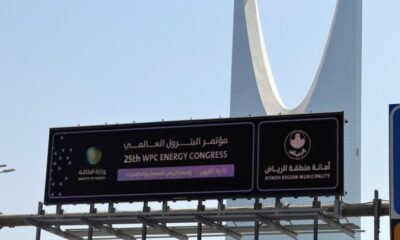
Several top energy executives have been dropped from the schedule of a major summit in Riyadh, as Saudi authorities pressed ahead with the event Monday despite deadly attacks on the capital claimed by Yemen’s Iran-aligned Houthis.
The chief executives of ExxonMobil, TotalEnergies, Shell, Chevron and BP had all been expected at the event, which began on Sunday, but were no longer on the agenda that conference organizers released early Monday.
“To everyone who traveled to Riyadh, thank you,” said Saudi Energy Minister Prince Abdulaziz bin Salman, who opened Monday’s session of the gathering for energy policy and industry.
“You know this country is safe and that we hold your protection at whole heart…Our gathering here does not mean the risk is gone.”
Prince Abdulaziz said the events of recent weeks were serious and that the kingdom’s response must be “equally serious.”
The WPC Energy Congress was originally scheduled for April of this year, but was postponed after the U.S. and Israeli war on Iran began in late February. Saudi Arabia was named host in October 2022, the first time the event, first held in Britain in 1933, has been held in the kingdom.
Chief executives of major energy companies are a regular fixture at WPC Energy events and had been scheduled to speak on stage this week about global oil and gas markets, energy security and the energy transition.
A BP spokesperson said the company had “made every effort to participate” in the conference. “Unfortunately, due to travel disruption we are unable to be there in person. We greatly value our long-standing partnerships across the region.”
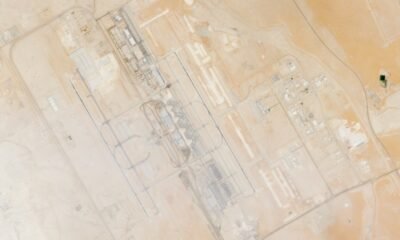
The WPC Energy Congress is taking place this week at a conference center some 10 kilometers (6 miles) from Riyadh’s international airport, which has been attacked four times in the last week.
One person was killed and nearly a dozen hurt in a new attack on the airport on Sunday evening, Saudi authorities reported, a day after a strike claimed by Houthis killed 13 people and wounded more than 300, the deadliest attack in the kingdom in more than a decade.
Major French supermarket chains Intermarche and Cooperative U were hit by a cyberattack that caused their refrigerators to defrost, the companies said Monday.
Some 150-200 Intermarche shops were targeted, along with almost 100 Cooperative U outlets, in the attack, the two retailers told Agence France-Presse (AFP).
Paris prosecutors confirmed the attack, which reportedly also hit other major chains, and also indicated it had prompted outbreaks of fire.
BFM TV said France’s largest supermarket chain E. Leclerc was also affected, with hackers “managing to remotely trigger the forced defrosting of the refrigeration systems in numerous stores.” E. Leclerc did not immediately confirm the information.
Those branches that were affected will have to “throw away all of the products” that are fresh and frozen, Intermarche told AFP.
Specialist French retail sector news website jebosseengrandedistribution.fr said other retail giants Carrefour Market and Monoprix were affected, but the companies have yet to confirm this.
‘Unprecedented’
The chief executive of Cooperative U, Dominique Schelcher, described the attack as “unprecedented” and confirmed the cyberattack had affected refrigeration systems since Sunday night.
“Targeting equipment essential to the preservation of fresh products and to the food supply of the French people is extremely serious and is unprecedented. It is unacceptable,” he wrote on the social media platform X.
He added that the company’s teams are “fully mobilized” to restore the situation as quickly as possible.
“An investigation will be necessary to shed full light on this attack,” he added.
The office of the Paris prosecutor confirmed to AFP that an investigation has been opened into “the large-scale cyberattack affecting the refrigerators of several major food retail chains across France.”
The probe will help “identify the victims and establish the link with the damage they reported in terms of foodstuff losses and the outbreak of fires,” the prosecutor’s office said.
Intermarche condemned the food waste and financial losses resulting from the attack, without providing figures, and warned there could be issues with insurance policies which do not “cover this type” of in-store incident.
BFM TV said temperatures were “altered remotely, resulting in the destruction of stocks of fresh and frozen products.”
The incident comes against the background of growing concern over the potential havoc that can be caused in Europe in all sectors by cyberattacks by malicious actors.
President Emmanuel Macron, a strong supporter of Ukraine in its fight against the Russian invasion, last month ordered measures to protect France’s critical infrastructure from Russian “hybrid attacks.”
Türkiye could cut its annual natural gas import bill by about $4 billion with its wind power capacity of more than 16 gigawatts (GW), based on current energy prices, according to a senior industry executive.
Ibrahim Erden, president of the Turkish Wind Energy Association (TWEA), said every 1,000 megawatts (MW) of installed wind power capacity could reduce natural gas import costs by around $250 million annually.
Türkiye has generated more than 40% of its electricity from renewable sources in recent years, with the share exceeding 60% during the January-August period
The importance of wind energy has increasingly been viewed through the lens of energy security following the Russia-Ukraine war and conflicts in the Middle East.
Wind power offers a strategic advantage because it does not depend on imported fuels, critical transit routes such as the Strait of Hormuz, or international embargoes, Erden told Anadolu Agency (AA).
Strong manufacturing base
Türkiye has expanded its wind energy sector in recent years, supported by its strong wind potential and geographical advantages, he said.
Global wind power installations increased by 165,000 MW last year, including 2,000 MW in Türkiye, which accounted for around 1.2% of global installations, exceeding its approximately 1% share of the global economy, Erden added.
The country’s total installed electricity capacity stood at 126 GW, while onshore wind power capacity reached 15.9 GW as of the end of October, Erden said.
Erden also highlighted the growth of Türkiye’s domestic wind energy manufacturing base, supported by local component incentives introduced around 2009-2010.
The industry has developed a manufacturing cluster stretching from Izmir through Balikesir, Bursa and Yalova to Istanbul, building on Türkiye’s industrial expertise, including in automotive manufacturing, he said.
Türkiye earns around $2 billion-$2.5 billion annually from exports of wind turbines, components and raw materials, making it an important supplier to global wind energy manufacturers, Erden said.
Rising domestic natural gas production and expanding renewable energy capacity are expected to reduce Türkiye’s energy import bill over the long term, he added.
New investments planned
There are currently five wind tower manufacturers and two blade manufacturers in Türkiye, with the number of blade factories expected to rise to three as new investments come online, Erden said.
He added that 75% of manufacturers plan new investments or capacity expansions over the next three years.
These investments are expected to increase demand for skilled technicians and white-collar professionals, Erden said.
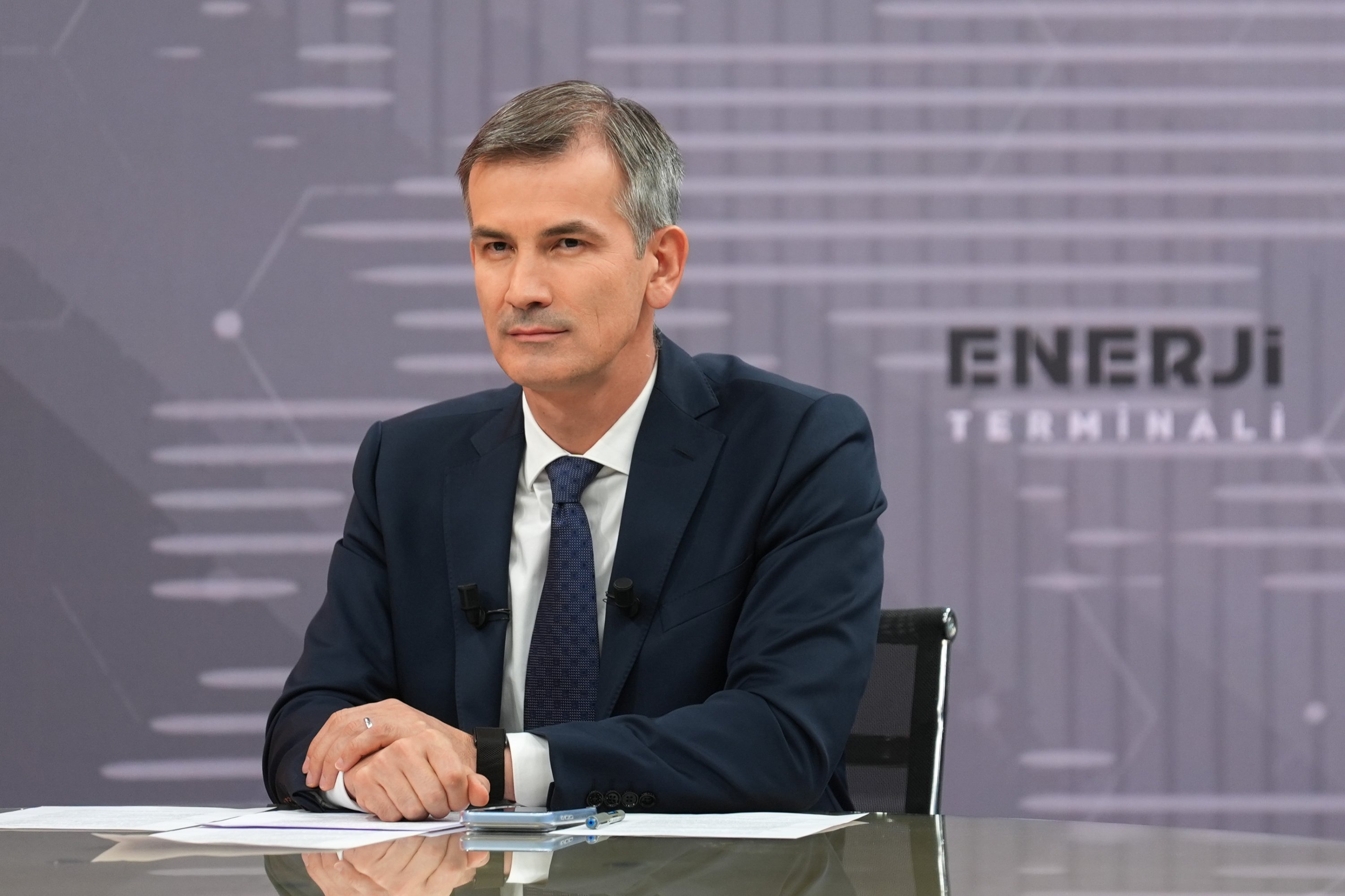
He also highlighted the role of Renewable Energy Resource Area (YEKA) projects in supporting domestic manufacturing, noting that locally produced components account for 65% of the turbines used in such projects.
The government aims to offer investors at least 2,500 MW of new wind and solar capacity annually through YEKA projects, he said, adding that predictable long-term targets and regular capacity allocations help strengthen investor confidence.
Türkiye’s position in global market
Türkiye ranked second in Europe for new onshore wind installations last year, sixth in installed wind capacity and fifth in wind industry manufacturing, Erden said.
Offshore wind projects are also expected to support further sector growth, he added.
Meanwhile, more than 70% of the global wind energy supply chain is concentrated in China, making the energy sector an increasingly important part of the economic competition between China, the United States and Europe, Erden said.
Türkiye is emerging as an alternative supplier, particularly for European markets, amid this competition, he added.
8 GW needed annually
Türkiye targets wind and solar installed capacity to reach 120 GW by 2035. The association aims for wind power to account for 48 GW of that total, he said.
Türkiye needs to install around 8,000 MW of new wind and solar capacity each year to reach its goal, Erden said.
Wind capacity alone would nearly triple electricity generation from wind, potentially increasing the annual value of avoided natural gas imports to around $10 billion-$12 billion under current price and generation assumptions, he added.
“This would mean an additional $6 billion-$8 billion in annual savings on top of the approximately $4 billion currently achievable,” Erden said.
He stressed that expanding grid infrastructure, speeding up permitting procedures and improving access to affordable financing would be essential to achieving the target.
Türkiye needs $24 billion in financing for grid investments alone under its National Energy Plan, while total financing signed or committed through work with international financial institutions stands at around $7.5 billion-$8 billion, Erden said.
Türkiye’s electricity demand is expected to rise significantly in the coming years as electric vehicles become more widespread, data centers expand, artificial intelligence applications grow and industrial electrification accelerates, he said.
This transformation makes expanding renewable energy capacity even more important, Erden added.
Türkiye is in talks with Saudi Arabia, Jordan and Syria on a large electricity transmission link connecting the four countries, Energy and Natural Resources Minister Alparslan Bayraktar said Monday.
Ankara views regional connectivity as a way to diversify energy supplies, pursuing pipeline projects with neighbors such as Iraq and Syria while seeking to expand cross-border links for oil, natural gas and electricity.
“We are discussing a major mega interconnection project, an electricity transmission line project, between Saudi Arabia, Jordan, Syria and Turkey,” Bayraktar told Anadolu Agency (AA).
Bayraktar was speaking on the sidelines of the 25th World Petroleum Council (WPC) Energy Congress in Riyadh. He gave no details on cost, capacity or timing.
He added that Türkiye wants to expand energy cooperation with other countries as well, naming Libya, Iraq, Pakistan and Uzbekistan in particular.
Türkiye’s investments in recent years have strengthened supply security in the region, according to Bayraktar.
He pointed to the Trans-Anatolian Natural Gas Pipeline (TANAP), TurkStream, the Baku-Tbilisi-Ceyhan oil pipeline and the Iraq-Türkiye oil pipeline, which together allow energy to move in different directions.
He said the aim is to use this infrastructure more fully. “We want to use our existing lines and infrastructure at the highest level. We want our lines to be full,” he said. The Iraq-Türkiye oil pipeline has a capacity of 1.5 million barrels per day, and he said that capacity should be filled.
On natural gas, Bayraktar said Türkiye is considering filling spare capacity in TANAP with additional gas, so that more gas could be carried to Türkiye and, through it, to Europe.
He said Türkiye’s investments in regasification terminals and liquefied natural gas infrastructure also create openings to bring in more LNG and send it on to Europe.
He said Türkiye continues to pursue a strategy of diversifying its energy sources, and is developing projects meant to support supply security on a regional and European scale, as well as meeting its own needs.
‘One of biggest crises of modern times’
Bayraktar described world energy markets as facing one of the biggest crises of modern times. Despite this, he said, Türkiye has had no problems with the supply security of oil and oil products.
He said developments affecting production and supply in major oil producers such as Venezuela, Russia and Iran had increased pressure on global markets, and that price swings were hurting economies around the world.
“A prolonged contraction in energy markets could have serious consequences for the global economy, and international cooperation needs to be strengthened to get out of the crisis,” he said. Energy markets could only become more balanced once regional tensions and war come to an end, he added.
Solidarity with Saudi Arabia
Bayraktar also expressed solidarity with Saudi Arabia over recent attacks claimed by the Houthis on airports in the kingdom.
“We are here as Türkiye to show that we stand by our Saudi brothers,” he said. He said he hoped the attacks would end and that the Turkish people stand with the Saudi people.
Saudi authorities pressed ahead with the WPC Energy Congress despite the deadly attacks, although several top energy executives were dropped from the schedule for the event.
The chief executives of ExxonMobil, TotalEnergies, Shell, Chevron and BP had all been expected at the event, which began on Sunday, but were no longer on the agenda that conference organizers released early Monday.
“To everyone who traveled to Riyadh, thank you,” said Saudi Energy Minister Prince Abdulaziz bin Salman, who opened Monday’s session of the gathering for energy policy and industry.
“You know this country is safe and that we hold your protection at whole heart… Our gathering here does not mean the risk is gone.”
Prince Abdulaziz said the events of recent weeks were serious and that the kingdom’s response must be “equally serious.”
The WPC Energy Congress was originally scheduled for April of this year, but was postponed after the U.S. and Israeli war on Iran began in late February. Saudi Arabia was named host in October 2022, the first time the event, first held in Britain in 1933, has been held in the kingdom.
Chief executives of major energy companies are a regular fixture at WPC Energy events and had been scheduled to speak on stage this week about global oil and gas markets, energy security and the energy transition.
The WPC Energy Congress is taking place this week at a conference center some 10 kilometers (6 miles) from Riyadh’s international airport, which has been attacked four times in the last week.
One person was killed and nearly a dozen hurt in a new attack on the airport on Sunday evening, Saudi authorities reported, a day after a strike claimed by Yemen’s Iran-aligned Houthis killed 13 people and wounded more than 300, the deadliest attack in the kingdom in more than a decade.
Electrification at heart of COP31 agenda
Earlier on Monday, Bayraktar used a panel on the sidelines of the event in Riyadh to stress Türkiye’s aim to put electrification at the center of its agenda for the 31st United Nations Climate Change Conference (COP31),
Bayraktar said Türkiye aimed to convey a message to the international community at COP31 on the need to advance electrification while addressing energy security and climate change.
Electricity demand in Türkiye is growing not only due to conventional consumption patterns but also emerging sources, including artificial intelligence-driven data centers, cooling needs, and desalination, he said.
Meeting this demand while advancing decarbonization would require investment across several areas, including renewable energy, energy efficiency, natural gas infrastructure and nuclear power, Bayraktar added.
Türkiye aims to achieve decarbonization by 2053 and is targeting 20 gigawatts (GW) of nuclear power generation capacity by 2050, he said.
Renewables, nuclear power
Bayraktar said Türkiye was pursuing an ambitious renewable energy strategy covering solar, wind, offshore wind and geothermal power.
Energy efficiency was another key priority, with potential for improvements across the economy, including agriculture, transportation and buildings, he said.
Nuclear energy would also help Türkiye meet rising electricity demand while supporting its decarbonization and carbon neutrality goals, Bayraktar added.
He said the country’s aging coal-fired power infrastructure needed to be transformed toward cleaner alternatives, while securing natural gas was becoming increasingly difficult under current market conditions.
Türkiye continues to invest in oil and gas infrastructure, including pipelines, underground storage facilities and regasification terminals, as well as offshore exploration and production activities at home and abroad, he said.
Bayraktar also stressed the importance of critical minerals, saying the energy transition depended on effective strategies for developing mineral resources.
Energy security remains central to climate goals
Bayraktar said global energy markets had faced successive challenges since the COVID-19 pandemic, including supply chain disruptions linked to the Russia-Ukraine war, economic difficulties, high capital costs and the recent conflict involving Iran.
These developments have underscored the importance of resilient energy markets and international cooperation, he said.
Energy security would become a top priority, Bayraktar said, adding that countries needed more coherent policies to address energy security alongside climate change.
Strong investment in AI infrastructure is helping global growth to remain at around 3% with major benefits for Asia, but it also foreshadows a “slow-moving tsunami” that could massively disrupt labor markets, taxation and education, International Monetary Fund (IMF) chief Kristalina Georgieva warned on Monday.
The artificial intelligence investment boom was already delivering a “demand shock, an investment shock” that could boost growth in advanced Asian economies by a half to one full percentage point, and emerging Asian economies by 0.2 to 0.8 percentage point, she said.
“AI, love it, hate it. It’s already here,” Georgieva said.
“That shift into higher gear is what is keeping the world economy growing at around 3%, despite the fact (that) we are being dragged down by the energy supply shock,” she told hundreds of participants on the first day of a weeklong set of meetings of the IMF and World Bank in the Thai capital.
The IMF in July forecast global growth at 3% in 2026. It will release an updated outlook on Tuesday.
Some 18,000 people are expected to attend the gathering this week, including finance officials from the IMF’s 191 members.
However, several finance ministers will skip the trip to focus on domestic priorities, including U.S. Treasury Secretary Scott Bessent and Spanish Finance Minister Arcadi España.
Also absent will be the finance ministers from Canada, India and the Democratic Republic of Congo, which is struggling to contain an Ebola outbreak that has killed at least 4,000 people, said a source familiar with the plans.
Saudi Finance Minister Mohammed Al-Jadaan, who heads the IMF’s steering committee, still planned to attend despite an operations halt at the Riyadh airport following deadly weekend attacks by Yemen’s Iran-aligned Houthis, two sources said.
Asked about the negative impact of AI on jobs, Georgieva said that IMF research shows that some 40% of jobs will be either augmented, downgraded, or eliminated by AI, and as high as 60% in advanced economies.
This will have profound consequences for jobs, growth, education and even how governments generate revenue through taxation, given the expected shift from labor to capital.
An initial study showed that 10% of jobs in the US already required AI skills. While routine, repetitive jobs were shrinking, low-paying jobs were increasing in two lower-paying sectors, construction and data centers.
“It is a transformative technology. It so completely changes how we work, how we live,” she said, noting that an AI assistant now gave her a 30-second message about her schedule each morning.
The U.S., China and India are the most important producers in the AI supply chain, but many of the firms supplying hardware for the needed infrastructure are in Asia, Georgieva said, referencing Thailand, host of this year’s annual meetings.
AI impact on entry-level jobs
Singapore President Tharman Shanmugaratnam, speaking at the same event, said governments should address how AI was reducing job opportunities for graduates.
“There is a particular problem that we have to address very soon … and that is that, the first rung in employment, your first job upon graduation, is now seeing less demand,” he said.
He said the world should also guard against AI resulting in a “new divergence” in growth and job creation between developing and advanced economies.
“AI is going to widen the divergence if we are too passive about it,” he said. “So we’ve got to do everything we can to first use AI to create good jobs and to create jobs that can be done well by human beings, can allow them to ride up a career ladder despite AI.”
World Bank President Ajay Banga, who has made jobs a central focus of his presidency, told reporters that he was not convinced that entry-level jobs would be destroyed by AI, and that much of the disruption would take place in advanced economies that are building large AI models.
“In the emerging markets, we are not into large language models,” he said, adding that the World Bank was focused on leveraging “small AI” that does not require massive computing power to deliver productivity gains for farmers, health clinics and teachers.


-
 Economy2 days ago
Can diesel prices fall after Trump-Russia deal?
-
 Politics3 days ago
Turkish Defense Ministry marks 7 years since Operation Peace Spring
-
 Politics2 days ago
Türkiye-France defense cooperation spark concern in Greek media
-
 Politics2 days ago
Türkiye presses Greece to hand over FETÖ members, crime bosses
-

 Economy2 days ago
Tehran’s once-bustling bazaar struggles as war dampens demand
-

 Sports2 days ago
Bezzecchi wins Indonesian GP to hand Martin championship lead
-
 Sports2 days ago
Deadly Houthi strike on Riyadh airport draws int’l condemnation
-
 Economy22 hours ago
Top oil execs drop from major event schedule after Riyadh attacks