
Politics
Rising ‘Turkish influence’ may be a good thing for Europe

The EU and the United States have grown apart recently, but they appear to agree on one thing: Türkiye is no longer a country to be underestimated in global affairs.
Statements by European Commission President Ursula von der Leyen, who warned against “Turkish influence” in Europe, may be downright hostile, but it is also an acknowledgement of the fact that Türkiye has cemented its place in the world as a key actor, rather than a pawn on the global chessboard. Add this to U.S. Ambassador Tom Barrack’s remarks describing the country as a vital partner for the United States, and it is clear that Türkiye is viewed by the West as an indispensable presence in international relations.
Now, the question is how the West will move forward in its relations with Türkiye. The EU has long maintained its stance on keeping Türkiye at its door, while Ankara was forced to establish one-on-one beneficial cooperation with members of the bloc, which always placed obstacles before it. As for the U.S., Washington seems more engaged with Ankara under the Trump administration, though a solid outcome of renewed ties is yet to be seen, especially in terms of lifting the sanctions.
Under the leadership of President Recep Tayyip Erdoğan, Türkiye has shifted its absolute alignment with the EU in terms of strategic cooperation to a balanced relationship. It did not lose the ambition for full membership to the bloc, but did not idle around while waiting for membership invitation after completing most of the criteria the EU asked to fulfill. It built new partnerships across the globe rather than remaining focused on Europe.
Nevertheless, as the U.S. under Trump and the Russia-Ukraine conflict upset the EU’s relatively serene world detached from international crises, the Turkish “influence” von der Leyen emphasized may be an ingredient to survive this new era for Europe. Türkiye’s overtures to the bloc in recent months show Ankara needs Brussels as much as it needs Ankara. In other words, both sides need each other, though in different fields. Take the economy, for instance. Türkiye is one of Europe’s largest trading partners. The rise of the Turkish defense industry and Türkiye’s appetite to bolster its defenses with EU products such as Eurofighter jets can also contribute to reinvigorating ties that took blows, especially in the mid-2010s, amid separate crises with members of the bloc, such as the Netherlands.
On a side note, Türkiye has not slammed von der Leyen’s remarks outright as it would have done in the past, and the EU was quick to clarify them. A commission spokesperson told Anadolu Agency (AA) on April 21 that von der Leyen’s remarks were merely “a recognition of its geopolitical clout, size and ambitions.” These attempts to downplay or ignore the remarks also highlight that both sides are keen on maintaining ties in a time of uncertainty. For Türkiye, this silence is something that may be associated with Ankara’s ultimate ambition in peace diplomacy: making new friends and keeping old foes at bay. Speaking of peace diplomacy, Türkiye is still essential for the EU as the only country that can talk to both sides in the Russia-Ukraine conflict, and as Kyiv recently pointed out, an ally trustworthy enough for them to host a possible Putin-Zelenskyy meeting. At the end of the day, Türkiye may address the EU’s concerns of lingering conflict that occasionally threatens to spill over into other countries by securing a peace deal, and at the same time, may help the bloc by boosting its defenses as a key partner through the SAFE mechanism Ankara seeks to benefit from.

President Recep Tayyip Erdoğan is expected to attend at least two events before and on July 15, 2026, on the 10th anniversary of the coup attempt by the Gülenist Terror Group (FETÖ).
On July 15, Erdoğan, who rallied the nation to resist the putschists 10 years ago, will visit Parliament for an event. Parliament lived up to its honorary “Ghazi” title (given due to its coordination of the War of Independence in its first days) by demonstrating unity against the putschists 10 years ago despite repeated airstrikes that partially destroyed its building. “Ghazi” means “war veteran” in Turkish. The lawmakers across the political spectrum are expected to revive this spirit with “National Will Watch” on Wednesday, where they will make speeches on the preservation of democracy against military intervention. July 15 was officially designated as the Day of Democracy and National Unity after the 2016 attempt.
Parliament’s mosque will host prayers in memory of those killed during the resistance against the coup attempt, and a commemoration ceremony will be held at a monument erected outside Parliament to honor the resistance. Parliament will also host three exhibitions on the occasion.
Erdoğan and Parliament Speaker Numan Kurtulmuş are scheduled to address a memorial event at Parliament.
Elsewhere, the ruling Justice and Development Party (AK Party) will hold a symposium on the legal and political ramifications of the coup attempt. Erdoğan will make a keynote speech at the symposium. AK Party Deputy Chair Hayati Yazıcı, in charge of the party’s political and legal affairs, will also make a speech at the symposium. A photo exhibition will accompany the symposium.
FETÖ used its military infiltrators to carry out a coup to oust Erdoğan and install a puppet regime in 2016. FETÖ’s conspiracy to plant infiltrators in every rank in the army would almost pay off, but an unexpected public resistance by thousands willing to sacrifice their lives to confront the putschists thwarted the attempt.
Tobias Ellwood, a former member of the U.K. Parliament and former minister for defense veterans, reserves and personnel, said Friday that Türkiye’s hosting of the NATO leaders’ summit in Ankara underscored the country’s growing strategic importance within the alliance, while highlighting its expanding defense capabilities and influence in trans-Atlantic security.
Speaking to Anadolu Agency (AA) after attending the July 7-8 NATO summit in Ankara, Ellwood congratulated Türkiye on hosting what he described as a successful gathering of allied leaders.
“I think it demonstrated Türkiye’s rising status and showed people what a capable and welcoming country it is,” Ellwood noted.
The former British minister, who also served as minister for the Middle East and Africa at the Foreign Office, said the alliance is facing fundamental questions about its future as emerging threats reshape the security landscape.
“NATO was originally designed to deter conventional military aggression by another state,” Ellwood said. “Today, however, questions arise over how cyberattacks would trigger Article 5, how attacks in space would affect the alliance, and how allies should cooperate in these new domains.”
He said technological developments and the evolution of warfare are challenging NATO’s traditional principles and deterrence posture, making adaptation increasingly important.
“The evolution of warfare is testing NATO, its founding principles and how the alliance functions as a deterrent force,” he said.
Ellwood described Türkiye as a key member of the alliance, noting that it has traditionally been viewed as NATO’s southern flank but is expected to play a broader role as the alliance adjusts to changing geopolitical realities.
“I think Türkiye has an important role to play, but that is part of a broader discussion about NATO’s future,” he said.
Ellwood also pointed to the relationship between President Recep Tayyip Erdoğan and U.S. President Donald Trump, describing it as noteworthy and potentially significant for alliance diplomacy.
“I think Erdoğan can quietly influence Trump because Trump respects him,” Ellwood said, adding that the relationship between the two leaders could prove valuable at a time when Trump has at times unsettled allies with his rhetoric and policy positions.
Turning to defense cooperation, Ellwood welcomed Türkiye’s advances in its domestic defense industry, particularly in drone technology, which was highlighted during the Defense Industry Forum held alongside the NATO summit.
“Türkiye should be congratulated. You have made tremendous progress,” he said.
He added that the next major challenge will be ensuring that Turkish-made defense systems are increasingly interoperable with those of other NATO allies, allowing them to operate more effectively within the alliance’s integrated defense architecture.
The NATO summit in Ankara brought together allied leaders to discuss collective defense, deterrence, defense spending and emerging security threats, while also showcasing Türkiye’s growing role in NATO’s military and defense-industrial agenda.
President Recep Tayyip Erdoğan on Saturday commemorated the 31st anniversary of the Srebrenica genocide, honoring the thousands of Bosniak victims killed during the 1995 massacre and reiterating Türkiye’s commitment to preserving their memory.
In a message shared on social media, Erdoğan described Srebrenica as “one of the most brutal genocides in history” and paid tribute to those who lost their lives in what remains Europe’s worst mass atrocity since World War II.
“On the 31st anniversary of Srebrenica, one of the most brutal genocides in history, I commemorate with mercy and sorrow all of our Bosniak brothers who were massacred,” Erdoğan wrote.
“I respectfully honor the cherished memory of our martyrs and extend my patience and condolences to their families and loved ones. We will never forget Srebrenica.”
The annual commemoration falls on July 11, the day Bosnian Serb forces captured the U.N.-designated safe area of Srebrenica in eastern Bosnia in 1995, setting in motion the systematic killing of more than 8,000 Bosniak Muslim men and boys over the following days.
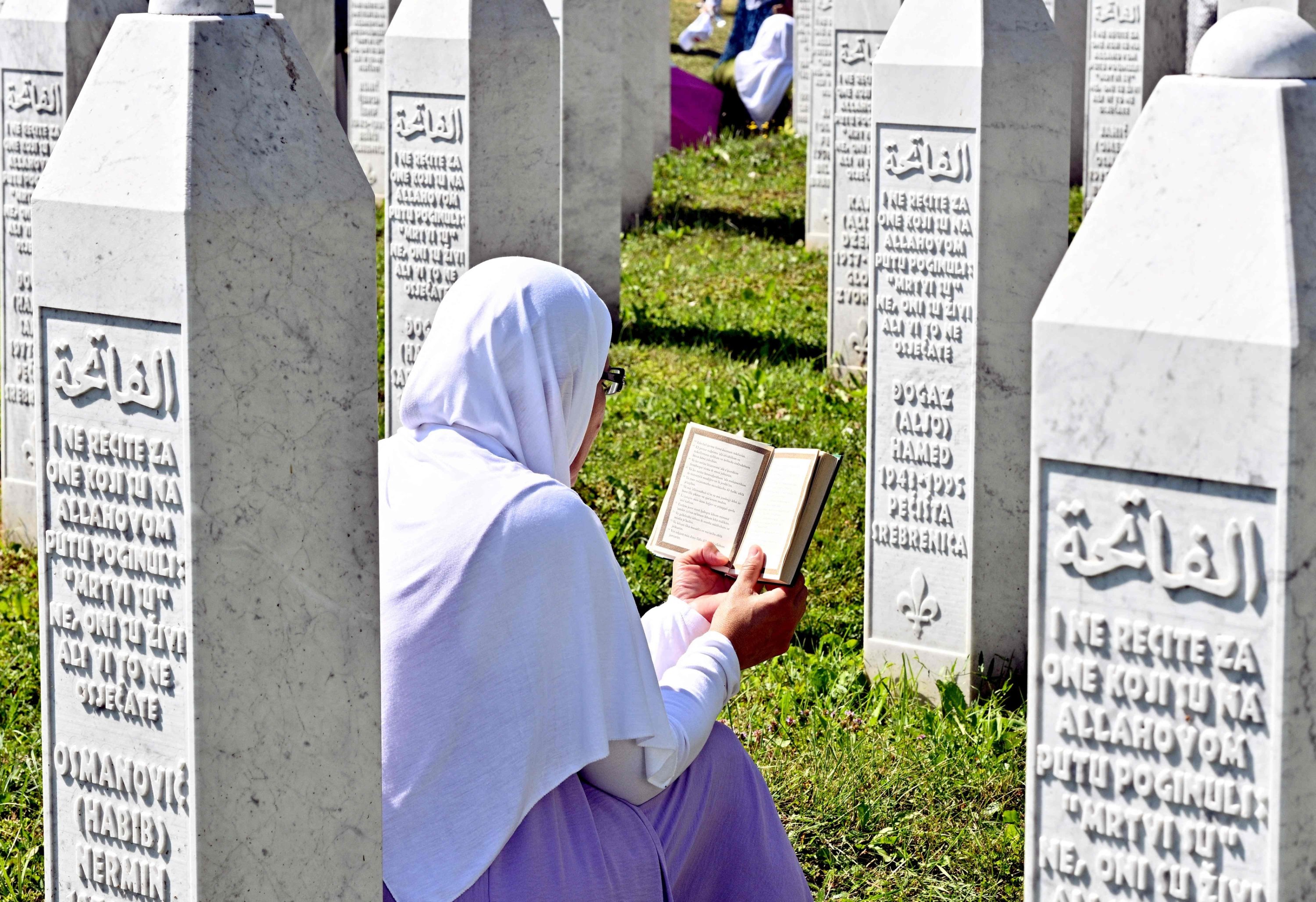
The massacre occurred during the Bosnian War, which lasted from 1992 to 1995 after the breakup of the former Yugoslavia. Srebrenica had been declared a protected U.N. enclave in 1993 and was guarded by Dutch peacekeepers. However, Bosnian Serb forces commanded by Gen. Ratko Mladić overran the town, separating men and boys from women, children and elderly civilians before carrying out mass executions.
An estimated 25,000 to 30,000 women, children and elderly residents were forcibly expelled from the enclave, while thousands of victims were buried in mass graves that were later disturbed in an attempt to conceal evidence of the killings.
The massacre has been legally recognized as genocide by both the International Criminal Tribunal for the former Yugoslavia and the International Court of Justice, which ruled in 2007 that the killings constituted genocide.
More than three decades later, forensic experts continue identifying victims through DNA analysis. Nearly 7,000 victims have been identified and buried at the Srebrenica-Potočari Memorial and Cemetery, while hundreds of people remain missing.
This year’s anniversary included the burial of 10 newly identified victims, ranging in age from 20 to 56, at the memorial cemetery in Potočari. Memorial ceremonies across Bosnia and Herzegovina honored those killed, while survivors, relatives and international delegations gathered to remember the victims and call for continued efforts to combat genocide denial and preserve historical truth.
The 2026 commemorations were held under the theme “We Are Here,” highlighting the resilience of survivors and the enduring legacy of Bosniak communities in Bosnia and Herzegovina and across the diaspora.
Türkiye has consistently supported international recognition of the Srebrenica genocide and has long maintained close ties with Bosnia and Herzegovina.
Erdoğan has repeatedly used the anniversary to stress the importance of justice, remembrance and preventing similar atrocities from occurring again.
The Srebrenica genocide remains a defining symbol of the international community’s failure to protect civilians despite the presence of a U.N. safe zone.
Successive U.N. reports have acknowledged serious shortcomings in the global response, making the massacre a lasting reminder of the consequences of inaction.
President Recep Tayyip Erdoğan expressed condolences on Sunday over the death of Qatar’s former ruler, Sheikh Hamad bin Khalifa Al Thani, praising his longtime ally for strengthening bilateral ties and contributing to regional stability.
“I was deeply saddened to learn of the passing of my dear friend, Sheikh Hamad bin Khalifa Al Thani, the Father Emir of the State of Qatar,” Erdoğan said in a statement on X.
The Turkish president said the former emir played a key role in elevating political, trade, military, humanitarian and cultural relations between Türkiye and Qatar to their current level during the years the two leaders worked together.
“During my tenure as prime minister, we worked closely together on the international stage. He made invaluable contributions to bringing political, trade, military, humanitarian and cultural ties between Türkiye and the State of Qatar to their current level.”
“I personally witnessed his sincere efforts for the peace of the Islamic world, the stability of our region and the prosperity of the Qatari people. May Almighty Allah have mercy on Sheikh Hamad bin Khalifa Al Thani.” Erdoğan said.
He extended condolences, on behalf of himself, his family and the Turkish nation, to Qatar’s Emir Sheikh Tamim bin Hamad Al Thani, the late leader’s family, the people of Qatar and the broader Islamic world.
Sheikh Hamad ruled Qatar from 1995 until his abdication in 2013, when he handed power to his son, Sheikh Tamim bin Hamad Al Thani.
Türkiye late Thursday rejected a European Parliament resolution on Cyprus, calling it “null and void” and accusing the EU of taking a biased approach to the decades-long dispute.
In a statement, the Turkish Foreign Ministry said the resolution contained “baseless and preposterous allegations against the heroic Turkish Armed Forces.”
“The resolution adopted by the European Parliament, which contains baseless and preposterous allegations against the heroic Turkish Armed Forces, is null and void,” the ministry said.
The ministry also expressed full support for a statement issued by the Foreign Ministry of the Turkish Republic of Northern Cyprus (TRNC) in response to the resolution.
Describing the text as “replete with despicable slanders,” the ministry said it represented “the latest example of the biased and distorted approach adopted by the EU and the European Parliament in particular, under the influence of certain circles, with respect to the Cyprus issue.”
The ministry also voiced concern over the EU’s increasingly one-sided stance on Cyprus.
“It is concerning that EU institutions are increasingly approaching the Cyprus issue in a manner that departs from historical realities and impartiality,” the statement said.
The island has been mired in a decades-long dispute between Greek and Turkish Cypriots, despite a series of diplomatic efforts by the U.N. to achieve a comprehensive settlement.
Ethnic attacks starting in the early 1960s forced Turkish Cypriots to withdraw into enclaves for their safety. In 1974, a Greek Cypriot coup aimed at Greece’s annexation led to Türkiye’s military intervention as a guarantor power to protect Turkish Cypriots from persecution and violence.
As a result, the TRNC was founded in 1983. The country is fully recognized only by Türkiye, which does not recognize the Greek Cypriot administration in the south.
The island has seen an on-and-off peace process, but negotiations have been stalled since 2017.
Türkiye’s main opposition Republican People’s Party (CHP) is expected to discuss further organizational changes at a key executive board meeting on Friday, amid continuing tensions following a court ruling that reinstated former Chairperson Kemal Kılıçdaroğlu.
According to Turkish media reports citing party sources, nearly 10 provincial party chairs could be dismissed during the meeting as the leadership moves to consolidate control over the organization.
The reports also claimed that CHP parliamentary group chair Özgür Özel could be removed from his post.
The leadership has repeatedly stressed that it will not tolerate what it describes as a dual power structure or disciplinary violations within the party following the court’s “absolute nullity” ruling, which returned Kılıçdaroğlu to the party leadership.
Since the ruling, the CHP has dismissed 36 provincial chairs, while 11 others have reportedly been referred to the party’s disciplinary board over statements and actions directed at the new leadership.
Media reports said provincial organizations in Trabzon, Afyonkarahisar and Rize are among those expected to face leadership changes at the latest meeting.
The reports also said appointments could soon be made to fill a number of provincial chairmanships that have remained vacant following previous dismissals.
Party officials are also expected to begin restructuring district organizations after changes at the provincial level are completed. According to the reports, newly appointed provincial chairs will oversee appointments at the district level, while local officials accused of undermining the party leadership could face disciplinary proceedings.


-
 Economy3 days ago
Ankara, Baghdad to sign 12-month deal on Iraq-Türkiye pipeline
-
 Daily Agenda2 days ago
A pipeline agreement was signed between Türkiye and TRNC! Minister Bayraktar: “We will continue all kinds of support with determination”
-
 Daily Agenda3 days ago
MSÜ Rector Erhan Afyoncu: “Our institutions were revived with the support of our President”
-
 Daily Agenda2 days ago
We will continue to support Lebanon – Last Minute News
-
 Economy3 days ago
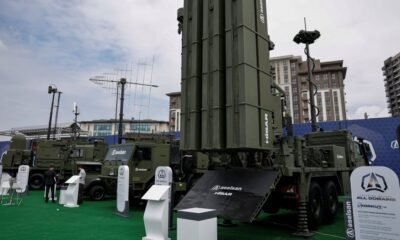
Aselsan lands nearly $1.7B deal to expand Türkiye’s air defense
-
 Economy19 hours ago
Turkish ship, yacht exports hit $1.5B in H1, sector eyes new record
-

 Daily Agenda2 days ago
Safety shield against earthquake risk
-
 Daily Agenda2 days ago
From purchasing weapons to selling missiles – DİLEK GÜNGÖR