
Sports
FIFA to sell pieces of World Cup final pitch as memorabilia

Fans will soon have the chance to own a piece of World Cup history after FIFA announced it will sell authenticated fragments of the natural grass pitch used in the 2026 FIFA World Cup final at MetLife Stadium in New Jersey.
The collectibles, marketed as the “2026 FIFA World Cup Piece of the Pitch,” feature genuine sections of the championship field permanently preserved in premium acrylic displays. FIFA says each item includes authentication features and is designed as a lasting keepsake from one of soccer’s biggest events.
“Own a genuine piece of football history with an authentic 2026 FIFA World Cup™ Piece of the Pitch, permanently preserved in a premium acrylic with a USB keepsake,” FIFA says in the product description on its official online store.
“Each piece contains an original fragment of the iconic Final playing surface, making it a unique collectible that celebrates one of the world’s greatest sporting events.”
The entry-level Foundation Edition is priced at $450, while higher-end versions range into the thousands of dollars. The premium Hero Edition, which sells for as much as $3,000, includes a larger section of the pitch along with exclusive memorabilia such as a gold-etched commemorative ticket, a miniature World Cup ball and other display items.
Each collectible is engraved with details including the official 2026 FIFA World Cup logo, MetLife Stadium, the date of the final on July 19, 2026, and the match result.
FIFA said orders will not be shipped until after the final is played and, for now, deliveries are limited to customers in the United States, the United Kingdom and Europe.
The sale comes as the temporary natural grass field installed for the World Cup is scheduled to be removed once the tournament ends.
MetLife Stadium, home of the NFL’s New York Giants and New York Jets, normally uses an artificial playing surface for American football. To meet FIFA’s tournament requirements, organizers installed a specially prepared natural grass pitch for the World Cup, which must be dismantled before the stadium returns to NFL use.
Rather than discarding the field, FIFA is transforming sections of the turf into authenticated collectibles, creating a new revenue stream while giving supporters an opportunity to own a tangible piece of the tournament.
The initiative also arrives amid the long-running debate over natural grass versus artificial turf. Many NFL players have argued that natural grass provides a safer playing surface and may reduce the risk of lower-body injuries, while FIFA has consistently required natural grass for its flagship competitions.
Preparing MetLife Stadium for the World Cup required extensive modifications, including the installation of the temporary grass surface to satisfy FIFA’s standards for international competition.
The “Piece of the Pitch” collection continues a growing trend of sports organizations turning iconic match-used items into premium memorabilia. Limited availability has already fueled strong demand, with some editions selling out shortly after launch.

Lionel Messi was named Tuesday to Argentina’s squad for an Oct. 6 friendly against Benin, which will serve as his farewell match after retiring from international football last month.
The 39-year-old said in August he was retiring from Argentina duty after a two-decade international career that included winning the 2022 World Cup and Copa America triumphs in 2021 and 2024.
“We made the decision to invite the best player in the world, the symbol of our national team, our captain, Lionel Andres Messi, so that he can have the farewell he truly deserves on Oct. 6 here in Argentina,” said Argentine FA president Claudio Tapia.
The match against Benin will take place at River Plate’s Estadio Monumental in Buenos Aires, which can accommodate 85,000 spectators.
Tapia also invited all of Argentina’s 2022 World Cup winners to join Messi for what he said would be an “unforgettable” occasion.
Argentina begin a series of three friendlies against Bolivia on Sept. 30 in Cordoba – their first match since losing the World Cup final to Spain – before taking on Burkina Faso in Buenos Aires on Oct. 3.
Messi has been included in the squad for the third match against Benin, when he is expected to make his 208th and final appearance for the national team. He is Argentina’s all-time record scorer with 125 goals.
Following the death of his father Jorge last month, Messi had said he had “serious doubts” about continuing to play football of any sort for “much longer.”
“It was a decision that hurt and still hurts deep in my soul but I understand that it is the right time,” Messi said when he called time on his Argentina career.
His contract with Major League Soccer club Inter Miami runs until the end of the 2028 season.
Last month FIFA ordered Argentina to play their next home match with capacity reduced to 50% for breaches of its disciplinary code relating to using a sports event for making demonstrations of a non-sporting nature.
After Argentina beat England 2-1 in a tense World Cup semifinal in July, several players held up a banner saying: “The Falklands are Argentine.”
The friendlies are also expected to count toward suspensions handed down following incidents after Argentina’s World Cup final defeat by Spain.
Midfielder Leandro Paredes received a 10-match ban, while defender Nahuel Molina was suspended for seven games and Thiago Almada for one.
AC Milan and Benfica will renew one of European football’s most storied rivalries Wednesday when the former champions meet at San Siro to open their Europa League campaigns.
Both clubs fell short of expectations last season, missing out on Champions League qualification, but each enters the competition among the leading contenders to lift the trophy in Frankfurt next spring.
Milan’s failure to secure a place among Europe’s elite followed a dramatic collapse at the end of last season. Six defeats in their final 10 Serie A matches cost them valuable ground and ultimately triggered a sweeping change in the club’s leadership.
Max Allegri’s second spell in charge lasted only a year before he was replaced by Ruben Amorim, who has overseen an unbeaten start to the new campaign.
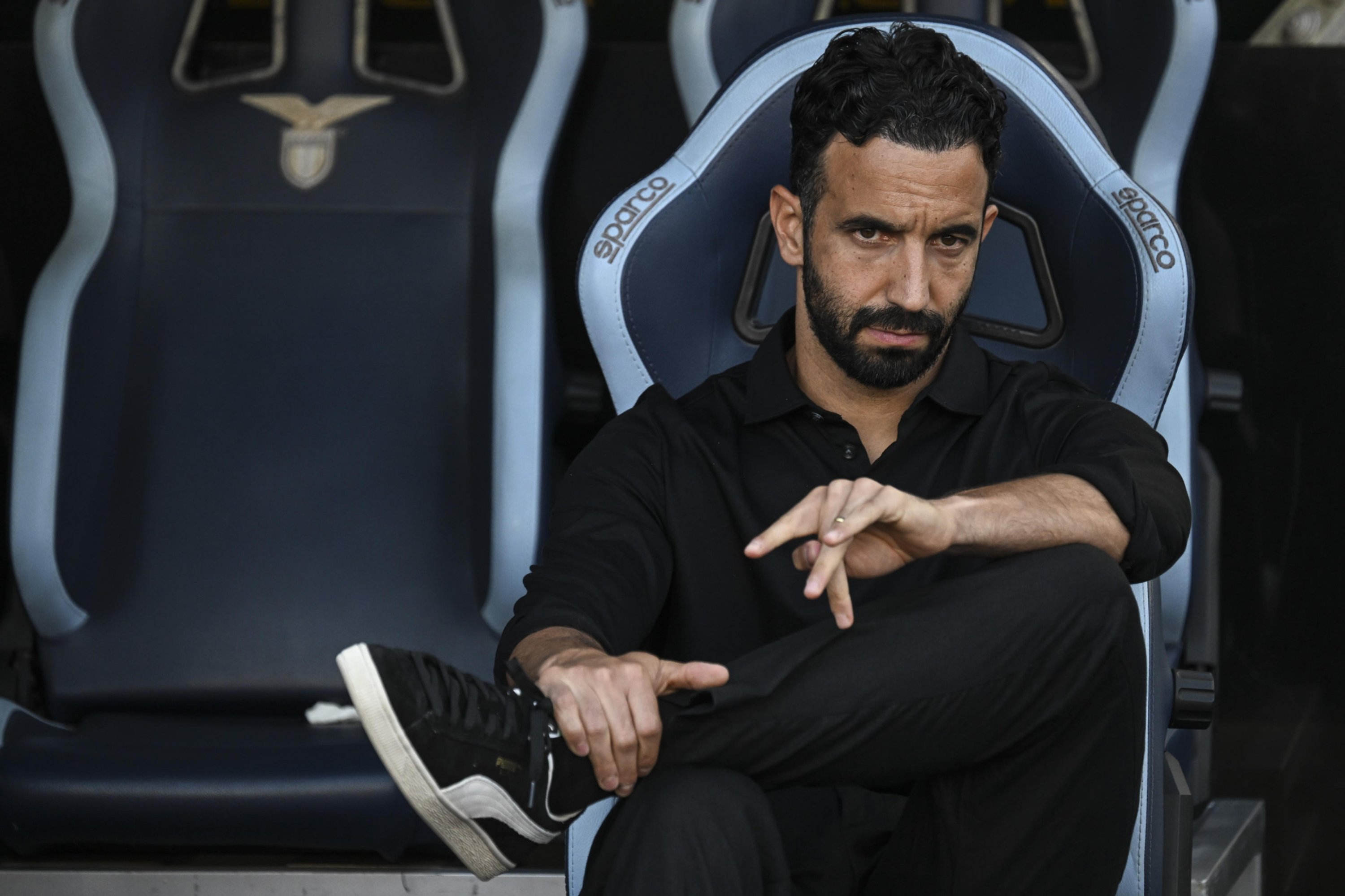
The Rossoneri opened with wins over Torino and Venezia before drawing their next two league matches. Juventus snatched a late equalizer in Turin, while Milan showed greater resilience against Lazio, recovering from two goals down to earn a point in Rome.
After missing out on European competition altogether last season, Milan are back on the continental stage for the first time since their Champions League knockout-round playoff exit in 2025.
For Amorim, the Europa League also offers a chance to rebuild his European reputation after his Manchester United side lost the 2025 final. The Portuguese previously established himself as one of Europe’s most promising coaches during a successful spell at Sporting Lisbon.
That makes Wednesday’s meeting particularly intriguing. Amorim spent nine years at Sporting as a player and, as a coach, regularly enjoyed the upper hand over Benfica in Portugal.
History, however, offers the visitors little encouragement.
Benfica have never beaten Milan in six competitive meetings, including European Cup finals in 1963 and 1990. The Portuguese giants will nevertheless arrive in Italy in confident mood after an impressive run of form under new coach Marco Silva.
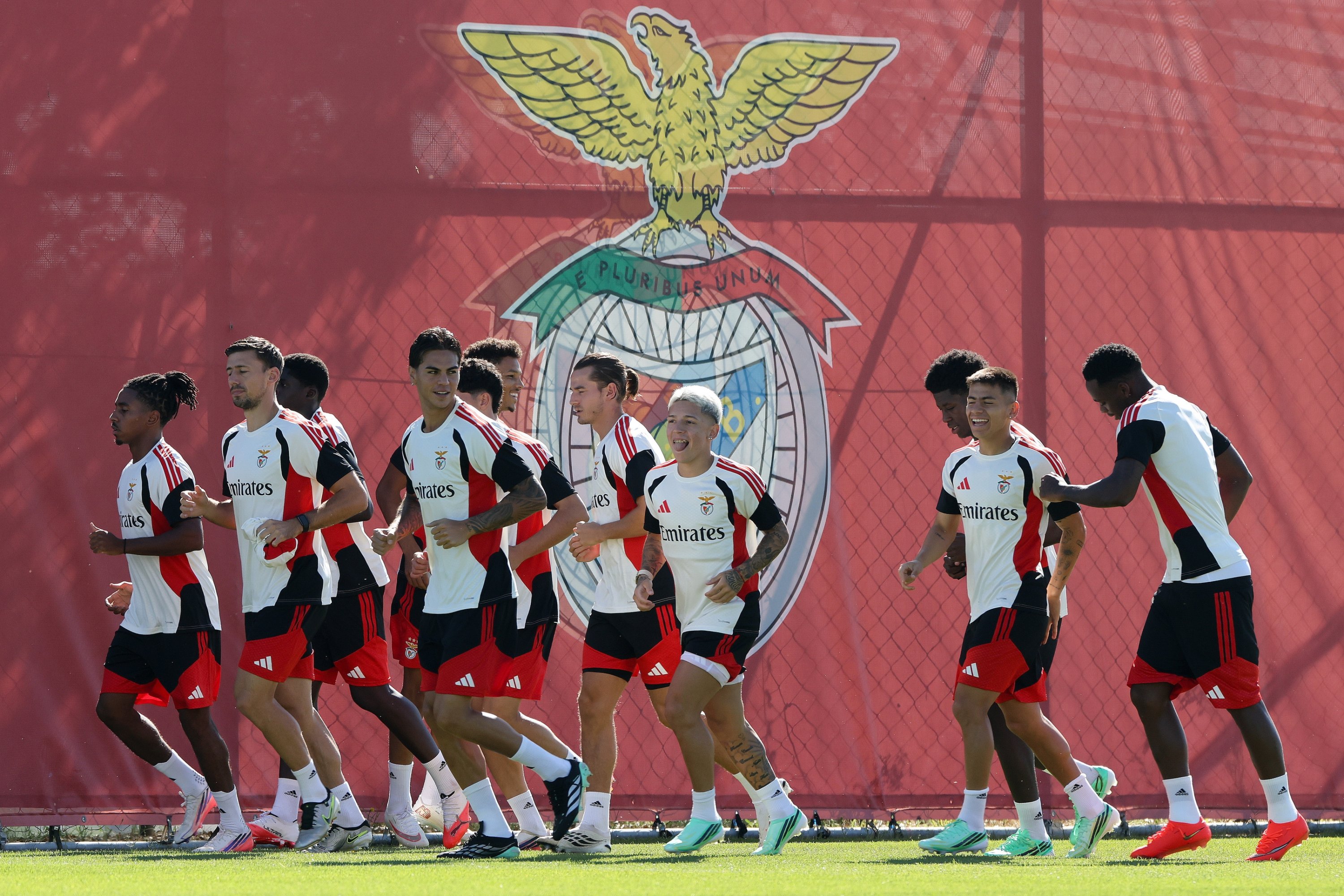
Benfica also endured a disappointing domestic campaign last season, finishing third in the Primeira Liga under Jose Mourinho. That forced them to navigate the Europa League qualifying rounds, where Silva’s tenure began with an unexpected defeat to Swiss side St. Gallen.
The Eagles quickly recovered, crushing St. Gallen 5-0 in the second leg before sweeping aside Hearts 7-2 and AGF 6-2 on aggregate to reach the league phase.
Since then, Benfica have been perfect domestically, winning four straight matches while scoring 12 goals. Their latest victory was particularly dramatic, with a late surge turning a potential draw against Gil Vicente into a 3-1 win and extending their winning streak to seven matches in all competitions.
Silva’s side now face a demanding stretch, beginning with Wednesday’s trip to Milan before an away meeting with Porto.
Milan could make changes for the midweek fixture, although Amorim is expected to retain his familiar 3-4-2-1 formation.
The hosts appear to have a near-fully fit squad after defenders Mattia Gabbia and Mario Gila recovered from minor problems to make the squad against Lazio.
One of the biggest selection questions surrounds Luka Modric. The 41-year-old midfielder has made 156 appearances in European competition, but his last appearance outside the Champions League came in November 2011.
Amorim also has several options available in the attacking positions behind Goncalo Ramos. Alphadjo Cisse, Alexis Saelemaekers, Ruben Loftus-Cheek, Omari Hutchinson and Christian Pulisic are all competing for places.
Ramos will have an added incentive if selected, with the former Benfica striker facing his old club.
Benfica, meanwhile, will look to Vangelis Pavlidis to provide the attacking threat. The Greek striker scored six goals during qualifying and has already added eight in the Primeira Liga.
Pavlidis has also maintained an impressive scoring rate in UEFA competition, averaging a goal every two matches.
Benfica will be without Alexander Bah, who remains sidelined with a shoulder injury. Daniel Banjaqui or versatile captain Fredrik Aursnes could therefore be asked to fill the right-back position.
Barcelona’s renovated Camp Nou will host the 2029 UEFA Champions League final, UEFA announced Tuesday, beating London’s Wembley Stadium to stage European football’s biggest club game.
UEFA’s executive committee selected Spotify Camp Nou during its meeting in Thessaloniki, Greece, awarding the final to Barcelona for the first time in 30 years. The match is scheduled for June 2, 2029.
The decision gives Barcelona a major international sporting event a year before Spain joins Portugal and Morocco in hosting the 2030 FIFA World Cup.
The 104,000-plus-seat Camp Nou is undergoing a major redevelopment that has been repeatedly delayed, with the upper tier and roof still under construction.
Once completed, the stadium is expected to become one of Europe’s largest football venues and offer expanded hospitality, accessibility and technology.
Barcelona last hosted the Champions League final in 1999, when Manchester United produced one of the most dramatic comebacks in the competition’s history, scoring twice in stoppage time to beat Bayern Munich 2-1.
The stadium also hosted the 1989 European Cup final, when AC Milan defeated Steaua Bucharest 4-0.
Wembley, meanwhile, has hosted three Champions League finals since 1999, in 2011, 2013 and 2024. It has staged the European Cup final eight times since the competition began in 1955.
Barcelona’s successful bid was submitted jointly by the club, Barcelona City Council and the Catalan government, with support from the Spanish Football Federation and the city’s hospitality sector.
UEFA said Camp Nou’s size and hospitality facilities were key strengths of the bid. Recent Champions League finals have generally been awarded to stadiums with capacities above 70,000, making the rebuilt Camp Nou’s more than 104,000 seats a significant advantage.
“This is an immense source of pride for FC Barcelona and for all Barça supporters,” Barcelona president Joan Laporta said.
Laporta described the decision as international recognition for the rebuilt stadium and thanked Barcelona’s city and regional authorities, as well as the Spanish federation, for supporting the bid.
The 2029 final will also provide a major showcase for Barcelona and Catalonia, with the city expecting the event to generate significant international exposure and economic benefits.
Bayern Munich to host 2028 final
UEFA also confirmed that the 2028 Champions League final will be played at Bayern Munich’s stadium. The German venue was the only bidder and will host the final just three years after staging the 2025 edition.
This season’s Champions League final will be held in Madrid at Atletico Madrid’s Metropolitano Stadium.
UEFA also awarded the 2028 and 2029 finals of the Europa League to Bucharest and Belgrade, respectively.
Bucharest’s National Arena will host the 2028 final, while the 2029 showpiece will be played at Serbia’s new national stadium, currently under construction on the outskirts of Belgrade.
The decision comes amid growing UEFA ties with Serbian football, which will co-host next year’s European Under-21 Championship with Albania.
Serbia’s selection comes just days after supporters of Belgrade’s two biggest clubs, Red Star and Partizan, paid tribute to convicted war criminal Ratko Mladic during a match at the city’s current national stadium. Mladic died last month in The Hague.
UEFA fined Red Star earlier this month after supporters chanted in Mladic’s honor during a Europa League match on the day of his death.
The current Europa League final will be played at Eintracht Frankfurt’s Waldstadion.
Other UEFA finals
UEFA selected Lyon to host the 2028 Women’s Champions League final, giving the competition’s record eight-time winners a chance to stage the showpiece in their home city.
Cardiff was chosen for the 2029 Women’s Champions League final at the national stadium in the Welsh capital. The venue will also host the opening match of the 2028 European Championship.
Turin will stage the 2028 Conference League final at Juventus’ stadium, while Budapest’s 67,000-seat Puskas Arena will host the 2029 final.
The Conference League has steadily grown since its launch in 2021. Its first two finals were played at much smaller venues in Tirana, Albania, and Prague, but UEFA has increasingly moved the competition’s title match into larger stadiums.
Lamine Yamal believes his trophy haul gives him the strongest case to win the 2026 Ballon d’Or, but Kylian Mbappe insists individual excellence should outweigh the lack of silverware in what has become a two-man battle for the prestigious award.
The Barcelona forward, who helped Spain win the 2026 World Cup, considers himself and Real Madrid star Mbappe the two best players in the world and says his success with Barcelona and Spain should give him the edge when the winner is announced next month.
“Who would I give it to? The best player in the world,” Yamal said in an interview with MovistarPlus+, which is due to be broadcast Friday.
“Who are they going to give it to? That’s already a very long conversation.
“I sincerely believe that there are two of us in the world and this year I would deserve it for what I have won.
“For me, Mbappe and I are the two best in the world. For me it’s clear and everyone who watches the games knows it.”
Yamal enters the final stretch of the Ballon d’Or race after another impressive start to the new season.
He scored twice Sunday as Barcelona defeated Levante 4-2 away from home, taking his league tally to seven goals as the defending champions opened up a three-point lead at the top of La Liga.
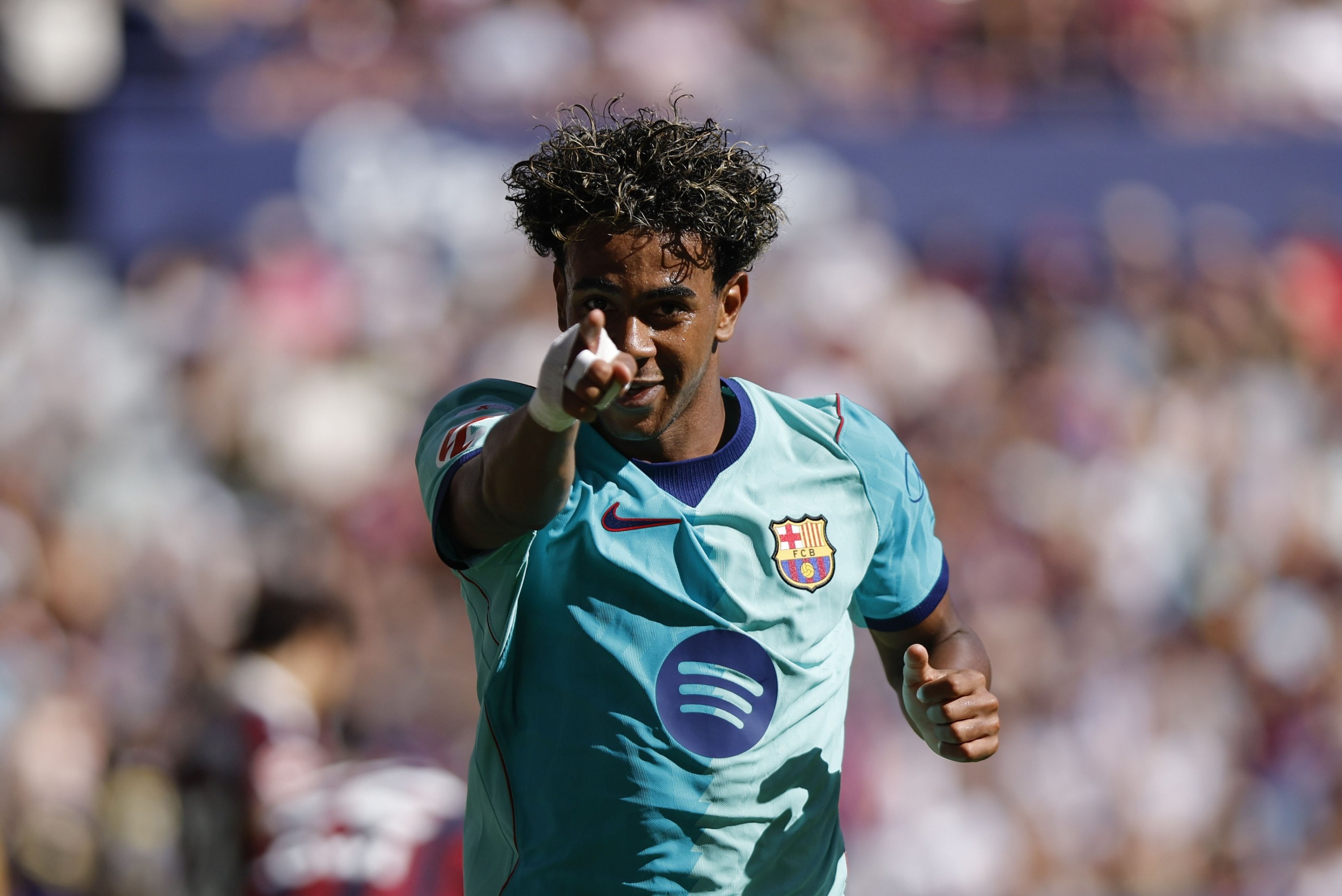
His argument for the award is built around both individual production and major trophies.
Barcelona won La Liga and the Spanish Super Cup last season, while Real Madrid ended the campaign without a major trophy. Yamal also played a prominent role in Spain’s World Cup triumph in North America, adding the biggest international prize in football to his growing collection of honors.
That success has strengthened the case for Yamal, who finished second in last year’s Ballon d’Or voting behind Paris Saint-Germain forward Ousmane Dembele.
At 19, Yamal is again among the leading contenders and could become the youngest player to win the award if he prevails in London on Oct. 26.
Mbappe, however, has made an equally forceful case despite Real Madrid’s lack of silverware.
The France international scored 15 goals in the Champions League and 25 in La Liga before adding to his World Cup tally. He also became the tournament’s all-time leading scorer, although France’s campaign ended with a 2-0 semifinal defeat by eventual champion Spain.
Speaking to France Football, Mbappe argued that the Ballon d’Or is an individual award and should not be determined solely by team trophies.
“I believe I can win it this year. It’s one of my goals, and a short-term one at that,” Mbappe said. “People say I didn’t win a trophy for club or country, but it’s an individual award.”
Mbappe was even more emphatic when asked whether he believed anyone had outperformed him.
“There was no player better than me,” he said.
He pointed to his scoring record in the biggest competitions, particularly his World Cup achievement, as evidence that his individual performances deserve recognition.
“My idea of the Ballon d’Or comes from the Messi and Ronaldo era. You don’t give it to ordinary players, you give it to players who are different,” Mbappe said. “I think I did things that were different this year, so I believe I can win it.”
Becoming the World Cup’s leading scorer was particularly significant for Mbappe because he surpassed Lionel Messi’s previous mark.
“It’s fantastic. That kind of achievement is different,” he said.
The contrasting arguments have created a compelling Ballon d’Or race. Yamal has the stronger trophy case, with domestic and World Cup honors, while Mbappe can point to extraordinary scoring numbers across the Champions League, La Liga and World Cup.
Other major contenders remain in the running, including Bayern Munich striker Harry Kane, reigning winner Dembele and former winner Rodri, while Jude Bellingham and Erling Haaland are also among the nominees.
Kane has emerged as another strong contender after a prolific season, while Dembele’s Champions League success with PSG gives him a compelling case to retain the award.
Yamal has previously played down the idea of actively campaigning for the prize, saying he would not beg for votes despite believing he had enjoyed an exceptional season. His latest comments, however, leave little doubt about where he stands.
With the ceremony approaching, the Barcelona teenager is making his case on the basis of winning. Mbappe is making his on individual brilliance.
The final decision will be made by journalists voting on the 30-player shortlist, with performances, consistency and major achievements all forming part of the assessment.
Top-seeded Alexander Zverev beat American Ben Shelton in four sets Sunday to win the U.S. Open, erasing the sting of a missed chance six years ago.
The German squandered a two-set lead in the 2020 title match against Austrian Dominic Thiem but now armed with a champion’s mentality following his breakthrough triumph at Roland Garros in June, he broke American hearts with a devastating display against Shelton.
“I think God has seen how hard we worked, how much we suffered, how much pain we went through and I think 2026 is the outcome of all the years that happened before,” Zverev said during the presentation ceremony.
The home fans were desperate to see Shelton end a 23-year American men’s Grand Slam drought but the eighth seed never found his top form in his first major final.
“I know that today 99.9% of the people wanted Ben to win so I’m very sorry,” said Zverev. “Even though I know that the crowd was against me, the crowd was always incredibly fair and we as players we appreciate it.”
Zverev was so focused on the job at hand, he did not even realize he had won the title when Shelton smacked a service return long.
As the umpire announced “Game, set and match Zverev,” the German headed back to the baseline, ready to receive Shelton’s serve.
It took him a few seconds to register why the cheering fans were giving him a standing ovation – as he belatedly cracked a smile and ran to the net to embrace Shelton.
He was beaming again as he was handed a Grand Slam record $5.5 million winner’s prize.
Zverev gets hot start
In a battle between two of tennis’ most explosive players, it was Zverev who had all the early firepower, as Shelton’s inexperience showed with a double fault on break point in the opening game.
Shelton produced one of the points of the match in the sixth game, scrambling to reach a drop shot and prevailing in a tense exchange at the net.
Encouraged by his team, the American mixed in serve-and-volley tactics in an attempt to shift the momentum, but the move proved ineffective and he handed Zverev the set with a double fault.
The partisan crowd tried to get under Zverev’s skin in the second set, cheering wildly after he produced a double fault in the ninth game. But the German refused to get distracted, surging to a 5-0 lead in the tiebreak as the fans desperately chanted “Let’s go, Ben!”
Zverev looked like he would roll to the finish line in the third set as he saved a break point in the sixth game with a lethal backhand winner.
Shelton’s frustration boiled over two games later when he slipped and crashed to the court, prompting the American to let out an expletive.
But Shelton dug in his heels, subduing his opponent with a series of powerful ground strokes from the baseline to break serve and force a fourth set.
Shelton’s resilience only delayed the inevitable as Zverev came through a 25-shot rally to secure an early break in the deciding set. He never let go of that advantage as he finally got the chance to hoist the U.S. Open trophy on his 11th appearance at the hard court major.
“My successes are a gift, the failures are a gift, and being here playing in front of you guys is a gift,” said Shelton, the first Black American man in 54 years to contest the New York final after Arthur Ashe.
His girlfriend, Olympic champion footballer Trinity Rodman, made it to his player’s box after racing 200 miles from her Washington Spirit game, which largely overlapped with the start of his match.
‘Jannik still ahead’
The victory will no doubt help Zverev move beyond a series of Grand Slam disappointments. The German’s career has also been overshadowed by allegations of domestic violence, which he has repeatedly denied.
His two majors this season have made a dent in the duopoly of Carlos Alcaraz and Jannik Sinner, who won all eight Grand Slam titles across 2024 and 2025.
Alcaraz, who won this year’s Australian Open, exited the U.S. Open in a quarterfinal defeat by Shelton after a long injury layoff while Sinner pulled out injured before the tournament began after winning Wimbledon.
Asked if he considered himself the world’s top player now, Zverev said, “With Jannik Sinner being injured and Carlos Alcaraz coming back from injury after four months, right now this moment, probably yes.
“Both of them healthy and both of them at the top of their game, maybe not.
“If everyone is healthy, I think Jannik is still ahead. It’s as simple as that.”
Real Madrid coach Jose Mourinho hailed his Turkish playmaker Arda Güler Monday ahead of the team’s visit to face Elche in La Liga Tuesday.
The Turkish midfielder came on as a substitute in Madrid’s 4-1 win over Rayo Vallecano Saturday and helped steady the team when they were wobbling under pressure.
Güler is not assured of a starting place at Madrid, with Kylian Mbappe, Vinicius Junior and Jude Bellingham all part of Mourinho’s regular side.
The 21-year-old is competing with record signing Yan Diomande and Brahim Diaz among others for minutes, ahead of the central midfield duo.
“There are people more qualified than me to talk about his development, people who have been here since he arrived, about how he’s transformed physically,” Mourinho told reporters.
“But for me, his quality of play is incredible – his vision, his decisionmaking, his playmaking, the stability he brings to the team, his creativity … For me, he’s a player with fantastic potential who already has some very impressive stats,” he said.
Güler has shown he has a strong link with Mbappe on the pitch, regularly combining well with the French forward, including for Madrid’s fourth goal against Rayo.
Mourinho, however, said he would not go completely overboard with praise for Güler, who arrived from Turkish Süper Lig side Fenerbahçe in 2023.
“Maybe I don’t want to go so far as to say ‘top, top, top’ three times, but I can definitely say ‘top, top,'” joked the Portuguese coach.
One player still looking for his best form at Madrid is Vinicius.
The Brazilian winger has scored one goal this season and Mourinho reiterated his view that Vinicius is still not at his best.
“The best version of him is scoring goals. Obviously, assisting is important, working for the team is very important. Commitment, solidarity, and teamwork are very important,” said Mourinho.
“But there’s another Vinicius, the Vinicius who arrived in Lisbon last season (in the Champions League) and in close matches, in the knockout rounds, gets one chance, scores a goal and that’s it.
“He’s lacking that top-level performance lately, but I am happy with him.”
Second-placed Madrid trail La Liga leaders Barcelona, who boast a 100% record, by three points.


-

 Economy3 days ago
US-Canada trade war reshapes Canadian supermarket shelves
-

 Economy20 hours ago
Trump shifts US military aid toward Latin American allies
-

 Politics3 days ago
Turkish police detain 20 in FETÖ infiltration raids in 6 provinces
-
 Politics3 days ago
Erdoğan vows to shield Türkiye from regional turmoil
-
 Politics3 days ago
AK Party makes local gains as 4 mayors, 3 CHP councilors switch sides
-

 Economy24 hours ago
Oil surges as attacks, pipeline outage worsen Saudi supply woes
-
 Politics3 days ago
FM Fidan discusses attacks on oil pipeline with Saudi counterpart
-
 Economy2 days ago
Türkiye completes production of spacecraft for 1st Moon mission