
Politics
Türkiye’s Fidan heads for Qatar to discuss bilateral, regional issues

Foreign Minister Hakan Fidan will visit Qatar Tuesday for talks expected to focus on preparations for a high-level strategic meeting, regional security and Israel’s genocidal war on Gaza, Turkish Foreign Ministry sources confirmed Monday.
During the visit, Fidan is expected to review preparations for the 12th meeting of the Türkiye-Qatar High Strategic Committee, set to be held in Türkiye later this year under the chairmanships of Turkish President Recep Tayyip Erdoğan and Qatari Emir Sheikh Tamim bin Hamad Al Thani, according to the sources.
The talks are also expected to cover Türkiye’s support for Qatar following Iranian attacks in March and April, the sources said. Fidan is also expected to underline Ankara’s sensitivity over restoring freedom of navigation in the Strait of Hormuz, describing it as critical to regional security and economic stability.
The minister is also expected to emphasize that recent regional developments have once again demonstrated the growing importance of Türkiye-Qatar military and defense cooperation. He is also expected to underline how joint efforts on connectivity carry strategic importance for regional stability.
The sources said Fidan will stress that bringing down tensions in the Gulf to a lasting end remains an urgent priority and will exchange views on ongoing diplomatic initiatives.
The meetings are also expected to focus on Israel’s actions in the region, including its operations in Gaza and the occupied West Bank. Fidan is expected to call for stronger joint efforts, based on regional ownership, to address conflicts and disputes, and urge that Israel’s actions and the humanitarian crisis in Gaza be brought to the attention of the international community.
He is also expected to warn against the policies of Prime Minister Benjamin Netanyahu’s government that claim Türkiye undermines peace efforts. He is also expected to emphasize the importance of preserving Lebanon’s sovereignty and territorial integrity amid Israeli attacks.
Türkiye and Qatar established a strategic partnership in 2014 and their High Strategic Committee has met annually since 2015. The two countries have signed 115 agreements through 11 committee meetings.
Bilateral trade reached $1.15 billion in 2025, with both countries aiming to raise the volume to $5 billion. To that end, a trade and economic partnership agreement entered into force on Aug. 1, 2025.
Fidan last visited Qatar on March 19, 2026.

Türkiye is expected to bring a long-awaited framework bill to Parliament next week as part of its “terror-free Türkiye” initiative, establishing the legal basis for the disarmament of the PKK terrorist group and the return of its members from their camps in the region, while creating a parliamentary oversight mechanism to monitor the process.
Behind-the-scenes negotiations have intensified following consultations by Parliament Speaker Numan Kurtulmuş with political party leaders to finalize the scope of the legislation and secure its swift passage through the Parliament. Kurtulmuş is expected to hold another round of meetings with party representatives in the coming days.
The proposed legislation is expected to establish a Monitoring and Coordination Board, which will oversee the PKK’s disarmament and the evacuation of its camps and caves.
Chaired by the vice president, the board will include officials from relevant ministries and technical experts. It will prepare verification reports addressing key questions, including how many weapons have been surrendered, how many PKK members have returned to Türkiye, and the overall situation on the ground. The reports will be submitted to Parliament every six months.
Subcommittees operating under the board will also be established to monitor former PKK members who return to Türkiye after laying down their arms, with the aim of preventing any renewed involvement in terrorist activities.
The draft legislation does not include any legal provisions or amnesty for the PKK’s senior leadership.
Instead, discussions have focused on relocating senior PKK figures leaving the group’s headquarters in Iraq’s Qandil Mountains to Sulaymaniyah, a city administered by the Patriotic Union of Kurdistan (PUK), rather than allowing them to move to a third country. Turkish authorities are expected to coordinate with Iraq’s Kurdistan Regional Government (KRG) to closely monitor those individuals.
The arrangement is intended to clarify the legal and practical status of senior PKK leaders who are not eligible to return to Türkiye.
Last week, Kurtulmuş launched consultations with political parties involved in the process, beginning with Nationalist Movement Party (MHP) leader Devlet Bahçeli, who is widely regarded as the architect of the initiative.
In 2024, Bahçeli publicly called on imprisoned PKK leader Abdullah Öcalan to urge the group to lay down its arms. Öcalan issued such a call in February 2025, after which the PKK announced its decision to dissolve. Turkish security authorities, however, have not yet officially confirmed the group’s complete disarmament, a key condition of the initiative.
Later the same day, Kurtulmuş met with representatives of the PKK-linked Peoples’ Equality and Democracy (DEM) Party, whose members have acted as intermediaries between Öcalan and Turkish authorities during the process. Before the meeting, a DEM Party delegation had visited Öcalan at his prison on Imralı Island near Istanbul, where they conveyed his latest message to the public.
Kurtulmuş concluded Tuesday’s consultations with a meeting with Republican People’s Party (CHP) leader Kemal Kılıçdaroğlu. The closed-door meeting at Parliament lasted about one hour.
On Wednesday, Kurtulmuş continued his consultations with Good Party (IP) leader Müsavat Dervişoğlu. The meeting, held behind closed doors at Dervişoğlu’s parliamentary office, lasted about 50 minutes and was also attended by IP deputy parliamentary group chairs Uğur Poyraz and Turhan Çömez.
Speaking afterward, Dervişoğlu criticized what he described as major decisions being made “under inappropriate circumstances” and behind closed doors.
Kurtulmuş later met with senior officials from the ruling Justice and Development (AK Party) in a closed-door meeting that lasted about one hour.
Following the meeting, AK Party Deputy Chairman Efkan Ala, who has played a key role in the consultations, declined to specify when the legislation would be introduced.
“We are holding discussions, and those discussions are continuing. Everyone is working on it,” Ala told reporters.
Turkish leaders on Friday marked the sixth anniversary of the reopening of Istanbul’s Hagia Sophia as a mosque with commemorative messages, while authorities announced a new phase in the landmark’s ongoing restoration.
President Recep Tayyip Erdoğan said Hagia Sophia had regained its “original identity” six years ago after an 86-year hiatus.
“Hagia Sophia regained its original identity six years ago today after 86 years of longing,” Erdoğan said in a social media post. “God willing, this blessed place of worship will continue to fill our skies with the call to prayer forever. May the revival of Hagia Sophia be blessed.”
Parliament Speaker Numan Kurtulmuş described the reopening as “not only the restoration of a place of worship but also a powerful expression of embracing our history and civilization.”
In a separate social media post, Kurtulmuş called Hagia Sophia Grand Mosque “one of the strongest symbols of a nation’s will engraved in history and its loyalty to a centuries-old trust.”
Nationalist Movement Party (MHP) leader Devlet Bahçeli also commemorated the anniversary, saying the reopening of Hagia Sophia for worship would continue to frustrate what he described as domestic and foreign opponents.
Erdoğan’s foreword
Erdoğan also wrote the foreword to a newly published trilingual collection on Hagia Sophia, released Friday by Demirören Publishing in Turkish, English and Arabic.
In the foreword, Erdoğan said he believed Hagia Sophia would continue to illuminate humanity’s shared conscience and cultural memory beyond serving as a place of worship.
“Hagia Sophia Grand Mosque, which filled the skies with the call to prayer for centuries and left an eternal echo in hearts, regained its original identity through the will of the nation on July 24, 2020, in keeping with the spirit of the conquest,” he wrote.
Erdoğan described Hagia Sophia as not only a place of worship but also “a monumental symbol of the nation’s historical consciousness, civilizational vision, strength of faith and the spirit of the conquest.”
The publication, titled “The Seal of the Conquest: Hagia Sophia Grand Mosque,” presents the site’s architectural, cultural and spiritual heritage through photographs and visual documentation.
Restoration enters new phase
Separately on Friday, the Culture and Tourism Ministry’s General Directorate of Foundations said the most extensive conservation, restoration and structural reinforcement project in the monument’s Republican-era history has entered a new stage.
Authorities have begun covering the temporary steel roof erected above the main dome with a high-security protective membrane to allow restoration work to continue safely.
Culture and Tourism Minister Mehmet Nuri Ersoy said the project is being carried out under the guidance of a scientific advisory board to protect the historic structure from weather conditions while preserving its original fabric.
“The mosaics are being secured, and all work is being carried out with great care without damaging the original structure,” Ersoy said in a social media statement marking the anniversary.
He said Türkiye remained committed to preserving Hagia Sophia through scientific conservation methods and passing it on to future generations.
“Hagia Sophia, one of the most valuable legacies of our civilization, will continue to live forever with the call to prayer, with prayers and with all its magnificence,” Ersoy said.
Authorities said comprehensive technical analyses concluded that the main dome requires structural reinforcement.
To carry out repairs to the dome’s lead covering and implement reinforcement measures, the existing lead panels will be removed for restoration or replacement. At the same time, conservation, restoration and strengthening work will be carried out on the interior mosaics.
Because the lead covering must be removed, officials decided to temporarily shield the dome with a steel structure and a protective membrane to prevent weather damage and protect the mosaics during construction.
The gray protective covering, selected to blend with the dome’s appearance, was chosen by a scientific advisory board of academics and conservation specialists following technical evaluations. It is made from flame-retardant material that meets high fire safety standards.
Engineers also completed structural calculations to ensure the temporary roof could withstand its weight and wind loads without affecting the monument.
Officials said the temporary protection system was carefully designed to avoid damaging the building’s historic fabric while allowing restoration work to proceed safely on both the interior and exterior of the dome.
Hagia Sophia Grand Mosque will remain open to worshippers and visitors throughout the restoration project.
Originally built as a church, Hagia Sophia served as a Christian place of worship for 916 years before being converted into a mosque following the Ottoman conquest of Constantinople in 1453. It became a museum under a 1934 Cabinet decree.
On July 10, 2020, Türkiye’s Council of State annulled the 1934 decree that had converted Hagia Sophia into a museum. Erdoğan signed a presidential decree the same day transferring the site to the Presidency of Religious Affairs and reopening it for Muslim worship.
The first Friday prayers at Hagia Sophia in 86 years were held on July 24, 2020, with Erdoğan among those attending.
Ninety lawmakers, led by former Republican People’s Party (CHP) leader Özgür Özel, resigned from Türkiye’s main opposition party on Friday, formalizing the biggest split in the party’s recent history and paving the way for the launch of a new political movement.
The resignations came days after Özel announced during his final CHP parliamentary group meeting on Tuesday that he would establish a new political party following a prolonged internal leadership dispute.
Özel signed the founding documents of the new party on Friday, officially initiating the legal process for its establishment.
The new political movement will be called the “New Party” (Yeni Parti). A total of 91 lawmakers who resigned alongside Özel joined the party’s founding board.
The party’s registration documents were scheduled to be submitted to the Interior Ministry later in the day.
Özel also updated the biography on his X account, replacing it with a photo of himself standing on a tractor in the central province of Yozgat alongside the logo of the “New Party,” a portrait of Mustafa Kemal Atatürk and the quote, “The peasant is the master of the nation.”
Speaking to reporters outside the First Turkish Grand National Assembly building after Friday prayers at Hacı Bayram Mosque in Ankara, Özel said the party had officially submitted its founding documents and received the registration certificate.
“With our 91 lawmakers, we are now heading to the Anadolu Club, which was established 100 years ago under the instructions of Mustafa Kemal Atatürk. There, the Founding Board will hold its first meeting to elect the party chair and other governing bodies,” he said.
“By the end of the day, we will have announced the New Party, its Party Assembly, its chairperson and informed Parliament that our parliamentary group has been established,” he noted.
He added that the New Party would participate in the upcoming budget negotiations as the main opposition “for the first and last time,” pledging that the party would eventually form a government that would deliver prosperity and stability.
On the other hand, the developments will significantly reshape the balance of power in Parliament.
The CHP, which currently holds 135 seats, will drop to 44 after the departure of the 91 lawmakers. As a result, the CHP will lose its status as the main opposition party, while Özel’s New Party will become Parliament’s largest opposition force by seat count.
The seating arrangement in the General Assembly is expected to be reorganized, and the number of parliamentary groups will increase to seven.
The breakaway follows months of internal turmoil within the CHP after Kemal Kılıçdaroğlu returned to the party leadership following a court ruling that invalidated the previous party congress, a decision widely referred to in Turkish political circles as the “absolute nullity” ruling.
CHP spokesperson, Müslim Sarı, told reporters on Wednesday that the new party being established by Özel was no different from the CHP in terms of its policies, pointing to Özel’s recent speech in which he said the new party would adhere to the same principles as the CHP. “If you are going down the same path, why do you need a new party?” he questioned.
“It seems like they are more interested in having a seat in a new party than advancing their policies,” he stressed.
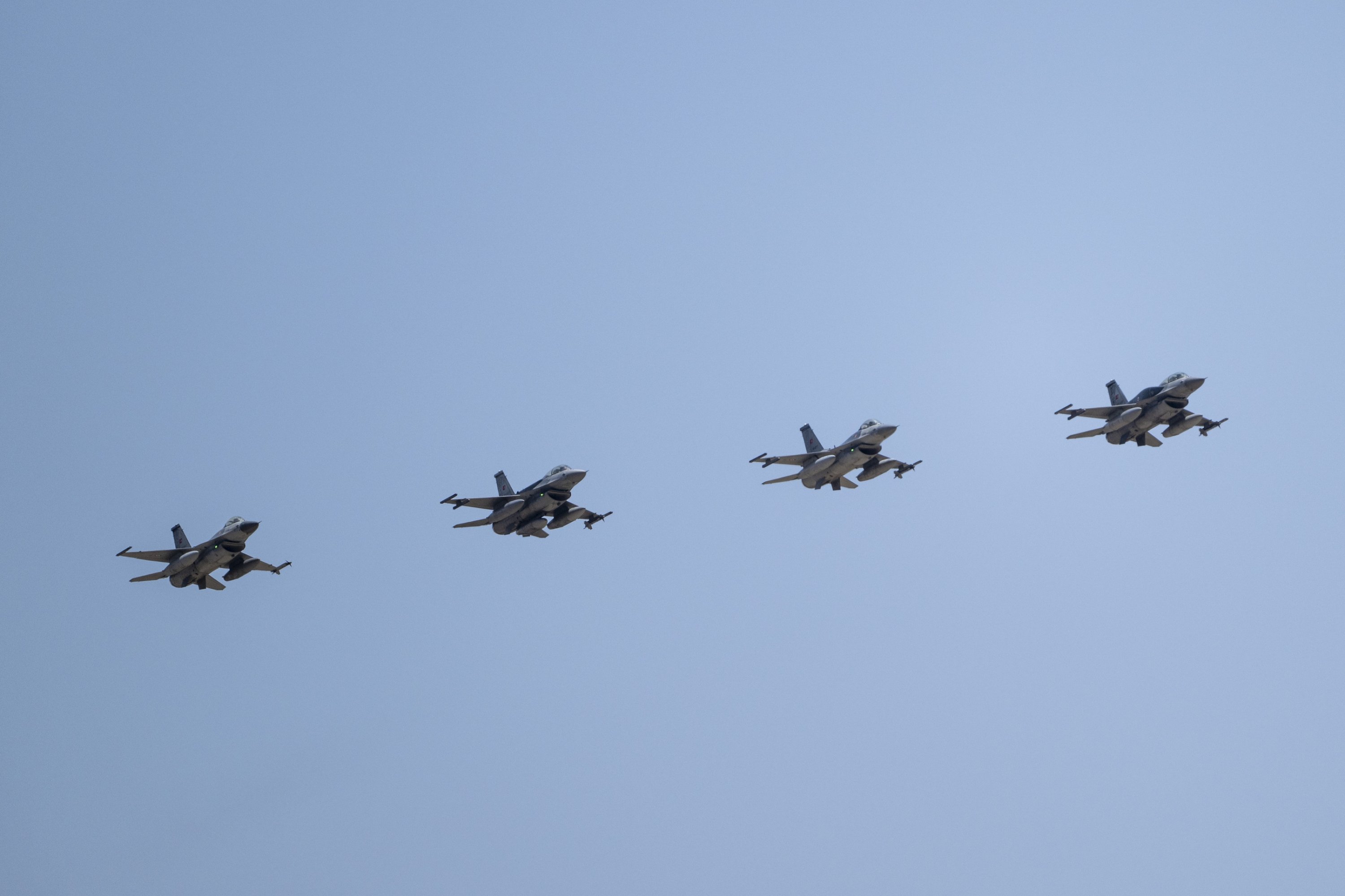
Five F-16 fighter jets and 76 crew members will soon fly to Estonia as the Turkish air force prepares to undertake an air policing mission in the Baltic region as part of a NATO operation.
The jets and their personnel continue preparations for the important task, which comes amid heightened concerns about the risk of the Russia-Ukraine conflict spilling over into the region. Also known as the “Pars (Leopard) Squadron,” the unit is currently based at its home base in Diyarbakır, southeastern Türkiye. Key NATO ally Türkiye often offers its services for the alliance’s air policing missions in Europe. This time, the squadron will be stationed at Amari Air Base in Estonia, which does not have its own fighter jets, unlike the other Baltic countries, Lithuania and Latvia.
The crews will be in Estonia from August to November for round-the-clock Quick Reaction Alert missions, keeping watch for airspace violations.
The squadron’s commander, Lt. Col. Özdemir, told Anadolu Agency (AA) on Sunday that air policing is a peacetime air defense activity.
“It is strategically important for the defense of NATO’s eastern flank. It will make important contributions to Türkiye, particularly by strengthening international deterrence, promoting joint operations with allied forces and helping them enhance their strategic capabilities,” he said.
He noted that the 181st Jet Squadron Command, to which Pars belongs, is one of the oldest and largest strike forces in eastern Türkiye.
Özdemir said their mission would mainly consist of monitoring airspace violations and responding to unidentified aerial vehicles.
“Pars is a squadron that has repeatedly proven itself in both domestic and international missions. We are confident that we will perform this task in the best possible way and represent Türkiye in the Baltic skies,” he added.
First Lt. Özmen, a member of the squadron, said the Turkish Air Force ranks above its peers thanks to tough, disciplined and continuous training.
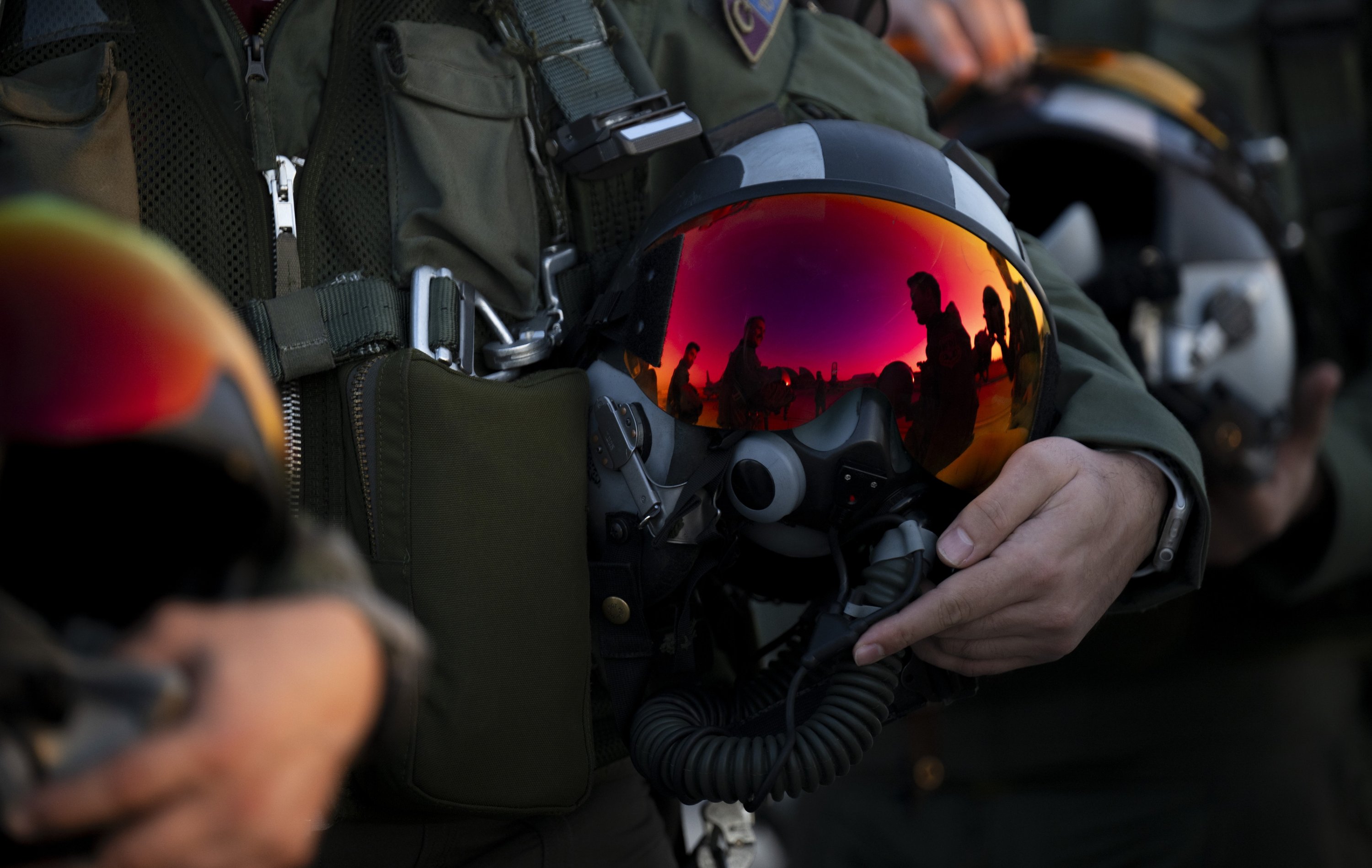
“This is certainly not solely the success of pilots. Behind all our accomplishments are crews, from maintenance workers to air traffic controllers, from planning officers to backup personnel, who devote their lives to these missions and demonstrate a strong team spirit,” Özmen said.
Under NATO’s Baltic Air Policing mission, the security of the Baltic skies has been provided by NATO member countries since 2004, when Estonia, Latvia and Lithuania joined the alliance.
NATO member countries with the necessary capabilities voluntarily contribute to the Baltic Air Policing mission, with responsibility rotating every four months.
Since the mission was first deployed in 2004, participating NATO fighter jets have been stationed at Siauliai Air Base in Lithuania.
Since 2014, NATO aircraft have also been deployed at Amari Air Base in Estonia, while they have also been able to operate from Lielvārde Air Base in Latvia since 2024.
As part of NATO’s Air Policing mission, the Turkish Air Force successfully completed Enhanced Air Policing missions in Poland from July 6 to Sept. 15, 2021, and in Romania from Nov. 30, 2023, to April 2, 2024. Türkiye is also scheduled to take on the air policing mission in Romania from December 2026 to March 2027.
Türkiye on Thursday condemned an Israeli minister’s raid to the Al-Aqsa Mosque compound alongside far-right figures, urging the international community to prevent attempts to alter the site’s historical and legal status.
In a statement, the Foreign Ministry said it “condemns in the strongest terms” the raid, warning that such actions threaten the historical and legal status of the holy sites in Jerusalem.
The ministry called on the international community to prevent provocative acts and attempts by Israeli Prime Minister Benjamin Netanyahu’s government to create “faits accomplis” that undermine the longstanding status of Jerusalem’s holy sites, particularly Al-Aqsa Mosque.
It reiterated Türkiye’s position that Al-Aqsa Mosque is a place of worship exclusively for Muslims and stressed that preserving its historical and legal status is a shared responsibility of the international community.
Communications Director Burhanettin Duran and ruling Justice and Development Party (AK Party) spokesman Ömer Çelik also condemned an Israeli minister’s raid on the Al-Aqsa Mosque compound, saying the move violated the site’s historic status and risked further inflaming tensions in the region.
Duran said attempts to undermine the historic and legal status of Jerusalem and Al-Aqsa Mosque were unacceptable and warned that such unilateral actions by the Israeli government would further escalate tensions and damage prospects for lasting peace.
“Such unilateral actions by Netanyahu’s genocidal government aimed at eroding the historical and legal status of Jerusalem only further escalate tensions in the region and undermine hopes for lasting peace.”
Reaffirming Türkiye’s longstanding position, Duran said preserving the historic status of Jerusalem and Al-Aqsa Mosque is a responsibility shared by the international community, adding that Ankara would continue to support the legitimate rights of the Palestinian people and defend Jerusalem’s status under international law.
“Under the leadership of our President, Recep Tayyip Erdoğan, Türkiye will continue to firmly defend the legitimate rights of the Palestinian people and the status of Jerusalem under international law,” Duran said.
In a separate statement, AK Party Deputy Chair and spokesperson Ömer Çelik also condemned the visit, saying the protection of Al-Aqsa Mosque’s legal and historical status is “the responsibility of all humanity.”
Far-right Israeli National Security Minister Itamar Ben Gvir visited the Al-Aqsa Mosque compound on Thursday with hundreds of Israeli Jews, drawing criticism over what was described as a violation of the site’s longstanding status quo.
Israeli Diaspora Affairs Minister Amichai Chikli said on Wednesday that Israel should prepare for the possibility of a future confrontation with Türkiye, arguing that direct military contact between the two countries was “not an impossible scenario.”
Speaking at a conference in west Jerusalem, Chikli said a direct encounter between the Israeli and Turkish militaries could occur at sea, adding that such a scenario could happen “even tomorrow morning.”
Türkiye in the past two decades has developed an independent defense industry capable of operating in open waters, thereby shifting geopolitical balances in its favor. The navy plays a critical role in ensuring the security of maritime trade routes in the Eastern Mediterranean, the Black Sea and the Aegean Sea, promoting regional stability.
In the past two decades, the country has reached a milestone by designing and producing its own warships. The TCG Heybeliada, the first indigenous corvette, was commissioned in 2011, followed by projects for indigenous frigates and destroyers.
The ADVENT combat management system, developed domestically, represents a significant achievement, enhancing the capabilities of the Turkish navy. In 2024, the country commissioned its first of six planned Reis-class submarines. The project for the Piri Reis submarine, the first of its class, was launched in 2019. It has a length of 68.35 meters (224.25 feet) and a capacity of 40 personnel.
Moreover, Israeli daily Israel Hayom reported that Israeli policymakers are increasingly focused on Türkiye’s growing regional role, arguing that Ankara has gained greater room to expand its influence as Iran’s regional position has weakened.
The newspaper said some Israeli analysts view Türkiye, backed by Qatar, as a leading force in a reshaping regional bloc and urged Israel to adapt its long-term security strategy accordingly.
According to the report, analysts called on Israel to reduce its dependence on the United States in defense procurement, strengthen domestic military capabilities and pursue new regional partnerships to address evolving geopolitical challenges.
The report also claimed Türkiye has expanded its influence across several conflict zones in the Middle East and is seeking to increase its strategic weight in regional trade and security, assertions that reflect the views of the analysts cited by the newspaper.
Relations between Türkiye and Israel have deteriorated sharply since the outbreak of the Gaza war, with Ankara strongly criticizing Israel’s military campaign and suspending bilateral trade. The two countries have also exchanged increasingly sharp rhetoric over regional security issues, including developments in Syria and the Eastern Mediterranean.


-
 Daily Agenda1 day ago
Fatih Altaylı confessed at the prosecutor’s office: He accepted broadcasts in support of AHBAP! “We knew he was addicted to gambling”
-
 Daily Agenda2 days ago
Brawl between Özgür Özel and Kemal Kılıçdaroğlu supporters! Mustafa Sarıgül kicked the citizen who reacted
-
 Daily Agenda2 days ago
Message from Minister of Justice Gürlek about the February 6 earthquake: They tried to overshadow the power of our state
-
 Daily Agenda3 days ago
AK Party MKYK member Hamza Dağ: The party founded by Özgür Özel does not have a new political understanding
-
 Daily Agenda3 days ago
The concept of “Productive Health” is coming to life! Minister Memişoğlu announced: We are waiting for everyone who says ‘I also have an idea’
-
 Economy3 days ago
2 Chinese supertankers apparently escape Houthis’ Red Sea blockade
-

 Daily Agenda2 days ago
CHP leader Hürriyet and 19 people were arrested
-
 Politics2 days ago
Erdoğan touts unity on anniversary of Erzurum Congress