
Economy
Central banks navigate uncertainty, global risks, Trump’s tariffs

Major central banks around the globe are heading to a week of their respective committee meetings, trying to stay firm on their policy path and goals of keeping inflation at bay in the face of ever-growing risks – from U.S. President Donald Trump’s tariffs to fresh conflict in the Middle East.
The U.S. central bank will lead the way and is likely to announce after the second day of its meeting on June 18 that it would keep interest rates unchanged for a fourth straight time, despite Trump’s push for rate cuts, as officials contend with uncertainty sparked by the Republican’s tariffs.
While the independent U.S. Federal Reserve (Fed) has started lowering rates from recent highs, officials have held the level steady this year as Trump’s tariffs began rippling through the world’s biggest economy.
The Fed has kept interest rates between 4.25% and 4.50% since December, while it monitors the health of the jobs market and inflation.
“The hope is to stay below the radar screen at this meeting,” KPMG chief economist Diane Swonk told Agence France-Presse (AFP).
“Uncertainty is still very high.”
“Until they know sufficiently, and convincingly that inflation is not going to pick up” either in response to tariffs or related threats, “they just can’t move,” she said.
Later during the week, the Bank of England (BoE), the Central Bank of the Republic of Türkiye (CBRT), and the Bank of Japan (BOJ) would also share their decisions on the interest rates.
Both the BoE and the Turkish central bank have their monetary policy meetings (MPC) on Thursday at midday, while Japanese policymakers would gather on Friday.
The Bank of England has cut the U.K.’s official interest rate by a quarter point to 4.25% last month as it sees the potential impact of U.S. tariffs on growth.
Despite a divided 5-4 vote in favor of cutting borrowing costs, this decision has proven to be timely, as recent data showed that the output of the British economy contracted by 0.3% in April, the same month in which Trump introduced his sweeping tariffs on most nations.
Economists, however, expect the bank to pause its easing this week.
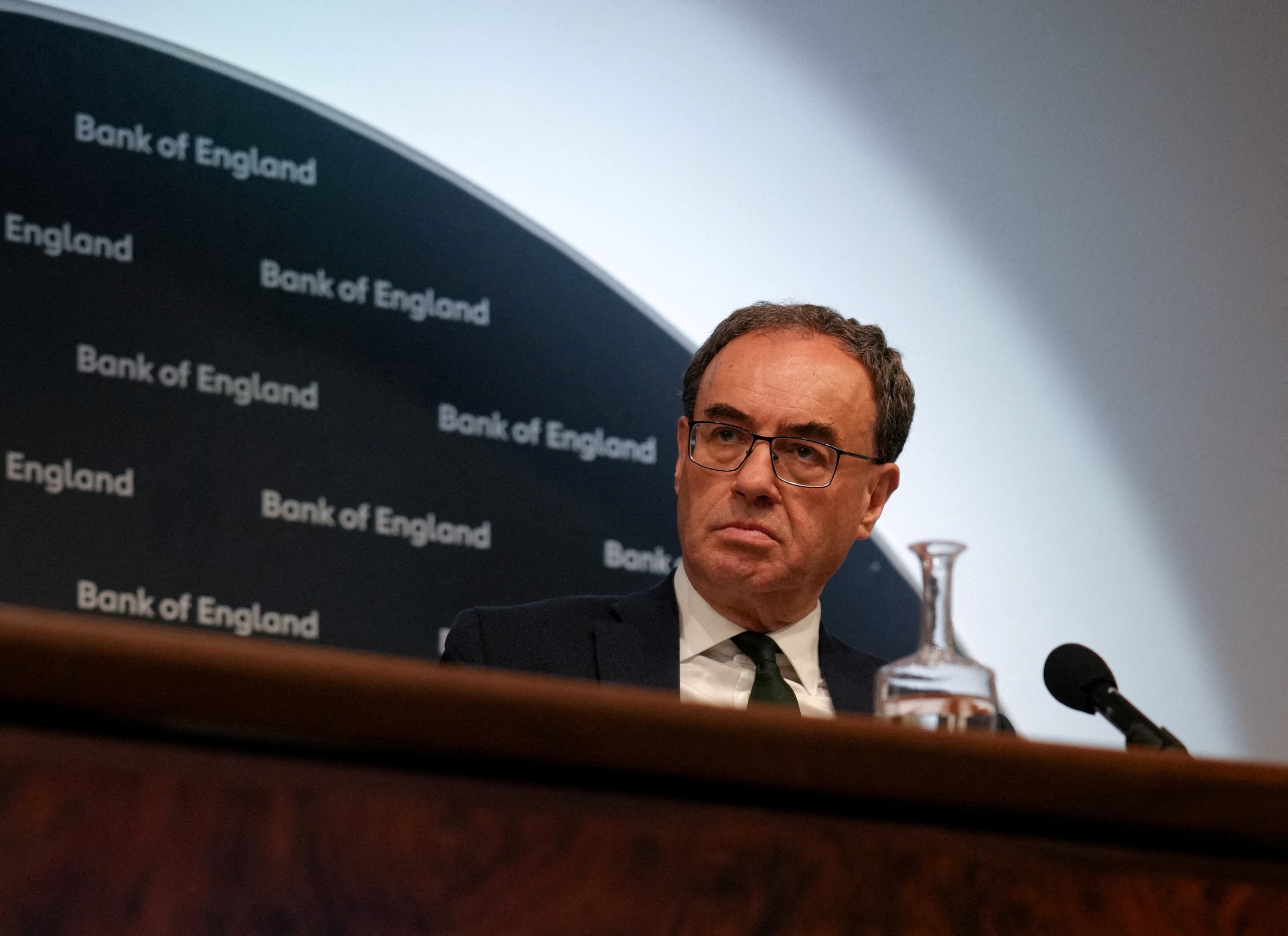
All 60 economists polled by Reuters expect the BoE to keep rates on hold at 4.25% this month, and almost all expect the next quarter-point rate cut to come in August.
So far, the central bank has taken what it calls a “gradual and careful” approach to cutting rates due to persistent inflation pressures and wage growth, only reducing rates four times, or every quarter, since August 2024.
Since returning to the presidency, Trump has slapped a 10% tariff on most U.S. trading partners, including the U.K. and Türkiye.
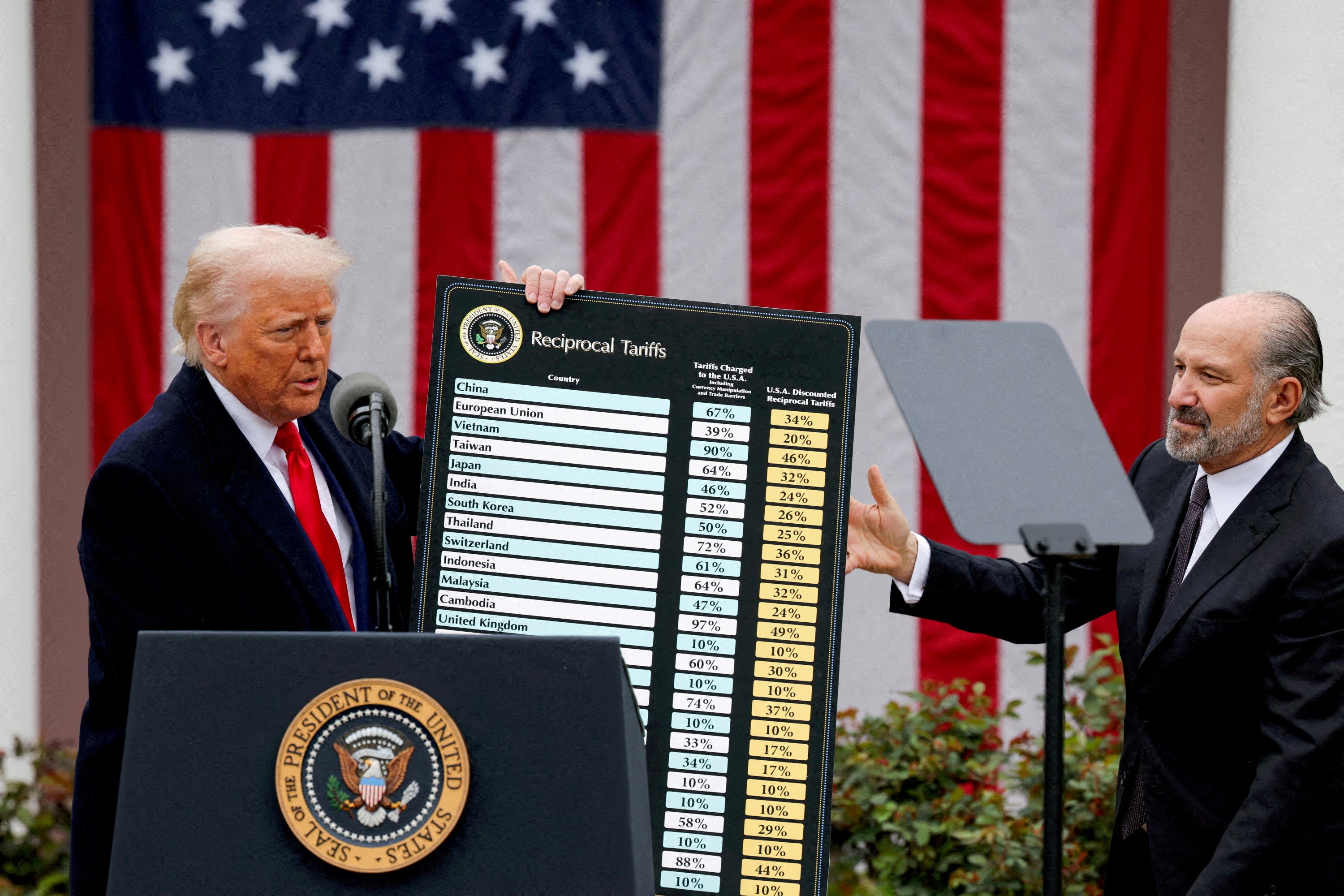
Higher rates in dozens of economies will take effect in July, unless an existing pause is extended.
Trump has also engaged in a tit-for-tat tariff war with China and imposed levies on steel, aluminum and automobile imports, rattling financial markets and tanking consumer sentiment.
Major financial institutions from the World Bank to the Organisation for Economic Co-operation and Development (OECD) have warned of a slowdown in global economic growth due to levies and accompanying uncertainty, which makes it difficult for companies and investors to plan long-term.
The World Bank in its latest report lowered the global growth forecast for 2025 by four-tenths of a percentage point to 2.3%, citing that higher tariffs and heightened uncertainty posed a “significant headwind” for nearly all economies. It projected that the global economy was set for its worst run since the 2008 financial crisis.
Coupled with other risks, including impacts on energy markets from fresh conflict between Israel and Iran, Israel’s ongoing Gaza attacks, as well as the Russia-Ukraine war, the central banks thus find themselves in a constant precautionary state with less space for maneuver.
CBRT likely to keep rate unchanged
The Turkish central bank is also expected to keep the policy interest rate unchanged this week, according to a recent poll by the Anadolu Agency (AA).
Despite inflation easing to the lowest since late 2021, the CBRT is likely to maintain rates at 46%, according to 19 of 23 economists polled by AA. Others projected a rise ranging from 100 to 350 basis points.
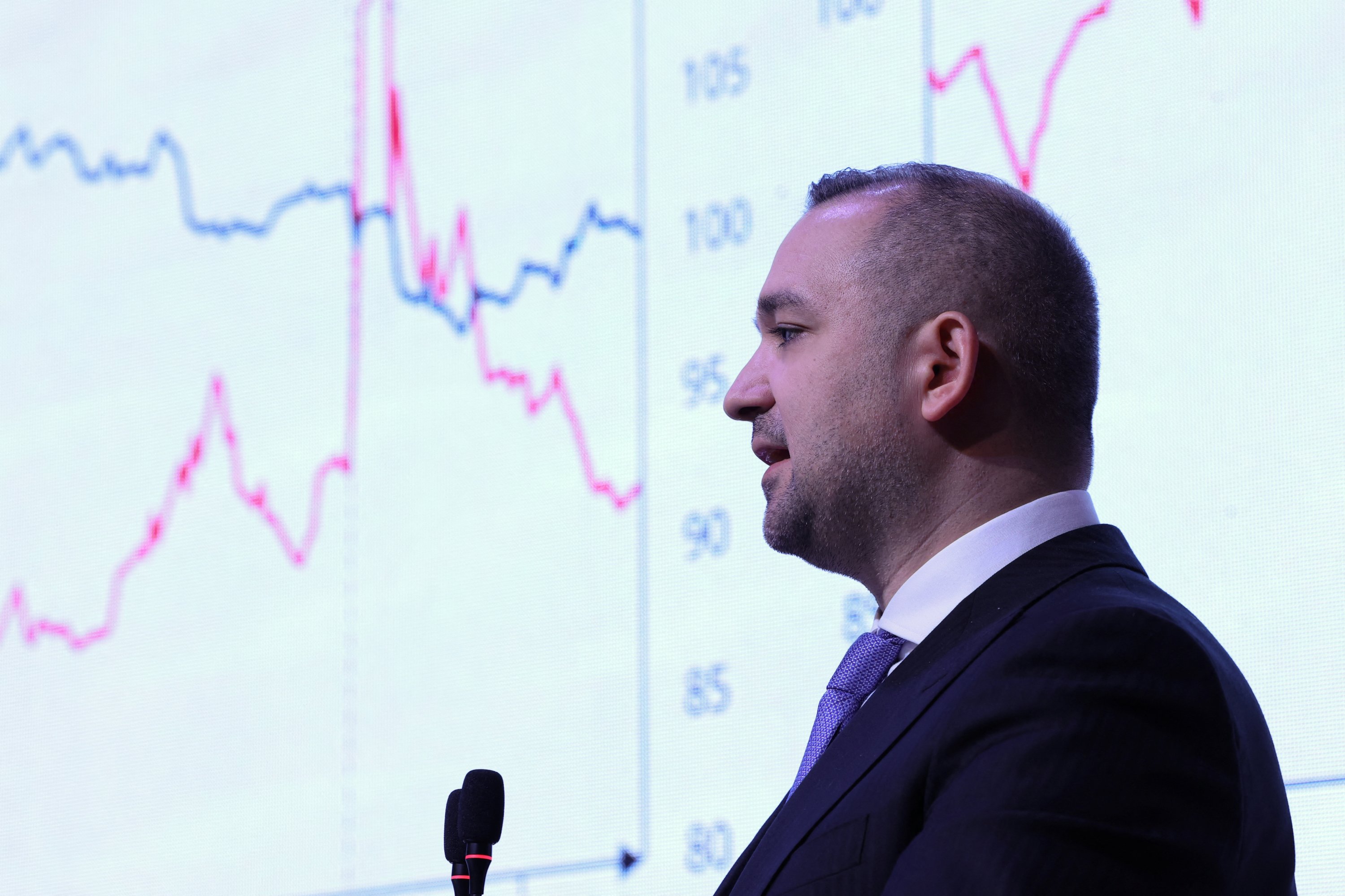
A rate cut is seen as a possibility at the next meeting on July 24, given that the bank is expected to restart its easing cycle this summer. Reuters poll shows that the easing cycle, once restored, would continue until at least mid-2026.
The average year-end forecast among the surveyed economists by AA is 35.5%.
Annual inflation in Türkiye eased to a lower-than-expected 35.41% in May, according to the official data.

The consolidated exports from Türkiye’s machinery sector, including those from free zones, reached a record of $23.7 billion (TL 1.2 trillion) in the January-October period, according to a report on Saturday citing data from the Machinery Exporters’ Association (MAIB).
Export volume dropped by 6.2% during the period, while the average export price per kilogram rose to $8.70. Despite the decline in volume, the increase in unit prices helped exports reach a record level in the first 10 months of the year, the report by Anadolu Agency (AA) indicated.
Germany was the leading destination for Türkiye’s machinery exports in the January-October period, with shipments rising 7.1% to $2.9 billion. The U.S. followed, with exports up 27% to $2 billion.
Internal combustion engines and components were the sector’s top export category, generating approximately $2.1 billion. The engines were followed by construction and mining machinery at $1.9 billion and pumps and compressors at nearly $1.4 billion.
Machinery Exporters’ Association Chair Sevda Kayhan Yılmaz, in her assessment, noted the European Union’s plan to expand the scope of its Carbon Border Adjustment Mechanism (CBAM) would place significant cost pressure on Türkiye’s machinery industry.
Yılmaz pointed out the European Parliament planned to increase the number of products covered by the regulation to 457. Türkiye, which exports approximately 8 billion euros ($8.77 billion) worth of products in the new categories to the EU annually, would be the second-most affected country after China, she added.
Also referring to the road map provided by the Green Deal Action Plan, which has been updated under the coordination of the Trade Ministry and the key expectations of the Turkish machinery industry regarding a “just transition” process, Yılmaz said they see it positively.
“We view the update to the Green Deal Action Plan, which was implemented to integrate our economy into green supply chains and to advance the Customs Union, as a critical step for our sector,” she said.
“The fact that the sectoral impacts of a national Emissions Trading System (ETS) will be analyzed under this new plan, and that international collaborations on carbon pricing will be developed, is significant for anticipating the cost pressures our exporters may face,” she added.
Furthermore, the opportunity to convey the industry’s perspectives, including regarding concrete technical bottlenecks on the ground, such as emission calculation methodologies and verification processes within the CBAM, to the EU further strengthens the exporters’ position, according to Yılmaz.
The European Union and Indonesia officially signed a comprehensive trade and investment protection agreement on Saturday in Brussels after 10 years of negotiations, the European Commission said in a statement.
The deal will likely come into effect in early 2027 as the European Parliament still needs to sign off and both the EU and Indonesia need to complete internal procedures.
The deal is part of the bloc’s efforts to diversify its trade and offset the impact of U.S. President Donald Trump’s tariffs.
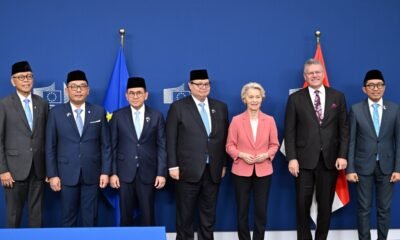
EU chief Ursula von der Leyen and Indonesian Minister of Economic Affairs Airlangga Hartarto attended a signing ceremony for a pact that Brussels said is projected to increase European Union exports to Southeast Asia’s largest economy by almost 40% within 15 years.
“This is one of the most ambitious deals the European Union has concluded in Asia,” said von der Leyen, the European Commission’s president.
EU trade chief Maros Sefcovic and Indonesia’s minister for trade Budi Santoso were also in attendance.
“Together, we represent a market of 730 million people,” von der Leyen added, thanking Indonesian President Prabowo Subianto, who she said will visit Brussels on Dec. 11.
Negotiations for the deal were concluded last year, almost a decade after they were launched, as part of a wider EU push to diversify trade as it faces challenges from the United States and China.
The Indonesia-European Union Comprehensive Economic Partnership Agreement (CEPA) and the ancillary Investment Protection Agreement (IPA) will open investment in strategic sectors such as electric vehicles, electronics, and pharmaceuticals, Brussels said.
The pact removes tariffs on more than 98% of European exports to the world’s fourth most populous country, including food, agricultural and industrial products and will help save over 600 million euros ($658 million) a year in customs duties, according to the EU.
Around 90% of Indonesian exports to the EU will be tariff-free, Airlangga said, noting that it is expected to benefit the country’s top shipments to the bloc, including palm oil, footwear and textiles.
“The benefits for our exporters are concrete and measurable,” he said, hailing a “new chapter” in economic relations with the EU.
Palm oil and deforestation had posed stumbling blocks to the negotiations, and the pact includes mechanisms for cooperation on regulatory and sustainability issues as well as a dedicated protocol on palm oil to allay some of the related concerns.
Brussels said the deal will boost economic growth, with the EU’s gross domestic product (GDP) projected to be 16 billion euros higher and Indonesia’s 27 billion euros higher by 2042 than they would be without the agreement.
The European Parliament has to greenlight the pact and Indonesian authorities complete the ratification process before it can provisionally come into effect.
Security risks in the Strait of Hormuz have prompted Iraq to seek alternative oil export routes, accelerating efforts to revive pipelines to Syria’s Mediterranean coast and Türkiye’s Ceyhan port.
Iraq faces significant economic risks from prolonged shipping disruptions in the Persian Gulf, as the country relies heavily on oil revenues to fund its public budget, pay wages and maintain foreign exchange reserves.
Iraqi Oil Minister Basim Mohammed Khudair said crude shipments had resumed through the Kirkuk-Ceyhan pipeline to Türkiye, with a target of gradually increasing flows to 500,000 barrels per day.
Baghdad also aims to expand its total oil export capacity from 3 million barrels per day in September to 5 million barrels per day through new pipelines.
Qatari energy firm UCC Holding is transporting 120,000 to 150,000 barrels of Iraqi crude per day to Syria under an agreement with Iraq’s State Oil Marketing Organization (SOMO).
Around 1.6 million barrels have been shipped since operations began Oct. 26.
UCC Holding plans to expand its tanker fleet from 6,000 to 10,000 vehicles, although trucking capacity and logistical constraints are expected to limit near-term growth along the overland route.
Iraq and Syria signed an agreement in Washington on July 17 to reconstruct the pipeline linking Haditha in western Iraq to Baniyas on Syria’s Mediterranean coast.
The project is expected to involve U.S. energy giant Chevron and have an initial capacity of 2 million barrels per day.
Iraqi Prime Minister Ali al-Zaidi and Syrian President Ahmed al-Sharaa discussed crude exports through the Baniyas pipeline during a meeting in Damascus on Oct. 28.
Beyond oil pipelines, Iraq is also advancing its Development Road project, a planned network of highways and railways connecting Basra’s Al-Faw Port to Türkiye.
The project aims to link the Persian Gulf with Europe and position Iraq as a regional freight transit hub.
Ali Naji, president of the Eco-Iraq Observatory, said shifting to alternative export corridors would strengthen Iraq’s export security and stabilize national revenues.
Naji said the proposed New Damascus Route would transport crude from Basra to the Haditha hub in western Iraq before branching toward Türkiye’s Ceyhan, Syria’s Baniyas and Jordan’s Aqaba ports.
He added that integrating pipelines with road, rail and trade corridors would capitalize on Iraq’s strategic location, deepen economic integration, strengthen resilience against geopolitical shocks and position the country as a regional energy and trade hub.
Iraqi energy expert Ahmed Sabah said diversifying export routes represented a strategic shift and a matter of national sovereignty, helping Iraq reduce its dependence on oil shipments through the Persian Gulf.
However, he warned that the plan would raise export costs due to pipeline construction, operating expenses and transit fees.
Sabah added that the alternative routes could increase Iraq’s distance from key South and East Asian markets, where many emerging economies are concentrated, while also requiring Baghdad to commit to minimum export volumes.
Türkiye’s banking regulator on Friday said it’s narrowing a mortgage restriction so that the 75% cut in the maximum loan-to-value ratio applies only to people who own at least two homes.
The Banking Regulation and Supervision Agency (BDDK), meanwhile, also set new credit card minimum payment rates that rise with a card’s limit.
The agency’s board made both decisions at its meeting on Thursday, its statement said.
Under a decision dated Aug. 24, 2023, the maximum loan amount relative to a home’s value was cut by 75% for borrowers who, along with their spouse or children under 18, owned at least one home.
The agency said the cut previously reduced the maximum ratio for such a borrower to 22.5% from 90%.
Under the new decision, the same 75% reduction applies when the borrower, a spouse, or children under 18 own at least two homes. It covers loans used to buy a home and loans secured by a home, other than vehicle loans.
As a result, borrowers who own a single home, in their own name or their spouse’s or children’s, are no longer subject to the 75% restriction as long as they have no second home.
The agency, meanwhile, readjusted minimum payment amounts for credit cards.
The payments will depend on the card’s limit:
TL 100,000 (about $1,977) or less: 20% of the period’s debt Above TL 100,000 and up to TL 200,000: 30% Above TL 200,000: 40%
Türkiye’s exclusion from “Made in Europe” rules would harm rather than protect the European automotive industry, Trade Minister Ömer Bolat said Thursday, as Turkish companies battle for access to future EU incentives.
The European Union is developing a package of industrial measures designed to boost competitiveness and shield local industry from low-cost imports, including Chinese-made cars that are gaining in popularity as the region shifts to EVs.
Türkiye, the EU’s third-largest vehicle export market and an important production location for automakers such as Ford, risks being left out. France and Germany are pursuing a “Made in Europe” definition that includes the 27 EU member states and extends special status to Britain.
“A scenario that leaves Türkiye outside the “Made in EU” framework would mean fewer new investments in Türkiye, a shrinking market for European suppliers and vehicle makers, and the gradual erosion of the integrated value chains developed over the past three decades,” Bolat said at an industry event in Berlin.
“Europeans have invested $25 billion in Türkiye’s automotive industry. They account for about 75% of investment, production, exports and imports,” he said.
Bolat said the European Commission’s March 4 draft included customs union partners within the scope of the “Made in EU” proposal.
However, discussions are continuing over possible restrictions on imported vehicles concerning electric car sales, public procurement, fleet incentives and loan programs for lower-emission vehicles, he added.
Bolat urged the EU to recognize Türkiye’s “unique position” as a trade partner, including its long-standing customs union with the bloc.
Zeki Şafak Ozan, a board member for Türkiye’s OIB automotive exporters’ association, said the goal was to conclude EU talks by the end of the year, but this seemed unrealistic, pointing instead to early next year.
“We knock on almost every door that we can,” Yakup Birinci, head of Turkish auto supplier association TAYSAD, told Reuters.
Bolat said the automotive sector was the EU’s top priority as the bloc seeks to raise the industry’s share of its economy back to 20%.
He also cited the EU’s carbon border adjustment mechanism and plans to halve steel import quotas among measures raising concerns for Turkish industry.
Bolat urged the bloc to fully honor its customs union with Türkiye, which took effect in 1996, as well as a separate free trade agreement covering iron and steel.
Turkish officials have held nearly 100 meetings and visits in Brussels and EU member states over the past year, Bolat said.
He added that he had traveled to Brussels five times this year, including three visits in the past four months, and met with Ford of Europe representatives as part of efforts to secure support from European manufacturers with investments in Türkiye.
On Tuesday, Jim Baumbick, president of Ford in Europe, said if the EU excludes Türkiye, Britain and Morocco from the “Made in Europe” model for car manufacturing, it will damage its own auto industry instead of strengthening it against Chinese competition.
Bolat said he would present Türkiye’s position at the automotive summit and discuss the issue with German Economy and Energy Minister Katherina Reiche.
Germany is Türkiye’s largest export market and third-largest source of imports after China and Russia, Bolat said.
Bilateral trade reached $52 billion last year, with Turkish exports to Germany totaling $22 billion and imports from Germany amounting to $30 billion.
More than 8,000 German companies operate in Türkiye, with investments totaling approximately $26 billion across sectors including manufacturing, energy and finance.
Turkish companies have invested more than $3 billion in Germany, which an increasing number use as a base to access other European markets, he added.
Türkiye is set to emerge from COP31 with billions of dollars in investment deals, including in green energy.
The country said it has agreed to deals and plans worth more than $26 billion in total since it began hosting the climate conference on Nov. 9 in the Mediterranean city of Antalya, Reuters reported on Friday.
They include a preliminary $15 billion renewable energy deal with China, $5.1 billion in financing agreements with development banks, and accords with Saudi Arabia and Canada.
Past hosts of climate conferences have also benefited from the influx of foreign governments and companies that typically accompanies U.N. talks.
In 2023, the United Arab Emirates (UAE) pursued both fossil fuel and renewable energy deals on the sidelines of the Dubai COP.
Türkiye did not comment on the deals.
Deals can help Türkiye’s own climate goals
Observers said the agreements, many of them related to clean energy, could help Türkiye with its own climate goals, including expanding electrification to help reduce fossil fuel emissions.
“I have long advocated for COP-hosting countries to use their COP as an investment attraction platform. It’s your best opportunity,” said Li Shuo, a veteran observer of China at U.N. climate talks who heads the China Climate Hub at the Asia Society Policy Institute.
Öykü Şenlen, senior researcher at think tank E3G, said the deals aligned with “Türkiye’s energy transition pathway.”
“It should lead the way for Türkiye to broker a strong deal out of COP31,” she said.
But a broader international climate deal appeared elusive as of Friday as the talks entered what was meant to be their final day.
The delegates from more than 190 countries remained divided on central issues, such as climate finance to help the poorest and most vulnerable deal with the impact of a warmer world.
Negotiators have also stripped out any reference to phasing down fossil fuel use from the latest draft agreement.
Although the talks were scheduled to end on Friday, U.N. conferences have a history of continuing past the deadline.
Business on sidelines
Apart from the negotiators, the COP31 event has attracted tens of thousands of other people and is matched by a trade fair where large businesses and startups can pay to exhibit.
The Bursa-based startup Harves Technology had a stand to market narrow modular water tanks shaped to fit along walls or fences. The founder came up with the idea because their own home had no space for a round rainwater tank.
By Thursday , the company had meetings with potential investors from India and France, and interest from distributors for Somalia, Brazil, Spain and Greece, said Beyza Altın, head of international sales.
Several of Türkiye’s businesses that secured exhibit stands at the two-week conference also signed deals they said would have been tough to land otherwise.
Water technology company Liaqua, whose machines extract drinking water from humid air, used the event to draw interest from government officials, investors and lenders in countries including Ghana, India, Mexico and Brazil, it said.
“Even if we worked for 10 years, we could not achieve what we achieved here in nine days, because the whole world is here,” said Tuncer Küçükaydoğmuş, founding partner at Liaqua.


-

 Lifestyle3 days ago
Cappadocia’s wider region reveals hidden cultural, natural gems
-

 Sports1 day ago
Galatasaray break home unbeaten record with 2-1 Samsunspor win
-
 Economy3 days ago
‘Made in Europe’ plan sans Türkiye would harm EU auto industry: Ankara
-
 Economy18 hours ago
EU, Indonesia sign landmark trade deal after 10 years of talks
-

 Sports3 days ago
Ethnosports Culture Festival makes global debut in Saudi Arabia
-
 Politics3 days ago
9 mayors join AK Party as Erdoğan vows stronger public engagement
-

 Economy2 days ago
Türkiye tightens mortgage rules for 2nd-home owners
-
 Politics2 days ago
Ankara backs stable, unified Syria, YPG integration: FM Fidan