
Economy
Israel-Iran strikes, anti-Trump protests keep investors on edge

Dual risks kept investors on edge ahead of markets reopening late on Sunday, from prospects of a broad Middle East war amid Israel-Iran tensions to nationwide protests against U.S. President Donald Trump that threatened more domestic chaos.
Israel launched a barrage of strikes across Iran on Friday and Saturday, saying it had attacked nuclear facilities and missile factories and killed a swathe of military commanders in what could be a prolonged operation to prevent Tehran from building an atomic weapon.
Iran launched retaliatory airstrikes at Israel on Friday night, with explosions heard in West Jerusalem and Tel Aviv.
On Saturday, Israel’s Prime Minister Benjamin Netanyahu said Israeli strikes would intensify, while Tehran called off nuclear talks that Washington had held out as the only way to halt the bombing.
Israel on Saturday also appeared to have hit Iran’s oil and gas industry for the first time, with Iranian state media reporting a blaze at a gas field.
The strikes knocked risky assets on Friday, including stocks, lifted oil prices and prompted a rush into safe havens such as gold and the dollar.
Brent crude prices were at $74.23 on Sunday midday after they touched an intraday high of $78.50 on Friday, a multi-month peak. U.S. West Texas Intermediate crude finished the week at $72.98 a barrel, up $4.94, or 7.62%.
Both benchmarks had their largest intraday moves since 2022 when Russia’s invasion of Ukraine caused a spike in energy prices.
Risks mounting
Meanwhile, protests, organized by the “No Kings” coalition to oppose Trump’s policies, were another potential damper on risk sentiment. Hours before those protests began on Saturday, a gunman posing as a police officer opened fire on two Minnesota politicians and their spouses, killing Democratic state assemblywoman Melissa Hortman and her husband.
All three major U.S. stock indexes finished in the red on Friday, with the S&P 500 dropping 1.14%.
Israel and Iran are “not shadowboxing anymore,” Matt Gertken, chief geopolitical analyst at BCA Research, told Reuters. “It’s an extensive and ongoing attack.”
“At some point, actions by one or the other side will take oil supply off the market,” and that could trigger a surge in risk aversion by investors, he added.
Any damage to sentiment and the willingness to take risks could curb near-term gains in the S&P 500, which appears to have stalled after rallying from its early April trade war-induced market swoon. The S&P 500 is about 20% above its April low, but has barely moved over the last four weeks.
“The overall risk profile from the geopolitical situation is still too high for us to be willing to rush back into the market,” said Alex Morris, chief investment officer of F/m Investments in Washington.
U.S. stock futures are set to resume trading at 6 p.m. (10 p.m. GMT) on Sunday.
With risky assets sinking, investors’ expectations for near-term stock market gyrations jumped.
‘Fear gauge’ soaring
The Cboe Volatility Index (VIX) rose 2.8 points to finish at 20.82 on Friday, its highest close in three weeks.
The rise in the VIX, often dubbed the Wall Street “fear gauge,” and volatility futures were “classic signs of increased risk aversion from equity market participants,” said Michael Thompson, co-portfolio manager at boutique investment firm Little Harbor Advisors.
Thompson said he would watch near-term volatility futures prices for any rise toward or above the level for futures set to expire months from now.
“This would indicate to us that near-term hedging is warranted,” he said.
The concerns over potential attacks on oil refineries, particularly in Iran, also add to the risks over prices in energy markets, which were already shaken due to uncertainty amid on-and-off Trump’s tariffs. However, analysts, despite the situation being tense, predict more unease only if prices soar above $100 per barrel.
Iran’s oil ministry denied on Sunday reports of an incident at Isfahan refinery, Reuters cited state media as saying.
Israel’s Oil Refineries, meanwhile, said its pipelines and transmission lines in Haifa had been damaged by missile strikes by Iran, according to a regulatory filing to the Tel Aviv Stock Exchange.
It said that no injuries or casualties were reported at the sites, with refining facilities continuing to operate despite a shutdown of some downstream operations.
Despite the spike in crude prices, the global benchmark Brent remained well under $80 a barrel. Irene Tunkel, Chief U.S. Equity Strategist at BCA Research, said on Friday she does not see long-term U.S. market implications unless prices soar above $100 a barrel, which would hurt consumer spending.
She said that was unlikely unless oil infrastructure is destroyed or “Iran somehow closes the Strait of Hormuz and (the conflict) spills out of Iran and energy production in Iraq is shifted.”
However, BCA’s Gertken said that the mix of domestic and global tensions is a recipe for more uncertainty and unease across most markets.
“Major social unrest does typically push up volatility somewhat, and adding the Middle Eastern crisis to the mix means it’s time to be wary.”

Turkish military pension fund Oyak is in talks with one of the world’s largest energy companies over a strategic partnership in fuel distributor Güzel Enerji, with the outcome expected to become clear by early next year, its top executive said Tuesday.
Oyak General Manager Murat Yalçıntaş did not name the potential partner, but the fund has previously said it was holding talks with Saudi Arabia’s state oil company Saudi Aramco over a possible stake in Türkiye’s fourth-largest fuel retailer Güzel Enerji.
Oyak’s head of energy business Uğur Doğan said in May that talks were under way for Aramco to become a shareholder in Güzel Enerji.
Yalçıntaş said Oyak wants to expand its energy activities beyond fuel distribution into production and refining as part of its 2030 strategy to become an international player in core sectors.
He said the partnership under discussion would be an important step in Oyak’s push to build a more multinational structure.
“We have strategic partnership talks with one of the world’s largest energy giants. We think the picture will become clear by the end of this year or early next year,” Yalçıntaş told reporters in Istanbul.
The 2030 strategy was announced in late February when Yalçıntaş said the company had identified infrastructure, energy, logistics, high technology and mining as priority sectors.
Under the strategy, Oyak aims to strengthen its balance sheet and enhance cash generation and capital efficiency while nearly doubling its asset value to $60 billion by the end of the decade.
On a planned refinery investment, Yalçıntaş said Oyak was considering both greenfield projects and opportunities involving existing refineries, either in Türkiye or abroad.
Oyak operates more than 189 companies across 30 countries in sectors including mining and metallurgy, cement, automotive, energy, chemicals, food, finance and construction.
The group’s consolidated revenue reached TL 418 billion ($8.56 billion) in the first half of 2026, while consolidated net profit rose 66% year-over-year to TL 83 billion, Yalçıntaş said.
Consolidated assets increased 31% from the same period of 2025 to TL 1.85 trillion.
In the mining and metals sector, liquid steel production reached nearly 4.67 million tons in the first half, up 19% year-over-year, while finished product output rose 19% and sales volumes increased 15%.
Oyak’s automotive operations also maintained a strong position, with Renault’s Turkish joint venture Mais selling 100,256 vehicles in the first eight months of the year for a 13.9% market share, Yalçıntaş said.
Tekfen investment to support portfolio expansion
Yalçıntaş said Oyak’s acquisition of a 42.8% stake in Tekfen Holding was one of its most important strategic moves in 2026.
He said Tekfen’s international experience in engineering, procurement and construction would complement Oyak’s existing industrial ecosystem and support its 2030 strategy.
The investment would also strengthen Oyak’s agricultural industrial operations through Tekfen’s fertilizer, crop protection, seeds and agricultural production businesses, he said.
Energy and agriculture remain strategic priorities
In energy, Oyak has completed the acquisition of the remaining shares in ISKEN and Arkas Deniz Taşımacılığı, giving it full ownership of both companies, Yalçıntaş said.
ISKEN accounted for about 1.7% of Türkiye’s total electricity generation between January and August, while Güzel Enerji’s consolidated revenue reached TL 112.3 billion in the first half.
Yalçıntaş said Oyak was also continuing investments in steel, including planned investments at its electrical steel facility in Romania.
He described agriculture and food as strategic sectors for Türkiye, citing Oyak’s Hektaş and Toros businesses as key components of its strategy to strengthen agricultural production and input supply.
More Oyak companies could go public
Yalçıntaş said more Oyak companies could be listed on the Borsa Istanbul Stock Exchange in the coming years.
He said the group had previously indicated that investors would see more publicly traded Oyak companies and had followed through on that commitment within six months, adding that preparations for further listings were continuing.
Oyak also plans to expand its infrastructure investments in Türkiye and abroad, including ports and logistics projects. Yalçıntaş said the group was assessing opportunities in Africa, particularly infrastructure projects linked to the production and transportation of the continent’s natural resources.
The group is also continuing to evaluate strategic partnerships in areas where it can create synergies, while considering exits from businesses that do not fit its portfolio strategy.
Integrating AI agents into online shopping could increase the threats of scams, fraud, and breaches of data privacy, banks including NatWest and Bank of America warned Tuesday, as they put forward a set of principles for how the technology should be developed.
Technology companies including OpenAI, Anthropic, Google and Meta are increasingly promoting AI chatbots as shopping tools, envisioning a future in which shoppers use AI agents to select products and make purchases on their behalf. Retailers, meanwhile, are racing to influence chatbots’ recommendations.
British retailer John Lewis said in September that searches originating from AI agents had risen to 2.5% from 0.3% a year earlier, with the trend accelerating.
The group of banks, which also includes ING, New Zealand’s ASB Bank, U.S. lender Capital One and Commonwealth Bank of Australia, said in a report that customers were enthusiastic about the potential of agentic commerce and keen to enable it.
However, they warned that the technology was advancing faster than industry standards and consumer protections.
“Consumers are unclear if AI will act in their interests,” the report said.
“They are concerned that AI agents may buy the wrong thing or spend too much – or even worse, lose their money to scams and fraud. They are not sure whether they will be protected or who they will need to go to if things go wrong.”
The report highlighted risks including AI agents requesting customers’ card details and entering them directly into websites, or steering users toward payment methods that offer weaker protections.
The banks plan to discuss a series of proposals with policymakers, including requiring disclosure when an AI agent is involved in a transaction, greater transparency over how AI agents make decisions, and safeguards to protect customer data.
Consumers and merchants should also be free to choose which AI-powered e-commerce services they use, while different systems should be interoperable, the report said.
Consumer confidence in Türkiye reached its highest level in more than eight years in September, official data showed Tuesday.
The consumer confidence index rose by 1.3% to 91.9 in September from 90.8 in August, according to the Turkish Statistical Institute (TurkStat)
That was the highest reading since July 2018, when the index stood at 92.9.
The index is calculated from the results of the consumer tendency survey carried out jointly by TurkStat and the Central Bank of the Republic of Türkiye (CBRT).
It indicates an optimistic outlook when above 100, while levels below 100 signal pessimism.
Households’ expectations for their financial situation over the next 12 months improved, with the corresponding index rising to 93.7 from 93.1.
The index measuring expectations for the general economic situation over the next 12 months edged up to 89.8 from 89.4.
By contrast, the index measuring households’ current financial situation slipped to 75.3 from 75.4.
Consumers were also more willing to spend on durable goods over the coming year, with the corresponding sub-index rising to 108.8 from 105.1 in August.
Authorities in Türkiye detained 14 more people Tuesday in connection with an investigation into suspicious share dealings at Katılımevim, a listed Turkish savings financing company, Justice Minister Akın Gürlek said.
Türkiye’s Capital Markets Board (SPK) last week filed criminal complaints against 38 people over alleged manipulation of shares in Katılımevim and two other listed companies, and imposed two-year trading bans on them.
The detentions are part of a widening crackdown on suspected share price manipulation at the center of a liquidity crunch that prompted regulators to freeze scores of funds and order their liquidation.
“With the operation carried out today, legal proceedings have been launched against 60 suspects until now; 4 suspects have been arrested; legal processes for 44 detained suspects are continuing; efforts continue to capture 12 suspects,” Gürlek said on the social media platform X.
He said all legal and financial measures were being taken to “uncover proceeds from crime, prevent the concealment of assets, and protect the rights of our victimized citizens.”
On Monday, authorities detained 15 people as part of the Katılımevim investigation, while freezing assets linked to executives at several other investment firms.
The liquidity crunch has led to the detention of top executives of several portfolio management firms and drawn scrutiny of concentrated bets in thinly traded stocks.
Treasury and Finance Minister Mehmet Şimşek said Friday the liquidation of funds would not put pressure on Borsa Istanbul Stock Exchange because regulatory changes should prevent any contagion risk.
He said authorities would continue to monitor the market closely.
Paramount inched closer to a blockbuster purchase of Warner Bros., months after the deal was initially floated, in what could be a game-changing moment in the entertainment industry.
California Attorney General Rob Bonta announced a settlement with Paramount in a lawsuit his state led challenging the company’s acquisition of Warner Bros. Discovery on Monday, effectively paving the way for the mega merger to move forward, with some new commitments.
The $81 billion blockbuster deal will bring together two of Hollywood’s oldest studios, key TV networks like CBS and CNN, and streaming platforms HBO Max and Paramount, as well as decades of libraries with titles ranging from “Harry Potter” to “Top Gun.”
But terms of Monday’s agreement include what Bonta called “court-enforceable” requirements for Skydance-owned Paramount to increase domestic production and establish monitoring of editorial independence of the company’s news operations.
The settlement still needs final court approval. Bonta maintained that Monday’s agreement “is not a vote of support for this merger” – but that he was always willing to come to the table and “find a strong solution that protects competition and consumers.”
The coalition of states – including entertainment heavyweights like California and New York – sued to block the $81 billion merger back in July, alleging a Paramount-Warner combo would “extinguish competition” and lead to fewer choices for consumers, particularly movie theatergoers and cable customers across the U.S.
Accompanied by a complaint also filed by the Writers Guild of America, the challenge was headed toward a full antitrust trial set to kick off in March.
Paramount said the allegations were meritless, but previously agreed to delay its transaction well into next year so the case could make its way through court. It then quickly called for a settlement – arguing that it had satisfied all regulatory clearances worldwide, including from the Trump administration’s Justice Department and the states’ challenge was its “final obstacle.”
As reports of the states reaching a settlement with Paramount emerged Monday, critics decried the deal – while warning of what further consolidation could mean in an industry already controlled by just a few major players.
“Today, billionaires have yet again bribed, censored, and bullied their way to the top,” Alvaro Bedoya, senior adviser at the American Economic Liberties Project and former FTC commissioner, said in a statement earlier Monday.
“Layoffs will follow. People from L.A. to Atlanta will lose their jobs, small businesses will lose their contracts, your cable bill and movie ticket will be even more expensive.”
Paramount, which is run by David Ellison, whose ultra-wealthy family has ties to U.S. President Donald Trump, won a bidding war against Netflix in February for control of a stable of assets that includes Warner Bros. Pictures, CNN and the HBO Max streaming service.
The Trump administration approved the deal, one of the largest media mergers in years, in June without demanding a change to its business, before 12 U.S. states sued to block the transaction.
Financing for the deal reportedly includes about $24 billion in equity from the sovereign wealth funds of Saudi Arabia, Qatar and Abu Dhabi. David Ellison’s father, billionaire Oracle founder Larry Ellison, also provided funding and a guarantee.
In their complaint, the 12 states argued the combined company would control roughly 27 percent of wide-release theatrical film distribution and a similar percentage of the basic cable channel industry.
California led the suit, joined by Arizona, Colorado, Connecticut, Massachusetts, Minnesota, Nevada, New Jersey, New Mexico, New York, Oregon and Washington, all Democratic-led.
Türkiye and the United Kingdom are continuing work on the procurement of Eurofighter Typhoon fighter jets, the National Defense Ministry said Monday.
The statement came after a team of experts from the ministry inspected aircraft maintenance facilities at the Royal Air Force’s Coningsby Air Base in the U.K. from Sept. 15-17.
Türkiye earlier this month said its pilots had begun flight training in August as part of the Eurofighter agreement signed with the United Kingdom.
“The work on the Eurofighter Typhoon procurement project being carried out with the United Kingdom continues as part of the modernization efforts of our Air Force,” the ministry said.
It described the visit as a “strategic” step toward planning maintenance and sustainment processes, ensuring compatibility of technical infrastructure and strengthening bilateral cooperation.
The inspection was conducted as Ankara and London continue their work on the Eurofighter Typhoon procurement project, according to the ministry.
The agreement signed in late October last year covers 20 Eurofighter jets that Türkiye will buy from the U.K. The deal is worth about 8 billion pounds ($10.8 billion).
This March, the countries signed a technical and logistical agreement for the maintenance and operation of the warplanes.
Britain, a leading partner in the Eurofighter program, had been Türkiye’s most vocal supporter, and the agreement followed long negotiations to overcome a German objection to the sale.
Türkiye’s interest in the Typhoon was first reported in 2022, as Ankara grew frustrated with prolonged negotiations over the acquisition of F-16 fighter jets from the U.S.
Türkiye is scheduled to receive the first of the batch of Typhoons in 2030. The deal provides the option for the sale of more jets in the future.
In addition, Türkiye also plans to purchase 12 secondhand jets from Qatar and 12 others from Oman.
Meanwhile, Türkiye is developing its own fifth-generation fighter jet. Named Kaan, the stealth fighter is sought to replace the Air Force Command’s aging F-16 fleet, which is planned to be phased out starting in the 2030s.


-

 Economy22 hours ago
AMD joins $1 trillion club as last chipmaker to cash in on AI rally
-

 Sports3 days ago
Mbappe swaps Nike for On as Swiss brand plots entry into football
-
 Economy24 hours ago
Türkiye extends funds liquidation process, freezes execs’ assets
-
 Politics2 days ago
Türkiye closely monitoring field as terror-free initiative advances
-
 Economy2 days ago
Türkiye revokes license of Iranian Bank Mellat
-
 Economy21 hours ago
US says all Iranian airlines to be ‘shut down’ Wednesday
-

 Sports3 days ago
Infantino invited to CAF strategy conference as FIFA election looms
-
 Politics1 day ago
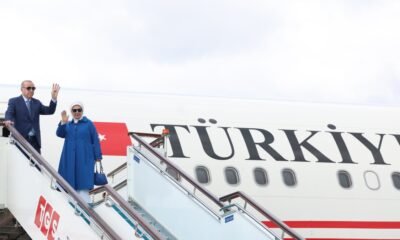
Erdoğan leaves for UN General Assembly with Gaza in mind