
Economy
Hungary probes BYD deal after ex-FM Szijjarto joins Chinese automaker

Hungarian authorities announced on Monday they had launched an investigation into a major foreign investment deal with BYD that was brokered by a former foreign minister who last week stepped down from Parliament to accept a top position at the Chinese automaker.
Peter Szijjarto’s announcement last Wednesday that he would take the job at the world’s top electric carmaker prompted accusations of a conflict of interest and criticism over his role in facilitating substantial government subsidies to the company while in office.
Prime Minister Peter Magyar told lawmakers on Monday that Szijjarto, a close ally of former Prime Minister Viktor Orban, had helped BYD while he was in office “with hundreds of billions (of forints) in public money, diplomatic support and state infrastructure.”
“We will examine all the decisions, negotiations and state commitments made by Peter Szijjarto that were related to the BYD Hungary investment,” Magyar said Monday.
He added the investigation would look into all subsidies, tax breaks, permits, environmental exemptions and publicly funded investments given to large multinational firms during Orban’s tenure.
“We will investigate who made these decisions, who prepared them, what professional warnings were ignored, and how much burden they left on Hungarian taxpayers, workers, local communities and the environment,” Magyar said.
Neither Szijjarto nor BYD have responded to Magyar’s allegations of conflict of interest while Szijjarto was in office. The former foreign minister has posed his new job as a “prestigious” opportunity to work for one of the “greatest success stories” in the automotive industry.
While serving in government, Szijjarto was instrumental in securing foreign investments in Hungary from Chinese companies, including his now-employer BYD, which received considerable state subsidies during his tenure.
In 2023, Szijjarto announced that BYD would open its first European factory in Hungary – allowing the conglomerate to skirt European Union import tariffs on Chinese electric vehicles imposed to protect the continent’s domestic auto manufacturing sector.
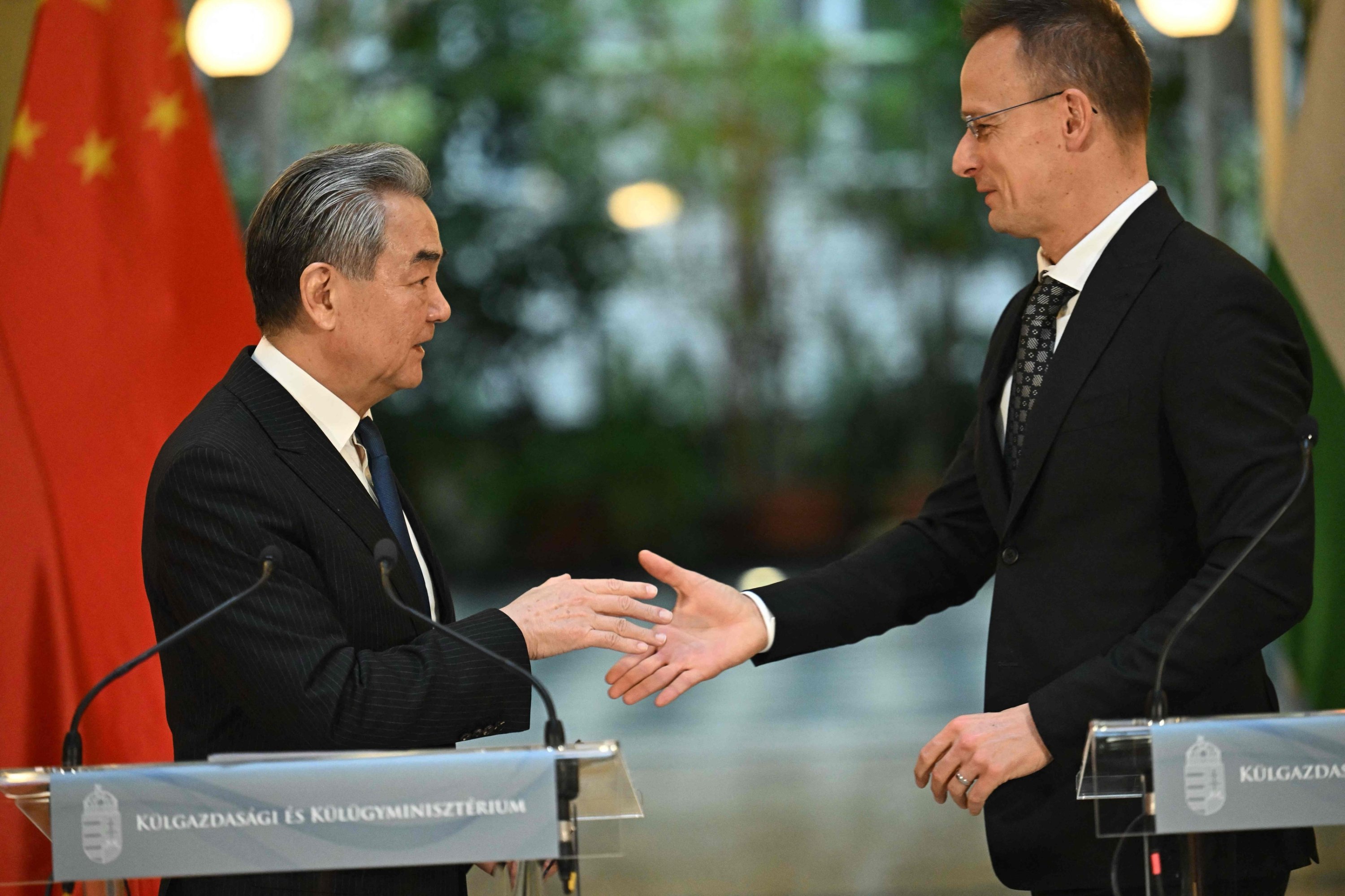
In 2025, Szijjarto also announced BYD would locate its European headquarters and a research and development center in Budapest and receive 20 billion forints ($63.7 million) in government assistance.
The investments were part of the Orban government’s push to make Hungary a global hub for lithium-ion battery manufacturing, largely by attracting Chinese battery manufacturers, who opened a series of plants across the country.
The moves led local residents, environmentalists and opposition politicians to protest over fears the new industry would exacerbate existing environmental problems, hit the country’s precious water supplies and further undermine its economy to China.
While foreign minister, Szijjarto also maintained close relations with Russia despite its full-scale invasion of Ukraine on Feb. 24, 2022. Breaking with nearly all of his EU counterparts, he frequently traveled to Moscow to negotiate agreements on purchasing Russian oil and gas and to meet with Russian Foreign Minister Sergey Lavrov, whom he referred to as his “friend.”
He was embroiled in controversy during Hungary’s 2026 election campaign when The Washington Post reported that he made regular phone calls to Lavrov during high-level EU meetings with “live reports on what’s been discussed.”
Szijjarto has dismissed the report while acknowledging that he conferred with Lavrov before and after EU foreign minister meetings about their agenda and decisions.
During a government news conference last week, Magyar said that “as far as I know,” an investigation had been launched concerning Szijjarto’s connections to the Russian government.

A groundbreaking lawsuit accusing Meta Platforms of using discriminatory AI tools to decide who would be laid off shines a spotlight on the steep obstacles workers face in challenging employers over the technology, especially in uncovering how it was deployed.
The case helps illustrate why a widely predicted wave of employment lawsuits over AI use has yet to arrive. Legal experts say workers often have little understanding of how AI systems are used in the workplace and many have also signed away their right to sue in court, agreeing instead to resolve workplace disputes through a private process called arbitration that can keep such claims from ever being tested publicly.
In a ruling last week declining to block Meta from finalizing the terminations of 26 people who sued, U.S. District Judge William Orrick identified a fundamental obstacle for plaintiffs who allege that AI discriminated against them: “they were not in the rooms where it happened.”
That means workers like the Meta employees, who claim they were targeted for layoffs because they have disabilities or took medical or family leave, often cannot muster the evidence of wrongdoing necessary to quickly secure a win in court.
And they face another obstacle: Like a majority of U.S. workers, the plaintiffs are bound by an arbitration agreement, meaning they cannot band together in a class action, put their case before a jury, or push for a multimillion-dollar settlement in open court.
Arbitration agreements block lawsuits
Companies generally prefer arbitration, which they say is a faster, cheaper alternative to court, while worker advocates say it often favors employers and discourages workers from bringing claims. The arbitration process is also confidential, so it can shield unfavorable evidence unearthed in an individual case from wider disclosure.
“Even if you establish that a particular system would produce discriminatory outcomes left and right, you have no way of sharing that information with other employees,” said Christine Webber, co-chair of the civil rights and employment practice at plaintiffs’ firm Cohen Milstein Sellers & Toll. Webber’s firm is not involved in the Meta case.
Webber and other plaintiffs’ lawyers said those hurdles explain the lack of high-profile court cases involving employers’ use of AI even as it becomes routine, and why even the lawsuit against Meta seeking only temporary relief is unusual.
One of the few cases to emerge over companies’ workplace use of AI tools involves Workday, which is facing claims that its popular HR management software unlawfully filtered out applicants for jobs at other companies based on race, age and disability. Arbitration is not an issue in that case because Workday does not have agreements with its customers’ job applicants. Workday denies the allegations.
Plaintiffs seek injunction
The agreements signed by the Meta workers contain a common, narrow exception for seeking a court order that temporarily blocks one side from taking some irreversible action. But that exception is typically invoked in cases involving the alleged theft of trade secrets or the solicitation of clients or employees, and not layoffs of at-will workers.
Orrick denied the plaintiffs a temporary restraining order that would have stopped Meta from completing the layoffs. He must still decide whether to issue a preliminary injunction, a temporary but longer-lasting order that would put the workers back in their jobs until their individual arbitration cases are resolved. He said he could change his mind and grant the injunction if the plaintiffs come up with evidence “regarding whether and how AI was used in an improper manner.”
A hearing is scheduled for Aug. 24, and the losing side can appeal Orrick’s decision.
The plaintiffs claim that in selecting jobs to cut, Meta consulted AI tools that tracked productivity and AI token usage (a measure of how much workers use AI tools), disadvantaging people who missed work because of medical conditions or to care for family members.
They allege that Meta used a number of internal AI-assisted systems, including a large language model assistant known as “Metamate,” an employee-trained “second brain” that tracked workers’ communications and documents, and a productivity score drawn from scanning keystrokes, screen content, emails and browser history, according to the lawsuit.
Meta said in court filings and statements last week in response to the lawsuit that humans made all of the decisions concerning nearly 8,000 layoffs announced earlier this year and has denied treating AI usage as a basis for identifying workers to terminate or to conduct performance reviews.
Orrick said in his decision that he was bound to take Meta at its word since the plaintiffs could not present any evidence to rebut those claims.
The plaintiffs’ lawyers in a joint statement last week acknowledged the hurdles they face in gathering evidence, even calling on current and former Meta employees to contact them with knowledge of how AI was used in the selection process.
“Meta holds virtually all the relevant information,” they said.
Türkiye has issued a Navtex, a legal advisory message to mariners, for seismic surveys in the Mediterranean as part of preparations for a planned natural gas pipeline linking it with the Turkish Republic of Northern Cyprus (RNC), a report said on Wednesday.
The Oruç Reis seismic research vessel will conduct surveys along the planned pipeline route until Aug. 30, Bloomberg News reported.
Earlier this month, Türkiye and the TRNC signed an agreement to begin work on the gas pipeline that would run beneath the Mediterranean Sea.
Energy and Natural Resources Minister Alparslan Bayraktar said the pipeline would be 101 kilometers long, with 97 kilometers running offshore and four kilometers on land.
The pipeline, designed as a two-way system, would connect Mersin’s Anamur district on Türkiye’s southern coast with the Teknecik area east of the coastal city Girne, also known as Kyrenia, in the TRNC.
Bayraktar said the infrastructure could initially supply natural gas to the TRNC, while also creating a potential route for transporting future gas discoveries from the Eastern Mediterranean and neighboring countries to Türkiye and eventually Europe.
Türkiye and Syria are working to open the Nusaybin-Qamishli border crossing “as soon as possible,” as the two neighbors seek to expand trade and strengthen regional transport corridors, Trade Minister Ömer Bolat said Wednesday.
Bolat made the remarks after meeting Qutayba Badawi, head of the Syrian Customs and Border Crossings Authority, in Ankara.
Bolat said the reopening of regional transit corridors linking Europe through Türkiye and Syria to Jordan, Saudi Arabia and the Gulf, as well as routes extending from Türkiye through Syria to Iraq and Kuwait, represented important progress.
Transit trade through the Cilvegözü border gate in southeastern Hatay province and the Akçakale crossing in Şanlıurfa province currently allows goods to move toward Iraq, Kuwait, Lebanon, Saudi Arabia and Jordan, with nearly 300 trucks crossing daily, he said.
“We are working together to open the Nusaybin-Qamishli border crossing as soon as possible,” Bolat said. He was referring to a point that links Turkish province Mardin’s Nusaybin district with Syria’s Qamishli region.
Bolat added that recent geopolitical tensions, including disruptions linked to the Strait of Hormuz, had highlighted the strategic importance of new oil and natural gas pipelines as well as road and rail transport corridors connecting Türkiye, Syria, Iraq and the Gulf states.
Syria’s Badawi said six border crossings between the two countries were currently operating at full capacity, five of them open to both commercial traffic and passenger crossings, while the Kesab crossing, also known as the Yayladağı Border Gate, serves only passenger traffic.
“The Nusaybin-Qamishli crossing will become operational in the near future,” he said, adding that this would increase the number of 24-hour border crossings between the two countries to seven.
Bilateral trade goal
Bolat said the two governments were working in close coordination, aiming to raise bilateral trade to the previously announced target of $10 billion annually.
Trade between the two countries reached $3.7 billion in the first year after opposition forces ousted longtime dictator Bashar Assad in late 2024, marking growth of more than 40%.
Bolat said both sides were working to further increase that figure this year.
He said Turkish companies were cooperating closely with Syrian authorities on energy, transport, infrastructure, construction and contracting projects, while a joint customs committee established under an agreement signed last year was coordinating customs-related cooperation.
National flag carrier Turkish Airlines (THY) has signed three major agreements to enhance its pilot training quality with new simulator procurement and support sustainable aviation fuel production, its chair said Wednesday.
The deals were signed on the sidelines of the Farnborough Airshow, the premier gathering of the aerospace and defense industry.
Chair Murat Şeker said the airline had concluded agreements with defense technology company Havelsan, Canadian Aviation Electronics (CAE) and the Sustainable Aviation Fuel Financing Alliance (SAFFA) Fund.
The contract with Havelsan covers eight full-flight simulators and four flight training devices, while the agreement with CAE includes seven full-flight simulators, including two optional units, and two flight training devices.
The orders, covering both narrow-body and wide-body aircraft types, are intended to strengthen the airline’s training infrastructure as its fleet expansion drives demand for more pilots, Şeker said in a post on LinkedIn.
He added that THY also joined the SAFFA Fund, an initiative established to expand sustainable aviation fuel (SAF) production capacity and support the aviation industry’s carbon reduction goals.
“With our long-term growth strategy, our sustainability-focused goals and our vision for supply chain security, we will further expand our investments in the future and transformation of the global aviation industry,” Şeker said.
Turkish Airlines has orders in place for nearly 420 aircraft, including Airbus and Boeing jets, with negotiations continuing for an additional 100 Boeing planes.
The company plans to expand its nonstop long-haul network by deploying ultra-long-range aircraft from late 2027, enabling direct flights to destinations in Australia and South America.
On Tuesday, Şeker said the carrier was also evaluating acquisition opportunities involving airlines, cargo operators and maintenance facilities, with Asia and South America emerging as likely regions for future investments.
Under its 2033 strategy, Turkish Airlines, which already serves more countries than almost any other carrier in the world, plans a major fleet replacement and expansion to around 800 aircraft. Its fleet included over 540 planes as of the end of May.
German prosecutors searched offices at Deutsche Bank’s headquarters in Frankfurt on Wednesday as part of an investigation into alleged fraudulent tax transactions linked to the lender’s Postbank unit years earlier.
The bank confirmed that Duesseldorf prosecutors were at its office in the city, and that the probe related to transactions at its Postbank division between 2008 and 2010.
“Deutsche Bank is being searched as a third party in this matter and we are cooperating fully,” Deutsche Bank said, declining to comment further.
Duesseldorf prosecutors did not immediately respond to a request for comment.
Probe relates to ‘cum-cum’ trades
A person familiar with the matter told Reuters the search involved so-called cum-cum trades, confirming German media reports.
Such schemes involved trading in stocks of German companies around dividend payout days, which authorities say amounted to tax fraud.
The transactions flourished during the financial crisis, and authorities estimated they stripped state coffers of billions. A years-long crackdown has since sought to claw back the money.
The alleged roles of German financial firms in cum-cum trades, as well as in related cum-ex deals, are likely to cost the industry around 7 billion euros ($8 billion), German financial watchdog BaFin said last week, citing a survey.
It marks the third time that prosecutors are known to have searched Deutsche Bank this year. A case earlier this year related to money laundering, and a second last week was related to its retail bank.
Deutsche Bank bought up Postbank, with its millions of clients and roots in the country’s postal system, in phases, starting in 2008.
In 2023, Deutsche Bank’s years-long technology integration process with Postbank caused glitches and service lapses, resulting in scrutiny by its regulator. A year later, legal issues over Deutsche’s takeover of Postbank pushed the bank to post a loss, breaking a long profit streak.
Ten former managers at Postbank have been named as suspects, with damages of 350 million euros to the German state coffers, Sueddeutsche Zeitung reported.
Türkiye on Wednesday laid the foundation for a new flagship data center that it says will strengthen the country’s digital sovereignty, cybersecurity resilience and artificial intelligence infrastructure, as it seeks to expand domestic control over critical digital assets.
Speaking at the groundbreaking ceremony, Transport and Infrastructure Minister Abdulkadir Uraloğlu described the facility of the state-owned satellite communications firm Türksat in the capital Ankara as “Türkiye’s new digital fortress.”
Uraloğlu stressed the center would ensure that critical data remain within the country’s borders. “We are establishing sovereignty over our data on our own soil,” he said. “This is not just a concrete structure, but Türkiye’s new digital fortress.”
The project forms part of Ankara’s strategy to expand domestic digital infrastructure and reduce reliance on foreign technology providers amid growing geopolitical competition over data, artificial intelligence and cyber capabilities.
Uraloğlu said the facility would include six system halls, two high-performance computing rooms with 20 cabinets each, 6,300 square meters (67,800 square feet) of white space and office space for 200 employees.
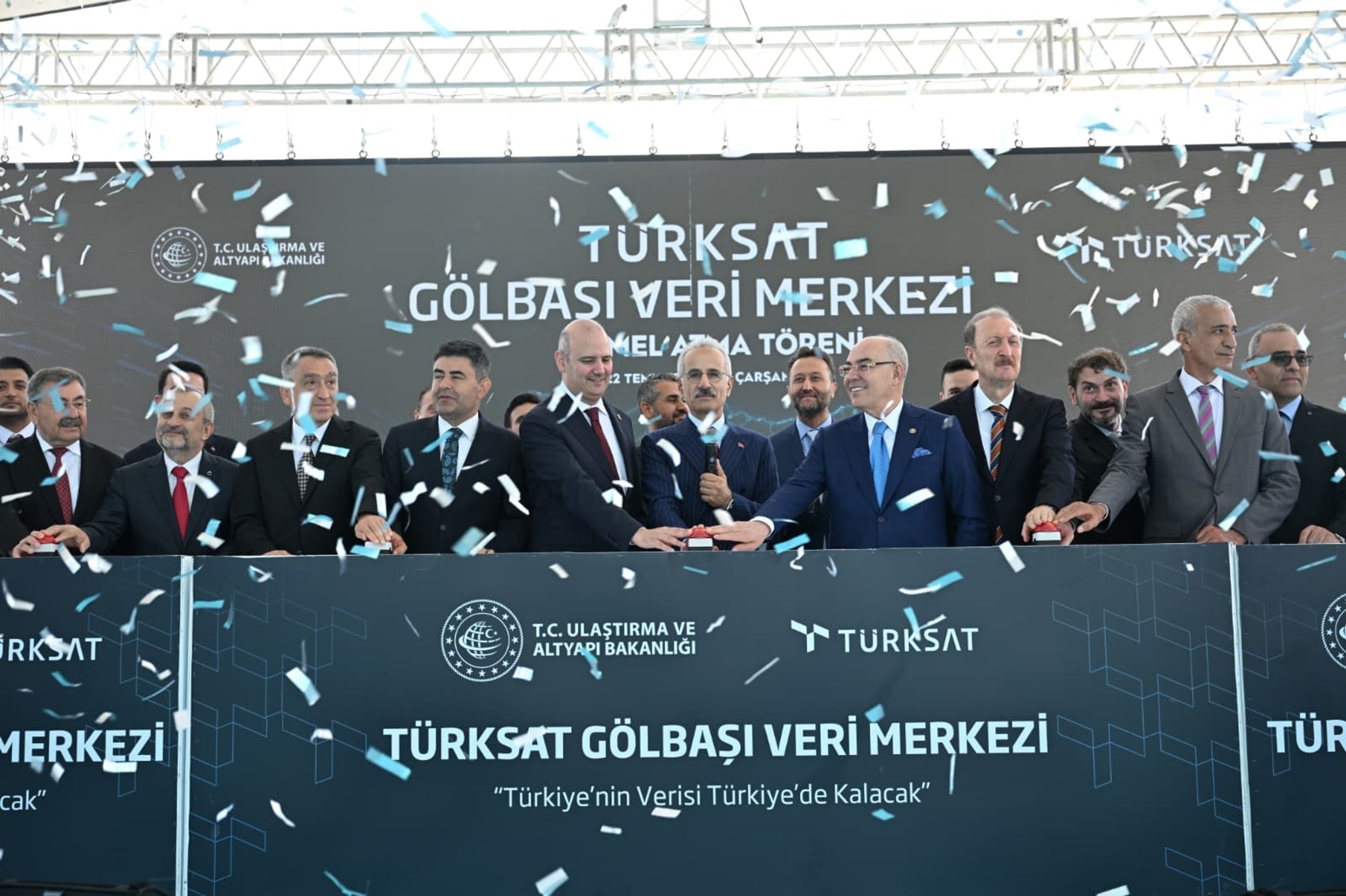
Once completed, the campus will span 35,300 square meters, making it one of Türkiye’s largest data centers. It will have an installed power capacity of 33 megavolt-amperes, while the physical capacity of Türksat’s existing data center will increase threefold in the first phase and more than eightfold after the second phase, he said.
The center is being designed to meet LEED Gold energy-efficiency standards and will feature low-carbon construction.
Regional data hub
Uraloğlu said the facility would house dedicated infrastructure for AI applications, including machine learning, deep learning, data mining, model training and high-performance computing.
The data center will also provide cloud and data services for institutions handling critical information using domestically developed software, with particular emphasis on supporting Türkiye’s e-Government platform and other public digital infrastructure, he added.
According to Uraloğlu, the center will be capable of maintaining uninterrupted operations during emergencies while helping reduce duplicated public-sector investments by consolidating cloud and data services under a single platform.
The minister said the facility could also position Türkiye as a regional data hub by offering secure hosting services to neighboring countries and Turkic states.

Construction is expected to be completed within about 18 months, with operations scheduled to begin in early 2028.
Satellite expansion
Uraloğlu also outlined Türkiye’s expanding satellite ambitions, noting that Türksat currently operates six active satellites at orbital positions of 31, 42 and 50 degrees east, providing coverage to an estimated 5.5 billion people, roughly two-thirds of the world’s population.
He said the domestically developed Türksat 6A, produced with more than 80% local content, has enabled Türkiye to become one of only 11 countries capable of designing and manufacturing communications satellites.
The satellite’s coverage has recently expanded across South Asia, providing broadcasting services in 10 countries including Pakistan, India, Bangladesh, Malaysia and Indonesia. Türksat now broadcasts a total of 550 television channels via its satellite fleet, including 69 channels through Türksat 6A’s South Asia coverage.
Uraloğlu also said Türkiye plans to sign a contract for the Türksat 7A satellite project before the end of the year.
The satellite, scheduled to enter service by the end of 2029, will replace the aging Türksat 3A and offer higher data capacity, broader coverage and more flexible resource management.
Uraloğlu also recalled that Türksat had recently signed a strategic partnership with Qatar-based satellite operator Es’hailSat to jointly utilize capacity on the future Es’hail-3/Türksat-Biruni satellite at the 50-degree east orbital slot.


-
 Politics2 days ago
Fidan meets Qatar emir, FM as Türkiye reaffirms support to Doha
-
 Refugees2 days ago
White House says Trump will fly old Air Force One for about a month
-
 Daily Agenda20 hours ago
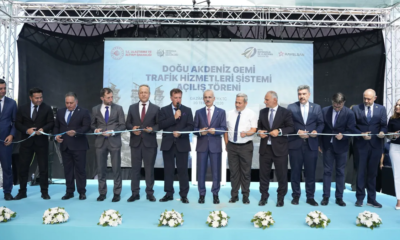
Important move for the Blue Homeland: Artificial intelligence-supported domestic digital maritime surveillance system from HAVELSAN to TRNC!
-

 Daily Agenda3 days ago
From torture cells to memory museum – Breaking News
-

 Economy2 days ago
Ryanair profits plunge by over 30% on fuel cost spike, lower fares
-

 Daily Agenda3 days ago
They did not write the lost device to the file – Last Minute News
-
 Politics2 days ago
CHP-run Istanbul succumbs to astronomical hikes
-

 Daily Agenda3 days ago
Turkish soldiers put the seal of peace in Cyprus