We know all too well what it feels like to step into a dreamland where time seems to slow to a halt, nestled gently against the mountains.
As we planned our summer vacation, we found ourselves facing a choice: Should we head for the seaside, with its pearly white sands, or opt for turquoise lakes surrounded by lush green meadows?
This time, we chose the latter. Instead of the Greek islands or the sun-drenched shores of the Mediterranean, we set our sights on Austria’s Lake District.
For most people, summer is all about the beach, the sea and soaking up the sun. Our Austrian getaway had all the makings of a classic summer holiday, with a few unexpected delights thrown in.
We spent our days swimming in crystal-clear turquoise lakes beneath the Alps, strolling across grassy meadows in flip-flops and enjoying dinner with a view as the evening air grew cool enough to reach for a shawl. And while a dip in a lake may not sound as appealing as a swim in the sea to some, we found it to be a special experience in its own right.
Summer may be behind us, but if this lakeside escape sounds tempting, now is the perfect time to start planning a trip for next year.
Nestled in the Austrian Alps, the Salzkammergut region is an ideal summer escape for anyone looking to trade the sweltering heat and crowded beaches for fresh mountain air and a slower pace of life.
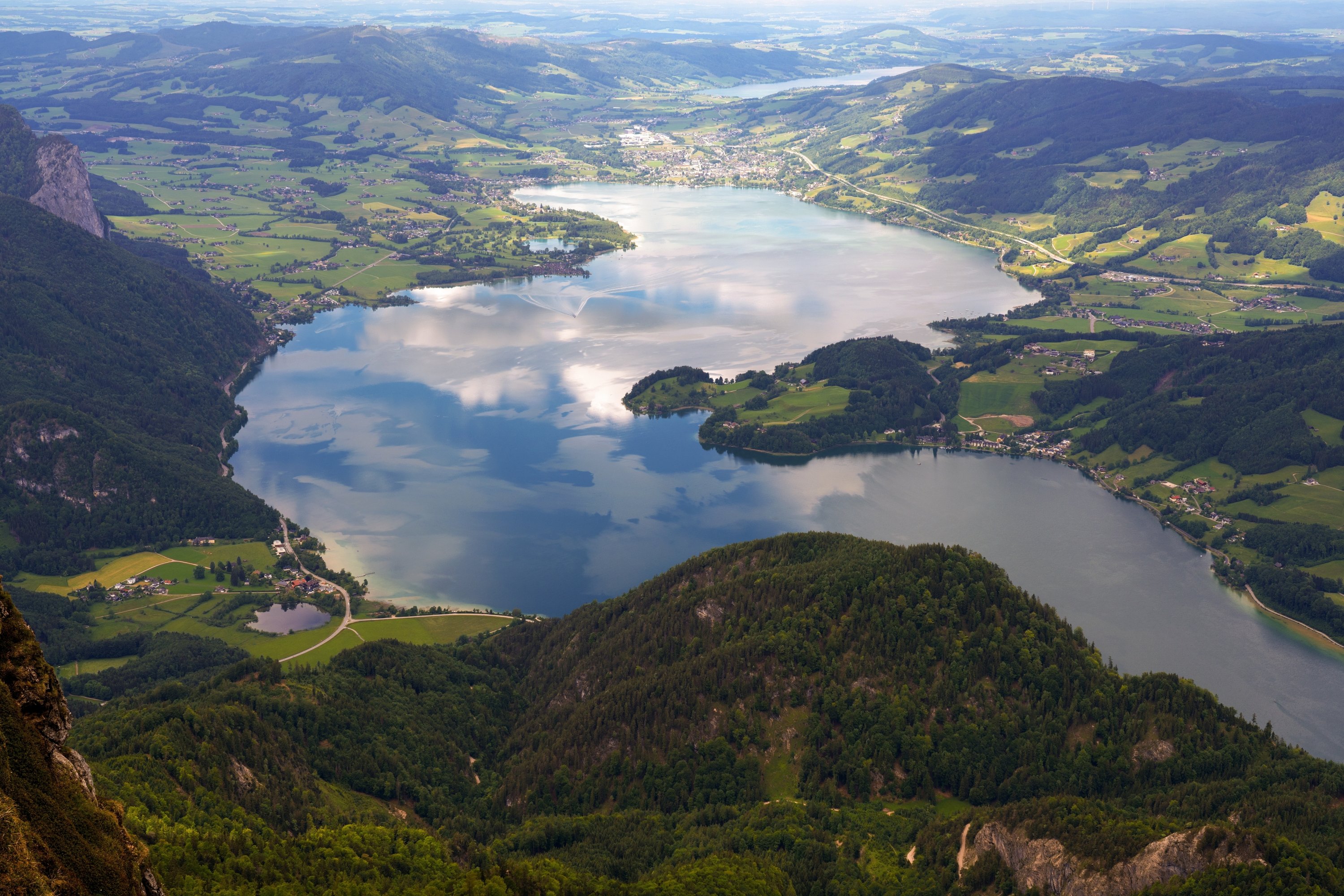
An aerial view of Schafberg mountain overlooking Lake Mondsee, Salzkammergut, Austria. (Shutterstock Photo)
With 76 crystal-clear lakes scattered among lush green mountains, the region offers plenty of ways to enjoy the outdoors, from swimming, canoeing and sailing to hiking trails with breathtaking views. The mild summer weather and postcard-worthy scenery only add to its appeal.
Beyond its natural beauty, Salzkammergut charms visitors with fairytale-like towns, well-preserved historic architecture, a rich cultural heritage and a peaceful atmosphere. It offers a different kind of summer holiday, one that feels as restorative as it is memorable. For us, the highlight of the trip was undoubtedly St. Wolfgang, a lakeside town with a character all its own.
St. Wolfgang
Set on the northern shore of Lake Wolfgangsee and framed by steep mountain slopes, St. Wolfgang is a charming little town where life moves at a gentler pace. We felt it as soon as we arrived. Unlike the hustle and bustle of city life, there was no sense of urgency here, just a slower pace that we soon found ourselves falling into.
We had admired colorful wooden houses in other parts of Europe, but St. Wolfgang had a charm of its own. Pastel-painted buildings lined the streets, and the scent of flowers filled the air. It didn’t take long for us to realize that this might be our favorite stop of the trip.
Every corner seemed to reflect a way of life in harmony with nature and we loved wandering through its streets, discovering hidden gems along the way. Here are the places we think you shouldn’t miss.
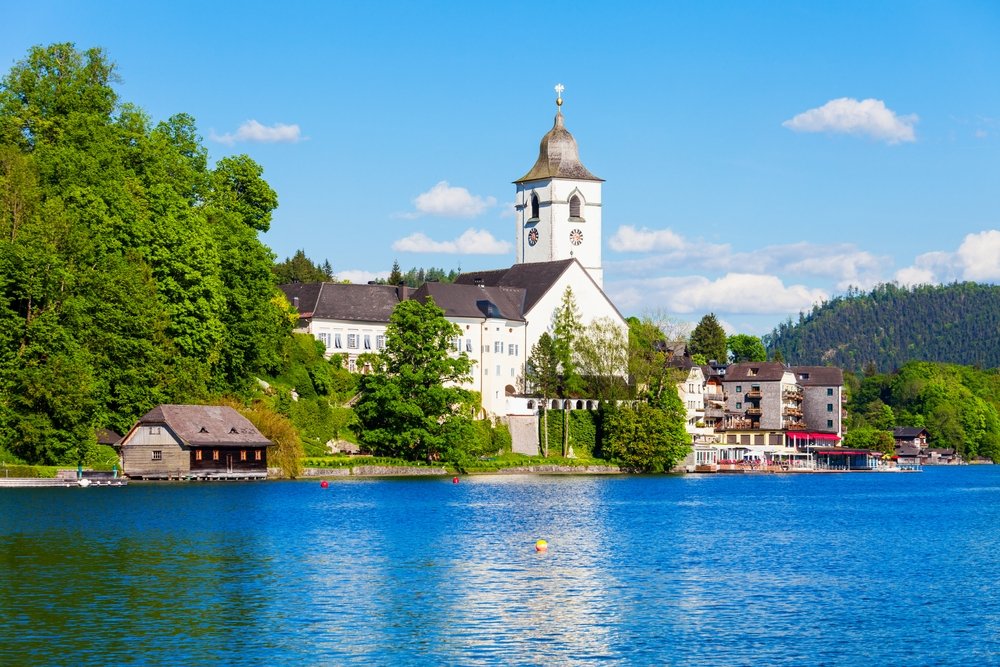
The St. Wolfgang catholic church (“Pfarrkirchen Wallfahrtskirche”), St. Wolfgang, Salzkammergut, Austria. (Shutterstock Photo)
St. Wolfgang Church
Pfarrkirche St. Wolfgang, the historic church standing on the lakeshore right in the center of St. Wolfgang is considered the heart and soul of the town. The building is said to have been founded by Bishop Wolfgang in the 10th century, when he retreated here to live in seclusion and established the site with his own hands. It has been one of Europe’s most important pilgrimage destinations since the Middle Ages.
The moment we pushed open the heavy wooden door and stepped inside, the bustle outside seemed to fade away, replaced by a cool stillness and the faint scent of candle wax. The church’s greatest treasure is its magnificent winged wooden altarpiece, created by master artist Michael Pacher in the 15th century. Intricately carved with biblical scenes and figures of saints, it is a remarkable example of medieval religious art and woodcarving.
The finely sculpted faces, delicate folds of the figures’ garments and gold-leaf details offer a glimpse into the craftsmanship and devotion of the era. Outside, the arched windows in the church courtyard overlook the lake, making them a lovely spot to pause and enjoy the tranquil scenery. We also found that they made the perfect natural frames for photographs of the lake and the surrounding landscape.
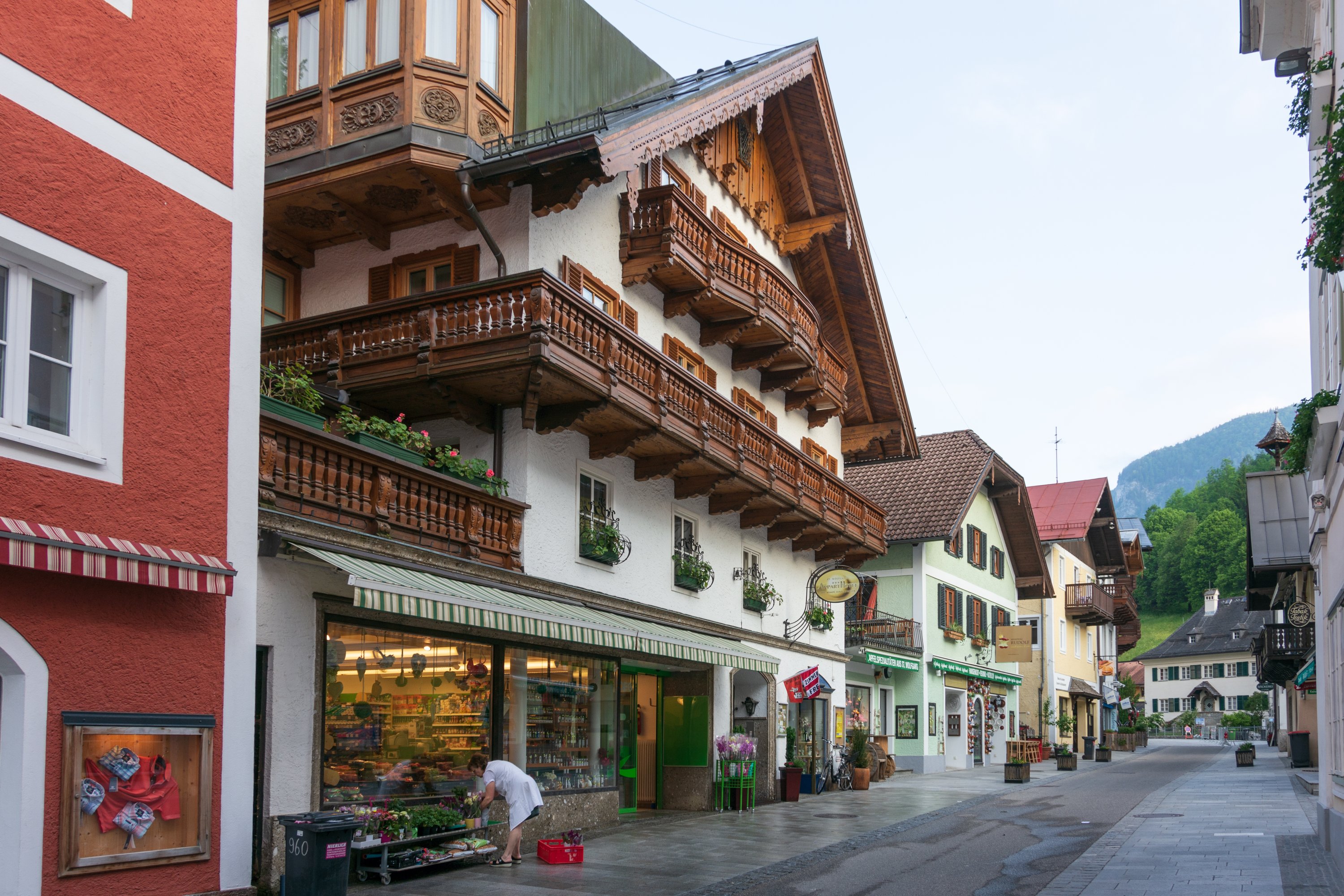
Historic alleys and streets in the old town of St. Wolfgang, Austria, June 7, 2019. (Shutterstock Photo)
Historic town center
The best way to get a feel for St. Wolfgang is to wander through its narrow cobblestone streets without a plan. Colorful Lüftlmalerei murals decorate the facades, while purple geraniums spill over dark wooden balconies, adding to the town’s storybook charm.
The air is filled with the scent of Swiss pine, known locally as Zirbenholz, drifting from the shops and mingling with the aroma of freshly baked traditional Austrian apple strudel and coffee from nearby bakeries. Passing handmade ceramics studios, tailors specializing in traditional Austrian clothing and inviting cafe terraces, we found ourselves slipping effortlessly into the town’s laid-back pace.
Be sure to leave some time for the little souvenir shops tucked away along the side streets, too. Their carefully arranged displays are full of distinctive finds, each reflecting the craftsmanship and care that make browsing them a pleasure.
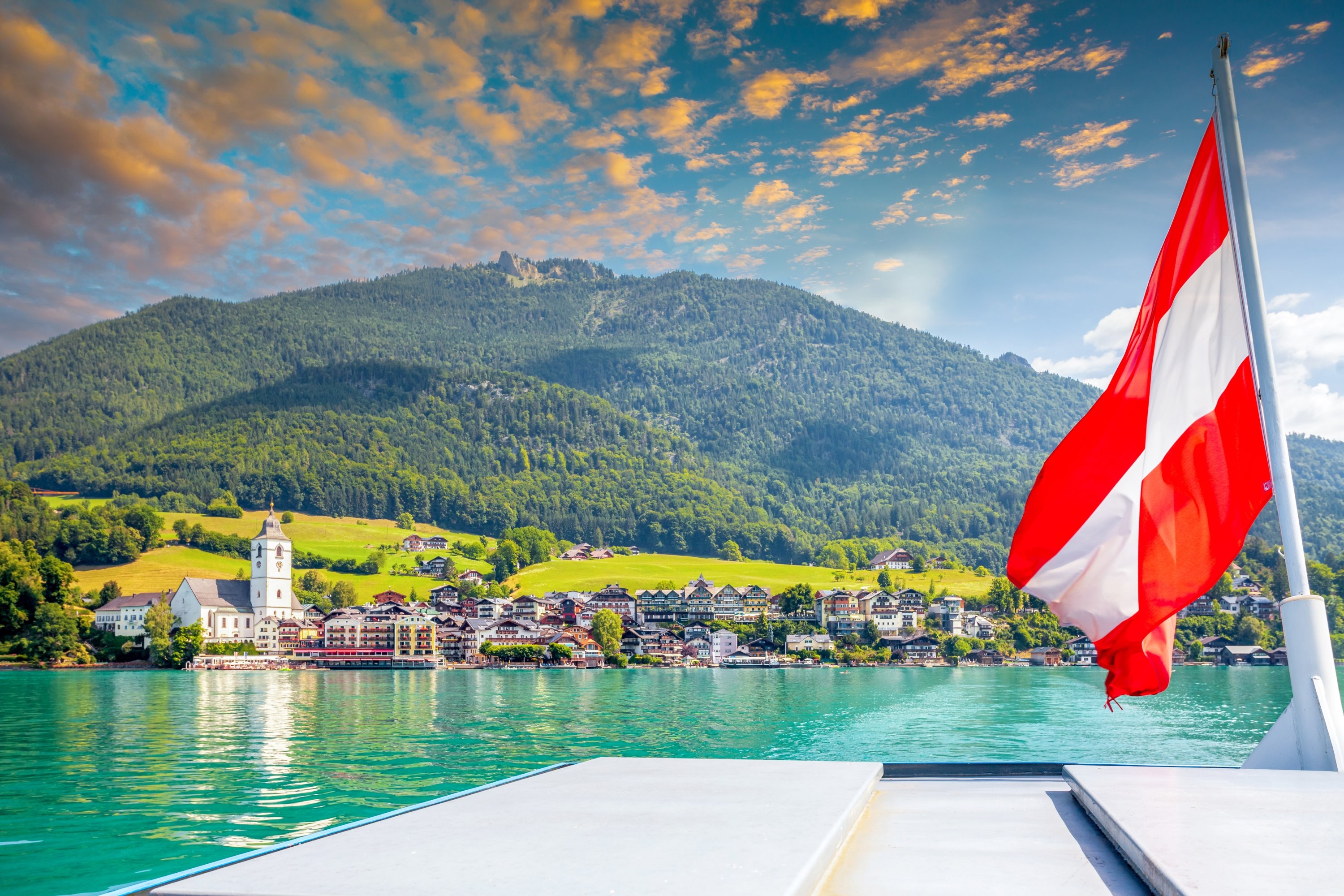
A view of St. Wolfgang, Salzkammergut, Austria. (Shutterstock Photo)
Pier square
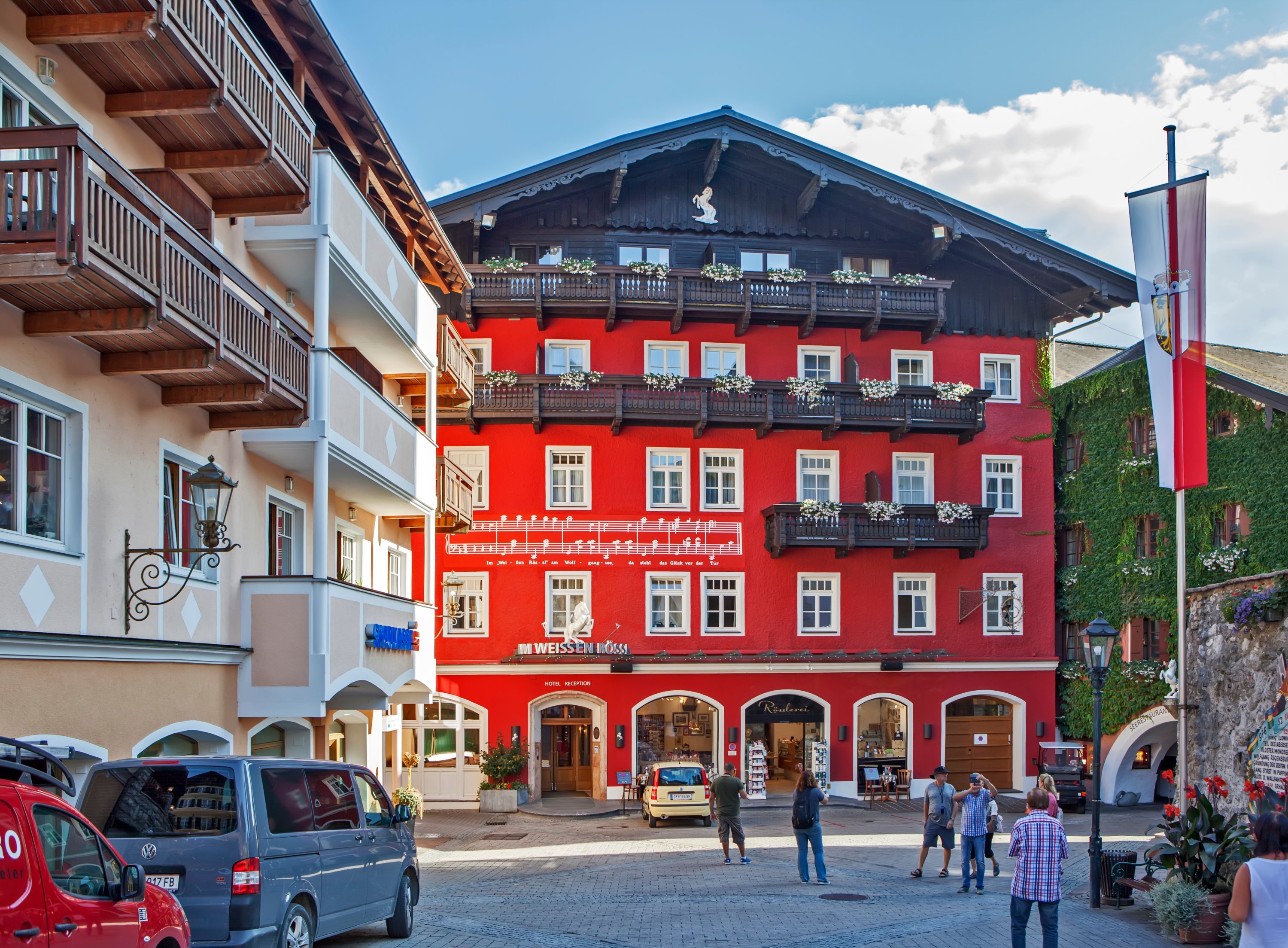
As we made our way down to the lakeshore, the first building to catch our eye was Im Weissen Rössl, famous for its striking red facade. This historic hotel, which has inspired classic operettas and films, is one of the town’s most recognizable landmarks.
We found ourselves lingering on the wooden swing benches along the piers beside the hotel. Designed for two people to sit side by side and gently sway as they gaze out over the water, they offered an unexpectedly soothing way to spend the afternoon.
We stayed there for quite some time. Sitting on the wooden pier, so close to the lake that we could almost reach out and touch the water, we could have watched the swans gliding along the shore and admired the beauty of the opposite bank for hours.
The largest and most famous hotel, Im Weissen Rössl, in St. Wolfgang, Austria, Sept. 19, 2018. (Shutterstock Photo)
Summit of Schafberg
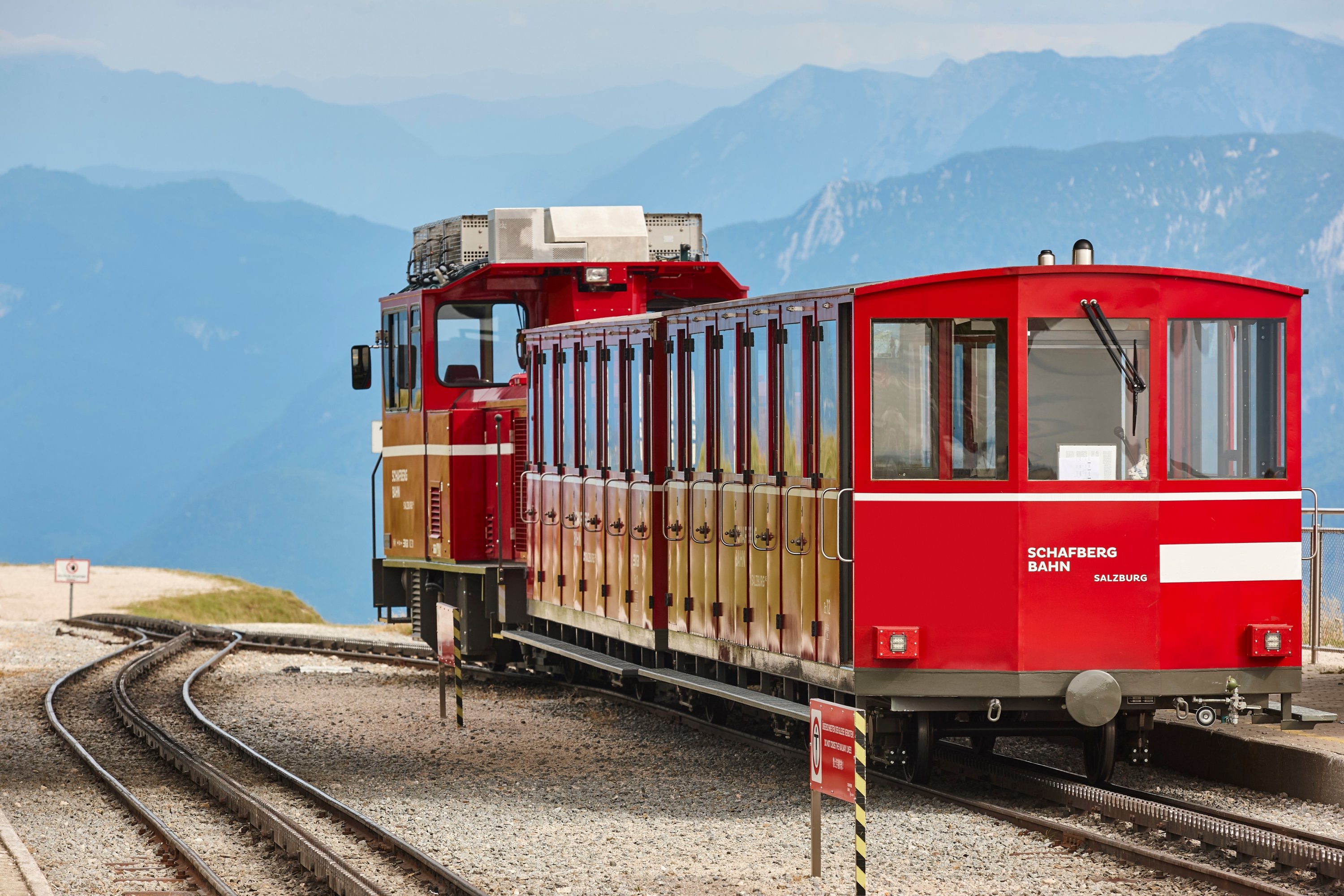
One of the most memorable experiences of our stay came before we left the town: riding the historic red Schafbergbahn steam train up the mountain. The railway has been operating since 1893, and its train steadily climbed the steep slopes on cogwheel tracks, carrying us through pine forests and past rugged cliffs to the 1,783-meter summit of Schafberg.
The panorama that greeted us at the top was breathtaking. We could see six different lakes spread across the Salzkammergut region at once, including Wolfgangsee, Mondsee and Attersee.
Walking along the trails in the cool mountain breeze and looking down from the steep rocky outcrop known as Himmelpforte, or Heaven’s Gate, gave us a true sense of the region’s dramatic natural grandeur.
A Schafberg train, Salzburgerland, Austria. (Shutterstock Photo)
Swimming, boat trips
We decided to see St. Wolfgang from the water, hopping aboard one of the traditional boats that glide across Lake Wolfgangsee. The view from the lake offered a fresh perspective on the town, with steep mountain slopes meeting the water and colorful buildings lining the shore.
In summer, the grassy lakeshores around town are perfect for a refreshing swim and a little downtime in nature. After a dip in the lake’s crystal-clear freshwater, we lay back on the grass and soaked up the peaceful Alpine scenery. With no saltwater to leave us feeling sticky, we could simply relax and enjoy the cool water and mountain air. It was one of those uncomplicated pleasures that ended up becoming a highlight of our summer getaway.
Moments to treasure
From misty mornings by the lake to the quiet charm of St. Wolfgang’s cobblestone streets, every moment felt like a welcome escape from city life. Inside St. Wolfgang Church, the historic wooden altarpiece offered a moment of reflection, while a leisurely pause on the swing benches beside Im Weissen Rössl brought the simple pleasure of watching swans glide across crystal-clear water.
The journey up Schafberg aboard the historic red steam train was equally unforgettable, culminating in sweeping views of six lakes from the 1,783-meter summit. As the sun set, painting the water orange, accordion music drifted from a nearby restaurant, providing a fitting end to the day.
Some memories, however, resist being captured in photographs. The stillness of the lake, the mountain air and the feeling of having stepped away from the rush of everyday life were treasures we would carry home with us.
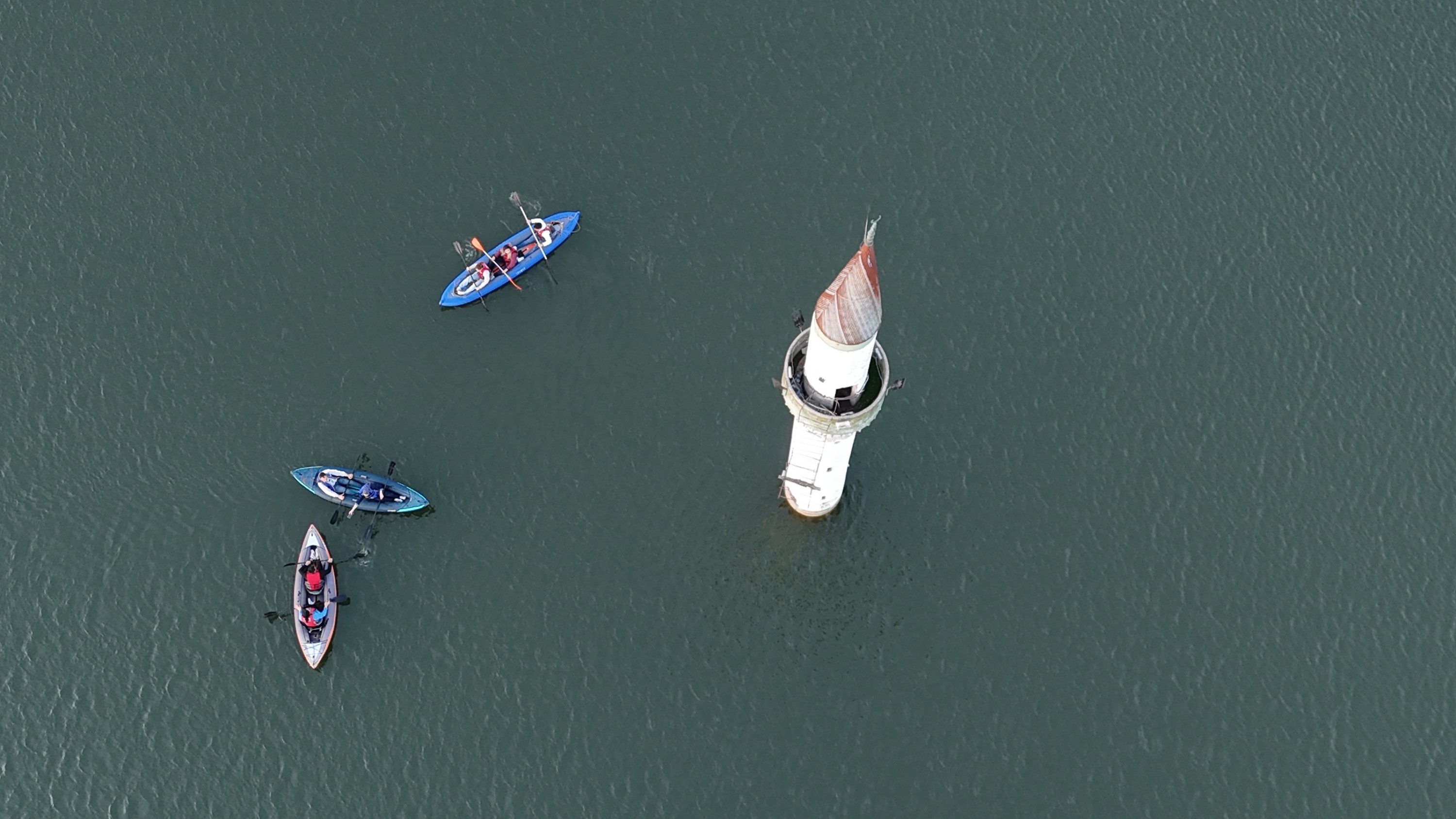
Canoe tours around the Sunken Minaret on the Kızılırmak River in Türkiye’s Samsun province continue to attract visitors as winter approaches.
Organized by the Bafra Extreme Outdoor Sports Group around the Sunken Minaret in the Boğazkaya neighborhood, the tours contribute to local tourism and the area’s economy.
Volkan Karaman, head of the Bafra Extreme Outdoor Sports Group, told Anadolu Agency (AA) that the group also organizes nature hikes and camping activities in the area, alongside canoe tours.
An aerial view of canoes around the Sunken Minaret on the Kızılırmak River in Bafra, Samsun, Türkiye, Oct. 26, 2026. (AA Photo)
Karaman said the group aims to offer visitors unique experiences by bringing sports and nature together and contribute to local tourism through its activities. The canoe tours around the Sunken Minaret also give people a chance to socialize, he said, adding that water sports should become more widespread on the Kızılırmak, Türkiye’s longest river.
He said the group hopes visitors will enjoy their time in the area and help promote Bafra by sharing photos of their experiences. Noting that the district attracts both domestic and international tourists, Karaman said the group also aims to support the local economy through spending on accommodation, food and outdoor activities.
“Bafra is a beautiful place, and our tourism activities will continue without interruption. We invite everyone to visit,” he said.
The Daily Sabah Newsletter
Keep up to date with what’s happening in Turkey,
it’s region and the world.
SIGN ME UP
You can unsubscribe at any time. By signing up you are agreeing to our Terms of Use and Privacy Policy.
This site is protected by reCAPTCHA and the Google Privacy Policy and Terms of Service apply.
Minister of Transport and Infrastructure Abdulkadir Uraloğlu announced that tickets for the new season of the Touristic Eastern Express will go on sale for individual travelers at 1:55 p.m. local time on Monday.
“The Touristic Eastern Express will operate a total of 70 trips during the 2026-2027 winter season, with 35 trips in each direction. Services from Ankara to Kars will run from Dec. 21, 2026, to March 10, 2027, while trains traveling from Kars to Ankara will operate from Dec. 23, 2026, to March 12, 2027,” he said.
Uraloğlu said trains departing from Ankara for Kars will run on Mondays, Wednesdays and Fridays, while trains from Kars to Ankara will operate on Wednesdays, Fridays and Sundays.
Providing details on ticket sales, Uraloğlu said individual tickets would go on sale at 1:55 p.m. tomorrow, Oct. 26, and could be purchased through TCDD Taşımacılık’s sales channels.
With scheduled sightseeing stops along the route, the Touristic Eastern Express gives passengers the opportunity to explore the cities it passes through, he noted.
“Trains traveling from Ankara to Kars will make sightseeing stops at Erzincan and Erzurum stations, while those traveling from Kars to Ankara will stop at İliç, Divriği and Sivas stations. Passengers will have the opportunity to experience Anatolia’s historical and cultural heritage firsthand,” he said.
The Daily Sabah Newsletter
Keep up to date with what’s happening in Turkey,
it’s region and the world.
SIGN ME UP
You can unsubscribe at any time. By signing up you are agreeing to our Terms of Use and Privacy Policy.
This site is protected by reCAPTCHA and the Google Privacy Policy and Terms of Service apply.
Türkiye’s place in the yachting industry extends beyond its coastline. The country builds vessels for international buyers, maintains a network of marinas and shipyards, and draws visitors to sailing destinations along the Aegean and Mediterranean. Bringing these elements closer together could open a further avenue for growth in both tourism and maritime services.
The opportunity was on display at the Bodrum Boat Show, held from Oct. 14 to 18, as boatbuilders, brokers and prospective buyers gathered in a town long associated with sailing holidays and traditional wooden gulets. The event offered a glimpse of an industry that links Türkiye’s established maritime traditions with a modern manufacturing sector and an international market for yacht ownership and chartering.
For Beril Hasdemir, regional manager of Sunreef Yachts, which specializes in customized luxury catamarans, demand is also shaped by changing ideas about how people spend time on the water.
“People want more space on the sea,” she said. Some customers view a yacht as more than a leisure purchase, she added. “Wherever you park, you have a home.” Some of the company’s international customers live aboard their boats, treating them as mobile residences rather than occasional holiday retreats.
While this remains a specialized market, it illustrates the range of activity that yachting can generate, from charter holidays and marina services to maintenance and provisioning. For Türkiye, the opportunity is to capture a larger share of that activity by connecting its manufacturing capabilities with its appeal as a destination.
From shipyards to sailing routes
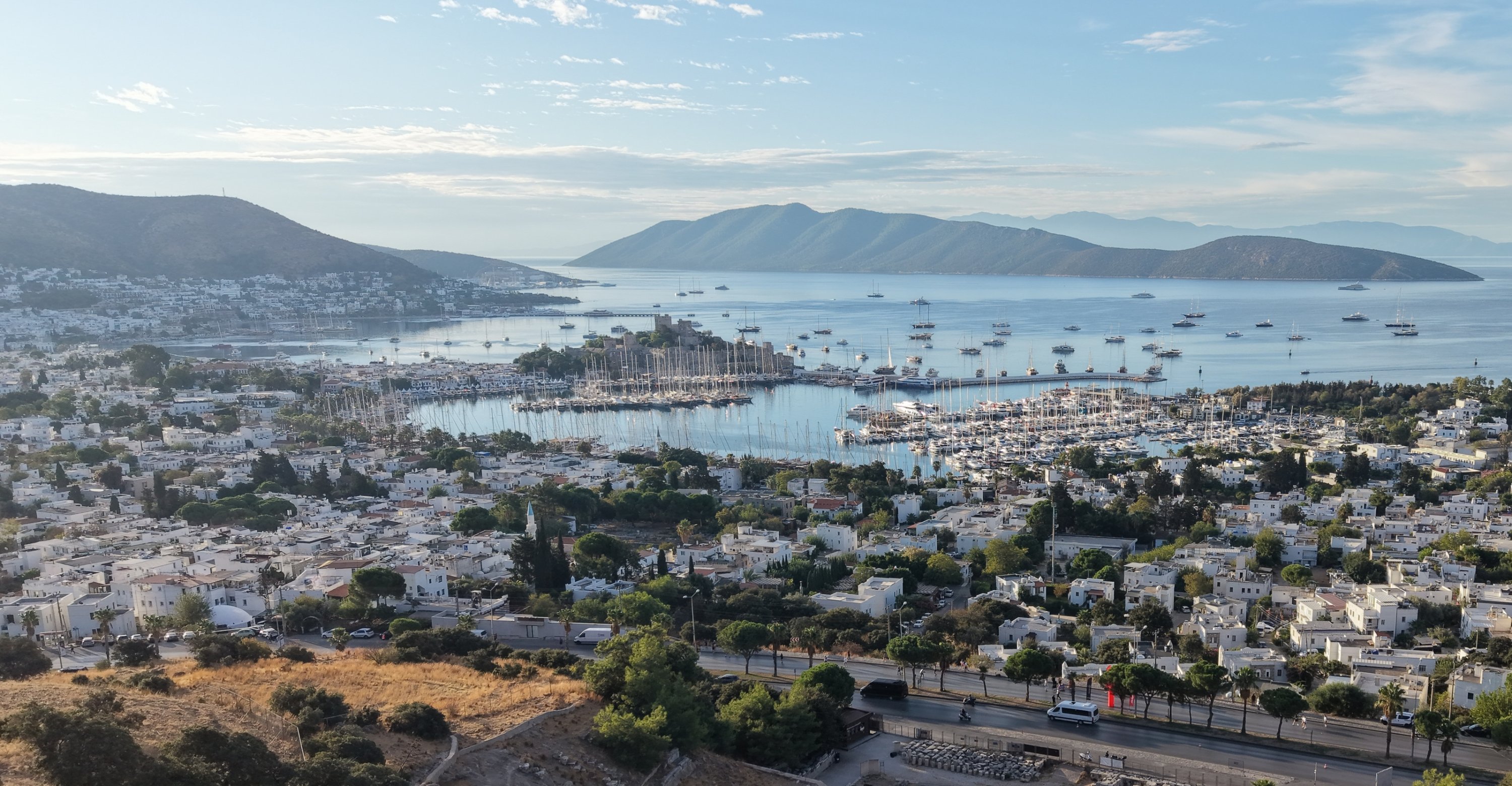
Türkiye’s western and southern coastlines offer a network of ports, sheltered bays and sailing routes linking destinations such as Bodrum, Datça, Marmaris, Göcek, Fethiye, Kaş and Antalya. Bodrum, with its established blue-cruise tradition and proximity to the Greek islands, is well placed to serve as a gateway to the eastern Aegean.
A general view of Bodrum’s historic old town in Muğla, southwestern Türkiye, Oct. 14, 2026. (AA Photo)
Yet the country’s position in yachting is not based on tourism alone. According to a 2024 yacht-market report, Türkiye ranked second globally in superyacht production, behind Italy. The report put exports of yachts, boats and vessels at $442.4 million in 2024, an increase of 8.52% from the previous year.
That industrial base creates opportunities beyond the sale of vessels. Maintenance, repair, refitting, equipment supply and brokerage can all benefit when more yachts are based in the country. Charter operations can provide another link, bringing visitors to Turkish ports while creating demand for local businesses.
Hasdemir said Sunreef’s charter department receives inquiries from customers interested in Türkiye, although the company does not currently have a charter vessel based in the country. She said she would like to see a local fleet established.
Her experience offers one indication of potential interest, rather than a measure of the market as a whole. Still, the connection between yacht production and tourism is worth considering: A country that builds vessels for international customers can also seek to attract their owners and charter clients to its own marinas.
A wider maritime economy
The economic effects of yachting can extend beyond the marina. Visitors traveling between ports may use restaurants, shops and local services in several coastal communities, while vessel owners and charter operators create demand for skilled workers and specialist suppliers.
Hasdemir said Türkiye could raise its international profile by promoting maritime tourism alongside its established tourism campaigns. She also pointed to the value of coordination among public institutions responsible for tourism, transport, trade and taxation.
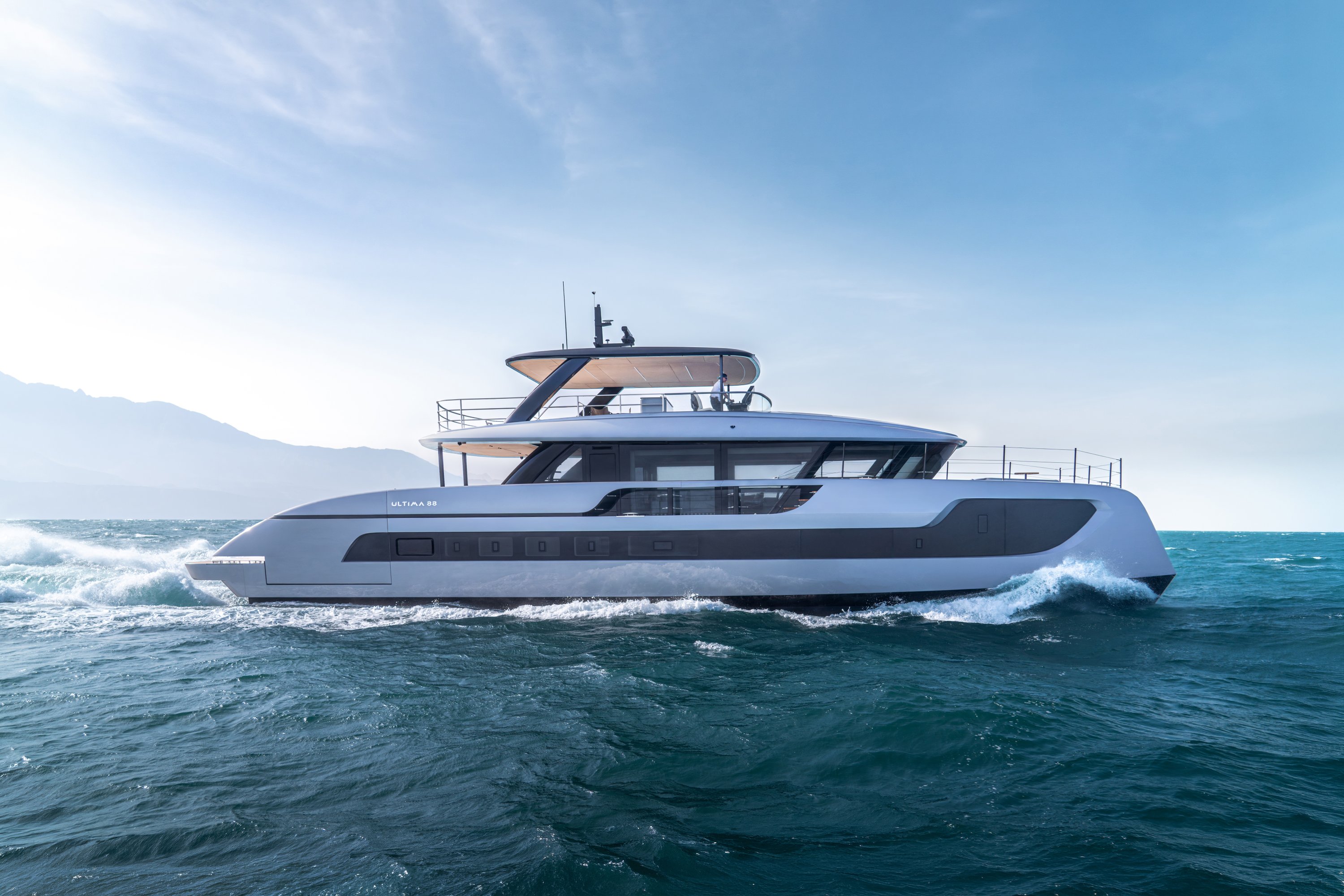
Sunreef Yachts’ ULTIMA 88 yacht sails at sea during a marketing campaign shoot. (Courtesy of Sunreef Yachts)
The opportunity is not confined to luxury yachts. Charter holidays, sailing schools and smaller boats offer ways to experience the coast without the expense of ownership. Hasdemir said she sees growing interest among Turkish customers, including some who might previously have chosen a hotel holiday.
A broader range of boating experiences could help diversify coastal tourism and bring more visitors into contact with the businesses and communities that support it. For destinations such as Bodrum, the ambition is to complement the traditional holiday season with activity connected to yacht services, sailing and maritime events.
That development also depends on preserving the coastline itself. Waste management, responsible anchoring and protection of marine habitats will remain important as boating activity expands. Hasdemir said some of Sunreef’s catamarans use electric motors, solar panels and battery systems to reduce reliance on conventional engines or generators in certain conditions. Such technologies can help limit some environmental impacts, alongside effective oversight of vessels and marina facilities.
The Bodrum Boat Show provided a platform for bringing manufacturers, buyers and maritime businesses together. Its longer-term contribution will depend on the commercial relationships it helps establish and the extent to which those connections continue beyond the event.
Türkiye already has two important components of a larger yachting economy: the capacity to build vessels for international markets and a coastline that attracts visitors from abroad. Developing closer links between the two could help extend the value of each, giving yacht manufacturing, tourism and maritime services a more connected role in the country’s coastal economy, Hasdemir said.
The Daily Sabah Newsletter
Keep up to date with what’s happening in Turkey,
it’s region and the world.
SIGN ME UP
You can unsubscribe at any time. By signing up you are agreeing to our Terms of Use and Privacy Policy.
This site is protected by reCAPTCHA and the Google Privacy Policy and Terms of Service apply.
Bayam’s Red Badlands in Kağızman, located in eastern Türkiye’s Kars province, are attracting nature lovers and photography enthusiasts with their reddish rocks and unusual geological formations.
Resembling Arizona’s canyons in the United States, the area has the potential to become a new destination for hiking and photography enthusiasts.
Located between the villages of Kötek and Bayam, the Bayam Red Badlands offer visitors a striking landscape shaped by natural erosion, with distinctive rock formations and reddish hues.
The area is gaining recognition through hiking trips organized by nature groups, emerging as a potential destination for nature tourism.
Hikers exploring the region have the opportunity to take a closer look at natural rock formations believed to be millions of years old.
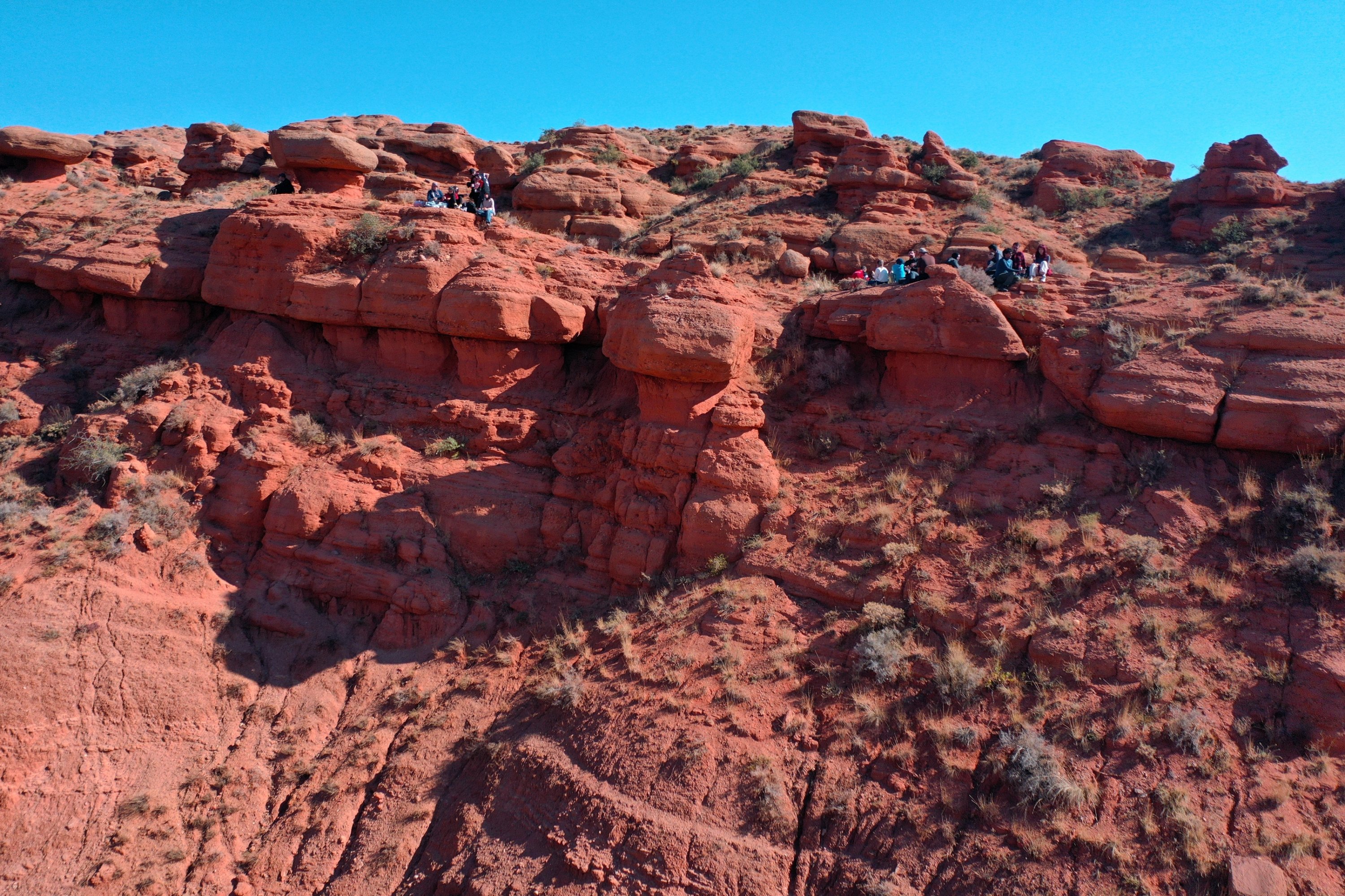
Mushroom-shaped rock formations rise from the reddish landscape of the Bayam Red Badlands, Kars, Türkiye, Oct. 18, 2026. (AA Photo)
Mushroom-shaped rocks
Rising above layers of fine sand, mushroom-shaped rocks and formations sculpted into unusual shapes also make the area an appealing destination for photography enthusiasts.
Adem Süleyman Güzel, head of the Kağızman Teachers’ House Sports Club, told Anadolu Agency (AA) that they organize activities to promote Kağızman’s natural and historical heritage to visitors. He said wind and floodwaters had eroded the rocks, creating striking mushroom-shaped formations and other unusual structures.
“We want to introduce the natural beauty and history of our hometown to those visiting the district,” he said.
Haşim Kaya, who joined a hike in the area, said the group organizes hiking trips every week.
Haşim Kaya described the Bayam Red Badlands as a magnificent natural landscape, comparing parts of the area to Arizona’s canyons and highlighting its mushroom-shaped rock formations.
“We welcome all nature lovers to Kağızman,” he said.
Derya Bektaş, one of the hikers, said the group had added the Bayam Red Badlands to its hiking route, describing it as a must-see destination with beautiful natural scenery.
“We get to discover the natural beauty of our hometown during our hikes, which also include various activities,” she said.
The Daily Sabah Newsletter
Keep up to date with what’s happening in Turkey,
it’s region and the world.
SIGN ME UP
You can unsubscribe at any time. By signing up you are agreeing to our Terms of Use and Privacy Policy.
This site is protected by reCAPTCHA and the Google Privacy Policy and Terms of Service apply.
After travelling more than 20 hours by air from Australia, Anne Boland arrived to find the Louvre shut behind barricades, prompting her to offer a piece of advice to tourists planning a trip to Paris.
“Stay home!” the 73-year-old pensioner told Agence France-Presse (AFP) on Monday outside the world’s most visited museum, after a weekend of unrest that rocked some of the French capital’s most iconic streets and squares.
She was one of thousands of visitors scrambling to navigate the City of Light as marches, traffic delays and wafting tear gas snarl the capital’s 14-billion-euro ($16-billion) tourism industry.
A small group of protesters was blocking the entrance to the Louvre’s famous glass pyramid, following days of mass protests that also spilled into some of the worst street violence France has seen in recent years.
Cycling through the city the day before, expecting charming Haussmann buildings, mansard roofs and corner cafes, Peter, a Dutch tourist, found himself touring a “war zone”.
“It was terrible – debris from fires everywhere, glass on the pavement,” the 63-year-old, who declined to give his last name, said.
Some shrugged off the disruptions. But almost all seemed caught off guard upon arriving at the Louvre, their plans suddenly cancelled.
Turned away, many resorted to selfies and photos in front of the former palace.
Roughly half a million people turned out across France on Saturday to denounce the surging cost of living, a culmination of earlier protests led by high school students demanding better conditions at their schools.
The Yellow Vests movement, which organized the weekend’s rallies, has called for more protests this coming Saturday, as the government mulls partial, targeted curfews.
‘A disaster’
The closure of the Louvre meant just one more detour for Anne and her husband Pat Boland, also 73, whose airline lost their luggage during the voyage.
“It’s just a disaster,” said Pat with a laugh.
“We were here at this exact spot seven years ago, and the queues were too long,” said Anne.
Having visited the museum twice, she’s yet to go inside.
“We don’t want to get involved. We want to stand back and get away from them,” Pat said of the protests.
“But we don’t want to go against them either,” Anne hastened to add, noting a trend of cost-of-living protests cropping up across the world recently, including in Ireland and Australia.
At the weekend, taxi drivers at Charles de Gaulle airport warned arriving passengers that they might not be able to make it to their destination if protesters blocked their routes.
A headline in a newspaper in Wales, in the U.K., wondered if France would be safe for families to visit for the upcoming school holiday, and the U.S. embassy called on its nationals to exercise caution.
But many in the city carried on in typical Parisian style: a video broadcast by America’s CBS news showed a couple drinking on a city terrace, unfazed by a nearby fire in the road.
“We haven’t seen anything concerning,” said Glenda Manna, 62, a university professor in town from the U.S.
But as the protests capture the attention of news channels – and politicians – around the world, there are incessant messages from family members back home pleading with them to “tell me you’re safe,” added her mother, Dorothy Hill, 82.
The Daily Sabah Newsletter
Keep up to date with what’s happening in Turkey,
it’s region and the world.
SIGN ME UP
You can unsubscribe at any time. By signing up you are agreeing to our Terms of Use and Privacy Policy.
This site is protected by reCAPTCHA and the Google Privacy Policy and Terms of Service apply.
The 2,000-year-old Basilica Therma Roman Bath in the Sarıkaya district of Yozgat, central Türkiye, is welcoming visitors in the evening following upgrades to its lighting and the opening of a cafe where guests can relax.
Listed on UNESCO’s Tentative List of World Heritage Sites, the historic bath draws attention for its Roman-era architecture and thermal waters, which reach temperatures of around 50 degrees Celsius (122 degrees Fahrenheit).
According to local legend, the site became known as “Kral Kızı,” or “King’s Daughter,” after the ailing daughter of a king who lived in Kayseri during the Roman period recovered her health in its thermal waters. Today, the structure is among the district’s major tourist attractions.
As part of a project supported by the Culture and Tourism Ministry and the Yozgat Governor’s Office, Sarıkaya Municipality took over the operation of the cafes located next to the Roman bath.
Additional lighting has also been installed, allowing visitors to explore the historic site in the evening.
Efforts are continuing to secure a place for the Roman bath on UNESCO’s permanent World Heritage List after it was added to the tentative list in 2018. Improvements are also underway in the surrounding area.
Plans include developing a shopping center in front of the bath where visitors can shop and purchase locally made souvenirs. Facade renovation work is also continuing along Marangoz Street in the district.
Mustafa Savran, who visited the Roman bath after traveling from Adana, told Anadolu Agency (AA) that he was impressed by the site’s nighttime atmosphere and lighting.
Savran said he was surprised to discover such an attraction in the district.
“When we arrived, we learned that there was a Roman bath here. They have set up a tea garden, and they have provided a wonderful service. We had tea, and the view is beautiful. It is also nice to be surrounded by historical monuments,” he said.
“We did not expect to find something like this in Sarıkaya, but we really liked it. It is a lovely setting. The nighttime atmosphere is especially beautiful, although it has a different charm during the day,” he added.
Akın Çiftçi, a lawyer who practices in the district, said the new lighting and cafe had made it possible for him to spend time at the site with friends and visitors. He thanked those involved in the improvements.
Mustafa Dalkıran, a Turkish expatriate who returned to his hometown from Bochum, Germany, also praised the site.
“It is an excellent place. It is a source of pride that such a historic monument, dating back around 2,000 years, is located in our country,” he said, adding that he was interested in historical sites and regularly watched documentaries about them.
“The place has turned out beautifully. The lighting and the view created by the water are particularly peaceful,” he said.
The Daily Sabah Newsletter
Keep up to date with what’s happening in Turkey,
it’s region and the world.
SIGN ME UP
You can unsubscribe at any time. By signing up you are agreeing to our Terms of Use and Privacy Policy.
This site is protected by reCAPTCHA and the Google Privacy Policy and Terms of Service apply.






 Economy3 days ago

 Politics2 days ago

 Sports3 days ago

 Economy1 day ago

 Politics3 days ago

 Politics3 days ago

 Economy3 days ago

 Sports2 days ago