
Economy
Inflation expectations for end of 2025 improve, shows survey

ANKARA
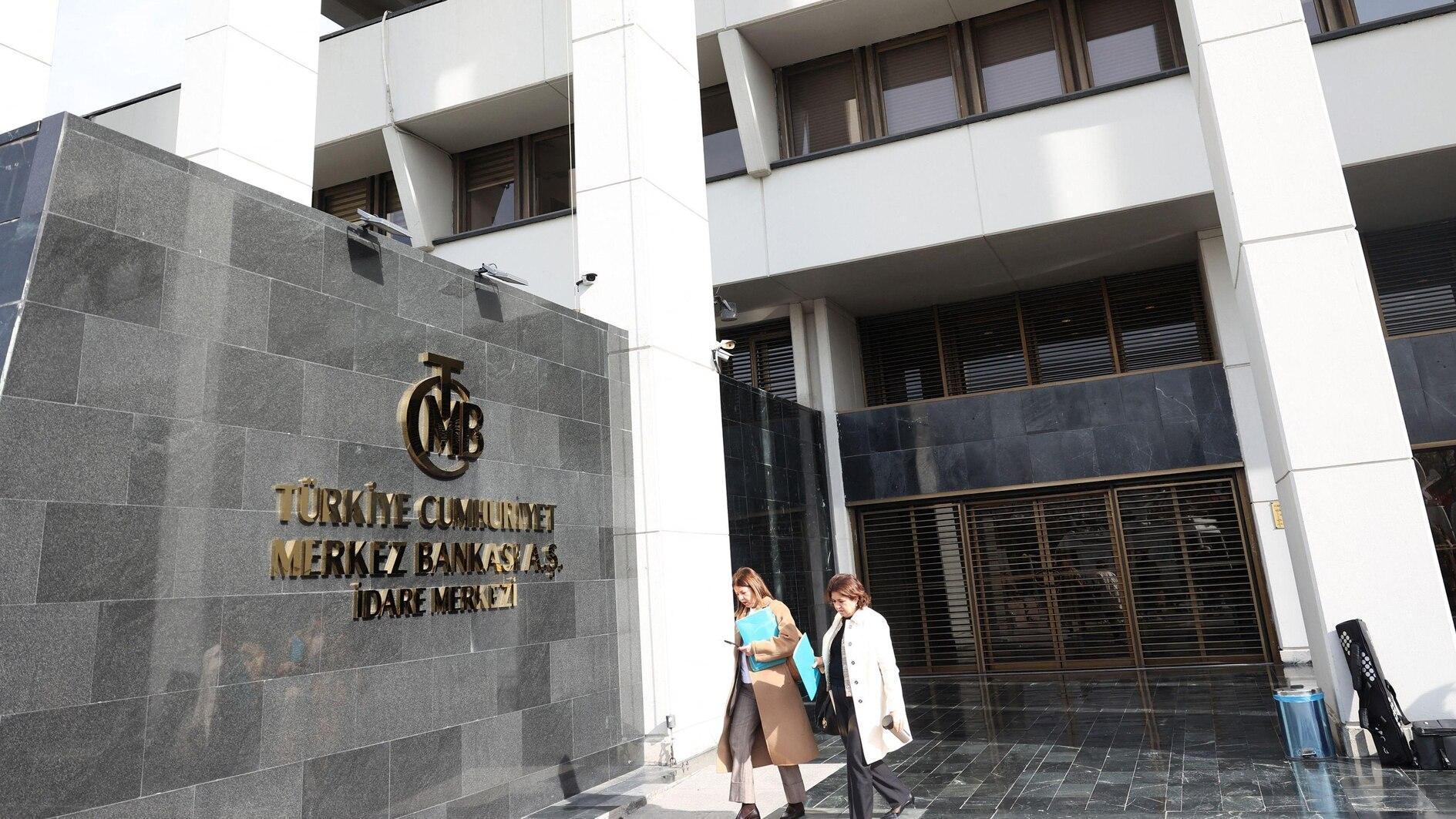
Inflation expectations for the end of 2025 declined from a previous 28.3 percent to 28.04 percent, a Central Bank survey showed on March 7.
class=”cf”>
Türkiye’s annual inflation rate eased for the ninth consecutive month in February, slowing to 39.05 percent, with consumer prices rising 2.27 percent month-on-month.
Consumer prices are forecast to rise by 2.27 percent in March, and 2.25 percent in April, according to the survey.
The 12-month ahead inflation expectations also improved, falling from 25.26 percent to 24.55 percent.
In February, the Central Bank lifted its annual consumer inflation forecast for 2025 from the previous 21 percent to 24 percent, while keeping its forecast for 2026 unchanged at 12 percent.
The 24-month ahead inflation expectations declined from 17.26 percent to 17.06 percent.
As inflation continued to decline, the Central Bank lowered its key interest rate by a further 2.5 percentage points on March 6.
The bank’s Monetary Policy Committee said it was reducing its benchmark one-week repo rate from 45 percent to 42.5 percent.
class=”cf”>
It was the bank’s third rate cut in a row.
“Considering the risks to the inflation outlook, we continue to think that the total [rate] cuts for the year could be more limited than markets expect,” Haluk Bürümcekçi, an economist, told state-run Anadolu Agency agency, commenting on this week’s interest rate reduction.
While the committee retained its positive evaluations regarding the inflation trend, it preferred a more cautious tone of the growth outlook, Bürüncekçi said.
Participants of the Central Bank’s survey lifted their GDP growth expectations for 2025 from a previous 3 percent to 3.1 percent, while increasing growth forecasts for 2026 from 3.9 percent to 4 percent.
The Turkish economy expanded by 3.2 percent last year to reach a size of $1.32 trillion, after growing 5.1 percent in 2023.
The current account balance is expected to post a deficit of $19.4 billion at the end of this year, an upward revision from the previous $18.8 billion, showed the survey. But participants’ current account deficit forecasts for 2026 improved from $24.6 billion to $24.49 billion.
The Central Bank’s Market Participants Survey monitors the expectations of experts and decision-makers from financial and real sectors related to various key economic variables.
A lot has changed in the four months since the leaders of the two global superpowers last met: Xi Jinping has overseen a surge in China’s trade, while Donald Trump has struggled with falling approval ratings at home.
That shift in fortunes has tempered expectations for their summit in Washington this week, analysts say, with Xi in no rush to make concessions and Trump constrained by a costly war with Iran that has hurt both his popularity and Americans’ wallets.
While thorny issues like Taiwan may surface, the main focus of the Sept. 24 meeting is whether the leaders will signal an extension to a trade truce struck last year that averted a major shock to the global economy.
“Xi is not really looking for anything tangible. He wants to extend the gentleman’s agreement with Trump so that China has time to fortify itself,” said Jon Czin, a foreign policy expert at the Brookings Institution who formerly served as China director at the U.S. National Security Council.
‘Living in Xi’s world’
White House officials have sought to downplay the potential for major breakthroughs.
U.S. Treasury Secretary Scott Bessent and Chinese Vice Premier He Lifeng helmed preparatory talks in New York Sunday aimed at teeing up some potential agreements on AI guardrails and trade in non-sensitive products.
That is a far cry from Trump’s vow when he returned to office in 2025 to use tariffs to address a trade imbalance with China that was “killing” the United States.
But since agreeing the truce with Xi in October of that year, his attention has been divided among myriad other foreign policy battles, from the wars in Iran and Ukraine to disputes with Europe over free speech.
China has faced its own challenges, such as slowing domestic demand and a protracted property crisis, but the export juggernaut that Trump sought to tame has kept roaring in what economists are increasingly referring to as China Shock 2.0.
China has found new markets and boxed out competition from other industrialized countries. It is exporting more of its goods to the rest of the world, with a $1.2 trillion global trade surplus last year, particularly as its low-priced electric vehicles undercut the auto sectors in Germany, Japan and South Korea.
Its surplus is on pace to top $1 trillion for a second straight year.
While U.S. efforts to curb the cheap parcels that online retailers such as Shein and Temu rely on have worked, more than half of the roughly 6,500 product categories China sold to the U.S. so far this year have grown compared to 2025.
A delegation of Chinese business leaders, potentially including some firms facing U.S. regulatory scrutiny as they seek greater market access, is set to accompany Xi to Washington.
The Trump administration “thought they could use massive unilateral pressure to force China to make concessions, and that did not occur,” said Scott Kennedy, an expert on the U.S.-China economic relationship at Washington-based think tank CSIS.
“Now this is Xi Jinping’s world, and we’re all living in it.”
Taiwan and trade wins
If Xi is in the driver’s seat as analysts suggest, that will further unnerve U.S. allies in Asia who expect the Chinese leader to push Trump to soften Washington’s support for Taiwan.
Xi repeatedly asked him about Taiwan when they met in Beijing in May, including about arms sales and Washington’s resolve to defend the island, Trump told reporters.
The U.S. president described a pending $14 billion arms package for Taiwan as a “negotiating chip” with Beijing.
Some officials in Taipei and Tokyo worry he may be tempted to cash in that chip for political wins ahead of November’s midterm elections, which could prove challenging for his Republican Party.
That could include Chinese purchases of Boeing jets or farm goods, or commitments to curb the flow of fentanyl precursor chemicals that have fueled the U.S. opioid crisis.
“China-U.S. ties have become more transactional,” said Wu Xinbo, a professor at Shanghai’s Fudan University who advises China’s Foreign Ministry.
While Washington may want to prioritize trade talks, for Beijing, the U.S. approach to Taiwan could be key, he said.
“If you accommodate our concern on the Taiwan issue, then we would be willing to accommodate your concerns on other issues, be it law enforcement or on purchases of U.S. agricultural products,” Wu said.
Putting pressure on Iran
Washington also sees Xi as uniquely able to exert pressure on Iran to bring an end to the war that has dragged Trump’s approval rating to the lowest of his political career.
However, Xi has shown little inclination to do so. Beijing is reportedly selling billions of dollars’ worth of goods to Iran through a sanctions-evasion scheme. China’s Foreign Ministry says it is not aware of such a scheme.
U.S. threats last month of secondary sanctions on countries doing business with Iran – which Bessent called an “Economic D-Day” – appear not to have yet been wielded against Tehran’s largest trading partner.
That is more evidence, analysts say, that Trump is eager to keep relations with Xi steady as he focuses his energies elsewhere – an arrangement that also suits the Chinese leader.
“Both Xi and Trump feel it’s quite helpful to have stability in the relationship so that they can focus on more pressing things,” said Ruby Osman, senior geopolitical researcher at the Tony Blair Institute for Global Change.
“For Trump, that is Iran. For Xi, that is building out China’s domestic resilience for whatever comes after Trump.”

U.S. Treasury Secretary Scott Bessent and Chinese Vice Premier He Lifeng were expected to meet on Sunday to try to prepare ground for potential agreements on artificial intelligence, tariffs and critical minerals for a high-stakes Washington summit this week between U.S. President Donald Trump and Chinese President Xi Jinping.
The meetings at JPMorgan Chase’s headquarters in Manhattan, which will also include U.S. Trade Representative Jamieson Greer, were due to start at about 10:30 a.m. (2.30 p.m. GMT) and are expected to run all day.
Reuters reported that the Chinese vice premier arrived in New York with visuals also showing him entering the banking giant’s headquarters.
Key topics will be the status of a U.S.-China trade truce that is set to expire on Nov. 10, flows of Chinese rare-earth magnets and critical minerals that U.S. officials say are insufficient, and potential guardrails for artificial intelligence after reports of key security breaches involving AI models.
The most likely outcome, analysts say, would be for Washington and Beijing to agree on small steps to show they are continuing to avoid escalating tensions in a delicate trade relationship that has major consequences for the global economy.
“I think there will be some show of deliverables because of the fact that it’s a presidential summit coming, but I don’t feel like we’re on the verge of some sort of breakthrough,” said Anna Ashton, a longtime China trade analyst and founder of Ashton Intelligence.
“I think the status quo is probably both sides’ general best expectation.”
Many of the issues that He, Bessent and Greer will have to work through for Trump and Xi are holdovers from the two leaders’ meeting in Beijing in May, including an effort on both sides to cut tariffs on non-strategic goods and Chinese pledges to increase purchases of U.S. agricultural goods by $17 billion a year and to purchase more than 200 Boeing aircraft.
The Bessent-He-Greer meeting follows a pattern set over the past 16 months, in which the three officials met in European and Asian cities to tee up potential agreements for Trump and Xi.
These efforts included the November 2025 truce reached in Busan, South Korea, which capped U.S. tariffs imposed during Trump’s second term in office at about 20% on Chinese goods after tit-for-tat escalation had brought them to triple-digit levels on both sides.
The U.S. Supreme Court later struck down the Trump tariffs that were invoked under a national emergencies law, including duties related to fentanyl trafficking.
Trump’s administration has been rebuilding them under new authorities, including restoring a 12.5% tariff on Chinese goods over forced labor allegations. It is finalizing a separate tariff investigation aimed at curbing excess industrial capacity that it says is rampant in China.
Under that truce, China promised to restore the flow of critical minerals to the U.S. and global users. However, a senior U.S. official told reporters on Friday that China’s performance on that front “has not been up to par” and would be a topic for discussion ahead of the Trump-Xi summit.
New talks on AI
The Bessent-He discussions on AI are significant because the U.S. and China are the two major forces driving the development of advanced AI tools and the global adoption of the technology.
Rare earths play a crucial role in the manufacturing of advanced semiconductor technology powering AI.
Bessent said on Friday he expects the discussions to cover “both open- and closed-weight models.” Open-weight models are AI systems with publicly accessible core elements, where users can download and fine-tune them for specific tasks.
Chinese open-weight models are becoming more popular with U.S. companies because they can be cheaper than closed-weight AI tools such as those developed by Anthropic, OpenAI and other U.S. companies.
“The United States remains the leader in AI. And we are open to discussions on avoiding shared risks and avoiding bifurcation of our two systems,” Bessent said in a statement regarding the China talks.
Bessent has called for the U.S. and China to agree on AI “guardrails,” aimed at keeping powerful models out of the hands of malign non-state actors.
Tariff reductions, investment
The U.S. and China also agreed in May to launch discussions to reduce tariffs for non-strategic goods under a so-called “Board of Trade” mechanism along with a similar forum to deal with specific investment issues.
While the Trump administration has tightened restrictions on U.S. companies investing in some industries in China, Reuters reported on Friday that it is working on rules that would likely allow U.S. pharmaceutical firms to invest in promising Chinese drugs and strike licensing deals for them.
China’s Ministry of Commerce said on Saturday that He would also lead a delegation of Chinese companies to the U.S. that would participate in economic and trade consultations ahead of the summit.
The business delegation, which mirrors a group of U.S. CEOs that Trump brought to Beijing in May, was announced as Trump expressed openness to Chinese automakers building factories in the U.S.
U.S. auto industry groups on Friday urged Trump to maintain an effective ban on Chinese vehicle sales in the U.S. on national security grounds.
Few states may be better positioned to tax billionaires than California. The state is politically left-leaning, faces significant health care funding needs and is home to as many as 250 billionaires whose combined wealth exceeds $2 trillion.
But the Nov. 3 ballot initiative Proposition 40, which asks Californians whether to impose a one-time 5% tax on the state’s billionaires, is far from certain to pass, political analysts say, amid a debate that has raised questions about income inequality and the state’s future business prospects.
Whether and how to tax the ultrawealthy are questions that extend well beyond the Hollywood Hills and Silicon Valley.
New York City Mayor Zohran Mamdani, a Democrat and democratic socialist, filmed a video in front of billionaire investor Ken Griffin’s penthouse as part of an ultimately successful campaign to tax high-end second homes in the city. Even a majority of Republicans see billionaires as creating unfairness and contributing to economic woes, one 2025 poll showed.
A Reuters/Ipsos poll in August found 64% of independent registered voters in the six-day nationwide poll said they support increasing taxes on corporations and billionaires, compared to 15% who oppose the idea.
“Billionaires are no longer very popular,” said University of California, Berkeley economics professor Emmanuel Saez, a researcher of wealth inequality who helped write Proposition 40. They have “enormous wealth, enormous power.”
Saez describes the proposal as very simply “a tax on billionaires to fund health care.”
California has more billionaires than any other state, according to a Forbes estimate last year, and is home to some of the country’s most valuable companies, including tech giants Google, Apple, Meta and Nvidia .
Polls show it ahead – for now
A UC Berkeley IGS Poll in August found 48% of likely voters supported Proposition 40, with 41% opposed, while a September Public Policy Institute of California poll showed it leading 52% to 46%.
California ballot measures typically need robust early support to survive Election Day. Undecided voters are more apt to vote “no” when the time comes, political analysts say, and opponents have yet to crank up their advertising campaign.
“California ballot measures tend to lose support over time, and if it’s polling below 50% in August, that’s not a good sign for its prospects,” said John Pitney, a professor of politics at Claremont McKenna College.
Backers say California’s measure would generate $100 billion for health care, food assistance and education. But skeptics peg the revenue estimate at closer to $40 billion and say it could also drive some billionaires out of state, depriving California of future tax revenue and investment.
Opposition has been bolstered by billionaires such as Sergey Brin, the Google co-founder who has spent more than $100 million to defeat Proposition 40 and support countermeasures on the same ballot that would effectively void it.
“I fled socialism with my family in 1979 and know the devastating, oppressive society it created in the Soviet Union. I don’t want California to end up in the same place,” Brin, 53, whose family left the Soviet Union when he was a child, told the New York Times.
Gov. Gavin Newsom, a Democrat widely believed to be running for president in 2028, also opposes Proposition 40, instead advocating for a nationwide federal wealth tax.
Colorful initiative history
California ballot initiatives draw unusual attention because the state combines a powerful direct-democracy system with the nation’s largest state economy and population. The process allows citizens to propose laws, though most initiatives are drafted by interest groups or lawyers.
Proposition 13 in 1978, which capped and rolled back property taxes, became a national symbol of a tax revolt that shaped U.S. politics.
But California voters have only approved one in three citizen initiatives historically.
In 2022, another California ballot measure aimed at increasing taxes on top earners, Proposition 30, lost 58% to 42%, even though Democrats outnumber Republicans nearly two to one.
“Sixty percent of Californians now reliably vote Democratic for statewide races, but that doesn’t mean that they’re really liberal on taxing, spending, or even many social issues,” said Thad Kousser, a professor of political science at UC San Diego.
European countries including France, Sweden, Finland, Denmark and Germany repealed wealth taxes between 1997 and 2018 amid concerns about capital flight, avoidance and economic competitiveness. The California proposition is retroactive to Jan. 1, limiting billionaires’ ability to escape the tax by moving.
Saez said the tax was unlikely to prompt many billionaires or the tech startups that are making people wealthy to move, because of the quality of California’s universities, research, infrastructure and talent.
“It’s just absurd to think that Silicon Valley is going to come to a standstill because of a billionaire wealth tax,” he said.
The U.S. emerged as the second-top destination for Turkish exports in the first eight months of the year, with shipments surging close to 13% compared to the same period a year earlier, according to a report on Sunday.
Türkiye’s exports to the U.S. increased by 12.9% year-over-year in the January-August period, reaching approximately $9.64 billion (TL 470.11 billion), the report by Anadolu Agency (AA) indicated. The U.S. thus became the second-largest destination for Turkish exports.
The country’s total exports increased by 4% on a yearly basis in the January-August period, rising from $177.9 billion to $185 billion, according to data compiled from Türkiye Exporters Assembly (TIM).
During the same period, Germany ranked first among Türkiye’s top export destinations, with exports totaling $13.58 billion.
When looking at trade with the U.S., exports surged from some $8.54 billion during the same period last year to $9.64 billion this January-August, approaching the $10 billion mark.
In Türkiye’s exports to the United States during the first eight months of the year, the chemicals and chemical products and electrical and electronics sectors stood out, while exports by the steel sector in August increased by a staggering 404.6% versus the same month last year.
According to sectoral export data for the U.S., exports of chemicals and chemical products increased by 33.7% during the January-August period compared with the same period last year, climbing from $780.3 million to slightly over $1 billion.
Automotive exports reached $841.2 million
Exports from the electrical and electronics sector to the U.S. also increased by 41.8% during this period, rising from $702.8 million to $996.4 million.
Meanwhile, the automotive industry was also among the sectors that exported the most to the United States. Its exports increased by 3.5% during the first eight months of the year, reaching $841.2 million.
During the same period, exports of cereals, pulses, oilseeds and related products increased by 4.7% to $596.9 million, while exports of ready-to-wear clothing and apparel rose by 6.5% to $594.8 million.
Similarly, sales of machinery and equipment also posted a yearly increase of about 27.2% to $530.8 million, while carpet exports rose by 5.2% to $486.7 million.
Istanbul’s exports to U.S. up by 9.1%
Looking at exports by province, Istanbul recorded the highest level of exports to the United States during the January-August period, totaling $3.42 billion. Istanbul’s exports to the U.S. increased by 9.1% compared with the same period last year.
Istanbul was followed by the capital, Ankara, with $976.5 million, the western province of Izmir with $819.7 million, Gaziantep in the south with $816.4 million, and the northwestern province of Kocaeli with exports totalling some $700.3 million.
Ankara’s exports to the United States increased by 53.5%, Gaziantep’s by 16.8%, Kocaeli’s by 13.6% and Izmir’s by 11.3%, respectively.
Exports from Bursa also increased by 25.7% during the same period, reaching $566.8 million, while exports from Eskişehir rose by 25.5% to $436.4 million.
Türkiye has revoked the license of Bank Mellat, one of Iran’s largest private banks, according to the decision published in the country’s Official Gazette early on Saturday.
The move follows a decision by Türkiye’s banking regulator over the Tehran-based bank, which provides financial support to Iran’s government and is subject to U.S., EU and U.K. sanctions, according to OpenSanctions, an open-source database of information on sanctions-hit entities.
The Iranian government is also the largest shareholder of the bank, it said.
In revoking Bank Mellat’s license, the Turkish regulator cited article 71b of the banking law, which says the entity’s “continued operation poses a threat to the rights of depositors and participation fund holders and to the security and stability of the financial system.”
The move comes two weeks after Washington imposed sanctions on a smaller Türkiye-based bank over alleged ties to Iran’s Islamic Revolutionary Guard Corps (IRGC).
A recent data breach at Australian graphic design platform Canva has affected information linked to 424 organizations or institutions in Türkiye, according to the country’s data protection authority.
According to Canva’s notification, the breach occurred after unauthorized access to a third-party tool used by the company as a data controller.
The threat actor is believed to have extracted certain personal data through a connection with the data processor.
The number of individuals impacted by the breach in Türkiye has not yet been determined, the private broadcaster CNBC-e said, citing a notice from the Personal Data Protection Authority (KVKK).
The affected data included various details belonging to employees of Canva’s customers.
According to the KVKK notice, the exposed information included first and last names, work email addresses, workplace locations and business telephone numbers.
The breach was not limited to employees’ contact information, the authority said.
Customer order forms, contracts, invoices, data protection agreements and master service agreements shared with Canva were also among the affected data, to the extent that they had been provided to the platform.
Other routine business correspondence conducted by companies through Canva may also have been affected, according to the notice.


-

 Economy3 days ago
Canva breach affects data linked to 424 organizations in Türkiye
-

 Economy3 days ago
Anthropic’s Claude used to breach OpenAI’s internal systems
-

 Politics3 days ago
Turkish intel chief Kalın visits Afghanistan to boost ties
-

 Economy3 days ago
Türkiye, Italy seek stronger trade, production ties in Rome talks
-

 Politics3 days ago
Chief adviser says Erdoğan will run for last time in April 2028 vote
-
 Economy3 days ago
Russia says Nestle, Auchan asset seizures payback for Europe’s actions
-

 Sports3 days ago
Too close to call as Mbappe, Kane, Yamal vie for Ballon d’Or
-
 Politics3 days ago
Türkiye remembers prime minister, ministers killed by junta