
Economy
World Bank approves $748M for Türkiye to upgrade its electricity grid

The World Bank has approved $748 million in concessional financing for Türkiye to modernize and expand its electricity transmission infrastructure, bringing the country’s total external concessional funding for 2025 to nearly $7 billion, according to a report on Tuesday.
The Türkiye Electricity Transmission System Transformation Project was approved by the World Bank’s executive directors – and will be implemented by the Türkiye Electricity Transmission Corporation (TEIAŞ) – the report by Anadolu Agency (AA) said.
As part of the project, approximately $748 million in financing will be provided to TEIAŞ, backed by a repayment guarantee from the ministry.
The financing includes $708 million in loans from the World Bank, $38 million from the Clean Technology Fund (CTF) and $2 million in grant support under the CTF framework.
The funds are backed by a repayment guarantee from the Treasury and Finance Ministry.
The project aims to eliminate operational constraints in Türkiye’s electricity transmission system and expand the national transmission ring.
It will also enhance infrastructure to connect new power generation facilities, particularly those based on renewable energy sources, to the grid.
The initiative is part of Türkiye’s broader efforts to strengthen energy security and reduce reliance on imported fossil fuels by promoting domestic renewable energy production.
Treasury and Finance Minister Mehmet Şimşek welcomed the new agreement, highlighting the productive cooperation between Türkiye and the World Bank, especially in the energy sector.
“This successful partnership will continue in the upcoming period,” Şimşek said.
“We are maintaining our efforts within the framework of our economic program, which ultimately aims for sustainable prosperity. In this regard, we are increasing electricity generation from renewable sources and our support for public investments will continue decisively to reduce dependence on imported energy.”

The first reactor at Türkiye’s Akkuyu nuclear power plant is expected to achieve its first self-sustaining nuclear chain reaction before the end of this year, Alexei Likhachev, head of Russia’s state nuclear corporation Rosatom, said Friday.
Rosatom is building Türkiye’s first nuclear power station in the Mediterranean province of Mersin worth $20 billion. Its four reactors will have a combined installed capacity of 4,800 megawatts (MW). Once all units are operational, it is expected to supply about 10% of Türkiye’s electricity demand.
Ankara plans to construct two additional plants, one in Sinop on the Black Sea coast and one in the Thrace region.
Türkiye has said it’s still in talks with Canada, China, Russia and South Korea on the projects.
LNG cooperation with Novatek
Separately on Friday, Energy and Natural Resources Minister Alparslan Bayraktar said he discussed cooperation possibilities in the liquefied natural gas (LNG) field with the chair of Russia’s largest LNG producer, Novatek, during a meeting in Moscow.
Bayraktar said on the social media platform X that Ankara would continue taking steps to increase Türkiye’s energy diversity and consolidate its supply security.
Türkiye is one of Europe’s largest gas markets, having consumed 59 billion cubic meters last year. The country relies on imports for a majority of its gas needs and has, in the last two years, inked long-term supply deals with major LNG producers, but has no such agreement with Novatek.
Türkiye is expected to account for about 20% of demand for new passenger aircraft in Europe and the Commonwealth of Independent States (CIS) over the next 20 years, requiring 1,800 new aircraft as passenger traffic grows, a senior Airbus executive said Thursday.
Antonio Da Costa, Airbus vice president for market analysis and forecast, said the number of flights taken annually per person in Türkiye was expected to triple to 3.1 by 2045, surpassing the regional average of 2.4.
“We expect to see the need for Türkiye as a whole, 1,800 new aircraft to renew the fleet and especially grow at the rate that’s expected,” Da Costa said, adding that passenger traffic in the country was expected to grow by around 4.5% annually over the next 20 years, compared with 2.9% for the wider region.
“Our expectation is that the fleet of aircraft in Türkiye overall, throughout all the airlines, will more than double over the next 20 years,” Da Costa said.
According to Airbus’ latest Global Market Forecast, Europe and the CIS region will need 8,190 new passenger aircraft by 2045, including 3,600 for growth and 4,590 for fleet renewal.
Da Costa said Istanbul’s position as an international connecting hub continued to strengthen, driven by strong tourism demand and transit traffic.
Asked about the impact of the conflict in the Middle East on aviation demand, Da Costa said Türkiye had benefited from traffic diversions away from parts of the Gulf region, attracting more tourists and connecting passengers.
“We do see an opportunity… there’s more incoming tourists and more connecting passengers coming through Türkiye due to the conflict in the Gulf,” he said.
While expecting regional tensions to ease over time, Da Costa said he believed the additional traffic flowing through Türkiye would support the country’s longer-term growth.
Engine maker CFM International said Friday it had signed a memorandum of understanding (MoU) with Turkish Airlines covering the purchase of more than 300 LEAP-1B engines, including spares.
The engines will power the 100 firm and 50 optional Boeing 737 Max aircraft the national flag carrier announced in September, seeking to bolster its short- and medium-haul operations.
Alongside new engines, a long-term services agreement will cover Turkish Airlines’ entire LEAP-1B fleet, including engines already ordered and delivered, spares, engines on leased aircraft and those tied to potential options.
In total, the agreement spans more than 600 LEAP-1B engines operated by the airline and its subsidiary AJet.
New MRO facility in Türkiye
The MoU also includes a material services agreement to support an engine maintenance, repair and overhaul (MRO) facility in Türkiye.
The facility is meant to strengthen the engine maintenance capabilities of Turkish Technic, the airline’s maintenance arm, and allow it to offer comprehensive maintenance services.
Turkish Airlines currently operates 96 Boeing 737 Next Generation aircraft powered by CFM56-7B engines, and 79 Boeing 737 Max aircraft powered by LEAP-1B engines. Both figures include the AJet fleet.
“This new step with CFM will support our growing fleet, network, and operational efficiency,” said Murat Şeker, chair of the board of Turkish Airlines.
“We are also pleased to strengthen our partnership with CFM through a comprehensive set of services, providing the expertise, reliability, and long-term support needed to develop our LEAP MRO capabilities alongside a long-standing partner,” Şeker noted.
Turkish Technic CEO Mikail Akbulut said the agreement will enable the company to provide comprehensive maintenance operations for the LEAP engine.
“As Turkish Technic, we will continue to invest in engine maintenance services as well as our aircraft and component maintenance capabilities in line with our strategy,” Akbulut said.
‘New milestone’ in partnership
Olivier Andries, CEO of Safran, one of CFM’s two parent companies, described the MoU as a “new milestone” in a relationship with Turkish Airlines spanning nearly four decades.
“It reflects our shared ambition to support the airline’s continued growth and fleet expansion,” he noted. “The MoU demonstrates our broader commitment to an open MRO ecosystem, which provides airlines with flexibility and competitive services to improve operational performance and manage costs effectively.”
Lawrence Culp, Jr., chair and CEO of GE Aerospace, CFM’s other parent company, said GE was proud to partner with an airline that flies to more countries than any other.
“Putting its trust in CFM to provide highly reliable and efficient engines to support the growth of its Istanbul network and engine MRO capabilities is a responsibility we take seriously,” he said.
CFM noted that in the 10 years since the LEAP engine entered service, it has delivered more than 10,000 engines, which have accumulated over 100 million flight hours.
Türkiye’s 2027 budget will aim to support disinflation while strengthening investment, employment and exports, Vice President Cevdet Yılmaz said Friday.
The proposal, which includes spending of almost TL 27.28 trillion (about $550.8 billion), is ready to be sent to Parliament.
Yılmaz spoke at a ceremony to present the plan, which he called a “budget of resilience, prosperity and transformation,” prepared in the face of difficult regional and global conditions.
Growth and employment
The Turkish economy has kept growing even as global financial conditions tightened, external demand weakened and cost pressures rose, Yılmaz said, adding that the effects of weaker foreign demand and energy costs were limited.
Stronger growth among trading partners would create opportunities for exports and support balanced expansion, he said.
The government expects growth to rise to 4.2% in 2027 from a projected 3.3% this year, as the global outlook improves and external demand recovers. The economy grew 3.7% in 2025.
Under the Medium-Term Program (MTP), growth should accelerate gradually to 5% in 2029 through policies focused on productivity, technological transformation and innovation.
For 2027, employment is expected to rise by 657,000 people and labor force participation to reach 53.4%. Unemployment is forecast to fall to 8% from a projected 8.1% in 2026.
Inflation
The underlying trend in inflation continues to improve despite fluctuations in energy and commodity prices, Yılmaz said. Annual inflation, which fell below 30% in September, is forecast to end this year at 28.4% and decline to 21% by the end of 2027.
“Price stability is the fundamental priority of our program,” he said. The medium-term goal, he said, is lasting single-digit inflation, helped by supply-side policies, notably in social housing and food.
Deficits and debt
The government now expects this year’s budget deficit to come in at 3.1% of GDP, below the initial 3.5% projection, as revenues are running above expectations.
For 2027, Yılmaz projected the deficit at 3.5% of GDP, or $78.1 billion, which would fall to 2.8% excluding earthquake-related spending. The budget is expected to maintain a primary surplus next year.
Türkiye’s EU-defined general government debt declined to 22.3% of GDP in the second quarter from 23.1% in the first. Yılmaz described low public indebtedness as an important advantage amid global uncertainty.
Trade and external balance
The current account deficit is projected at 2.6% of GDP this year, which Yılmaz called manageable despite a temporary rise caused by the Iran war. The government expects it to fall below 2% next year.
Türkiye will continue policies to boost exports, strengthen energy supply security and reduce reliance on energy imports, Yılmaz said.
Goods exports rose 5.2% year-over-year to $211 billion in January-September, bringing the 12-month total to a record $283.7 billion.
Medium-high- and high-technology products made up 44% of exports, up from about 28% in the early 2000s.
Total goods and services exports are expected to reach $410 billion this year, said Yılmaz.
Housing and rents
Yılmaz said the budget will raise urban transformation spending by 176% to TL 276 billion and speed up social housing construction for low-income people, people with disabilities and newly married young people.
The government will also expand social housing and rental social housing to limit rent increases and meet housing needs. Support for social housing finance will rise 150% to TL 250 billion.
Earthquake reconstruction spending over 2023-2026 totaled $109 billion at current prices, equivalent to $104 billion, Yılmaz said, with 455,357 independent units completed and delivered.
Expenditures
The proposal projects expenditures of almost TL 27.28 trillion and revenues of TL 23.41 trillion, with national income expected to reach $2.24 trillion.
Interest spending is projected at $80.2 billion, personnel at $143.7 billion and current transfers at $206.7 billion.
By economic category:
Current transfers: TL 10.24 trillion Personnel: TL 7.12 trillion Interest: TL 3.97 trillion Goods and services: TL 2.18 trillion Capital spending: TL 1.85 trillion Capital transfers: TL 750 billion Lending: TL 613 billion Reserve appropriations: TL 542 billion
Selected sectors and programs:
Education: TL 2.46 trillion Health: TL 2.13 trillion Social assistance and support: TL 1.34 trillion (4.9% of the budget) Real sector support: TL 658 billion, excluding agricultural loan subsidies Electricity and natural gas support: TL 605 billion, up 62% Employer social security premium support: TL 351 billion Care support for elderly and disabled people: TL 132 billion Birth grants: TL 84 billion
Revenues
Value-added tax: TL 5.68 trillion Income tax: TL 5.53 trillion Special consumption tax: TL 3.28 trillion Non-tax revenue: TL 3.50 trillion Other taxes: TL 3.18 trillion Corporate tax: TL 2.22 trillion
President Recep Tayyip Erdoğan said Friday that Türkiye is addressing the fund turmoil in line with its priorities, warning that those who multiplied small sums through market tricks would be made to pay.
Erdoğan said Türkiye was confronting a problem that had resurfaced in a certain part of the fund market, and that the government had brought it under control through decisive steps taken since Sept. 17.
The crisis erupted after several funds last month said they could not meet investors’ redemption requests during a market sell-off, prompting a wide investigation into suspected price manipulation in a number of thinly traded stocks.
The Capital Markets Board (SPK) suspended trading in 131 funds run by seven asset management companies and placed them into liquidation, affecting nearly half a million investors. The government said it aimed to complete the liquidation of half of the funds by the end of this week.
Prosecutors have issued asset freezes and travel bans and have arrested more than 80 people, including the top executives of the asset management companies.
Erdoğan said the government had quickly set up a Fund Coordination Board to oversee the liquidation.
“We are carrying out the operation with the care of a surgeon,” he told an event in Istanbul.
Repaying investors
Erdoğan said the authorities were handling the issue according to three priorities.
The first priority, he said, is for the savings in the funds being liquidated to be paid to their owners as quickly as possible. He said payments under ordinary liquidation began last week and have continued without problems.
For extraordinary liquidations, interim payments will begin once the bill submitted to Parliament becomes law, he said.
Manipulators to be held to account
The second priority, Erdoğan said, is to deal in court with those who made unjust gains through manipulation. He said this is being carried out with the judicial process in mind, and that investigations are deepening in light of new information and confessions.
He contrasted those people with ordinary workers and business owners. “My exporter brother travels country to country to sell one more container, my industrialist brother works with great devotion despite the ring of fire around us, my merchant and tradesman brothers go to extraordinary lengths to earn honestly,” he said.
Against that background, he said, he would show no tolerance for people who multiplied TL 3 into TL 10, TL 20 or TL 30 in just three to five months through market trickery, and that they would be made to pay for their excessive gains.
Protect markets
The third priority is to manage the process without damaging the capital markets, Erdoğan said. He said the government had been careful from the first day, drawing a clear line between opportunists and investors.
He said the opposition and what he called “hired-gun” press outlets had not shown the same care.
Warning against ‘criminalizing’ markets
Erdoğan said ignoring the problem in part of the fund market would be wrong, but so would using it as cover to attack Turkish capital markets and scare investors away. “We cannot welcome the criminalization of our entire capital markets over the fund issue,” he said.
He said such an approach would hurt not only the capital markets but also the real sector, because capital markets act as a financial bridge between savers and businesses.
Erdoğan said the problem had arisen in only 4.6% of the total number of funds. Turning that into an attack on all capital market instruments, he said, “would amount to undermining the Turkish economy and sabotaging our country’s path to development.”
“No one – whether a politician or a journalist – has the right to do this. And we will not tolerate such opportunism.”
Türkiye plans to complete new legislation by the beginning of 2027 to strengthen the fight against capital markets crimes, including coordinated trading by investment funds, Treasury and Finance Minister Mehmet Şimşek said Friday.
Vice President Cevdet Yılmaz said separately that the government is preparing a broader bill with structural reforms for the markets. Both made the announcements in social media posts as the government works to restore investor confidence after last month’s fund turmoil.
The crisis erupted after several funds said they could not meet investors’ redemption requests during a market sell-off, prompting a wide investigation into suspected price manipulation in a number of thinly traded stocks.
The Capital Markets Board (SPK) suspended trading in 131 funds run by seven asset management companies and placed them into liquidation, affecting nearly half a million investors. The government said it aimed to complete the liquidation of half of the funds by the end of this week.
Prosecutors have issued asset freezes and travel bans and have arrested more than 80 people, including the top executives of the asset management companies.
MSCI freezes index changes
Top officials’ statements came a day after MSCI froze certain changes to its Türkiye equity indexes, saying it needed more time to assess market reforms. The decision leaves Türkiye’s emerging-market status unchanged.
The freeze took effect immediately and will remain in place until further notice. MSCI will not increase foreign inclusion factors or the number of shares used in its indexes, add securities to the MSCI Turkey Investable Market Index, or make upward migrations across size-segment indexes.
MSCI said the decision followed concerns raised during its 2026 Market Classification Review over “possible coordinated trading through fund holdings closely affiliated with certain smaller listed companies.” If sufficient progress is not evident by June 2027, it said, it could take further steps, including consulting on a potential downgrade from emerging-market to frontier- or standalone-market status.
Türkiye’s benchmark BIST 100 is on track for a fifth straight weekly decline and is down more than 20% from its record closing high in May.
New rules, government priorities
Şimşek said the SPK has taken steps to improve transparency and investor confidence, partly in light of assessments by international index providers.
He said these measures have improved the flow of information and made ultimate share ownership more transparent.
Şimşek pointed to the Fund Guide, announced by the SPK at the end of August. Under its rules, hedge funds must disclose their portfolios weekly, and funds traded on the TEFAS electronic platform must announce when their ownership of a company crosses certain thresholds, whether rising above or falling below them. The guide also introduced concentration limits and requires that fund borrowing be collateralized and carried out on organized markets.
The government will closely monitor the results and take additional steps without delay, in consultation with stakeholders, Şimşek said.
Main priorities are completing the liquidation of the problem funds and protecting investors’ rights, according to the minister.
Şimşek said sanctions would be applied firmly against anyone who disrupts the fair and competitive functioning of the markets. The goal, he said, is a transparent, reliable and effective capital market.
Bill expected in Parliament next week
Yılmaz said the necessary steps have been taken regarding the troubled funds and that the process would speed up after a bill expected to be debated in Parliament next week.
Liquidating the funds through ordinary and extraordinary procedures would strengthen the structure of the capital markets, he said, adding that administrative measures had also been taken to prevent similar problems from recurring. Preparations are continuing for a new bill with structural improvements.
The government sees capital markets as an important part of its development policy and will continue to strengthen them in line with international standards, through both administrative decisions and legislation, Yılmaz said.


-

 Sports2 days ago
Galatasaray’s Champions League woes deepen after 4-1 loss to Barca
-
 Politics2 days ago
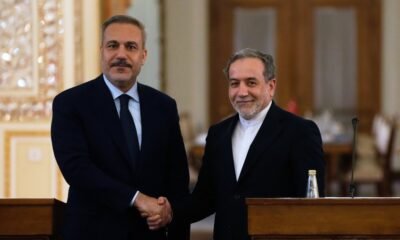
FM Fidan, Iran FM discuss regional tensions, efforts to end conflicts
-

 Sports2 days ago
Beşiktaş battle struggling Hoffenheim in Europa League matchup
-
 Politics1 day ago
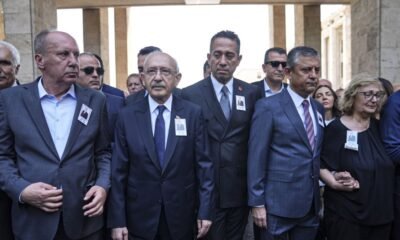
Turkish opposition CHP moves to sue former leader Özel over forgery
-

 Sports2 days ago
Trabzonspor aim winning start against KuPS in Conference League
-

 Sports3 days ago
Barcelona beat Galatasaray 4-1 in Champions League
-
 Economy2 days ago
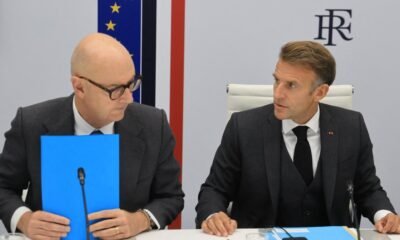
Higher borrowing costs ‘alarm signal’ for France: Finance minister
-
 Economy2 days ago
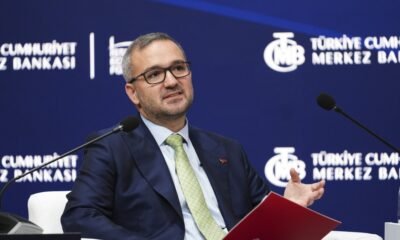
Turkish lira preference remains strong despite fund outflows: CBRT