
Economy
EU reportedly plans access to single market for candidate countries

The European Union is reportedly preparing to offer candidate countries gradual access to its single market and research programs before full membership, according to a report on Wednesday citing a draft proposal prepared by the European Commission.
The proposal envisages the “gradual integration” of candidate countries into the EU’s single market, including closer trade links and participation in research, innovation and industrial programs, as they work toward full membership, Politico reported on Wednesday.
“The single market is the first priority for economic convergence,” the draft review says, adding that earlier integration could strengthen European value chains and reduce strategic dependencies.
The document proposes deeper participation for candidate countries to demonstrate regulatory alignment and sufficient enforcement capacity, particularly in areas that support preparations for EU accession and serve shared economic and strategic interests.
Under the proposed framework, countries would also be expected to align more closely with EU foreign and security policies.
Access could be limited or withdrawn if countries fail to meet the required conditions, including democratic reforms and alignment with the bloc’s strategic interests.
The European Commission is also considering a wider use of qualified majority voting in areas currently subject to unanimity.
The draft says the risk of delays or blockages could increase as EU membership expands.
It also refers to so-called “passerelle clauses,” which can allow certain decisions to shift from unanimity to majority voting without formally amending the EU treaties.
Such mechanisms could potentially be used in areas including sanctions, responses to human rights crises and the deployment of civilian missions.
However, activating the clauses themselves requires unanimous approval from EU member states.
EU leaders are due to discuss enlargement and the bloc’s future institutional arrangements at a summit in Brussels on Oct. 15-16.

State authorities launched an audit of recent capital markets transactions and issued new detention warrants Wednesday, after Ankara created a coordination board to oversee the rapid liquidation of investment funds caught up in the recent turmoil.
President Recep Tayyip Erdoğan announced Tuesday that Vice President Cevdet Yılmaz will chair the board, following a three-hour meeting with economic officials and market regulators. He also tasked the State Supervisory Council (DDK) with examining the crisis.
DDK Chair Salih Tanrıkulu said late Tuesday the council had begun an investigation to determine whether fund transactions and supervisory activities in capital markets were conducted in line with regulations.
How fund turmoil unfolded
The problems emerged in early September, when the Capital Markets Board (SPK) changed its guidelines for investment funds. Funds could no longer put all their assets into a single stock and were required to diversify.
The move sought to address concerns that many funds were heavily invested in a small number of obscure or hard-to-sell stocks.
To comply, some funds began selling holdings, which spooked investors and set off a rush to cash out. Several fund management companies then admitted they could not meet redemption demands. On Sept. 16, authorities ordered 131 funds managed by seven companies into liquidation.
The crisis worsened amid suspected price manipulation in a number of thinly traded stocks, which triggered heavy losses and redemption pressures.
Almost half a million investors hold stakes in the funds ordered to be liquidated, whose combined assets are said to be around TL 1 trillion ($20.4 billion).
Criminal investigation widens
Authorities have also investigated some of the asset managers and arrested or detained several financial executives.
Justice Minister Akın Gürlek said Wednesday detention orders were issued for 34 more suspects as part of the probe.
The latest operation brings the total number of suspects in the case to 217, Gürlek said on social media. Of those, 56 have been arrested and 88 placed under judicial control.
The investigation is not limited to the funds and suspects already identified, he added.
Gürlek said authorities were also examining trading activity in 26 stocks listed on Borsa Istanbul deemed to have been subject to manipulative transactions, money transfers and connections to individuals and accounts that generated unusually large gains.
He said authorities will pursue legal procedures to transfer assets identified as proceeds of crime to a fund to be established under the Savings Deposit Insurance Fund (TMSF).
Separately, former SPK Chair Ibrahim Ömer Gönül, who was appointed in 2022 and left the post in April when his term ended, was expected to give a statement to prosecutors Wednesday.
Key numbers
The funds held around TL 1.3 trillion in assets on Aug. 31. By Sept. 16, a day before the SPK announced the liquidation decision, assets had fallen by TL 272.5 billion, or 21%, to TL 992 billion, reflecting investor redemptions and share price declines. The SPK said last week that 455,758 individual investors held investments in the affected funds. Fifteen money market funds held TL 307 billion, or 31% of assets due to be liquidated. The other 116 funds, including equity funds, held TL 685 billion, or 69%. The five largest funds held TL 686.7 billion, or 69.2% of the total.
Two-pronged response
At Tuesday’s meeting, the SPK presented a road map for paying investors, based on the asset and liquidity status of the funds under liquidation.
The Communications Directorate said officials also discussed additional administrative and legal measures to strengthen capital markets oversight and prevent similar cases.
The two bodies tasked by Erdoğan will have separate roles. The Fund Coordination Board will manage the liquidation, aiming to finish it quickly while protecting investors’ legitimate rights and the public interest. It will assess the funds’ assets and liquidity, determine how much each investor is owed and coordinate repayments.
The DDK, working independently of the liquidation, will look backward. It will form a team of auditors, joined by capital markets specialists, to review transactions and decisions at the funds and establish how the crisis emerged, who was responsible and whether any institutions failed in their duties.
Under its constitutional powers, it can directly request confidential and public records, physical and digital, from relevant institutions, including the SPK and Borsa Istanbul (BIST).
Auditors will examine financial records to identify suspicious transactions, the roles of those involved in supervision and any actions that may have violated regulations or harmed market functioning, from both administrative and legal perspectives.
Once the investigation is complete, the DDK will submit its reports to Erdoğan. It may also forward its findings to the relevant administrative and judicial authorities.
Türkiye’s unemployment rate decreased to 7.8% in August from 8.1% in the previous month, official data showed on Wednesday.
The number of unemployed people aged 15 and over in Türkiye decreased by 106,000 to 2.74 million in August compared to the previous month, according to the Turkish Statistical Institute (TurkStat).
The unemployment rate was estimated at 6.6% for men and 10.1% for women during the same period, TurkStat said.
The number of employed persons in Türkiye increased by 136,000 to reach 32.51 million in August, as the employment rate rose by 0.1 percentage points to 48.4%.
The employment rate was 65.8% for men and 31.5% for women in the month.
The labor force participation rate remained unchanged at 52.5% in August, while the labor force increased by 29,000 people to 35.25 million.
The participation rate reached 70.5% for men and 35% for women during the month.
The youth unemployment rate for the 15-24 age group dropped by 1.1 percentage points to 13% in August.
The youth unemployment rate stood at 9.7% for men and 19.4% for women.
The average weekly actual working hours of people at work increased by 0.5 hours to 42.5 hours in August compared to the previous month.
The U.K. economy expanded slightly more than previuosly reported in the second quarter of the year, revised data showed on Wednesday.
The data showed positive signs from household finances and business investment that could encourage Treasury chief John Healey as he prepares October’s budget.
Economic output expanded by 0.5% in the April-to-June period, the Office for National Statistics (ONS) said.
The reading was slightly stronger than a preliminary estimate for 0.4% growth in gross domestic product (GDP). Economists polled by Reuters had expected the 0.4% rise to be confirmed.
Britain’s economy was the fastest growing among the G-7 large advanced economies in the first half of 2026, the ONS data showed.
Real household disposable income per head rose by 1.0% in quarterly terms during the three months to June, the biggest jump since the end of 2024 and following a 0.8% drop in the first quarter.
The ONS also revised up second-quarter business investment growth to an annual rate of 5.2% from an initial estimate of 0.8%.
Separate balance-of-payments data showed Britain ran a smaller current account deficit than economists had expected in the second quarter, at 19.9 billion pounds ($26.4 billion) versus a consensus of 24.7 billion pounds.
Excluding precious metals trade, the deficit closed to 1.4% of economic output, the smallest such reading in five years, and helped by strong growth in services exports.
The world’s largest aviation, space and technology festival opened its doors to visitors Wednesday and will offer an array of air shows, technology competitions, exhibitions and educational activities.
Teknofest, which has welcomed nearly 12 million visitors since its launch in 2018, will be held through Sunday in the southeastern province of Şanlıurfa.
Organized under the leadership of the Turkish Industry and Technology Ministry, the T3 Foundation, and Defense Technologies Engineering and Trade Inc. (STM), the festival will cover an area of 191,000 square meters (2.06 million square feet) at Şanlıurfa GAP Airport.
Air shows, exhibitions, activities
Teknofest Southeast will bring together activities for visitors of all ages throughout the five-day event.
The festival will feature air shows by Türkiye’s leading aviation and defense platforms, including Solotürk and the Turkish Stars, as well as fighter aircraft.
Visitors will also have the opportunity to see Atak helicopters, platforms such as Hürkuş, Anka, Bayraktar TB2, Bayraktar TB3 and Bayraktar Akıncı, as well as land and naval vehicles.
The program will include concerts, stage performances, exhibitions, educational workshops, simulation areas, a planetarium, science shows, the Teknofest Time Tunnel, displays of domestically developed land, naval and air vehicles, trade fair activities and special first-flight experiences for students.
More than 1.6M contestants applied from 99 countries
Teknofest Southeast will feature technology competitions aimed at supporting technological development in critical fields, with teams that advance through the preliminary stages receiving financial and other forms of support.
More than 1.6 million contestants and hundreds of thousands of teams applied to the technology competitions as part of this year’s edition. Of more than 730,000 teams that applied, 2,000 advanced to the finals.
Successful contestants will receive more than TL 100 million (over $2 million) in total support.
Applications to this year’s Teknofest Technology Competitions came from 99 countries, including the U.S., France, China and Japan.
Eleven new categories were added, including 5G, the Artificial Intelligence and Smart Road Safety Competition, the Technological Applications in Combating Addiction Competition and the Electronic Warfare Competition.
The finals of technology competitions in 14 categories will be held as part of Teknofest Southeast.
These include the Technological Applications in Combating Addiction Competition, organized by the Turkish Green Crescent Society; the Blockchain Competition, organized by the Scientific and Technological Research Council of Türkiye (TÜBİTAK); the Steel Dome Air Defense Systems Competition and Mobile Satellite Terminal Competition, organized by Aselsan; the Financial Technologies Competition, organized in cooperation with Takasbank and the Central Bank of the Republic of Türkiye (CBRT); the HackMasters Southeast Competition, organized by the Cybersecurity Presidency; the International Invention Competition under ISIF, organized by the Turkish Patent and Trademark Office; the Mining Technologies Competition, organized by Turkish Gold Inc.; the Architectural and Visual Design Competition, organized by KÜME Foundation; the 3T in Oncology Competition, organized by Cansağlığı; the Agricultural Technologies Competition, organized by Bilişim Vadisi and TÜME; the Teknofest Drone Championship and World Drone Cup, organized by STM; and the Teknofest Robolig Competition, organized by the T3 Foundation.
President Recep Tayyip Erdoğan said Tuesday that Türkiye’s economy will remain on a strong footing and citizens will be protected from losses in the ongoing fund investigation, as the government established a fully authorized board to oversee the liquidation process and pledged to pursue anyone responsible for wrongdoing.
Speaking at a meeting of the ruling Justice and Development Party (AK Party), Erdoğan said the government had finalized the steps it plans to take and drawn up a road map following discussions at Monday’s Cabinet meeting and a broader meeting Tuesday.
“We have established a fully authorized board chaired by our vice president to coordinate the process concerning the funds slated for liquidation,” Erdoğan said, adding that he had also instructed the State Supervisory Council to take part in the process.
“We will bring this process to a swift conclusion,” he said.
Erdoğan said he believed Türkiye would emerge from the process having addressed the problems exposed by the investigation, with its economy strengthened and capital markets placed on a healthier footing.
He sought to reassure the public that authorities were closely monitoring developments, saying the issue had been on the government’s agenda from the outset and that all relevant institutions were taking necessary measures.
The remarks come amid a widening investigation into transactions in Türkiye’s capital markets. The Capital Markets Board (SPK) earlier ordered investment funds managed by seven portfolio management companies to be closed to trading and decided to liquidate some of the funds as part of measures aimed at protecting investors.
Authorities have also stepped up judicial action. Five suspects were arrested Tuesday as part of investigations into capital market transactions, while prosecutors continue examining suspected offenses including fraud, money laundering and violations of capital markets legislation.
Fatma Betül Sayan Kaya, a former minister and AK Party deputy chair, announced late Saturday in a social media post that she has requested to be relieved of all her duties within the party, citing “various claims” concerning her. Her resignation came amid speculation over alleged links to the fund withdrawals investigation, which emerged earlier this month.
Erdoğan, who a day earlier stressed that the problems were confined to a limited segment of the fund market and did not pose a broader risk to Türkiye’s financial system, reiterated that the government would not tolerate wrongdoing involving public or state assets.
He said the AK Party remained committed to the principles and objectives on which it was founded 25 years ago and would part ways with those who engaged in wrongdoing or put personal interests ahead of those principles.
“We do not act in politics for ourselves or for personal gain, but for the peace, prosperity and successful future of 86 million people,” Erdoğan said.
Erdoğan added that the party would not treat unfairly anyone who had contributed to the movement but drew a clear line over misconduct involving public assets.
“We have no place for anyone who misappropriates state or public assets,” he said.
Erdoğan had said Monday that anyone found to have engaged in market-distorting activities through investment funds would be held accountable before the law, while emphasizing that Türkiye’s capital markets remained resilient and fundamentally sound.
Meanwhile, Nationalist Movement Party (MHP) Chair Devlet Bahçeli also voiced support for the government’s handling of the fund investigation, saying the priority should be to safeguard financial market stability while ensuring that those involved in market-distorting activities are held accountable under the law. Bahçeli said measures were being taken to protect investors, particularly small investors, and prevent broader repercussions for the financial system.
“Our economy is secure, our institutions are doing their jobs and there is no cause for concern,” he said, adding that the MHP backed the measures announced by President Erdoğan and the government.
China’s efforts to offset losses in the United States are intensifying competitive pressure on Turkish exporters, as many of the alternative markets targeted by Chinese companies are also important destinations for Türkiye’s shipments, a report said Tuesday.
The report by the Foreign Economic Relations Board of Türkiye (DEIK) examines changes in China’s trade following additional U.S. tariffs introduced in 2025 and their potential implications for Türkiye.
China’s share of total exports accounted for by shipments to the United States fell to 11.14% in 2025 from 14.68% in 2024, according to the report. As its position in the U.S. market weakened, China accelerated efforts to diversify its export destinations.
China’s exports to Africa rose 25.9% in 2024-2025, while exports to the Middle East increased 9.7% and shipments to the European Union rose 8.63%. Nigeria, the United Arab Emirates (UAE) and Germany emerged as particularly important markets.
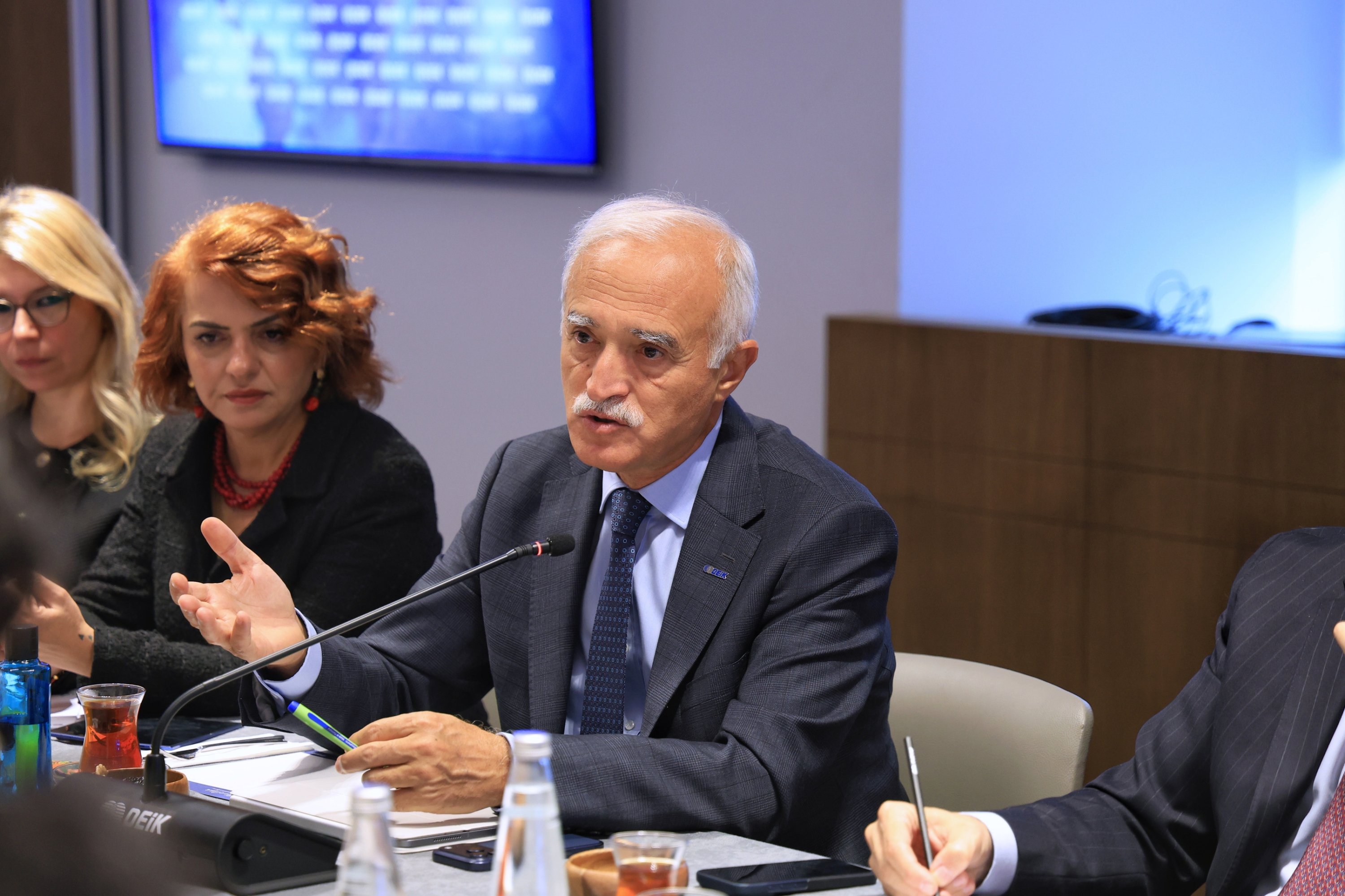
DEIK Chair Nail Olpak said the shift showed protectionist trade policies were affecting global trade routes beyond the bilateral relationship between the world’s two biggest economies.
“When access to one market becomes more difficult, global trade does not disappear; it finds new routes, new countries and new partners,” he told a meeting with press members in Istanbul. “The issue is therefore not only a tariff dispute between the U.S. and China, but the reshaping of global trade routes.”
China’s new markets overlap with Türkiye’s
The slowdown in the U.S. is prompting China to establish new trade channels across a much broader geographic area, including the Association of Southeast Asian Nations (ASEAN), Africa, the Middle East and Europe.
This is particularly important for Türkiye because many of the markets China is targeting are also important destinations for Turkish companies, Olpak said.
“Africa, the Middle East and Europe, where China is moving more strongly to offset its losses in the U.S. market, are also regions where the Turkish business community has traditionally been strong or aims to expand further,” he said.
“For this reason, we must closely monitor the geographic diversification of China’s exports.”
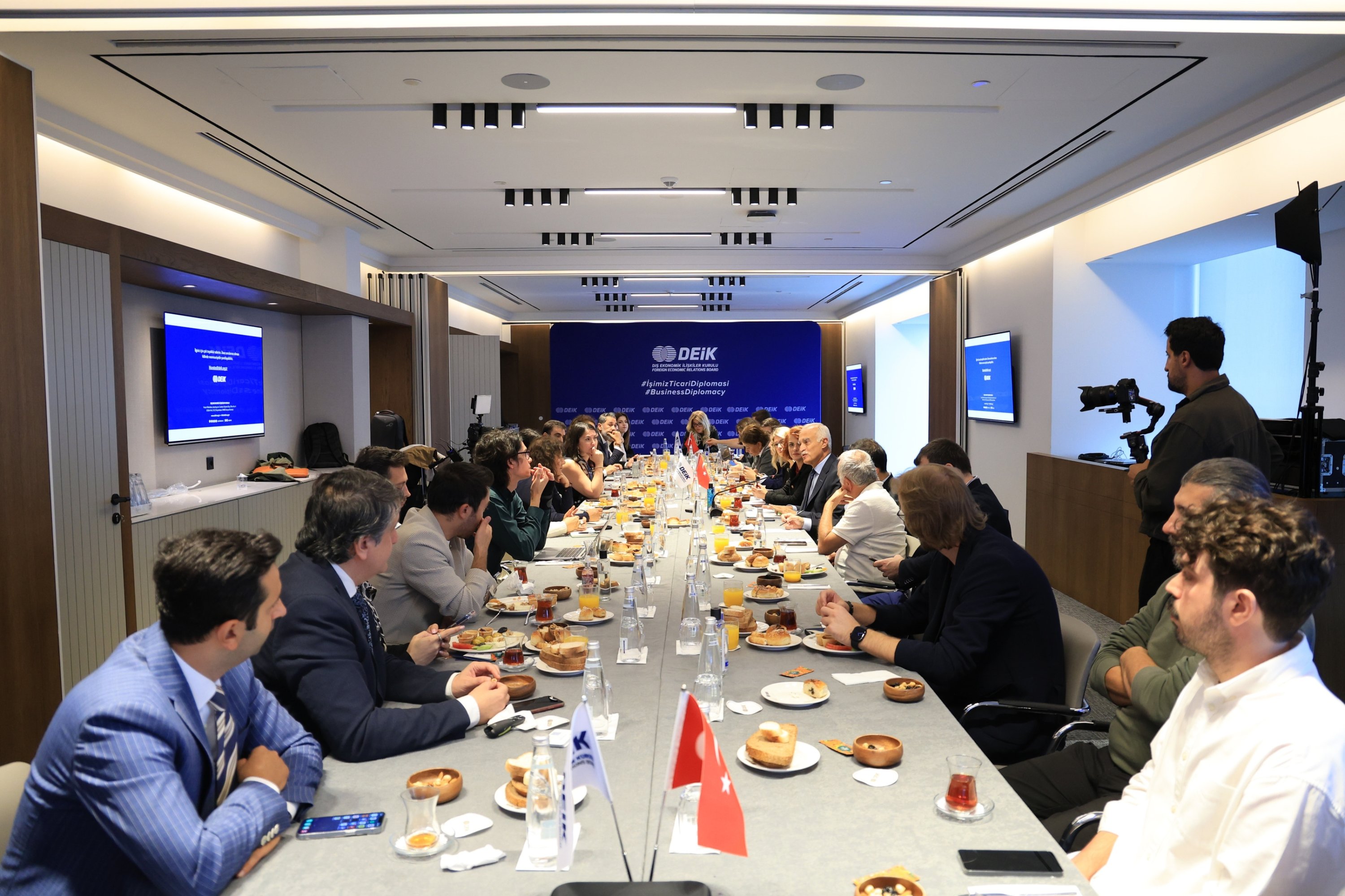
He said Türkiye’s manufacturing capacity, geographic position, logistics advantages, integration with Europe and business relationships across different regions could provide opportunities as global trade is reorganized.
“However, I do not think this should be read simply as ‘China is coming and competition is increasing,'” Olpak said. “What matters is turning these advantages into trade and investment through the right strategy.”
China’s exports to Germany, Türkiye’s largest export market, increased 10.55% between 2024 and 2025. The report said available data did not yet indicate that China’s growing presence in Germany represented a direct and significant threat to Türkiye.
Africa, Middle East face closer competition
The report identified Africa and the Middle East as regions requiring closer monitoring by Turkish exporters.
In Egypt, China’s exports reached $19.97 billion in 2025, compared with Türkiye’s nearly $4.1 billion, indicating a widening competitive gap in China’s favor, according to the report.
Olpak said Türkiye’s position in Africa should not be viewed solely through the lens of price competition, pointing to the country’s trade, contracting, investment, logistics and industrial ties across the continent.
“Alongside price competition, we will increasingly see competition based on trust,” he said. “Türkiye’s ability to establish long-term relationships and act as a reliable partner can become an important competitive advantage, particularly in Africa and the Middle East.”
UAE competition intensifies in tech, industrial goods
The United Arab Emirates is another market highlighted by the report. China’s exports to the UAE increased from $43.81 billion in 2021 to $72.90 billion in 2025, while Türkiye’s exports to the Gulf country stood at $9.28 billion last year.
China’s strength in electrical equipment and machinery could increase competitive pressure on Turkish companies in the UAE market, according to the report.
Olpak said Turkish companies would need to focus more heavily on value-added production.
“We need to talk not only about how much we export to a country, but also which products we export, at what technology level and with what added value,” he said. “Türkiye’s response in increasingly competitive markets should be greater value-added, stronger brands, technology, innovation and lasting partnerships.”
‘Trust competition’ creates opportunities for Türkiye
Olpak said the trade conflict between the U.S. and China was also reshaping global supply chains, potentially creating opportunities for Türkiye to strengthen its position as a production and investment hub.
“The world is no longer asking only, ‘Where can I produce more cheaply?’ Questions such as ‘Where can I produce more safely, how can I reach my market faster, how can I diversify my supply chain and with which partner can I establish a long-term and predictable relationship?’ have become just as important as cost,” he noted.
Olpak described this shift as an emerging “competition for trust” alongside competition over price and technology.
“Türkiye has significant potential precisely at this point,” he said, citing the country’s proximity to Europe, industrial infrastructure, skilled workforce, logistics capabilities and economic ties with different regions.
He said the transformation in U.S.-China trade should therefore be assessed not only in terms of potential competitive pressure in Türkiye’s export markets, but also in terms of new investment and production opportunities for the country.


-
 Politics3 days ago
Türkiye pursues dialogue, diplomacy at UN General Assembly
-
 Economy3 days ago
Türkiye bolsters ‘agro diplomacy’ to minimize impact of geopolitical risks
-
 Politics3 days ago
Türkiye, Pakistan, Saudi military chiefs meet in Riyadh
-
 Politics2 days ago
Türkiye, UAE set for new talks amid Iran war, Israeli expansion
-
 Economy2 days ago
Trump Inc. faces congressional grilling if Democrats win midterms
-
 Economy3 days ago
German state leader Wüst to visit Türkiye, mark labor deal anniversary
-
 Sports3 days ago
Spain crush English comeback hopes in Nations League thriller
-
 Sports3 days ago
China teen takes record javelin gold to light up ‘sad’ Asian Games