
Politics
NATO leaders to discuss transatlantic ties, Turkish comms chief says

Turkish Communications Director Burhanettin Duran on Monday said that the upcoming NATO summit in Ankara will be critical for both the alliance’s future and the evolving global security architecture.
Speaking to journalists at the International Media Center ahead of the July 7-8 summit, Duran noted the gathering, which has been described under the concept of “NATO 3.0,” would address key strategic issues.
“This summit, which has come to the fore under the concept of NATO 3.0, is very important. Very important issues will be discussed in Ankara, both for NATO’s future and for how the global architecture will be shaped,” Duran said.
Duran said the summit is expected to attract the highest-level participation ever at the level of heads of state and government, alongside numerous bilateral meetings.
He said more than 2,500 media representatives will cover the event from the Presidential National Library, where facilities include workspaces, live broadcast positions, and editing rooms.
Bilateral meetings
Asked about President Recep Tayyip Erdogan’s bilateral meetings, Duran said NATO leaders are expected to discuss strengthening the transatlantic alliance, European security, and defense spending, while bilateral talks will also focus on country-specific issues.
“In addition, there will be bilateral meetings. Bilateral meetings generally focus on countries’ own bilateral agendas. However, since they are being held on the sidelines of NATO, issues such as defense and security, Europe’s future, and strengthening Europe’s security will also be on the agenda. Defense spending will also be discussed,” he said.
“Countries’ bilateral agendas are naturally unique to each of them, so each meeting should be assessed separately. But from this perspective, the summit will provide a platform both for shaping NATO’s future and for countries to review their bilateral relations. Our president will hold numerous bilateral meetings and will evaluate various agenda items within those meetings,” Duran added.

Türkiye established four specialized subcommittees Monday as a newly formed coordination board held its first meeting to oversee the implementation of legislation underpinning the country’s “terror-free Türkiye” initiative.
The National Solidarity and Integration Coordination Board convened at the Presidential Complex in Ankara under the chairmanship of Vice President Cevdet Yılmaz, with discussions focusing on interagency coordination and the implementation of the process.
The meeting was attended by Justice Minister Akın Gürlek, Foreign Minister Hakan Fidan, Interior Minister Mustafa Çiftçi, Defense Minister Yaşar Güler, National Intelligence Organization (MIT) chief İbrahim Kalın, Presidential Secretary-General Hakkı Susmaz and National Security Council (MGK) Secretary-General Okay Memiş.
The board was established under Law No. 7595 on Strengthening National Solidarity and Social Integration, which entered into force Aug. 18.
In a statement following the meeting, officials said the process aims to completely eliminate terrorism from Türkiye and the wider region, remove violence and weapons from the country’s agenda and strengthen social cohesion.
The board discussed procedures governing its work and ways to ensure high-level coordination among state institutions involved in implementing the legislation.
Four bodies will operate under the board: the Judicial and Legal Affairs Coordination Subcommittee, the Monitoring and Assessment Subcommittee, the Social Cohesion and Integration Subcommittee, and the Disarmament and Strategic Coordination Subcommittee.
“The state, with all its institutions acting in full coordination, will continue to resolutely implement these historic steps that will strengthen social integration,” the statement said.
The meeting also focused on the road map for the dissolution and disarmament of the PKK terrorist group, including developments on the ground and mechanisms for security agencies to monitor the process.
The board will oversee the dissolution of the PKK/KCK and affiliated groups and the surrender of weapons and ammunition under the terrorist group’s control.
Authorities will work through interagency coordination to verify that weapons have been permanently laid down, while a National Security Council decision will be awaited for formal confirmation of the process.
The government described the legislation as a key legal foundation for the terror-free Türkiye initiative, saying the process is intended to strengthen domestic peace and social integration while contributing to greater stability, security and prosperity in the wider region.
President Recep Tayyip Erdoğan said Tuesday that Türkiye’s ongoing efforts to eradicate terrorism would usher in a new era for the country and contribute to stability across the region, as he addressed an event in eastern Türkiye marking the 955th anniversary of the Battle of Malazgirt.
Speaking at the Recep Tayyip Erdoğan National Garden in Ahlat, a district of Bitlis province, Erdoğan said Türkiye would move toward a stronger future through national unity and solidarity.
“Let no one have any doubt: We will all witness the rise of a great and powerful Türkiye on the horizon, just as these monuments here bear witness to history,” Erdoğan underlined. “Together, we will shoulder the sacred legacy of our martyrs and veterans and carry Türkiye toward a much stronger future.”
Erdoğan placed particular emphasis on solidarity among Turks, Kurds and Arabs, saying Türkiye’s progress would also benefit other peoples across the region.
“We know who is disturbed by this. We know who is concerned about it,” he noted “Whatever you do, you cannot turn us away from our path. You cannot prevent us, as Turks, Kurds and Arabs, from embracing one another in brotherhood.”
The president said the country’s “terror-free Türkiye” initiative, which he said was first signaled in Ahlat two years ago, would open the door to a new period when it achieves its objectives.
“Our economy will grow stronger along with our brotherhood, and the resilience of our home front will increase along with our prosperity,” he said.
The president added that Türkiye’s immediate neighborhood, particularly Syria and Iraq, could achieve the peace and stability it has sought for years.
“The winners will be humanity, brotherhood, peace and stability. The winner will be the Turkish nation with its 86 million citizens.”
Erdoğan said Türkiye had entered a new phase in its development, declaring that “the dawn of a great and powerful Türkiye has broken” and that the construction of the “Century of Türkiye” had begun.
The president’s remarks came as Türkiye prepared to commemorate the Battle of Malazgirt, fought on Aug. 26, 1071, when Seljuk forces led by Sultan Alp Arslan defeated the Byzantine army. The victory is widely regarded in Türkiye as a turning point that paved the way for the settlement of Anatolia by the Turks.
Events commemorating the 955th anniversary were held in Ahlat on Aug. 23-25, drawing visitors to the Recep Tayyip Erdoğan National Garden. Crowds carrying Turkish flags began gathering at the venue early Tuesday ahead of Erdoğan’s address.
Erdoğan is expected to chair a Cabinet meeting at the Presidential Complex in Ahlat. His program is also expected to continue with a dinner attended by Cabinet members, regional governors and relatives of fallen soldiers.
Furthermore, Nationalist Movement Party (MHP) Chair Devlet Bahçeli also issued a statement Tuesday commemorating the anniversary, describing the 1071 victory as a defining moment that changed the course of history and shaped the future of Anatolia.
“The Turkish nation’s march on the stage of history has witnessed the establishment of many world states, conquests that became legends and victories whose memories have been carried with pride through generations and illuminated the future,” Bahçeli said.
He traced the historical developments preceding Malazgirt, citing the Seljuk victory at Dandanaqan in 1040, early expeditions into Anatolia, the Battle of Pasinler in 1048 and Alp Arslan’s conquest of Ani in 1064.
Bahçeli said the Battle of Malazgirt represented the culmination of a longer political and military process that established a lasting Turkish presence in Anatolia.
He also emphasized the continuity of Turkish statehood from the Seljuk period through the Ottoman Empire and the modern Republic of Türkiye.
“Malazgirt is our past, Anatolia is our honor, Türkiye is our future,” Bahçeli said. “The Republic of Türkiye is our destiny.”
The annual Malazgirt commemorations hold symbolic importance in Türkiye, with senior officials frequently invoking the 1071 victory as a milestone in the country’s historical presence in Anatolia.
Meanwhile, the Turkish Presidency’s Directorate of Communications set up a stand at the anniversary events in Ahlat to provide visitors with information about the historic victory.
Two digital kiosks featured an interactive quiz prepared specifically for the anniversary as well as an archery-themed game.
The directorate also distributed copies of a book titled “The Malazgirt Victory: Turkish Art of War and Artistic Aesthetics” to visitors.
A 360-degree rotating photo platform at the stand also drew interest from participants, allowing visitors to take photographs commemorating the anniversary events.
Staff from the Directorate of Communications provided information about the institution’s activities and the publication as part of the three-day commemorations.
Turkish security forces detained 48 suspected migrant smugglers in operations across 23 provinces, the Interior Ministry announced Monday, as authorities intensified efforts against irregular migration and organized smuggling networks.
Thirty-one of the suspects were formally arrested following judicial proceedings, while 17 were released under judicial supervision, the ministry said in a statement.
The operations were coordinated by the Gendarmerie General Command’s Department of Combating Migrant Smuggling and Human Trafficking and the Turkish Coast Guard Command.
Raids and enforcement operations were carried out in the provinces of Ağrı, Ankara, Aydın, Balıkesir, Bitlis, Çanakkale, Düzce, Edirne, Erzurum, Hatay, Izmir, Kırklareli, Kocaeli, Konya, Manisa, Muğla, Siirt, Sivas, Şanlıurfa, Şırnak, Tekirdağ, Tunceli and Van.
Authorities used both aerial and ground surveillance during the operations. Unmanned aerial vehicles operated by the Gendarmerie General Command conducted surveillance from the air, while provincial gendarmerie units carried out operations on the ground.
Public security, highway patrol and commando units also participated, while Coast Guard personnel supported coordinated operations targeting maritime smuggling routes.
Security forces seized 83 vehicles and 18 boats and boat engines believed to have been used in migrant smuggling activities, the ministry said.
All 48 suspects detained during the operations were subjected to judicial proceedings.
Türkiye has stepped up operations targeting networks accused of facilitating irregular migration, particularly in provinces along its land and maritime borders and along major transit routes.
The Interior Ministry said authorities would continue operations against irregular migration and migrant smuggling networks to protect public order and national security.
The ministry said its approach to combating irregular migration would continue to prioritize human rights while maintaining public order and safeguarding the country’s national interests.
It also thanked personnel from the Gendarmerie, Coast Guard and migrant smuggling and human trafficking units involved in the operations.
Separately, in the central Turkish province of Nevşehir, a suspect accused of transporting four irregular migrants and agreeing to take them from Sivas to Nevşehir for TL 50,000 ($1,040) per person was formally arrested by a court.
As part of a joint operation against migrant smuggling by the Nevşehir Provincial Police Department’s Intelligence Branch and the Department of Combating Migrant Smuggling and Border Gates, police placed the suspect, identified as Hüseyin Ö., under surveillance.
Authorities determined during questioning that Hüseyin Ö. had agreed to transport the four irregular migrants from Sivas to Nevşehir for TL 50,000 per person.
The suspect was detained and referred to a courthouse after procedures at the police station. A court subsequently ordered his arrest and he was sent to prison.
Deportation proceedings have been initiated for the four illegal migrants.
On Saturday, the Turkish Coast Guard also rescued 37 irregular migrants, including three children, from a rubber boat off the coast of Didim in the western province of Aydın after they were pushed back into Turkish territorial waters by Greek authorities.
Coast Guard boats were dispatched after receiving information about a group of irregular migrants aboard a rubber boat off Didim.
The Coast Guard rescued all 37 migrants from the vessel.
A Turkish financial crimes report has detailed on Monday extensive property transactions, multimillion-lira bank transfers and vehicle purchases involving the family and close associates of Alihan Kuriş, the alleged leader of a criminal organization under investigation by Ankara prosecutors.
The report by Türkiye’s Financial Crimes Investigation Board (MASAK), dated Aug. 20, was prepared as part of an investigation by the Ankara Chief Public Prosecutor’s Office into alleged laundering of criminal proceeds, fraud causing losses to public institutions and violations of the Tax Procedure Law.
Prosecutors requested an examination of changes in the wealth and assets of Kuriş and his relatives since Jan. 1, 2016.
MASAK examined assets, bank transactions, vehicles, company partnerships and property transfers involving Kuriş, his wife, parents, brother and grandmother, as well as his wife’s parents and sibling.
According to the report, land registry records showed a combined 1,818 property transactions involving four family members.
Kuriş’s mother, identified by the initials A.G.D.K., had 646 property transaction records, while his late grandmother, N.K., had 539. His father, M.S.K., had 207 transactions, while his father-in-law, M.K., had 426.
The transactions involving Kuriş’s mother covered a wide range of properties, including homes, offices, shops, workshops, restaurants, agricultural land and plots. Some were acquired through inheritance or transfers from relatives, while other properties were subsequently transferred to third parties or companies, according to the report.
MASAK found 27 properties registered to Kuriş’s father, 21 of which carried annotations or seizure orders.
The properties included apartments, plots, agricultural land, office and commercial premises and several multistory buildings. One property carried 38 enforcement liens and 72 public liens as well as multiple mortgage records, the report said.
Records also showed transfers involving Kuriş, his brother Hilmi Tuna Kuriş and their mother following their father’s death.
Property transactions involving Hilmi Tuna Kuriş intensified between 2024 and 2026, according to the report.
MASAK also said his banking transfers reached tens of millions of Turkish liras. Some properties linked to him were subject to enforcement liens, precautionary measures and two separate seizure orders.
The report also highlighted a transaction involving Kuriş’s wife, who had no real estate registered in her name but owned two vehicles.
On Sept. 5, 2023, TL 2.4 million (around $50,000) was transferred to his wife’s account by a third party, Mehmet Özmen. Almost the entire amount was transferred the same day to an automotive company, according to MASAK.
Investigators are examining why Özmen financed the vehicle and whether there was a legal or commercial relationship between the parties.
MASAK records also showed two luxury vehicles from the 2023 and 2024 model years registered to A.N.B.
Investigators are examining the source of funds behind the property purchases, vehicles, company interests and increased banking activity as part of the broader probe into Kuriş and his alleged organization.
Alihan Kuriş, the de facto leader of a group known publicly as “Süleymancılar,” was arrested last week along with other suspects.
The group originated as a religious movement named after 20th-century Islamic scholar Süleyman Hilmi Tunahan, Kuriş’s great-grandfather.
Initially operating through informal religious instruction in homes and mosques, the group later expanded across Türkiye through Quran courses and student dormitories, largely financed by membership contributions and donations. Over time, its activities expanded into commercial sectors including food, health care, tourism, textiles, construction and real estate.
President Recep Tayyip Erdoğan and Brazilian President Luiz Inácio Lula da Silva discussed bilateral relations and regional and global developments in a phone call, Türkiye’s Communications Directorate said Monday.
Erdoğan welcomed the continued development of relations between Türkiye and Brazil, saying ties that were elevated to an advanced level two decades ago have continued to strengthen.
The Turkish president said deepening cooperation in a broad range of areas, particularly investment, trade and the defense industry, would benefit both countries, according to the statement.
Erdoğan also emphasized the potential for stronger economic ties between Ankara and Brasilia amid growing protectionist tendencies in the global economy.
He said he believed Türkiye and Brazil could develop a model of economic cooperation that would increase the prosperity of both countries while countering protectionist trends.
The two leaders also discussed regional and global issues.
Erdoğan said Türkiye and Brazil’s policies prioritizing peace in addressing regional and international challenges contributed to global peace.
Türkiye and Brazil have sought to expand bilateral economic and political relations in recent years while also cooperating through multilateral platforms on international issues.
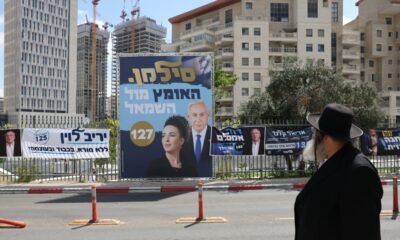
As Israel’s expansionist policies threaten the stability of the wider region, Israeli Prime Minister Benjamin Netanyahu further stokes the fire. Netanyahu is currently running his election campaign on anti-Türkiye rhetoric after being forced under U.S. pressure to stop attacks on Iran and Lebanon.
The prime minister, whose name has been linked to corruption allegations and whose party has fallen in public opinion polls, has long sought to avoid prison. He became the first sitting Israeli prime minister to stand trial for corruption. The architect of the genocide in the Gaza Strip, who is responsible for the deaths of more than 73,000 Palestinians (most of them women and children), has been criticized even in Israel for “setting the region on fire to protect his seat.”
Netanyahu’s Likud party is currently the largest party in Israel’s 120-seat parliament with 32 seats. But opinion polls for elections scheduled for Oct. 27 show Likud falling from 32 seats to 23 and becoming the second-largest party. Polls also show Likud and Netanyahu’s far-right and ultra-Orthodox coalition partners falling far below the 61 seats needed to form a government. A poll published by Israel’s Channel 13 on Aug. 19 showed Netanyahu and his coalition partners winning a total of only 51 seats.
Amid these developments, Netanyahu and his team turned to anti-Türkiye rhetoric. The signals came weeks before Israel’s Aug. 18 attack on the inactive Abu al-Duhur military air base in Syria’s Idlib province.
Amichai Chikli, a Likud lawmaker and diaspora minister, claimed in a radio interview in June that Israel would “sooner or later enter a war with Syria.” “Türkiye and Syria are far more disturbing developments than Iran,” Chikli said. Chikli, who often draws attention with anti-Türkiye posts, also voiced unease over the Mecca Joint Defense Agreement signed by Türkiye, Saudi Arabia, and Pakistan. He said Saudi Arabia’s move to act with Türkiye was a “very bad development” for Israel.
Defense Minister Yisrael Katz, one of Netanyahu’s closest figures, has also emerged as a leading figure using anti-Türkiye rhetoric against Turkish President Recep Tayyip Erdoğan in the election campaign. Katz frequently targets Türkiye and Erdoğan on social media, and many of his posts are written in Turkish.
Eli Cohen, a Likud lawmaker and energy minister, also signaled last month that anti-Türkiye rhetoric would be used in the campaign. “If Türkiye establishes a base in Syria, we will establish one too,” Cohen told a local radio station.
Some opposition leaders and analyses published in Israel agree that Netanyahu and people close to him have turned the attack in Syria into an election campaign tactic by using anti-Türkiye rhetoric. Democrats party leader Yair Golan said Netanyahu made an “arrogant and dangerous” move with the attack. Golan said Israel “raised tensions with Türkiye and deepened the rift with the U.S.,” stressing that Netanyahu used military force for political calculations and that Tel Aviv paid the price in security terms.
Former Israeli Prime Minister Ehud Barak said Netanyahu was pursuing a policy of reaching voters through security tensions ahead of the Oct. 27 elections.
Israeli political commentator Esther Solomon said in an analysis published in Haaretz newspaper that Netanyahu had failed to get the poll results he wanted “despite all his efforts” before the elections. Solomon said Netanyahu was trying to gain more votes by using every front to “overwhelm, surprise, and wear down the opposition” to build momentum for his party before the elections.
Another political commentator, Jonathan Lis, said in Haaretz that political considerations also played a role in Netanyahu’s decision-making process alongside security and diplomatic parameters. “As Israel’s October elections approach, it is highly suspicious that Netanyahu would want an escalation of tensions with Türkiye and Syria, especially as the Trump administration encourages calm between the parties,” Lis said.
The election campaign built on anti-Türkiye rhetoric in Israel is not limited to statements by Netanyahu and figures close to him. Channel 14 television, known for its closeness to Netanyahu, targeted Türkiye’s Consulate General in occupied East Jerusalem, which represents Palestine. A Channel 14 report claimed “unauthorized renovation” was being carried out in the building housing Türkiye’s Consulate General in Jerusalem. The report said the Israeli-affiliated Jerusalem Municipality was not allowed to inspect the site and broadcast exterior footage of the consulate building.
In addition, i24 television aired a documentary claiming Türkiye was trying to take control of East Jerusalem by focusing on the activities of Turkish institutions and associations in the city. The documentary gave broad coverage to humanitarian aid provided by Turkish institutions and associations to Palestinians in the city and also included the activities of the Yunus Emre Cultural Center in East Jerusalem.
A new Likud billboard in Tel Aviv features Erdoğan alongside Iranian Supreme Leader Mojtaba Khamenei, Hezbollah Secretary-General Naim Qassem, and New York Mayor Zohran Mamdani under the message, “They want Netanyahu to lose. Don’t let them win.”
‘Cheap politics’
Netanyahu is seeking to portray Türkiye as a new threat as part of “cheap politics” aimed at gaining an electoral advantage, Türkiye’s Communications Directorate said Friday, warning that Israel’s increasingly aggressive rhetoric poses serious risks to regional and global stability.
The directorate strongly rejected recent remarks by the Israeli Prime Minister’s Office concerning Erdoğan, describing them as an “impertinent rant” devoid of historical facts and political seriousness, and another sign of the desperation of an administration seeking to evade accountability for war crimes and crimes against humanity.
It said the “cheap politics” pursued by Netanyahu and his associates, which it said was also designed to secure an advantage in elections, has no resonance in Israeli society, the region, the international community, or Türkiye.
The directorate said the remarks by an Israeli government facing genocide accusations before international justice mechanisms were a telling demonstration of how deeply Türkiye’s voice and Erdoğan’s refusal to remain silent in the face of injustice have unsettled the Netanyahu administration.
It also warned that Israel’s election campaign has increasingly fallen under the influence of irresponsible security-driven populism and an intensifying politics of threats. “The Netanyahu government’s effort to construct Türkiye as a new threat figure is also part of this cheap politics,” the directorate said.
It warned that pursuing a politics of threats and escalating tensions for the sake of domestic political competition carries serious risks not only for Israeli society but also for regional and global peace and stability.
Türkiye will continue, as it has in the past, to stand against oppressors and alongside the oppressed, and firmly defend peace, justice, and stability in the region regardless of the cost, the directorate said.


-

 Sports3 days ago
Top 10 greatest sports rivalries in world, ranked
-

 Sports3 days ago
Hull roar back into Premier League with 2-0 rout of Man Utd
-
 Economy3 days ago
US imposes 50% tariffs on Canadian goods as trade talks collapse
-
 Politics17 hours ago
Netanyahu clings to anti-Türkiye campaign amid Likud’s decline
-
 Economy2 days ago
At 55, China-Türkiye ties expand beyond trade into strategic co-op
-

 Sports2 days ago
Real’s 2nd Mourinho era starts with last-gasp win at Espanyol
-
 Politics20 hours ago
Verdict likely due in cases of corruption linked to CHP mayors of Türkiye
-
 Economy1 day ago
Turkish central bank resumes repo auctions after nearly 6-month pause