
Economy
Trump ramps up pressure for Fed rate cuts in rare talks with Powell

U.S. President Donald Trump intensified his push for interest rate cuts on Thursday during his first meeting with Federal Reserve Chair Jerome Powell since returning to the White House in January.
Trump has in recent months trained his fire on the Fed chair – whom he first nominated to lead the independent central bank back in 2017 – accusing him of being “too slow” to cut rates to boost economic growth.
Powell and his colleagues on the Fed’s rate-setting committee have insisted they will only cut rates from current levels when economic conditions allow.
Trump told Powell that he was “making a mistake by not lowering interest rates,” White House Press Secretary Karoline Leavitt told a press briefing after the meeting.
Trump also said in the meeting that holding interest rates high was putting the United States at an “economic disadvantage” to other countries, including China, Leavitt said.
Earlier Thursday, the Fed said Powell had defended U.S. central bank independence over interest rates during the unusual meeting, which was initiated by Trump to discuss “economic developments including for growth, employment, and inflation.”
“Chair Powell did not discuss his expectations for monetary policy, except to stress that the path of policy will depend entirely on incoming economic information and what that means for the outlook,” the Fed said in a statement.
The Fed’s rate typically influences borrowing costs across the economy, including for mortgages, car loans, and business borrowing.
Powell said the Fed’s rate-setting committee would make its decisions “based solely on careful, objective, and non-political analysis,” the bank said.
The meeting, the first since Trump began his second term, marks a ratcheting up of the pressure on Powell following the president’s frequent social media posts criticizing him for moving too slowly to cut rates, a process that stokes both growth and inflation.
Trump and Powell met on several occasions during the president’s first term in office.
Trump argues that there is “no inflation” and so Powell should cut rates, though such a move might not necessarily reduce the borrowing costs consumers face. Inflation is down substantially from a year ago, yet it remains above the Fed’s 2% target.
Trump has also called Powell a “fool” and earlier this year suggested he would fire the Fed chair.
After financial markets reacted negatively, Trump said he had “no intention” of removing Powell, whose term as chair ends in May 2026.
Fed chairs regularly meet with Treasury secretaries but less often with presidents, given that the Fed’s interest rate decisions are intended to be separate from political concerns.
Earlier this month, Powell said he had never requested a meeting with a president and added, “I never will,” suggesting it was inappropriate given the Fed’s political independence.
“I can’t imagine myself doing that,” Powell said at a news conference May 7. “It’s always come the other way: A President wants to meet with you.”

German Foreign Minister Johann Wadephul said Tuesday he was “shocked” by U.S. President Donald Trump’s intervention to have Jensen Huang reinstated as chief executive of AI tech giant Nvidia, questioning whether this was a “good model” for governance.
“It shocked me, to be honest, because as far as I know, if I’m personally looking back, I never saw and recognized such an intervention from the political side to a special company,” Wadephul said at a Berlin event in response to a question about Trump’s move.
“I do have some doubts whether this is a very good model for the future,” Wadephul added.
“So we have enough reason to really defend the rules-based international order, which also means that in free, democratic, and rules-based countries, political power should refrain from interfering in the economic engagement of companies,” he said.
Nvidia’s board voted to bring Huang back on Monday in a stunning reversal that came about two weeks after he resigned over an affair with a woman whom U.S. intelligence agencies suspect of spying for China.
The move drew approval from Wall Street and opposition from U.S. lawmakers.
Trump, who has a close relationship with Huang, said the reinstatement followed his own direct contacts with the board, and he welcomed the move as a “correct and proper decision.”
Türkiye expects its part of the Development Road, a planned transport corridor between Iraq and Europe, to have a major economic impact, including drawing more than $78 billion in investment, Transport and Infrastructure Minister Abdulkadir Uraloğlu said Tuesday.
“We anticipate that the Development Road, with $78.5 billion of investment in our country, will contribute $61.5 billion to our economy over 10 years and create an average of 71,000 jobs a year through the siting of production and logistics centers,” Uraloğlu said.
He was speaking before Parliament’s Planning and Budget Committee.
Uraloğlu said Türkiye is strengthening the Middle Corridor, a trade route linking Asia and Europe through Central Asia and the South Caucasus, for east-west links.
In the north-south direction, he said, the Development Road will link Faw Port in southern Iraq, on the Persian Gulf, to Europe through Türkiye.
Cargo leaving the Faw Port would travel about 1,200 kilometers (745.65 miles) by rail to Ovaköy, a crossing on the Türkiye-Iraq border in southeastern Türkiye. From there, it would continue across Türkiye toward Europe. The initiative was unveiled in May 2023 and is estimated to cost $20 billion.
Under an agreement already signed, the Iraqi section will be built by Turkish contractors, and the project will also contribute to energy security, Uraloğlu said.
Uraloğlu said shipping time between Asia and Europe is 45 days around the Cape of Good Hope and 35 days through the Suez Canal. He said it falls to 25 days on the Development Road and just 18 days on the Middle Corridor.
He said Türkiye is also boosting Middle Corridor links through the TRIPP corridor. A 224-kilometer rail line from Kars to Dilucu, via Iğdır in eastern Türkiye, will create a new connection to Azerbaijan across the Zangezur route, he said.
Uraloğlu is set to travel to Iraq’s capital, Baghdad, where he’s expected to meet the Prime Minister Ali al-Zaidi, Communications Minister Mustafa Sened and Transport Minister Wehb Salman al-Haseni.
Investment program
Uraloğlu said the ministry’s investment program has 1,881 projects under 852 main projects. About 37% of the TL 7.2 trillion portfolio is complete, and TL 4.5 trillion remains.
The 2026 allocation was TL 562.7 billion, and the 2027 proposal is TL 774.4 billion, up 37.6%. Rail will get 52% of it and roads 37%.
The government has started serial production of its first national high-speed train, which runs at 225 kph (about 140 mph), Uraloğlu said. The high-speed network serves 23 provinces and 53% of the population, with direct service to 15 cities, and has carried 117 million passengers since opening.
“Our target is to reach 32 of our cities directly by high-speed train in 2030,” he said. The government also plans to raise the number of logistics centers from 14 to 25.
Roads
Uraloğlu said 292 kilometers more of divided road were built this year, and the goal is a 4,297-kilometer motorway network in 2028.
Of the 3,848 kilometers now in service, 2,282 were built with public funds and 1,566 under public-private partnerships. He said handing the partnership projects to the state is expected to bring in about TL 132.6 billion a year at 2027 prices, equal to roughly half of the road investment budget.
He said the government is building a 40-kilometer 5G test corridor between Hasdal and Istanbul Airport and a 247-kilometer smart-transport corridor for autonomous driving in Ankara.
Work continues on sections of the Northern Marmara Motorway, the Sarıyer-Kilyos Tunnel in Istanbul, which will cut travel from 35 minutes to five, and several other motorways. Connecting the Northern Marmara Motorway to Ankara would bring the road trip between Istanbul and the capital to about three hours, he said.
Aviation
Türkiye has raised the number of countries with air service agreements from 81 to 175, Uraloğlu said.
He said the country carried 247 million passengers, third in Europe and seventh in the world. Istanbul Airport, which turns 8, has served more than 490 million passengers, and a fourth runway opened Sept. 18, saving 25% of fuel on eastbound flights and cutting 2,000 tons of emissions in two months.
The number of airports has risen from 26 to 58 and will reach 60 with new ones in Bayburt-Gümüşhane and Yozgat, he said.
Antalya Airport’s capacity was raised from 35 million to 82 million passengers at a cost of 1.3 billion euros, and the state will earn 8.5 billion euros from it.
The ministry is also building a new terminal at Samsun Çarşamba Airport, a new sea-based airport at Trabzon for 10 million passengers a year, and a new airport at Aydın with a 2,900-meter runway and a 2-million-passenger capacity.
The spectacular rebound in Nvidia’s share price following Jensen Huang’s return as CEO could have added as much as $15 million to U.S. President Donald Trump’s holdings in the stock on Monday, according to calculations by the Financial Times.
Huang resigned on Nov. 12 over extramarital affairs, including one with a suspected Chinese spy, in a departure that sent shares in the U.S. chip giant tumbling.
News of his return sent Nvidia shares soaring more than 30% and added more than $900 billion to the company’s market value.
According to the Financial Times, Trump may have owned as many as 370,000 shares in Nvidia as of Sept. 30.
The newspaper based its estimate on the president’s financial disclosures to the Office of Government Ethics, the most recent of which was filed on Nov. 5.
The disclosures do not include precise figures for disposals and purchases of shares.
The maximum figure for his holdings was therefore calculated on the assumption of purchases at the upper limit of each range, and sales at the lower limit.
A report from ABC News, citing Trump’s annual financial disclosure report, did not specify the number of shares he owned but said their value reached at least $12 million by the end of 2025.
It added that his accounts have continued to trade Nvidia in recent months, citing separate filings.
Nvidia said Monday that it had reinstated Huang as CEO after receiving information from the U.S. government that he did not pose a national security risk.
Trump, who has a close relationship with Huang, said the reinstatement followed his own direct contacts with the board, and he welcomed the move as a “correct and proper decision.”
“I’ve been speaking to the board directly and indirectly, and I felt very strongly about it,” he told U.S. broadcaster CNBC.
Ruben Gallego, a Democratic senator for Arizona, called for scrutiny of Trump’s portfolio.
“We need to investigate what stock positions took place before the announcement,” he said in a post on the social media platform X. “This White House is the most corrupt in history.”
Anthropic’s shares slipped below their $83 initial public offering (IPO) price in premarket trading on Tuesday, a striking unraveling just days after the Claude developer’s record-breaking Nasdaq debut.
After briefly breaking below its offer price, the stock was last down 5% at $83.39, extending a steep retreat from its $111.50 opening price on Nov. 19.
Anthropic missed out on a broad Wall Street rally driven by AI-related stocks after Nvidia reinstated Jensen Huang as chief executive on Monday.
The stock debuted 34% above the IPO price but has since been swept up in a broader technology selloff, with the S&P 500 and the Dow ending the previous week in confirmed correction territory.
Anthropic’s rapid reversal has added to concerns about stretched AI valuations and the vast sums being poured into computing infrastructure, with rising interest rates threatening to push those costs even higher. As the first frontier AI company to go public, Anthropic is widely seen as a proxy for the sector.
“If we do see a slowdown in the data-center buildout, then that obviously can impact the speed at which Anthropic can develop and therefore future revenue and therefore its valuation,” said Fiona Cincotta, senior market analyst at StoneX.
Anthropic is not alone among blockbuster technology IPOs in quickly surrendering early gains and falling below its offer price. SpaceX, whose $85.7 billion June listing was the world’s biggest before Anthropic, took about a month to fall below its offer price.
In 2012, Facebook, now Meta Platforms, had slipped below its offer price on its second trading day.
The comparisons show that a swift loss of an IPO premium is not unprecedented even for highly anticipated listings, and that an early break below the offer price is not necessarily a guide to longer-term performance.
Key risks
With Anthropic’s shares now testing their IPO price, attention is turning to risks that could determine where the stock goes next, including insider selling, pressure from open-weight models and a potential slowdown in data-center investments.
Anthropic’s IPO lock-up provisions allow certain employees and insiders to sell portions of their holdings from the first trading day, with further staggered releases tied to earnings announcements.
CEO Dario Amodei and President Daniela Amodei sold more than 3.37 million shares worth over $280 million each to the IPO’s underwriters a day after the debut, according to a filing late on Monday.
Anthropic’s underwriters also exercised their option to buy additional shares, lifting the IPO’s gross proceeds to a record $93.5 billion, while removing a potential source of support for the stock after its debut.
Anthropic also faces growing competition from cheaper open-weight AI models, which it has warned could pressure pricing.
Users can download and adapt models from DeepSeek, Mistral and Moonshot AI, unlike proprietary models such as Claude, ChatGPT and Gemini, with Chinese developers in particular gaining ground globally.
Huang’s return could also sharpen the competitive threat to Anthropic, given his strong advocacy for open-weight AI models.
Some support could emerge in the coming days as Anthropic’s addition to major indexes prompts buying from passive funds.
Index rebalance analytics firm Intropic estimates passive funds could buy up to 30% of the shares offered by the year-end. MSCI will add Anthropic to its global standard indexes as of the Nov. 30 close.
Iraq’s prime minister moved on Tuesday to bring border crossings and oilfields in areas controlled by the Kurdistan Regional Government (KRG) under federal authority, in an effort to curb oil smuggling.
Ali al-Zaidi’s move could potentially deepen tensions between Baghdad and the semi-autonomous entity controlling Iraq’s north after he sought to rein in an influential pro-Iranian militia.
The decision comes as al-Zaidi cracks down on Tehran’s most powerful militia ally in Iraq, Kataib Hezbollah, and senior officials accused of running a years-long smuggling ring that generated hundreds of millions of dollars from stolen oil.
The heavily armed Kataib, one of dozens of pro-Iranian armed groups with political sway accused of operating with impunity in Iraq, rejected the findings of an official high-level investigation into the smuggling network.
The prime minister of the KRG, Masrour Barzani, rejected the Baghdad government’s decisions to centralize control over oil and border crossings, saying they “are in no way acceptable.”
Zaidi’s order, which was announced by his office on Tuesday, covers oilfields in the Diyala, Kirkuk, Salahuddin and Nineveh provinces and follows a probe into smuggling at the state-run North Oil Company, which manages the northern oil and gas fields.
Khormala, the main oilfield under KRG security control, appeared to be covered by the order, three people familiar with the matter said. Given past tensions with Baghdad, one of them said KRG authorities would likely resist any move by the federal oil ministry to take over management of the field.
“The Kurdistan region may use the absence of an oil and gas law as a pretext for refusing to hand over the oil wells. This would lead to a political and constitutional debate over how to implement the decisions,” said Baghdad-based political analyst Hamza Mustafa.
“In taking these decisions, he has moved away from political deal-making and favoritism. He is unconcerned about securing the support of those political forces for another term. That is why he is taking on all the corruption networks.”
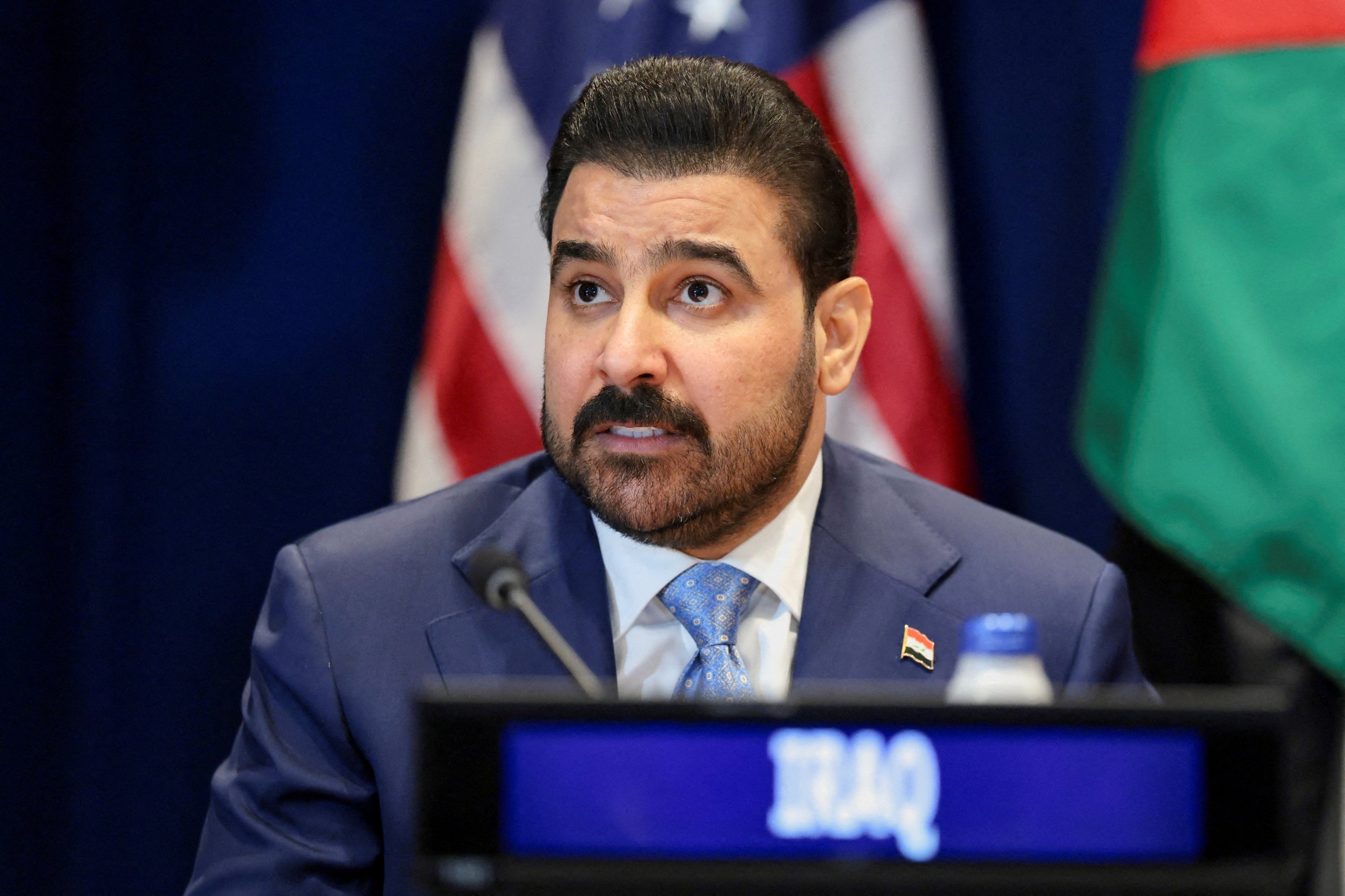
A statement from his office said the prime minister’s directive was based on the principle that “national sovereignty is indivisible and protecting Iraq’s wealth is a battle for survival in which the state puts an end to all forms of smuggling.”
PM cracks down on smuggling, Iran allies
In a further move directly challenging KRG authorities’ decades-long bid to run their own affairs, al-Zaidi ordered the border authority to take over all crossings in the Kurdistan region, which borders Türkiye, Iran and Syria.
He also directed the Kurdistan Regional Government to approve exports of crude oil and petroleum products only through the federal oil ministry.
Al-Zaidi, meanwhile, removed the head of the border crossings authority and suspended North Oil Company’s director general and his deputies pending further investigation.
Relations between the national government and KRG authorities have been fraught for years.
Iraq’s Kurds held a 2017 referendum on independence, which elicited fierce opposition from Baghdad and regional powers. The vote prompted military and economic retaliation from Baghdad, which retook the strategic oil-producing city of Kirkuk and other areas.
A previous dispute over KRG authorities’ sales of oil without Baghdad’s approval halted pipeline shipments to Türkiye for more than two years before the sides agreed in September 2025 to restart them.
Al-Zaidi – a multimillionaire businessperson and political novice – is trying to attract large-scale investment in Iraq. Analysts, however, say that first requires establishing the political and economic stability that has been lacking since a 2003 U.S.-led invasion toppled Saddam Hussein.
The European Union has imposed temporary limits on imports of hybrid vehicles from China, Japan, Türkiye, Britain and other countries to protect EU automakers, although for most countries they are high enough to cover existing shipments.
The measures, announced in the EU official journal on Tuesday, follow an agreement Brussels struck with Beijing last month to limit the number of hybrid cars from China to 350,000 vehicles, around half the number set to arrive in the European Union this year.
The volume limits, which will apply from Dec. 1, are “safeguard” measures that have to apply to all major exporters of hybrid cars to the European Union. Other countries to which the import caps apply are South Korea, Mexico, Morocco, Serbia and the United States.
The measures are provisional and apply for a maximum of 200 days while the investigation continues. If the Commission concludes by proposing definitive measures, which apply for longer, these would need broad backing by EU members.
The Commission based its investigation on imports over the last six months of 2025 and the first six months of 2026, with a clear focus on Chinese exports.
Brussels has long accused China of unfair trade practices, including price dumping, currency manipulation and state subsidies. Officials and companies say the measures undermine EU companies and lead to job losses.
“The surge in imports of hybrid passenger vehicles into the EU has been driven by growing global production overcapacity,” the Commission said.
“It is also prompted by increased use of trade-restrictive measures in other major markets.”
Hybrid vehicles are among the most popular models for European consumers, and Chinese makers have profited from their lower-priced models to gain huge market shares.
The import caps are most restrictive for China, when the new annualized limits are compared to the investigation period.
China’s Commerce Ministry said it hoped the European Union would abide by the consensus the two sides had reached, and that it reserved all rights to firmly safeguard the legitimate interests of Chinese industries.
Imports from Mexico, Morocco and Serbia were also higher than the limits in the period. However, for Mexico the gap was fewer than 600 cars and, for Morocco and Serbia, imports declined markedly in the second quarter of this year.
All other countries’ hybrid exports to the EU were below the volume limits, which are based on 2025 levels plus about 15%.
The commission said imports from China came not just at the expense of EU production, but were also eating into the market shares of other exporters such as Japan and South Korea.


-
 Economy2 days ago
EU, Indonesia sign landmark trade deal after 10 years of talks
-
 Economy1 day ago
Türkiye, Russia to weigh new trade, energy cooperation deals
-

 Economy22 hours ago
US expands Iran sanctions, targets ‘shadow-banking’ networks
-
 Economy1 day ago
Home sales to foreigners in Türkiye hit 2026 high
-

 Sports1 day ago
Vlahovic, Trossard lift Beşiktaş past Konyaspor in 6-goal thriller
-

 Politics1 day ago
20 detained in corruption probe into Turkish municipality
-

 Politics2 days ago
Türkiye welcomes landmark ICJ ruling on Myanmar’s Rohingya genocide
-
 Economy2 days ago
Turkish machinery exports hit record $23.7B in first 10 months