
Politics
Turkish FM launches phone diplomacy amid pending US-Iran talks

Foreign Minister Hakan Fidan resumed his phone diplomacy on Saturday. The Foreign Ministry said Fidan held separate phone calls with his Iranian and Pakistani counterparts on Saturday.
The talks between Hakan Fidan, Abbas Araghchi and Ishaq Dar focused on the latest developments in the negotiation process between Iran and the U.S., according to the ministry.
The first round of talks between the U.S. and Iran was held in Islamabad two weeks ago but failed to produce an agreement to end the conflict that began on Feb. 28 and spread across the Middle East. The talks followed a two-week cease-fire brokered by Pakistan on April 8, which was later extended by Trump.
On Sunday, the ministry announced that Fidan held a phone call with U.S. negotiators. Sources from the Foreign Ministry said Fidan exchanged views with the U.S. interlocutors on the latest developments in negotiations between the U.S. and Iran.
Araghchi met Pakistan’s Prime Minister Shehbaz Sharif and army chief Field Marshal Asim Munir in Islamabad on Saturday, while the visit of U.S. envoys Steve Witkoff and Jared Kushner to the Pakistani capital was cancelled.
The sticking points between the two sides are said to be the opening of the Strait of Hormuz, a global shipping chokepoint which Iran has effectively closed since it was attacked by the U.S. and Israel on Feb. 28, the U.S. blockade of Iranian ports, and the fate of enriched uranium Tehran has.
Türkiye could consider taking part in multinational demining operations in the Strait of Hormuz after a possible peace agreement between the U.S. and Iran, Fidan said late Friday. Speaking to reporters in London, Fidan said Türkiye “would be open to” participating in a coalition tasked with clearing naval mines in the strait once a deal is reached, describing such work as a “humanitarian” effort.
However, Fidan underscored that Ankara would not take part in operations that risk positioning Türkiye as a party to renewed conflict. Ankara would avoid any role implying alignment if conflict resumes, Fidan said.
Fidan said Türkiye could foresee a comprehensive deal resulting in a negotiated return to the status quo, ensuring open, toll-free passage through the Strait of Hormuz. Otherwise, both sides would have to explore new ways to find a resolution, according to the minister.
Ankara has been at the forefront of efforts to mend ties between the United States and Iran. Before the conflict began in February with U.S. and Israeli attacks, Türkiye was among the countries considered as a venue for negotiations between the U.S. and Iran. After the conflict began and spread across the region, Türkiye itself faced the risk, with at least five missiles intercepted over its airspace. Still, it adhered to its neutral stand and sought to bring the sides to the negotiation table, especially through Fidan’s diplomatic blitz by phone and visits to the regional countries affected by the conflict.
Earlier this month, Fidan hailed the “sincerity” of the United States and Iran on achieving a cease-fire. However, he warned that Israel may disrupt the process. Fidan also pointed out Israel’s emerging “state strategy” of finding “new enemies” in the region, such as Türkiye.
Speaking to Anadolu Agency (AA) on April 13, Fidan said: “The whole world wants free international passage through the Strait of Hormuz. Hormuz should remain open through peace; using an international armed force is a challenge,” he said. He stated that the Strait of Hormuz issue demonstrated that the war is not merely “regional” but a conflict with global repercussions. He highlighted that the Strait was where up to 25% of natural gas and oil shipments went through. “We are facing a situation where a great logistics chain, production and industrial infrastructure is affected,” he added. “The question now is how the strait is going to be run.”
Fidan emphasized the importance of keeping international shipping routes open amid rising tensions in the Gulf. “What the entire world wants is that international transit remain free and not be obstructed,” he said. He warned that stability in the waterway cannot be achieved through forceful measures. “Our position is to reopen it through peace. There are many difficulties in intervening here with an international armed peace force,” he said.
He also noted that there was a thin line between being party to the conflict targeting Iran and keeping the Strait of Hormuz open. “But no country wants to be part of this war, Europeans in particular openly expressed this,” he stated.
On Türkiye’s stand, Fidan pointed out the stance adopted by President Recep Tayyip Erdoğan since the beginning of the war, and this was “the policy of keeping Türkiye out of war.” He said the situation in Hormuz had a significant impact on the global markets and Türkiye made every contribution to resolve the issue. The minister, however, added that Türkiye was not “very much dependent on Strait of Hormuz in terms of energy security, energy supplies.” “The share of natural gas in electricity production dropped and share of renewable energy sources dramatically increased in the past two decades. But we feel the indirect impact of the situation, especially on pricing. Energy supplies are delivered smoothly but pricing poses a problem. This may be a burden on the economy in the long run,” he warned.

Tobias Ellwood, a former member of the U.K. Parliament and former minister for defense veterans, reserves and personnel, said Friday that Türkiye’s hosting of the NATO leaders’ summit in Ankara underscored the country’s growing strategic importance within the alliance, while highlighting its expanding defense capabilities and influence in trans-Atlantic security.
Speaking to Anadolu Agency (AA) after attending the July 7-8 NATO summit in Ankara, Ellwood congratulated Türkiye on hosting what he described as a successful gathering of allied leaders.
“I think it demonstrated Türkiye’s rising status and showed people what a capable and welcoming country it is,” Ellwood noted.
The former British minister, who also served as minister for the Middle East and Africa at the Foreign Office, said the alliance is facing fundamental questions about its future as emerging threats reshape the security landscape.
“NATO was originally designed to deter conventional military aggression by another state,” Ellwood said. “Today, however, questions arise over how cyberattacks would trigger Article 5, how attacks in space would affect the alliance, and how allies should cooperate in these new domains.”
He said technological developments and the evolution of warfare are challenging NATO’s traditional principles and deterrence posture, making adaptation increasingly important.
“The evolution of warfare is testing NATO, its founding principles and how the alliance functions as a deterrent force,” he said.
Ellwood described Türkiye as a key member of the alliance, noting that it has traditionally been viewed as NATO’s southern flank but is expected to play a broader role as the alliance adjusts to changing geopolitical realities.
“I think Türkiye has an important role to play, but that is part of a broader discussion about NATO’s future,” he said.
Ellwood also pointed to the relationship between President Recep Tayyip Erdoğan and U.S. President Donald Trump, describing it as noteworthy and potentially significant for alliance diplomacy.
“I think Erdoğan can quietly influence Trump because Trump respects him,” Ellwood said, adding that the relationship between the two leaders could prove valuable at a time when Trump has at times unsettled allies with his rhetoric and policy positions.
Turning to defense cooperation, Ellwood welcomed Türkiye’s advances in its domestic defense industry, particularly in drone technology, which was highlighted during the Defense Industry Forum held alongside the NATO summit.
“Türkiye should be congratulated. You have made tremendous progress,” he said.
He added that the next major challenge will be ensuring that Turkish-made defense systems are increasingly interoperable with those of other NATO allies, allowing them to operate more effectively within the alliance’s integrated defense architecture.
The NATO summit in Ankara brought together allied leaders to discuss collective defense, deterrence, defense spending and emerging security threats, while also showcasing Türkiye’s growing role in NATO’s military and defense-industrial agenda.
President Recep Tayyip Erdoğan on Saturday commemorated the 31st anniversary of the Srebrenica genocide, honoring the thousands of Bosniak victims killed during the 1995 massacre and reiterating Türkiye’s commitment to preserving their memory.
In a message shared on social media, Erdoğan described Srebrenica as “one of the most brutal genocides in history” and paid tribute to those who lost their lives in what remains Europe’s worst mass atrocity since World War II.
“On the 31st anniversary of Srebrenica, one of the most brutal genocides in history, I commemorate with mercy and sorrow all of our Bosniak brothers who were massacred,” Erdoğan wrote.
“I respectfully honor the cherished memory of our martyrs and extend my patience and condolences to their families and loved ones. We will never forget Srebrenica.”
The annual commemoration falls on July 11, the day Bosnian Serb forces captured the U.N.-designated safe area of Srebrenica in eastern Bosnia in 1995, setting in motion the systematic killing of more than 8,000 Bosniak Muslim men and boys over the following days.
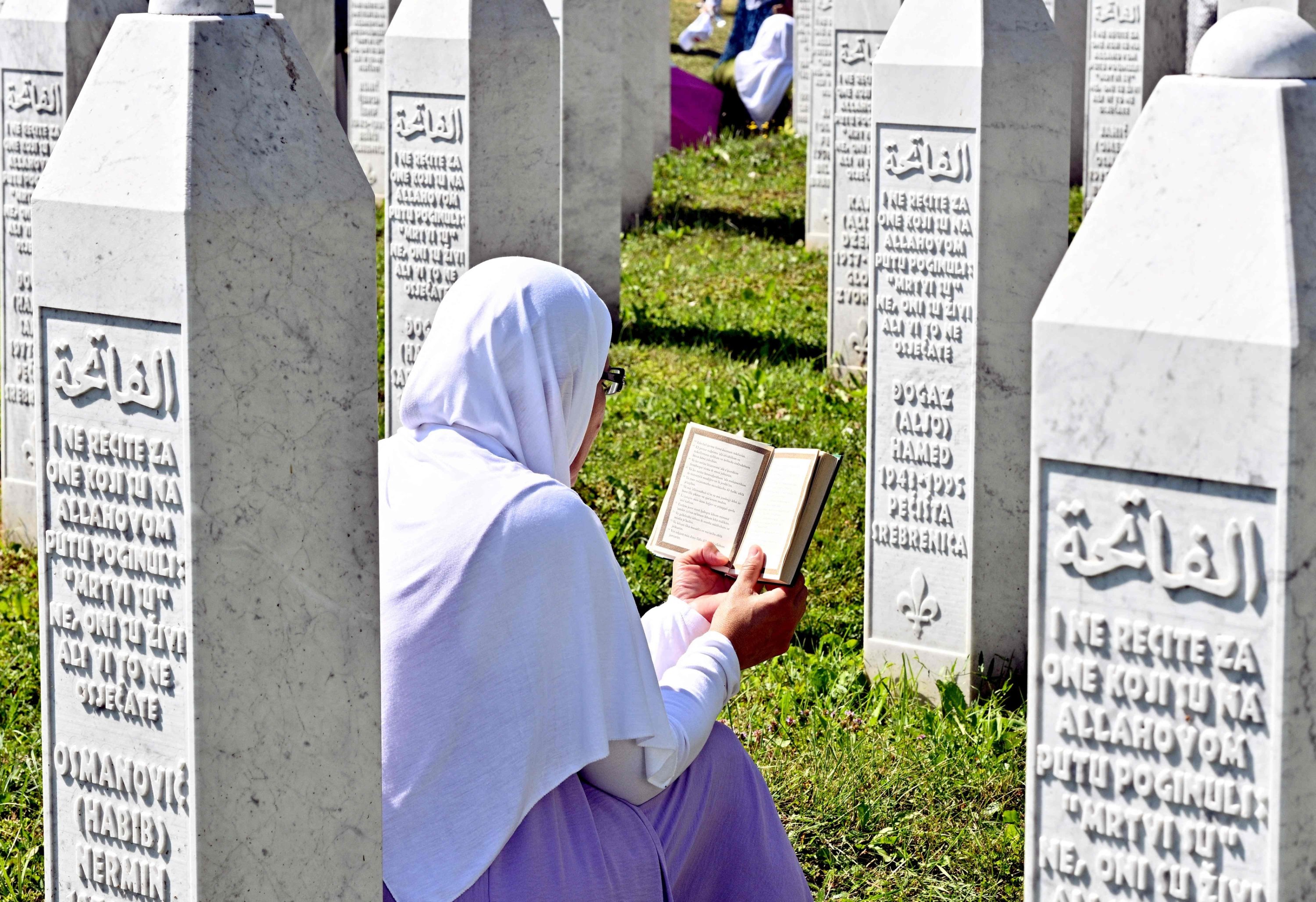
The massacre occurred during the Bosnian War, which lasted from 1992 to 1995 after the breakup of the former Yugoslavia. Srebrenica had been declared a protected U.N. enclave in 1993 and was guarded by Dutch peacekeepers. However, Bosnian Serb forces commanded by Gen. Ratko Mladić overran the town, separating men and boys from women, children and elderly civilians before carrying out mass executions.
An estimated 25,000 to 30,000 women, children and elderly residents were forcibly expelled from the enclave, while thousands of victims were buried in mass graves that were later disturbed in an attempt to conceal evidence of the killings.
The massacre has been legally recognized as genocide by both the International Criminal Tribunal for the former Yugoslavia and the International Court of Justice, which ruled in 2007 that the killings constituted genocide.
More than three decades later, forensic experts continue identifying victims through DNA analysis. Nearly 7,000 victims have been identified and buried at the Srebrenica-Potočari Memorial and Cemetery, while hundreds of people remain missing.
This year’s anniversary included the burial of 10 newly identified victims, ranging in age from 20 to 56, at the memorial cemetery in Potočari. Memorial ceremonies across Bosnia and Herzegovina honored those killed, while survivors, relatives and international delegations gathered to remember the victims and call for continued efforts to combat genocide denial and preserve historical truth.
The 2026 commemorations were held under the theme “We Are Here,” highlighting the resilience of survivors and the enduring legacy of Bosniak communities in Bosnia and Herzegovina and across the diaspora.
Türkiye has consistently supported international recognition of the Srebrenica genocide and has long maintained close ties with Bosnia and Herzegovina.
Erdoğan has repeatedly used the anniversary to stress the importance of justice, remembrance and preventing similar atrocities from occurring again.
The Srebrenica genocide remains a defining symbol of the international community’s failure to protect civilians despite the presence of a U.N. safe zone.
Successive U.N. reports have acknowledged serious shortcomings in the global response, making the massacre a lasting reminder of the consequences of inaction.
President Recep Tayyip Erdoğan expressed condolences on Sunday over the death of Qatar’s former ruler, Sheikh Hamad bin Khalifa Al Thani, praising his longtime ally for strengthening bilateral ties and contributing to regional stability.
“I was deeply saddened to learn of the passing of my dear friend, Sheikh Hamad bin Khalifa Al Thani, the Father Emir of the State of Qatar,” Erdoğan said in a statement on X.
The Turkish president said the former emir played a key role in elevating political, trade, military, humanitarian and cultural relations between Türkiye and Qatar to their current level during the years the two leaders worked together.
“During my tenure as prime minister, we worked closely together on the international stage. He made invaluable contributions to bringing political, trade, military, humanitarian and cultural ties between Türkiye and the State of Qatar to their current level.”
“I personally witnessed his sincere efforts for the peace of the Islamic world, the stability of our region and the prosperity of the Qatari people. May Almighty Allah have mercy on Sheikh Hamad bin Khalifa Al Thani.” Erdoğan said.
He extended condolences, on behalf of himself, his family and the Turkish nation, to Qatar’s Emir Sheikh Tamim bin Hamad Al Thani, the late leader’s family, the people of Qatar and the broader Islamic world.
Sheikh Hamad ruled Qatar from 1995 until his abdication in 2013, when he handed power to his son, Sheikh Tamim bin Hamad Al Thani.
Türkiye late Thursday rejected a European Parliament resolution on Cyprus, calling it “null and void” and accusing the EU of taking a biased approach to the decades-long dispute.
In a statement, the Turkish Foreign Ministry said the resolution contained “baseless and preposterous allegations against the heroic Turkish Armed Forces.”
“The resolution adopted by the European Parliament, which contains baseless and preposterous allegations against the heroic Turkish Armed Forces, is null and void,” the ministry said.
The ministry also expressed full support for a statement issued by the Foreign Ministry of the Turkish Republic of Northern Cyprus (TRNC) in response to the resolution.
Describing the text as “replete with despicable slanders,” the ministry said it represented “the latest example of the biased and distorted approach adopted by the EU and the European Parliament in particular, under the influence of certain circles, with respect to the Cyprus issue.”
The ministry also voiced concern over the EU’s increasingly one-sided stance on Cyprus.
“It is concerning that EU institutions are increasingly approaching the Cyprus issue in a manner that departs from historical realities and impartiality,” the statement said.
The island has been mired in a decades-long dispute between Greek and Turkish Cypriots, despite a series of diplomatic efforts by the U.N. to achieve a comprehensive settlement.
Ethnic attacks starting in the early 1960s forced Turkish Cypriots to withdraw into enclaves for their safety. In 1974, a Greek Cypriot coup aimed at Greece’s annexation led to Türkiye’s military intervention as a guarantor power to protect Turkish Cypriots from persecution and violence.
As a result, the TRNC was founded in 1983. The country is fully recognized only by Türkiye, which does not recognize the Greek Cypriot administration in the south.
The island has seen an on-and-off peace process, but negotiations have been stalled since 2017.
Türkiye’s main opposition Republican People’s Party (CHP) is expected to discuss further organizational changes at a key executive board meeting on Friday, amid continuing tensions following a court ruling that reinstated former Chairperson Kemal Kılıçdaroğlu.
According to Turkish media reports citing party sources, nearly 10 provincial party chairs could be dismissed during the meeting as the leadership moves to consolidate control over the organization.
The reports also claimed that CHP parliamentary group chair Özgür Özel could be removed from his post.
The leadership has repeatedly stressed that it will not tolerate what it describes as a dual power structure or disciplinary violations within the party following the court’s “absolute nullity” ruling, which returned Kılıçdaroğlu to the party leadership.
Since the ruling, the CHP has dismissed 36 provincial chairs, while 11 others have reportedly been referred to the party’s disciplinary board over statements and actions directed at the new leadership.
Media reports said provincial organizations in Trabzon, Afyonkarahisar and Rize are among those expected to face leadership changes at the latest meeting.
The reports also said appointments could soon be made to fill a number of provincial chairmanships that have remained vacant following previous dismissals.
Party officials are also expected to begin restructuring district organizations after changes at the provincial level are completed. According to the reports, newly appointed provincial chairs will oversee appointments at the district level, while local officials accused of undermining the party leadership could face disciplinary proceedings.
The Turkish Republic of Northern Cyprus (TRNC) on Friday strongly condemned a resolution adopted by the European Parliament criticizing Türkiye’s 1974 Peace Operation in Cyprus, accusing the assembly of distorting historical facts and acting in line with Greek Cypriot narratives.
In a written statement, the TRNC Foreign Ministry rejected the resolution, saying it misrepresented Türkiye’s 1974 military operation while unfairly targeting both Türkiye and the Turkish Cypriot people.
The ministry argued that Türkiye launched the operation on July 20, 1974, under its rights and obligations as a guarantor power stemming from the 1960 Treaty of Guarantee, following a coup carried out on July 15, 1974, by supporters of union with Greece. It said the operation not only ensured the safety of Turkish Cypriots but also prevented mass killings on the island.
The statement criticized the European Parliament for ignoring atrocities committed against Turkish Cypriots while making “baseless accusations” against the Turkish Armed Forces (TSK).
According to the ministry, the resolution would serve only to reinforce what it called Greek Cypriot propaganda aimed at misleading the international community.
The ministry also noted that female lawmakers from the TRNC Parliament had sent letters to the relevant European Parliament committee before the vote, disputing claims contained in the draft resolution and seeking to present what they described as the realities on the island. Despite those efforts, the resolution was adopted, which the ministry said demonstrated that European Union institutions had lost their impartiality on the Cyprus issue and were acting as advocates for the Greek Cypriot side.
The ministry said decisions that disregard the will of the Turkish Cypriot people, ignore their inherent rights and deliberately distort realities on the island are “null and void” from the TRNC’s perspective and carry no legitimacy.
It also called on the European Parliament to abandon one-sided approaches, refrain from using the Cyprus issue as a political tool, and respect both the current realities and historical facts on the island.

Minister Gürlek donated the 150 thousand liras he earned from the compensation case to the Turkish Red Crescent

Preparation for action against Minister Gürlek’s wife! 2 suspects arrested

Reactions to Haluk Levent are like an avalanche! Outburst of anger from citizens: He crushed the money in gambling
Minister Gürlek donated the 150 thousand liras he earned from the compensation case to the Turkish Red Crescent
Preparation for action against Minister Gürlek’s wife! 2 suspects arrested
Reactions to Haluk Levent are like an avalanche! Outburst of anger from citizens: He crushed the money in gambling
-
 Economy3 days ago
Ankara, Baghdad to sign 12-month deal on Iraq-Türkiye pipeline
-
 Daily Agenda2 days ago
A pipeline agreement was signed between Türkiye and TRNC! Minister Bayraktar: “We will continue all kinds of support with determination”
-
 Daily Agenda2 days ago
MSÜ Rector Erhan Afyoncu: “Our institutions were revived with the support of our President”
-

 Daily Agenda2 days ago
We will continue to support Lebanon – Last Minute News
-
 Economy2 days ago
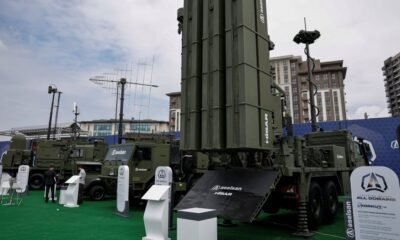
Aselsan lands nearly $1.7B deal to expand Türkiye’s air defense
-

 Economy3 days ago
Tackling historic crisis, Volkswagen to cut capacity, model lineup
-

 Daily Agenda1 day ago
Safety shield against earthquake risk
-
 Daily Agenda2 days ago
From purchasing weapons to selling missiles – DİLEK GÜNGÖR