
Politics
Türkiye committed to diplomacy to end US-Israel-Iran war

In the midst of a conflict gripping the region, Türkiye walks a thin line of neutrality. Foreign Minister Hakan Fidan said on Saturday that Ankara would continue to maintain diplomatic contacts to help bring an end to the war launched by the U.S. and Israel against Iran.
Speaking after an informal meeting of the Foreign Ministers Council of the Organization of Turkic States (OTS), Fidan said: ” (Iranian President) Mr. Pezeshkian’s statement, ‘We will not attack unless attacked. We apologize for attacking,’ is a statement that we have emphasized,” adding that various reservations have been made in Iran regarding this statement, but this is an internal matter within the Iranian system.
Emphasizing that Israel’s expansionist and divisive agenda is widely known, Fidan said: “Israel has adopted a strategy of causing instability, conflicts, and civil wars throughout the region. Together with our friendly and brotherly countries, we have adopted a peace-oriented policy against this approach.”
He also said Türkiye has maintained peace, security and stability despite the turmoil around it, attributing this to the sound foreign policy pursued under the leadership of Recep Tayyip Erdogan.
Fidan will be joined by Minister of National Defense Yaşar Güler on Tuesday at Parliament. The two ministers will inform lawmakers about the war, developments in the Middle East and measures Türkiye took against the spillover of the conflict. It is unclear whether the briefing by Güler and Fidan will be closed to the press, but briefings regarding national security are often closed to the press at the Turkish Parliament.
“I want to emphasize once again that we strongly condemn attacks targeting third countries,” Fidan said in his remarks on Saturday, noting that attacks targeting Qatar, Kuwait, Saudi Arabia, the United Arab Emirates and Bahrain endanger the lives of innocent civilians and increase the risk of the war spreading.
He said using attacks on neighboring countries as a pressure tactic, unless directly attacked, is neither a sound war strategy nor beneficial for regional stability.
Fidan said Türkiye anticipated how Iran might respond to crises even before strikes by the U.S. and Israel. He added that Ankara had long advised Tehran to avoid targeting neighboring countries and to pursue dialogue with Washington about its nuclear dispute while preserving regional stability.
The foreign minister also said that it is not the right strategy to attack civilian and energy infrastructure of countries that do not allow their airspace to be used by others or the use of foreign military bases on their territory.
“This would only serve to further Israel’s expansionist agenda in the region. We have stated that this is not the right strategy,” the foreign minister added.
Fidan said a large majority of global public opinion supports ending the war, noting that some countries have taken open positions like Spain, while others raise the issue privately.
He said Türkiye is working to turn this international consensus into concrete diplomatic action, similar to the global stance seen during the State of Palestine recognition process at the U.N.
“The targeting of our country and Azerbaijan this week has once again shown how great the risk we face is,” he said, adding that they have repeatedly reminded everyone that similar incidents should not be repeated.
Fidan also referred to a missile that was shot down entering Türkiye’s airspace, saying the country does not easily fall for provocations and has no difficulty defending its security, but also knows the risks of being dragged into a wider conflict.
“If this were a missile that lost its course, that is one thing. But such incidents should happen only once. If there are going to be more, our advice is: Please be careful, no one in Iran should embark on such an adventure,” he said, adding that despite years of sanctions and pressure on Iran, Türkiye has consistently maintained a principled, transparent stance and worked to promote peace and stability in the region.
He added that despite years of sanctions and pressure on Iran, Türkiye has repeatedly demonstrated its friendship, maintained a principled position and remained one of the few countries acting transparently and in line with clear principles.
Israel’s intentions
Responding to a question about claims that the U.S. may be organizing Kurdish groups to help overthrow the Iranian government, Fidan said Türkiye’s National Intelligence Organization and defense authorities are closely monitoring those activities.
He said he discussed the issue in a call with U.S. Secretary of State Marco Rubio, who told him that Washington was not pursuing the effort.
Fidan, however, said Israel’s intentions in this regard were “no secret.”
“Israel has for many years adopted a strategy of using Kurdish groups in the region as proxy forces,” he said, adding that during current developments in Iran, Israeli circles have continued to signal their intention to use Kurdish groups in a similar manner.
He said it remains unclear how much the U.S. would support, distance itself from or remain neutral toward the strategy.
Fidan warned that any scenario aimed at triggering a civil war in Iran along ethnic or sectarian fault lines would be the most dangerous outcome.
“This would not only cause more suffering and loss of life among innocent civilians in Iran, but could also lead to millions of people being displaced and forced to flee to neighboring countries and beyond as refugees,” he said.
Fidan expressed hope that Kurdish opinion leaders in the region would avoid taking on such a historic responsibility.
He added that Türkiye is also maintaining contact with various regional actors, including Iraqi Kurdish Regional Government President Nechirvan Barzani and other authorities.
“After Iraq and Syria, a prolonged period of uncertainty, war and instability in Iran would benefit no one,” he said, noting that Türkiye shares a border of more than 560 kilometers (348 miles) with Iran.
“Any internal crisis in such a large country would inevitably spread across the region with a multiplier effect. That is why we are seeking ways to prevent such a scenario and keep the situation under control,” Fidan added.
Turkic cooperation
Fidan said OTS members maintain cooperation based on mutual trust and have achieved concrete progress in areas such as the economy, culture and connectivity, while working closely to develop a common stance on global developments.
He warned that the international system is becoming increasingly unpredictable and that international law is being disregarded more frequently, stressing that greater solidarity among Turkic states is therefore becoming more important.
Fidan said OTS member states had adopted a statement regarding regional developments, noting that any attack targeting one member state would be a source of great concern for all members of the organization.
He thanked member countries for their strong support and solidarity in the face of attacks targeting Türkiye and Azerbaijan.
The foreign minister said the war in the region must end as soon as possible, stressing that diplomacy is the only viable solution.
“We have spent months trying to establish a negotiation table. Even today, we continue to say that diplomacy is the only option to resolve the problems,” he said.
Fidan warned that conflicts may benefit terror groups and threaten global energy security, and that Türkiye is closely monitoring the safety of its citizens and is maintaining full diplomatic and consular support in the region.
He also welcomed steps by Azerbaijan and Armenia toward lasting peace, saying they show that stability is beginning to take hold in the South Caucasus, and expressed hope that the momentum will soon lead to a permanent peace agreement.
He added that peace and stability in Afghanistan are crucial for the region, noting that several Turkic states border the country and that rising tensions between Afghanistan and Pakistan are being closely monitored.
Fidan said ending the long-standing isolation of the Turkish Republic of Northern Cyprus is a shared historical responsibility.
He also emphasized strengthening energy security, connectivity and regional cooperation, including increasing infrastructure investments to enhance the East-West Middle Corridor across the Caspian region.
He said OTS members will continue working in close coordination to strengthen cooperation and contribute to peace, stability and prosperity in the region and beyond.
Mustafa Sarıgül, a larger-than-life figure in Turkish politics, is now embroiled in investigations targeting his close circle. Soon after the arrest of his two sons in a fraud and money laundering probe, the lawmaker for the main opposition New Party (YP) saw his personal bodyguard, Ömer B., detained on Thursday along with four other suspects.
The detention was linked to an investigation into the Sarıgül family, including the lawmaker’s ex-wife. However, media reports suggest there may be more to the investigation into Ömer B., who was reportedly the man seen in a video that surfaced online two years ago. The video, which showed B. having sex with Mustafa Sarıgül, was “fake,” according to the lawmaker, who shared a report by independent investigators verifying the footage’s inauthenticity. The head of the firm that conducted the verification was also among those detained in the investigation into allegations that the Sarıgül family set up companies in Türkiye and abroad to launder money. The Sabah newspaper reported on Thursday that the firm had asked Sarıgül for $200,000 to prepare a fake report claiming the sex video was not authentic.
Ömer, Sarıgül’s younger son, was the first to be detained in the money laundering investigation, while his other son, Emir, has not turned himself in for days amid claims that his father used his parliamentary immunity to hide him in his own home.
Sarıgül alternated between business and politics throughout his career and made a name for himself as Türkiye’s youngest lawmaker in the 1987 elections. He rose to further prominence as mayor of Şişli, an upscale Istanbul district, from 1999 to 2014. After a brief stint leading a political movement, he rejoined the opposition Republican People’s Party (CHP) in 2013, years after unsuccessfully challenging CHP leader Deniz Baykal in intra-party elections. Baykal stepped down in 2010 following a separate sex video scandal.
Sarıgül left the CHP again and established a new party in 2020. He returned to the party ahead of the 2023 general elections and was elected to represent his hometown of Erzincan in Parliament. He joined the YP after it was founded last July by former CHP Chair Özgür Özel. His latest stint in the CHP made him familiar to younger generations, as Sarıgül once again shot to fame with bizarre social media videos in which he is often seen slapping nearby objects and people in alternating fits of excitement and anger.

President Recep Tayyip Erdoğan told journalists on Wednesday that he would soon visit the Syrian capital Damascus.
He said preparations were underway for the landmark visit, but the date had yet to be determined. It will be the first such visit by Erdoğan since revolutionary forces led by Ahmed al-Sharaa ousted the Baathist regime in 2024.
Türkiye is among the biggest supporters of the new administration in Damascus and cooperates with it in nearly every field from defense to education as the post-Baathist country strives to erase the traces of years of civil war.
Foreign Minister Hakan Fidan and the head of the National Intelligence Organization (MIT) were among the first high-ranking officials to visit Syria after the revolution, and since then, numerous official visits have been held between the two countries, along with an exchange of ambassadors in the post-war era.
Syria was also on the agenda of Erdoğan’s address to lawmakers of his Justice and Development Party (AK Party) earlier on Wednesday. He recalled the capture of Mihraç Ural, a senior terrorist originating from southern Türkiye, who was among the perpetrators of a notorious massacre in Syria’s Banyas in 2013 that targeted civilians opposing the Baathist regime.
Syrian authorities have captured Ural, also a suspect in the 2013 Reyhanlı bombings that killed 53 people in southern Türkiye, earlier this month. Erdoğan said on Wednesday that the capture was the work of “secret heroes” of MIT and Syrian intelligence. According to earlier media reports, Syria’s General Intelligence Directorate detained Ural as he attempted to escape across the border. Ural fled Türkiye for Syria in 1982 after being imprisoned over his involvement in illegal organizational activities. Following the outbreak of the Arab Spring and anti-government protests in Syria, Ural reactivated the Popular Front for the Liberation of the Sanjak of Iskenderun-Syrian Resistance, a sectarian-based militant organization, in early 2012.
Erdoğan told the party meeting that he raised the voice of the oppressed when the Banyas massacre happened, “when the cries of children were everywhere.”
“When the people of Syria wondered when they would be spared, we told them that Allah was with them and those who have been patient would achieve victory,” quoting an Arabic saying that is also believed to be a hadith by the Prophet Muhammad.
Erdoğan stressed that he was speaking out against the crimes of the Baathist regime at a time when “those who lecture Türkiye, both at home and abroad, on democracy, the rule of law and human rights had fallen silent.”
“We wholeheartedly believe, as the late (poet) Sezai Karakoç so eloquently put it, that ‘victory grows with every defeat.’ In those days, when oppression, cruelty and barbarism surrounded us, we said, ‘Whatever they do is in vain; there is a decree from the heavens,” he said, quoting Karakoç again, from a poem Erdoğan often invokes in his speeches.
“Allah did not let us down before either our nation or the oppressed people of Syria. Almighty Allah granted our Syrian brothers and sisters a magnificent victory,” he said.
Erdoğan said the Syrian people had achieved an extraordinary victory on Dec. 8, 2024, one that would be remembered for years to come and passed down from generation to generation, from heart to heart. He said that, following years of oppression, they were witnessing the gradual return of peace, tranquility and stability to Syria despite Israel’s severe provocations. Under the resolute leadership of al-Sharaa, he added, the Syrian people were building their common future in unity and solidarity.
“We believe that a brand-new chapter will open in Syria once the integration process in the north is completed,” Erdoğan said. “As Türkiye, we will continue to stand by Syria at every stage where our support is needed, and we are striving to fulfill our responsibilities in this process to ensure the welfare and peace of the Syrian people.”
Erdoğan also pointed to significant developments in Syria that, he said, should serve as a lesson, particularly for tyrants and murderers. Stressing that the cries for justice of the oppressed had not gone unanswered and that justice, however slowly, was being served, Erdoğan continued: “Wherever they flee, the criminals who take pleasure in killing children are being tracked down in the lairs where they hide and eliminated one by one. The time has come to hold to account those who threaten Türkiye, those who spilled the blood of 248 innocent people in Banyas and 53 of our citizens in Reyhanlı, and those vile individuals who struck heroic poses over the bodies of Syrian children,” he said.
“My brothers and sisters, have no doubt: The time will come for others to answer for their actions, too. We are deeply pleased that justice will ultimately be served, even if belatedly and even at the cost of the lives of hundreds of thousands of oppressed Syrians,” he added.
Justice Minister Akın Gürlek highlighted the plight of Palestinians at an international summit by the OECD in Istanbul on Wednesday.
Gürlek said OECD countries must speak out forcefully to defend the rights of 1.5 million people displaced in Gaza, calling for a global justice system that would put an end to vandalism by Israeli settlers, who are backed by the state and cannot even tolerate Palestinian-owned olive trees, a universal symbol of peace.
Speaking at the 2026 OECD Global Roundtable on Equal Access to Justice in Istanbul, Gürlek welcomed the OECD’s efforts to bring participants together around the principle that justice is fundamental to economic development. Recalling the International Justice Summit held in Istanbul on Oct. 8-9, Gürlek said participants from different countries had discussed their shared responsibility to ensure that justice services, with human dignity at their core, are delivered fairly and without delay. He said the summit had produced highly beneficial results.
Gürlek recalled that Palestinian Justice Minister Sharhabil al-Zaim, who had been invited to the meeting but was not allowed to leave the country by the Israeli government, was unable to attend. He said the incident had once again demonstrated to the international public the Israeli government’s disregard for the universal justice system.
Gürlek said the people of Palestine and Gaza were those most in need of achieving the goal of access to justice for all, one of the main topics of the gathering. He stressed that this need could not be separated from the principles of peace and development that had guided the OECD’s establishment.
Referring to the organization’s origins, Gürlek said the OECD was an important international platform that had made significant efforts to promote global development and social prosperity. He noted that it had particularly contributed to strengthening Europe’s position in the global economy and helping the continent serve as a model through its development policies.
He said Europe needed the OECD’s effective presence more than ever, citing youth movements in France, discontent caused by the rising cost of living and its social repercussions across Europe, years of war and tensions in Eastern Europe, the rise of the far right, growing risks related to energy costs and economic stagnation as major developments putting pressure on the global economy. Gürlek stressed that these developments were increasing social unrest and anxiety about the future while putting at risk the universal values embraced by developed societies. At a time when many humanitarian values were struggling to find practical expression, he said, the situation increased the likelihood of more serious problems and negatively affected people’s expectations regarding access to justice.
Gürlek said Türkiye had joined the OECD as a founding member and had sincerely supported international peace in every field, including the economic and political spheres, and would continue to do so.
“We attach great importance to the fundamental purposes for which international organizations are established. As the Republic of Türkiye, we fully understand the importance of sincerely contributing to these collective cooperation efforts for global peace and a global justice order,” he said.
Emphasizing that one of the most important pillars of global peace was the effective functioning of a universal legal system that protects human dignity, Gürlek said well-functioning justice systems were essential to maintaining social order, sustaining economic activity and ensuring security.
He said countries in an increasingly globalized world needed stronger cooperation in every field. “Therefore, global stability requires shared development models, trade relations, secure logistics routes, cultural exchanges, the equitable distribution of natural resources, the convergence of knowledge and technology on common ground and, most importantly, the proper and timely implementation of the global justice system,” he said. “When the global justice system has all the necessary infrastructure and rights are protected through a universal approach that recognizes no borders, it will become a vital lifeline sustaining global peace.”
Namık Gedik’s legacy was under the spotlight during a recent ceremony commemorating Prime Minister Adnan Menderes and Ministers Fatin Rüştü Zorlu and Hasan Polatkan, on the anniversary of their execution by the junta behind the 1960 coup.
Official records long maintained that Menderes had committed suicide after his arrest by putschists on May 29, 1960, but a new report by the Board of Inspection of the Interior Ministry indicates that he was defenestrated to his death while in custody. At the commemoration ceremony in Istanbul last month at the graves of Menderes, Zorlu and Polatkan, Interior Minister Mustafa Çiftçi announced that the body of Gedik would be relocated to the memorial site in the city from Ankara, where Gedik was originally buried.
The new report contains legal findings regarding the late minister’s suspicious death and officially records that the incident, previously described as a “suicide,” was an outright murder.
The investigation, launched on the instructions of President Recep Tayyip Erdoğan and with the approval of Çiftçi following a meeting between Erdoğan and the families of victims of the May 27, 1960 coup, has recently been completed.
The report states that, whether Gedik was pushed out of a window, killed after being tortured and then thrown from the building, or driven to his death after losing consciousness under severe physical and psychological abuse, the incident constituted an unequivocal “murder” under criminal law, committed during the coup process.
It also recommends restoring Gedik’s reputation, including holding a state funeral for reburial.
The background sections of the newly prepared report also document in detail the grim facts surrounding the May 27 coup that the public already knows, incorporating them into the state’s official archives. The report records that putschists forcibly seized Gedik from his home after shooting the lock on his front door, then took him to the Military Academy in an open truck used to carry sand and garbage, amid insults from soldiers and a mob. The press then reported the incident in mocking headlines.
The report also details the physical improbabilities that undermine the claim of suicide. Citing findings by professor Erhan Afyoncu, rector of the National Defense University, it emphasizes that it is physically questionable whether the heavily built interior minister could have jumped through a narrow, double-glazed window measuring 86 by 55 centimeters, whose frame remained intact, particularly while guards were present inside.
Finally, the report reiterates that no autopsy was performed following the death under pressure from the junta and that, under the pretext of the purported “suicide,” Gedik was buried under military escort without even a funeral prayer being performed.
Gedik began his political career when he was elected as a lawmaker representing Aydın (the hometown of Menderes) in 1950. In the years leading up to the 1960 coup, he served as interior minister in two separate Cabinets.
At the time of his death, it was claimed that Gedik had broken the window of the room where he was being held and jumped to his death. However, some eyewitnesses said that two putschist officers had thrown him out of the window after he was brutally beaten. Subsequent examinations also established that the broken section of the window was too small for Gedik to fit through. Despite all the suspicions, Gedik’s body was buried in Ankara without an autopsy, without being washed in accordance with Islamic burial rites on the grounds that he had “committed suicide” and without a funeral prayer.
According to the putschists’ account, three notes were found in Gedik’s pocket after his death. One was a letter to his wife written in the modern Turkish alphabet, with a note added underneath in the old Ottoman script: “I am embarking on a journey from which there is no return.”
President Recep Tayyip Erdoğan held separate phone calls Wednesday with Azerbaijani President Ilham Aliyev and Bulgarian Prime Minister Rumen Radev, discussing bilateral cooperation, regional security and global developments, Türkiye’s Communications Directorate said.
During his conversation with Aliyev, Erdoğan reaffirmed Türkiye’s commitment to strengthening cooperation with Azerbaijan, emphasizing the deep-rooted bonds of brotherhood between the two countries, the directorate said on social media platform X.
Erdoğan also congratulated Aliyev on the 35th anniversary of Azerbaijan’s Restoration of Independence and invited him to attend the 13th Summit of the Organization of Turkic States, scheduled to take place in Ankara.
In a separate call with Radev, Erdoğan stressed Ankara’s determination to deepen ties with Bulgaria and pursue concrete steps to expand cooperation, particularly in trade.
The Turkish president also highlighted Türkiye’s diplomatic efforts to ensure safe navigation in the Black Sea through continued engagement with both Russia and Ukraine.
Erdoğan expressed sorrow over a drone attack in Bulgaria’s exclusive economic zone and conveyed his sympathies and best wishes.
He also invited Radev to the COP31 Leaders’ Summit, scheduled for Nov. 11-12 in Antalya, according to the directorate.
Türkiye will host foreign ministers from six countries in Istanbul on Friday for the first joint meeting of the R4 and E3 diplomatic groups, focusing on escalating regional tensions, the Palestinian issue and efforts to end the Russia-Ukraine war, the Foreign Ministry sources said on Thursday.
Foreign Minister Hakan Fidan will chair the Oct. 23 meetings, bringing together representatives from Egypt, Pakistan, Saudi Arabia and E3 countries, including Germany, the United Kingdom and France.
Participants will include German Foreign Minister Johann David Wadephul, British Foreign Minister Ed Miliband, French Foreign Minister Jean-Noel Barrot, Egyptian Foreign Minister Badr Abdelatty, Pakistani Foreign Minister Ishaq Dar and Saudi Foreign Minister Faisal bin Farhan Al Saud.
The seven countries will convene under the R4+E3 format for the first time at Türkiye’s initiative, marking a new platform for diplomatic coordination between regional and European powers.
According to the sources, discussions will focus on Palestine, the Strait of Hormuz, developments involving Yemen and diplomatic efforts to resolve the Russia-Ukraine war.
The ministers are also expected to explore opportunities for closer cooperation and coordination between the two diplomatic groups.
Fidan is expected to emphasize that regional security requires countries directly affected by conflicts to assume greater responsibility, highlighting Türkiye’s commitment to regional ownership and cooperation.
He will warn against allowing existing conflicts to fuel new crises or spread instability across the region.
On Palestine, Fidan is expected to criticize Israel’s continued occupation and settlement expansion, urging stronger international pressure and warning against actions that could undermine Jerusalem’s historical and legal status or prospects for a two-state solution.
He is also expected to stress that tensions between Washington and Tehran can only be resolved through dialogue, arguing that military measures risk triggering broader regional confrontation.
Fidan will highlight the importance of permanently restoring freedom of navigation through the Strait of Hormuz and Bab el-Mandeb, two critical maritime routes for international trade.
The minister is expected to reaffirm Türkiye’s support for Saudi Arabia’s security following Houthi attacks targeting civilians and civilian infrastructure.
On Syria, he will acknowledge contributions by R4 and E3 countries toward stability while criticizing Israeli actions that Ankara says threaten the country’s security.
Turning to Ukraine, Türkiye’s top diplomat will reiterate Ankara’s readiness to support diplomatic efforts to end the war and prevent hostilities from spreading across the Black Sea.
R4, E3 initiatives
The R4 mechanism, comprising Türkiye, Egypt, Pakistan and Saudi Arabia, was established to strengthen regional dialogue and promote stability.
Its foreign ministers have held six meetings since March 2026, most recently in New York on Sept. 21.
The E3 grouping, consisting of Germany, France and Britain, emerged in 2003 through diplomatic cooperation over Iran’s nuclear program before expanding its engagement to other international issues.
Friday’s meeting will bring the two formats together for the first time, providing an opportunity to coordinate responses to overlapping regional and global security challenges.


-
 Economy2 days ago
Canadian PM Carney due in Türkiye amid push for free trade deal
-
 Economy3 days ago
Turkish households’ confidence in lira remains resilient: S&P
-
 Politics3 days ago
Turkish, Saudi FMs discuss regional security in phone call
-

 Sports3 days ago
Osimhen, Leao return to Lille as Galatasaray seek European lifeline
-

 Politics1 day ago
Türkiye’s AK Party edges closer to reform local governance
-

 Economy3 days ago
US bans govt agencies from using DeepSeek, China vows to protect firms
-
 Politics2 days ago
Turkish Cypriot leader vows continued diplomacy to end isolation
-
 Politics3 days ago
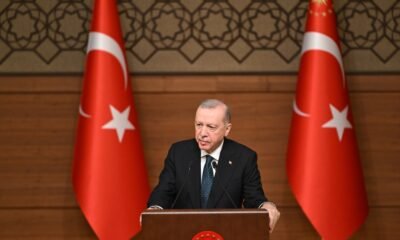
Erdoğan lauds work to spare Türkiye from turmoil amid Israeli tensions