
Economy
Türkiye to continue policies promoting Turkish lira under new MTP

Economic policymakers aim to continue implementing policies aimed at reducing the attractiveness of foreign-currency deposits, while increasing the share of Turkish lira and extending their maturities during the new Medium-Term Program (MTP) period.
Turkish officials unveiled on Sunday the new economic program covering the 2027-2029 period, seeking to curb inflation and ensure sustainable growth, while also supporting manufacturing, local agricultural development and boosting high-tech exports.
At the same time, the officials aim to maintain the attractiveness of the Turkish lira.
According to the MTP, Turkish-lira-denominated investment instruments will be encouraged, policies aligned with monetary policy regarding credit growth will be maintained and financing conditions for investment- and export-oriented activities will be improved, a report by Anadolu Agency (AA) indicated on Tuesday.
In 2026, when international financial markets experienced periods of excessive volatility due to global uncertainty and geopolitical risks, the Central Bank of the Republic of Türkiye (CBRT) encouraged a shift toward the Turkish lira through macroprudential policy measures used as a tool supporting the disinflation process and monetary policy, while ensuring that credit growth remained at levels consistent with inflation.
Within this framework, in January, the growth limit on FX loans was tightened, while a growth limit was also introduced for the limits on consumer overdraft accounts (KMH).
In March, the scope of loans exempted from the reserve requirement framework based on credit growth was narrowed. Moreover, at the end of May, growth limits were reduced for consumer loans and vehicle loans extended to individuals, KMH limits, and Turkish-lira commercial loans.
As a result of the reduction in the growth limit for FX loans, the annualized increase in FX commercial loans, adjusted for exchange-rate effects, declined to 11.2% as of Aug. 28.
In addition, in January, reserve requirement ratios were increased for funds obtained through Turkish-lira-denominated repo transactions with nonresidents and for loans obtained from abroad.
Macroprudential regulations also helped balance household indebtedness, while growth in individual credit cards and KMH slowed.
Accordingly, Turkish lira deposits became more prominent among household assets, while the rapid increase in precious metal prices led to a higher share of precious metal accounts within FX deposits.
At the same time, the banking sector’s nonperforming loan ratio rose from 2.2% to 2.9% as of July 2026 compared with the same period of the previous year, but it continued to remain below its historical average. The increase was driven by higher outstanding balances on loans to small and medium-sized enterprises (SMEs), consumer loans, and individual credit cards.
The banking sector’s stable profitability structure continued to be the most important factor supporting capital adequacy, while temporary flexibilities used in calculating the Capital Adequacy Ratio (CAR) were phased out as of 2026.
As part of the exit strategy from the KKM scheme, the opening and renewal of accounts for individuals were terminated as of Aug. 23, 2025. Following the decision, the balance of KKM accounts held by individuals, which stood at $9.6 billion, was completely eliminated by August 2026.
Within this framework, as the KKM balance – which had reached a 26.2% share of total deposits in August 2023 – was phased out, the share of Turkish lira deposits in total deposits increased to 61.5% as of Aug. 28, 2026.
On Sunday, Vice President Cevdet Yılmaz also pointed to the increase in Turkish lira deposits.
“Within the framework of the policies we have implemented, confidence in the Turkish lira has continued to increase,” he suggested.
“The rise in the share of TL deposits in total deposits from 31.6% to 61.5% as of Aug. 28 has been a concrete indication that the policies we have been pursuing are right,” he noted.

South Korea’s economy expanded at more than triple the expected pace in the third quarter, fueled by strong semiconductor demand, central bank data showed Tuesday.
The country’s gross domestic product (GDP) grew 1.0% in the July-September period compared to the previous three months, according to preliminary figures from the Bank of Korea (BOK).
The figure exceeded the central bank’s forecast of 0.3% growth made in August.
Growth was supported by a 2.3% rise in exports, “led by semiconductors, machinery and electrical equipment,” the BOK said.
Investment in facilities also jumped 4.1%, driven mainly by machinery used in semiconductor manufacturing.
From a year earlier, the country’s economy expanded 3.4%, slightly below the 3.7% recorded in the previous quarter.
The country’s real gross domestic income (GDI), a measure of purchasing power, surged 18.8% year-over-year, its fastest increase in nearly 49 years, helped by rising semiconductor prices.
South Korea’s economy recorded its fastest growth in over five years in the January-March period, expanding 1.7% from the previous three months owing to soaring semiconductor demand.
The semiconductor boom has also propelled the country’s current account surplus to record levels.
The country recorded a $116.6 billion current account surplus in the second quarter, surpassing the combined surpluses of manufacturing powerhouses Germany and Japan for the first time since comparable records began in 1996.
The International Monetary Fund (IMF) forecasts South Korea’s annual current account surplus will reach $421.9 billion this year, the second-largest among 190 economies after China.
Semiconductor exports surged 218.7% year-over-year to $148 billion in the third quarter, according to government data.
The unemployment rate in Türkiye edged up 0.5 percentage points to 8.4% in September, official data showed on Tuesday.
The number of unemployed persons aged 15 years old and over increased by 198,000 to 2.96 million in September compared to the previous month, the data from the Turkish Statistical Institute (TurkStat) showed.
The rate was estimated 6.9% for men and 11.3% for women, TurkStat said.
The number of persons in the labor force was 35.4 million, the institute said, up 149,000 month-over-month. Labor force participation rate was 52.7%, increasing by 0.1 percentage point.
The youth unemployment rate in the 15-24 age group rose 1.6 percentage points on monthly basis to 14.8% in the month.
This rate was estimated 10.4% for men and 23.3% for women.
The world will add less clean energy capacity in 2026 for the first time in five years due to inadequate transmission networks and trade barriers, the chief of the International Renewable Energy Agency (IRENA) said Tuesday.
Growth in solar and wind capacity has been accelerating every year since 2021, when the coronavirus pandemic disrupted global supply chains.
Clean power installations, including hydropower, surged a record 692 gigawatts, or 15.5%, to 5,149 GW in 2025 – representing half the world’s power capacity.
Governments have pledged to boost clean energy use to ensure reliable power supply and cut costs, particularly after the US-Israeli war with Iran choked energy supplies and inflated prices. But IRENA Director-General Francesco La Camera noted that there has been a slowdown in renewables deployment in China due to curtailment – or rejection of clean power when a grid hits its limits.
“The main cause of a lack of new record in additions this year is the mismatch between generation capacity and the capacity to distribute and transmit electricity,” he told Reuters on the sidelines of the Singapore International Energy Week conference.
China, the world’s biggest renewable energy producer, turned away enough clean energy to power Mexico for a year in the first half of 2026, while networks in nations such as Australia and Japan also failed to keep pace with a surging renewables buildout.
“The amount of the (capacity) increase in the other parts of the world this year, I don’t think it will offset the slowing down in China,” La Camera said. He declined to provide a numerical forecast for expected growth in clean energy additions this year.
Renewable energy additions are crucial to reducing global emissions, and the United Nations said in a report last week that “urgent and stringent” emission cuts were required to slow global warming.
The Turkish market regulator announced late Monday that it has temporarily halted capital market activities of two portfolio management companies as part of liquidation measures amid the ongoing funds probe that has embroiled Turkish stocks.
The Capital Markets Board (SPK) said in a written statement on its website that it has decided to temporarily suspend the capital markets activities of Tera Portföy and Pusula Portföy and appoint banks to carry out the liquidation of funds established by the companies.
The board said it decided to stop market activities of the mentioned portfolio management companies – including investment funds, real estate investment funds and venture capital investment funds established by them that have been closed to transactions – but are not yet under liquidation as part of the liquidation process.
Authorities announced a series of measures since the middle of September to shore up market stability after some investment funds defaulted on redemption requests, triggering a sharp selloff in Türkiye’s benchmark stock index.
They announced the liquidation of 131 funds managed by seven companies, including Tera and Pusula. The liquidation process has been split into ordinary and extraordinary procedures.
The SPK said on Monday it mandated private lender Işbank to oversee the liquidation of the funds established by Tera Portföy and state-run Ziraat Bank to oversee the liquidation of those established by Pusula Portföy.
Earlier during the day, the regulator also said it raised the amount of financial assets required for people who ask to be treated as professional clients to TL 50 million (around $1 million) from earlier TL 10 million.
Construction site work has begun on a new airport in the Black Sea province of Trabzon, which will be Türkiye’s third built on the sea, Transport and Infrastructure Minister Abdulkadir Uraloğlu said Monday.
The work has started on setting up the construction site for the infrastructure, and the project will require 100 million tons of fill dumped into the Black Sea, Uraloğlu said.
The existing airport’s single 2,640-meter runway and its facilities are inadequate for growing passenger and cargo traffic, the minister said.
“We will give Trabzon a new, higher-capacity, modern airport that meets international standards,” Uraloğlu said.

As part of the project, a 6,000-meter protective breakwater is planned to shield the fill area from the sea.
The airport will feature a 3,000-meter runway, 45 meters wide, with a parallel taxiway of the same length and width.
An apron 1,370 meters long and 155 meters wide, and a security apron 400 meters long and 120 meters wide are also part of the project.
According to Uraloğlu, the airport will have a 110,000-square-meter terminal building with capacity for 10 million passengers a year. The existing airport handles more than 3 million passengers a year.

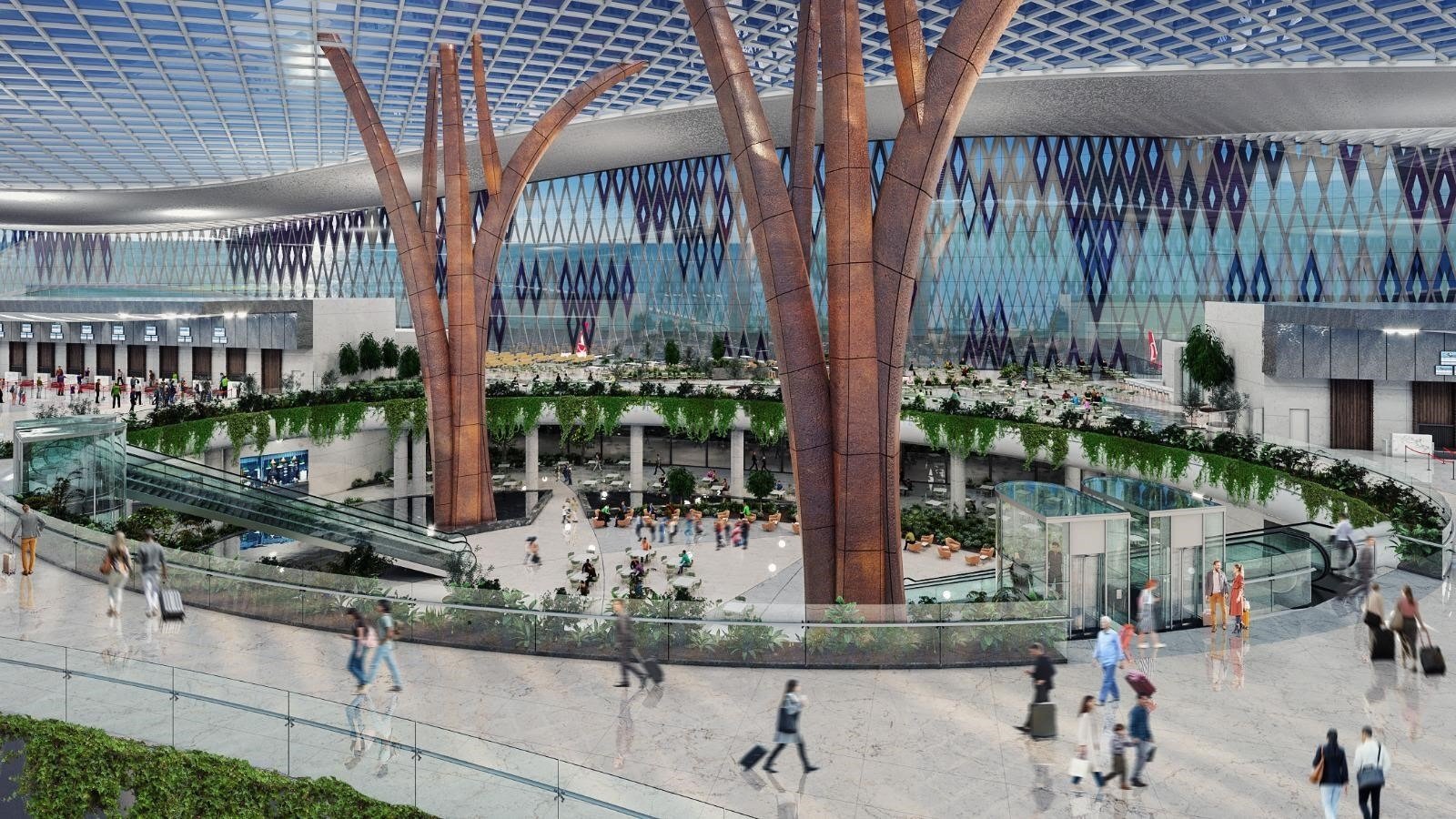
It will also include a technical block of 65,000 square meters, an air traffic control tower and support buildings.
Trabzon, a city of nearly a million people, is known for its green valleys, steep hills and a Byzantine-era monastery.
The local economy runs on agriculture and tourism. The city has become one of the hotspots for foreign tourists in recent years, particularly for those from the Gulf countries.
Türkiye’s securities regulator on Monday said it had raised the financial asset threshold for “qualified investors” fivefold, with existing status holders having to prove again that they meet the new requirements.
The overhaul marks the latest change since a crisis in September prompted authorities to order the liquidation of more than 130 investment funds that authorities suspect were manipulated and inflated in price.
Capital Markets Board (SPK) said the amount of financial assets required for people who ask to be treated as professional clients, which was TL 10 million ($200,000), is now TL 50 million.
The trading volume requirement has risen to TL 25 million from TL 5 million. Amounts that legal entities must meet to be treated as professional clients have also been reset.
The board said the qualified investor conditions in its various communiques, which refer back to the professional investor rules, have been updated to match.
Current holders of qualified investor status must re-document that they meet the new conditions.
The board also removed an exception introduced by a principal decision dated Dec. 18, 2025. It had applied to qualified investors buying units in real estate investment funds and venture capital investment funds.
These investors will now be subject to the same amounts that apply to qualified investors generally.
The board extended to Jan. 31, 2027, the final deadline for investment funds to fully comply with portfolio and investment limits.
The earlier schedule set staged deadlines for Oct. 31 and Nov. 30, 2026, and full compliance by Dec. 31, 2026. Under the update, the final deadline applies without the staged steps.
The board also removed a provision on exceptions for public institutions’ and affiliates’ money and capital market instruments, without affecting similar provisions in its communique on investment funds.
Nearly half a million investors held stakes in the funds that regulators ordered liquidated in mid-September.
Authorities say the liquidation process has been completed for 84 of the 131 initially frozen funds and payments have been made to their investors.
Parliament last week passed a law that establishes a framework for repayments, with payments adjusted for inflation and interim payouts of up to TL 1 million.
In late August, the SPK issued a Fund Guide requiring hedge funds to disclose their portfolios weekly, among other measures. Treasury and Finance Minister Mehmet Şimşek has said further regulation is being studied.


-
 Politics3 days ago
Türkiye rules out fight against Houthis under Saudi defense pact: Güler
-
 Economy2 days ago
Earnings reports, Fed decision to dominate busy week for markets
-
 Politics22 hours ago
France reportedly mulls postponing Med grid after Türkiye-Libya deal
-

 Politics1 day ago
Turkish opposition parties’ cash row grows
-
 Politics18 hours ago
Yemen hails strong ties with Türkiye, its role in region
-

 Economy22 hours ago
Ready for French test?: 5 questions for European Central Bank
-

 Sports3 days ago
Madrid’s Mourinho rejects Barcelona comparisons ahead of Clasico
-
 Politics3 days ago
8-nation Istanbul talks urge diplomacy to quell Mideast conflicts