
Politics
Türkiye warns US attack on Iran could trigger security risks

The unprecedented U.S. strikes on Iranian soil put Türkiye on edge as Ankara already seeks a diplomatic solution to the conflict between Israel and Iran.
“As Türkiye, we have always drawn attention to the risk of the conflict that started with Israeli aggression in the region spreading and the destabilization of the security environment. The attack by the U.S. on Iran’s nuclear facilities today (June 22) has maximized this risk,” a statement issued by the Foreign Ministry said Sunday.
The statement came shortly after Iran’s foreign minister delivered a stern warning to the United States in Istanbul where he attended a summit of foreign ministers of the Organisation of Islamic Cooperation (OIC).
“Türkiye is deeply concerned about the possible consequences of the U.S. attack on the nuclear facilities of the Islamic Republic of Iran. The ongoing developments could cause the regional conflict to escalate to a global level,” the Turkish ministry added. “We do not want this catastrophic scenario to come to life.”
It also called on all parties involved to “act responsibly, mutually cease attacks immediately and avoid steps that could lead to further loss of life and destruction.”
“The only way to resolve the dispute over Iran’s nuclear program is through negotiations. We call on the international community to support efforts to find a diplomatic solution between the parties,” it said. Türkiye also voiced its readiness to fulfill its responsibilities and “make constructive contributions.”
Although it is not party to the dispute between Iran and world powers over Tehran’s nuclear program, nor to the Iran-Israel conflict that continues after U.S. strikes, Türkiye has a lot at stake as a regional power and a neighbor of Iran. Unlike its allies in the West, it has defended Iran’s right to self-defense and slammed Israel’s policy of expansionism that now has its sights on Iran. Turkish leaders have repeatedly warned that Israel’s next target may be Türkiye if its regional aggression is not stopped. Indeed, Israel views Türkiye as an opponent and occasionally issues veiled threats to Turkish leadership for its unwavering support to Palestinians suffering under the Israeli attacks since 2023. Türkiye also maintains close ties with its NATO ally the United States.
Justice and Development Party (AK Party) spokesperson Ömer Çelik said in a social media post on Sunday that worst-case scenarios can be triggered if conflicts spread across the region. “The danger of expansion of conflicts in our region emerged after U.S. attacks on Iran’s nuclear facilities,” he warned.
Çelik said Israel’s aggression, attempting to set the entire region on fire, posed a threat to everyone. Çelik reiterated that President Recep Tayyip Erdoğan has conducted comprehensive diplomacy after Israel’s attacks on Iran earlier this month and held talks with regional and world leaders. “In this context, it was emphasized that the negotiation table is the only solution. Our president expressed readiness for peace diplomacy and hosting talks to that extent. His assessment since the very beginning of the conflict proved true. From now on, negotiations should be central (to the solution of the issue),” he said.
Erdoğan on Saturday urged greater unity among Islamic countries to resist Israeli actions and growing regional instability as he warned of attempts to impose a “new Sykes-Picot order” in the Middle East. “We will not allow the establishment of a new Sykes-Picot order in our region with borders to be drawn in blood,” Erdoğan said at the 51st Session of the Council of Foreign Ministers of the OIC in Istanbul.
The president expressed confidence in the resilience of the Iranian people amid the current conflict with Israel. “We have no doubt that the Iranian people, with their solidarity in the face of difficulties and strong state experience, will hopefully overcome these days,” he said. He also expressed his condolences on behalf of Türkiye to those killed in Israeli bombings and assassinations targeting Iranian citizens.
He strongly condemned Israel’s recent attacks on Iran, emphasizing that Iran’s right to self-defense in the face of state terrorism is natural, legitimate, and legal. Erdoğan described Israel’s strikes on Gaza, Lebanon, Yemen, Syria, and Iran as acts of “banditry,” warning that Israeli Prime Minister Benjamin Netanyahu’s government poses the greatest obstacle to peace in the region. He also urged Islamic countries to stand firm against Israel’s actions beyond Gaza. “We must show greater solidarity to stop Israel’s acts of banditry not only in Palestine but also in Syria, Lebanon, and Iran,” Erdoğan added.
He underscored that the current period of shifting balances and fragile politics requires the Islamic world to unite. He said the OIC must clearly express its stance against Israeli policies that have plunged the region into chaos and urged member states to reinforce tolerance and solidarity. Erdoğan stressed, regardless of sect or ethnicity, all Muslims share the same qibla and destiny and must set aside differences to confront common challenges.
Erdoğan emphasized that the OIC, as the second-largest international organization after the U.N., must become more effective, serve as a tool for development, and be better organized to address current and future challenges.
He reiterated that Türkiye’s OIC chairmanship begins during a time when Israeli aggression again threatens stability and peace in the region. He stressed that a multipolar world requires the Islamic world to become a pole of its own, taking on greater responsibility and playing a more prominent role in global affairs. Erdoğan concluded by saying that Muslims must resolve internal disagreements with their own wisdom and will, asserting that the Islamic world has the capacity and determination to find solutions to every issue that affects its future.
In the meantime, Türkiye remains on alert against the potential spillover of the conflict. Officials say the army is vigilant and border security measures are in place in light of the latest developments. Erdoğan also recently underlined that Türkiye’s defense capabilities were significantly strengthened thanks to the groundbreaking efforts of the local defense industry, which recorded a dramatic improvement in the past two decades, from the development of long-range missiles to unmanned aerial vehicles.

President Recep Tayyip Erdoğan received Khalifa Haftar, commander of the Libyan National Army (LNA), at the Presidential Complex in Ankara on Wednesday, marking a notable diplomatic engagement between Türkiye and eastern Libya.
Haftar, who arrived in the Turkish capital for diplomatic talks, was accompanied by a delegation.
Saddam Haftar, the commander’s son and presumed successor, described the talks as “an important step” toward building mutual trust, saying they “laid the groundwork for a new phase in relations” between Türkiye and eastern Libya.
Defense Minister Yaşar Güler, National Intelligence Organization (MIT) chief Ibrahim Kalın and Presidential Communications Director Burhanettin Duran also attended the meeting.
Libya has remained politically and institutionally divided following the overthrow of Moammar Gadhafi in 2011 and the outbreak of renewed conflict in 2014.
The Tripoli-based Government of National Unity (GNU), led by Prime Minister Abdul Hamid Mohammed Dbeibah, operates in western Libya, while a rival administration backed by military commander Khalifa Haftar operates in the east.
Having expanded its engagement with Haftar’s camp in recent years, Türkiye has emerged as one of the few external actors maintaining channels of communication with both sides.
On Nov. 22, Fidan and National Intelligence Organization (MIT) chief Ibrahim Kalın met with Dbeibah in Istanbul as Ankara stepped up diplomatic contacts ahead of Erdoğan’s planned visit. Fidan met Haftar in Benghazi last August.
Türkiye also hosted Haftar’s son, Khaled Haftar, chief of staff of the Libyan National Army (LNA), in early November as part of its growing engagement with eastern Libya.
In October, Türkiye hosted talks between military representatives from eastern and western Libya aimed at unifying the country’s military institutions.
Haftar’s forces control the port city of Benghazi, where two Russian ships were attacked over the weekend in a surprise operation claimed by Ukraine.
Haftar has close links with Russia, and Ankara has also sought to mediate in the Russia-Ukraine war. The attack in Benghazi that sank a Russian warship and damaged a Russian freighter shocked even many of Ukraine’s allies.
Voluntary returns of Syrians living in Türkiye have continued nearly two years after the fall of Bashar Assad’s regime on Dec. 8, 2024, with many crossing into their homeland through the Öncüpınar Border Crossing in the southern province of Kilis.
Syrians living in various Turkish cities, including Istanbul, Şanlıurfa and Kayseri, are traveling to Kilis to return to Syria through the border crossing.
Speaking to Türkiye’s Ihlas News Agency (IHA) on Thursday, one Syrian who traveled from Istanbul to Kilis to cross into Syria said he had lived in Türkiye for 13 years after fleeing his country when the civil war broke out. The 36-year-old, who works as a translator and speaks five languages, said he had spent his youth in Türkiye and considered the country his first homeland.
Other Syrians, some of whom said they had lived in Türkiye for more than 14 years, also described their years in the country as positive, saying they considered Türkiye their first homeland.
The fall of the Assad regime in December 2024 marked a turning point for millions of Syrians displaced by the country’s 13-year civil war, prompting an increase in voluntary returns from neighboring countries. The political transition raised hopes among refugees of rebuilding their lives at home and reuniting with relatives after years of displacement.
Türkiye, which hosted millions of Syrians under its temporary protection system throughout the conflict, introduced measures to facilitate voluntary returns. These included allowing refugees to make visits to Syria to assess conditions before deciding whether to return permanently.
Seven suspects have been arrested in an investigation by the Istanbul Chief Public Prosecutor’s Office into FETÖ’s so-called “gaybubet houses,” safe houses used by the Gülenist Terror Group (FETÖ) to conceal fugitives, and its network for helping members flee abroad.
Details of the investigation, obtained by Turkish daily Sabah, revealed that two former soldiers dismissed from the Turkish Armed Forces (TSK) were hiding in a gaybubet house despite having final prison sentences against them. A former military “imam” for the group, who had recently been released from prison, was also found hiding at the same location.
The operation was conducted by the prosecutor’s Office of Investigation into Terrorism Crimes and targeted the residences FETÖ refers to as “gaybubet houses,” as well as networks organizing the escape of its members abroad.
Seven suspects – Hakan A., Hasan G., İsmail A., Mehmet H., Mustafa B., Ahmet Hakan P. and Canan B. – were arrested on charges of membership in an armed terrorist organization. The suspects included wanted fugitives and individuals responsible for providing logistical support to the safe houses.
According to findings in the investigation file, the organization rented houses through individuals with no criminal records who appeared to have no organizational affiliations, in order to conceal members facing judicial proceedings or arrest warrants.
Investigators found that GSM lines were redirected to other numbers to avoid detection, while SIM-card-free mobile phones, Superbox Wi-Fi connections and VPN infrastructure were used at the residences.
A search of the house uncovered $46,000 in cash, which none of the suspects claimed as their own. Investigators determined that the money had been sent by the organization to maintain the gaybubet house and finance escape operations abroad. Foreign currency was also found concealed among clothing, while banknotes in denominations of $1, $2 and $5 had been placed in specially prepared envelopes.
The investigation found that FETÖ members referred to locations where fugitives were concealed as gaybubet houses, while escape operations abroad were code-named “Hicret” (migration).
Members captured along escape routes were reportedly portrayed within the organization as “Hizmet Eri” (service personnel). Investigators also determined that suspects had been made to swear oaths not to disclose details of the houses where they stayed, the individuals providing logistical support or the escape arrangements to law enforcement authorities.
An examination of the captured fugitives’ phones also revealed that the encrypted messaging application Signal had been installed under assumed names in a folder labeled “Secure/Hidden,” with the devices operating without SIM cards.
The investigation detailed the organizational activities allegedly carried out by the seven suspects.
Ismail A., who had no criminal record, reportedly rented the gaybubet house on the instructions of his older brother, Hakan A. He also paid the rent and utility bills and refused to provide police with the house’s digital access passwords.
Hakan A., who allegedly managed the residence and its logistical arrangements, provided transportation and other support to fugitives and arranged meetings with them.
Ahmet Hakan P. reportedly traveled to Istanbul by bus and went to the gaybubet house, where he held organizational meetings with dismissed military personnel. Canan B. was also found to have played an active role in securing the residence and meeting its logistical and financial needs.
One of the most notable suspects was Mustafa B., who had a finalized prison sentence for serving as a military “imam” in FETÖ’s military clandestine network at the rank of “director.”
After being released from prison on Oct. 5, 2026, Mustafa B. went directly to the gaybubet house without carrying any digital devices, apparently to evade surveillance, investigators found.
Former soldiers Mehmet H. and Hasan G., who had been dismissed from the Turkish Land Forces under government decrees and served as “students” in FETÖ’s military clandestine structure, were also caught at the same house. Both were wanted under arrest warrants and had final prison sentences.
In a separate operation targeting FETÖ in the capital Ankara, police arrested three fugitives.
Teams from the Ankara Police Department’s Organized Crime and Anti-Smuggling Division and Intelligence Division had been conducting operations to locate wanted individuals in the city.
Officers identified the addresses of convicted FETÖ members wanted for membership in an armed terrorist organization and attempting to overthrow the constitutional order.
During raids at the identified locations, police arrested A.A., who had been on the run for a year and had a finalized 18-year prison sentence; K.N., who had been wanted for three years; and N.K.Ç., who had been a fugitive for seven years.
New Party (YP) Chair Özgür Özel has appointed several figures facing bribery allegations to the party’s new executive board, including a senior politician accused of receiving TL 5 million (nearly $100,000) in bribes, who will now oversee the party’s finances.
The party’s 28-member Central Executive Board (MYK) was finalized following its first ordinary congress, with nine members joining Özel’s executive team for the first time.
As the Sabah newspaper reported, Özgür Karabat, who is accused of receiving TL 5 million in bribes in an indictment involving businessperson Aziz Ihsan Aktaş, was appointed deputy chair responsible for administrative and financial affairs.
Aktaş was previously alleged to have secured lucrative tenders from municipalities run by the CHP in exchange for bribes.
Özgür Karabat, a former CHP deputy chair and a senior figure in the YP, is among the politicians facing parliamentary referral requests as part of ongoing judicial investigations.
Karabat’s name appears in the investigation into alleged corruption at Istanbul Metropolitan Municipality (IBB).
According to the indictment, prosecutors also alleged that before Türkiye’s 2024 local elections, Karabat collected money from contractors doing business with Istanbul Metropolitan Municipality, its subsidiaries and CHP-run district municipalities under the name of “election support.” The indictment further claims Karabat received a TL 5 million bribe in connection with those activities. Based on these allegations, prosecutors prepared a parliamentary referral (fezleke) and forwarded the file to the Ankara Chief Public Prosecutor’s Office.
The appointment puts Karabat in charge of the party’s finances. Özel previously said the party’s financial resources had been provided by the public.
Burhanettin Bulut, a CHP deputy chair and Adana lawmaker who later joined the YP, faces allegations of receiving $1 million in bribes in the same indictment and was appointed deputy chair responsible for media and corporate communications.
Bulut returned to the executive board after being excluded from the party’s initial leadership lineup.
Türkiye’s National Intelligence Organization (MIT) has dismantled a cyberespionage network targeting wireless internet networks at critical public institutions, particularly defense industry facilities, in an operation that led to the arrest of two suspects, security sources said Thursday.
MIT launched an investigation after receiving intelligence that two individuals were attempting to infiltrate the wireless networks of critical institutions on behalf of foreign intelligence services.
The investigation revealed that the suspects had used specialized software and equipment to map Wi-Fi networks along predetermined routes in Ankara and Istanbul.
Following the investigation, the two suspects were detained in a joint operation conducted by MIT and the Istanbul Police Department.
Critical institutions targeted
The suspects admitted to operating near critical public institutions, defense industry facilities, political party headquarters, military installations and foreign diplomatic missions in Ankara.
They also said they had received instructions through job advertisements on social media and were paid in cryptocurrency for their espionage activities.
Further investigations by MIT determined that the suspects had been operating on behalf of a foreign intelligence service.
Both suspects were formally arrested and sent to prison pending trial.
Türkiye strongly condemned an attack by Yemen’s Iran-backed Houthis on a major financial district in the Saudi capital Riyadh, reaffirming its solidarity with the kingdom and calling for an immediate end to attacks threatening regional stability.
In a written statement, the Foreign Ministry denounced the attack on the King Abdullah Financial District and wished those injured a speedy recovery.
The ministry reiterated its call for an immediate halt to attacks targeting civilian infrastructure and undermining regional peace and security.
“We emphasize our full solidarity with Saudi Arabia in the face of the ongoing Houthi attacks and reaffirm our support for the country’s sovereignty and territorial integrity,” the ministry said.
Yemen’s conflict deepened in September 2014 when the Iran-backed Houthis seized control of the capital, Sanaa, and several other parts of the country.
A Saudi-led Arab coalition intervened in March 2015 in support of Yemen’s internationally recognized government.
Although a cease-fire that took effect in April 2022 ushered in a period of relative calm, renewed fighting since July has shifted territorial control across the country.
The Houthis have intensified attacks on government-controlled areas in Yemen while targeting Saudi Arabia with ballistic missiles and drones, further heightening regional security concerns.


-
 Economy3 days ago
Türkiye, Russia to weigh new trade, energy cooperation deals
-
 Economy3 days ago
Türkiye’s central bank says could opt for tax measures to support lira
-
 Economy3 days ago
US expands Iran sanctions, targets ‘shadow-banking’ networks
-

 Economy2 days ago
Türkiye plans pension increase above inflation rate: VP Yılmaz
-

 Economy2 days ago
What to know about Megaspeed, blacklisted tech firm with opaque ties
-

 Economy3 days ago
Alice Huang had contact with Chinese spy agency during Nvidia CEO affair: Report
-
 Politics3 days ago
Turkish FM embarks on phone diplomacy with Egypt, KRG, Saudi Arabia
-
 Economy2 days ago
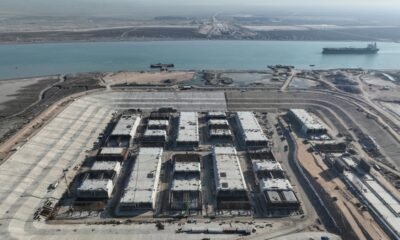
Türkiye foresees over $78B investment under Development Road project