
Daily Agenda
99th anniversary message from MİT President Kalın: The Goal is the Türkiye Century and a Terror-Free Türkiye

Director of the National Intelligence Organization, İbrahim Kalın, explained the goals of the organization in his article titled “Safer and Stronger Turkey in the Turkish Century”, which he wrote on the occasion of the 99th anniversary of the organization.
 MIT’S ACTIVITIES: Our basic principle is this: None of us are safe until we are all safe. He who ignores the security of others cannot guarantee his own security. Multi-dimensional new threats can only be eliminated with a holistic security approach rather than single and tactical measures.
TURKEY’S CENTURY: With its multi-dimensional and balanced foreign policy strategy followed in line with the “Turkey Century” vision, as well as its ever-developing intelligence capabilities, we will enter this new era not only as a regional actor; At the same time, we enter as a global stakeholder that produces solutions and is based on justice and solidarity.
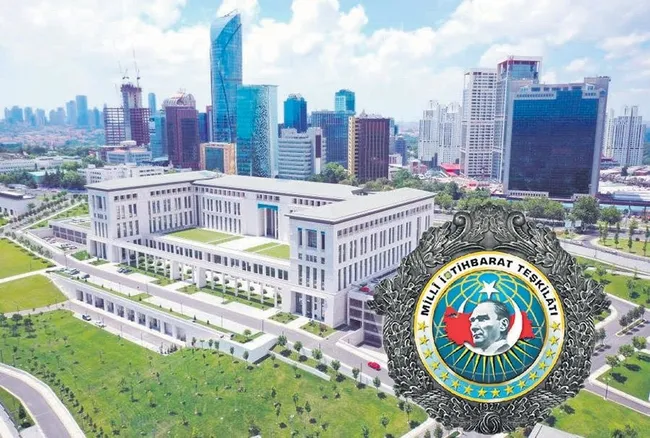
TERRORISM-FREE Türkiye: Steps that transform our ancient civilization heritage into strategic value will also prevent interventions contrary to the spirit of our history and geography. The new era, free from terrorism and based on the law of brotherhood and social integration, will be one of the greatest achievements of the Turkish Century, built with a strategic mind.
SYRIA: Our country and our Organization, which has made significant contributions to the international community’s efforts to integrate Syria into the international system as a key actor, will continue to support the establishment and preservation of stability in Syria for regional peace with strategic patience and wisdom.
Daily Agenda
The Iraqi Minister first insisted and then signed! Who did the Development Road Project disturb? Here’s what’s behind the scenes
After President Recep Tayyip Erdoğan and Iraqi Prime Minister Ali al-Zaydi had a one-on-one meeting at the Presidential Complex and chaired the meeting between delegations, agreements were signed between the two countries.
“Education and Academic Cooperation Memorandum of Understanding” was signed by Police Academy President Murat Balcı and Iraqi Prime Minister and Armed Forces Commander’s Private Secretary General Abdulemir Shammari. The “Memorandum of Understanding in the Fields of Youth and Sports” was signed by Minister of Youth and Sports Osman Aşkın Bak and Iraqi Minister of Foreign Affairs Fuad Hüseyin. The “Memorandum of Understanding on Cooperation in the Field of Industrial Property” was signed by the Minister of Industry and Technology Mehmet Fatih Kacır and the Iraqi Minister of Finance Falih Sari. The “Memorandum of Understanding on Railway and Road Transport through the Fishhabur-Ovaköy Border Gate” and the “Framework Memorandum of Understanding on the Development of Transportation Infrastructure within the Republic of Iraq in Exchange for Natural Resources” were also signed by Minister of Transport and Infrastructure Abdulkadir Uraloğlu and Iraqi Minister of Transport Veheb Selman Muhammed.
The agreement ceremony was marked by Iraqi Minister of Transport Veheb Salman Muhammed’s insistence on signing the Memorandum of Understanding regarding the Development Road Project. Following the intervention and instruction of Iraqi Prime Minister Ali Zaydi, the relevant agreements were signed.
(Minister of Transport and Infrastructure Abdulkadir Uraloğlu and Iraqi Minister of Transport Veheb Selman Muhammed signing the agreement)
It was noteworthy that President Recep Tayyip Erdoğan also warned about what happened during the signing ceremony and asked for additional information from the Minister of Foreign Affairs Hakan Fidan.
After the images attracted the attention of the world media; SETA Foreign Policy Researcher Can Acun gave striking answers to Sabah.com.tr’s questions about the Development Path Project, the changing balances in the Middle East and President Erdoğan’s determined diplomatic moves.
SETA Foreign Policy Researcher Can Acun
WHAT LIES BEHIND THE SCENES?
Can Acun emphasized the importance of the Development Road Project in terms of the national security and commercial interests of both Iraq and Türkiye. He pointed out that the project is at a critical angle for the continuity of global logistics lines. Can Acun said, “A while ago, I carried out various field studies in Iraq in the context of the Development Road Project. I had the chance to meet with many main actors there. I also met with the officials of the Bedir organization and political structure, to which the Minister of Transport is affiliated. All of them stated that they definitely supported the project in these meetings and that it was seriously important for the future of Iraq.” he said.
Can Acun said, “There is a new government in Iraq, a new Prime Minister, a cabinet formed by him and a certain struggle within the framework of internal political balances.” he said.
Stating that highways, train lines, various industrial zones and new agricultural areas will be created with the Development Road Project, Can Acun said, “We see that it is a project exceeding 20 billion dollars.” he said.
Drawing attention to the closure of the Strait of Hormuz and the events in Babülmendep, Can Acun said, “In this sense, we can talk about an equation in which the Development Road Project has become much more important. Apart from the highway and train line, it is also very possible to transport oil here.” he used his words.
THE AXIS OF THE DISCUSSIONS IN IRAQ
Emphasizing the size of the economic volume that will be created with the Development Road Project, Acun pointed to Iraq’s internal balance. He stated that there are discussions between different political groups in the country on many issues, from how the process will work to the routes to be used, whether Hashd al-Shaabi elements will play a role in security or not, to the sharing of the financial share and revenue that will arise.
Can Acun said, “This signature issue in Türkiye should be evaluated in this context. We should not read it as a party against the project, but on the contrary, we can read it as a manifestation of Iraq’s internal balances in the context of sharing the new wealth that may occur here.” He included his statements.
HOW DOES IRAN APPROACH THE PROJECT?
While many evaluations were made on social media about its closeness to Iran after Iraqi Minister of Transport Veheb Salman Muhammed resisted signing, Can Acun touched on Tehran’s approach. Acun noted that Iran has an ambivalent position. Can Acun said, “Although Iran seems to support the project from the outside, it may have an impact in terms of breaking the blockade it has currently created in the context of the Strait of Hormuz. It can also be seen as a project that can reduce Iran’s strategic importance in the connectivity corridors. In this context, it may try to use various influence forces within Iraq. However, almost all the actors within Iraq, that is, even the groups working closely with Iran, have to officially support the project. Because I think this project is really critical for the future of Iraq.”
The multilateral diplomacy traffic that President Recep Tayyip Erdoğan has recently established with Iraq, Gulf countries (UAE, Qatar) and regional actors plays an important role in creating both peace and economic prosperity in the Middle East. While Türkiye’s role in the international arena becomes stronger day by day, the Development Path Project will make a significant contribution to these steps.
Can Acun opened a separate parenthesis to the developments in the Middle East and said, “There is currently chaos in the Middle East in the context of the aggressive policies of the United States and Israel. We see that Iran has responded to this and closed the Strait of Hormuz, which is the biggest trump card it has, and the conflicts have even deepened, and in the context of Yemen, the Houthis have started to cut off the Bab al-Mandeb, and ships belonging to various countries, especially Saudi Arabia, have begun to blockade.” he said.
“THE ALTERNATIVES PUT OUT BY Türkiye ARE CRITICALLY IMPORTANT”
Noting that America’s blockade against Tehran has created a very serious global energy crisis in the region and the world, Can Acun said, “We see that 20% of the world’s oil and petrochemical industry is produced in the region and exported to the world through these straits. But now there is a serious interruption and there is uncertainty about the future. Therefore, I think the new global logistics lines put forward by Türkiye and new alternatives in terms of new energy supply security are of critical importance for the world and the region.” he said.
President Erdoğan emphasized the Development Road Project at the joint press conference with Iraqi Prime Minister Ali al-Zaidi:
The war environment drives us to deepen our cooperation not only in defense but also in the fields of energy and transportation. The Development Road Project has become more important than ever in the face of current developments.
Can Acun noted that President Recep Tayyip Erdoğan demonstrated the geographical and strategic importance of Türkiye with the diplomatic steps he took. Acun said that Türkiye has emerged as a country that can protect these lines with both its political will and military deterrent power.
Can Acun said:
Zangezur Corridor seriously manifests itself as the Middle Corridor. At the same time, Türkiye attaches strategic value, attaches importance and seriously supports the Development Road Project. However, there are alternative corridors. The Hejaz Line from Saudi Arabia to Türkiye again passing through Syria; Again, transportation of oil and energy resources in Kirkuk to the world via Türkiye and Ceyhan; In fact, Türkiye has serious proposals and efforts to open the oil produced on a scale that can include Kuwait in the Persian Gulf with the Development Path to the world from here via the Iraq-Türkiye line.
PRESIDENT ERDOĞAN’S REGIONAL ADOPTION POLICY…
Now we see that the world attaches great importance to this. Because the current situation does not seem sustainable in any way. There is an outage that could cause a global energy crisis. Therefore, the security of the region and these straits and the possibility of supply shortages for the future will always be on the table, and investment in alternative corridors will increase. In this sense, I think the strong political will and strong military deterrent power of Türkiye, which President Erdoğan has included with his regional ownership policy, will enable alternative corridors to be implemented in this sense.

Daily Agenda
Minister Tekin evaluated the international reflections of Türkiye’s new practices in education
The new curriculum, digitalization steps and the rise in international student success research that the Ministry of National Education has implemented in education in recent years are reflected in the reports of international organizations and attract the attention of education circles. Türkiye’s rising graph, revealed by the new curriculum within the scope of the Turkey Century Education Model, the steps taken in the field of digitalization, and research such as the Program for International Student Assessment (PISA) and the International Mathematics and Science Trends Survey (TIMSS) conducted by the Organization for Economic Co-operation and Development (OECD), are among the headlines that attract attention in the international arena. The Turkey Century Education Model, which emerged as the product of a ten-year long-term study by the Ministry and started to be gradually implemented in the 2024-2025 academic year, centers on skill-based learning, values education and the holistic development of students as well as knowledge transfer. In various international meetings and diplomatic contacts between countries, Türkiye’s new curriculum approach is followed by many countries, especially OECD member countries, and evaluations are made that the skill-oriented structure of the model is compatible with global education trends.
At the G20 Education Ministers Meeting held in the Republic of South Africa in November last year, the Ministry of National Education’s breakthroughs and outstanding practices in the field of education were cited as an example to the world by UNICEF. UNICEF Global Education and Adolescent Development Director Pia Britto stated that the “value and skill-based” Türkiye Century Education Model has been appreciated internationally. Pointing out that face-to-face training for teachers to prepare for the new curriculum stands out as exemplary practices, Britto stated that Türkiye is among the countries that successfully implement national standards in early childhood education with its centralized education system. In the news made by an agency from Azerbaijan, it was stated that the Turkish Century Education Model deals with value education, character development and national spiritual identity together with academic development, thus Türkiye has achieved a comprehensive transformation not only in infrastructure but also with an education model that overlaps with its own values.
“WE EXPECT Türkiye’S SUPPORT ON THE USE OF TECHNOLOGY IN THE FIELD OF EDUCATION”
While positive opinions about Türkiye’s progress in the field of digitalization in education were included in some reports, it was stated that Türkiye’s experiences in this regard were appreciated in the meetings held at the ministerial level. While the United Nations Development Program (UNDP) reports draw attention to Türkiye’s global leadership in educational technologies, the report emphasizes that Turkey is the only country in the world with interactive whiteboards and internet infrastructure in almost all of its classrooms. In her meeting with Minister of National Education Yusuf Tekin, Kyrgyzstan Minister of Education Dogdurkul Kendirbaeva stated that they watched Türkiye’s use of artificial intelligence and technology in education with appreciation and said, “We expect Türkiye’s support in the use of technology in the field of education.” he said. Former Head of the European Union Delegation to Türkiye, Ambassador Thomas Ossowski, also stated that they are proud of the successful projects carried out with the Ministry of Education and that Türkiye can be a role model for other countries in many areas, especially digitalization in education. In the “Education at a Glance 2025 Report” published by the OECD and presenting comparative data on education systems, it was emphasized that Türkiye showed a strong increase in education. The report revealed that Türkiye stands out among OECD countries in increasing inclusiveness in education and bringing the young population into education.
“NOT BECAUSE THEY FOUND A MAGIC WAND, BUT BECAUSE THEY BUILT CONSISTENT SYSTEMS”
Türkiye’s ranking in the latest application of TIMSS, conducted by OECD as well as PISA, attracted the attention of representatives of many countries and institutions. The Japanese education delegation visited the Ministry and examined Türkiye’s rising success in PISA research and its practices in the field of measurement and evaluation. In his meeting with Minister Tekin, OECD Secretary General Mathias Cormann stated that Türkiye is one of the few countries showing a trend in the right direction in the last 10 years of PISA results. OECD Director of Education Andreas Schleicher pointed out that Türkiye’s moves in the field of education show that it can turn things around in crises, and said, “Not because they found a magic wand, but because they built consistent systems, mobilized local resources to make education sustainable, and invested in workforce policies where better skills translate into better jobs and better lives…” UNESCO Deputy Director-General for Education and former Italian Minister of Education Stefania Giannini also emphasized that Turkey is one of the bright examples of countries that come from different perspectives and challenges, produce solutions and make progress.
STUDENTS WERE MONITORED WITH THE MONUMENT RESEARCH IN THE YEARS WHEN PISA AND TIMSS WERE NOT APPLIED
Minister of National Education Tekin made statements about the practices implemented by Türkiye in education and their reflections in the international arena. Tekin explained that they have improved the education and training system since the 2010s, both with the monitoring and evaluation units they established within the Ministry and in terms of international indicators. Stating that they have established a system within the Ministry that analyzes, monitors, evaluates and reports physical infrastructure, academic success and human resources practices through artificial intelligence, Tekin said, “Where, which of our schools needs what, all our general manager friends and friends in relevant units can see it electronically. This is about physical infrastructure and technological infrastructure.” made his assessment. Reminding that they started the Monitoring and Evaluation of Academic Skills (ABIDE) research, which is one of the national monitoring research of the Ministry, regarding their academic achievements, Tekin stated that they monitored the academic achievements of students by conducting this research in the years when PISA and TIMSS were not implemented.
Reminding that organizations such as OECD and UNESCO publish reports on education and training processes at routine intervals, Tekin said, “These organizations publish reports with names such as ‘Education Outlook’ and implement cycles to monitor academic skills, as in the PISA and TIMSS examples. In these two evaluations, we were determining and implementing our policies based on both internal and external evaluations.” shared his knowledge.
“THE POINT WE HAVE REACHED IN TERMS OF INDICATORS IS IMPORTANT”
Tekin said, “Especially during the July 15 period, with the tutelage structures and practices over the Ministry blocked, Türkiye’s achievements in international reports began to gain upward momentum.” he said. Referring to the international reports published on education in Türkiye, Tekin continued his words as follows: “It is clearly stated that Türkiye exceeds the international averages in issues such as the schooling rate, the number of students per classroom, the number of students per teacher, the use of technology in education. This is important for us and we continue to take steps to ensure its continuation and not fall behind in this sense. This will continue as education and training has been given first priority in all our budgets since the date our President became prime minister. Therefore, physical and technological infrastructure and similar financial resources.” “The problems related to these issues have been largely solved. I say largely because we live in an earthquake zone. Such needs will arise as earthquake strengthening, earthquake controls and analyzes are carried out. We have schools that have completed their economic life, the process of demolishing and rebuilding them will continue, but the point we have reached in terms of indicators is important.”
“WHEN OUR CURRICULUM BECAME SKILL-FOCUSED, THESE ACHIEVEMENTS STARTED TO INCREASE”
Minister Tekin told them in international environments in 2013-2014, “Since your programs are still focused on providing information to children, there is no possibility of your children being successful in international exams.” He reminded me that it was said. Stating that when they wanted to make a skill-oriented program, they encountered obstacles from the tutelage forces whose interests were harmed, Tekin said, “When those structures were closed and our education programs and curriculum became skill-oriented, these successes began to increase.” expressed his opinion. Türkiye Century Education Model regarding Türkiye’s education system: “You do not have a skill-oriented structure.” Emphasizing that they prepared it to eliminate criticism, Tekin said that the new curriculum was prepared by taking the opinions of international structures, teachers and academics.
Reminding that the 59th PISA Board of Directors Meeting was held in Türkiye in May last year, Tekin continued his words as follows: “After the presentation we made to them there, it was decided that these program changes should be translated into different languages and explained to different countries. Delegations from many countries started to be requested from us to explain these, and our friends are telling this. This has started to be reflected in the scores.” Tekin stated that Türkiye achieved great success in terms of international indicators in the recently announced TIMSS scores and emphasized that it ranked 4th in 4th grade science, 7th in 8th grade science, 8th in 4th grade mathematics and 10th among OECD countries in 8th grade mathematics.
“WE WANT OUR CHILDREN TO BE STRONG WHILE COMPETING IN THE INTERNATIONAL ARENA”
Reminding that PISA 2025 results will be announced in Bratislava, the capital of Slovakia, on September 8, Tekin stated that OECD has high expectations from Türkiye. Minister Tekin said, “We want our children to be strong while competing in the international arena, but on the other hand, we do not want them to move away from the values that make us who we are. Therefore, we look at the issue in this way. While talking to the officials of other countries, we share that these should be included in education programs in order for that country’s own future to be embraced by its children, for children to internalize world peace, and for ending human rights violations and wars in the world.” he said.
Daily Agenda
Clear statement from the Ministry of Foreign Affairs: We confirm our full support to the Turkish Cypriot people.
In his statement on his social media account, Ministry of Foreign Affairs Spokesperson Öncü Keçeli said, “We appreciate the efforts made by UN Secretary General Antonio Guterres regarding the Cyprus issue since the beginning of his duty. In this period when there is still no common ground for a solution between the two parties on the island, we believe that focusing on progress in important areas of cooperation within the scope of the process initiated by Secretary General Guterres in 2025 will serve to build trust.” he said.
Öncü Keçeli said:
On the other hand, we emphasize once again that the solution perspective will not materialize unless the uncompromising attitude of the Greek Cypriot side changes and its actions that negatively affect regional security are stopped. We hereby draw attention once again that solution models that have been tried and exhausted over decades are a thing of the past. As the homeland and guarantor state, we reiterate that a fair, comprehensive and sustainable solution to the Cyprus issue can be reached on the basis of the realities on the Island, the sovereign equality and equal international status of the Turkish Cypriot people. As always, we confirm our full support for the Turkish Republic of Northern Cyprus and the Turkish Cypriot people.
Daily Agenda
President of Religious Affairs Safi Arpaguş: We must be able to introduce our children to our own civilization values
According to the statement made by the Diyanet, Arpaguş spoke at the Childhood Quran Teaching Workshop themed “Educational Activities for Children in Quran Courses: Evaluation and Future Perspective” organized by the General Directorate of Educational Services.
Stating that early childhood is the most critical phase in which a person’s identity, personality and character are shaped, Arpaguş said, “In this respect, we see Quran courses for ages 4-6 as not only a teaching process in which the skill of reading the Quran is acquired, but also as a strategic education area that aims to protect the child’s nature, support his spiritual and moral development, and contribute to the construction of a solid identity and personality.” made his assessment.
Drawing attention to the importance and sensitivity of childhood, Arpaguş continued as follows:
“We should measure our success in teaching the Quran not by how much students memorize, but by their ability to establish a relationship of love and trust with the Quran that will last a lifetime. What is more important than a child of four or five years old knowing all the letters is that he comes running to the Quran lesson. What is more valuable than memorizing long surahs for a child at that age is that he can learn the love of Allah in a compassion-centered way. Therefore, we measure our success criteria not only on the amount of memorization, recognition of letters or the level of applying the rules of tajwid, but also on participation in the lesson, desire to learn, social “We have to read through multidimensional indicators such as interaction and positive attitudes towards the Quran.”
Arpaguş stated that they aim to develop a Quran education model that brings together knowledge and wisdom and transforms it into morality, and said, “In order to bring our children together with our own civilization values, we have to develop a strong pedagogical approach centered on wisdom, as in the Islamic education tradition. When we can do this, we will achieve great success in Quran education and we will have come a long way towards raising faithful, knowledgeable, moral and personality generations.” he said.
Emphasizing that they are trying to make the most of the realities revealed by science and the possibilities and opportunities of the age in terms of preparing children for the future in the best possible way, Arpaguş said, “We are constantly trying to update our educational programs and course materials with the contributions of child psychologists, child development experts, pedagogues, academics and educators in the field. Our workshop held here today is a manifestation of this sensitivity.” made his assessment.
Deputy President of Religious Affairs Hüseyin Harikalar, Chairman of the Mushaf Examination and Reading Board Osman İyişenyürek and General Director of Educational Services Sedide Akbulut also attended the workshop.
The Presidential Cabinet convened under the chairmanship of President Recep Tayyip Erdoğan. The meeting at the Presidential Complex started at 16.24.
The most important topic of the meeting chaired by President Erdoğan will be the Terror-Free Türkiye target.
In the process of Türkiye without terrorism, all eyes are now on legal regulation. The current stage of the regulation, which is planned to be enacted before the Grand National Assembly of Türkiye (TBMM) goes into recess, will be discussed at the cabinet meeting. Comprehensive evaluations will be made regarding the contacts and studies carried out in this context.
THE TENSION BETWEEN THE USA AND IRAN WILL ALSO BE ON THE TABLE
In foreign policy, the ongoing tension between the USA and Iran in the Middle East will be on the agenda of the cabinet. Ankara, which has been striving for permanent peace in the region since the beginning, is following the developments closely. At the meeting, diplomatic initiatives to reach a new agreement on the Washington-Tehran line will be evaluated.
THE ECONOMY PROGRAM AND THE LATEST SITUATION IN THE MARKETS WILL BE DISCUSSED AT THE MEETING.
Developments in the Middle East, and especially the Hormuz crisis, continue to have a negative impact on the global economy and trade. At the cabinet meeting, actions to be taken against these effects that trigger inflation will be on the table. The economic program implemented within the framework of the Medium Term Program and the 12th Development Plan and the latest situation in the markets will be discussed.
Daily Agenda
Director of Communications Burhanettin Duran announced the final declaration of the 2nd Communication Council
Director of Communications Burhanettin Duran, in his speech at the closing of the 2nd Communication Council held at the Presidency’s Directorate of Communications, stated that they held consultations with broad participation and on a solid basis, in the process where they took the first step with the Communication Council Preparatory Workshop on January 8-9, 2025.
Stating that they completed the Council, which they crowned yesterday with the attendance of President Recep Tayyip Erdoğan, with today’s sessions, Duran said that they meticulously discussed every topic of communication, especially public diplomacy, strategic communication, security, crisis management, media policies and digital transformation.
In his speech, Duran also announced the Final Declaration of the 2nd Communication Council.
Emphasizing that a joint strategic communication working group should be established under the coordination of the Directorate of Communications, and the authority, responsibility and approval processes to be used in crisis periods should be determined in advance, Duran continued his words as follows:
“Fundamental principles such as proactivity, consistency and transparency should be taken as basis in the context of combating hybrid threats and international crises. Data-based content production should be the basis in the strategic communication narrative and artificial intelligence technologies should be used safely and effectively in analysis processes. International students in Türkiye should be accepted as communication ambassadors. A system that will create an international reference in the field of strategic communication should be developed, global academic collaborations and the visibility of Turkish academic publications should be supported. Political communication studies should be carried out based on data, sociological changes and transformations should be taken into account, possible crises should be prevented.” In order to manage effectively, a strategic and proactive approach should be adopted. The opportunities brought by the digitalization process in the field of political communication should be evaluated and measures should be taken against risks and threats.
HARMONY WITH TURKISH FOREIGN POLICY IN PUBLIC DIPLOMACY
Director of Communications Duran stated that for an effective public diplomacy strategy, it is necessary to establish strong collaborations between the public, private sector, local governments and civil society, develop effective narrative strategies and ensure the harmony of activities with Turkish foreign policy.
Pointing out that public diplomacy activities should be designed to be impact-oriented and network-based, Duran said:
“Türkiye’s international broadcasting potential should be developed and strengthened. Soft power elements such as cultural, sports, scientific and humanitarian activities should be handled with a multilingual narrative strategy on a periodic and thematic basis. Mechanisms should be established to systematically measure the impact of public diplomacy activities through artificial intelligence and new media technologies. Branding efforts should be increased by developing strategies to strengthen Turkey’s brand, these studies should be transformed into a country branding strategy document and an action plan should be created.”
JOURNALISM AND FIGHTING DISINFORMATION
Duran stated that the awareness of media members against disinformation should be increased with training programs that benefit from the experience of the Center for Combating Disinformation.
Emphasizing that training programs on the conscious, safe and responsible use of artificial intelligence should be developed and disseminated to include media literacy, digital literacy, verification processes, the fight against disinformation, copyrights and digital ethics, Duran made the following evaluations:
“Verification mechanisms should be strengthened in news and content production processes. Cooperation between universities, public institutions, private sector and relevant stakeholders should be strengthened for the development of local and national artificial intelligence technologies, and the Turkey Media Database should be created. Digital disaster scenarios should be prepared at the national level against digital crises, cyber threats, information pollution and similar digital risks and should be updated regularly. Professional and institutional support mechanisms should be developed to strengthen field journalism. Digital technologies and artificial intelligence applications should be implemented in line with the basic principles of journalism: accuracy, on-site observation, source diversity and public interest. News production should be free from the pressure of clicks and popularity, and qualified journalism should be supported. Legislative arrangements regarding the legal status of freelance media workers should be made. Standards such as audio description, sign language, subtitling and ergonomic web designs should be adopted to increase the access of disabled individuals to media content. Legal regulations, social awareness campaigns and technological solutions should be developed in television broadcasts, away from ratings concerns. “Incentive mechanisms should be developed to increase the number of qualified content that respects ethical values and is compatible with our national identity. Projects that promote Türkiye’s cultural richness, history and identity should be increased, and Turkey should tell its own story with the content it produces.”
“DIGITAL TRANSFORMATION SHOULD BE CONDUCTED WITHIN THE FRAMEWORK OF THE NATIONAL STRATEGY”
Presidential Communications Director Duran stated that professional terminology in the field of public relations and corporate communication should be standardized and the widespread use of common concepts and term sets should be encouraged.
Explaining that public relations should be effectively included in the decision-making processes as one of the strategic management functions of institutions, Burhanettin Duran said:
“While digital transformation and artificial intelligence applications are being disseminated to ensure efficiency in public relations processes, the human-oriented communication approach should be preserved. University-public-private sector collaborations should be institutionalized in order to develop qualified human resources in the field of public relations. Türkiye’s digital transformation process should be carried out within the framework of a holistic national strategy with clearly defined stakeholders and task distribution, in which the public, academia, private sector and civil society assume joint responsibility. Communication law should be harmonized with digital transformation with the cooperation of state institutions, judiciary, academia, media and technology sector. Personality “The ‘right to be forgotten’ should be provided with a clear and applicable legal framework by considering the balance between human rights, freedom of expression and public interest. Digital parenting should be strengthened and children should have access to safe digital experiences appropriate to their age. Safe content policies and digital media literacy for children should be disseminated. Regulatory frameworks based on transparency, accountability and protection of individual rights in the development and use of artificial intelligence and digital platforms should be prepared. A national strategy document for individuals and society in the digital age should be prepared and continuous evaluation and coordination mechanisms should be established.”
CRISIS COMMUNICATION
Duran stated that the central role of the TAMP Communication Group should be strengthened in official information processes during disaster and crisis periods in accordance with the Türkiye Disaster Response Plan (TAMP).
Duran explained that TAMP Communication Group should have a platform where they will be in constant coordination with each other in a structure similar to the Disaster Communication Advisory Board, which includes representatives of relevant institutions, and said:
“The teams that manage the disaster and the teams that manage the disaster communication should be separated from each other. Mechanisms to prevent disinformation that occurs during disaster periods should be established before the crisis; preventive measures should be developed. The disaster broadcasting standard should be updated and it should be ensured that media platforms include only competent and accredited people in crisis periods. Proactive administrative and legal measures should be implemented without compromise against lynching culture, perception operations and manipulation activities that threaten social solidarity during disaster periods. In times of crisis, the pressure to be the first to share in digital and conventional media should be “The standard of institutional confirmation mechanisms in counter-broadcasting should be made a mandatory professional rule. Face-to-face disaster awareness activities should be increased in risky regions where digital access is limited, and alternative communication channels (announcement systems, local radios) for these regions should be planned before the disaster. Disaster Journalism Accreditation and Training Programs should be implemented to ensure that journalists and content producers working in disaster areas protect the traumatic situations and privacy of disaster victims.”
Director of Communications Duran stated that internship programs for communication faculty students, where they can spend their final semesters in the sector, should be expanded and employment opportunities for graduates in the public sector should be improved.
Duran said that the faculty of communication curriculum should be updated according to digitalization and media literacy should be made a basic and compulsory course for all university programs.
CINEMA, SERIES, MOVIE
Duran explained that the development of a cinema policy appropriate to changing technological-sociological conditions and the increase of national cinema platforms should be encouraged for the purpose of research, archiving, restoration and sectoral data sharing, and said:
“Co-productions, film fairs and sectoral collaborations should be supported for the internationalization of the film and cinema industry. Against international content monopolization and cultural hegemony, a comprehensive Communication Strategy Document based on local and national values should be prepared in line with the goal of the Turkey Century. Film, TV series, animation and documentary productions that establish a stronger bond with the audience, have natural and original storytelling, and reflect cultural heritage, family values and social memory should be encouraged. By encouraging the establishment of large TV series and film plateaus in the target provinces, the plateaus will be used in regional tourism.” “Incentives for contributions should be increased. Finally, a map of Türkiye’s current communication field should be prepared and the Communication Council should be organized periodically within the framework of different themes. I hope that the Communication Council Conclusion Declaration, which includes ideas, determinations and proposals on all dimensions of communication, will be beneficial. I would like to express that we will pay attention to each article and strive to implement these articles immediately.”
Duran thanked the academics, communication and media professionals, experts and colleagues who devoted their time and effort to the Council.

NBA Europe projected to generate $2.2B for Istanbul economy

The Iraqi Minister first insisted and then signed! Who did the Development Road Project disturb? Here’s what’s behind the scenes

Türkiye, Moldova push to strengthen trade, defense, tech ties
NBA Europe projected to generate $2.2B for Istanbul economy
The Iraqi Minister first insisted and then signed! Who did the Development Road Project disturb? Here’s what’s behind the scenes
Türkiye, Moldova push to strengthen trade, defense, tech ties
-
 Economy2 days ago
Türkiye helping shape NATO’s future security architecture: TAI
-

 Economy17 hours ago
About 6,000 Audi workers protest over threatened plant closure
-
 Daily Agenda9 hours ago
Clear statement from the Ministry of Foreign Affairs: We confirm our full support to the Turkish Cypriot people.
-

 Daily Agenda2 days ago
KADES continues to save lives! It was downloaded 10 million times: More than 200 thousand reports were received!
-
 Politics3 days ago
Türkiye’s ruling AK Party to mark 25th anniversary with 25 million-trees
-
 Economy3 days ago
Red Sea crossings slow after Houthi attack on Saudi Arabia
-
 Daily Agenda3 days ago
Our young scientists collected medals
-
 Politics3 days ago
UN chief begins key visit to Cyprus amid push for solution