
Economy
Calm after storm: Markets in Q3

After a turbulent start to the year, investors have enjoyed a scorching summer rally that has added $5 trillion to global stock markets, pushing shares to record highs and lifting almost everything else, too.
Those looking after public finances in Paris or London may disagree, but it is as if all the fiscal and trade worries have eased and investors are back to doing what they do best – buying expensive tech stocks.
Google’s have leapt almost 40% during a quarter when AI darling Nvidia also became the world’s first $4 trillion company, and China’s nearest equivalent, Cambricon, surged 120%.
The headscratcher, though, is that the usual go-to asset when traders suspect trouble, gold, has jumped another 17% to fresh record highs too and silver almost 30%.
Japan’s yen, another safety play, has dropped, but the ominous rumblings in the bond markets certainly haven’t gone away either, with the collapse of another French government briefly pushing its borrowing costs above Italy’s for the first time and 30-year yields hitting a record high in Japan.
At the same time, implied U.S. bond volatility has dropped to its lowest in over three years. That’s a sign that markets may be learning to live with the trade war, while Moritz Kraemer, chief economist at LBBW and the former head of sovereign ratings at S&P Global, also points to the stock market’s surge.
Not only is the price-to-earnings ratio on U.S. stocks now in the top 2%-3% in history, but just 10 firms now account for 40% of the S&P 500’s entire value, and all at a time when government debt loads are looking increasingly unsustainable.
“When you also then throw in all the uncertainty around Trumponomics, that’s hard to square,” Kraemer said.
Silver shining
A steadier dollar has also lowered stress levels. While still down nearly 10% for the year – the most at this stage of a year since 1989 – it is up 1% in the third quarter, largely thanks to a weaker yen.
Oil prices are pretty much where they started the third quarter, whereas gold’s record run leaves it up 46% and heading for its biggest annual jump since 1979. Silver is over 60% higher.
“Gold and silver have been the big trade,” said Saxo Bank’s head of FX strategy John Hardy, explaining the gains have been driven by worries huge government debt loads will lead to “some form of financial repression”.
There has also been the ongoing rise in European weapons makers, up over 85% this year and leaving everything bar Chinese tech stocks and, wait for it, European banks, for dust.
That has been driven by U.S. President Donald Trump, too, following signals he will scale back Europe’s military protection, forcing the region – and other NATO members – to rearm.
Another small U.S. interest rate cut and Trump’s attacks on the Fed, meanwhile, have shifted bond markets.
The 30-year Treasury yield surged past 5.1% to its highest since 2007 in May, but is now back at 4.7%, while Switzerland has taken its rates back down to 0%.
Argentina got messy again
The dollar’s stabilization leaves the euro up 13% for the year, the yen over 6% higher and the Swiss franc up 13.5%, while some of the fastest-charging emerging market currencies had been checked.
Trump’s grumbles at Russian President Vladimir Putin have trimmed the ruble’s surge, albeit to a still world-leading 32%, while gold producer Ghana’s cedi has pulled back 16% this quarter, having been up over 40% at the end of the second half.
The Hungarian forint and Czech crown have crept up again in Eastern Europe, and Brazil’s real, the Mexican and Colombia’s pesos and emerging market local currency debt are all enjoying double-digit gains too.
Argentina has been the quarter’s standout story, though, after a corruption scandal and a thumping regional election defeat for Javier Milei’s party crashed the peso and the rest of its markets.
The central bank tried to prop it up, but to no avail. Washington then left markets open-mouthed as it rowed in with a Mario Draghi-style whatever-it-takes promise of support.
“This is a country that is undergoing a major restructuring of the entire economy,” Vanguard’s co-head of emerging market debt, Daniel Shaykevich, said. “There is a lot of risk if that program doesn’t continue as expected”.
There won’t be much downtime in the fourth quarter.
The U.S. government has just shut down for the first time in almost seven years, Trump is dishing out more tariffs, China’s new five-year economic plan is due Oct. 20-23, Argentine midterms are three days later, and there’s all the Fed, growth and AI unknowns, too.
“It is a tricky market to read at the moment,” Charles Schwab managing director Richard Flynn said. “Investors have had a really good time of it in the last five years, but as we know from history, it doesn’t last forever.”

Türkiye generated nearly $823 million from vegetable exports from January through September, up 10% from a year earlier, according to a report on Saturday.
Some 651,087 tons of tomatoes, peppers, cucumbers, zucchini, and other vegetables grown in Türkiye found buyers in international markets, according to information compiled by Anadolu Agency (AA) from data provided by the Türkiye Exporters Assembly (TIM).
Fresh vegetable export revenues, which amounted to some $749.15 million between January and September last year, increased by 10% during the same period this year, reaching $822.68 million.
Tomatoes ranked first among fresh vegetable exports, generating $304.16 million in revenue. Peppers followed, bringing in $275.48 million in export earnings.
Compared with the same period last year, revenue from tomato exports increased by 4%, while revenue from pepper exports rose by 29%. Together, these two products accounted for approximately 70% of total fresh vegetable export revenues.
During this period, Türkiye earned $61.38 million from cucumber and gherkin exports, $57.44 million from zucchini exports, and $39.64 million from carrot and radish exports.
Romania largest export market
Romania ranked first among Türkiye’s fresh vegetable export markets, purchasing products worth approximately $147 million.
Germany followed with $132.7 million, while Russia ranked third with $76 million.
During the same period, Türkiye exported fresh vegetables worth $55.48 million to Bulgaria, $49.96 million to Ukraine, and $47.8 million to the Netherlands.
Hayrettin Uçak, the chair of the Turkish Fresh Fruit and Vegetable Exporters’ Associations Sector Board, told Anadolu Agency (AA) that they viewed the increase in export revenues positively, despite changing conditions throughout the vegetable production season.
“Our exports increased by 10% over the previous year during the first nine months, and this success in exports makes us happy,” Uçak said.
“Neighboring and nearby markets are important for our vegetable exports. We need to closely monitor consumer expectations and shopping habits in the European market. Being able to supply buyers with the products they want, in suitable packaging and on time, plays a decisive role in commercial relationships. In this respect, we consider the growth in exports to Romania and Germany particularly important,” he added.
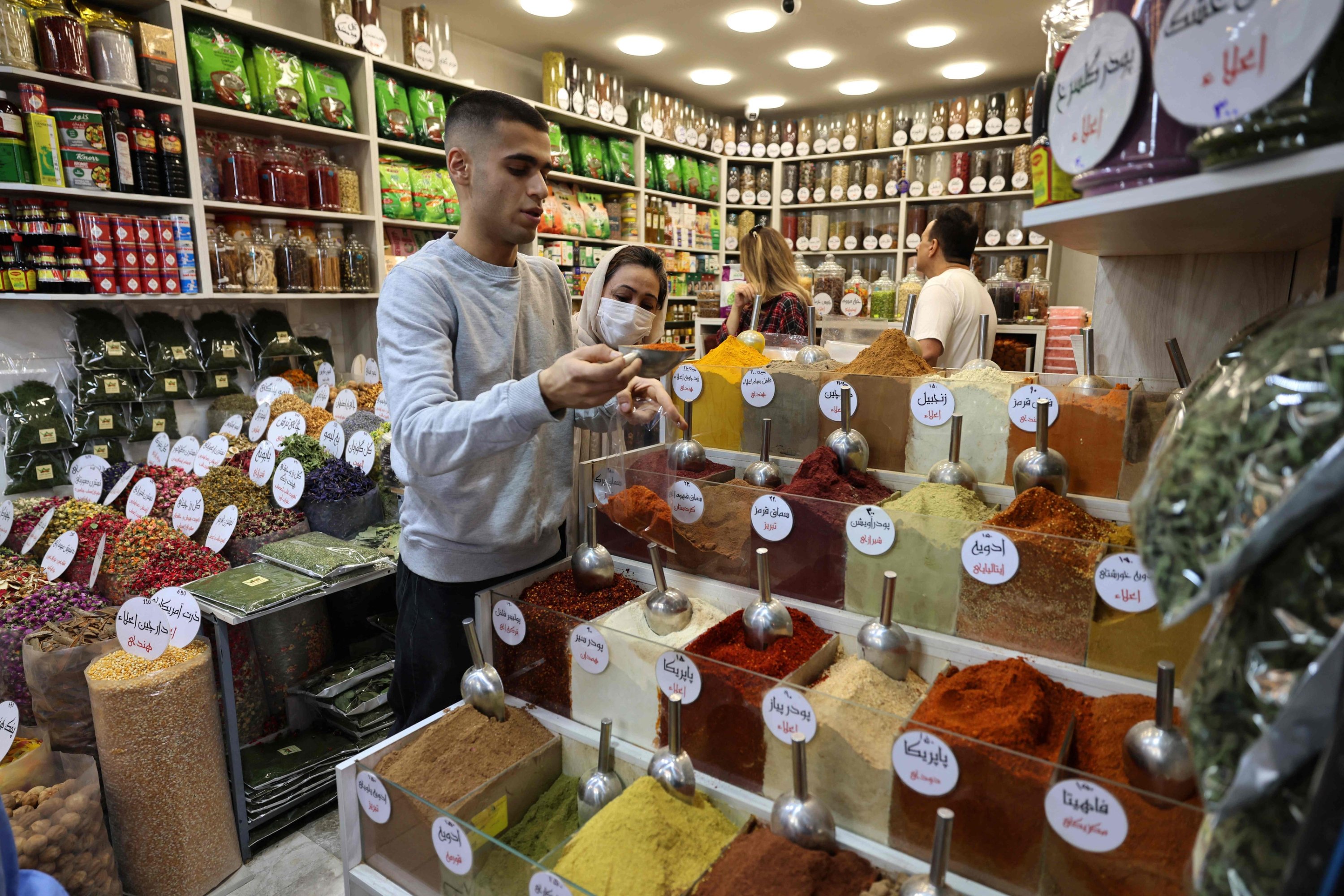
The scent of fragrant herbs and spices drifts through Tehran’s bazaar, but business is far from brisk. Shopkeeper Nasir says locals who once purchased nuts by the kilo are buying less as the U.S.-Iran war-driven price increases squeeze demand and push traders to the brink.
The marketplace in the Iranian capital’s north would usually be abuzz with customers, but shops now sit mostly empty with only small numbers of people walking its old narrow paths, a jarring shift for the sellers shouting to promote their goods.
“There used to be customers who bought 2 to 5 kilograms. Now, they’re down to buying one kilogram or half a kilogram,” said the 61-year-old.
“Prices are truly high. We all know it, and it would be a lie to say otherwise.”
Nasir called on authorities to stabilize the currency so businesses could plan ahead.
“We’re left in limbo; everyone is,” said the fruit and nut seller.
“They need to stabilize the dollar exchange rate.”
Iran’s economy has been battered by years of sanctions, but the conflict that began in February with U.S.-Israeli attacks and an American blockade of the country’s ports has put extra strain on daily life.
Rising inflation, nearly 90% year-over-year in September according to official figures, and erratic currency exchange fluctuations have driven up the cost of everyday items. Food prices have more than doubled since last year.
At the bazaar, a historic covered market in Tehran’s Tajrish square, locals surrounded by Iranian flags and Persian signage try to escape the economic gloom, scanning sweets, jewellery, traditional garments and cuts of meat before their weekend begins.
In an alley, a street artist plays a guitar while another drums his hands on a box to draw tips from passersby.
‘Just need stability’
But across the commercial district, many struggle to see a future for their businesses.
“It is a desperate, last-ditch struggle. Manufacturers are going bankrupt, laying off staff and closing shops, and the impact inevitably reaches us,” said Ali Nowruzi, 36, who runs a sportswear shop in the bazaar.
The businessman now orders only a few items for display on his shop’s shelves to stop them from looking bare like his warehouse, which he says lies empty due to lack of demand.
“We have absolutely no plan for the future. When people don’t come to buy … it effectively spells bankruptcy for the business,” he said, citing rising rent and utility bills.
“We just need some stability.”
Many shoppers, whose purchasing power has weakened since the outbreak of war, are seen leaving the bazaar without buying anything.
Azadeh, a 45-year-old woman currently out of work, says she just goes there to “watch the shops”.
Mounting pressure over the war saw Iran’s gross domestic product (GDP) contract 10.1% year-over-year between late March and late June, according to official figures.
The rial traded at around 2.7 million to the dollar on the unofficial market in the past week, compared with about 1.7 million before the war.
The minimum monthly wage that stood at around $120 a year ago has fallen to $65.
The country’s economy minister has rejected predictions of an imminent economic collapse, accusing Iran’s foes of trying to fuel public anxiety and drive up exchange rates.
Prices ‘skyrocketed’
Azadeh offers a price comparison of a kitchen cloth bought several months ago for 22 cents. She says that the item now costs $1.10, five times more.
“It shows that prices haven’t just gone up; they’ve truly skyrocketed,” she said.
She has stopped buying some fruits and says she can no longer afford holidays.
“We aren’t meant to just exist, we’re meant to actually live, right?” she asked.
Car mechanic Mojtaba Rezaei says his customers have “dropped to a 10th of what it was” because “goods now cost two or three times as much.”
“I actually feel embarrassed telling prices to customers. People just come in, ask the price, and leave,” the 57-year-old told Agence France-Presse (AFP) at the bazaar.
“So many things – buying clothes, going out for leisure, dining at restaurants – have all been cut out of our lives.”
Global finance leaders will meet in Thailand this week as the widening Middle East war, a historic energy supply shock and higher interest rates threaten to weigh further on already lackluster global economic growth.
The U.S.-Israeli-led war with Iran, now in its eighth month, and the inflation and hardship it has caused, will dominate the agenda and sideline conversations during the annual meetings of the International Monetary Fund (IMF) and World Bank, being held outside of Washington for the first time in three years.
Notably absent will be U.S. Treasury Secretary Scott Bessent, who dispatched two senior officials in his stead while he handled some “domestic engagements,” a U.S. official said.
His decision to skip the high-profile gathering and a meeting of the G-20 major economies, which the U.S. leads this year, may frustrate counterparts amid rising tensions over the Iran war, Ukraine’s battle with Russia and the U.S. move to impose sanctions on the International Criminal Court (ICC).
World Bank President Ajay Banga told Reuters that while global growth had held up better than feared when Iran closed the Strait of Hormuz, shutting off some 20% of the world’s oil, pressures were building again.
Soaring prices for diesel, rising fertilizer prices and a looming “super” El Nino weather effect that experts say could lead to 450,000 heat-related deaths are all hitting at once.
G-7 countries have agreed to release 100 million barrels of diesel and crude oil from emergency reserves under pressure from U.S. President Donald Trump, who is keen to see lower gasoline prices before the November elections that could see his Republican Party lose control of Congress.
Trump on Friday announced a deal with Russia that would provide even more diesel to global markets and a temporary waiver of U.S. sanctions designed to deprive Moscow of revenues for its war on Ukraine. The move drew swift criticism from Ukrainian President Volodymyr Zelenskyy.
More than 1 billion barrels of oil have been released mainly from onshore commercial inventories since the start of the war on Feb. 28, but industry executives say the amount of oil in storage that is accessible to the global market is running low, making the market more fragile and fueling pressure on prices.
Banga said the bank was not revising down its global forecasts at the moment, but was keeping a close eye on developments.
“The real thing is not just El Nino by itself; it’s the combination … What’s happening to fertilizer prices? What’s happening to energy costs? What’s happening to debt? It’s that put together that creates its own challenges,” he said.
“And I think that will call upon all of us to be far more careful on what we prepare for in the coming months.”
Rising debt
IMF Managing Director Kristalina Georgieva issued a similar warning in her traditional curtain raiser speech previewing the meetings, telling the audience, “Winter is coming.”
The IMF has signaled little change in its forecast for 3% global growth in 2026 and may edge its forecast for next year slightly higher.
But some countries will see downgrades, including Ukraine, now in its fifth year of war against Russia’s invasion, and Gulf countries hit by Iranian strikes and sharply reduced energy exports.
IMF research released on Tuesday showed that sharp spikes in food and energy prices are an increasingly common source of crises that drive inflation expectations higher for longer, worsen poverty and threaten economic stability.
One huge headache for policymakers is the growing public debt burden that is sapping growth and adding inflationary pressures. The IMF says public debt is at the highest level since World War II and will exceed 100% of GDP before 2030.
Advanced economies, led by the U.S., have the highest debt-to-GDP ratios, but emerging markets and low-income countries are particularly vulnerable, given a perfect storm of challenges: capital outflows in search of higher U.S. rates, El Nino and lack of investment in AI, which has mitigated negative supply shocks in the U.S. and other rich countries.
Emerging market concerns
Developing countries are particularly vulnerable given high public debt levels that will have to be renegotiated at higher interest rates.
Interest payments already exceed 10% of revenue in developing countries on average.
Early in the COVID-19 crisis, G-20 leaders announced a suspension of debt service payments for the poorest countries, but there is little appetite for such action now, according to diplomats from G-20 countries, who said high debt levels and political pressures posed bigger hurdles this time.
Many lower-income countries are worried about new IMF recommendations for loan programs that call for fewer, but deeper reforms as a condition for approving lending, a change that many fear will lead to painful austerity measures.
“Countries are already cutting their expenditures because their debt payments are going high and because of the IMF conditionality,” said Iolanda Fresnillo, who works on debt justice for Eurodad.
“We fear that this review of conditionality policy is just going to make things worse.”
Kenya, she said, had avoided a debt restructuring by cutting public expenditures and trying to raise taxes, but the changes sparked significant protests, especially among young people.
The IMF risked losing credibility unless it acknowledged the severity of the crisis facing many developing countries.
“As long as they continue with the governance structure that they have, they are becoming less and less relevant,” she said.
Flight routes to Bangkok often route through the Middle East, posing immediate security challenges to the 10,000-plus travelers descending on Thailand’s bustling capital city of 9 million residents following recent attacks on Saudi airports.
Turkish contractors have undertaken 12,900 projects worth $570 billion across 139 countries, Trade Minister Ömer Bolat said Friday, inviting European companies to expand their partnerships with Turkish firms.
Speaking at the European International Contractors (EIC) General Assembly in Istanbul, Bolat said the portfolio included completed and ongoing projects, with $520 billion of the total achieved over the past 23 years.
The sector began its overseas operations in Libya in 1972. Bolat said the Turkish companies have since completed more than 3,100 international technical consultancy projects worth $3.5 billion.
Forty-nine Turkish companies featured in Engineering News-Record’s 2025 ranking of the world’s top 250 international contractors, placing Türkiye second behind China, which had 71 firms.
Europe accounted for 40% of overseas contracts secured by Turkish contractors in 2025, Bolat said, citing projects in Spain, Portugal, the Netherlands, Poland and Romania.
He said the growing need to renew social housing, infrastructure, transport networks and buildings across Europe offered significant opportunities for cooperation.
“As Turkish contracting companies, we are ready to work with you and enter into partnerships,” Bolat said.
He also invited European businesses to invest in Türkiye, saying the country hosted 89,000 foreign-invested companies, 63% of them European.
“If you are not in Türkiye, you are not too late. We invite you to Türkiye,” he said.
Bolat said Türkiye has invested more than $300 billion in infrastructure over the past 23 years, expanding its ports, airports, roads, railways and logistics networks.
Amid regional wars, protectionism and supply chain disruptions, resilience has become as important as efficiency, he said.
Türkiye aims to become a center for production, trade, logistics, investment and connectivity, Bolat added.
Turkish prosecutors have identified 214 individuals and companies they say made a combined TL 187.65 billion ($3.8 billion) from three of the investment funds at the center of the country’s fund turmoil, according to a report Friday.
Authorities are now seeking to recover what they describe as unjust gains and return money to affected investors, the Sabah newspaper said.
Justice Minister Akın Gürlek told Sabah that the Istanbul Chief Public Prosecutor’s Office had passed the names to the Savings Deposit Insurance Fund (TMSF).
The TMSF has started notifying those on the list formally that the money must be returned. The recovered funds will be collected in accounts set up for investors who suffered losses.
Who made gains
According to the investigation file, the list includes 141 individuals and 73 companies. The individuals are reported to have each made more than TL 100 million, for a total of about 100.68 billion. The companies made almost TL 86.98 billion in total.
The gains came from funds managed by Tera, Pusula and Hedef Portföy, three of the seven management companies whose funds are being liquidated.
Tera funds generated approximately TL 28 billion in gains for 102 individuals and TL 62.1 billion for 38 companies, the report said.
Pusula funds yielded around TL 69.7 billion for 19 individuals and approximately TL 10 billion for 20 companies. Hedef Portföy funds generated nearly TL 3 billion for 20 individuals and TL 14.9 billion for 15 companies.
Focus on mid-September withdrawals
Authorities launched a sweeping investigation and market intervention last month after suspected price manipulation in a number of thinly traded stocks triggered heavy losses and redemption pressures at investment funds.
The Capital Markets Board (SPK) halted trading in more than 130 funds on Sept. 17. Nearly half a million investors have been affected.
Gürlek said investigators were looking especially closely at people who sold fund holdings and withdrew their money on Sept. 13, 14, 15 and 16.
Prosecutors’ examination found that these people withdrew in advance, acting on information given to them. Gürlek said the investigation was being widened in light of these findings.
Payments underway
Separately, Treasury and Finance Minister Mehmet Şimşek said on Thursday that 17 funds open to trading on the TEFAS electronic fund platform had been liquidated and that the money owed to about 43,000 fund investors had been deposited in the relevant banks.
Şimşek said comprehensive regulations were being introduced to prevent a repeat, and that further measures would be taken beyond the existing rules.
Meanwhile, the ruling Justice and Development Party (AK Party) was due Friday to submit draft legislation governing the liquidation of the funds.
The proposed temporary law aims to establish a legal framework for the liquidations, prioritize the protection of small investors and set rules for payments.
Under the proposal, authorities would adjust amounts invested in and withdrawn from the funds for inflation, with interim payments of up to TL 1 million per investor targeted for October.
The bill would also include provisions for recovering losses from those held responsible and establish a legal basis for extraordinary liquidation proceedings.
Real estate is among the assets that could be sold to raise funds for investor payments, with the legislation setting out how such assets would be liquidated and the proceeds distributed.
Türkiye and the European Space Agency (ESA) are reportedly holding talks to renew cooperation and develop joint orbital programs, an expert said Friday.
Gülin Dede, partnerships director at the nonprofit Space Renaissance International (SRI), said she had heard that discussions were underway and expressed optimism that they would lead to positive results and revive previous cooperation agreements between Ankara and the agency.
Dede, Türkiye’s first female analog astronaut who previously worked at ESA’s technology development center in the Netherlands, said European space officials were showing growing interest in expanding cooperation with Türkiye.
She also welcomed Türkiye’s signing of the Artemis Accords, an international framework for cooperation in civil space exploration.
Dede was speaking on the sidelines of the International Astronautical Congress (IAC) in the southern Antalya province, which she said helped raise Türkiye’s profile within the global space community.
“That this event is being held in Türkiye sends a wonderful message to the global space community and ecosystem, evident from the academic contribution of the delegates and their satisfaction with the expo, the evaluation of Turkish firms’ exhibits and presentations from other countries,” she said.
“I’m here myself as a committee member, and our work is progressing successfully,” she added.
Dede said ESA had “always sought cooperation with Türkiye” and stressed the importance of maintaining the momentum generated by the congress through sustained investment in the country’s space capabilities.
She also said greater participation by Turkish astronauts in international missions and activities could help strengthen Türkiye’s position as a partner in future space projects.
Dede urged Ankara to take a more active role in the European Organization for the Exploitation of Meteorological Satellites (EUMETSAT) and deepen its engagement with the U.N. Committee on the Peaceful Uses of Outer Space (COPUOS).


-
 Economy3 days ago
Trump says anyone who doesn’t call AI ‘super intelligence’ is ‘enemy’
-
 Politics3 days ago
Turkish, Greek Cypriot leaders to hold new round of talks Oct. 13
-
 Politics2 days ago
Türkiye rules out ops against Houthis, vows to help Saudi defense
-

 Economy2 days ago
Türkiye identifies 214 people, firms made about $3.8B from troubled funds
-
 Politics2 days ago
Turkish intelligence chief discusses SDF integration with Syrian FM
-
 Economy3 days ago
Drone hits data center of Russia’s ‘Google’ in 1st for Ukraine war
-
 Economy2 days ago
Türkiye’s Kalyon PV to build solar panel factory in US
-
 Politics2 days ago
Türkiye, France deepen military ties under new road map