
Economy
Russia’s small businesses raise concern over planned tax hikes

Proposed tax hikes, designed to mobilize Russia’s state finances as the war in Ukraine drags on, are set to hit one in 10 small business owners, many of whom say they would have no choice but to shut down or move into the shadow economy.
Russia has been gradually raising domestic taxes since 2023, the second year of the war, including personal income and corporate profit taxes, to keep up with military spending, now at its highest level since the Cold War.
The new tax regime, including a measure to cut the annual revenue threshold for VAT tax breaks for small businesses to 10 million rubles ($123,000) from 60 million rubles, is set to take effect in 2026, pending approval by parliament.
“This is a shock for all small businesses,” said Sergei Borisov, head of the Opora small businesses lobby, one of several groups that wrote a letter last week to speakers of both parliamentary chambers in an attempt to stop the initiative.
Under the tax proposals, businesses with annual revenues of between 10 million and 250 million rubles, currently exempt from paying VAT, will have to pay VAT of up to 5% and will need to hire accountants to handle their tax affairs.
Opora says the measure will affect 700,000 entrepreneurs or one tenth of the entire entrepreneurial class. A third of the 11,000 business owners polled by Opora said they will be ready to close down, and a similar share said they may have to move into the informal economy and stop paying tax altogether.
“For years, we operated under the simplified tax system, which was clear and convenient. Now our costs will go up, and we don’t know how we will survive,” said Sergei Pakhomov, who manages a grocery shop in central Moscow.
Big employer
The measure comes on top of a proposal to raise the general VAT rate to 22% from 20%, expected to generate about 1 trillion rubles to help fund military spending and curb a swelling budget deficit.
Small and medium-sized businesses account for more than a fifth of Russia’s gross domestic product (GDP), according to the latest available data from the Economy Ministry, and employ 31 million people, about 40% of the total workforce.
Russia defines small and medium-sized companies as those employing up to 250 people and generating up to 2 billion rubles in annual revenue. The government expects to raise 200 billion rubles from the measures.
But Opora has calculated that additional costs for businesses would amount to as much as 420 billion rubles, double the amount of extra budget revenues. The lobby groups have proposed setting the threshold for VAT payments at 30 million rubles, rather than the 10 million rubles proposed.
“While not disputing the undeniable need to increase federal budget revenues to ensure national defense and security, it is important to note the extremely negative consequences for the microbusiness sector,” the lobby groups said in the letter.
Faced with criticism, Finance Minister Anton Siluanov said in parliament on Wednesday that he was ready to adjust the proposal but did not give details.
Sector benefited earlier
The sector has benefited from substantial state support in the form of tax breaks, loan and office lease subsidies, and startup grants that helped small firms survive the COVID-19 pandemic and adapt to the economic fallout of the war.
The Finance Ministry said the reforms will curb fraudulent schemes in which larger businesses split into smaller units to pay less tax, arguing that at a lower threshold, such breakups would no longer make economic sense.
But small business owners said they would be the ones hit hardest.
“Take money from the big sharks, not from us little ones. I’m kind of in shock. They are already squeezing the life out of us,” said Irina Pankratova, who runs the Artel tailor shop in Moscow.
Jewelry designer Anna Slavutina, who started her business in 2003 and now owns three shops with her husband Alexei Filimonov, said one of their two stores in St. Petersburg has been running at a loss for the past year.
“Our customers there are asking us whether we are going to close. What can I tell them? We will see,” Slavutina said, adding that if they do shut down, the state would lose tax.
Tax spiral
Slavutina’s warning is echoed by T-Bank’s chief economist Sofya Donets, who predicts the tax reform is likely to push the budget into a “tax spiral,” in which the planned increase in revenues is offset by a shrinking tax base.
“It’s all going to be an experiment on living people. I think we will see more business closures, not in the form of bankruptcies, but more like ‘to hell with it all’ voluntary shutdowns,” Donets said.
Donets and other economists argue that this year’s hikes in corporate profit and personal income taxes have so far failed to deliver the expected budget revenues, suggesting the government could face a similar trap in 2026.
Small businesses may struggle to pass on the tax increase to consumers next year due to slowing demand, high competition and rising input costs, economists say. Many may also consider going underground.
“They won’t collect much money from this, but we could end up with a flood of social problems. For a cow to give a lot of milk, it needs to be given all the conditions for a good graze on a green meadow,” said economist Evgeny Kogan.

Upcoming midterm elections in the U.S. stand as a main reason behind the Trump administration’s sudden announcement that Russian diesel would be released immediately to American and global markets, analysts and critics say.
On Friday, U.S. President Donald Trump said he concluded a “highly successful discussion” with Russian President Vladimir Putin and noted it was agreed that Russia would “immediately” supply over 300,000 tons of diesel fuel to the American and global marketplace.
“Another 500,000 Tons during the month of November, and 1,000,000 Tons immediately therafter,” he wrote in a post shared on his Truth Social.
Separately, the U.S. Treasury Department has shared a notice and issued a temporary exemption from sanctions against Russia, permitting the sale, supply, unloading and import of Russian diesel until April 7, 2027.
Russian Deputy Prime Minister Alexander Novak also announced the immediate lifting of Russia’s ban on diesel exports, according to the state news agency Tass.
Record diesel prices
The prices of diesel reached record highs in the U.S., and many advanced economies, including the U.K., France and Germany, in recent weeks amid the ongoing war between the U.S. and Iran in the Middle East and Ukraine’s attacks on Russian energy infrastructure.
U.S. national average diesel prices reached $6.27 per gallon as of October, according to AAA Fuel Prices.
However, with the midterm elections next month, critics argue that the amount of supply volume shared by Trump is insufficient, also suggesting that Russia is likely unable to produce as much at its refineries impacted by Ukrainian attacks.
Before the reported lift on the ban, Russian authorities had recently extended the ban on exports of diesel untill end of October amid the domestic crunch in supplies – a rare case for the country, which before the invasion of Ukraine was one of the top global energy suppliers.
Can deal ease pressure on prices?
The U.S.-Russia deal, which has led to a rebuke by Ukraine and its European allies, such as Germany, raised a question: could it actually help alleviate the recent cost pressures the customers across Europe and the U.S. have been facing?
Following Trump’s announcement, diesel futures in fact dropped, trading about 4.5% lower at $4.67 per gallon. Data from the NY Harbor chart, displaying costs of futures on Oct. 9, showed that the November price dropped by 4.1% to $4.68.
Still, it is unclear how it would reflect on crude oil prices, with tensions in the Middle East and lately between Saudi Arabia and Houthi rebels also weighing on the outlook.
Diesel is a refined product, and additional shipments do not automatically increase crude production.
WTI price settled Friday at $91.85 per barrel, up 0.39%, while Brent crude closed at $104.72, gaining 0.42%. Both benchmarks finished higher despite the initial reaction to Trump’s announcement.
But since diesel is used in logistics and agriculture and coupled with the recent G-7 decision to release additional emergency stockpiles, any drop in prices would be welcomed by farmers and companies, which have voiced dissatisfaction with the current level of prices.
The U.S.-Russia deal was also criticized by Ukrainian President Volodymyr Zelenskyy, after which Trump said the war-torn country needed a new president.
“Allowing Russia to sell petroleum products is an investment in the war, which must be ended, not prolonged,” Zelenskyy wrote on Telegram on Friday evening.
German Education Minister Karin Prien on Sunday also criticized Trump over his call for a new Ukrainian president amid the recent U.S.-Russia diesel agreement.
“For a few liters of diesel. What a moral bankruptcy,” Prien said on X in response to Trump’s remarks.
Trump on Saturday called for Ukraine to “get a new president,” accusing Zelenskyy of repeatedly failing to reach a deal to end the war with Russia.
“I suggest they get a new leader who can make a deal, because he could have made many deals that, for some reason, he never does,” Trump said.
Meanwhile, Germany reaffirmed its commitment to sanctions against Russia on Saturday following the Trump-Putin agreement, according to German media.
The bank accounts of 214 individuals and companies have been frozen as part of the ongoing investigation into funds and asset management companies following the liquidation order by Turkish authorities, with TL 187 billion (about $3.8 billion) in earnings under scrutiny, according to a Sunday report by Sabah newspaper.
As part of an ongoing investigation into investment funds in Istanbul, authorities identified 141 individuals and 73 companies, 214 in total, who reportedly earned more than TL 100 million from three funds, the report suggested.
The Istanbul Chief Public Prosecutor’s Office is said to have sent the list of these individuals and companies to the Savings Deposit Insurance Fund (TMSF), which has begun formally notifying them about the return of their earnings, it added.
Court orders have also imposed travel bans preventing the relevant individuals and company executives from leaving Türkiye.
Moreover, investigators are reportedly tracing where the money went after it was withdrawn from the investment funds.
On Friday, another report said that Turkish prosecutors have identified 214 individuals and companies they say made a combined TL 187.65 billion from three of the investment funds at the center of the country’s fund turmoil.
The Sunday report names Melis Sütşurup Sandal, the wife of Turkish singer Mustafa Sandal.
According to the investigation documents cited in the report, she reportedly earned TL 2.355 billion from Tera’s TLY investment fund, placing her first among the individuals listed.
Her total withdrawals from fund accounts during 2026 reportedly amounted to nearly TL 15.8 billion. As of Sept. 16, 2026, her fund account reportedly held approximately TL 250 million.
The Financial Crimes Investigation Board, known as MASAK, has also begun examining the bank accounts of people who transferred money from their fund investments into their personal bank accounts. Investigators are said to be preparing detailed reports to determine where the approximately TL 187.65 billion ended up.
Authorities launched a sweeping investigation and market intervention last month after suspected price manipulation in a number of thinly traded stocks triggered heavy losses and redemption pressures at investment funds.
The Capital Markets Board (SPK) halted trading in more than 130 funds on Sept. 17. Nearly half a million investors have been affected.
India targets increasing its steel capacity to 604 million metric tons by 2047 from around 220 million tons at present, according a draft steel policy for public consultation released late on Saturday.
Reuters reported last week, citing the draft document, that the policy lays out plans to cut sector emissions and shore up access to iron ore and coking coal, key raw materials, to meet anticipated demand.
The policy aims to cut the sector’s average carbon-emission intensity to around 1.54 tons of carbon dioxide per ton of crude steel by 2047 from the current 2.54 tons, in line with India’s net zero emission goal for 2070, according to the draft document.
The steel ministry expects iron ore demand at 772 million tons and plans to secure access to high-grade reserves by pursuing foreign assets and joint ventures, the document said.
The ministry also expects coking coal demand to reach 236 million tons, the document said, with the government planning to diversify its sourcing via “strategic global outreach” and acquire overseas assets.
Türkiye generated nearly $823 million from vegetable exports from January through September, up 10% from a year earlier, according to a report on Saturday.
Some 651,087 tons of tomatoes, peppers, cucumbers, zucchini, and other vegetables grown in Türkiye found buyers in international markets, according to information compiled by Anadolu Agency (AA) from data provided by the Türkiye Exporters Assembly (TIM).
Fresh vegetable export revenues, which amounted to some $749.15 million between January and September last year, increased by 10% during the same period this year, reaching $822.68 million.
Tomatoes ranked first among fresh vegetable exports, generating $304.16 million in revenue. Peppers followed, bringing in $275.48 million in export earnings.
Compared with the same period last year, revenue from tomato exports increased by 4%, while revenue from pepper exports rose by 29%. Together, these two products accounted for approximately 70% of total fresh vegetable export revenues.
During this period, Türkiye earned $61.38 million from cucumber and gherkin exports, $57.44 million from zucchini exports, and $39.64 million from carrot and radish exports.
Romania largest export market
Romania ranked first among Türkiye’s fresh vegetable export markets, purchasing products worth approximately $147 million.
Germany followed with $132.7 million, while Russia ranked third with $76 million.
During the same period, Türkiye exported fresh vegetables worth $55.48 million to Bulgaria, $49.96 million to Ukraine, and $47.8 million to the Netherlands.
Hayrettin Uçak, the chair of the Turkish Fresh Fruit and Vegetable Exporters’ Associations Sector Board, told Anadolu Agency (AA) that they viewed the increase in export revenues positively, despite changing conditions throughout the vegetable production season.
“Our exports increased by 10% over the previous year during the first nine months, and this success in exports makes us happy,” Uçak said.
“Neighboring and nearby markets are important for our vegetable exports. We need to closely monitor consumer expectations and shopping habits in the European market. Being able to supply buyers with the products they want, in suitable packaging and on time, plays a decisive role in commercial relationships. In this respect, we consider the growth in exports to Romania and Germany particularly important,” he added.
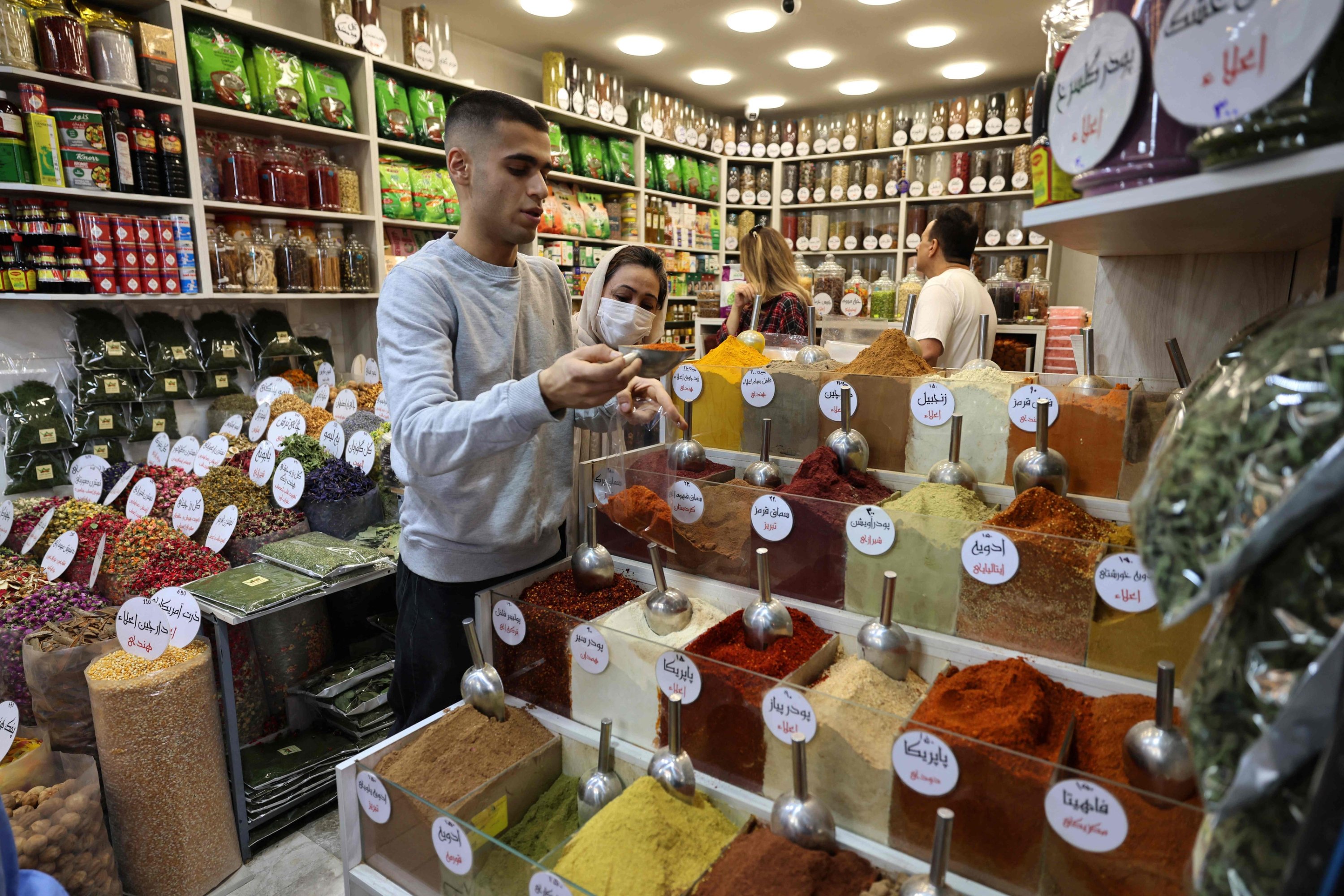
The scent of fragrant herbs and spices drifts through Tehran’s bazaar, but business is far from brisk. Shopkeeper Nasir says locals who once purchased nuts by the kilo are buying less as the U.S.-Iran war-driven price increases squeeze demand and push traders to the brink.
The marketplace in the Iranian capital’s north would usually be abuzz with customers, but shops now sit mostly empty with only small numbers of people walking its old narrow paths, a jarring shift for the sellers shouting to promote their goods.
“There used to be customers who bought 2 to 5 kilograms. Now, they’re down to buying one kilogram or half a kilogram,” said the 61-year-old.
“Prices are truly high. We all know it, and it would be a lie to say otherwise.”
Nasir called on authorities to stabilize the currency so businesses could plan ahead.
“We’re left in limbo; everyone is,” said the fruit and nut seller.
“They need to stabilize the dollar exchange rate.”
Iran’s economy has been battered by years of sanctions, but the conflict that began in February with U.S.-Israeli attacks and an American blockade of the country’s ports has put extra strain on daily life.
Rising inflation, nearly 90% year-over-year in September according to official figures, and erratic currency exchange fluctuations have driven up the cost of everyday items. Food prices have more than doubled since last year.
At the bazaar, a historic covered market in Tehran’s Tajrish square, locals surrounded by Iranian flags and Persian signage try to escape the economic gloom, scanning sweets, jewellery, traditional garments and cuts of meat before their weekend begins.
In an alley, a street artist plays a guitar while another drums his hands on a box to draw tips from passersby.
‘Just need stability’
But across the commercial district, many struggle to see a future for their businesses.
“It is a desperate, last-ditch struggle. Manufacturers are going bankrupt, laying off staff and closing shops, and the impact inevitably reaches us,” said Ali Nowruzi, 36, who runs a sportswear shop in the bazaar.
The businessman now orders only a few items for display on his shop’s shelves to stop them from looking bare like his warehouse, which he says lies empty due to lack of demand.
“We have absolutely no plan for the future. When people don’t come to buy … it effectively spells bankruptcy for the business,” he said, citing rising rent and utility bills.
“We just need some stability.”
Many shoppers, whose purchasing power has weakened since the outbreak of war, are seen leaving the bazaar without buying anything.
Azadeh, a 45-year-old woman currently out of work, says she just goes there to “watch the shops”.
Mounting pressure over the war saw Iran’s gross domestic product (GDP) contract 10.1% year-over-year between late March and late June, according to official figures.
The rial traded at around 2.7 million to the dollar on the unofficial market in the past week, compared with about 1.7 million before the war.
The minimum monthly wage that stood at around $120 a year ago has fallen to $65.
The country’s economy minister has rejected predictions of an imminent economic collapse, accusing Iran’s foes of trying to fuel public anxiety and drive up exchange rates.
Prices ‘skyrocketed’
Azadeh offers a price comparison of a kitchen cloth bought several months ago for 22 cents. She says that the item now costs $1.10, five times more.
“It shows that prices haven’t just gone up; they’ve truly skyrocketed,” she said.
She has stopped buying some fruits and says she can no longer afford holidays.
“We aren’t meant to just exist, we’re meant to actually live, right?” she asked.
Car mechanic Mojtaba Rezaei says his customers have “dropped to a 10th of what it was” because “goods now cost two or three times as much.”
“I actually feel embarrassed telling prices to customers. People just come in, ask the price, and leave,” the 57-year-old told Agence France-Presse (AFP) at the bazaar.
“So many things – buying clothes, going out for leisure, dining at restaurants – have all been cut out of our lives.”
Global finance leaders will meet in Thailand this week as the widening Middle East war, a historic energy supply shock and higher interest rates threaten to weigh further on already lackluster global economic growth.
The U.S.-Israeli-led war with Iran, now in its eighth month, and the inflation and hardship it has caused, will dominate the agenda and sideline conversations during the annual meetings of the International Monetary Fund (IMF) and World Bank, being held outside of Washington for the first time in three years.
Notably absent will be U.S. Treasury Secretary Scott Bessent, who dispatched two senior officials in his stead while he handled some “domestic engagements,” a U.S. official said.
His decision to skip the high-profile gathering and a meeting of the G-20 major economies, which the U.S. leads this year, may frustrate counterparts amid rising tensions over the Iran war, Ukraine’s battle with Russia and the U.S. move to impose sanctions on the International Criminal Court (ICC).
World Bank President Ajay Banga told Reuters that while global growth had held up better than feared when Iran closed the Strait of Hormuz, shutting off some 20% of the world’s oil, pressures were building again.
Soaring prices for diesel, rising fertilizer prices and a looming “super” El Nino weather effect that experts say could lead to 450,000 heat-related deaths are all hitting at once.
G-7 countries have agreed to release 100 million barrels of diesel and crude oil from emergency reserves under pressure from U.S. President Donald Trump, who is keen to see lower gasoline prices before the November elections that could see his Republican Party lose control of Congress.
Trump on Friday announced a deal with Russia that would provide even more diesel to global markets and a temporary waiver of U.S. sanctions designed to deprive Moscow of revenues for its war on Ukraine. The move drew swift criticism from Ukrainian President Volodymyr Zelenskyy.
More than 1 billion barrels of oil have been released mainly from onshore commercial inventories since the start of the war on Feb. 28, but industry executives say the amount of oil in storage that is accessible to the global market is running low, making the market more fragile and fueling pressure on prices.
Banga said the bank was not revising down its global forecasts at the moment, but was keeping a close eye on developments.
“The real thing is not just El Nino by itself; it’s the combination … What’s happening to fertilizer prices? What’s happening to energy costs? What’s happening to debt? It’s that put together that creates its own challenges,” he said.
“And I think that will call upon all of us to be far more careful on what we prepare for in the coming months.”
Rising debt
IMF Managing Director Kristalina Georgieva issued a similar warning in her traditional curtain raiser speech previewing the meetings, telling the audience, “Winter is coming.”
The IMF has signaled little change in its forecast for 3% global growth in 2026 and may edge its forecast for next year slightly higher.
But some countries will see downgrades, including Ukraine, now in its fifth year of war against Russia’s invasion, and Gulf countries hit by Iranian strikes and sharply reduced energy exports.
IMF research released on Tuesday showed that sharp spikes in food and energy prices are an increasingly common source of crises that drive inflation expectations higher for longer, worsen poverty and threaten economic stability.
One huge headache for policymakers is the growing public debt burden that is sapping growth and adding inflationary pressures. The IMF says public debt is at the highest level since World War II and will exceed 100% of GDP before 2030.
Advanced economies, led by the U.S., have the highest debt-to-GDP ratios, but emerging markets and low-income countries are particularly vulnerable, given a perfect storm of challenges: capital outflows in search of higher U.S. rates, El Nino and lack of investment in AI, which has mitigated negative supply shocks in the U.S. and other rich countries.
Emerging market concerns
Developing countries are particularly vulnerable given high public debt levels that will have to be renegotiated at higher interest rates.
Interest payments already exceed 10% of revenue in developing countries on average.
Early in the COVID-19 crisis, G-20 leaders announced a suspension of debt service payments for the poorest countries, but there is little appetite for such action now, according to diplomats from G-20 countries, who said high debt levels and political pressures posed bigger hurdles this time.
Many lower-income countries are worried about new IMF recommendations for loan programs that call for fewer, but deeper reforms as a condition for approving lending, a change that many fear will lead to painful austerity measures.
“Countries are already cutting their expenditures because their debt payments are going high and because of the IMF conditionality,” said Iolanda Fresnillo, who works on debt justice for Eurodad.
“We fear that this review of conditionality policy is just going to make things worse.”
Kenya, she said, had avoided a debt restructuring by cutting public expenditures and trying to raise taxes, but the changes sparked significant protests, especially among young people.
The IMF risked losing credibility unless it acknowledged the severity of the crisis facing many developing countries.
“As long as they continue with the governance structure that they have, they are becoming less and less relevant,” she said.
Flight routes to Bangkok often route through the Middle East, posing immediate security challenges to the 10,000-plus travelers descending on Thailand’s bustling capital city of 9 million residents following recent attacks on Saudi airports.


-

 Politics3 days ago
Türkiye rules out ops against Houthis, vows to help Saudi defense
-

 Economy3 days ago
Türkiye identifies 214 people, firms made about $3.8B from troubled funds
-
 Economy3 days ago
Türkiye’s Kalyon PV to build solar panel factory in US
-
 Politics3 days ago
Turkish intelligence chief discusses SDF integration with Syrian FM
-
 Politics3 days ago
Türkiye, France deepen military ties under new road map
-

 Economy3 days ago
Türkiye extends high-speed rail network to EU border
-
 Politics3 days ago
Türkiye’s Akıncı drones extend gendarmerie’s reach across country
-
 Economy3 days ago
European firms called to expand partnerships with Turkish contractors