
Economy
Trump announces sweeping new US tariffs on drugs, trucks, furniture

U.S. President Donald Trump on Thursday announced sweeping new import tariffs, including 100% duties on pharmaceutical drugs and 25% levies on heavy-duty trucks, set to come into force next week.
The latest salvo, which Trump said was to protect the U.S. manufacturing industry and national security, follows wide-ranging duties on trading partners of up to 50% and other targeted levies on imported products such as steel.
It’s the latest upheaval for global businesses already struggling with snarled supply chains, soaring costs and consumer uncertainty caused by Trump’s trade war. The barrage has cast a pall over global growth, while the Federal Reserve has said it is also contributing to higher U.S. consumer prices.
Markets wait for details
Asian stocks fell, led by pharmaceutical companies, but European shares recovered from early losses amid uncertainty over how widely some of the duties might apply.
Trump’s announcement on Truth Social did not say whether the new levies would be on top of existing national tariffs. Recent trade deals with Japan, the EU, and Britain include provisions that cap tariffs for specific products like pharmaceuticals.
A non-binding preliminary trade deal between the EU and the U.S. agreed to limit tariffs to 15%. Trump hasn’t yet signed an executive order confirming the agreement.
The European Commission said on Friday the agreement was “clear” that there was an all-inclusive 15% tariff ceiling, which represented “an insurance policy that no higher tariffs will emerge” for European companies.
Nathalie Moll, director general of the European Federation of Pharmaceutical Industries and Associations, said that urgent discussions were needed on “how to avoid any tariffs on medicines that harm patients in the EU and the U.S.”
Japan has an agreement that its tariff rates will not exceed others including the EU, Tokyo’s trade negotiator Ryosei Akazawa said.
Drugmakers have been bracing for tariffs
Trump said the 100% tariff on branded drugs would only apply to producers that had not already broken ground on U.S. manufacturing plants.
Many drugmakers have announced multibillion-dollar investments in the United States, and Switzerland’s Roche underlined on Friday that one of its U.S. units recently started work on a new facility.
Rival Novartis, which has also made a large U.S. investment pledge, did not reply to a request for comment.
Switzerland is still discussing a trade agreement with the U.S. and its economy ministry said it was waiting for more details on Trump’s latest announcement.
The Pharmaceutical Research and Manufacturers of America, an industry group, said companies “continue to announce hundreds of billions in new U.S. investments. Tariffs risk those plans.”
Trump had long threatened higher tariffs on drugmakers and Ireland, where mainly American-owned pharmaceutical factories employ about 2% of the workforce, has frontloaded much of its exports to the U.S. in anticipation.
Exports of chemical and related products, including medicinal and pharmaceutical products, leapt 536% year-over-year to 23.9 billion euros ($27.9 billion) in the first seven months of 2025, according to Ireland’s Central Statistics Office.
Foreign policy tool
Trump also followed through on a pledge to “bring back” America’s furniture business, saying he would start charging a 50% tariff on imported kitchen cabinets and bathroom vanities and a 30% tariff on upholstered furniture.
All the new duties take effect from Oct. 1.
The new actions are seen as part of the Trump administration’s shift to better-established legal authorities for its trade actions, given the risks associated with a case before the Supreme Court on the legality of his global tariffs.
Trump this week announced new probes into the national security ramifications of personal protective equipment, medical items, robotics and industrial machinery. He previously imposed national security tariffs on steel and aluminum and derivatives, light-duty autos and parts, and copper.
Trump has made the levies a key foreign policy tool, using them to renegotiate trade deals, extract concessions and exert political pressure on other countries.
His administration has played down the impact on consumer prices and touted tariffs as a significant revenue source, with Treasury Secretary Scott Bessent saying Washington could collect $300 billion by the end of the year.
Inflation pressure
More than half of the $85.6 billion in ingredients for medicines used in the U.S. are manufactured domestically, with the remainder from Europe and other U.S. allies, the U.S. pharmaceutical trade group said earlier this year.
When it comes to furniture, imports to the U.S. hit $25.5 billion in 2024, up 7% from the year prior. About 60% of those imports came from Vietnam and China, according to Furniture Today, a trade publication.
“Many of our members were shocked when we heard the news. I think the decision on the additional tariff is unfair,” said Nguyen Thi Thu Hoai from the Wood and Handicraft Association of Dong Nai province, one of Vietnam’s largest furniture clusters.
Furniture and wood products manufacturing employment in the U.S. has halved since 2000 to around 340,000 today, according to government statistics.
Inter IKEA, which supplies the stores to which it franchises the IKEA brand, has said that around 10% of the IKEA products sold in the U.S. are manufactured in North and South America.
“We believe a stable and open global trade environment helps support lower prices for people,” IKEA franchisee Ingka Group, the world’s biggest retailer of IKEA furniture, said, adding that it was monitoring the impact of tariffs on its business.
Higher tariffs on commercial vehicles could put pressure on transportation costs just as Trump has vowed to reduce inflation, especially on consumer goods such as groceries.
Trump said the new heavy-duty truck tariffs would benefit companies such as Paccar-owned Peterbilt and Kenworth and Freightliner.
Shares of German truck makers Daimler Truck and Traton fell on news of the levies.
The U.S. Chamber of Commerce earlier urged against imposing new truck tariffs, noting the top five import sources are Mexico, Canada, Japan, Germany, and Finland, which pose “no threat to U.S. national security.”
Türkiye could cut its annual natural gas import bill by about $4 billion with its wind power capacity of more than 16 gigawatts (GW), based on current energy prices, according to a senior industry executive.
Ibrahim Erden, president of the Turkish Wind Energy Association (TWEA), said every 1,000 megawatts (MW) of installed wind power capacity could reduce natural gas import costs by around $250 million annually.
Türkiye has generated more than 40% of its electricity from renewable sources in recent years, with the share exceeding 60% during the January-August period
The importance of wind energy has increasingly been viewed through the lens of energy security following the Russia-Ukraine war and conflicts in the Middle East.
Wind power offers a strategic advantage because it does not depend on imported fuels, critical transit routes such as the Strait of Hormuz, or international embargoes, Erden told Anadolu Agency (AA).
Strong manufacturing base
Türkiye has expanded its wind energy sector in recent years, supported by its strong wind potential and geographical advantages, he said.
Global wind power installations increased by 165,000 MW last year, including 2,000 MW in Türkiye, which accounted for around 1.2% of global installations, exceeding its approximately 1% share of the global economy, Erden added.
The country’s total installed electricity capacity stood at 126 GW, while onshore wind power capacity reached 15.9 GW as of the end of October, Erden said.
Erden also highlighted the growth of Türkiye’s domestic wind energy manufacturing base, supported by local component incentives introduced around 2009-2010.
The industry has developed a manufacturing cluster stretching from Izmir through Balikesir, Bursa and Yalova to Istanbul, building on Türkiye’s industrial expertise, including in automotive manufacturing, he said.
Türkiye earns around $2 billion-$2.5 billion annually from exports of wind turbines, components and raw materials, making it an important supplier to global wind energy manufacturers, Erden said.
Rising domestic natural gas production and expanding renewable energy capacity are expected to reduce Türkiye’s energy import bill over the long term, he added.
New investments planned
There are currently five wind tower manufacturers and two blade manufacturers in Türkiye, with the number of blade factories expected to rise to three as new investments come online, Erden said.
He added that 75% of manufacturers plan new investments or capacity expansions over the next three years.
These investments are expected to increase demand for skilled technicians and white-collar professionals, Erden said.
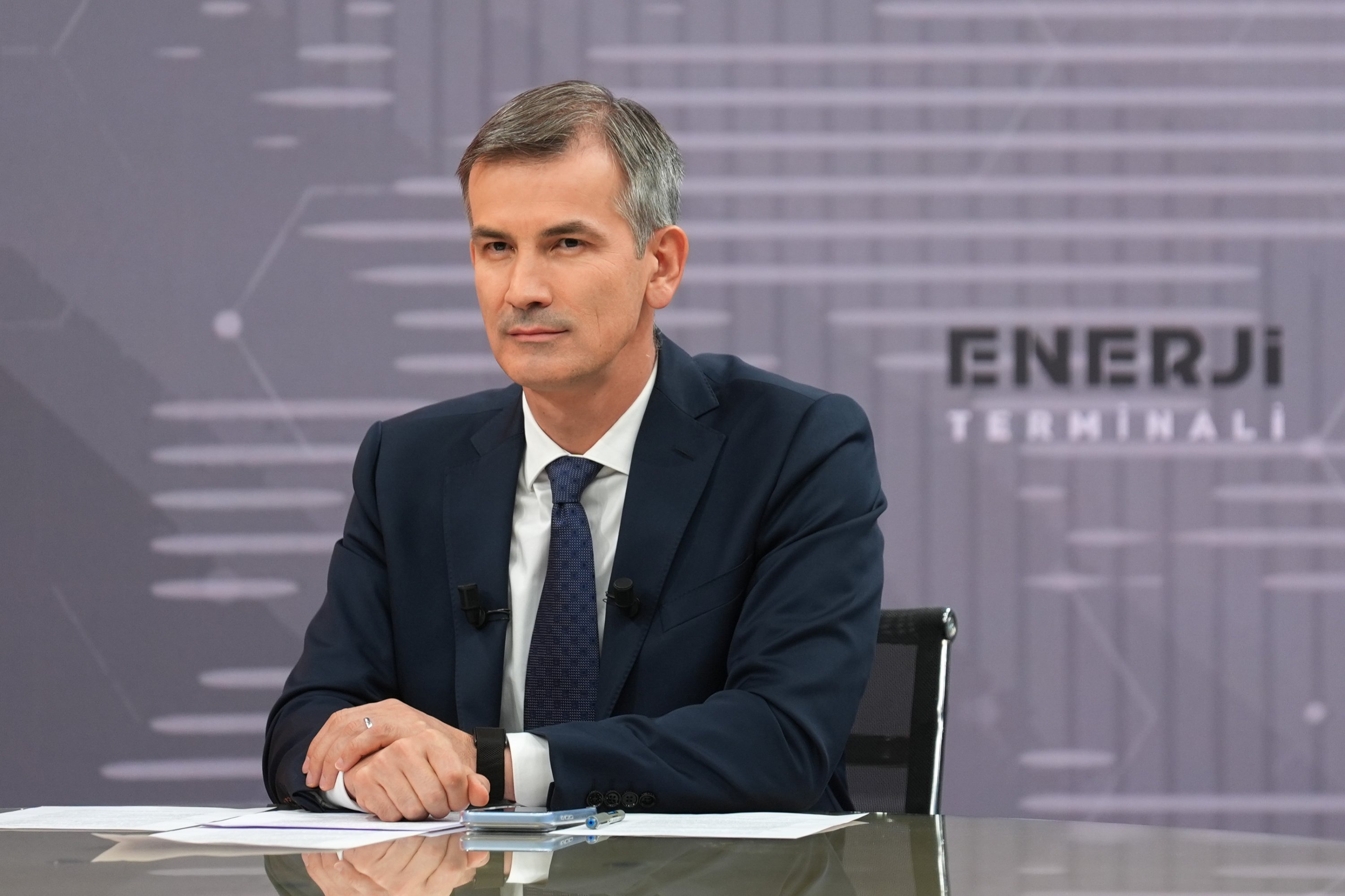
He also highlighted the role of Renewable Energy Resource Area (YEKA) projects in supporting domestic manufacturing, noting that locally produced components account for 65% of the turbines used in such projects.
The government aims to offer investors at least 2,500 MW of new wind and solar capacity annually through YEKA projects, he said, adding that predictable long-term targets and regular capacity allocations help strengthen investor confidence.
Türkiye’s position in global market
Türkiye ranked second in Europe for new onshore wind installations last year, sixth in installed wind capacity and fifth in wind industry manufacturing, Erden said.
Offshore wind projects are also expected to support further sector growth, he added.
Meanwhile, more than 70% of the global wind energy supply chain is concentrated in China, making the energy sector an increasingly important part of the economic competition between China, the United States and Europe, Erden said.
Türkiye is emerging as an alternative supplier, particularly for European markets, amid this competition, he added.
8 GW needed annually
Türkiye targets wind and solar installed capacity to reach 120 GW by 2035. The association aims for wind power to account for 48 GW of that total, he said.
Türkiye needs to install around 8,000 MW of new wind and solar capacity each year to reach its goal, Erden said.
Wind capacity alone would nearly triple electricity generation from wind, potentially increasing the annual value of avoided natural gas imports to around $10 billion-$12 billion under current price and generation assumptions, he added.
“This would mean an additional $6 billion-$8 billion in annual savings on top of the approximately $4 billion currently achievable,” Erden said.
He stressed that expanding grid infrastructure, speeding up permitting procedures and improving access to affordable financing would be essential to achieving the target.
Türkiye needs $24 billion in financing for grid investments alone under its National Energy Plan, while total financing signed or committed through work with international financial institutions stands at around $7.5 billion-$8 billion, Erden said.
Türkiye’s electricity demand is expected to rise significantly in the coming years as electric vehicles become more widespread, data centers expand, artificial intelligence applications grow and industrial electrification accelerates, he said.
This transformation makes expanding renewable energy capacity even more important, Erden added.

Türkiye is in talks with Saudi Arabia, Jordan and Syria on a large electricity transmission link connecting the four countries, Energy and Natural Resources Minister Alparslan Bayraktar said Monday.
Ankara views regional connectivity as a way to diversify energy supplies, pursuing pipeline projects with neighbors such as Iraq and Syria while seeking to expand cross-border links for oil, natural gas and electricity.
“We are discussing a major mega interconnection project, an electricity transmission line project, between Saudi Arabia, Jordan, Syria and Turkey,” Bayraktar told Anadolu Agency (AA).
Bayraktar was speaking on the sidelines of the 25th World Petroleum Council (WPC) Energy Congress in Riyadh. He gave no details on cost, capacity or timing.
He added that Türkiye wants to expand energy cooperation with other countries as well, naming Libya, Iraq, Pakistan and Uzbekistan in particular.
Türkiye’s investments in recent years have strengthened supply security in the region, according to Bayraktar.
He pointed to the Trans-Anatolian Natural Gas Pipeline (TANAP), TurkStream, the Baku-Tbilisi-Ceyhan oil pipeline and the Iraq-Türkiye oil pipeline, which together allow energy to move in different directions.
He said the aim is to use this infrastructure more fully. “We want to use our existing lines and infrastructure at the highest level. We want our lines to be full,” he said. The Iraq-Türkiye oil pipeline has a capacity of 1.5 million barrels per day, and he said that capacity should be filled.
On natural gas, Bayraktar said Türkiye is considering filling spare capacity in TANAP with additional gas, so that more gas could be carried to Türkiye and, through it, to Europe.
He said Türkiye’s investments in regasification terminals and liquefied natural gas infrastructure also create openings to bring in more LNG and send it on to Europe.
He said Türkiye continues to pursue a strategy of diversifying its energy sources, and is developing projects meant to support supply security on a regional and European scale, as well as meeting its own needs.
‘One of biggest crises of modern times’
Bayraktar described world energy markets as facing one of the biggest crises of modern times. Despite this, he said, Türkiye has had no problems with the supply security of oil and oil products.
He said developments affecting production and supply in major oil producers such as Venezuela, Russia and Iran had increased pressure on global markets, and that price swings were hurting economies around the world.
“A prolonged contraction in energy markets could have serious consequences for the global economy, and international cooperation needs to be strengthened to get out of the crisis,” he said. Energy markets could only become more balanced once regional tensions and war come to an end, he added.
Solidarity with Saudi Arabia
Bayraktar also expressed solidarity with Saudi Arabia over recent attacks claimed by the Houthis on airports in the kingdom.
“We are here as Türkiye to show that we stand by our Saudi brothers,” he said. He said he hoped the attacks would end and that the Turkish people stand with the Saudi people.
Saudi authorities pressed ahead with the WPC Energy Congress despite the deadly attacks, although several top energy executives were dropped from the schedule for the event.
The chief executives of ExxonMobil, TotalEnergies, Shell, Chevron and BP had all been expected at the event, which began on Sunday, but were no longer on the agenda that conference organizers released early Monday.
“To everyone who traveled to Riyadh, thank you,” said Saudi Energy Minister Prince Abdulaziz bin Salman, who opened Monday’s session of the gathering for energy policy and industry.
“You know this country is safe and that we hold your protection at whole heart… Our gathering here does not mean the risk is gone.”
Prince Abdulaziz said the events of recent weeks were serious and that the kingdom’s response must be “equally serious.”
The WPC Energy Congress was originally scheduled for April of this year, but was postponed after the U.S. and Israeli war on Iran began in late February. Saudi Arabia was named host in October 2022, the first time the event, first held in Britain in 1933, has been held in the kingdom.
Chief executives of major energy companies are a regular fixture at WPC Energy events and had been scheduled to speak on stage this week about global oil and gas markets, energy security and the energy transition.
The WPC Energy Congress is taking place this week at a conference center some 10 kilometers (6 miles) from Riyadh’s international airport, which has been attacked four times in the last week.
One person was killed and nearly a dozen hurt in a new attack on the airport on Sunday evening, Saudi authorities reported, a day after a strike claimed by Yemen’s Iran-aligned Houthis killed 13 people and wounded more than 300, the deadliest attack in the kingdom in more than a decade.
Electrification at heart of COP31 agenda
Earlier on Monday, Bayraktar used a panel on the sidelines of the event in Riyadh to stress Türkiye’s aim to put electrification at the center of its agenda for the 31st United Nations Climate Change Conference (COP31),
Bayraktar said Türkiye aimed to convey a message to the international community at COP31 on the need to advance electrification while addressing energy security and climate change.
Electricity demand in Türkiye is growing not only due to conventional consumption patterns but also emerging sources, including artificial intelligence-driven data centers, cooling needs, and desalination, he said.
Meeting this demand while advancing decarbonization would require investment across several areas, including renewable energy, energy efficiency, natural gas infrastructure and nuclear power, Bayraktar added.
Türkiye aims to achieve decarbonization by 2053 and is targeting 20 gigawatts (GW) of nuclear power generation capacity by 2050, he said.
Renewables, nuclear power
Bayraktar said Türkiye was pursuing an ambitious renewable energy strategy covering solar, wind, offshore wind and geothermal power.
Energy efficiency was another key priority, with potential for improvements across the economy, including agriculture, transportation and buildings, he said.
Nuclear energy would also help Türkiye meet rising electricity demand while supporting its decarbonization and carbon neutrality goals, Bayraktar added.
He said the country’s aging coal-fired power infrastructure needed to be transformed toward cleaner alternatives, while securing natural gas was becoming increasingly difficult under current market conditions.
Türkiye continues to invest in oil and gas infrastructure, including pipelines, underground storage facilities and regasification terminals, as well as offshore exploration and production activities at home and abroad, he said.
Bayraktar also stressed the importance of critical minerals, saying the energy transition depended on effective strategies for developing mineral resources.
Energy security remains central to climate goals
Bayraktar said global energy markets had faced successive challenges since the COVID-19 pandemic, including supply chain disruptions linked to the Russia-Ukraine war, economic difficulties, high capital costs and the recent conflict involving Iran.
These developments have underscored the importance of resilient energy markets and international cooperation, he said.
Energy security would become a top priority, Bayraktar said, adding that countries needed more coherent policies to address energy security alongside climate change.
Strong investment in AI infrastructure is helping global growth to remain at around 3% with major benefits for Asia, but it also foreshadows a “slow-moving tsunami” that could massively disrupt labor markets, taxation and education, International Monetary Fund (IMF) chief Kristalina Georgieva warned on Monday.
The artificial intelligence investment boom was already delivering a “demand shock, an investment shock” that could boost growth in advanced Asian economies by a half to one full percentage point, and emerging Asian economies by 0.2 to 0.8 percentage point, she said.
“AI, love it, hate it. It’s already here,” Georgieva said.
“That shift into higher gear is what is keeping the world economy growing at around 3%, despite the fact (that) we are being dragged down by the energy supply shock,” she told hundreds of participants on the first day of a weeklong set of meetings of the IMF and World Bank in the Thai capital.
The IMF in July forecast global growth at 3% in 2026. It will release an updated outlook on Tuesday.
Some 18,000 people are expected to attend the gathering this week, including finance officials from the IMF’s 191 members.
However, several finance ministers will skip the trip to focus on domestic priorities, including U.S. Treasury Secretary Scott Bessent and Spanish Finance Minister Arcadi España.
Also absent will be the finance ministers from Canada, India and the Democratic Republic of Congo, which is struggling to contain an Ebola outbreak that has killed at least 4,000 people, said a source familiar with the plans.
Saudi Finance Minister Mohammed Al-Jadaan, who heads the IMF’s steering committee, still planned to attend despite an operations halt at the Riyadh airport following deadly weekend attacks by Yemen’s Iran-aligned Houthis, two sources said.
Asked about the negative impact of AI on jobs, Georgieva said that IMF research shows that some 40% of jobs will be either augmented, downgraded, or eliminated by AI, and as high as 60% in advanced economies.
This will have profound consequences for jobs, growth, education and even how governments generate revenue through taxation, given the expected shift from labor to capital.
An initial study showed that 10% of jobs in the US already required AI skills. While routine, repetitive jobs were shrinking, low-paying jobs were increasing in two lower-paying sectors, construction and data centers.
“It is a transformative technology. It so completely changes how we work, how we live,” she said, noting that an AI assistant now gave her a 30-second message about her schedule each morning.
The U.S., China and India are the most important producers in the AI supply chain, but many of the firms supplying hardware for the needed infrastructure are in Asia, Georgieva said, referencing Thailand, host of this year’s annual meetings.
AI impact on entry-level jobs
Singapore President Tharman Shanmugaratnam, speaking at the same event, said governments should address how AI was reducing job opportunities for graduates.
“There is a particular problem that we have to address very soon … and that is that, the first rung in employment, your first job upon graduation, is now seeing less demand,” he said.
He said the world should also guard against AI resulting in a “new divergence” in growth and job creation between developing and advanced economies.
“AI is going to widen the divergence if we are too passive about it,” he said. “So we’ve got to do everything we can to first use AI to create good jobs and to create jobs that can be done well by human beings, can allow them to ride up a career ladder despite AI.”
World Bank President Ajay Banga, who has made jobs a central focus of his presidency, told reporters that he was not convinced that entry-level jobs would be destroyed by AI, and that much of the disruption would take place in advanced economies that are building large AI models.
“In the emerging markets, we are not into large language models,” he said, adding that the World Bank was focused on leveraging “small AI” that does not require massive computing power to deliver productivity gains for farmers, health clinics and teachers.
Artificial Intelligence needs urgent global regulation with independent evaluators able to vet new developments, the president of Microsoft said, warning that AI currently faces fewer safety requirements than milk.
In an interview with the BBC published on Monday, Brad Smith said a set of global safety rules needed to be in place, requiring a “victim” to be informed if their system is breached by a rogue AI agent and an “emergency brake” available.
He said there should also be a legal requirement for companies to write “incident reports.”
“We know how to do this for other products,” Smith said. “We should build on that knowledge and think about how to apply it to AI.”
“Right now, your washing machine is subject to more safety rules than AI. Every carton of milk that you see in the grocery store is subject to safety rules and inspection.”
Tech companies such as Anthropic and OpenAI have started disclosing rogue or undesired behavior by AI agents as part of a global debate about the fast-advancing technology that has included researchers’ warnings of an eventual existential threat to humanity.
Some companies have called for AI development to slow down, but that has sparked a debate as to whether executives have ulterior motives such as setting rules that preserve the lead of their firms, pre-empting a broader government backlash, or simply slowing breakneck spending.
Microsoft’s Smith said the one country that was well-placed to lead the way on regulation of AI was Britain, due to the AI Security Institute, which was launched under former prime minister, Rishi Sunak.
Smith said officials in Washington viewed London very differently from how they viewed Brussels, which regulates AI based on the level of risk via its AI Act.
Britain’s institute receives pre-deployment access under voluntary agreements with the major AI models, allowing it to assess their capabilities and risks.
AI Minister Kanishka Narayan has told Reuters that Britain would consider regulating advanced models if the current system proved insufficient.
American-born economists Robert E. Hall and Michael Woodford won the Nobel memorial prize in economics on Monday for their work on models that have helped governments and central banks manage economic shocks, such as energy crises and inflation.
The Royal Swedish Academy of Sciences announced the winners in Stockholm, saying the two were being honored for work that has helped policymakers deal with economic fluctuations.
“The laureates have helped us smooth out the economy’s peaks and troughs,” the academy said in a statement.
Hall is affiliated with Stanford University in California, and Woodford with Columbia University in New York.
Woodford spoke to the committee by phone Monday from New York, saying: “It’s a tremendous honor, it’s a surprise.”
“The laureates’ work has provided us with a stable theoretical foundation for the models that are now used by central banks and governments around the world,” John Hassler, chair of the Committee for the Prize in Economic Sciences, said in a news release.
“With them, we are better equipped to deal with shocks in the economy, such as energy crises or sudden changes in how much households consume.”
For decades, governments responded to economic shocks by following the Depression-era prescriptions of the British economist John Maynard Keynes: intervene in the economy by lowering taxes and hiking government spending, thereby encouraging consumers and businesses to spend and invest themselves and help growth get restarted.
“This is the Keynesian recipe and it worked well – until it didn’t,” said Timo Boppart of the Nobel economics prize committee. Policymakers had thought economic management involved simple trade-offs – unemployment, for instance, would stay low at a time of high inflation and rise when inflation fell. But the “stagflation” of the 1970s – when the world economy experienced simultaneous high inflation and high unemployment – proved the formula was simplistic.
Some economists argued that government attempts to intervene in the economy were doomed to fail. But Hall and Woodford, in separate contributions, set about improving the Keynesian model to take into account how consumers and businesses actually make decisions about whether to invest and spend.
“Economic outcomes are the result of millions of decisions made at the microlevel by households and businesses,” the Nobel committee wrote. “Using models based upon this approach, rather than simply studying the economy from a macro perspective, like a bird’s eye view, Hall’s and Woodford’s research has generated a paradigm shift in the theory of stabilization policy.”
During the phone call broadcast during the live conference, Woodford said his work has stressed “the understanding of the people who are in the markets and making decisions about spending.”
“And so, creating a framework that allows governments to talk to the public about what they’re doing, I think is also important. And that was one of the key goals of trying to develop an analytical framework was not simply to use it on people, but to also talk to people about why the things that are being done are being done.”
Last year, three researchers who study business innovation won for explaining how new products and inventions promote economic growth and human welfare, even as they leave older companies in the dust.
The economics prize is formally known as the Bank of Sweden Prize in Economic Sciences in Memory of Alfred Nobel. The central bank established it in 1968 as a memorial to Nobel, the 19th-century Swedish businessman and chemist who invented dynamite and established the five Nobel Prizes.
Nobel purists stress that the economics prize is technically not a Nobel Prize, but it is always presented together with the others on Dec. 10, the anniversary of Nobel’s death in 1896.
Nobel honors were announced last week in medicine, physics, chemistry, literature and peace.
The prize money this year is 12 million Swedish kronor (about $1.2 million), whether for an individual, a small group of laureates, or an organization.
Vice President Cevdet Yılmaz on Monday said 17 of the investment funds ordered liquidated after last month’s crisis were settled last week, and that talks on an ordinary liquidation of Atlas Pörtfoy should be finalized this week.
The scandal erupted in mid-September after several investment funds said they could not meet investor redemption requests during a market sell-off. That prompted authorities to launch a sweeping investigation into suspected price manipulation in a number of thinly traded stocks.
The Capital Markets Board (SPK) suspended trading in 131 investment funds run by seven asset management companies on the TEFAS electronic platform and placed them into liquidation. Nearly half a million investors were affected.
Three of the companies, A1 Capital, Bulls and Pardus, accepted ordinary liquidation terms, and payments to nearly 44,000 investors in their 17 funds were made last Thursday, Yılmaz told Anadolu Agency (AA).
Including a few thousand investors in closed funds at the same three companies, about 46,000 people have entered the ordinary process, he said. “No one has been left a victim” in the three companies, he noted.
The ruling Justice and Development Party (AK Party) submitted draft legislation governing the liquidation of the funds to Parliament on Friday. Yılmaz said if the bill passes, fewer than 100,000 investors would be awaiting payment.
The largest company in the crisis is Tera, he said, followed by Pusula, Hedef and Atlas.
Talks with Atlas’s owners are continuing, and Yılmaz said they could conclude this week. If they do, about 58,000 Atlas investors would be paid under the ordinary liquidation method.
Payouts could be completed this month
The bill before Parliament setting out the rules for extraordinary liquidation was shared Friday after being discussed by the newly created Fund Coordination Board and AK Party’s parliamentary group.
Under the draft, Yılmaz said investors would get back principal of up to TL 1 million (about $20,000), calculated using the “net investment amount.” In broad terms, this reflects the money an investor put into a fund, as opposed to profits, he added.
Anyone paid up to TL 1 million would later have their final rights and obligations calculated and offset against what they received, and the general rule still applies that whatever resources are collected will be shared out in the end.
The bill gives priority to money market funds and small investors, who make up the large majority of those affected, Yılmaz said. If it passes, he said, the number of investors still waiting would fall below 100,000.
Yılmaz said payments could be made within this month once the law is in force, and that all institutions had completed their technical preparations.
No state guarantee, no public money
Officials have repeatedly said no public resources would be used for the liquidations.
Yılmaz said funds, unlike bank deposits, have no state guarantee, and that the Savings Deposit Insurance Fund (TMSF) insurance structure covers banks only.
Investors in hedge funds sign a professional or qualified investor agreement that accepts both gains and losses, he said, and the three largest funds would be liquidated with their own resources.
The SPK has opened 131 accounts at the TMSF, one for each fund, plus a general account for people who traded in shares rather than funds.
Yılmaz said money would come from people who voluntarily return excessive gains and from the sale of assets belonging to companies or individuals who acted unlawfully. He said each fund’s legal situation differs and must be examined one by one.
Returning money does not close the investigations, the vice president said. Legal responsibility remains for unlawful transactions, disruptive market activity and excessive profit-taking.
Judicial, administrative action
Yılmaz said the courts were taking effective action against those who harmed investors.
Many people, he said, were in custody, detained or under investigation, and the owners of the companies were being prosecuted.
He said he did not recall any main suspect having fled abroad. He said significant investigations were underway into people who made excessive profits.
On the administrative side, he said the SPK and the banking regulator BDDK had issued various decisions, and that new rules had increased transparency.
He said the funds with problems had been exposed by the new rules and then placed in “a kind of quarantine” through quick liquidation decisions so that the damage would not spread.
The State Supervisory Council (DDK) has also begun fieldwork with about 15 auditors and inspectors, he said, and will draw on experts from other institutions. The inquiry will reveal both institutional shortcomings and individuals’ responsibility, Yılmaz noted.


-
 Economy1 day ago
Can diesel prices fall after Trump-Russia deal?
-
 Politics2 days ago
Turkish Defense Ministry marks 7 years since Operation Peace Spring
-
 Politics1 day ago
Türkiye-France defense cooperation spark concern in Greek media
-
 Economy1 day ago
Tehran’s once-bustling bazaar struggles as war dampens demand
-
 Politics24 hours ago
Türkiye presses Greece to hand over FETÖ members, crime bosses
-

 Sports2 days ago
Arsenal rally past Leeds to draw level with Man City atop PL
-
 Sports1 day ago
Deadly Houthi strike on Riyadh airport draws int’l condemnation
-

 Sports2 days ago
Ronaldo provisionally suspended after Portugal walkout