
Politics
Turkish FM set for Austria visit with busy agenda on EU ties, conflicts

Foreign Minister Hakan Fidan will pay a two-day official visit to Austria starting on Wednesday.
His visit will kick off with a meeting with Austrian Minister for European and International Affairs Beate Meinl-Reisinger. He is also expected to be received by Austrian Chancellor Christian Stocker and hold talks with Feridun Sinirlioğlu, a veteran Turkish diplomat who now serves as secretary-general of the Organization for Security and Co-operation in Europe (OSCE). He will also address a conference at the Diplomatic Academy of Vienna and is scheduled to attend a meeting with the representatives of Turkish civic society organizations in Austria.
Foreign Ministry sources said Fidan’s talks will touch upon a broad range of issues, from bilateral ties to current affairs. His talks with the Austrian officials will concentrate on exploring the opportunities to deepen fields of cooperation, diversification of commercial and economic relations, increasing the trade volume and discussing potential for promoting mutual investments. Sources said Fidan would also highlight cooperation potential in strategic fields, particularly energy, digitalization, connectivity and the defense industry. In addition, the minister will emphasize that Türkiye attaches importance to the well-being, prosperity and social harmony of the Turkish community in Austria.
On relations with the EU, sources said Fidan would express Türkiye’s commitment to full membership in the bloc as part of the vision laid out by President Recep Tayyip Erdoğan. He will also underline that it was of interest to all parties to approach Türkiye-EU relations through a strategic vision rather than narrow-minded political calculations and the need for a more comprehensive and institutionalized cooperation to overcome the current challenges in relations.
On the Russia-Ukraine conflict, Fidan will voice Türkiye’s commitment to efforts to end the conflict with a fair and sustainable peace and persuade the sides to return to negotiations to achieve this goal, according to the Foreign Ministry sources.
Other issues that Türkiye’s top diplomat will discuss with Austrian officials include the U.S.-Israel-Iran war, the situation in the Strait of Hormuz and the situation in Gaza. Fidan will express Türkiye’s commitment to efforts to end the conflict permanently and highlight the necessity of a return to the status quo in the Strait of Hormuz and ensuring unhindered passage. On Gaza, sources said Fidan would stress Israel’s violations of the cease-fire and its steps to derail the peace plan. He will also point out how the Netanyahu administration encouraged illegal settler terrorism and expanded the occupation of the Palestinian territories systemically. According to the diplomatic sources, Fidan would also highlight that Israel’s policies of occupation and destruction threatened peace and stability in the entire region.
Türkiye and Austria, which fought several wars during the Ottoman era, fought together in World War I, and after the fall of the empire, established good ties. Austria’s Meinl-Reisinger last met Fidan during the Antalya Diplomacy Forum earlier this month.
Austria and Türkiye’s trade volume exceeded $4.3 billion in 2025, and the countries aim to elevate it to $5 billion in the short run. Foreign direct investment in Türkiye by Austria surpassed $11.2 billion between 2005 and 2025, while the Turkish investments in Austria in the same period were $887 million.
Austria also has a large Turkish community numbered around 350,000 people, while Türkiye is popular among Austrian tourists. In 2025, more than 563,000 Austrian tourists visited Türkiye.

Türkiye’s ambition to join the European Union is often disrupted by disagreements on several issues, and major powers of the bloc usually seek to look past them. But Greece and the Greek Cypriot administration have remained steady hurdles in Ankara’s rapprochement with the EU. This was evident again when the European Parliament approved a resolution squarely targeting Türkiye over what it called crimes carried out by Türkiye’s Peace Operation in 1974.
The Greek Cypriot administration concluded its term at the rotating presidency of the Council of the European Union earlier this month. However, the repercussion of the presidency was felt once again this week after a report, prepared by a member of the European Parliament from Greece’s ruling party, was overwhelmingly adopted by the EU body. The report focuses on what it calls sexual violence targeting Greek Cypriot women during the 1974 Turkish operation on divided Cyprus. It calls for recognition of those crimes, but more importantly, it urges the withdrawal of Turkish troops from the island and implies that it was an obstacle to “reunification” of the island.
The six-month term, which wrapped up on June 30, 2026, was marked by intense diplomatic broadsides, regional energy maneuvers and a complete freeze on high-level political integration. While the presidency has now transitioned to Ireland, the fallout underscores how central the divided island remains to any potential EU-Türkiye strategic reset.
Türkiye was quick to condemn the resolution and branded it as “null and void.” The Turkish Foreign Ministry said in a statement that the resolution contained “baseless and preposterous allegations” against the Turkish army. The ministry also highlighted that the EU “adopted a one-sided stance on Cyprus,” which departed from “historical realities and impartiality.”
Ankara often complains that the EU is held hostage by the narrative of Greek Cypriots and Greece, which is among the guarantor states in Cyprus. The staunch opposition of Greece and Greek Cypriots to Türkiye’s efforts to integrate itself with the European Union often overlaps with their aim to damage Türkiye’s geopolitical interests. Before and after it took over the rotating presidency, the Greek Cypriot administration made it known that it would remain combative against Türkiye’s rights in the Eastern Mediterranean, for instance. It pushed regional energy and defense projects despite concerns of Ankara that its maritime rights and national security are being put at risk.
One such move was a framework agreement signed between the Greek Cypriot administration and Egypt earlier this year for transporting natural gas from offshore fields to Egypt. The Turkish Republic of Northern Cyprus (TRNC) and Türkiye view it as a violation of the equal rights of Turkish Cypriots in the region where the fields are located.
On the security front, Greek Cypriots and Greece reinforced their partnership with Israel, an arch-foe of Türkiye, while signing a Status of Forces Agreement with France for the potential deployment of French troops on the island in the future.
Although Turkish-EU relations were lukewarm at best during the Greek Cypriot presidency, the diplomacy remained at work. The recent NATO summit in Ankara was also an opportunity for Ankara to review its relations with the EU. Erdoğan met European Council President Antonio Costa and European Commission President Ursula von der Leyen on the margins of the summit. Erdoğan’s statements following the meeting that highlighted cooperation with the bloc demonstrate that Türkiye is still committed to alignment with the EU. Cyprus, however, loomed large at the same meeting, with Costa urging Türkiye to seize “renewed momentum” on talks about the divided island.
President Recep Tayyip Erdoğan is expected to attend at least two events before and on July 15, 2026, on the 10th anniversary of the coup attempt by the Gülenist Terror Group (FETÖ).
On July 15, Erdoğan, who rallied the nation to resist the putschists 10 years ago, will visit Parliament for an event. Parliament lived up to its honorary “Ghazi” title (given due to its coordination of the War of Independence in its first days) by demonstrating unity against the putschists 10 years ago despite repeated airstrikes that partially destroyed its building. “Ghazi” means “war veteran” in Turkish. The lawmakers across the political spectrum are expected to revive this spirit with “National Will Watch” on Wednesday, where they will make speeches on the preservation of democracy against military intervention. July 15 was officially designated as the Day of Democracy and National Unity after the 2016 attempt.
Parliament’s mosque will host prayers in memory of those killed during the resistance against the coup attempt, and a commemoration ceremony will be held at a monument erected outside Parliament to honor the resistance. Parliament will also host three exhibitions on the occasion.
Erdoğan and Parliament Speaker Numan Kurtulmuş are scheduled to address a memorial event at Parliament.
Elsewhere, the ruling Justice and Development Party (AK Party) will hold a symposium on the legal and political ramifications of the coup attempt. Erdoğan will make a keynote speech at the symposium. AK Party Deputy Chair Hayati Yazıcı, in charge of the party’s political and legal affairs, will also make a speech at the symposium. A photo exhibition will accompany the symposium.
FETÖ used its military infiltrators to carry out a coup to oust Erdoğan and install a puppet regime in 2016. FETÖ’s conspiracy to plant infiltrators in every rank in the army would almost pay off, but an unexpected public resistance by thousands willing to sacrifice their lives to confront the putschists thwarted the attempt.
Tobias Ellwood, a former member of the U.K. Parliament and former minister for defense veterans, reserves and personnel, said Friday that Türkiye’s hosting of the NATO leaders’ summit in Ankara underscored the country’s growing strategic importance within the alliance, while highlighting its expanding defense capabilities and influence in trans-Atlantic security.
Speaking to Anadolu Agency (AA) after attending the July 7-8 NATO summit in Ankara, Ellwood congratulated Türkiye on hosting what he described as a successful gathering of allied leaders.
“I think it demonstrated Türkiye’s rising status and showed people what a capable and welcoming country it is,” Ellwood noted.
The former British minister, who also served as minister for the Middle East and Africa at the Foreign Office, said the alliance is facing fundamental questions about its future as emerging threats reshape the security landscape.
“NATO was originally designed to deter conventional military aggression by another state,” Ellwood said. “Today, however, questions arise over how cyberattacks would trigger Article 5, how attacks in space would affect the alliance, and how allies should cooperate in these new domains.”
He said technological developments and the evolution of warfare are challenging NATO’s traditional principles and deterrence posture, making adaptation increasingly important.
“The evolution of warfare is testing NATO, its founding principles and how the alliance functions as a deterrent force,” he said.
Ellwood described Türkiye as a key member of the alliance, noting that it has traditionally been viewed as NATO’s southern flank but is expected to play a broader role as the alliance adjusts to changing geopolitical realities.
“I think Türkiye has an important role to play, but that is part of a broader discussion about NATO’s future,” he said.
Ellwood also pointed to the relationship between President Recep Tayyip Erdoğan and U.S. President Donald Trump, describing it as noteworthy and potentially significant for alliance diplomacy.
“I think Erdoğan can quietly influence Trump because Trump respects him,” Ellwood said, adding that the relationship between the two leaders could prove valuable at a time when Trump has at times unsettled allies with his rhetoric and policy positions.
Turning to defense cooperation, Ellwood welcomed Türkiye’s advances in its domestic defense industry, particularly in drone technology, which was highlighted during the Defense Industry Forum held alongside the NATO summit.
“Türkiye should be congratulated. You have made tremendous progress,” he said.
He added that the next major challenge will be ensuring that Turkish-made defense systems are increasingly interoperable with those of other NATO allies, allowing them to operate more effectively within the alliance’s integrated defense architecture.
The NATO summit in Ankara brought together allied leaders to discuss collective defense, deterrence, defense spending and emerging security threats, while also showcasing Türkiye’s growing role in NATO’s military and defense-industrial agenda.
President Recep Tayyip Erdoğan on Saturday commemorated the 31st anniversary of the Srebrenica genocide, honoring the thousands of Bosniak victims killed during the 1995 massacre and reiterating Türkiye’s commitment to preserving their memory.
In a message shared on social media, Erdoğan described Srebrenica as “one of the most brutal genocides in history” and paid tribute to those who lost their lives in what remains Europe’s worst mass atrocity since World War II.
“On the 31st anniversary of Srebrenica, one of the most brutal genocides in history, I commemorate with mercy and sorrow all of our Bosniak brothers who were massacred,” Erdoğan wrote.
“I respectfully honor the cherished memory of our martyrs and extend my patience and condolences to their families and loved ones. We will never forget Srebrenica.”
The annual commemoration falls on July 11, the day Bosnian Serb forces captured the U.N.-designated safe area of Srebrenica in eastern Bosnia in 1995, setting in motion the systematic killing of more than 8,000 Bosniak Muslim men and boys over the following days.
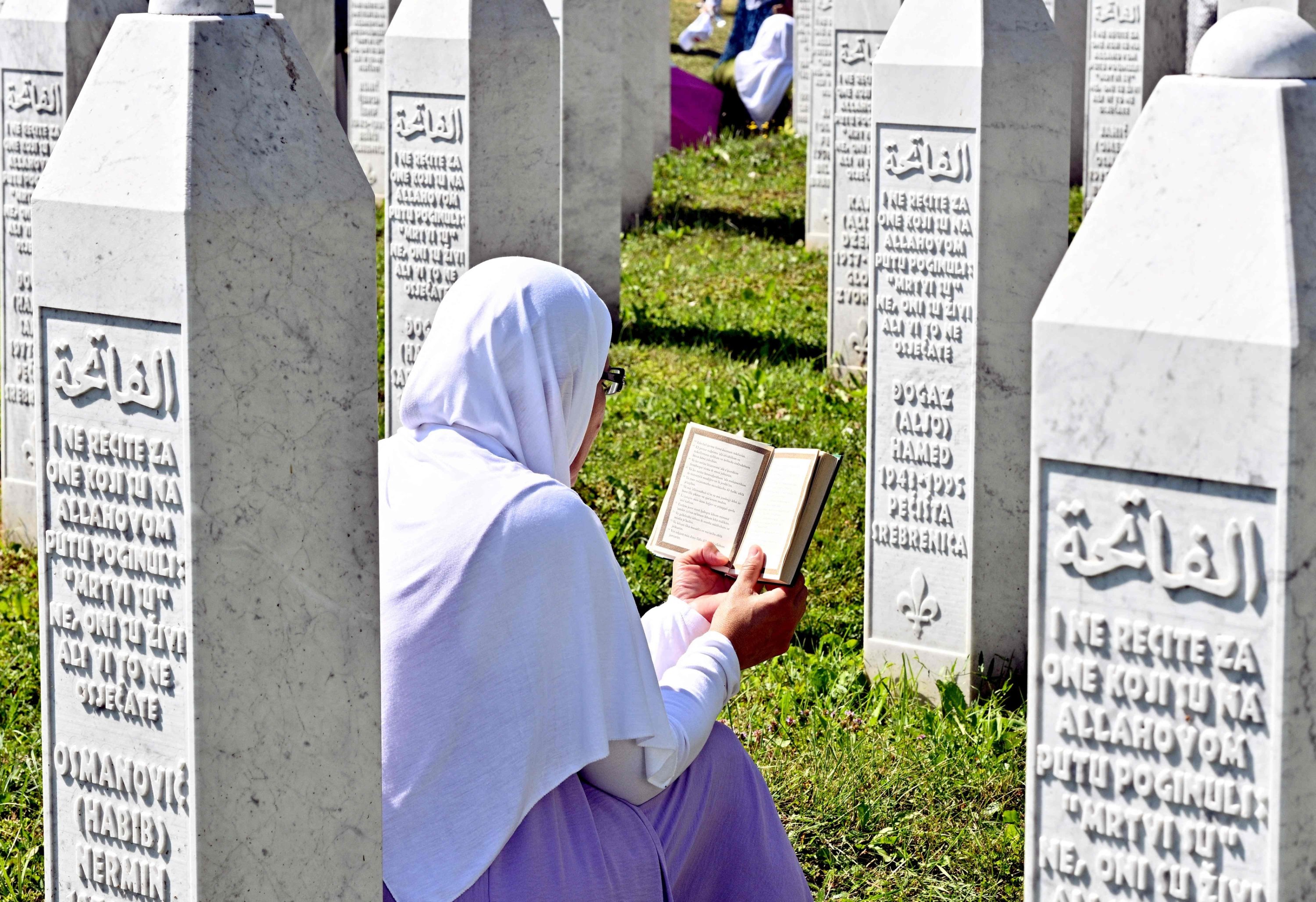
The massacre occurred during the Bosnian War, which lasted from 1992 to 1995 after the breakup of the former Yugoslavia. Srebrenica had been declared a protected U.N. enclave in 1993 and was guarded by Dutch peacekeepers. However, Bosnian Serb forces commanded by Gen. Ratko Mladić overran the town, separating men and boys from women, children and elderly civilians before carrying out mass executions.
An estimated 25,000 to 30,000 women, children and elderly residents were forcibly expelled from the enclave, while thousands of victims were buried in mass graves that were later disturbed in an attempt to conceal evidence of the killings.
The massacre has been legally recognized as genocide by both the International Criminal Tribunal for the former Yugoslavia and the International Court of Justice, which ruled in 2007 that the killings constituted genocide.
More than three decades later, forensic experts continue identifying victims through DNA analysis. Nearly 7,000 victims have been identified and buried at the Srebrenica-Potočari Memorial and Cemetery, while hundreds of people remain missing.
This year’s anniversary included the burial of 10 newly identified victims, ranging in age from 20 to 56, at the memorial cemetery in Potočari. Memorial ceremonies across Bosnia and Herzegovina honored those killed, while survivors, relatives and international delegations gathered to remember the victims and call for continued efforts to combat genocide denial and preserve historical truth.
The 2026 commemorations were held under the theme “We Are Here,” highlighting the resilience of survivors and the enduring legacy of Bosniak communities in Bosnia and Herzegovina and across the diaspora.
Türkiye has consistently supported international recognition of the Srebrenica genocide and has long maintained close ties with Bosnia and Herzegovina.
Erdoğan has repeatedly used the anniversary to stress the importance of justice, remembrance and preventing similar atrocities from occurring again.
The Srebrenica genocide remains a defining symbol of the international community’s failure to protect civilians despite the presence of a U.N. safe zone.
Successive U.N. reports have acknowledged serious shortcomings in the global response, making the massacre a lasting reminder of the consequences of inaction.
President Recep Tayyip Erdoğan expressed condolences on Sunday over the death of Qatar’s former ruler, Sheikh Hamad bin Khalifa Al Thani, praising his longtime ally for strengthening bilateral ties and contributing to regional stability.
“I was deeply saddened to learn of the passing of my dear friend, Sheikh Hamad bin Khalifa Al Thani, the Father Emir of the State of Qatar,” Erdoğan said in a statement on X.
The Turkish president said the former emir played a key role in elevating political, trade, military, humanitarian and cultural relations between Türkiye and Qatar to their current level during the years the two leaders worked together.
“During my tenure as prime minister, we worked closely together on the international stage. He made invaluable contributions to bringing political, trade, military, humanitarian and cultural ties between Türkiye and the State of Qatar to their current level.”
“I personally witnessed his sincere efforts for the peace of the Islamic world, the stability of our region and the prosperity of the Qatari people. May Almighty Allah have mercy on Sheikh Hamad bin Khalifa Al Thani.” Erdoğan said.
He extended condolences, on behalf of himself, his family and the Turkish nation, to Qatar’s Emir Sheikh Tamim bin Hamad Al Thani, the late leader’s family, the people of Qatar and the broader Islamic world.
Sheikh Hamad ruled Qatar from 1995 until his abdication in 2013, when he handed power to his son, Sheikh Tamim bin Hamad Al Thani.
Türkiye late Thursday rejected a European Parliament resolution on Cyprus, calling it “null and void” and accusing the EU of taking a biased approach to the decades-long dispute.
In a statement, the Turkish Foreign Ministry said the resolution contained “baseless and preposterous allegations against the heroic Turkish Armed Forces.”
“The resolution adopted by the European Parliament, which contains baseless and preposterous allegations against the heroic Turkish Armed Forces, is null and void,” the ministry said.
The ministry also expressed full support for a statement issued by the Foreign Ministry of the Turkish Republic of Northern Cyprus (TRNC) in response to the resolution.
Describing the text as “replete with despicable slanders,” the ministry said it represented “the latest example of the biased and distorted approach adopted by the EU and the European Parliament in particular, under the influence of certain circles, with respect to the Cyprus issue.”
The ministry also voiced concern over the EU’s increasingly one-sided stance on Cyprus.
“It is concerning that EU institutions are increasingly approaching the Cyprus issue in a manner that departs from historical realities and impartiality,” the statement said.
The island has been mired in a decades-long dispute between Greek and Turkish Cypriots, despite a series of diplomatic efforts by the U.N. to achieve a comprehensive settlement.
Ethnic attacks starting in the early 1960s forced Turkish Cypriots to withdraw into enclaves for their safety. In 1974, a Greek Cypriot coup aimed at Greece’s annexation led to Türkiye’s military intervention as a guarantor power to protect Turkish Cypriots from persecution and violence.
As a result, the TRNC was founded in 1983. The country is fully recognized only by Türkiye, which does not recognize the Greek Cypriot administration in the south.
The island has seen an on-and-off peace process, but negotiations have been stalled since 2017.

BREAKING NEWS: Minister Gürlek’s statement on Muhsin Yazıcıoğlu investigation: 29 suspects identified

Hierarchical structure in FETO’s encrypted communication network ByLock was deciphered

Türkiye retail sales up 13.7% in May on strong non-food demand
BREAKING NEWS: Minister Gürlek’s statement on Muhsin Yazıcıoğlu investigation: 29 suspects identified
Hierarchical structure in FETO’s encrypted communication network ByLock was deciphered
Türkiye retail sales up 13.7% in May on strong non-food demand
-
 Daily Agenda2 days ago
A pipeline agreement was signed between Türkiye and TRNC! Minister Bayraktar: “We will continue all kinds of support with determination”
-
 Daily Agenda3 days ago
MSÜ Rector Erhan Afyoncu: “Our institutions were revived with the support of our President”
-
 Daily Agenda2 days ago
We will continue to support Lebanon – Last Minute News
-
 Economy22 hours ago
Turkish ship, yacht exports hit $1.5B in H1, sector eyes new record
-
 Economy3 days ago
Aselsan lands nearly $1.7B deal to expand Türkiye’s air defense
-

 Daily Agenda2 days ago
Safety shield against earthquake risk
-
 Daily Agenda2 days ago
From purchasing weapons to selling missiles – DİLEK GÜNGÖR
-
 Daily Agenda1 day ago
BREAKING NEWS: Director of Communications Burhanettin Duran announced: Access to 2 thousand 702 social media accounts linked to FETO has been blocked