
Economy
Air Canada taps new CEO to replace chief who couldn’t speak French

Air Canada on Wednesday appointed a new CEO to succeed Michael Rousseau, who announced his retirement after coming under criticism over his failure to issue condolences both in English and French after a fatal airport disaster.
Canada’s national carrier said Anko Van der Werff, currently the chief executive at Scandinavian Airlines (SAS), would take charge by the end of January 2027.
Van der Werff was chosen following “a comprehensive global search,” Air Canada said.
“The search considered a number of performance criteria, including the ability to communicate in French,” it added.
The incoming boss, who will also serve as president and sit on Air Canada’s board, said he was “mindful of the importance of serving Canadians in both official languages.”
Rousseau had sparked controversy by issuing an English-only video message to express condolences after a deadly collision late on March 22 between an Air Canada jet and a fire truck at New York’s LaGuardia Airport.
Canada has two official languages – English and French – and one of the pilots killed in the accident was from French-speaking Quebec.
Rousseau had issued an apology over his English-only message, regretting that he couldn’t express himself in French “despite many lessons over several years.”
Prime Minister Mark Carney – whose occasionally halting French was discussed when he entered politics last year – also said at the time that he was “disappointed” by Rousseau’s unilingual message.
Air Canada is the country’s largest airline and is headquartered in Montreal, Quebec – Canada’s traditionally French-speaking province. The company is required to offer services in both languages.

U.S. President Donald Trump pledged to double tariffs on Canadian vehicles starting next year, as the neighboring countries and historic allies spiral towards an ever-escalating trade war.
“On January First, 2027, Tariffs on all Cars, Trucks, both large and small, Automotive Parts, and Steel, will be increased to 50%,” Trump wrote on Monday on his Truth Social platform.
The current U.S. tariff impacting Canadian autos stands at 25% for non-U.S. content, while imported steel to the United States generally faces a 50% duty.
Trump’s latest threat comes after the North American neighbors failed Friday to reach a deal to avert new 50% U.S. tariffs on select Canadian goods. The duties took effect on Saturday.
Canadian Prime Minister Mark Carney has since announced retaliatory tariffs targeting the United States after walking away from what he called a “bad deal.”
The new Canadian tariffs will target U.S. steel and dairy industries, while also covering sectors like agricultural equipment, pulp and paper, and electronics.
Canada’s response is set to take effect on Sept. 8.
The White House had alleged “discriminatory treatment” by Canada against U.S. alcohol, automobile and dairy products in rolling out the 50% tariffs.
Trump delayed their implementation by three days last week as Washington and Ottawa intensified talks towards a deal.
Top Canadian negotiator Dominic LeBlanc and his team were at U.S. Trade Representative (USTR) Jamieson Greer’s office in Washington for hours on Thursday and Friday.
However, both sides failed to reach an agreement after talks that continued late into Friday night.
The latest duties hit about 5.5% of Canadian goods entering the U.S., or some $20 billion worth of products ranging from hockey sticks to cement.
On Monday, Trump charged that “Canada has been ripping off the United States of America for years” and added that “we don’t need Canada, they need us.”
Greer told The New York Times (NYT) on Saturday that the Trump administration had offered to eliminate a 10% tariff on softwood lumber and reduce the 25% autos tariff.
Washington was also ready to cut steel tariffs from 50% to 25% for the majority of Canadian steel, according to Greer.
Carney said in a statement late Friday that he had decided to suspend trade talks with the U.S., and Greer told CBS on Monday that both sides have yet to schedule further negotiations.
Besides the latest tariff fight, the U.S. and Canada also have to agree on revisions to the U.S.-Mexico-Canada free trade agreement (USMCA), which Trump has declined to renew in its current form.
Trump’s threats to make Canada the 51st U.S. state have also antagonized many Canadians.
Top economic officials on Monday reviewed preparations for Türkiye’s economic road map for the next three years, focusing on policy priorities, macroeconomic forecasts, budget targets and structural measures, according to a statement.
The Medium-Term Program is expected to outline the government’s updated macroeconomic assumptions, fiscal framework and structural reform agenda for 2027-2029. It is due to be announced in early September.
The Economic Coordination Board (EKK) said preparations were at an advanced stage, with members reviewing the latest work in light of global and domestic economic developments.
The program will set targets for inflation, growth, unemployment, the current account deficit, exports and imports. It will also establish spending caps for public institutions and identify priority reform areas aimed at preserving fiscal discipline.
Chaired by Vice President Cevdet Yılmaz, the EKK includes the ministers of finance, trade, labor, energy, industry and agriculture, along with senior officials from key economic institutions, including the central bank. Monday’s meeting was the board’s seventh this year.
According to the statement, discussions covered the program’s main policy priorities, macroeconomic projections, budget aggregates and structural measures needed to meet the targets.
The EKK said the road map would prioritize structural reforms to boost productivity and competitiveness while supporting investment, production, employment and exports. It also emphasized continued fiscal discipline and anti-inflation efforts, particularly supply-side measures targeting food and housing.
The board said policymakers were also considering input from public institutions, the private sector, civil society, professional organizations and academia.
Government says economic resilience has improved
The board said macroeconomic indicators had improved under the government’s current program and that the economy had become more resilient despite heightened global uncertainty.
It said growth had remained steady, unemployment had declined and the disinflation process was continuing.
Exports have also maintained an upward trend despite difficult global conditions, supported by Türkiye’s production infrastructure and efforts to diversify markets, the EKK said.
The board noted that high commodity prices continued to pressure the current account balance, but said the deficit as a share of gross domestic product (GDP) remained at sustainable levels.
It also said fiscal discipline had been maintained despite measures to cushion the effects of geopolitical developments, with the budget deficit broadly in line with program targets.
New financing support for manufacturers and exporters
The EKK also highlighted measures aimed at improving access to financing for manufacturers and exporters.
The government raised per-worker premium support for employees in selected manufacturing sectors to TL 3,500 (nearly $73), while the daily rediscount credit limit for exporters increased from TL 4.5 billion to TL 5 billion.
The ceiling for the Investment Commitment Advance Loan Program was raised to TL 750 billion, and an additional TL 250 billion in new credit support was allocated to the manufacturing industry.
The government also introduced additional financing for the tourism sector to help offset the impact of geopolitical developments. The EKK said TL 60 billion in Treasury-backed financing would be made available to tourism companies.
The aging population is by far the biggest driver of the sharp increase in social spending in Germany, a leading economic research institute said in a report on Monday.
Germany’s social spending reached a record 32% of the budget in 2025, driven largely by an aging population and rising health care costs, the ifo Institute said.
Spending related to old age and illness accounted for around 70% of Germany’s total social expenditure last year, according to the Munich-based institute.
The findings were included in its latest analysis, titled “Expansion of the Welfare State: Germany’s Social Budget 1992-2025.”
The two categories accounted for more than 80% of the inflation-adjusted increase in social spending since 1992, with the institute identifying demographic change as the main structural cost driver.
“The key structural cost driver behind this trend is demographic change, which is exacerbating the shift in the burden within the German welfare state between the generations,” ifo researcher Lilly Fischer said.
Germany’s inflation-adjusted social spending has risen by around 70% since 1992, while its share of gross domestic product (GDP) increased by nearly 6 percentage points, according to the analysis.
The institute, however, said that the welfare system also served as an automatic stabilizer during periods of economic crisis, cushioning households against economic downturns.
Sharp increase since 2019
Inflation-adjusted social expenditure increased by 11.5%, or around 104 billion euros ($121.3 billion), between 2019 and 2025, according to the institute.
Additional health and long-term care spending for an aging population, along with higher federal pension payments, were the main contributors to the increase.
“The social budget is growing faster than the gross domestic product, which is why the weak economy is also contributing to the increase in the social budget share,” ifo researcher Emilie Hoslinger said.
The institute said aging would continue to place an upward pressure on social spending in the coming years, warning that the trend could only be contained through reforms to Germany’s social security systems.
Tax-financed assistance and support programs, including basic income support and child benefits, accounted for nearly 20% of the country’s social budget in 2025, according to the institute.
Shein is seeking to raise up to $1.8 billion in a Hong Kong IPO that would value the fast-fashion retailer at about 70% below its private-market peak four years ago, as slower growth prospects are expected to weigh on investor demand.
The long-awaited Hong Kong IPO comes after Shein, known for selling $5 dresses and $10 jeans to shoppers in about 160 countries, scrapped plans to list in New York and London over the past four years.
Shein on Monday launched the process to sell 280 million shares at between HK$47.60 and HK$49.50 per share, the company’s filings showed, raising up to HK$13.86 billion ($1.77 billion) and valuing it at close to $27 billion at the top of that range.
The marked decline in valuation comes as tariffs, intensifying competition and rising costs cloud Shein’s outlook. Shein was valued at $64 billion in 2023 and April 2024.
Even after it sharply cut the valuation, analysts said the growing headwinds in its core markets of the United States and Europe would weigh on the company’s fundraising.
“The drop in Shein’s valuation largely reflects the change in prospects for the company from, say, two to three years ago when its IPO was first mooted,” said Lorraine Tan, Singapore-based director of equity research for Asia at Morningstar.
“We believe interest in Shein by global investors has probably cooled as a result, leading to the reduced listing price.”
At $27 billion, Shein is valued at around 0.7 times forecast sales, more expensive than European rival Zalando’s 0.4 times, but cheaper than H&M and Inditex, which trade at around 1.1 times and 4.0 times, respectively.
“Public investors are no longer paying for hyper-growth,” said Winston Ma, an adjunct professor at New York University School of Law and former head of North America for China’s sovereign wealth fund CIC.
“They are underwriting a mature cross-border platform that must now defend its profit margins against trade tariffs, higher compliance costs, and regulatory scrutiny in both the U.S. and China.”
Growth slows sharply
The China-founded, Singapore-headquartered company will announce the final IPO price on Aug. 31 and start trading on Sept. 1.
Cornerstone investors led by existing shareholders Boyu, Tiger Global and General Atlantic have subscribed for about $383 million worth of Shein shares, the prospectus showed. Tencent, Greenwoods, Taikang Life and UBS Asset Management will also take stock.
Shein said it would use about 80% of the cash raised in the IPO to improve its technology and increase its brand and global presence. It has agreed to pay up to about $3.5 billion in cash to certain investors who bought special shares in earlier private funding rounds, according to the prospectus.
The shares sold in the IPO will have one-tenth the voting rights of the shares held by the company’s founders. Co-founders Sky Yangtian Xu, Maggie Gu, Molly Miao and Tony Ren will control 90% of Shein’s voting rights, the prospectus showed.
Slowing revenue growth and weaker core earnings are weighing on Shein’s business, while shrinking margins have also raised concerns that its expansion is running into headwinds from higher trade costs, tighter regulatory scrutiny and intensifying competition across global e-commerce.
Shein said in the prospectus its first-half 2026 revenue growth is expected to be broadly in line with the 1.1% growth posted in the first quarter, while its operating margin is expected to be slightly lower than the first-quarter level.
The company said this is due to new European import charges, pricing pressure and weaker demand in the Middle East linked to the Iran war.
“I’m not that positive on the Shein IPO. Their growth has slowed down a lot already,” Dickie Wong, executive director of research at uSMART Securities in Hong Kong.
“I expect the subscription response to be just average. While the valuation has come down significantly, I would not recommend subscribing at this stage given the slower growth outlook and regulatory pressures.”
Sliding valuation
Shein swung to a $99 million quarterly loss after the U.S. removed an import duty exemption on small packages, and a $328 million fair-value charge on convertible redeemable preferred shares following an accounting change.
The de minimis rule had allowed packages worth less than $800 ordered online from China to enter the U.S. duty-free.
Shein previously said Chinese-origin products sold by it or through its marketplace and shipped to the U.S. are now subject to tax rates ranging from 10% to 87.5%.
In its prospectus, Shein said it faces a “significantly higher level of duties and taxes” in the United States, which directly triggered a 14.3% drop in U.S. revenues during the first quarter this year.
The company said it has set aside about $80 million at end-March for ongoing legal and regulatory cases. These include a U.S. Federal Trade Commission (FTC) investigation that could result in significant payments, an EU Digital Services Act investigation and data privacy cases in France and Ireland.
Shein’s purchase of U.S. clothing brand Everlane in May for $80 million is now facing a national security review by the Committee on Foreign Investment in the United States (CFIUS), according to a person familiar with the matter.
Shein’s IPO is the largest new share sale in Hong Kong in 2026, surpassing autonomous driving firm Momenta Global’s $751 million offering in July.
Electric vehicle sales picked up across much of Europe in July, as high oil prices, government subsidies and the availability of more affordable models pushed more drivers to abandon combustion-engine cars, according to industry data.
EV sales have soared across Europe since the Iran war began in February and caused pain at the pump. The big question for many in the auto industry is whether consumer interest will fade if and when oil prices retreat, while a lack of public charging options remains a major concern.
“People are looking for ways to protect themselves from volatility in fuel prices, and EVs are a great way to do that,” Renault U.K. managing director Adam Wood told Reuters at the French automaker’s dealership in Letchworth, 40 miles (64 km) north of London.
“We’re at a tipping point where EVs … are part of the mainstream.”
Two years ago, just 10% of Renault’s U.K. sales were electric. By contrast, in July this year EVs made up more than 50% of the company’s orders and the Renault 5 – a revived version of the top-selling Renault model originally launched in 1972 – was last month Britain’s best-selling electric car, its original boxy shape having evolved into a more curvy design offering what Renault’s website says is a range of up to 250 miles.
Later this year, Renault will also start selling the electric Twingo, which will start at less than 20,000 pounds ($26,984) – before a possible U.K. government subsidy for which Renault hopes to qualify.
‘No chance of me going back’
Charlotte Merrell, 32, just bought an electric Renault Megane, her first EV. She said charging at home costs a little more than 1 pound versus 60 pounds for her previous combustion-engine model.
Buying an EV was “the best decision I ever made,” Merrell said. “There’s no chance of me going back.”
According to industry data, EV sales in the European Union rose 40.5% in the first half of the year versus the same period in 2025 to more than 1.2 million cars, accounting for 20.7% of all sales.
Data provided to Reuters by research group New Automotive and industry group E-Mobility Europe show EV registrations rose 13% year-over-year in July across 16 markets covering more than 90% of car sales in the EU and European Free Trade Association.
That means EVs made up 25.7% of all new car sales in those markets.
Online searches
Others have found a similar trend.
Amsterdam-based online marketplace OLX said since the Iran war began, customer enquiries for EVs had jumped across its online car marketplaces in France (84%), Romania (59%), Portugal (30%) and Poland (19%). Chinese brands known for affordable models make up a growing portion of EV listings, it said.
“People are getting far more confident around this new technology,” said OLX CEO Christian Gisy.
In a late July poll of 1,000 users by German online marketplace Carwow, 62% of respondents said switching to an EV is the best long-term response to persistently high fuel costs.
Accelerating transition
In Europe, traditional automakers and Chinese rivals alike have launched a growing number of more affordable models that are also supported by subsidies.
In the year through July, 29% of new cars in France were EVs. In July alone, EVs accounted for a record 35% of new car registrations, versus 17% the previous year, as the country’s “social leasing” EV subsidies program for lower-income car buyers kicked in.
Marie-Laure Nivot, head of automotive market analysis at research firm AAA DATA, said the program “creates an environment that accelerates the transition” to EVs.
Different trends, EV obstacles
It’s a somewhat different picture in the U.S., where the Trump administration killed a federal EV tax break last year. So although second-quarter EV sales rose 15% versus the first quarter, they fell more than 20% year-over-year.
Cox Automotive projects U.S. EV sales will fall 23% this year versus 2025, for a market share of just 6.2%, also reflecting a lack of affordable models.
A dearth of public charging remains an obstacle to EV ownership for millions of Europeans who live in apartments, an issue that needs to be addressed for sales to keep growing, Ian Henry of consultancy AutoAnalysis said.
“We could be near a saturation point because there are people who might want to go electric, but can’t.”
Tesla is recalling nearly 3 million cars in China over interior door handles that could hinder a person’s ability to exit the vehicle during an emergency, Beijing’s national market watchdog said.
Eight Chinese carmakers also filed recalls over similar safety risks, China’s State Administration for Market Regulation (SAMR) announced on Friday.
Some recalls were effective immediately, while others began over the weekend and on Monday.
Tesla’s recall involves 2.9 million domestically-made units of its Model 3 and Model Y electric cars and begins on Sept. 25.
The U.S. carmaker – which operates a huge factory in Shanghai – is also recalling around 46,000 imported units of its Model 3, Model X and Model S cars, the SAMR announcement said.
The recalled cars have inner emergency mechanical handles “similar in color to the interior, making them difficult to identify and operate” in emergencies, the watchdog said.
In Tesla’s Model 3, for example, passengers must reach into a compartment inside the door pocket and find a release cable to manually open the rear door, according to the company’s website.
“In extreme situations such as severe collisions causing the vehicle’s low-voltage system to fail, (the handles) may affect passengers’ ability to quickly open car doors for escape and rescue operations outside the vehicle,” SAMR said.
SAMR said Tesla was separately recalling 2.7 million domestically-made Model 3 and Model Y EVs over issues with monitoring systems while a driver is using steering assist functions.
It was not clear whether some Teslas were counted in both recalls.
Chinese EV makers including Xiaomi, XPeng, Geely, Chery and Leapmotor are also recalling cars with handles that blend in with their interior.
Xiaomi began recalling around 390,000 units of its 2024 SU7 series on Friday, and XPeng started recalling nearly 265,000 cars on Saturday.
Beijing-based BAIC BluePark, a subsidiary of state-owned automaker BAIC, on Saturday began recalling around 46,000 Arcfox Kaola EVs over a “lack of dedicated text prompts” near the emergency mechanism on its right rear sliding door.
Beginning on Monday, Geely is recalling around 92,000 cars from its luxury brand Zeekr.
Companies offered to attach warning labels near the handles for free, and some said they would remotely upgrade software involving lowering windows after a crash.
Safety concerns have risen in China recently over sleek car designs that are prone to losing operability in the event of a crash.
The mass recalls are in line with China’s plan to ban hidden door handles on cars from Jan. 1, 2027, local media reports said.
Those rules, announced in February by the Ministry of Industry and Information Technology, will require door handles to have both interior and exterior mechanical releases.
Electronic door handles were introduced with Tesla’s 2012 launch of the Model S, later becoming popular with Chinese EV brands prioritizing high-tech features.
Folding into the body of the car, such door handles provide a slight boost to efficiency by reducing drag while the vehicle is in motion.


-

 Sports2 days ago
Hull roar back into Premier League with 2-0 rout of Man Utd
-
 Economy2 days ago
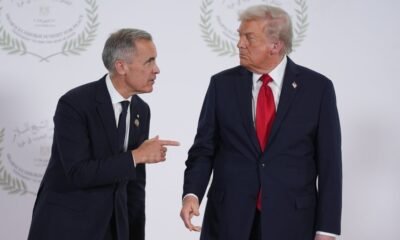
US imposes 50% tariffs on Canadian goods as trade talks collapse
-

 Sports2 days ago
Top 10 greatest sports rivalries in world, ranked
-

 Politics3 days ago
Ankara slams ‘reckless attacks’ of Israel, backs Syria’s stability
-

 Politics1 day ago
Erdoğan targeted for standing up to Netanyahu’s genocide: AK Party spox
-

 Economy1 day ago
At 55, China-Türkiye ties expand beyond trade into strategic co-op
-

 Economy3 days ago
Türkiye showcases growing naval capabilities at top maritime festival
-

 Politics3 days ago
Businessman alleges Imamoğlu’s financing scheme in major Turkish graft case