
Economy
Trump orders cutoff of US trade with Spain over NATO spending, Iran

U.S. President Donald Trump on Wednesday directed an immediate suspension of all trade with NATO ally Spain, escalating strains tied to defense spending and the Iran war despite European Union rules requiring trade negotiations to be conducted as a single bloc.
During a NATO summit in Ankara, which European leaders had hoped would put a lid on rifts within the military alliance, Trump instead reignited the dispute with Spain, calling Madrid a “terrible partner.”
He also irked another NATO ally Denmark by reiterating that his country should control Greenland. Denmark promised to defend every inch of its territory.
It was the second time Trump has instructed Treasury Secretary Scott Bessent to halt commerce with Spain over its refusal to commit to NATO’s new defense spending target of 5% of GDP. However, after his first such promise in March, trade between the two countries continued normally.
“Spain doesn’t agree to anything, and you shouldn’t carry them,” Trump told NATO Secretary-General Mark Rutte, who later tried to soothe the tension by saying that Spain “made a huge step last year” raising its spending to 2%, although he added that “there are still issues we have to solve.”
“I don’t want to do any trade with them, alright?” Trump said, turning to Bessent, who replied: “Yes, sir.” Trump then added, “Take it immediately. Don’t even talk to them. They’re hopeless. They’re bad people… They make so much money with us, and we’re going to see that they make a lot less.”
EU vows to protect member states’ interests
The office of Spanish Prime Minister Pedro Sanchez, who leads a minority leftist government, said in a statement it was treating Trump’s statements as “business as usual” and did not intend to change the “excellent” relations it enjoyed with Washington.
It pointed out that Spain had a trade deficit with the U.S. and that economic ties were forged by private companies rather than governments, adding that as part of the customs and trade union, individual EU members could not be singled out.
Later on Wednesday, the EU said it will “always ensure” the interests of member states are “fully protected.”
“We expect the U.S. to honor its commitments under that joint statement as we have honored ours,” EU trade spokesperson Olof Gill said, referring to a trade pact signed last year between Brussels and Washington.
“The Commission will always ensure that the interests of the European Union and all our member states are fully protected. We will continue to advocate for stable, predictable and mutually beneficial trans-Atlantic trade for the benefit of all,” Gill added.
Trump has repeatedly expressed frustration with Spain after Sanchez, a Socialist, refused to let the U.S. use its airspace or bases on its territory for the Iran war. Washington jointly operates with Madrid two key military bases in southern Spain for naval and air operations.
Spain is the world’s largest olive oil exporter and also sells auto parts, steel, and chemicals to the United States, although analysts consider it to be less vulnerable to Trump’s threats of economic punishment than other European economies.
Trump said he would air his grievances with fellow NATO allies at the leaders’ consultations at the summit on Wednesday, including his long-standing ambitions to acquire Greenland, adding that he was “very upset” with NATO allies over unequal defense spending and a lack of support on Iran.

Türkiye’s exports to Organization of Islamic Cooperation (OIC) member countries reached $41.5 billion in the first seven months, the Trade Ministry said Monday.
That marks an increase of $345.7 million compared to a year ago, the ministry said in a statement.
The OIC was established in 1969 to strengthen cooperation and solidarity among Islamic countries and protect common rights and interests, representing approximately a quarter of the world’s population and one-tenth of global income with its 57 member states.
The Trade Ministry is pursuing a Strategy for Developing Exports with OIC Members, which effectively supports the activities of exporters toward Islamic countries that hold an important place in the global economy.
Under the strategy, which is also included in the 2026-2028 Medium-Term Program, the share of Islamic countries in total exports, currently at 27%, is targeted to rise to 30% by 2028.
Within the scope of the strategy, 21 countries whose economic and commercial data were analyzed in detail were designated as first-phase focus countries, namely Azerbaijan, Bahrain, Bangladesh, the United Arab Emirates (UAE), Algeria, Indonesia, Morocco, Ivory Coast, Qatar, Kuwait, Libya, Malaysia, Egypt, Nigeria, Uzbekistan, Pakistan, Senegal, Saudi Arabia, Tunisia, Jordan and Oman.
Türkiye’s foreign trade volume with OIC countries stood at $87.6 billion in 2013, increasing approximately 1.4 times to reach $119.1 billion as of 2025.
Last year, the countries with which Türkiye carried out the most trade among OIC countries were the UAE with approximately $19 billion, Iraq with $14.3 billion, Egypt with $7.9 billion and Kazakhstan with $7.9 billion.
The exchange continued to increase in the January-July period of this year.
Trade volume with OIC countries increased by 2.2% compared to the same period last year, reaching $69.2 billion, the Trade Ministry said.
The data showed Türkiye’s exports to OIC countries increased by more than 0.8% compared to the same period of the previous year.
In the January-July period, the OIC countries where exports increased the most in value terms were Egypt, reaching a total of $2.8 billion with an increase of $522.2 million; Libya, reaching a total of $2.2 billion with an increase of $438.5 million; Syria, reaching a total of $2.1 billion with an increase of $296.8 million; and Jordan, reaching a total of $1.3 billion with an increase of $227.5 million.
Inflation expectations among households and the real sector rose in August, while expectations among market participants declined, a survey by the Central Bank of the Republic of Türkiye (CBRT) showed on Monday.
Market participants’ expectations for inflation in 12 months fell 0.26 percentage points to 23.69%, according to the CBRT’s Sectoral Inflation Expectations survey.
Expectations among the real sector rose 0.30 points to 32.80%, while household expectations increased 0.64 points to 45.58%.
Türkiye’s annual consumer price inflation eased to 31.75% in July 2026, down from 32.11% in June.
Last week, the CBRT adjusted its end-2026 inflation forecast upward to 28% from 26% mainly due to energy and food price pressures. But it left its interim target unchanged at 24%.
The bank also kept its interim inflation targets for end-2027 and end-2028 at 15% and 9%, respectively.
Monday’s survey showed the share of households expecting inflation to decline over the next 12 months also fell in August.
The proportion of households expecting inflation to decrease over the coming year dropped 0.78 percentage points to 16.85%.
Food, energy biggest sources of price increases
Households continued to identify food, fuel and energy as the product and service groups that experienced the largest price increases over the previous year.
These are also expected to see the strongest increases over the next 12 months.
The share of respondents identifying food as the category with the largest price increase fell 0.4 percentage points to 39.3% in August.
Households’ expectations for housing price increases over the next 12 months also moderated slightly.
The expected increase in housing prices over the coming year fell 0.36 percentage points to 32.13%.
The survey also showed a rise in expectations for the Turkish lira’s exchange rate against the U.S. dollar.
The 12-month-ahead dollar/TL expectation increased by TL 1.49 from the previous month to TL 54.47.
Turkish households’ preference for gold increased in August, while the share considering real estate investments declined, according to a survey by the Central Bank of the Republic of Türkiye (CBRT) Monday.
The survey showed that 41.3% of respondents said they would buy gold, up 1 percentage point from the previous month. Gold was the most preferred investment option among those surveyed.
By contrast, the share of respondents who said they would buy a home, shop or land fell 1.4 percentage points to 37.1%.
Real estate and gold have for years been traditional investment options for Turks seeking to safeguard themselves against stubborn inflation.
Türkiye’s annual consumer price inflation eased to 31.75% in July 2026, down from 32.11% in June.
Monday’s survey showed households’ expectations for inflation in 12 months time increased 0.64 percentage points to 45.58%.
Last week, the central bank adjusted its end-2026 inflation forecast upward to 28% from 26% mainly due to energy and food price pressures. But it left its interim target unchanged at 24%.
The bank also kept its interim inflation targets for end-2027 and end-2028 at 15% and 9%, respectively.
Monday’s survey also showed households continued to identify food and fuel and energy as the product and service groups that had experienced the largest price increases over the previous year.
These are also expected to see the strongest increases over the next 12 months.
The share of respondents identifying food as the category with the largest price increase fell 0.4 percentage points to 39.3% in August.
Households’ expectations for housing price increases over the next 12 months also moderated slightly.
The expected increase in housing prices over the coming year fell 0.36 percentage points to 32.13%.
U.S. President Donald Trump pledged to double tariffs on Canadian vehicles starting next year, as the neighboring countries and historic allies spiral towards an ever-escalating trade war.
“On January First, 2027, Tariffs on all Cars, Trucks, both large and small, Automotive Parts, and Steel, will be increased to 50%,” Trump wrote on Monday on his Truth Social platform.
The current U.S. tariff impacting Canadian autos stands at 25% for non-U.S. content, while imported steel to the United States generally faces a 50% duty.
Trump’s latest threat comes after the North American neighbors failed Friday to reach a deal to avert new 50% U.S. tariffs on select Canadian goods. The duties took effect on Saturday.
Canadian Prime Minister Mark Carney has since announced retaliatory tariffs targeting the United States after walking away from what he called a “bad deal.”
The new Canadian tariffs will target U.S. steel and dairy industries, while also covering sectors like agricultural equipment, pulp and paper, and electronics.
Canada’s response is set to take effect on Sept. 8.
The White House had alleged “discriminatory treatment” by Canada against U.S. alcohol, automobile and dairy products in rolling out the 50% tariffs.
Trump delayed their implementation by three days last week as Washington and Ottawa intensified talks towards a deal.
Top Canadian negotiator Dominic LeBlanc and his team were at U.S. Trade Representative (USTR) Jamieson Greer’s office in Washington for hours on Thursday and Friday.
However, both sides failed to reach an agreement after talks that continued late into Friday night.
The latest duties hit about 5.5% of Canadian goods entering the U.S., or some $20 billion worth of products ranging from hockey sticks to cement.
On Monday, Trump charged that “Canada has been ripping off the United States of America for years” and added that “we don’t need Canada, they need us.”
Greer told The New York Times (NYT) on Saturday that the Trump administration had offered to eliminate a 10% tariff on softwood lumber and reduce the 25% autos tariff.
Washington was also ready to cut steel tariffs from 50% to 25% for the majority of Canadian steel, according to Greer.
Carney said in a statement late Friday that he had decided to suspend trade talks with the U.S., and Greer told CBS on Monday that both sides have yet to schedule further negotiations.
Besides the latest tariff fight, the U.S. and Canada also have to agree on revisions to the U.S.-Mexico-Canada free trade agreement (USMCA), which Trump has declined to renew in its current form.
Trump’s threats to make Canada the 51st U.S. state have also antagonized many Canadians.
Top economic officials on Monday reviewed preparations for Türkiye’s economic road map for the next three years, focusing on policy priorities, macroeconomic forecasts, budget targets and structural measures, according to a statement.
The Medium-Term Program is expected to outline the government’s updated macroeconomic assumptions, fiscal framework and structural reform agenda for 2027-2029. It is due to be announced in early September.
The Economic Coordination Board (EKK) said preparations were at an advanced stage, with members reviewing the latest work in light of global and domestic economic developments.
The program will set targets for inflation, growth, unemployment, the current account deficit, exports and imports. It will also establish spending caps for public institutions and identify priority reform areas aimed at preserving fiscal discipline.
Chaired by Vice President Cevdet Yılmaz, the EKK includes the ministers of finance, trade, labor, energy, industry and agriculture, along with senior officials from key economic institutions, including the central bank. Monday’s meeting was the board’s seventh this year.
According to the statement, discussions covered the program’s main policy priorities, macroeconomic projections, budget aggregates and structural measures needed to meet the targets.
The EKK said the road map would prioritize structural reforms to boost productivity and competitiveness while supporting investment, production, employment and exports. It also emphasized continued fiscal discipline and anti-inflation efforts, particularly supply-side measures targeting food and housing.
The board said policymakers were also considering input from public institutions, the private sector, civil society, professional organizations and academia.
Government says economic resilience has improved
The board said macroeconomic indicators had improved under the government’s current program and that the economy had become more resilient despite heightened global uncertainty.
It said growth had remained steady, unemployment had declined and the disinflation process was continuing.
Exports have also maintained an upward trend despite difficult global conditions, supported by Türkiye’s production infrastructure and efforts to diversify markets, the EKK said.
The board noted that high commodity prices continued to pressure the current account balance, but said the deficit as a share of gross domestic product (GDP) remained at sustainable levels.
It also said fiscal discipline had been maintained despite measures to cushion the effects of geopolitical developments, with the budget deficit broadly in line with program targets.
New financing support for manufacturers and exporters
The EKK also highlighted measures aimed at improving access to financing for manufacturers and exporters.
The government raised per-worker premium support for employees in selected manufacturing sectors to TL 3,500 (nearly $73), while the daily rediscount credit limit for exporters increased from TL 4.5 billion to TL 5 billion.
The ceiling for the Investment Commitment Advance Loan Program was raised to TL 750 billion, and an additional TL 250 billion in new credit support was allocated to the manufacturing industry.
The government also introduced additional financing for the tourism sector to help offset the impact of geopolitical developments. The EKK said TL 60 billion in Treasury-backed financing would be made available to tourism companies.
The aging population is by far the biggest driver of the sharp increase in social spending in Germany, a leading economic research institute said in a report on Monday.
Germany’s social spending reached a record 32% of the budget in 2025, driven largely by an aging population and rising health care costs, the ifo Institute said.
Spending related to old age and illness accounted for around 70% of Germany’s total social expenditure last year, according to the Munich-based institute.
The findings were included in its latest analysis, titled “Expansion of the Welfare State: Germany’s Social Budget 1992-2025.”
The two categories accounted for more than 80% of the inflation-adjusted increase in social spending since 1992, with the institute identifying demographic change as the main structural cost driver.
“The key structural cost driver behind this trend is demographic change, which is exacerbating the shift in the burden within the German welfare state between the generations,” ifo researcher Lilly Fischer said.
Germany’s inflation-adjusted social spending has risen by around 70% since 1992, while its share of gross domestic product (GDP) increased by nearly 6 percentage points, according to the analysis.
The institute, however, said that the welfare system also served as an automatic stabilizer during periods of economic crisis, cushioning households against economic downturns.
Sharp increase since 2019
Inflation-adjusted social expenditure increased by 11.5%, or around 104 billion euros ($121.3 billion), between 2019 and 2025, according to the institute.
Additional health and long-term care spending for an aging population, along with higher federal pension payments, were the main contributors to the increase.
“The social budget is growing faster than the gross domestic product, which is why the weak economy is also contributing to the increase in the social budget share,” ifo researcher Emilie Hoslinger said.
The institute said aging would continue to place an upward pressure on social spending in the coming years, warning that the trend could only be contained through reforms to Germany’s social security systems.
Tax-financed assistance and support programs, including basic income support and child benefits, accounted for nearly 20% of the country’s social budget in 2025, according to the institute.


-

 Sports2 days ago
Hull roar back into Premier League with 2-0 rout of Man Utd
-
 Economy2 days ago
US imposes 50% tariffs on Canadian goods as trade talks collapse
-

 Sports2 days ago
Top 10 greatest sports rivalries in world, ranked
-
 Politics1 day ago
Erdoğan targeted for standing up to Netanyahu’s genocide: AK Party spox
-

 Refugees2 days ago
US envoy Barrack says Israel gave no warning ahead of Syria air strike
-
 Economy1 day ago
At 55, China-Türkiye ties expand beyond trade into strategic co-op
-
 Politics1 day ago
8 nations reject Israel’s E1 settlement plan, urge sanctions
-
 Refugees3 days ago
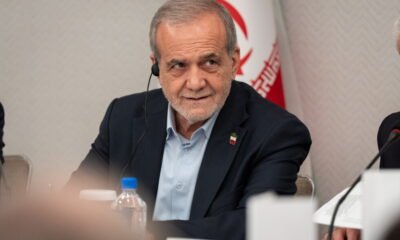
Iran says the world accepts that it has defeated the US